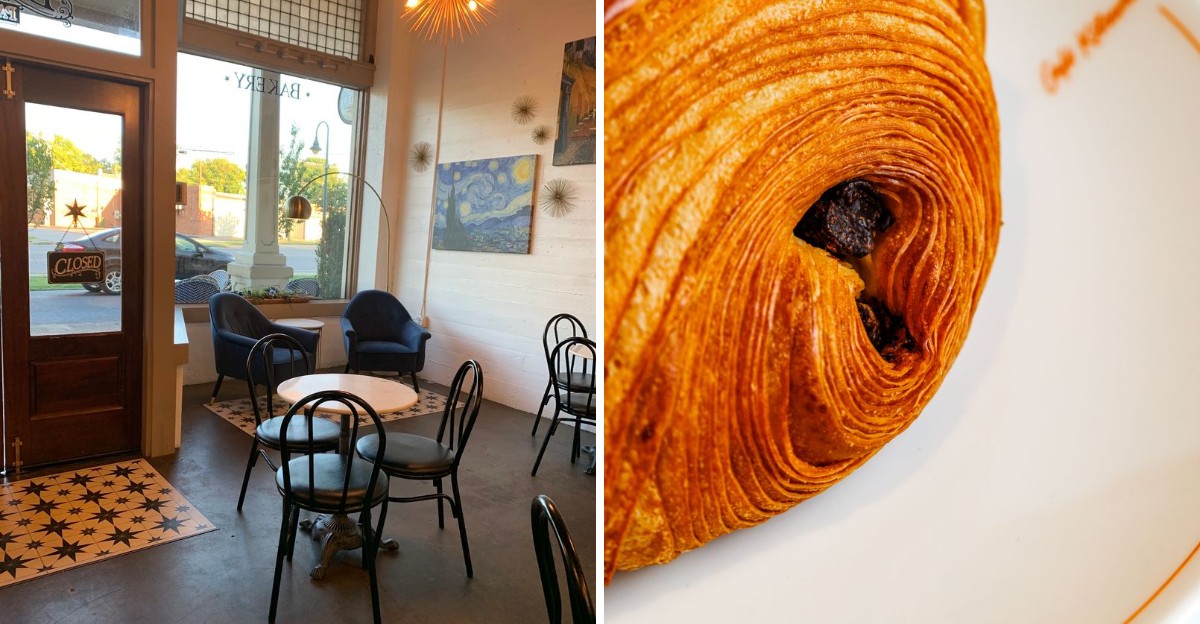
The croissant leaves evidence. A few flakes on the plate.
A few on your shirt. At least one somehow ends up in the keyboard if you are foolish enough to bring breakfast to work.
That is what happens when laminated pastry is done properly. At this Alabama patisserie, dough is folded repeatedly by hand until the layers separate into crisp, delicate sheets around a buttery center.
Everything is made from scratch on site, with no frozen pastries waiting to be reheated. The shop is veteran-owned and run by Chef Kevin Zurmuehlen and his wife Kristen, which makes the contrast with Huntsville’s rocket-and-engineering reputation even more charming.
Rockets get people into space. These croissants may simply get them through breakfast.
A Corner of Paris Parked on Meridian Street
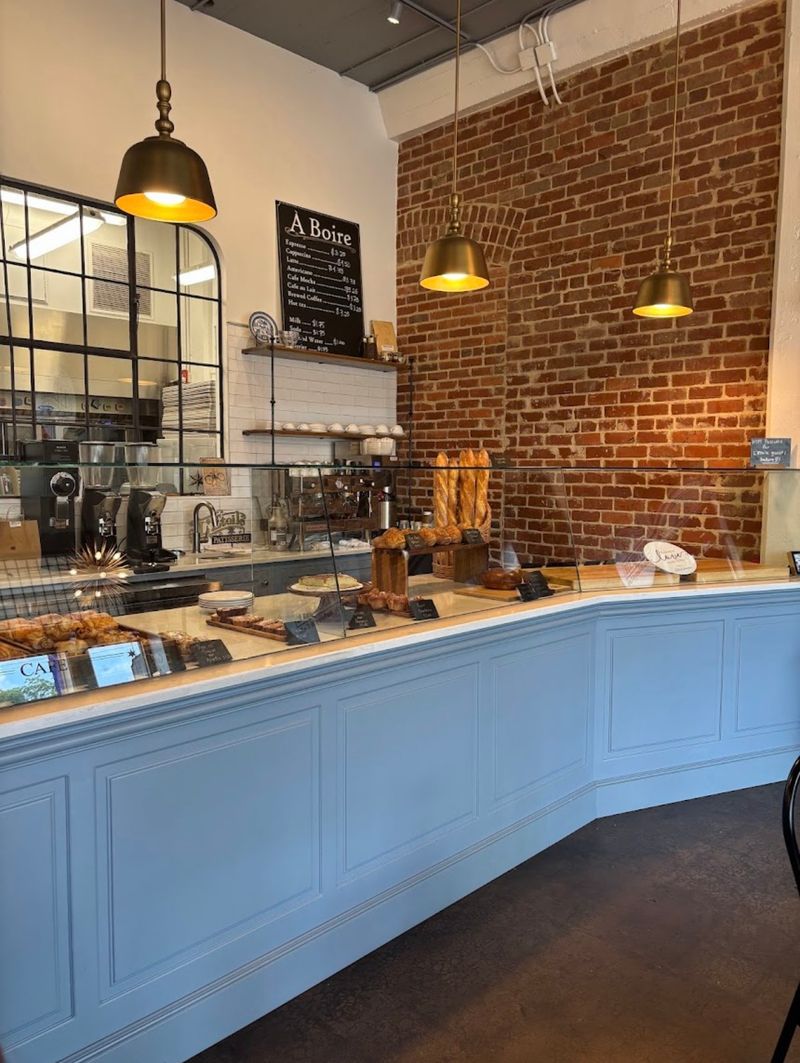
Meridian Street North is not where most people expect to find a French bakery, and that is exactly what makes the first visit so fun.
L’Etoile Patisserie sits at 1214 Meridian St N in Huntsville, Alabama, tucked into a stretch of town that has slowly filled with small, independent spots worth slowing down for.
The European flair shows up immediately. Decor leans elegant without feeling stuffy, and the whole room seems arranged around the idea that a pastry deserves a proper setting.
Chef Kevin Zurmuehlen and his wife Kristen built the place with two goals stacked together. One was baking that could hold its own against the real thing.
The other was community, the kind where staff remember faces and conversations pick up where they left off.
That veteran-owned? background shows in the details, from the tidy display cases to the steady rhythm behind the counter. Nothing feels rushed, even when the morning line stretches toward the door.
Parking is straightforward, and the location makes it easy to fold into a bigger Huntsville day. Grab something flaky, then head toward downtown or the botanical garden with a paper bag riding shotgun.
First-timers often stand at the case a little too long, unsure where to start. That hesitation is part of the charm here, honestly.
Croissants Built Over Two and a Half Days
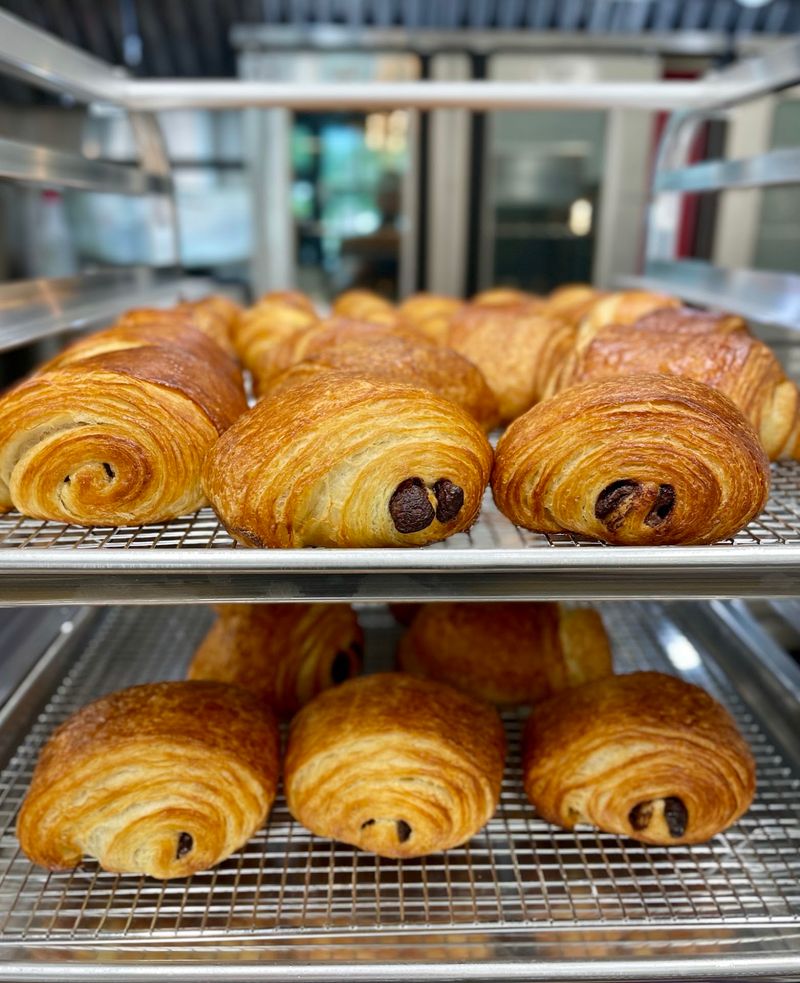
Some pastries are made in an hour. Croissants here are not.
Laminated dough at L’Etoile can take up to two and a half days from start to finish, a schedule that sounds absurd until the first bite explains it. Layers of butter get folded into dough, chilled, rolled, folded again, and rested, over and over, until the count climbs into something ridiculous.
The payoff is that shattering crackle. Shards fall onto the plate the moment a croissant is torn open, revealing a honeycomb interior that stretches instead of crumbling.
Chef Kevin trained at the Auguste Escoffier School of Culinary Arts, and the technique behind these pastries follows classic French method rather than shortcuts. Everything is made from scratch in house, which means no frozen dough ever slides into the oven.
Butter quality matters enormously in lamination, and it shows in the flavor, rich and slightly nutty rather than greasy. A properly made croissant should feel light in the hand despite all that butter, and these do.
Morning is the smart time to visit, since the freshest batches come out early and popular items disappear. Eat one standing up if patience runs short.
Nobody will judge, and the crumbs are worth it.
Pain au Chocolat, the Runaway Bestseller
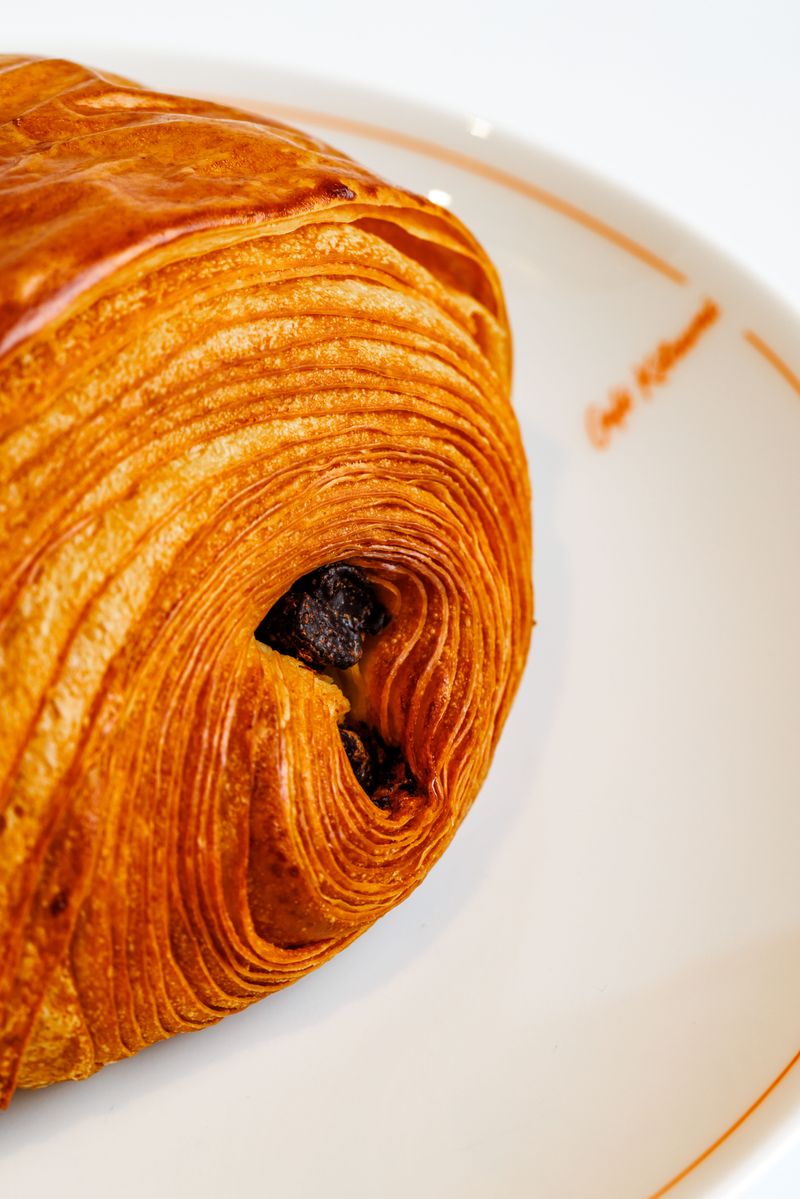
More than 54,000 sold in a two-year stretch. That number belongs to one pastry, and it is not a croissant.
Pain au chocolat rules the menu at L’Etoile, and the recipe is refreshingly simple in concept. Croissant dough wraps around four dark chocolate batons, then bakes until the outside turns deep gold and the chocolate softens into something almost molten.
Dark chocolate is the smart choice here because it cuts through all that butter instead of piling sweetness on sweetness. The result tastes balanced rather than cloying, which is why people keep coming back for a second one before finishing the first.
Texture does a lot of the work too. Crisp edges give way to tender layers, and then the chocolate arrives right in the middle.
Warm from the oven is the ideal window, though these hold up well enough for a short drive home. Reheating briefly in a low oven brings back most of the crackle, a trick worth remembering.
Regulars often order a few extra to stash for the next morning. Whether those extras survive the night is another question entirely.
For anyone unsure what to try on a first visit, this one settles the debate quickly.
Kouign-Amann and Its 136 Layers of Nonsense
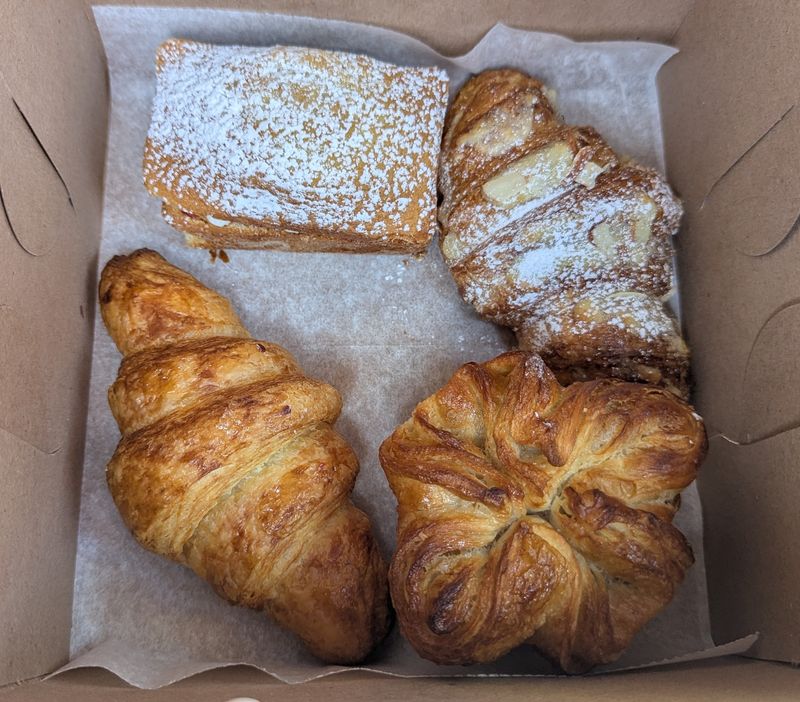
Say it out loud and it sounds like a spell. Kouign-Amann, roughly pronounced queen-ah-mahn, comes from Brittany in northwestern France and translates plainly to butter cake.
The name undersells it. This pastry carries 136 layers, each one separated by butter and sugar, and the whole thing takes two days to build with around eight hours of hands-on work.
Sugar caramelizes against the pan during baking, forming a lacquered shell that crackles under a fork. Underneath, the middle stays soft and pillowy, almost custardy in spots where the butter pooled.
Chef Kevin counts it as a personal favorite, which tracks. It is the kind of pastry bakers love because the technique hides in plain sight, disguised as a humble round of dough.
Compared to a croissant, the flavor runs deeper and sweeter, with a slight toffee note along the edges. The contrast between crisp shell and tender center is the whole point.
Sharing one is possible. Sharing one is also unlikely.
Newcomers to French pastry sometimes skip it because the name looks intimidating on a card. Skipping it would be a mistake, and the counter staff are happy to explain what makes it different.
Order it alongside an espresso and let the afternoon stretch a little.
Baguettes, Brioche, and a Case That Keeps Changing
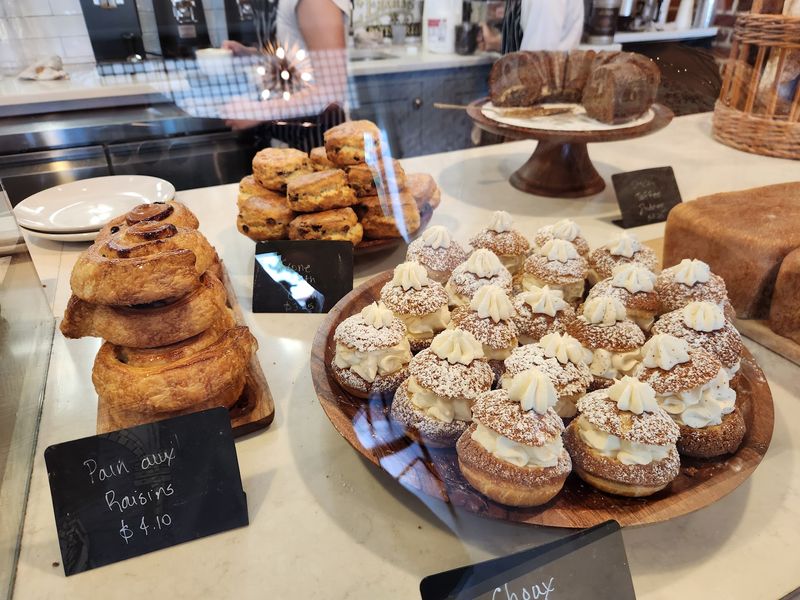
Croissants get the headlines, but the rest of the case deserves a slow lap.
Artisanal baguettes come out with the kind of crackling crust that sends crumbs everywhere, and the interior stays open and chewy. Perfect for sandwiches, soup, or nothing at all.
Brioche shows up in interesting variations, including a peppered version and one made with Herbes de Provence. Those savory-leaning options surprise people who expect a bakery to run sweet across the board.
Rotating patisseries keep the display interesting week to week. Croissant aux Amandes arrives filled with frangipane cream and scattered with sliced almonds, a classic that solves the problem of day-old croissants in the most delicious way possible.
Choux a la Creme lands on the lighter side, airy shells piped full of whipped vanilla mascarpone cream. Eclairs cycle through flavors like pistachio, chocolate raspberry, and citron.
Savory fans have options too. The Croque Madame brings richness in a completely different direction, a proper lunch rather than a snack.
Because the lineup shifts, two visits rarely look identical. Asking what came out that morning is the best strategy, since staff know exactly what is at its peak.
Bring a friend and split several things. That approach solves the impossible-choice problem neatly.
An Interior That Invites Lingering
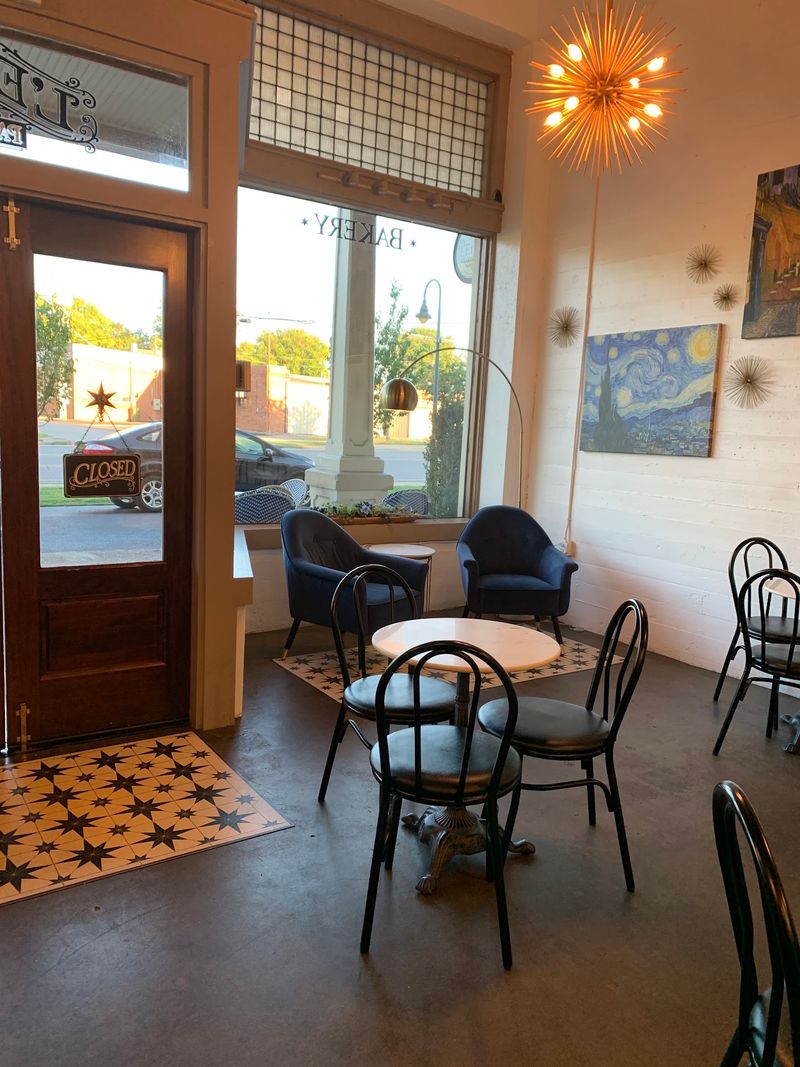
Comfort arrives fast inside. The room reads as European without tipping into theme-park territory, and the details feel chosen rather than ordered from a catalog.
Soft lighting, tidy tables, and a pastry case that glows like a jewelry display set the mood. Conversations stay at a pleasant hum instead of bouncing off hard surfaces.
Slowing down seems to be the whole idea. People sit longer here than they plan to, coffee going lukewarm while a conversation stretches past its natural end.
Kristen and Kevin have said the aim is an experience, not just a transaction, and that shows in how the space works. Staff greet regulars, explain unfamiliar pastries to newcomers, and generally act like hosts rather than cashiers.
Mornings carry a busier energy, with the door swinging and orders stacking up. Afternoons soften considerably, which makes them ideal for reading, working, or simply staring out the window.
Small tables mean big groups should plan around off-peak hours. Solo visitors, meanwhile, will feel right at home.
Photos happen constantly, and it is easy to see why. Every angle looks composed, from the tiled details to the neat rows of pastries waiting behind glass.
Twenty minutes here resets a whole day.
Espresso, Tea, and the Art of the Right Pairing
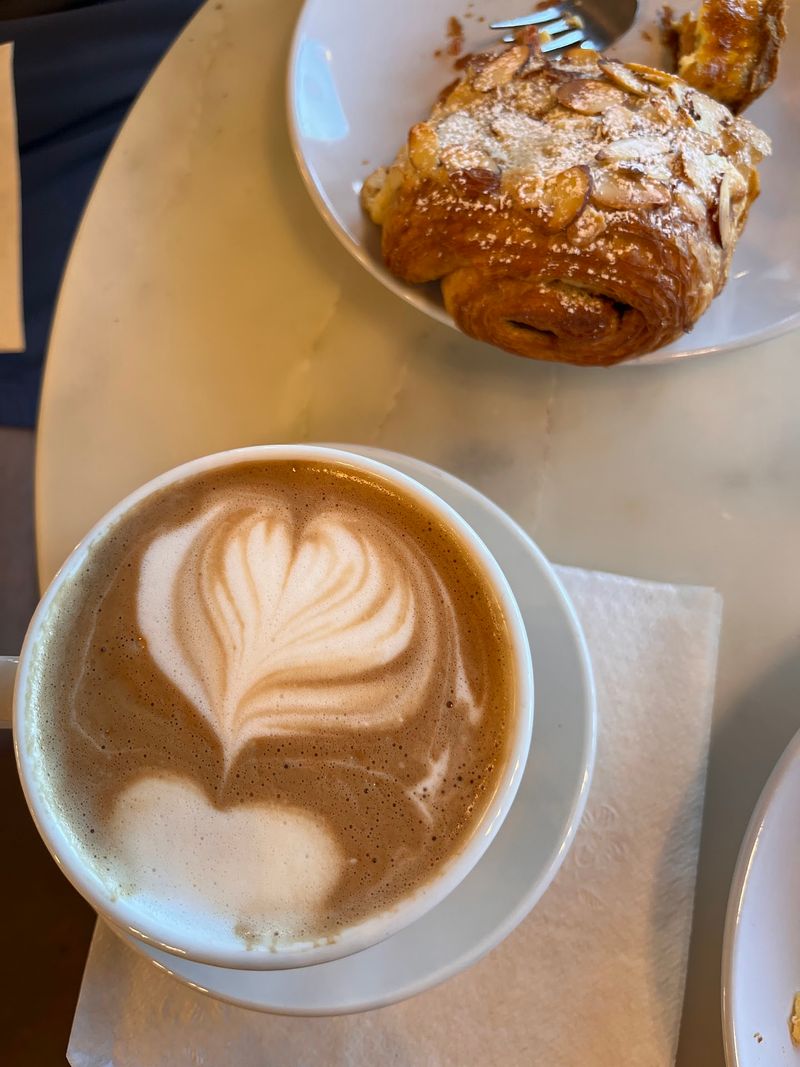
A great pastry can carry itself, but the right drink makes it sing.
European-style espresso drinks anchor the beverage menu, from short and intense shots to milkier lattes with proper microfoam. Fine teas fill out the rest for anyone skipping caffeine-heavy options or just craving something gentler.
Pairing is half the fun. Espresso cuts cleanly through the butter in a croissant, while a latte works better against dark chocolate, softening the edges rather than competing.
Tea makes an excellent partner for almond-based pastries, where delicate flavors can get bulldozed by strong coffee. Staff are happy to steer newcomers toward a good match.
Preparation gets the same attention as the baking, which is not always true at bakeries where drinks feel like an afterthought. Here, the two sides of the counter clearly talk to each other.
Sitting with a small cup and a single pastry turns into a proper pause, the sort that European cafes have perfected over centuries. Rushing through it defeats the purpose entirely.
Take a table, order something warm, and let the morning unfold at its own pace. Huntsville moves fast enough the rest of the time.
The combination is what completes the illusion, France for twenty minutes, right in north Alabama.
