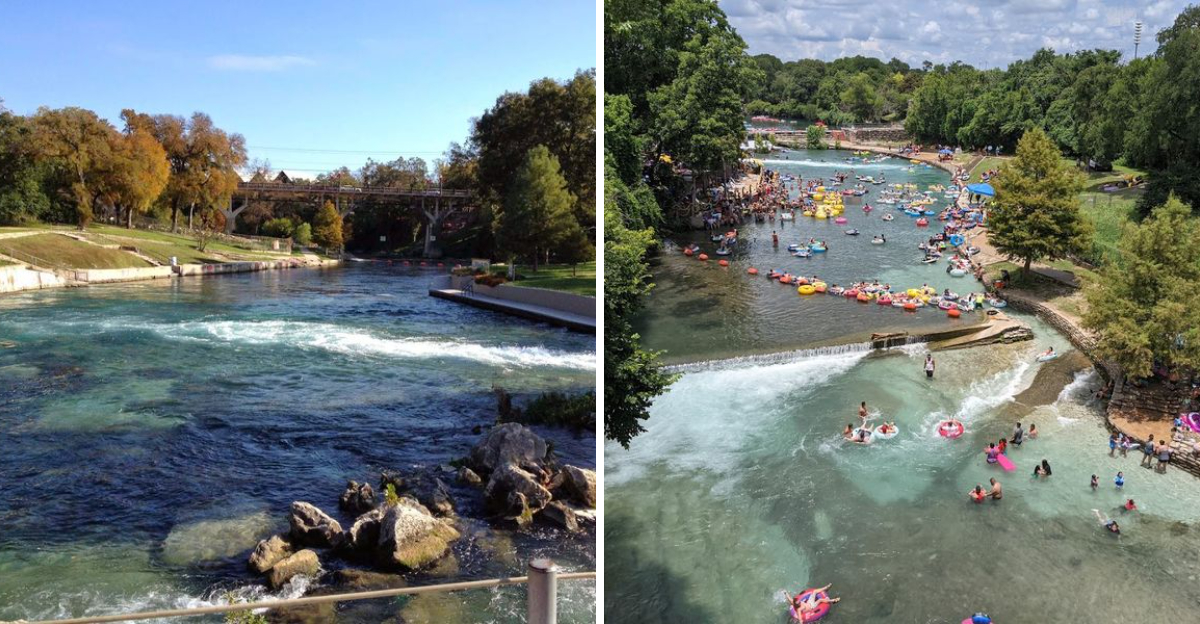
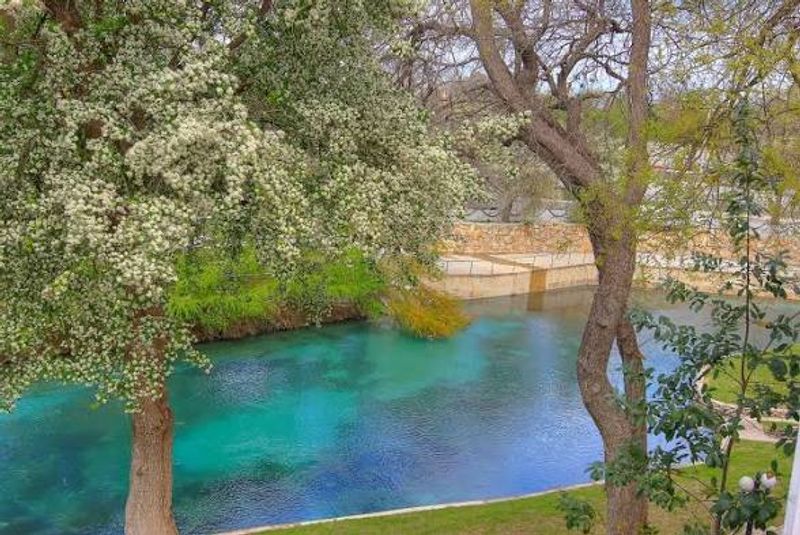
You look at the water and think it cannot be real. Clear, blue-green, and moving at a pace that invites you to jump right in.
This Texas river is almost too beautiful to believe. It stays cool year-round, fed by natural springs, making it the perfect place to float, swim, or just stare at the water like it is a screensaver.
The current is gentle enough for a lazy tube ride, and the surroundings are pure Hill Country charm. You can spend an entire afternoon drifting along, letting the water carry you past limestone banks and overhanging trees.
It is the kind of spot that makes you forget you are only a short drive from civilization. A place like this reminds you why Texas is so hard to leave.
Where the River Actually Comes From
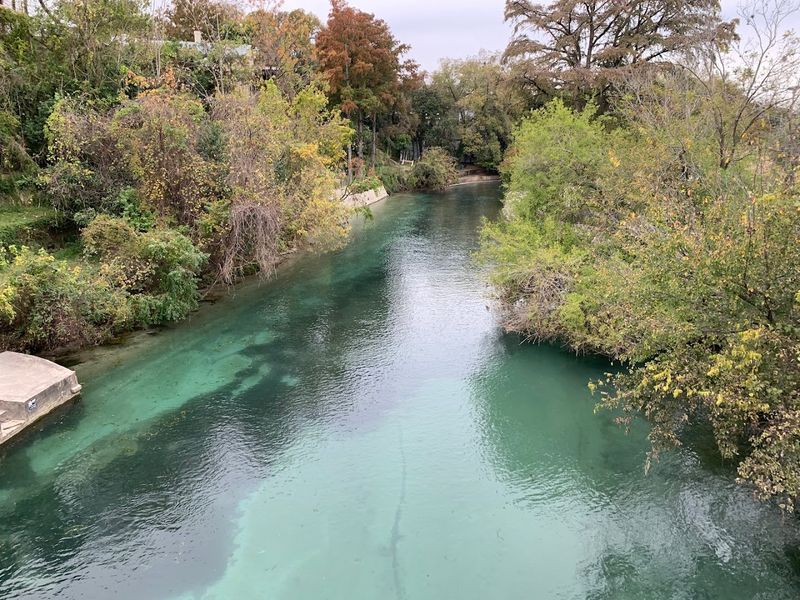
Most rivers have long, winding origin stories that stretch across hundreds of miles. The Comal River skips all of that and simply bursts out of the ground, right inside city limits.
The Comal Springs, located within Landa Park, represent the largest concentration of naturally occurring freshwater springs in all of Texas.
These springs push up through ancient limestone formations along a fault line that runs from San Antonio through New Braunfels and on to San Marcos. The water filtering through that rock has been traveling underground for a very long time.
It emerges clean, cold, and constant, completely unaffected by surface runoff or tributaries.
That underground journey is what gives the river its famously clear look. The Edwards Aquifer acts like a massive natural filter, and what comes out the other side is some of the purest spring water you will find anywhere in the state.
The springs push out roughly 8 million gallons of water every single hour.
German settlers who founded New Braunfels in 1845 specifically chose this location because of how reliable the springs were. Before them, the Tonkawa people gathered here for at least 10,000 years.
The name Comal itself comes from Spanish, meaning basin or flat dish, given to distinguish this waterway from the nearby Guadalupe River back in 1727. The springs have only stopped flowing once in recorded history, during a severe drought in 1956.
That kind of consistency is genuinely rare.
Tubing the Comal, A Float You Will Not Forget
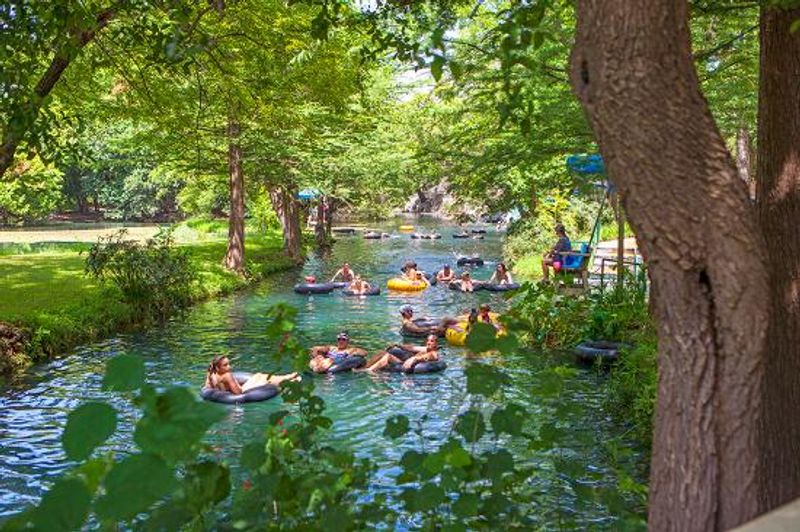
Floating the Comal on a tube is one of those experiences that sounds simple but somehow delivers more than expected. The current moves at a pace that feels just right, not so fast that you miss anything, not so slow that you get restless.
You drift past bald cypress trees draped over the water, and the coolness hits you the moment you slip in.
The river stays between 68 and 72 degrees Fahrenheit year-round. That temperature is genuinely refreshing on a hot Texas afternoon.
It is the kind of cold that makes you gasp a little at first, then immediately appreciate it.
One of the most talked-about moments on any Comal tubing trip is the Tube Chute. Built over the historic Clemens Dam, this concrete channel creates a natural waterslide effect that sends tubers into a splashing whitewater pool below.
The ride lasts about ten seconds, but the excitement lasts considerably longer.
If the chute feels like too much, a clearly marked walking path lets you bypass it entirely and rejoin the river below. Tube rentals are available from several outfitters along the river, and most include a shuttle back to your starting point.
The whole float typically takes one to two hours depending on how many times you stop to splash around. Families, friend groups, and solo travelers all show up here, and somehow the river feels welcoming to all of them equally.
It is genuinely hard not to smile the whole way down.
Landa Park, the Green Heart of New Braunfels
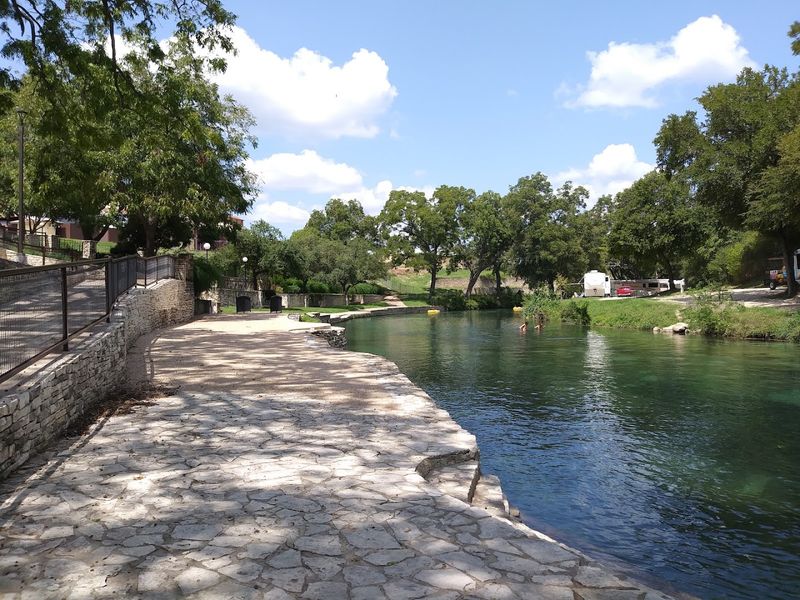
Landa Park sits at the very top of the Comal River, right where the springs bubble up and form Landa Lake. It is the kind of park that feels like it has been there forever, and in many ways, it has.
The grounds are wide, shady, and full of the sort of easy charm that makes you want to stay longer than planned.
Paddleboat rentals on Landa Lake are a classic way to spend an hour. The water is clear enough to watch fish moving below the surface, and the surrounding trees create a canopy that softens the afternoon heat.
There is also a miniature train that loops through the park, which is genuinely fun regardless of your age.
A spring-fed swimming pool within the park offers another way to cool off without committing to the full river float. The pool draws directly from the same aquifer that feeds the river.
That means the water is just as clean and just as cold.
Walking trails wind through the property, connecting different sections of the park and offering quiet spots to sit near the water. Picnic tables are scattered throughout, and the whole area has a relaxed, unhurried atmosphere.
Families set up for the afternoon, kids chase ducks near the lake edge, and herons stand perfectly still along the banks like they own the place. Landa Park is located at 164 Landa Park Dr, New Braunfels, TX 78130, and it is free to enter.
The Wildlife Living Right Along the Banks
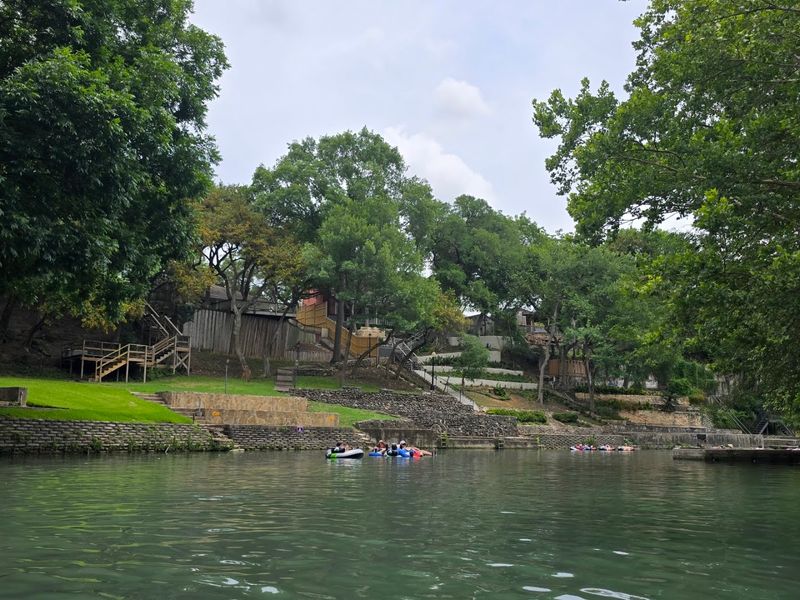
The Comal River is not just a pretty backdrop. It is a functioning, living ecosystem that supports a surprising variety of wildlife, some of it found nowhere else on earth.
The endangered fountain darter, a tiny fish no bigger than a finger, lives exclusively in the spring-fed waters of the Comal and San Marcos rivers.
The Comal Springs riffle beetle and the Comal Springs salamander also call this river home, both listed as federally endangered species. Seeing them requires a slow, patient eye and ideally some snorkel gear.
The water clarity makes observation much easier than it would be in a typical murky river.
Above the waterline, the birdlife is equally impressive. Great Blue Herons and Green Herons patrol the shallows with focused intensity.
Belted Kingfishers dart low over the surface, and if you sit quietly near a cypress tree long enough, you might spot a migrating songbird resting in the branches overhead.
White-tailed deer occasionally wander through Landa Park at dusk. Raccoons and armadillos make appearances near the water’s edge, especially in the quieter corners of the park away from the main tubing areas.
The bald cypress, pecan, and sycamore trees lining the banks create a rich riparian habitat that supports all of this activity. Conservation efforts are actively working to protect the spring flow and water quality that makes this biodiversity possible.
The river is alive in a way that goes far beyond its visual beauty.
Swimming, Kayaking, and Other Ways to Enjoy the Water
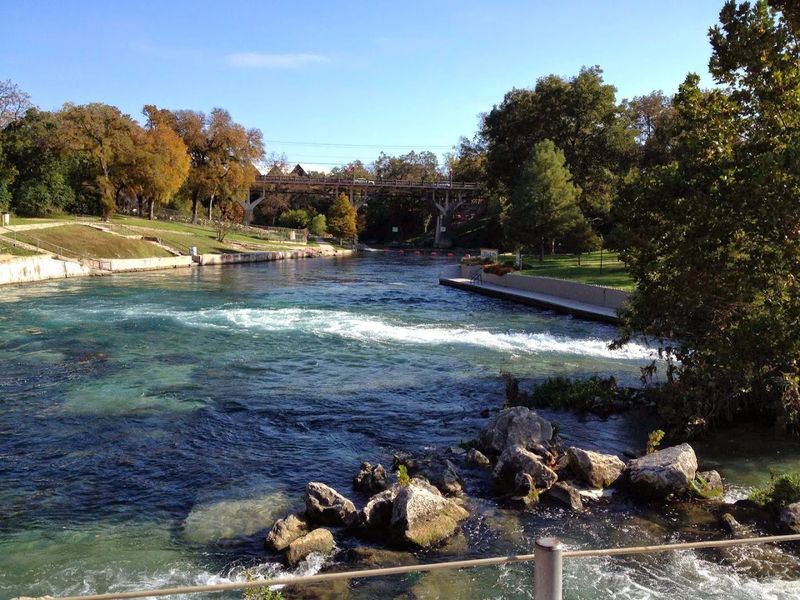
Tubing gets most of the attention, but the Comal River offers a lot more than just floating downstream on an inner tube. Kayaking and canoeing are popular options for people who want a bit more control over where they go and how fast they get there.
Paddleboards have also become a common sight on calmer sections of the river.
Swimming is allowed in designated areas, and the water is clean enough that it genuinely feels like a treat rather than a risk. The rocky bottom is visible throughout most of the river, which makes it easy to judge depth before jumping in.
Kids especially love exploring the shallower edges where small fish dart around their feet.
Snorkeling is a surprisingly rewarding activity here. The spring clarity means you can see aquatic plants swaying in the current, tiny fish hovering in formation, and the detailed texture of the limestone riverbed.
It feels a bit like a freshwater aquarium, except completely natural and free of any glass walls.
Scuba diving is also permitted in certain sections and draws enthusiasts who want to observe the spring openings up close. Fishing rounds out the list of water-based activities, with bass and other species present throughout the river.
Prince Solms Park at 100 Liebscher, New Braunfels, TX 78130 offers solid access for anglers. Whatever your preferred way of being near water, the Comal has a version of it waiting for you, and the temperature makes every option feel like a reward.
Hinman Island Park, the Quiet Spot Most Visitors Miss
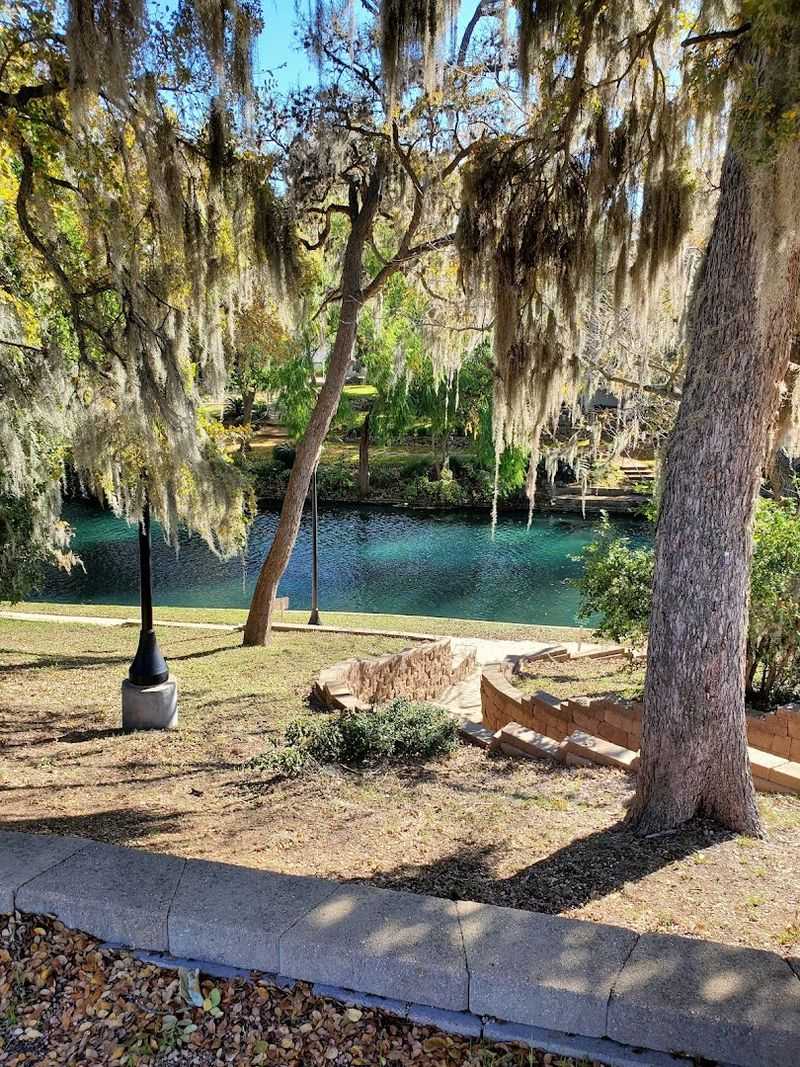
Hidden between Landa Park and Prince Solms Park, Hinman Island sits in a stretch of the Comal that feels noticeably quieter than the busier tubing sections. It is the kind of spot that rewards people who take a moment to look at a map and wander slightly off the main path.
The park sits along Hinman Island Dr in New Braunfels, and access is straightforward once you know it is there.
Picnic tables are scattered throughout the grounds, shaded by mature trees that keep the area comfortable even on warmer days. A playground makes it a practical stop for families with younger kids who need a break from the water.
The atmosphere here is unhurried, almost sleepy in the best possible way.
River access from Hinman Island is easy and calm. The current at this section moves gently, making it a good spot for wading or simply sitting on the bank with your feet in the water.
It does not have the dramatic rush of the Tube Chute, but that is exactly the point.
Local families tend to favor this park on weekends when the main tubing corridors get crowded. You are much more likely to find a quiet bench here than almost anywhere else along the river on a summer Saturday.
The combination of shade, water access, and relaxed energy makes Hinman Island feel like a genuine hidden gem within a destination that already gets plenty of attention. Sometimes the best spots are the ones that do not advertise themselves loudly.
How the River Stays So Remarkably Clear
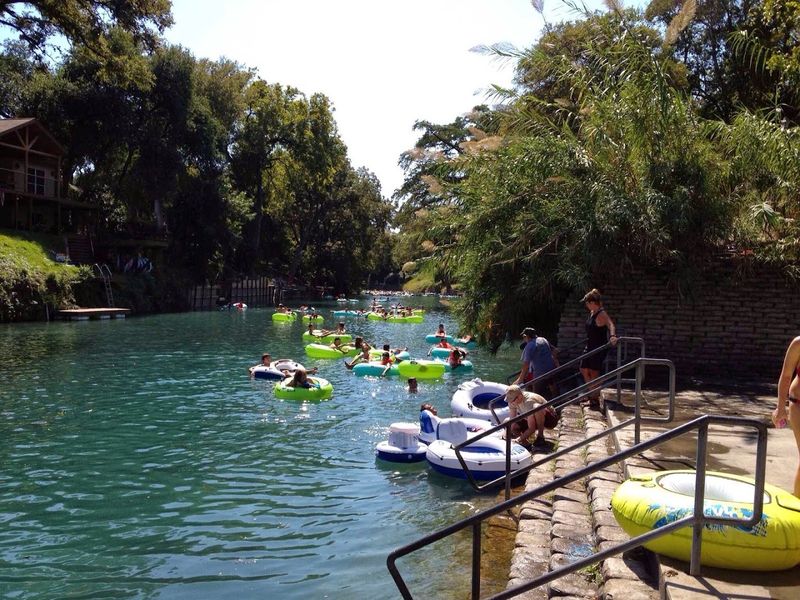
One of the first things people ask when they see the Comal River for the first time is some version of: how is it this clean? The answer has everything to do with where the water comes from and nothing to do with human maintenance.
This river has no tributaries feeding into it, no surface runoff mixing with its flow.
Every drop of water in the Comal comes directly from the Edwards Aquifer through the Comal Springs. That underground journey through limestone filters out sediment, organic matter, and most impurities before the water ever reaches the surface.
What emerges is cold, mineral-rich, and visually stunning.
The blue-green tint that makes the river so photogenic is a direct result of those dissolved minerals from the limestone. It is not a filter or a trick of the light.
The color is genuinely there, consistent across different times of day and different seasons of the year.
Heavy rainfall can temporarily change things. When the surrounding area gets significant rain, some sediment can enter the river and cloud the water for a short period.
The constant flow of 8 million gallons per hour typically clears things up within 24 to 36 hours, returning the river to its usual transparent state. The steady temperature, between 68 and 72 degrees year-round, also contributes to the ecosystem stability that keeps everything looking pristine.
There are not many rivers anywhere in the country where you can see the bottom so clearly from the surface. The Comal makes it look effortless.
The History Baked Into Every Bend
New Braunfels has a story that feels different from most Texas towns, and the Comal River is woven through all of it. German immigrants arrived here in 1845, led by Prince Carl of Solms-Braunfels, and they chose this exact spot because of the springs.
Reliable water meant reliable survival, and the Comal delivered both without hesitation.
Those early settlers put the river to work almost immediately. Gristmills and sawmills were built along its banks to harness the constant flow.
Later, the river even contributed to early hydroelectric power generation in the region. The water that now carries laughing tubers downstream once powered an entire frontier community.
The name Comal itself traces back to 1727, when Spanish explorers used the word, meaning basin or flat dish, to distinguish this waterway from the larger Guadalupe River nearby.
Before European contact, the Tonkawa people and other indigenous groups gathered along these same banks for at least 10,000 years.
The springs were a meeting point long before anyone built a city around them.
Prince Solms Park, named for that original German leader, still sits at 100 Liebscher, New Braunfels, TX 78130, offering a quiet nod to the town’s founding story.
Walking through New Braunfels, you notice the German architectural influence in the old stone buildings and the names of local businesses.
The river connects all of it, past and present, in one continuous, uninterrupted flow. History feels less like something in a textbook here and more like something you can actually touch.
Planning Your Visit, What to Know Before You Go
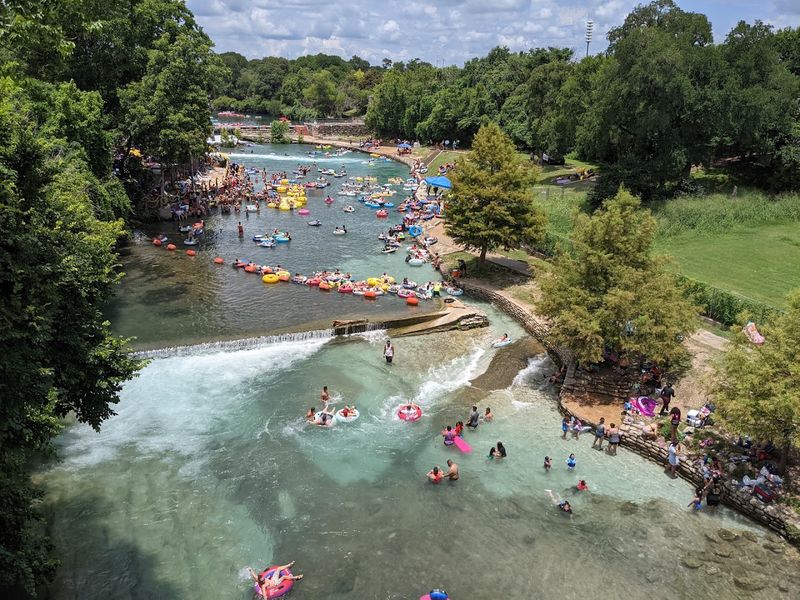
Showing up to the Comal River without a little planning can turn a great day into a frustrating one, especially during summer weekends when New Braunfels draws serious crowds. The river is most popular between Memorial Day and Labor Day, and peak days can fill parking areas quickly.
Arriving early, before 10 in the morning, makes a noticeable difference.
Several entry points are available along the river. Landa Park at 164 Landa Park Dr, New Braunfels, TX 78130 is the most popular starting area.
The Last Public Exit for tubers is located at 661 S. Union Ave, New Braunfels, TX, and has paid parking available nearby.
Tube rentals are easy to find from outfitters clustered around the main access points. Most provide a shuttle service back to your starting point at the end of your float.
Bringing your own tube is also an option, though you will still need to arrange your own transportation back upstream.
Water shoes or sandals with a strap are strongly recommended since the riverbed is rocky in places. Sunscreen is essential, and reef-safe formulas are worth choosing to help protect the aquatic ecosystem.
Bringing a small waterproof bag for your phone and keys is a practical move that saves a lot of stress.
The river is accessible year-round, but winter visits are much quieter and still beautiful in their own right. The water temperature barely changes, so even a cool December afternoon on the Comal has its own peaceful appeal.
Address: 164 Landa Park Dr, New Braunfels, TX 78130
