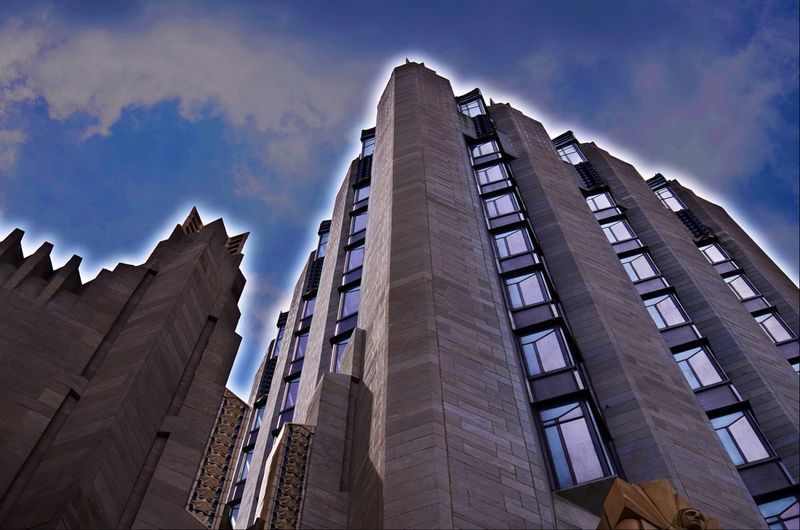
Some buildings in Oklahoma sneak up on you. You turn a corner downtown expecting brick and parking meters, and instead there’s a limestone tower pointing straight up like it wants to leave the ground behind.
I went in curious and came out with a crick in my neck and a notebook full of scribbles about praying hands and seven-pointed stars. Best part: walking through it costs nothing at all.
A Limestone Tower Rising Over Downtown
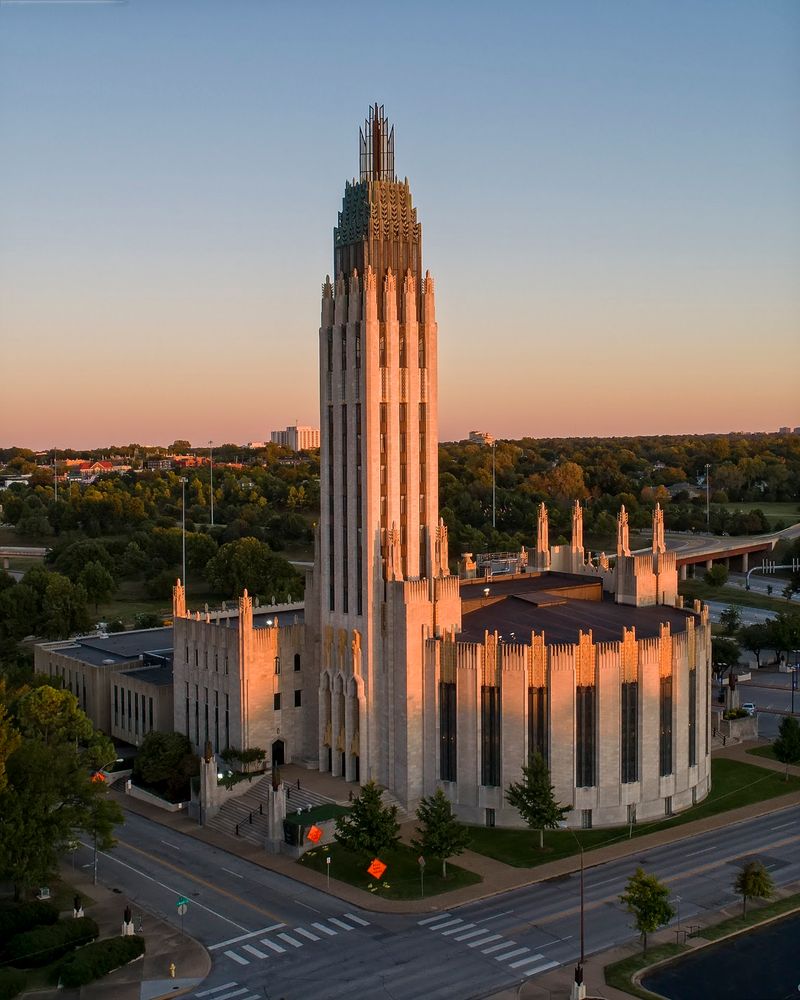
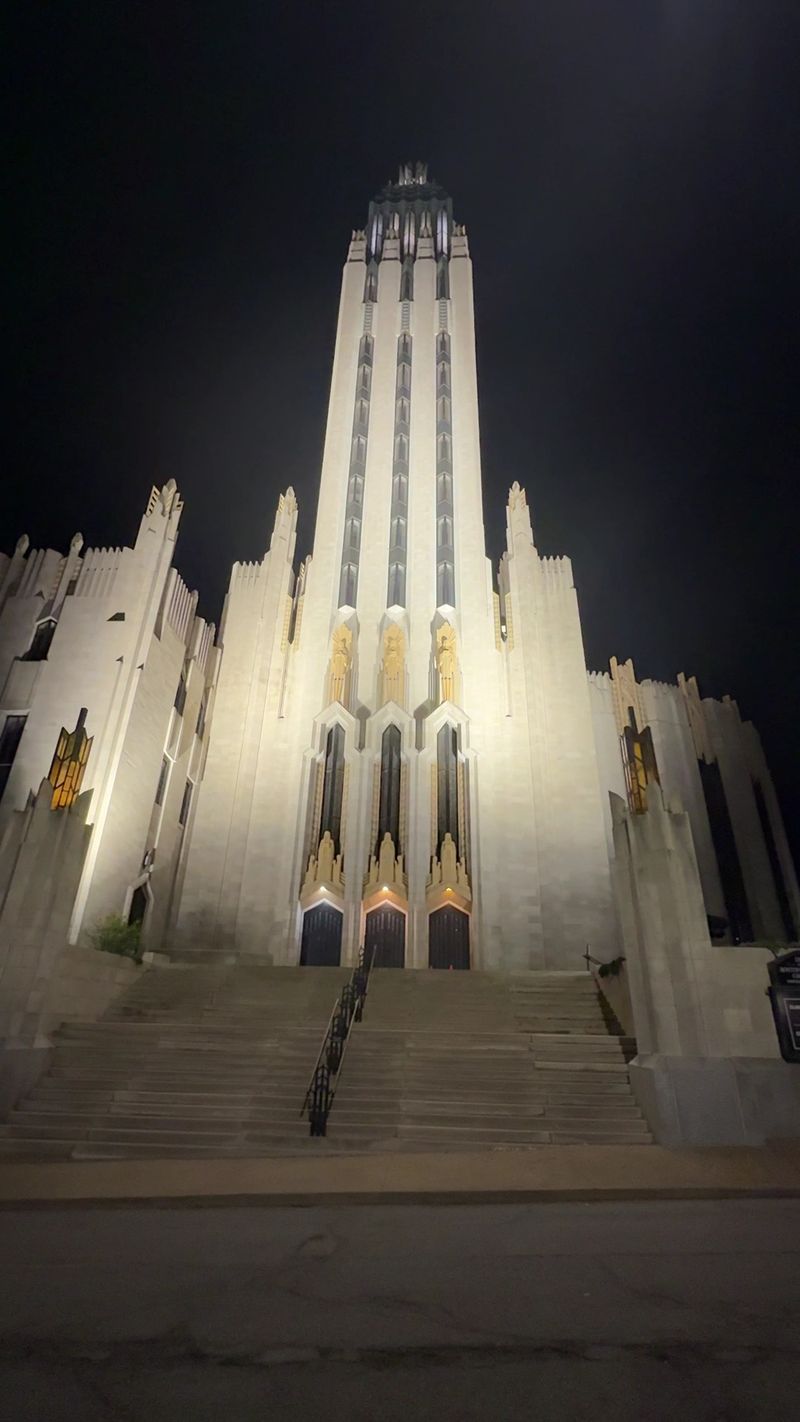
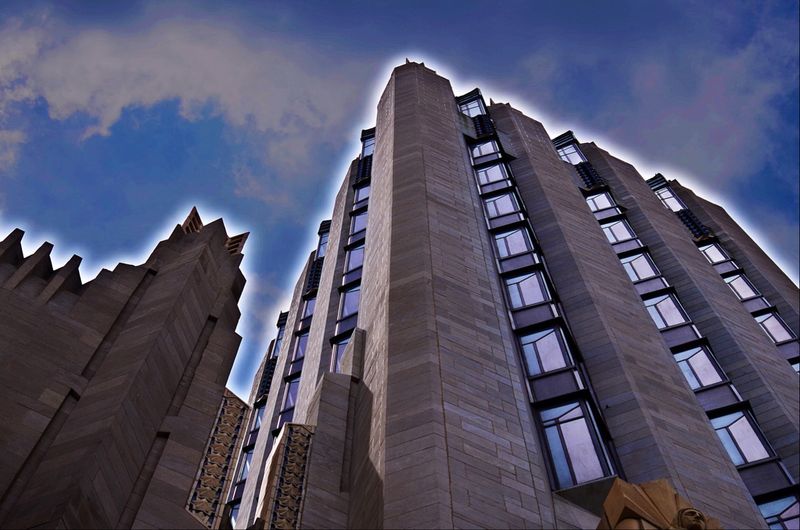
Head south out of Tulsa’s downtown core along Boston Avenue and the skyline does something odd. A pale, fluted shaft of limestone climbs up and keeps climbing, about 255 feet in all, with a central section running roughly fifteen stories.
The address is 1301 S Boston Ave, Tulsa, OK 74119, and the building is Boston Avenue United Methodist Church, finished in 1929. It reads less like a traditional church and more like a sculpture someone decided to make habitable.
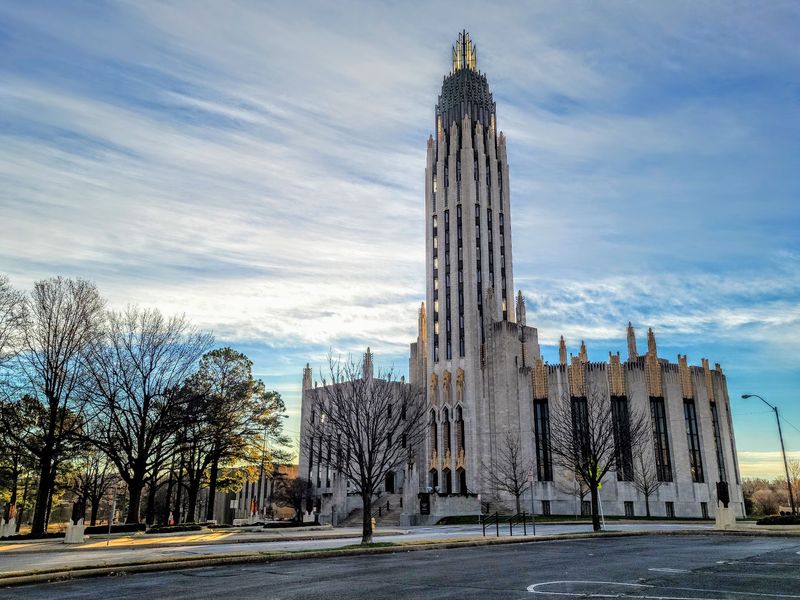
What gets most first-timers is the verticality. Every line on the facade pulls the eye upward, and there is no steeple in the usual sense, just that soaring central tower flanked by terra cotta figures that seem to lean out toward the street.
Visitors often say it is nearly impossible to drive past without slowing down. Locals who have passed it their whole lives still describe catching themselves staring at it.
For an Oklahoma road trip built around architecture, it makes an easy anchor stop. It sits within a short walk of several other downtown landmarks, and there is no admission charge to look.
The Art Teacher Who Sketched a Landmark
Credit for this building starts with a woman holding a sketchpad, not a draftsman holding a T-square. Dr. Adah M.
Robinson, an art teacher, developed the artistic vision that shaped the church’s form and symbolism.
Working alongside her was Bruce Goff, who handled the architectural side and who would go on to become one of the more famous names in American design. Goff had been her student, which makes the collaboration even more interesting to think about.
Authorship of the design has been debated over the years, and some guides will tell you so plainly rather than smoothing it over. That honesty is part of what makes the story worth hearing in person.
What matters for a visitor is the result. The building does not follow standard church blueprints because it was not conceived by someone thinking in standard church blueprints.
Travelers who plan self-guided Bruce Goff routes across Oklahoma frequently list this as the highlight of the drive. Anyone with a curiosity about how art and engineering meet will find plenty to chew on here.
Free Sunday Tours at 12:15
Mark 12:15 p.m. on a Sunday and you get the full story told out loud. Free guided tours begin then, gathering in the church library on the second floor, and they run through the building’s history, materials, and layers of symbolism.
No ticket, no reservation, no donation box blocking the door. Guides walk you through details that are genuinely easy to miss on your own, which is the whole point of showing up at the scheduled hour.
Groups can generally arrange a weekday tour by contacting the church ahead of time, and bus and motorcoach parking is available for larger parties. Calling 918-583-5181 is the simplest way to sort that out.
Sunday morning services are held before the tour, so the building is already open and busy with people. Visitors regularly mention that members go out of their way to greet newcomers regardless of whether they are there to worship or to photograph the ceiling.
Tour times can shift around holidays, so a quick check of bostonavenue.org before driving in is a smart move.
Terra Cotta Figures and Reaching Hands
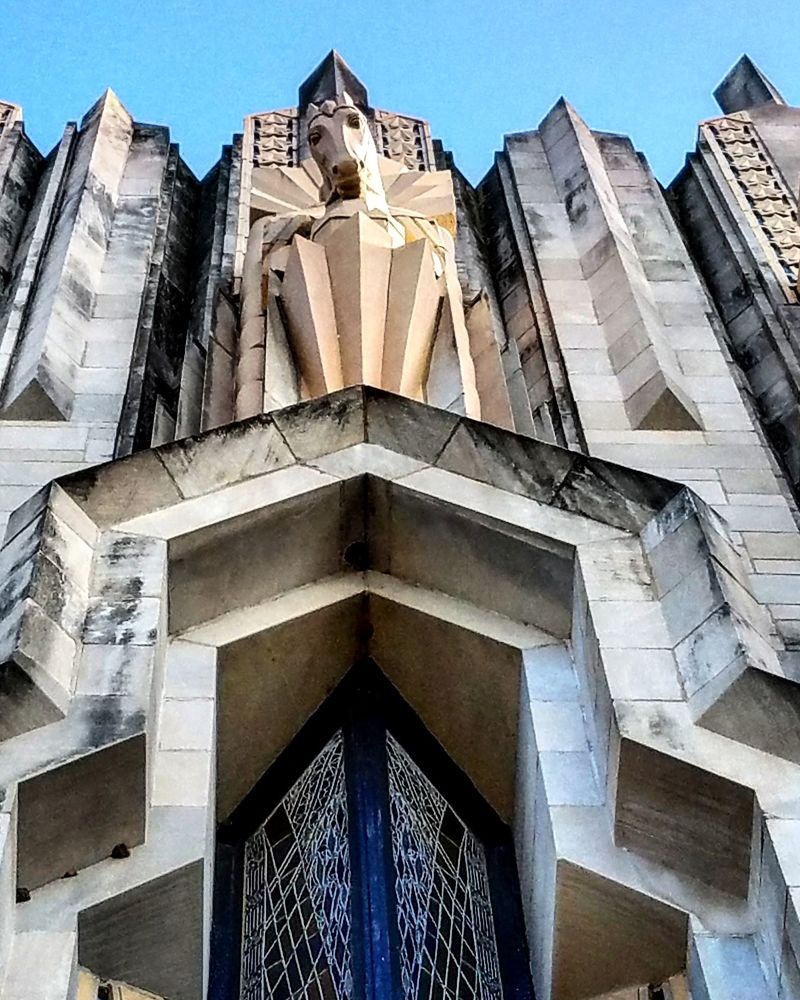
Look up at the tower base and you will spot rows of stylized human figures carved into terra cotta, arms lifted, faces turned skyward. They represent circuit riders and early Methodist leaders, rendered in that angular 1920s idiom that makes everyone look like they are mid-stride.
Praying hands show up again and again across the building, sometimes as sculpture, sometimes abstracted into the lines of a column or window frame. Once you notice the motif, you cannot unsee it.
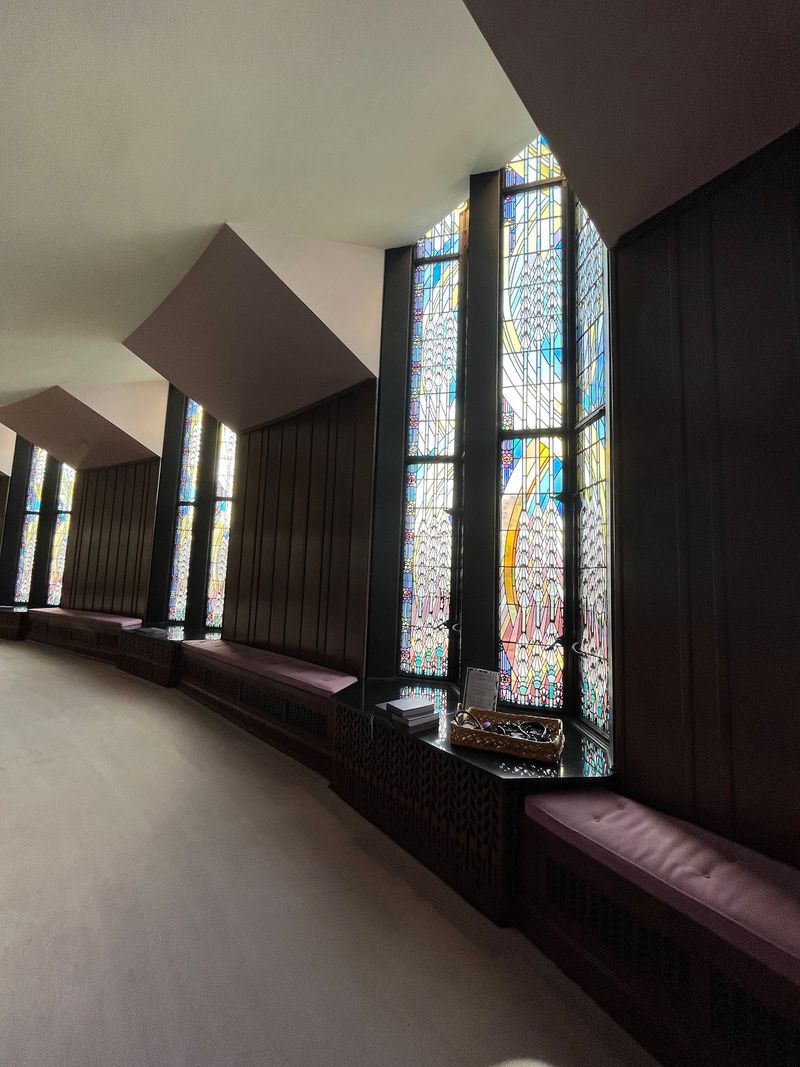
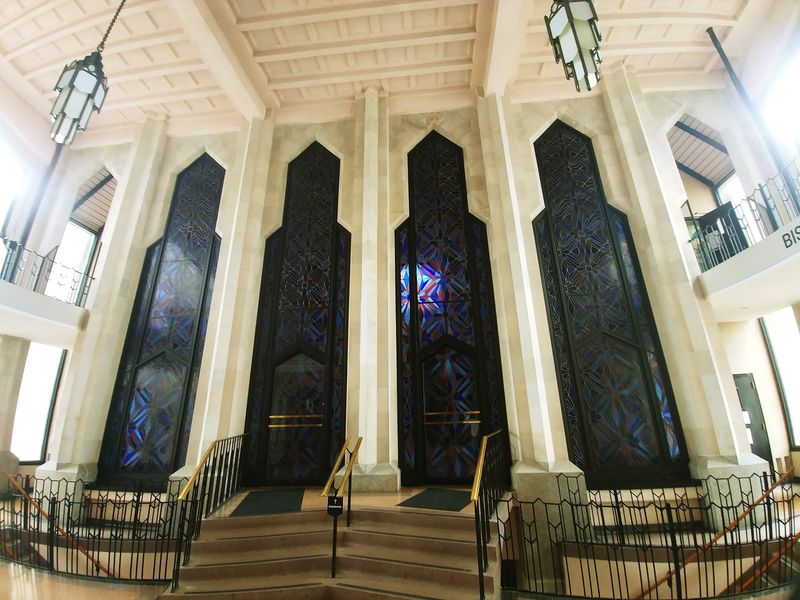
Pointed arches and seven-pointed stars turn up too, worked into stone, metal, and glass. The seven-pointed star carries its own meaning within the design language the artists chose.
Photography is welcome throughout the building, including flash, with the sensible exception of worship services. That makes it a rewarding stop for anyone who travels with a camera.
Bring a zoom lens or at least a phone that handles distance well. Some of the best detail sits several stories above the sidewalk, and squinting only gets you so far.
Oklahoma Wildflowers Carved in Stone
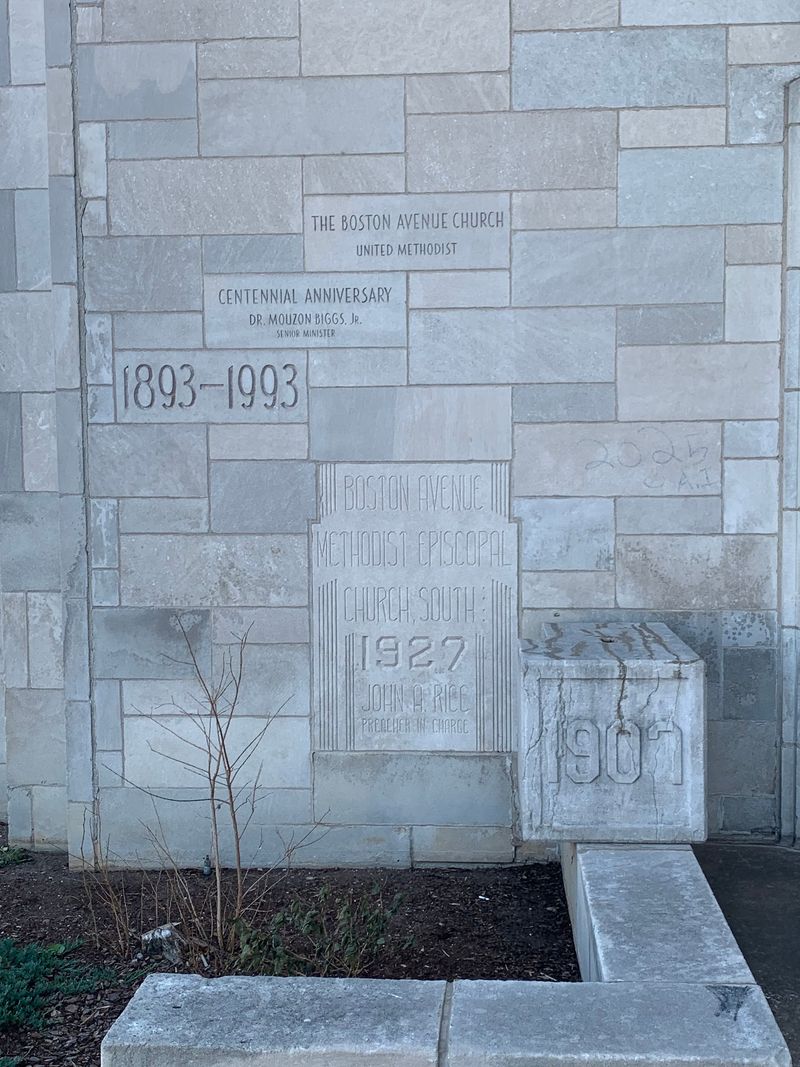
Here’s a detail that tends to win over Oklahomans specifically: the decorative flowers are not generic European motifs. They are tritoma and coreopsis, plants tied to this ground, stylized into crisp Deco geometry.
Coreopsis in particular is the kind of yellow roadside bloom you have driven past a thousand times between towns without giving it a second thought. Seeing it carved into a National Historic Landmark reframes the whole drive home.
The choice was deliberate. Robinson wanted the ornament to grow out of the place rather than be imported from a pattern book, and the effect is a building that feels rooted rather than borrowed.
Guides usually point these out, though you can hunt for them yourself with the walking tour booklet available at the welcome desk. It is a fun assignment to hand a kid who is losing steam.
Materials elsewhere include metal, glass, Indiana limestone, and Minnesota granite, so the flowers appear across several different surfaces and textures. Each one catches light a little differently.
Inside the Circular Sanctuary
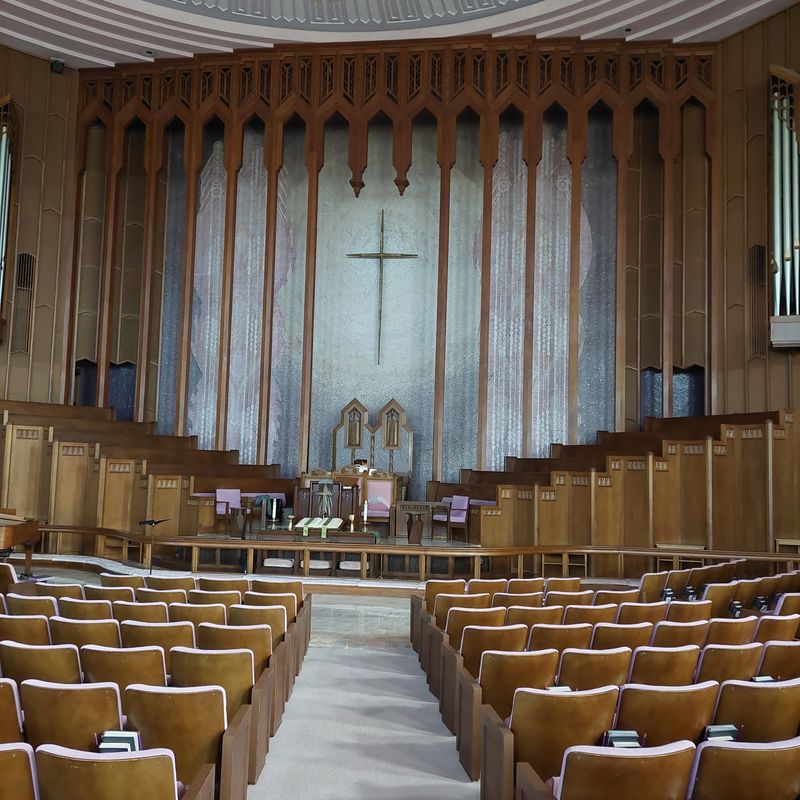
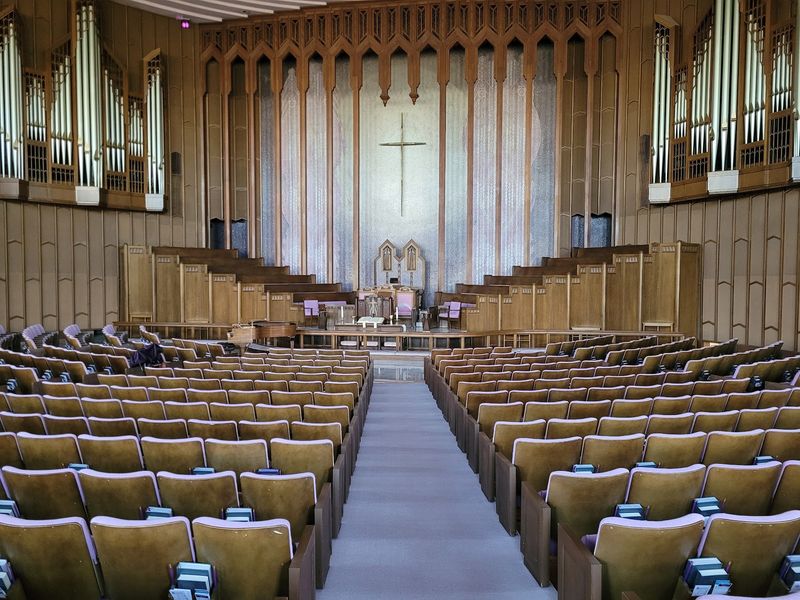
Step through the doors and the geometry changes completely. The sanctuary is circular, with seating curving around rather than marching in straight rows, which puts almost everyone within easy sight of the front.
Overhead, a dome ceiling holds stained glass at its center, throwing colored light down into the room on bright days. Exposed pipe organ pipes rise behind the chancel like a metal forest.
Acoustics get mentioned often by people who have heard music there. Voices and instruments carry through much of the main building, which regulars describe as one of the genuine pleasures of the space.
The room reads as warm rather than cold, despite all the hard stone and metal. Curves have a way of softening things.
One visitor compared the whole effect to stepping into a fantasy hall, which is a strange compliment for a church but an accurate one. It does not look like anywhere else in the state, and that alone justifies the parking effort.
The Walking Tour Booklet at the Welcome Desk
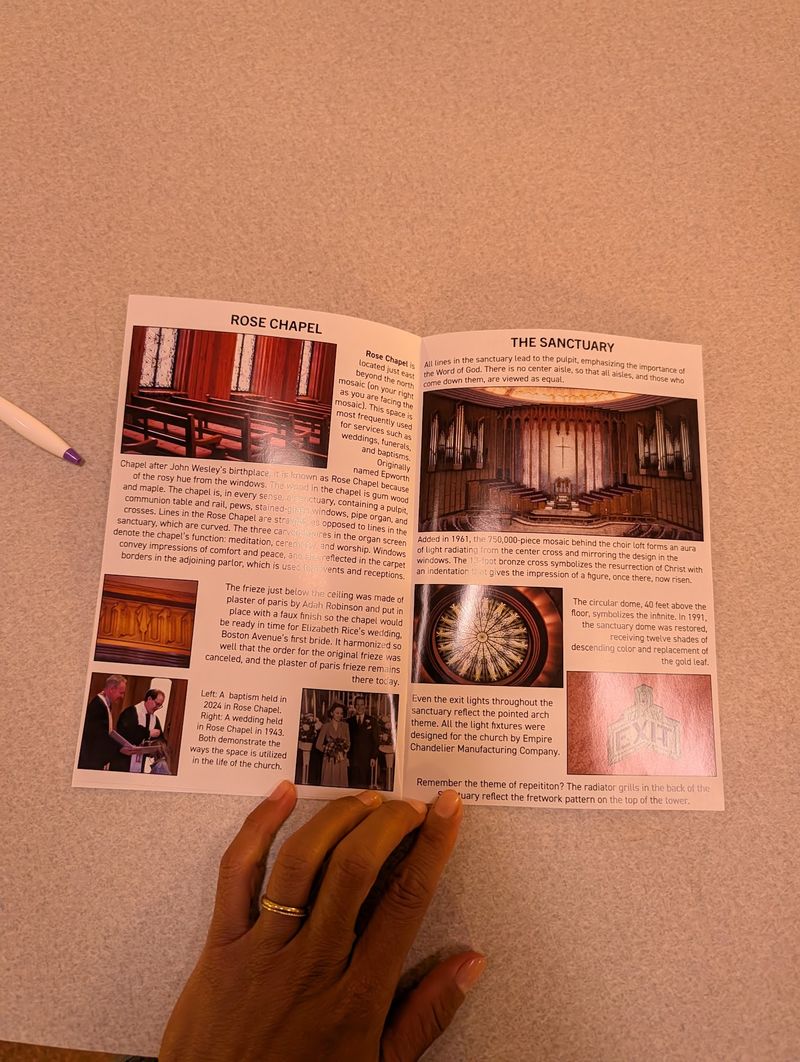
Can’t make Sunday work? Stop at the welcome desk and ask for the Walking Tour Guide booklet.
It maps out the design, the symbolism, and the thinking behind the building so you can move at your own speed.
Self-guided visits are available any time the building is open to the public, which covers a lot of weekday hours. Several visitors have described wandering the halls essentially alone on a quiet weekday morning.
Staff have a reputation for being relaxed about letting people roam and admire. One art class was even allowed to spread out and sketch, which tells you something about the atmosphere.
Pacing is entirely up to you. A quick pass takes maybe thirty minutes; a thorough one with the booklet in hand can stretch past an hour without feeling long.
For anyone traveling with restless kids or a companion who tires easily, the flexibility is a real advantage over a fixed-schedule tour. You set the clock.
National Historic Landmark Status
Recognition arrived formally in 1999, when the U.S. Department of the Interior designated the church a National Historic Landmark.
It also appears on the National Register of Historic Places.
That designation is not handed out casually. Fewer than three thousand places nationwide carry it, and the building earned its spot as one of the country’s leading examples of ecclesiastical Art Deco.
For Oklahomans who occasionally hear the state dismissed as flyover country, the plaque is a decent argument to have in your back pocket. National recognition, downtown Tulsa, free to visit.
Preservation has clearly been taken seriously. The stonework, metal, and glass all look cared for rather than merely survived, which matters in a climate that throws heat, wind, and hail at everything standing.
Architecture students and history buffs have been making the trip for decades. Plenty of them say studying this building in person teaches more than any slide in a lecture hall ever could.
After Dark, When the Tower Lights Up
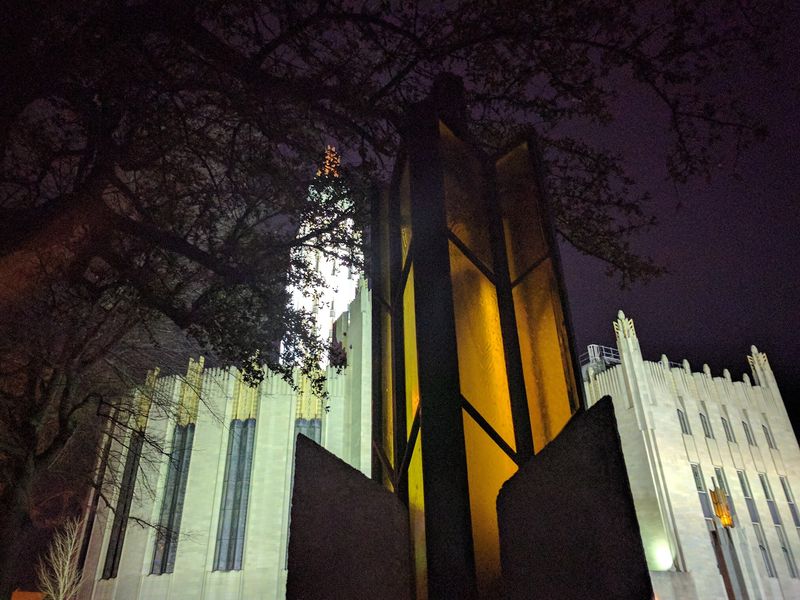
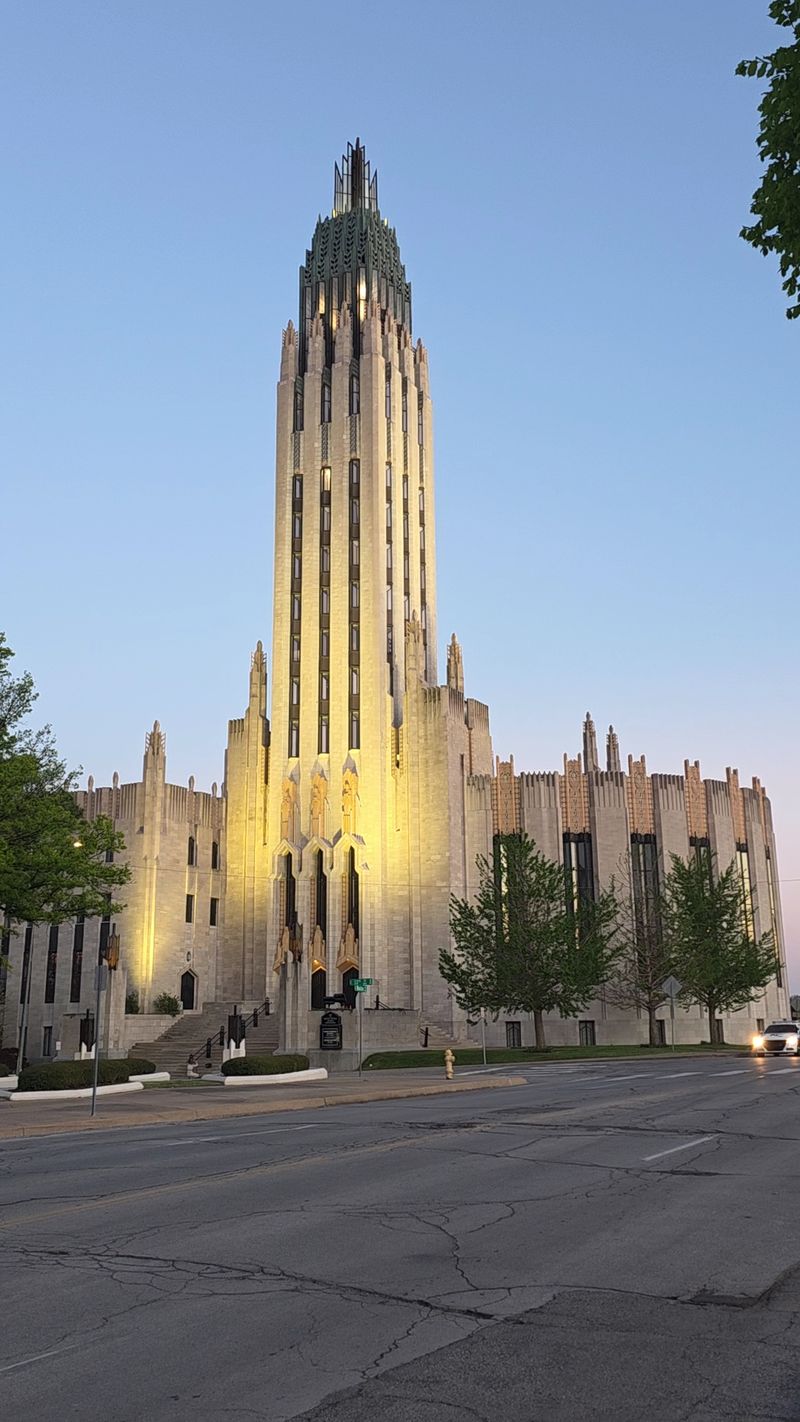
Stick around until sunset if your schedule allows. Once the lights come on, the tower changes character entirely, and several visitors insist it is even more striking after dark than at midday.
Uplighting rakes across the vertical fins and deepens every shadow, turning the limestone into something closer to sculpture than masonry. The terra cotta figures pick up a glow that daylight flattens out.
You cannot go inside at that hour, since the building closes at 5 p.m. on weekdays. But the exterior is the main event for nighttime photography anyway, and the sidewalks are public.
Winter has an advantage here. Early sunsets mean you can tour the interior in the afternoon, grab supper downtown, and still catch the lit facade before it gets late.
Bring a tripod if you are serious about the shot. Handheld night photos of a 255-foot tower rarely do it justice, and you will want this one to come out right.
A Congregation That Keeps the Doors Open
Buildings this beautiful can feel like museums with velvet ropes. That is not the case here, and the difference comes down to the people inside.
Members and staff have built a reputation for making outsiders feel expected rather than tolerated. Whether you arrive for a service, a tour, or purely to gawk at the ceiling, the reception tends to be the same.
The congregation runs a wide slate of community programs, including bell choirs and vocal choirs spanning ages five through adult, a youth orchestra, and a free theater program. A free dental clinic operates in partnership with several other Tulsa congregations.
A blessing box near the property is restocked multiple times a week with groceries for neighbors. Mission partnerships extend to organizations working across the region.
None of that is required reading for a tourist, but it does explain the atmosphere. A building kept alive by daily use feels different from one preserved behind glass, and you sense it the moment you walk in.
Hours, Parking, and the Saturday Catch
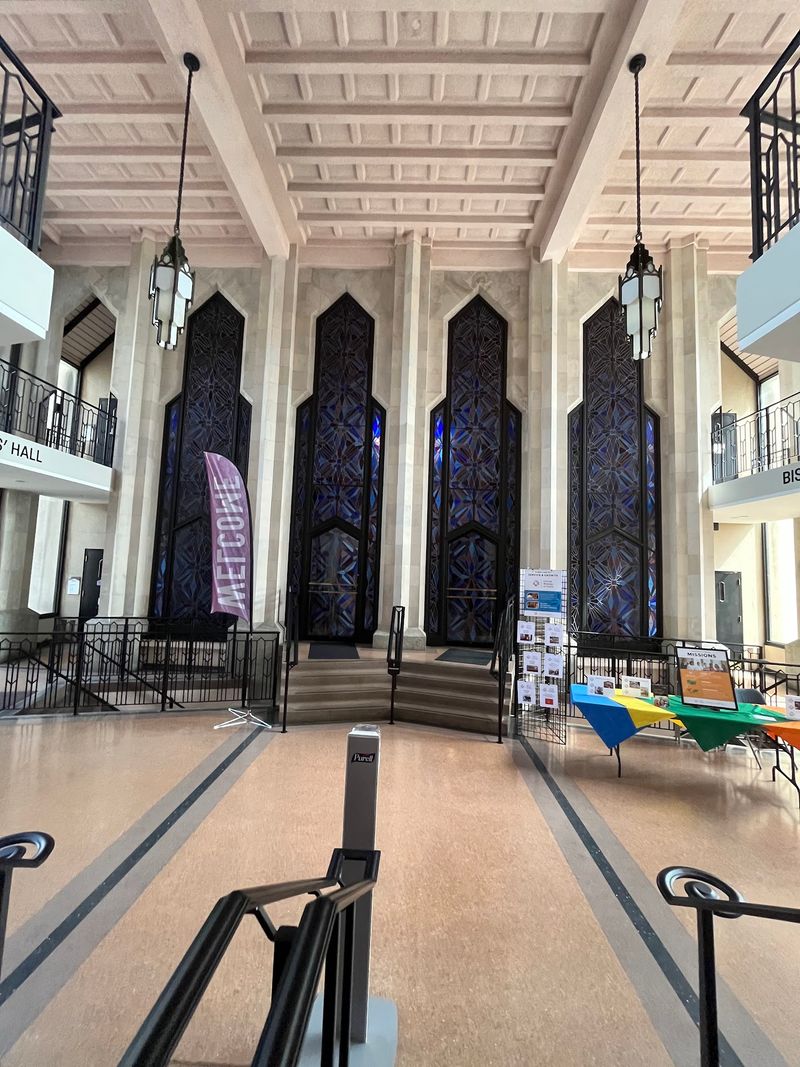
Plan around the calendar and you will save yourself a wasted drive. Monday through Friday the building is open 8:30 a.m. to 5 p.m., Sunday runs 8 a.m. to 1 p.m., and Saturday it stays closed.
That Saturday closure catches a lot of weekend travelers off guard. More than one visitor has admired the exterior on a Saturday and left disappointed about missing the interior, so build your itinerary accordingly.
Parking is plentiful and free, which is not something you can say about every downtown Tulsa destination. Handicapped spaces are available, and the building is ADA compliant.
Bus and motorcoach parking exists for tour groups, church groups, and school trips. Calling ahead at 918-583-5181 helps the staff prepare.
Hours can shift around holidays and special services, so confirming before you leave home is wise. Drive time from Oklahoma City runs roughly an hour and forty minutes, well within easy-day-trip range for most of Green Country and central Oklahoma.
Pairing It With Tulsa’s Deco Trail
One stop rarely satisfies once the Deco bug bites. Downtown Tulsa holds one of the country’s better concentrations of 1920s and 1930s architecture, and this church is the crown piece of that collection.
Organized architecture tours of downtown churches have been offered by local preservation groups, and visitors who joined them came away impressed by how much sits within a few blocks. Walking between stops is realistic in mild weather.
Summer heat in Oklahoma is no joke, though, and downtown pavement amplifies it. May through September, plan morning visits or hop between air-conditioned interiors.
Spring and fall are the sweet spots for a walking route. Comfortable temperatures, good light for photos, and fewer crowds competing for sidewalk space.
Budget a half day if you want to combine the church with nearby landmarks and a meal. The church itself costs nothing, which leaves room in the day’s spending for whatever diner or lunch counter you decide to try afterward.
Bringing the Kids Without the Meltdown
Historic buildings and restless children are not always a happy pairing. This one holds up better than most, partly because there is so much to find and partly because nobody will shush you for looking around.
Adults, teens, and kids are all welcomed, and the space is designed to be accessible to everybody. The booklet doubles as a scavenger hunt if you frame it right.
Challenge younger kids to count praying hands, spot the seven-pointed stars, or find the flowers that grow wild in Oklahoma. It buys you a solid twenty minutes of engaged wandering.
The stained glass dome is usually the moment that lands. Even kids who claim buildings are boring tend to stop talking when they look straight up.
Restrooms and level access make logistics simpler for families and for grandparents traveling along. And since admission is free, a short visit that ends early costs you nothing but the gas to get there.
Worth the Drive, Whatever Your Reason
Few free attractions in Oklahoma deliver quite this much. A 255-foot tower, a circular sanctuary under stained glass, a National Historic Landmark designation, and a guided tour that costs nothing beyond showing up at 12:15 on a Sunday.
Architecture fans will get the most out of it, obviously. But the appeal stretches wider than that, catching history buffs, photographers, sketchers, and folks who just enjoy standing inside a room that took real imagination to build.
Skip it if you need gift shops and interactive exhibits to hold your attention. Everything here rewards slow looking rather than button pushing.
Go on a weekday for solitude, Sunday for the guided narration, and after dark for the photographs. Any of the three is a good use of an afternoon.
For Oklahomans hunting proof that the state holds landmarks worth bragging about, 1301 S Boston Ave makes the case without asking for a dime. Bring a camera, wear comfortable shoes, and give yourself permission to stare.
