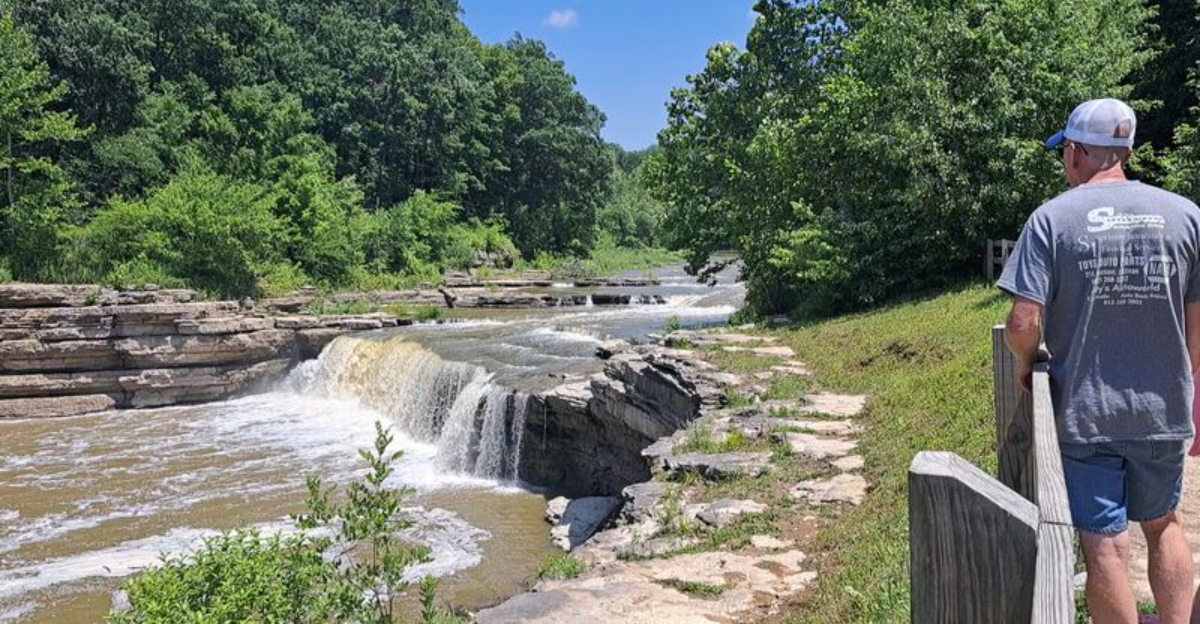
I have lived in Indiana long enough to think I had seen most of what the state has to offer outdoors. Then someone mentioned a certain waterfall, and I realized I had been missing one of the most spectacular natural spots in the entire Midwest.
A gentle 1.6-mile loop quietly connects two of the state’s biggest waterfalls, winding through lush greenery, shaded paths, and scenic overlooks that almost anyone can handle. Along the way, you can hear the soothing rush of water, spot local wildlife, and feel completely immersed in nature, far from the bustle of everyday life.
Whether you are looking for a peaceful morning walk, a family outing, or just a reason to get outside and breathe in fresh air, this trail delivers something genuinely memorable every single time you visit, leaving you with a sense of wonder and a lasting appreciation for just how beautiful and serene the Hoosier outdoors can be.
Indiana’s Largest Waterfall by Volume Waits at the Upper Falls
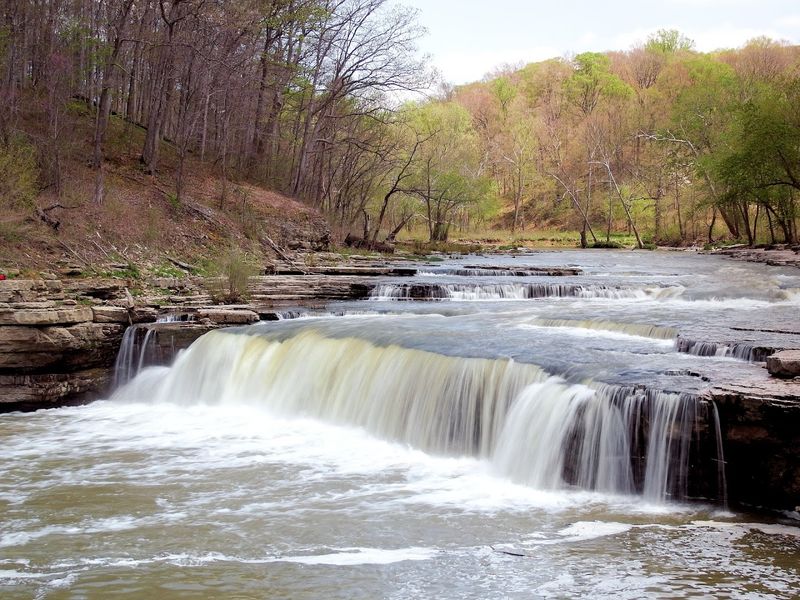
Most people do not realize that Indiana is home to a waterfall that holds the title of the largest by volume in the entire state. Upper Cataract Falls drops approximately 45 feet over a wide rocky ledge, and when water levels are high, the sheer force of it is genuinely breathtaking.
You can hear it before you even see it, which makes that first glimpse around the trail bend feel like a real reward.
The viewing area near the upper falls sits close enough that you can feel a light mist on your face on the right day. Families love gathering here to take photos, and honestly, no camera does it full justice.
The scale of the falls against the surrounding woodland creates a scene that feels almost too dramatic for a place this easy to reach.
Parking is conveniently located just off Lower Falls Road, putting you within a short walk of the upper falls viewpoint. The trail surface near the upper section is partially paved, making it accessible for most visitors.
Spring and early summer tend to bring the highest water flow, which is when the falls look their most powerful and impressive. If you time your visit after a few days of rain, the volume of water pouring over that ledge will genuinely stop you in your tracks and remind you why Indiana has hidden gems worth finding.
Lower Cataract Falls Offers a Completely Different Kind of Beauty
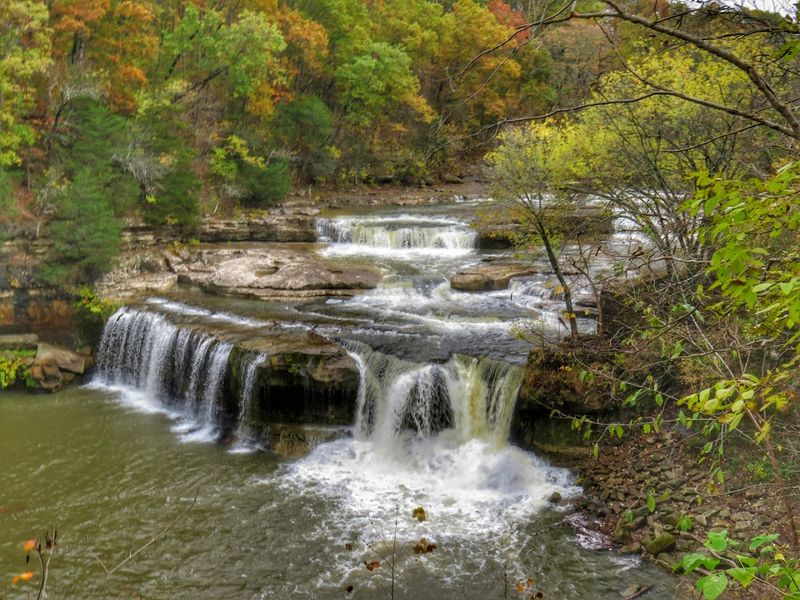
Where the upper falls hits you with raw power, the lower falls takes a more layered approach. Lower Cataract Falls is a series of smaller drops totaling around 30 feet, spread across a wider rocky channel that gives the water room to fan out and tumble in multiple directions at once.
The effect is almost musical, with different pitches of rushing water blending together as you stand on the boardwalk and take it all in.
The boardwalk near the lower falls makes viewing safe and comfortable without taking away from the natural setting. Restrooms are also located near the lower falls trailhead, which is a practical bonus that families especially appreciate.
The surrounding landscape here feels slightly more open than the upper section, giving the area a calm, meadow-like quality that pairs well with the sound of moving water.
I find the lower falls especially appealing in the early morning when the light filters through the trees and catches the spray. Wildlife sightings are common along this stretch, with birds moving through the wetland edges and deer occasionally appearing near the tree line.
The lower falls also tends to draw fewer people than the upper section, so if you want a quieter experience, spending a few extra minutes here is well worth it. The Cataract Falls State Recreation Area is located at 2605 N Cataract Rd, Spencer, IN 47460, and the lower falls area is easy to find from the main entrance.
The 1876 Covered Bridge Adds Historic Charm to Every Visit
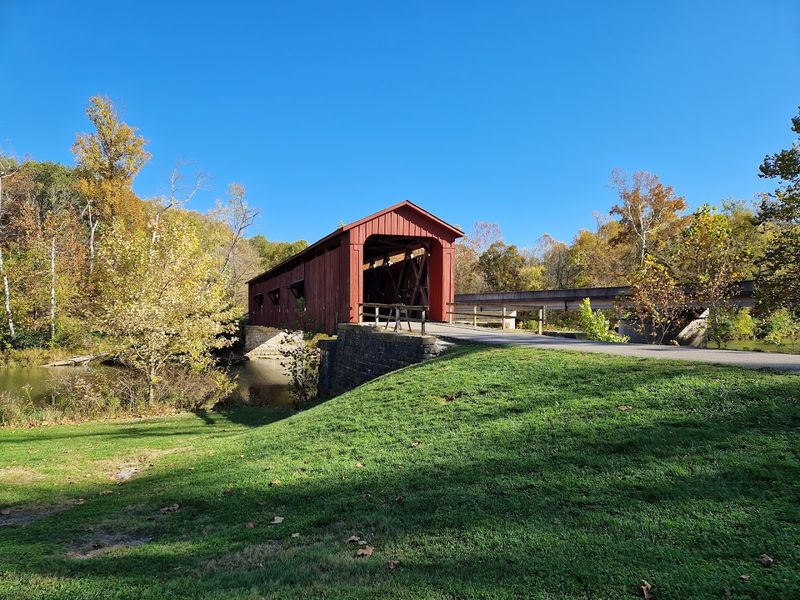
Built in 1876, the Cataract Falls Covered Bridge is one of those rare structures that makes you stop and think about how much history a single piece of wood can hold. The bridge spans Mill Creek near the upper falls area, and its weathered wooden planks and classic covered design feel completely at home in the surrounding landscape.
Walking across it or simply standing nearby and looking at it from the trail is one of the quieter highlights of the entire loop.
Covered bridges in Indiana have a long and beloved history, and this one ranks among the most photographed in the state. It sits close enough to the parking area that even visitors who are not hiking the full trail can enjoy it.
The combination of the rushing water below, the old wooden structure above, and the tree canopy surrounding everything makes this spot feel genuinely timeless.
History enthusiasts will appreciate knowing that the area around Cataract Falls was once home to Miami, Shawnee, and Potawatomi tribes long before European settlers arrived. The covered bridge came later as the region developed, but it has become just as much a part of the landscape as the falls themselves.
Visiting in fall is particularly special, when orange and red leaves frame the bridge in a way that looks almost too perfect for a photograph. It is the kind of detail that turns a nature walk into something you talk about for years afterward.
An Easy 1.6-Mile Loop That Almost Anyone Can Complete
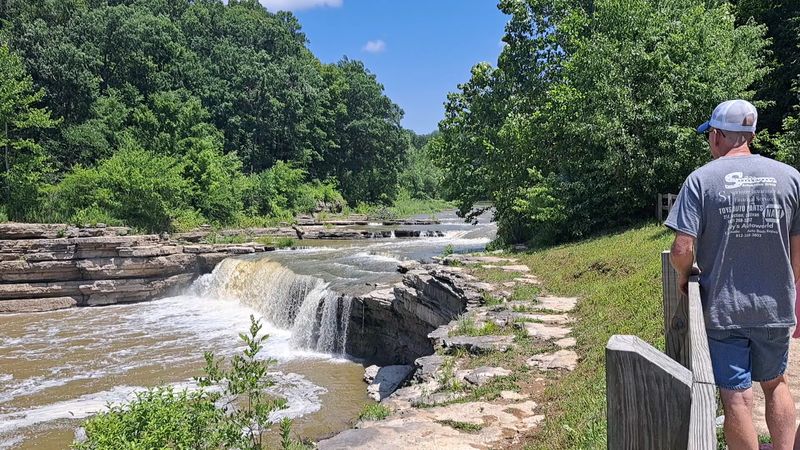
Not every great trail has to be a grueling challenge, and the Ed Dailey Nature Trail proves that point beautifully. The loop covers just 1.6 miles with an elevation gain of roughly 98 feet, which means even casual walkers, young kids, and older adults can handle it comfortably.
Most people finish the full loop in somewhere between 30 minutes and an hour, depending on how long they linger at each waterfall.
The trail surface is a mix of partially paved sections and packed dirt, which keeps things manageable without feeling overly manicured. There is one short stretch that gets a bit more rugged, but it is brief and adds a touch of adventure without being intimidating.
The well-marked path means you are unlikely to get turned around, which makes it a stress-free outing for families visiting for the first time.
Dogs are welcome on the trail as long as they are kept on a leash, so this is a genuinely pet-friendly destination that four-legged companions seem to love just as much as their owners. The trail is open year-round from 6 AM to 9 PM, giving visitors plenty of flexibility throughout every season.
For anyone who wants to explore Indiana’s natural beauty without committing to a full day of strenuous hiking, this loop hits exactly the right balance. It is approachable, rewarding, and just long enough to feel like a real outdoor experience rather than a quick stroll.
Wildlife and Diverse Ecosystems Line the Trail from Start to Finish
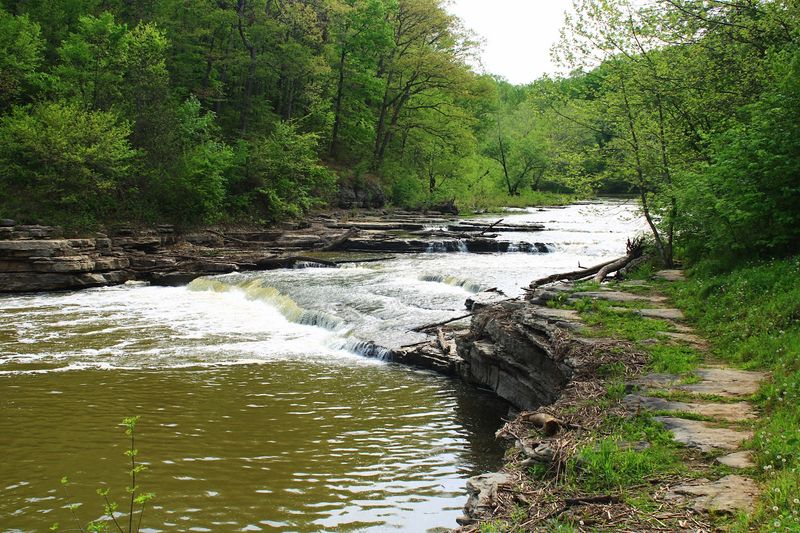
One of the things that surprises first-time visitors most about the Ed Dailey Nature Trail is how much variety the landscape packs into such a short distance. Within the same 1.6-mile loop, you move through dense woodland, open meadow edges, and wetland zones, each one supporting its own cast of plants and animals.
Birdwatchers especially love this trail because the habitat transitions create ideal conditions for spotting a wide range of species in a single outing.
White-tailed deer are regularly seen near the wooded stretches, particularly in the early morning and late afternoon hours when foot traffic is lighter. The wetland areas along the lower section of the trail attract herons and other wading birds, and the forest canopy overhead buzzes with activity during spring migration.
Even if you are not a dedicated naturalist, the sheer amount of life visible along this trail has a way of pulling your attention away from your phone.
Wildflowers bloom along the trail edges in spring, adding splashes of color to the forest floor that feel almost intentional. Summer brings full green canopy coverage that keeps the trail shaded and cooler than you might expect on a warm day.
The diversity of what you encounter here is a big part of why people return to this trail in every season rather than checking it off the list after one visit. Nature finds a way to show you something new each time, and that keeps the experience feeling fresh.
Every Season Transforms the Trail Into Something Completely New
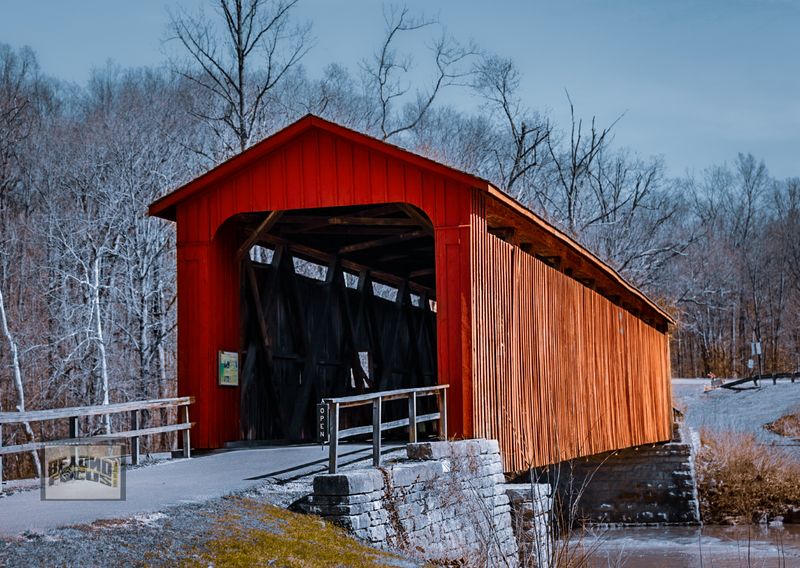
Few trails in Indiana look as dramatically different across the four seasons as the Ed Dailey Nature Trail. Spring brings wildflowers pushing up through the leaf litter and water levels at their highest, making the falls roar with impressive force.
Summer wraps the entire loop in deep green shade, keeping temperatures surprisingly comfortable even on hot Indiana afternoons.
Fall might be the most visually stunning time to visit, when the maple and oak trees along the trail turn every shade of orange, red, and gold imaginable. The covered bridge framed by autumn foliage is a scene that photographers return for year after year.
The colors reflect off the water near the falls in a way that makes the whole area feel like it belongs on a calendar rather than a public trail just off a two-lane road in Owen County.
Winter visits have their own kind of magic that is harder to describe but easy to appreciate once you experience it. When temperatures drop far enough, the falls partially freeze, creating ice formations and icy pools that produce sounds and visuals unlike anything you see in warmer months.
Some visitors have reported being able to walk out toward the falls when the ice is thick enough, which turns a familiar trail into something genuinely extraordinary. Wearing proper footwear in winter is strongly recommended since the trail can get slippery, but the reward for braving the cold is a version of Cataract Falls that very few people ever get to witness.
Nearby Attractions Make Cataract Falls a Full Day Worth Planning
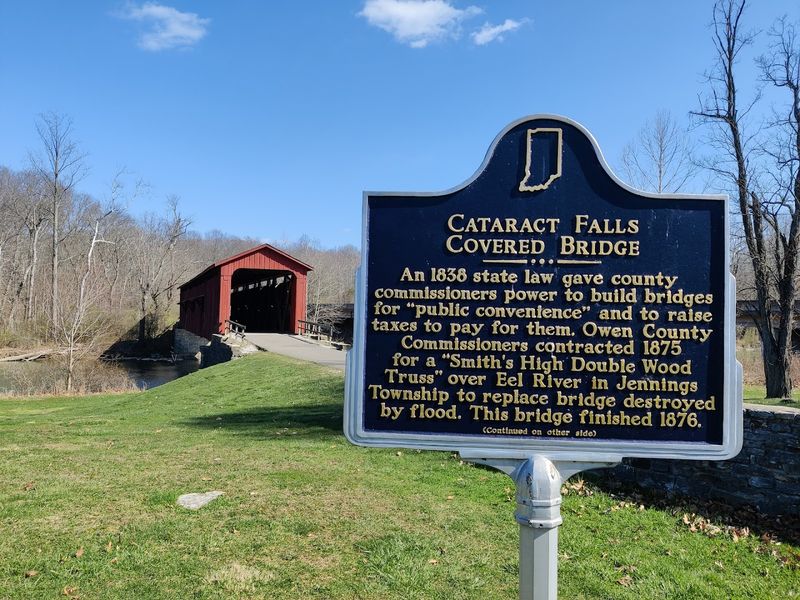
The Ed Dailey Nature Trail sits within the Lieber State Recreation Area, which borders Cagles Mill Lake and opens up a whole range of activities beyond just the waterfall hike. Fishing and boating on the lake are popular options for visitors who want to extend their time in the area after completing the trail.
The combination of waterfall hiking and lakeside recreation in one location makes this a genuinely versatile destination for groups with different interests.
If you are looking to grab a meal before or after the trail, the town of Spencer is the closest option and sits just a short drive away. Spencer serves as the Owen County seat and has local dining spots worth exploring after working up an appetite on the trail.
The Cataract General Store, located near the falls area, is a local landmark that many visitors stop at for a quick bite or to pick up supplies before heading out.
For those who want to make a full weekend of it, the surrounding Owen and Putnam County area offers additional covered bridges, rural scenery, and small-town Indiana charm that rewards slow, exploratory driving. The Cataract Falls State Recreation Area is open daily from 6 AM to 9 PM.
Planning a full day around this area is genuinely easy, and the variety of things to do means you rarely leave feeling like you ran out of ways to enjoy it.
Dear Reader: This page may contain affiliate links which may earn a commission if you click through and make a purchase. Our independent journalism is not influenced by any advertiser or commercial initiative unless it is clearly marked as sponsored content. As travel products change, please be sure to reconfirm all details and stay up to date with current events to ensure a safe and successful trip.
