The headlights go off. That is when the bridge becomes interesting.
Not because the steel suddenly changes, but because the darkness leaves plenty of room for every old story attached to it to come rushing back.
This Alabama crossing has been surrounded by local legend for decades, with generations of teenagers using it for nighttime dares and ghost hunters treating it like a place where something might actually happen.
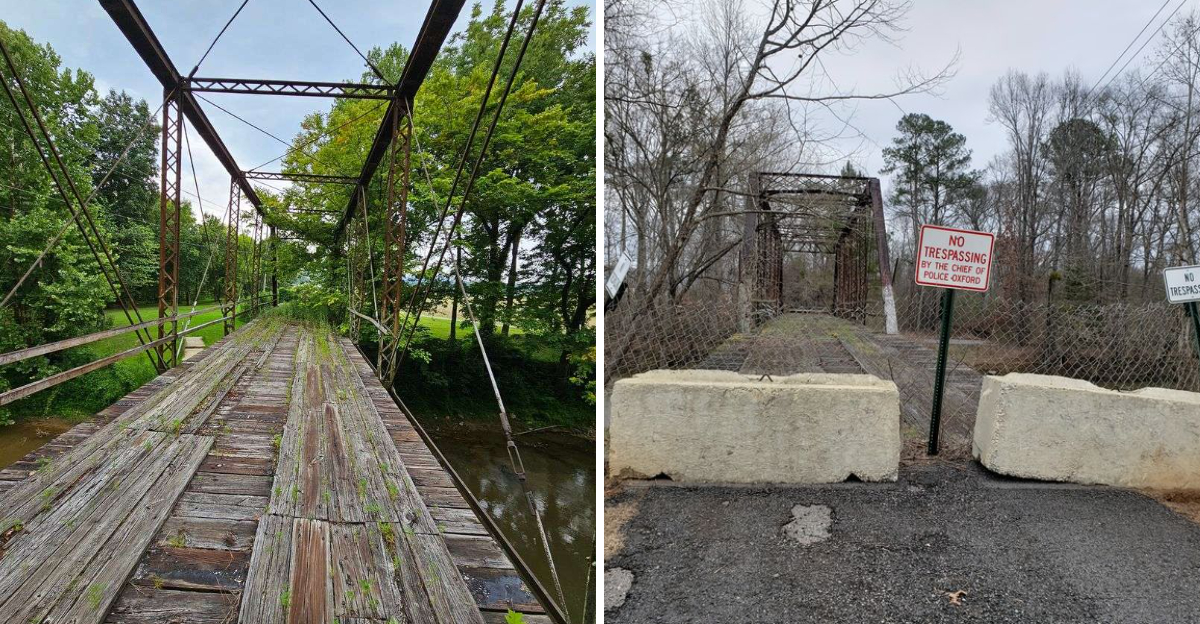
The structure itself has plenty of history even without the rumors. It is an old steel truss bridge from the Depression era, now closed at both ends and slowly being swallowed by vegetation.
A bridge can carry traffic. Apparently, this one can carry a legend too.
A Depression-Era Truss That Still Stands Its Ground
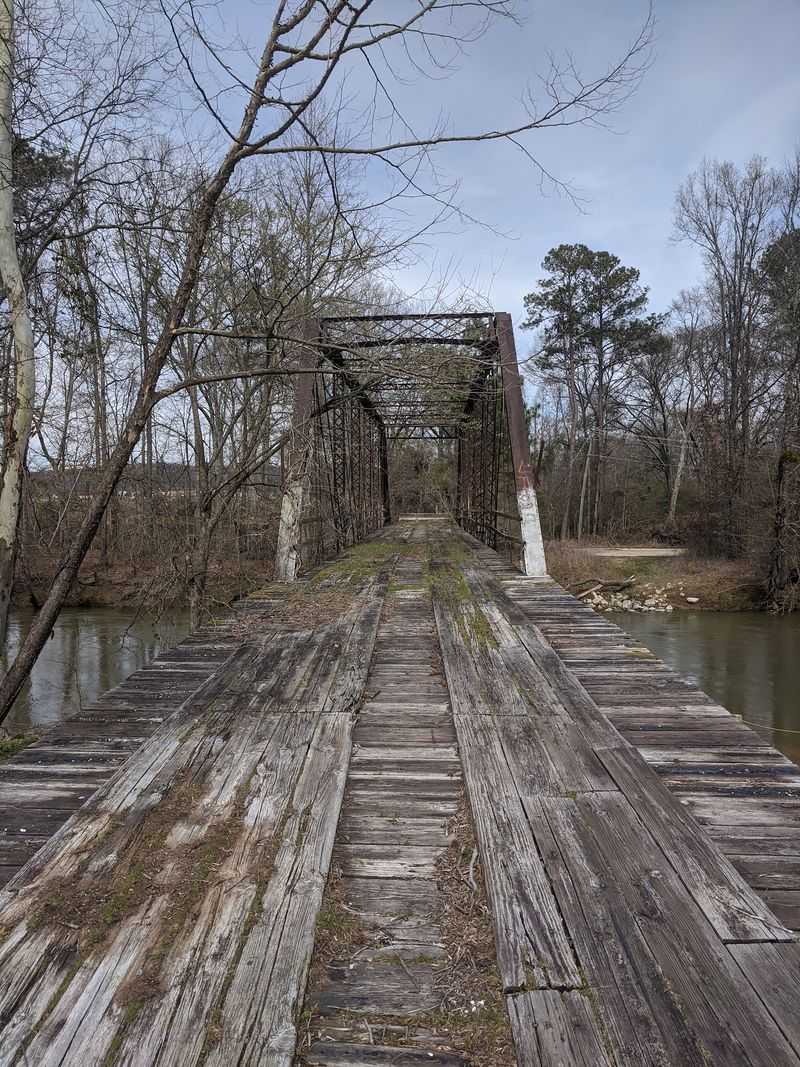
Steel beams crisscross overhead like an old iron cage, and that shape is the first thing most visitors notice. Built around 1930, the crossing carries the far less dramatic official name of Boiling Springs Road Bridge.
Engineers call the style a Pratt through truss, a design that was practical, affordable, and everywhere during the early twentieth century. Diagonal members handle tension, vertical ones handle compression, and the whole thing works like a puzzle solved with rivets.
For decades it did nothing spooky at all. Farm trucks rolled across it, kids walked it on the way home, and Choccolocco Creek slid along underneath without much fuss.
The span connected neighborhoods south of what is now Interstate 20, making it a small but genuine piece of Calhoun County infrastructure history. Depression-era construction tended toward function over flourish, and that plainness is exactly what gives the bridge its brooding look today.
Photographers love the geometry. Morning light slips between the beams and throws striped shadows across the deck, which makes for shots that need no filter at all.
Anyone with an interest in old American bridges will find plenty to study here, from the riveted connections to the way the portal bracing frames the road ahead.
Legends aside, the engineering alone justifies the detour, and it explains why preservation-minded folks still keep an eye on the aging structure.
The Story Of The Couple Who Never Came Back
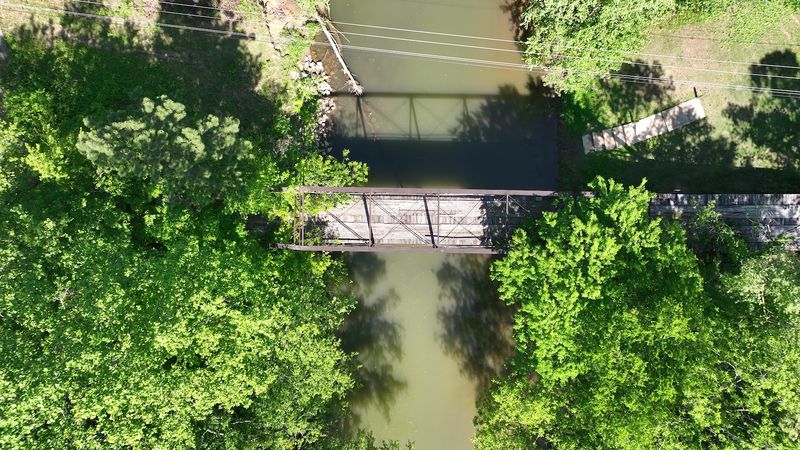
Every good haunted place needs a heartbreak at its center, and this one has a doomed young couple. Local telling puts the tragedy sometime in the 1950s, when a car supposedly went off the bridge and into the creek below.
Their bodies, the story goes, were never recovered from the dark water. That detail matters, because unfinished endings are what keep ghost stories alive across generations.
The instructions passed around town are oddly specific. Park in the middle of the span after dark, cut the engine, kill every light, and wait.
Believers say a spectral passenger settles into the back seat during those silent minutes. The proof, according to the legend, shows up afterward as a damp spot on the upholstery, as though someone climbed in soaking wet.
Folklore researchers trace the tale’s circulation to the 1960s, even though it places the accident a decade earlier. That gap between event and telling is typical of urban legends, which tend to gain their details on the way from one storyteller to the next.
Nowadays the bridge is barricaded, so nobody is parking anywhere near the middle of it. The story survives anyway, retold at sleepovers, campfires, and high school parking lots throughout Oxford and Anniston, which may be the most haunted thing about it.
Why Looking Back Gave The Bridge Its Name
Names like Boiling Springs Road Bridge do not travel far. Hell’s Gate Bridge, on the other hand, sticks in the memory the second someone says it out loud.
The nickname comes from a second legend layered on top of the first. Stop on the span, the story says, then turn and look behind at the road just crossed.
Instead of ordinary asphalt and gravel, witnesses have claimed to see something glowing, something that resembles the fiery gates of the underworld.
Whether that vision comes from taillights reflecting off mist, an odd trick of perception, or pure imagination fueled by anticipation, the reported effect built the reputation.
Skeptics have offered plenty of tidy explanations over the years. Fog rising off Choccolocco Creek reflects light strangely, and eyes adjusting from bright headlights to total darkness can invent all sorts of shapes.
None of that has slowed the storytelling down. The bridge earned its name through repetition, and repetition is how folklore becomes permanent.
Visitors today can still stand near the barricaded approach and look back along Boiling Springs Road toward the trees. Nothing fiery is likely to appear, but the setting delivers atmosphere in generous helpings.
Rural quiet, deep shade, and rust-streaked steel do a lot of the work on their own.
Rust, Barricades, And A Structure Slowly Losing Its Battle
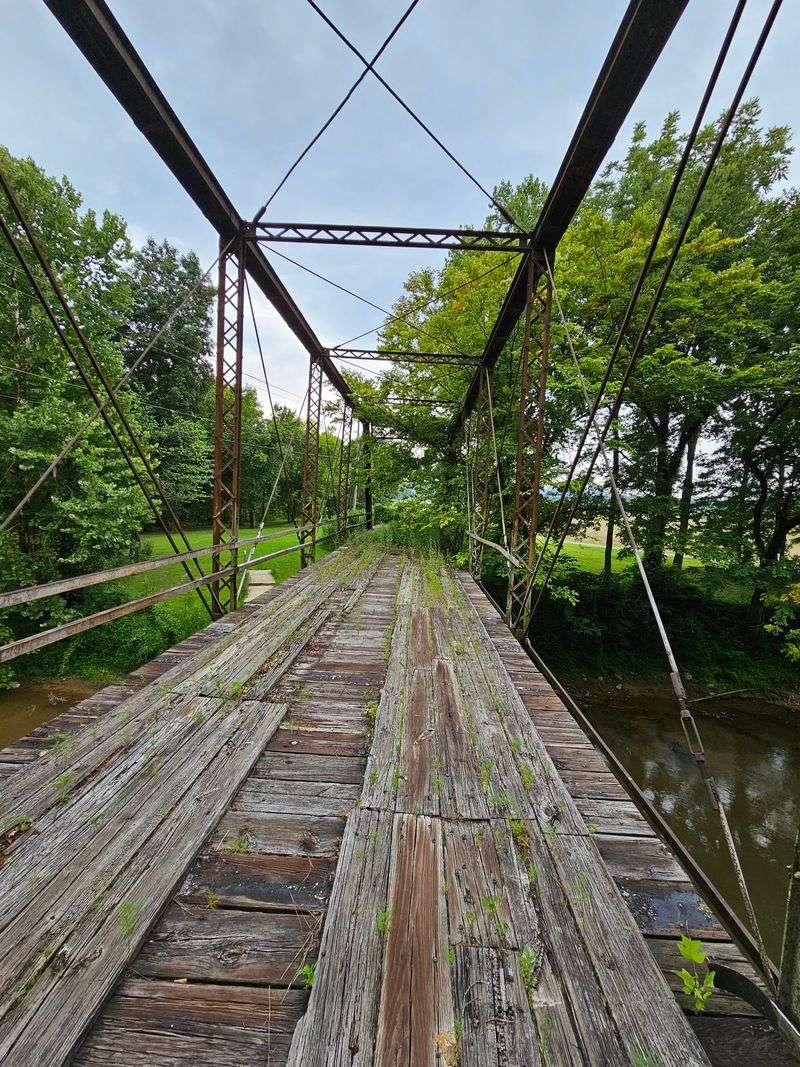
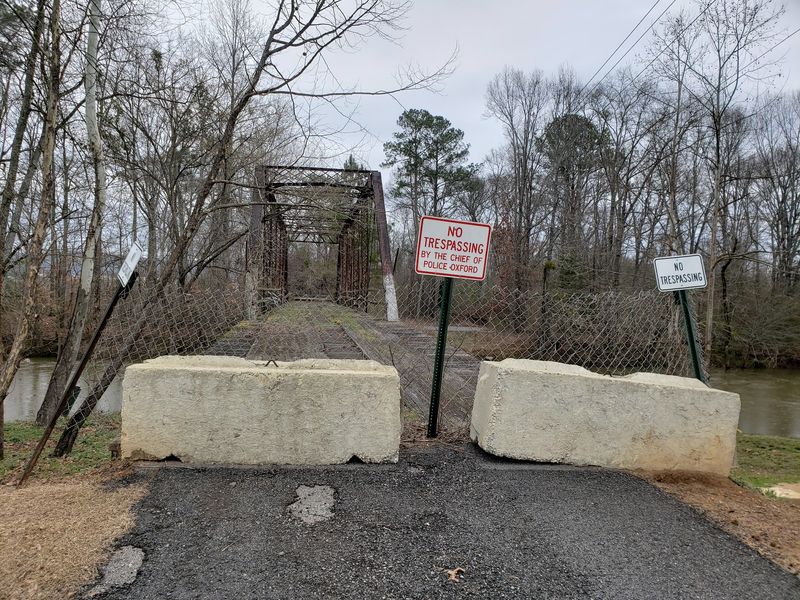
Concrete blocks and chain-link fencing greet anyone who drives out to see the crossing. Those barriers went up because inspections told an increasingly grim story about the old span.
Records show the bridge rated as poor by 1992, then serious by November of 2000. Local authorities shut it to vehicles around late 2005 or early 2006, and it has been closed ever since.
Time has not been kind. Rust blooms across the trusses, the deck has given way in spots, and vegetation creeps up the abutments like it plans to stay.
Walking across is genuinely unsafe and strongly discouraged, because the structure is falling apart in a literal rather than poetic sense. Broken boards and unstable footing turn a curiosity trip into a hospital visit fast.
The smart approach is to view it from the closed approach, camera in hand, feet on solid ground. Wear sturdy shoes, watch for uneven gravel, and respect posted signage along Boiling Springs Road in Oxford.
There is a strange beauty in the decay. Peeling paint, orange oxidation, and green overgrowth combine into a palette that looks made for photography.
Abandonment amplifies the mood better than any haunted attraction ever could. Nobody had to add fog machines here, because neglect handled the set design all by itself.
Choccolocco Creek And The Quiet Woods Around It
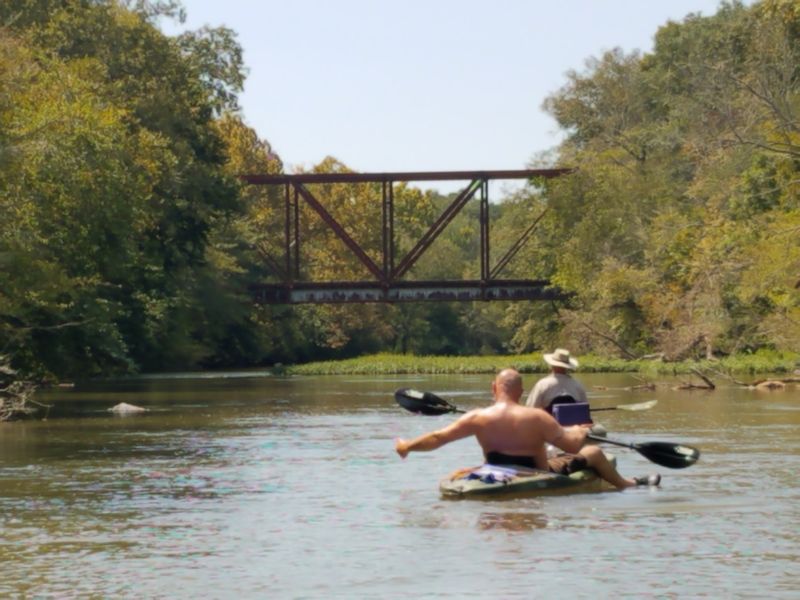
Below the steel, the water does what it has always done. Choccolocco Creek moves slowly through Calhoun County, brown and calm in most seasons, edged with hardwoods that lean toward the current.
Sound carries oddly out here. Traffic from Interstate 20 fades into nothing, replaced by insects, birds, and the occasional splash of something unseen.
Spring brings dense green that nearly swallows the trusses from a distance. Autumn thins the canopy and reveals more of the ironwork, which is why late fall tends to be the best season for photos.
Summer humidity settles into the creek bottom and produces that low haze people love to blame for ghostly sightings. Winter strips everything bare and makes the whole scene feel colder in every possible sense.
Wildlife shows up regularly. Herons work the shallows, turtles line up on fallen limbs, and deer tracks press into the soft banks near the approach.
The setting rewards patience more than adrenaline. Bring water, insect repellent, and a willingness to stand still for a while.
Cell service can be spotty in the low areas, so downloading directions ahead of time saves frustration. Visiting in daylight is far more practical, since the roads out that way are narrow, unlit, and easy to misjudge after dark.
Folklore That Belongs To The Whole Community
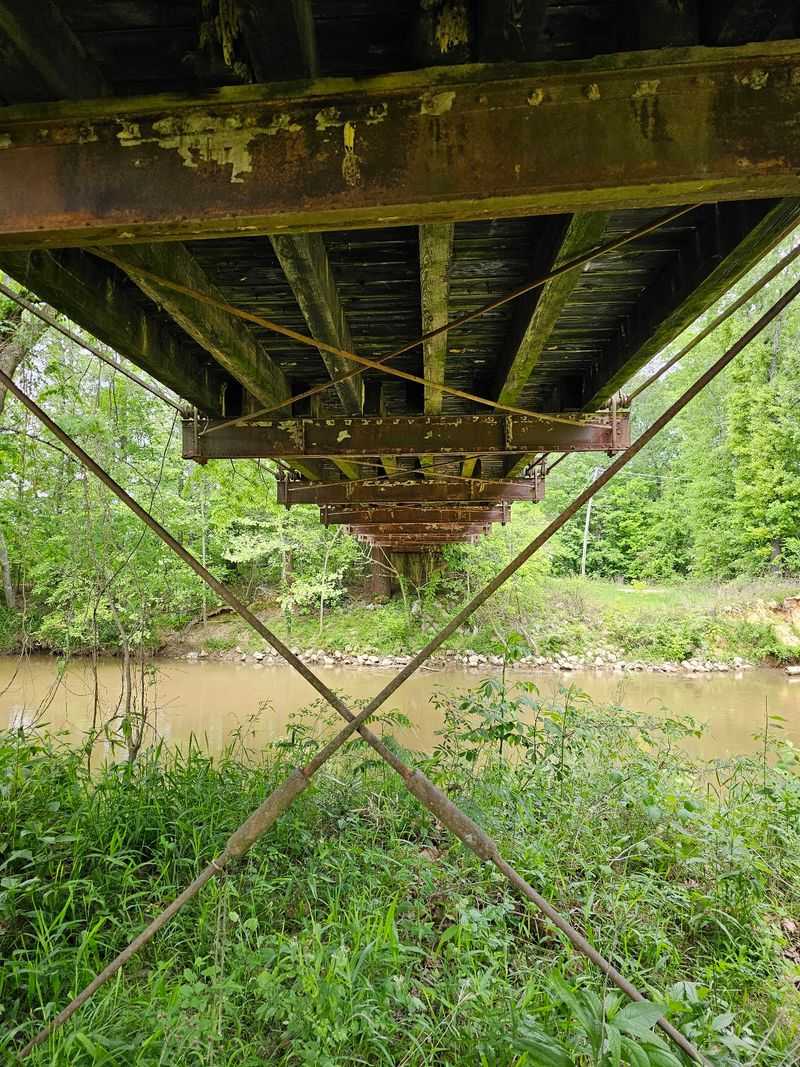
Ask around Oxford and Anniston, and the bridge comes up faster than almost any other landmark. It has become shorthand for a certain kind of small-town adventure that gets handed from older siblings to younger ones.
Stories like this one do real cultural work. They give a community a shared reference point, something everybody recognizes without needing explanation.
Alabama has plenty of legends, yet this crossing ranks among the most widely repeated. Message boards, ghost-hunting channels, and regional folklore collections have all featured it, spreading the tale well past county lines.
What makes the legend durable is how universal its ingredients are. Young love, sudden loss, water that keeps its secrets, and a dark road with no streetlights.
Those pieces show up in ghost stories from Maine to California, dressed in local details. Here the details are Alabama pines, red clay, and a Depression-era truss.
Believers and skeptics both get something out of the trip, which is part of the appeal. One group listens for footsteps while the other admires rivets, and both leave satisfied.
Folklore also preserves history in sideways fashion. The bridge might have been demolished and forgotten long ago if not for the stories, so in a strange way the ghosts have been better caretakers than any maintenance budget.
Planning The Drive Out To Boiling Springs Road
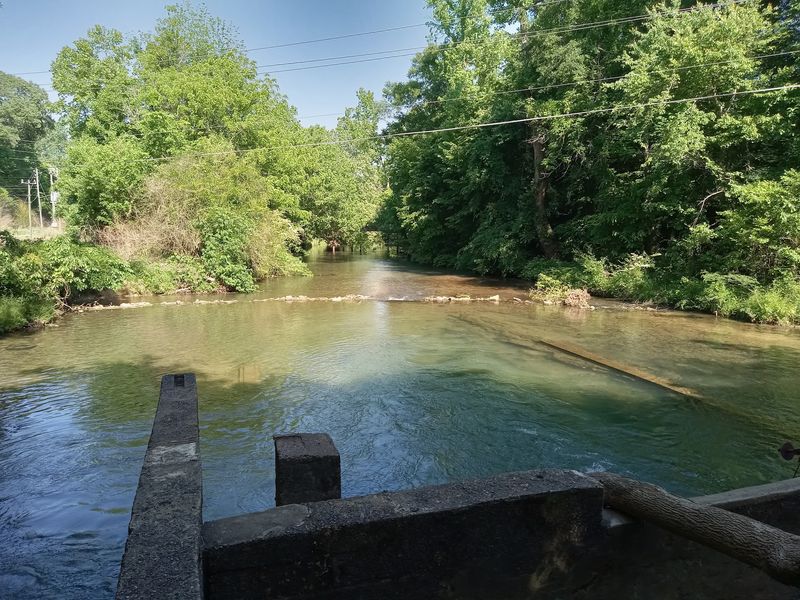
Getting there is half the mood. The bridge sits on Boiling Springs Road in Oxford, Alabama, tucked south of Interstate 20 in a pocket of Calhoun County where the pavement narrows and the shoulders disappear.
Exact location is: Oxford, AL 36203, United States. Navigation apps handle the route reasonably well, though the final turns run through residential and rural stretches.
Drive slowly and keep an eye out for pedestrians, mailboxes, and the occasional dog with big opinions.
Parking is limited, so pull well off the roadway and avoid blocking any driveway. Neighbors live nearby, and courtesy goes a long way toward keeping the site accessible for future visitors.
Daytime trips work best for photography and safety. Nighttime visits attract attention, offer zero lighting, and put people near an unstable structure they should not be climbing.
Combine the stop with other things in the area to round out the day. Oxford and neighboring Anniston offer parks, trails, and museums within a short drive, which turns a ten-minute legend stop into a full outing.
Pack light but pack smart. Sturdy footwear, water, a charged phone, and a camera with decent low-light performance cover most needs.
Leave no trash behind, take nothing from the site, and skip the spray paint. Respect keeps the story alive, and the old iron deserves better than another layer of graffiti.
