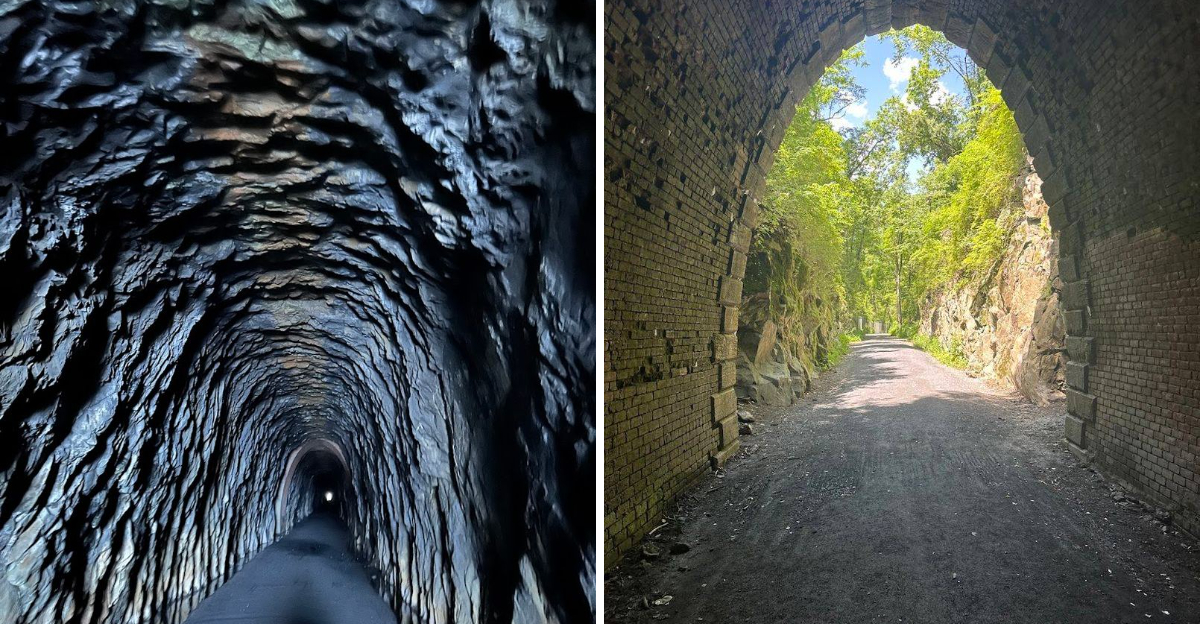
Hidden beneath Virginia’s mountains lies a hand carved tunnel that feels equal parts triumph and enigma. Cut straight through solid rock with hand drills and black powder, it stands as a raw display of human grit and determination.
Step inside and the air shifts, sounds stretch and rebound in strange ways, and the darkness seems to press closer with every step. Local stories about eerie echoes start to make sense the longer you linger.
When I visited, the experience left me both impressed by the craftsmanship and unsettled by the atmosphere. It is not just a passage through stone but a place that lingers in your mind, making it a must see for anyone drawn to unusual and unforgettable sites.
A Tunnel Born From Impossible Ambition
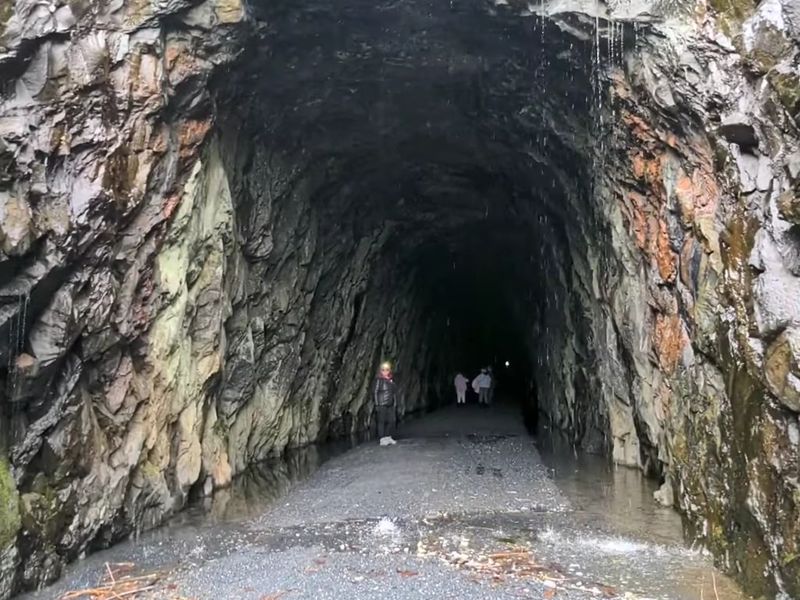
Before a single train ever rumbled through its dark belly, this tunnel existed only as a bold idea on paper. French-born engineer Claudius Crozet envisioned cutting straight through the Blue Ridge Mountains to connect Virginia’s rail network, and what followed was one of the most audacious construction projects of the 1800s.
Workers chipped away at solid rock using nothing but hand drills, hammers, and black powder. There were no power tools, no electric lights, and absolutely no room for error deep inside a mountain.
The project stretched over several grueling years, pushing both the workers and the engineer’s calculations to their absolute limits.
What makes the achievement jaw-dropping is the precision involved. Two separate crews dug from opposite ends of the mountain, and when they finally met in the middle, their alignment was less than six inches off.
That kind of accuracy, achieved without modern instruments, still impresses engineers today. Standing at the entrance of the Claudius Crozet Blue Ridge Tunnel, it is impossible not to feel a deep sense of awe for what human determination can accomplish.
The Hands That Built It: A Story of Sacrifice
No story about this tunnel is complete without honoring the people who actually built it. Irish immigrants and enslaved African Americans formed the core of the workforce, laboring under brutal conditions that history books rarely capture with enough honesty.
Cholera swept through the work camps and claimed lives before the tunnel was ever finished. Rock falls, misfired black powder charges, and the sheer physical punishment of swinging hammers underground took a devastating toll.
These workers did not sign up for an adventure. Many of them had no choice at all.
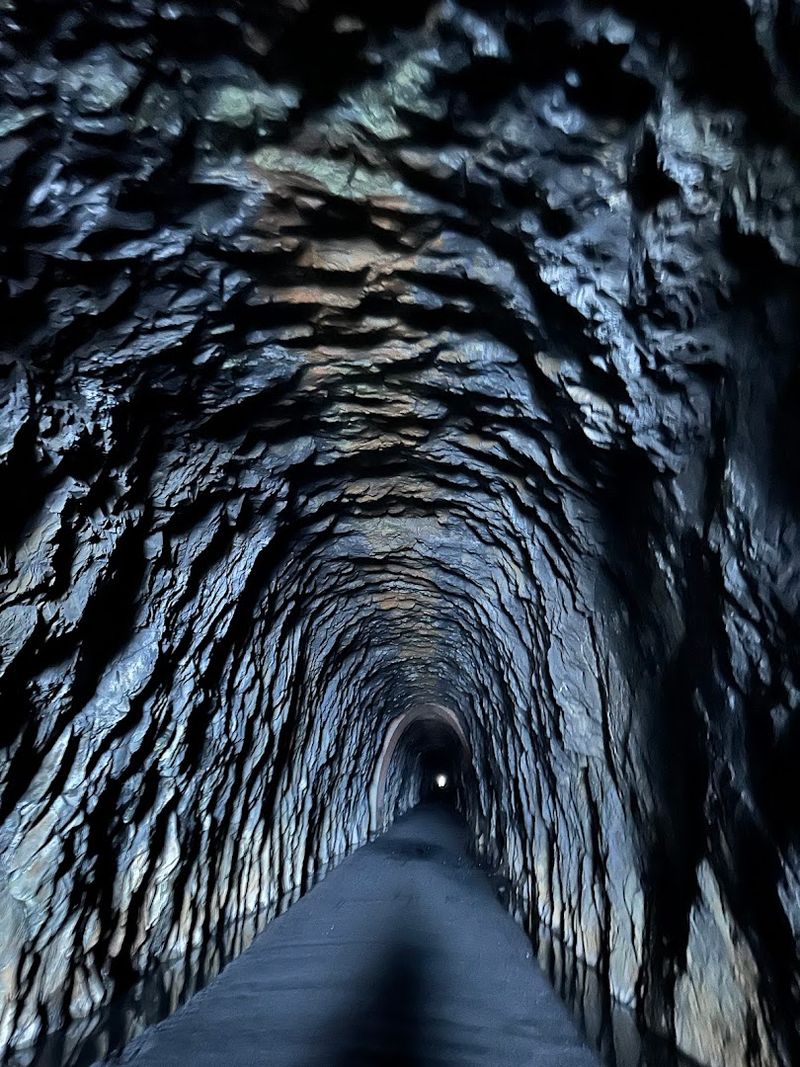
Walking through the tunnel today, I kept thinking about the hands that shaped every inch of those stone walls. The rough-hewn surfaces are not just geological features.
They are the fingerprints of an entire workforce whose names were largely never recorded. Virginia has a complicated history, and this tunnel holds some of its most sobering chapters within its cool, dark interior.
Paying attention to that history makes the experience of visiting far more meaningful than simply snapping a photo at the entrance.
Why the Darkness Inside Feels Alive
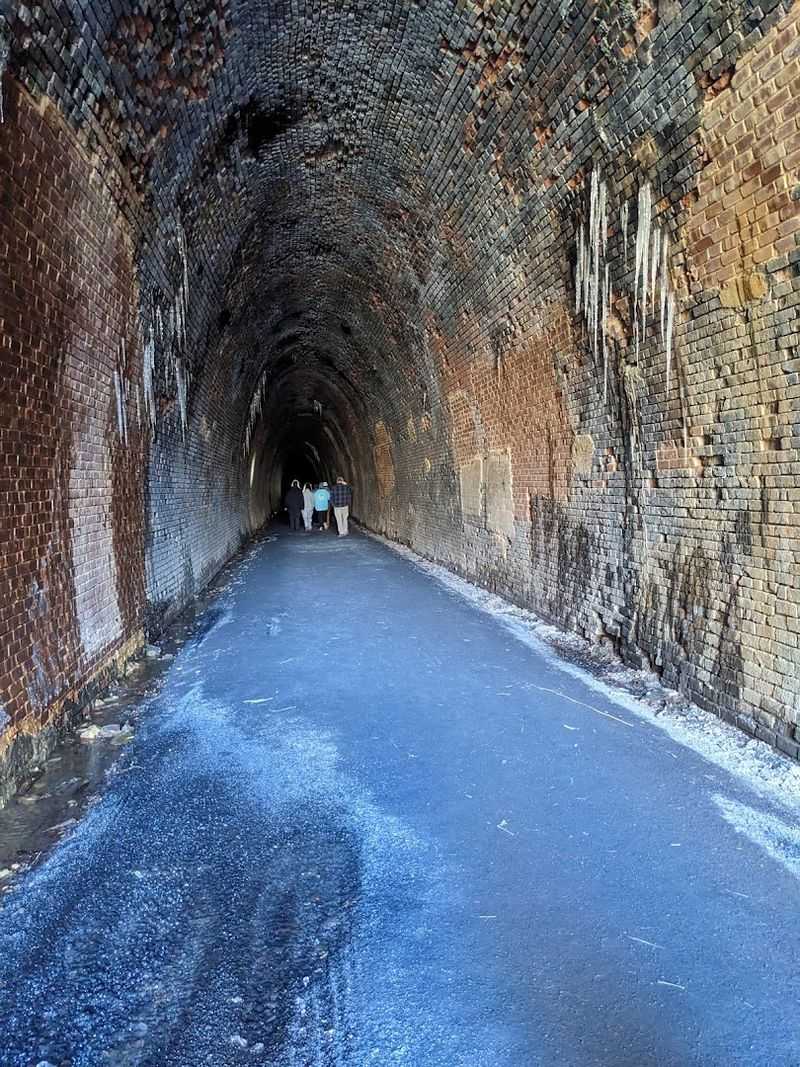
Stepping inside the Claudius Crozet Blue Ridge Tunnel is not like walking into any ordinary dark space. The blackness here is total, swallowing your flashlight beam into something that feels almost physical.
Your footsteps crunch on gravel, and the sound bounces off the curved walls in ways that make you second-guess what you are hearing.
That is where the ghostly whisper reputation comes from. The tunnel’s long, cylindrical shape creates natural acoustic effects that amplify and distort even the smallest sounds.
A whisper at one end can travel surprisingly far, arriving at the other end transformed into something unrecognizable. It is pure physics, but physics can be genuinely creepy in the right setting.
The temperature drops noticeably the moment you cross the threshold. Even on a scorching Virginia summer afternoon, the tunnel holds a steady cool that wraps around you like a damp blanket.
Bring a good flashlight, not just your phone camera. The darkness here laughs at phone screens.
A powerful beam makes the whole experience dramatically better, turning those eerie stone walls into something absolutely spectacular.
The Trail That Leads You There
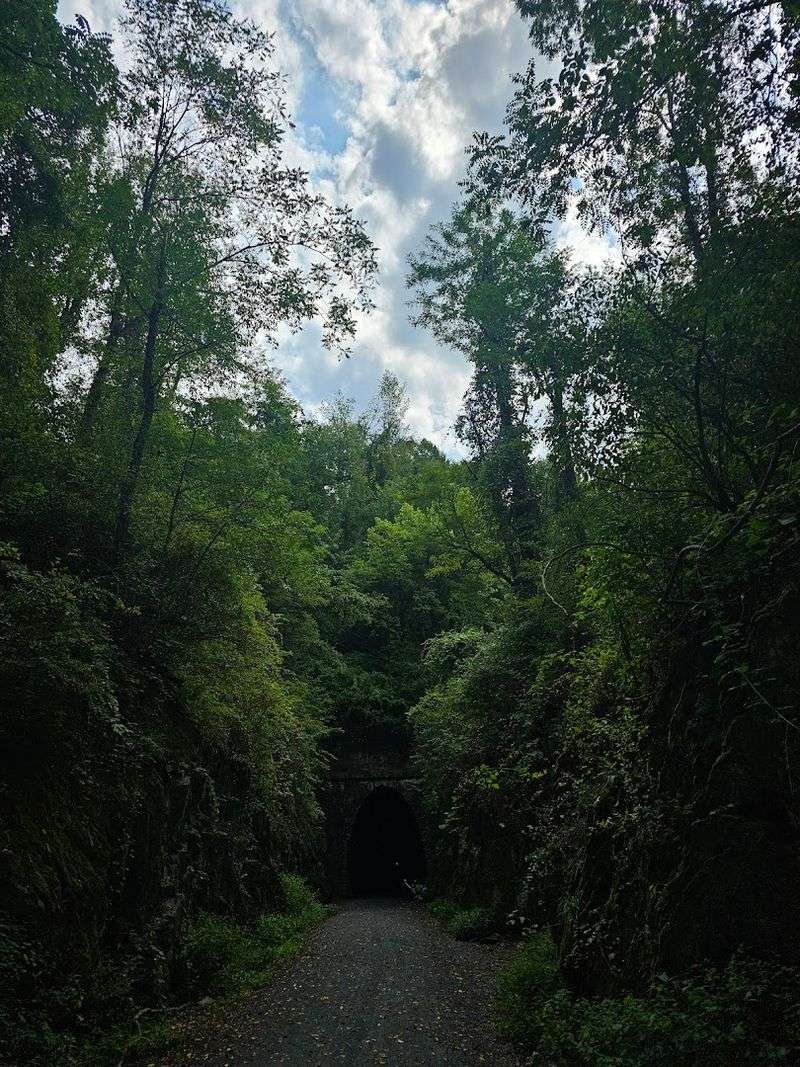
Getting to the tunnel is part of the fun, and the trail itself deserves some serious appreciation. The path runs along a former railroad grade, which means the terrain stays relatively flat and manageable for most of the approach.
Gravel underfoot, trees overhead, and the quiet hum of nature surrounding you on both sides make for a genuinely pleasant warm-up before the main event.
Most people park at the east end trailhead and walk toward the tunnel entrance, which sits roughly half a mile from the parking area. The approach is easy enough for kids and casual walkers, though strollers may find the gravel surface a bit tricky.
On the other side of the tunnel, the west trail climbs more steeply, rewarding those who push through with some gorgeous Virginia mountain scenery.
The full end-to-end experience covers a satisfying distance that feels just right for a half-day outing. Dogs are welcome on the trail, making it a favorite spot for locals who want a quick escape from everyday life.
The combination of easy access and dramatic payoff is exactly what makes this trail so consistently popular throughout the year.
Engineering That Still Impresses Modern Experts
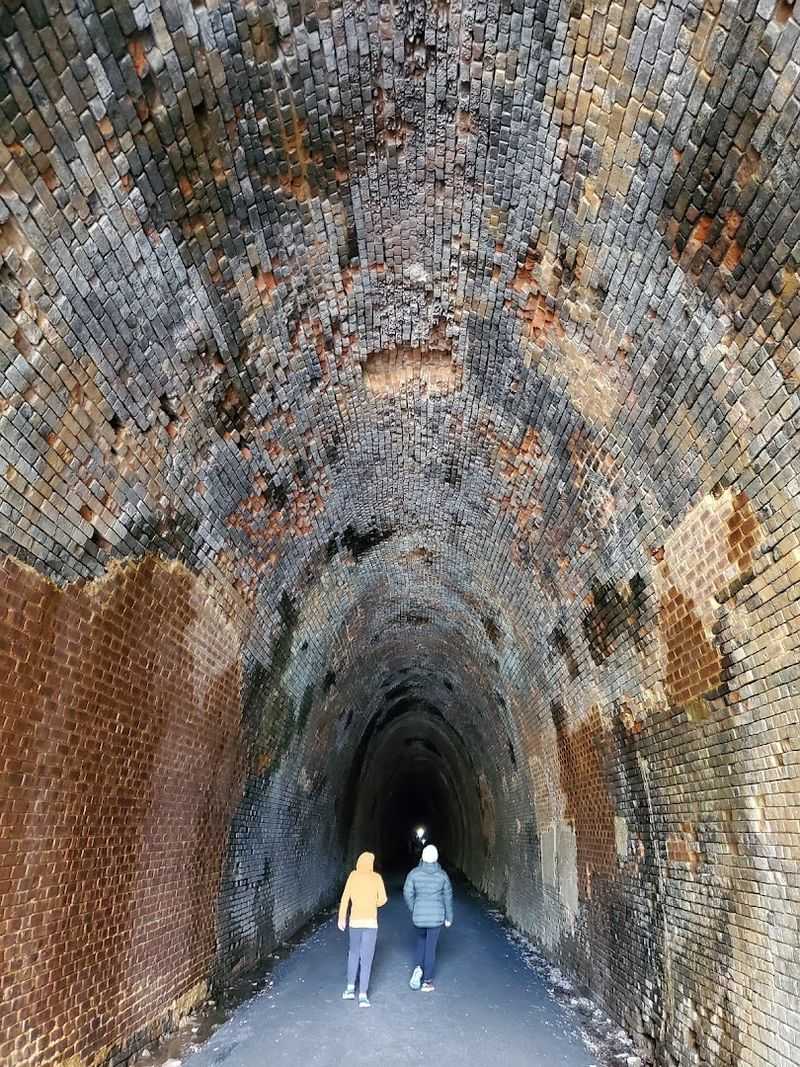
The American Society of Civil Engineers does not hand out historic landmark status to just anything. The Blue Ridge Tunnel earned that designation because what Claudius Crozet pulled off here was genuinely extraordinary for its era.
At the time of its completion, it was the longest railroad tunnel in the United States, punching through over four thousand feet of solid mountain.
Crozet’s calculations had to account for the curvature of the earth, the natural slope of the mountain, and the unpredictable behavior of different rock strata. He was doing complex three-dimensional geometry with paper, pencil, and surveying instruments.
The fact that both crews met with such minimal misalignment is the kind of detail that makes civil engineers get genuinely excited at dinner parties.
The brick arching at the tunnel portals is another highlight worth stopping to study. Craftsmen laid thousands of bricks in precise curved formations to stabilize the entrances, and those arches are still standing strong today.
Virginia has no shortage of historic engineering achievements, but this one carries a particular combination of ambition, precision, and human drama that puts it in a category all its own.
What Makes the Ghostly Reputation Stick
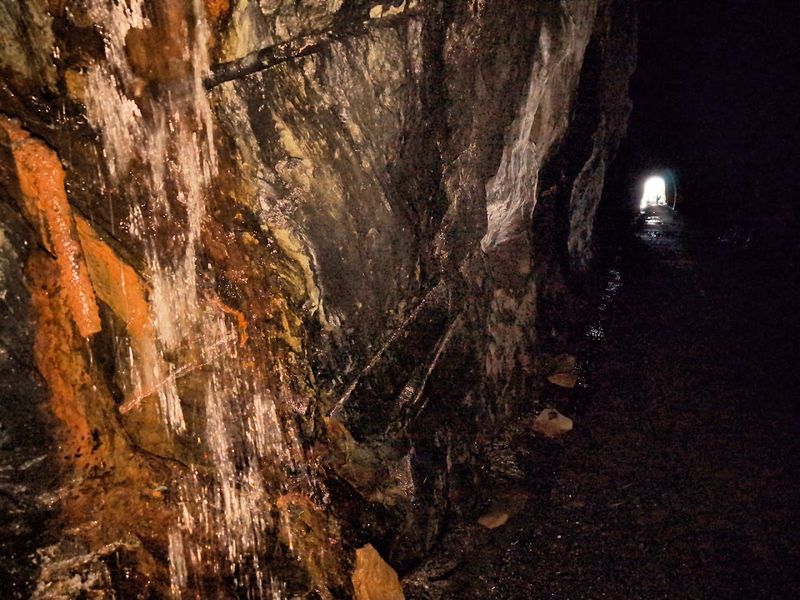
Every great tunnel needs a ghost story, and this one delivers. The acoustic properties of a long stone cylinder are genuinely unsettling in a way that even the most skeptical visitor tends to notice.
Sounds travel in unexpected directions, voices seem to come from nowhere, and the occasional drip of water landing on the floor echoes like a distant footstep.
Local folklore has leaned into these natural phenomena for years. Stories of whispers from the workers who never made it out have circulated in the surrounding communities for generations.
There is no verified paranormal evidence, but that almost makes it more interesting. The mystery stays alive precisely because the tunnel’s atmosphere does such a convincing job of feeding the imagination.
I stood alone near the center of the tunnel for a few minutes during my visit, flashlight off, and I will admit the experience was not entirely comfortable. The darkness was complete, the silence was punctuated by strange small sounds, and the cool air carried a weight that felt oddly present.
Spooky or not, the Claudius Crozet Blue Ridge Tunnel earns every bit of its eerie reputation through atmosphere alone.
Seasonal Magic: When to Visit for the Best Experience
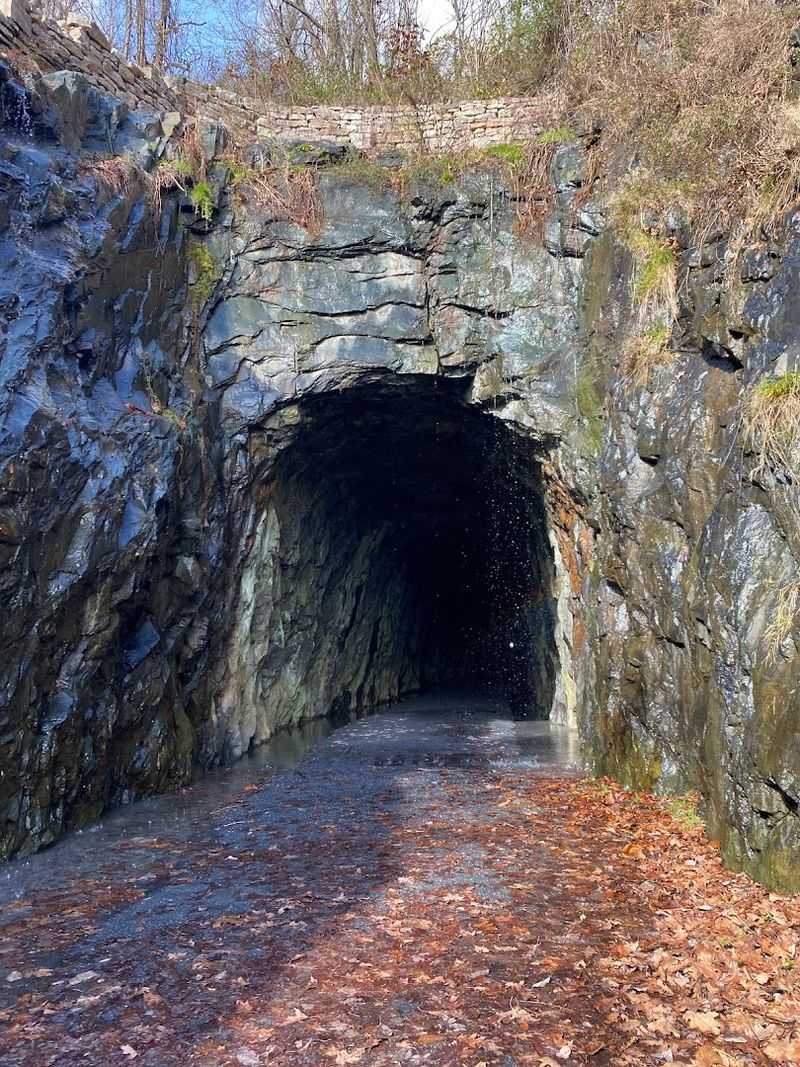
Timing your visit to the Claudius Crozet Blue Ridge Tunnel can completely transform the experience. Autumn is spectacular here, with the Blue Ridge Mountains putting on a full color show that turns the approach trail into a canvas of orange, red, and gold.
The tunnel entrance framed by fall foliage is one of those scenes that makes you stop walking just to stare.
Summer visits have their own appeal, particularly because the tunnel’s interior temperature stays dramatically cooler than the outside air. Stepping from a hot Virginia afternoon into that cool stone corridor feels like the mountain is doing you a personal favor.
Spring brings wildflowers along the trail and a fresh green energy that makes the whole hike feel uplifting.
Winter visits are quieter and carry a moody atmosphere that suits the tunnel’s character perfectly. Fewer people on the trail means more silence, more stillness, and a more contemplative experience overall.
The tunnel does not care what season it is. It stays dark, cool, and quietly dramatic no matter when you show up.
Pack appropriate layers for your season and prepare for the temperature shift the moment you step inside.
Practical Tips Before You Pack Your Flashlight
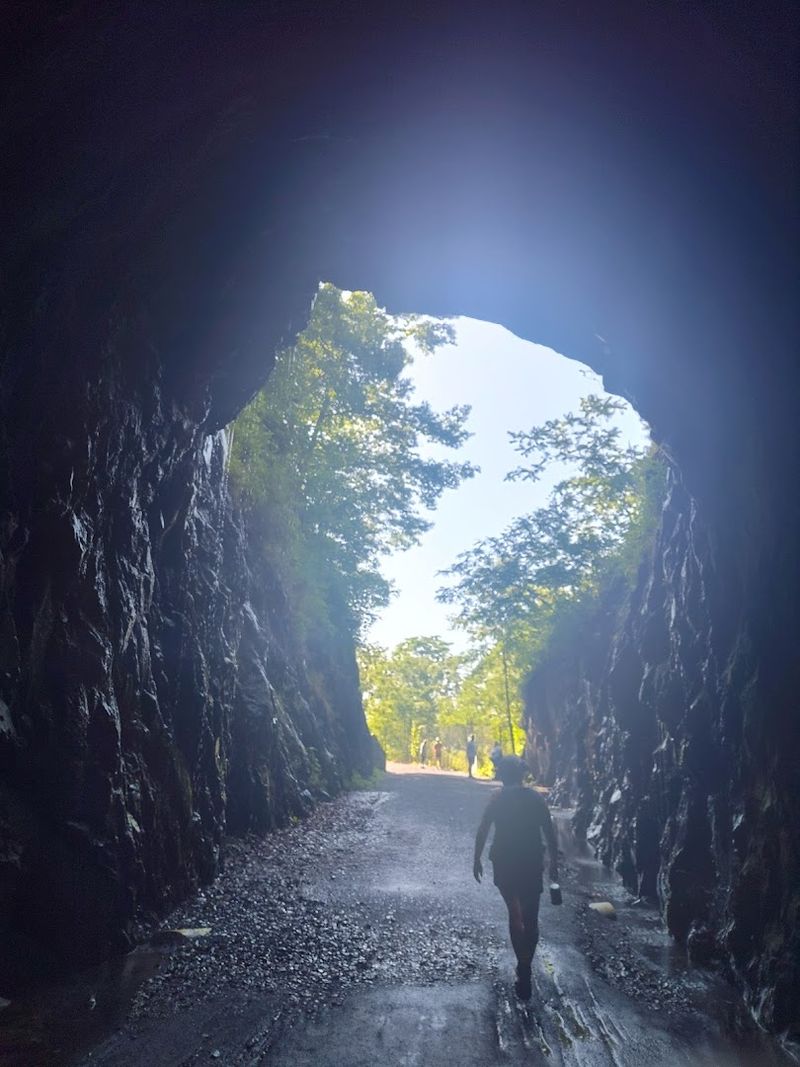
A few smart preparations make the difference between a great tunnel experience and a frustrating one. The single most important item to bring is a powerful flashlight or headlamp.
Phone lights genuinely do not cut it inside this tunnel. The darkness is deep enough that a weak light source creates more shadows than clarity, and stumbling around in there is not the adventure you want.
Wear comfortable walking shoes with good grip, since the gravel trail and the tunnel floor can be uneven in spots. A light jacket or layer is worth tucking into your bag even in summer, because the temperature inside the tunnel drops enough to feel noticeably chilly after a few minutes.
The tunnel also tends to hold moisture, so the air carries a cool dampness that catches some visitors off guard.
Parking at the east end trailhead on Afton Depot Lane is the most convenient starting point for most visitors. The trail is open from sunrise to sunset, admission is free, and leashed dogs are welcome.
Go on a weekday if you can. Weekends draw bigger crowds, and the tunnel experience is genuinely better when you have stretches of it to yourself.
The Restoration That Brought It Back to Life
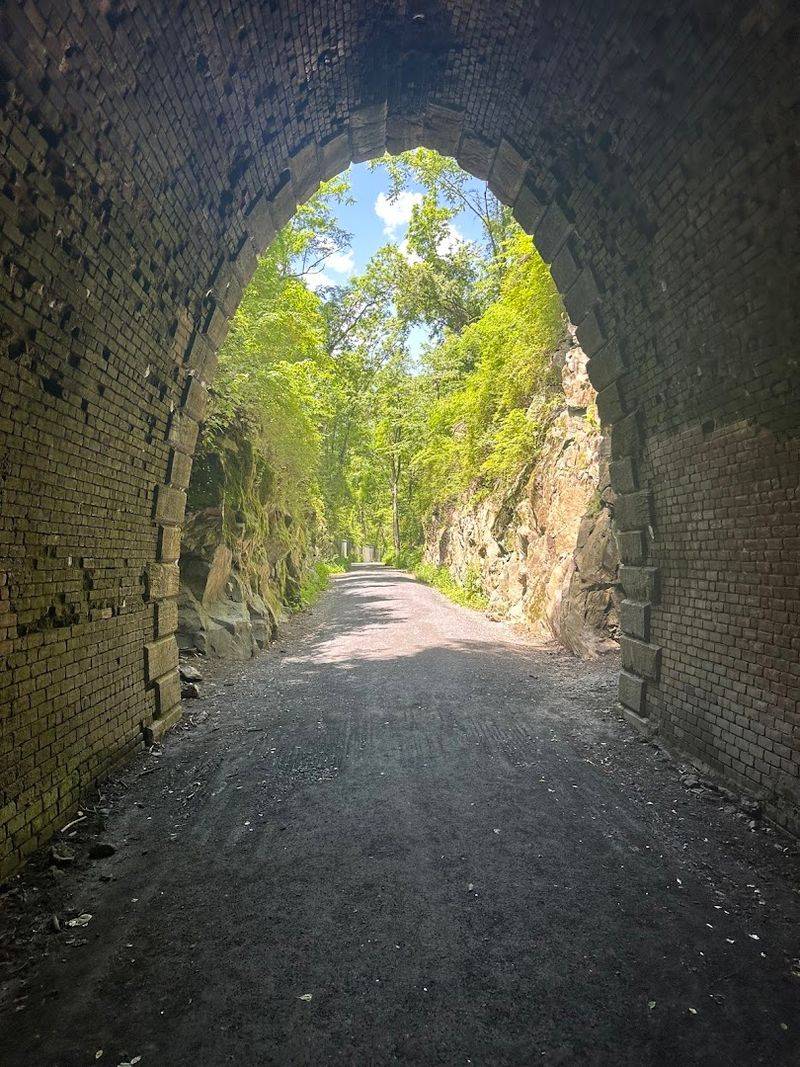
After decades of sitting abandoned and inaccessible, the tunnel got a second life through a serious restoration effort. The project involved clearing debris, stabilizing the structure, improving drainage, and restoring the historic brick portals to something closer to their original appearance.
The result is a trail and tunnel that feel both historically authentic and safely accessible.
Reopening to the public in late 2020 gave Virginia a genuinely unique outdoor attraction that had been hiding in plain sight for years. Informational signage along the trail and at the portals helps visitors connect the physical space to its historical context.
Reading those panels before entering the tunnel adds real depth to the walk through it.
The restoration team worked carefully to preserve the tunnel’s character without over-polishing it into a theme park version of itself. The rough stone walls, the brick arches, and the general atmosphere of age and history remain completely intact.
It still feels like a place where something significant happened, because it genuinely was. The Claudius Crozet Blue Ridge Tunnel is not a reconstruction or a replica.
It is the real thing, and that authenticity makes every visit feel like a genuine connection to Virginia’s past.
Plan Your Visit to This Virginia Mountain Marvel
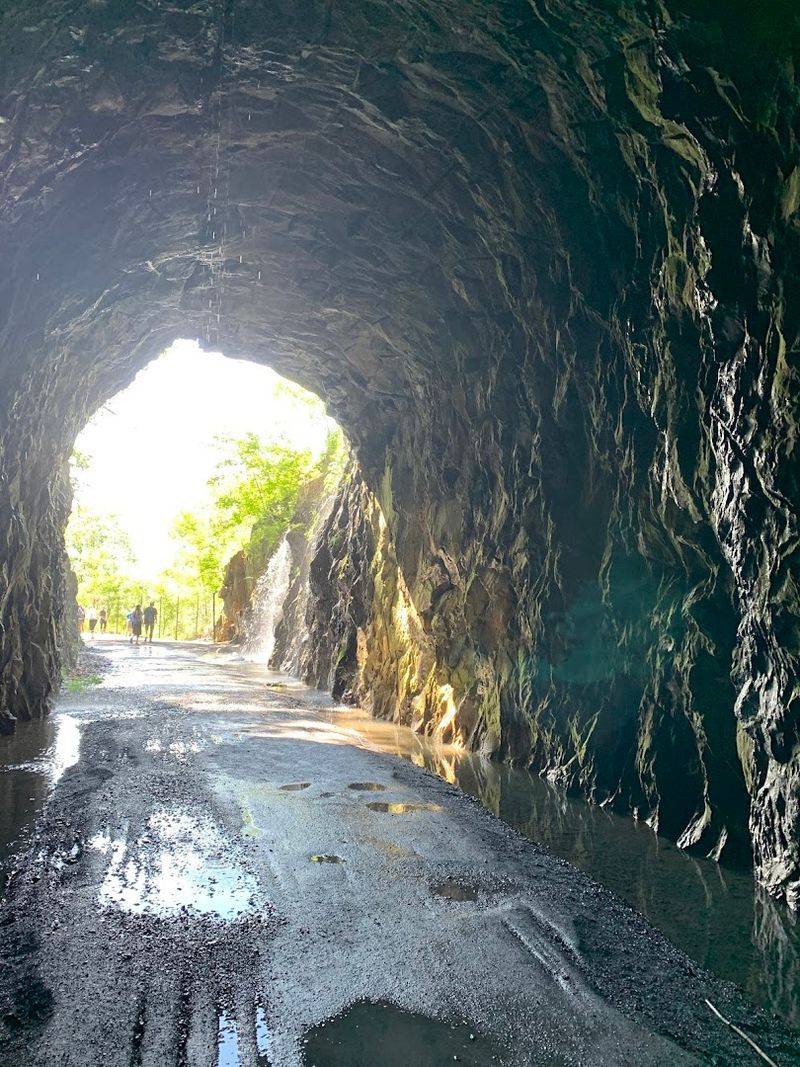
The Claudius Crozet Blue Ridge Tunnel sits in one of the most scenic corners of Virginia, and the surrounding area gives you plenty of reasons to extend your trip beyond the tunnel itself. The Blue Ridge Mountains offer gorgeous driving routes, overlooks, and outdoor activities that pair perfectly with a tunnel visit.
Afton sits right along the Blue Ridge Parkway corridor, which means the scenery on the way there is already worth the drive.
The address to punch into your navigation is 186-196 Afton Depot Lane, Afton, Virginia. Parking is available at both the east and west trailheads, with the east end offering the shorter walk to the tunnel entrance.
The trail is free to use and open daily from sunrise to sunset, making it one of the most accessible historic attractions in the state.
Virginia has a long list of remarkable places to explore, but few combine history, natural beauty, and genuine atmosphere quite like this one. Pack your flashlight, lace up your shoes, and set aside a few hours for an experience that is equal parts history lesson and adventure.
The mountain has been waiting since the 1800s. It can wait a little longer, but honestly, you should not make it.
