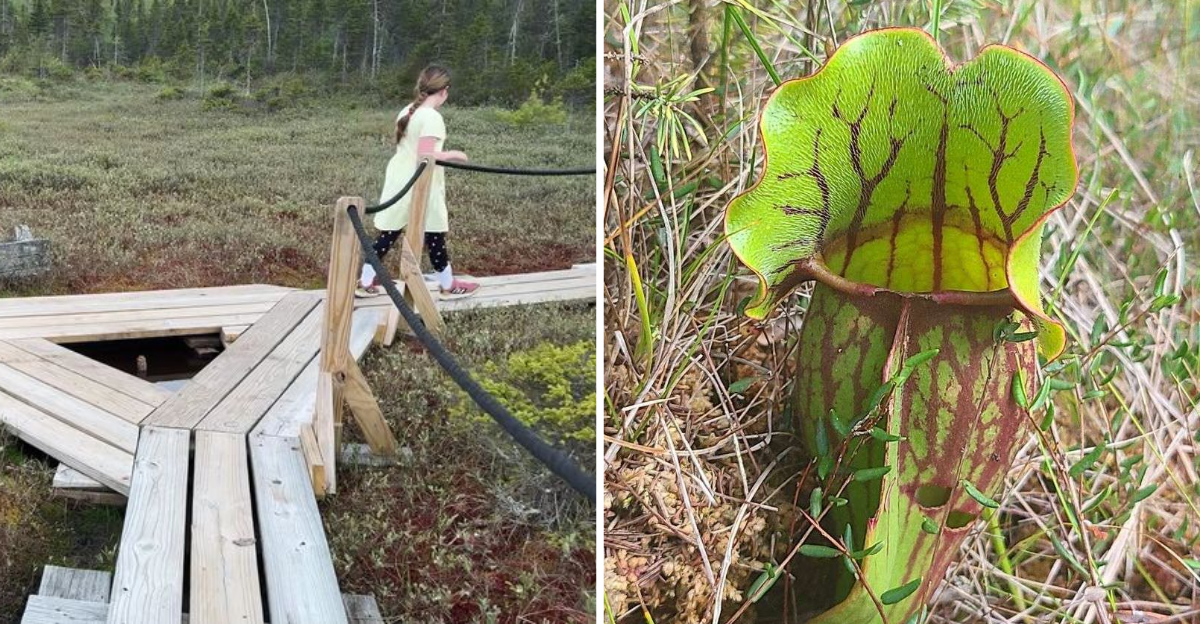
Carnivorous plants, arctic-like flowers, and twisted little trees that look like they belong in a fairy tale. New Hampshire has a bog that stopped me in my tracks the moment I arrived.
A floating mat of ancient moss stretches out before you, and the trail is less than a mile of boardwalk floating on a peat mat that can be up to twenty feet deep. Sections gently bounce beneath your feet as you walk.
I stood at the edge and watched the light shift across the open bog, the air smelling like pine and damp earth in a way that city air never quite manages.
The quiet out there gets inside you, the only sounds birds and the occasional creak of the boardwalk underneath you.
A World Shaped by Ancient Ice
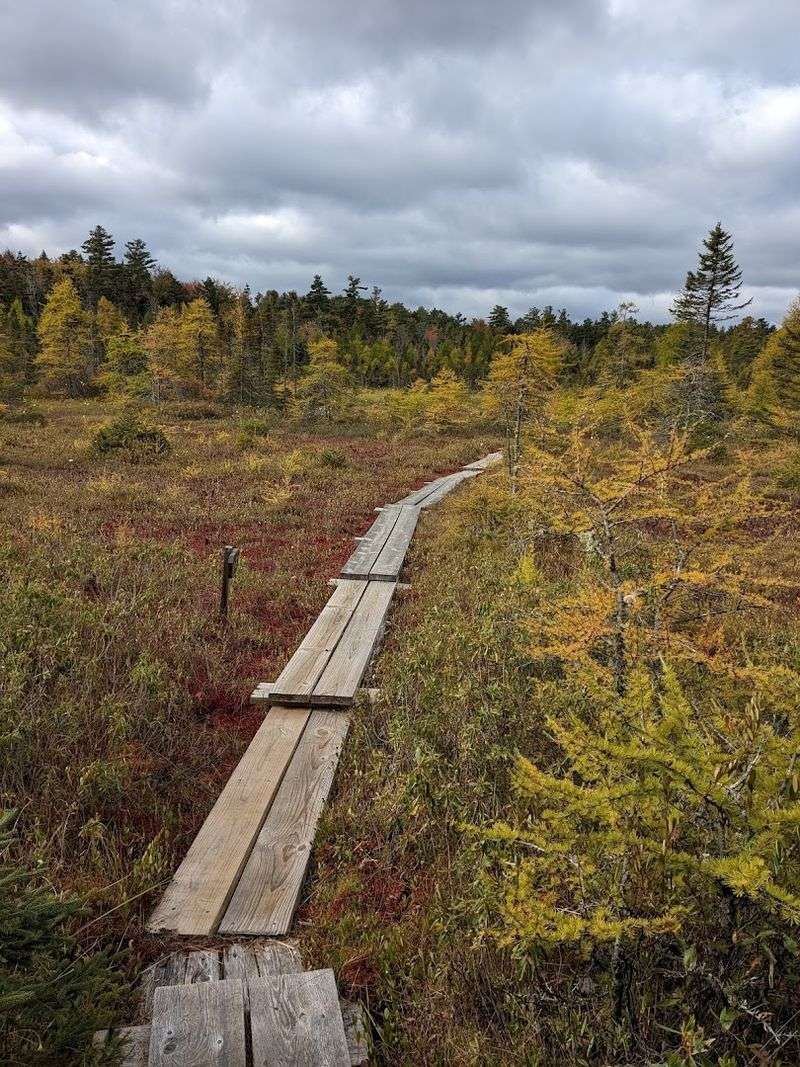
Thousands of years ago, massive chunks of glacial ice sat buried in the earth here, and when they finally melted, they left behind something remarkable.
The Philbrick-Cricenti Bog sits inside what geologists call a kettle-hole, a deep bowl-shaped depression carved not by rivers or erosion, but by the slow disappearance of ancient ice.
That simple geological fact sets the stage for everything else that makes this place so extraordinary.
Because the only water feeding the bog comes from rainfall and snowmelt, the nutrient levels stay incredibly low. Most plants cannot survive those conditions, which is exactly why the ones that do are so unusual and fascinating.
The water in the bog maintains a pH of around 4.0, roughly similar to tomato juice, making it one of the more acidic natural environments you will find in the northeastern United States.
Over thousands of years, layers of slowly decomposing plant material have built up into thick deposits of peat. Some of those peat layers extend nearly twenty feet deep beneath the surface.
The whole system has been quietly accumulating and evolving since the last ice age, and that long, slow history gives the bog a kind of weight and presence that you can almost feel when you stand on the boardwalk.
Interpretive signs along the trail do a great job of explaining this geological backstory in a way that makes the science feel exciting rather than overwhelming.
It is the kind of place that makes you appreciate just how much can happen in ten thousand years.
The Quaking, Bouncing Bog Mat
The moment you step onto the boardwalk and feel the ground shift slightly beneath you, something clicks. This is not solid earth.
Beneath the planks lies a floating mat of sphagnum moss and sedge that literally hovers above several feet of dark, still water.
That subtle bounce underfoot is not your imagination, and it is honestly one of the most memorable physical sensations I have had on any trail.
Sphagnum moss is the real architect of this entire ecosystem. It holds an astonishing amount of water, keeps the environment acidic, and slowly breaks down over centuries to form the peat that gives the bog its depth.
The mat itself is not anchored to the bottom of the kettle-hole in the way you might expect solid ground to be. It floats, shifts slightly with weight and wind, and continues to grow outward from the edges year after year.
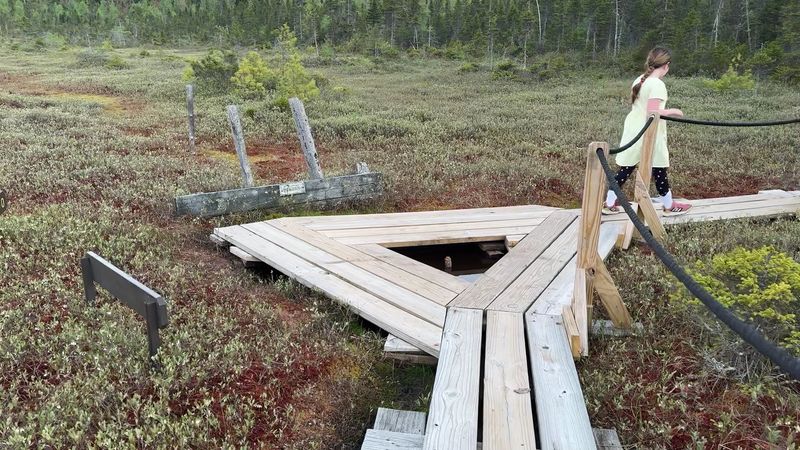
At one point along the trail, there is a spot where visitors can push a long wooden pole down through the mat to feel just how deep the water and peat go beneath the surface. Watching that pole disappear almost entirely is genuinely jaw-dropping.
It turns an abstract fact into something immediate and real.
The bog mat can look deceptively solid from the boardwalk, almost like a lawn of red and green moss, but stepping off the designated path is strongly discouraged for good reason.
The mat cannot support a person in many places, and the water below is far deeper than it appears.
The Boardwalk That Makes It All Possible
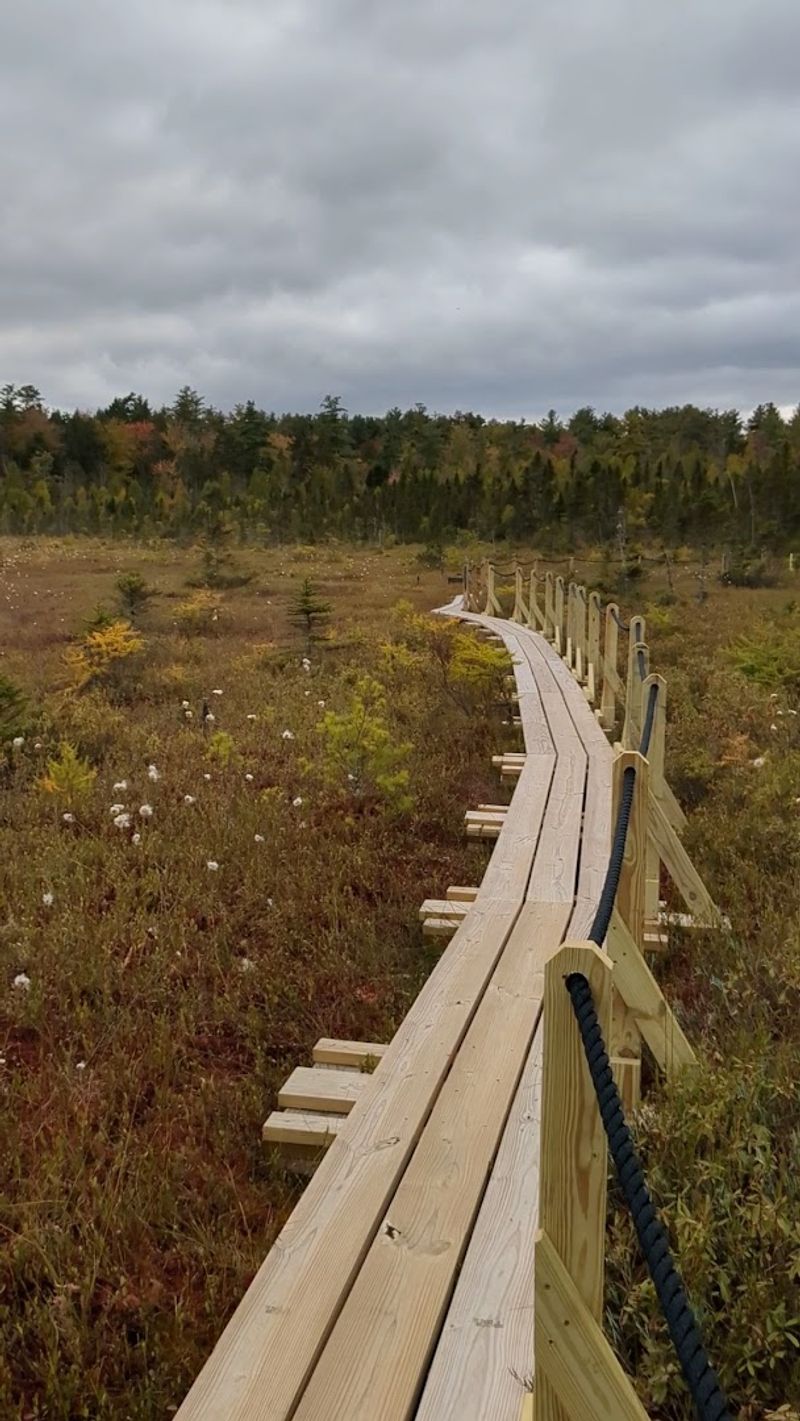
Getting to experience a fragile ecosystem like this one without damaging it is a genuine challenge, and the trail system at Philbrick-Cricenti Bog handles it beautifully.
The New London Conservation Commission has invested serious effort into building and maintaining a network of boardwalks and bog bridging that lets visitors move through the landscape without disturbing its delicate surface.
The result is a trail that feels both purposeful and surprisingly comfortable to walk.
A significant upgrade completed between 2022 and 2025 brought new aluminum walkways to replace some of the older wooden sections.
These newer sections are wider, often around 36 inches, and many include handrails, which makes the trail more accessible for people with limited mobility.
Most of the main loop is wheelchair accessible, though one section called the Tundra Loop involves a forest trail that is narrower and less even. Strollers handle the main boardwalk sections without much trouble.
Interpretive signs are placed thoughtfully throughout the trail, explaining everything from peat formation to the specific plants growing right beside you.
There is also a QR code system with trail markers that lets you pull up additional information on your phone as you walk.
The whole loop covers less than a mile, which makes it easy to complete in thirty to sixty minutes without feeling rushed. Dogs are not permitted on the trails, which helps protect the sensitive habitat.
The trail is free to visit, and parking is available along Newport Road, though the lot is small so arriving early on busy weekends is a smart move.
Carnivorous Plants Living Their Best Lives
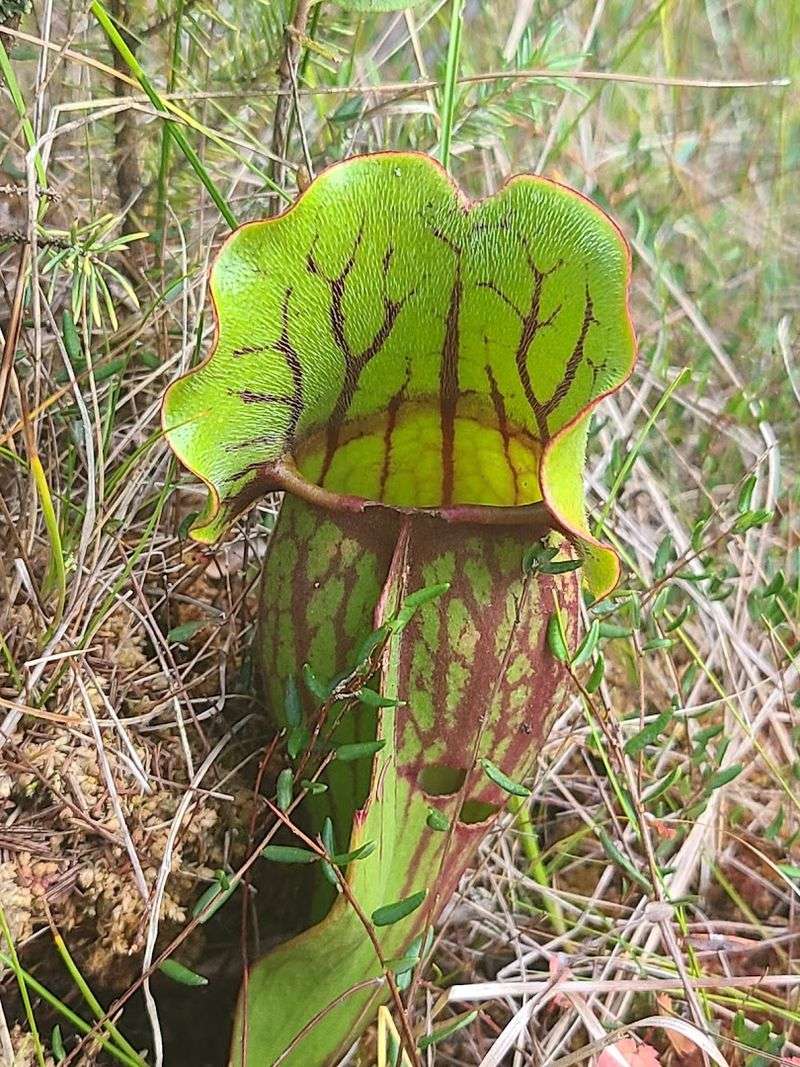
Nothing quite prepares you for the moment you crouch down and realize that the beautiful, vase-shaped plant in front of you is actively digesting an insect.
Purple pitcher plants are everywhere in this bog, their deep red and green tubes holding small pools of digestive liquid that trap and slowly break down any bug unlucky enough to fall in.
Spotting one with an actual captured insect floating inside is equal parts unsettling and completely fascinating.
Sundews are another carnivorous resident worth looking for, though they require a bit more patience to spot. Their leaves are covered in tiny, glistening tentacles tipped with sticky droplets that look almost like morning dew.
Small flies and gnats land on them, get stuck, and the leaf slowly curls inward. It is an elegant and slightly sinister process, and the plants pull it off with zero drama.
Bladderworts round out the carnivorous lineup, though they operate mostly underwater and are less visible from the boardwalk. They use tiny vacuum-like bladders to suck in and trap small aquatic organisms.
All three of these plants evolved their hunting habits as a direct response to the bog’s nutrient-poor conditions. Since the soil and water cannot provide enough nitrogen, they get it from their prey instead.
It is one of the most striking examples of adaptation you will find anywhere in New England, and the fact that you can see it up close, just inches from the boardwalk, makes the whole experience feel genuinely special.
A Tapestry of Tundra-Like Wildflowers and Trees
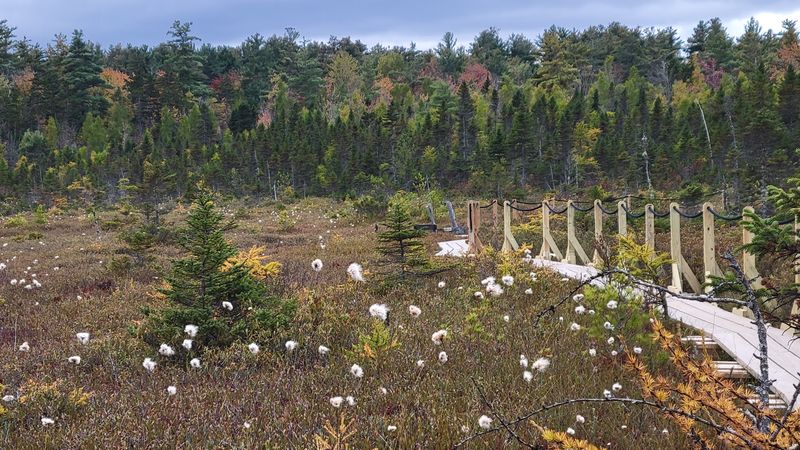
Most people do not expect to find arctic wildflowers in New Hampshire, but the Philbrick-Cricenti Bog has a habit of surprising its visitors.
The same extreme conditions that keep most plants away create a perfect environment for species that typically thrive in far northern tundra.
White fringed bog orchids push up through the thick moss with quiet elegance, and grass-pink orchids add vivid splashes of purple-pink that stop you mid-step.
Bog bean, water arum, bluebead lily, and bunchberry are among the other plant species that call this place home. Leatherleaf and bog-rosemary form dense, low-growing mats across much of the open bog surface.
Each of these plants has its own set of adaptations for surviving the cold, acidic, nutrient-starved conditions, and together they create a layered, textured landscape that looks completely different from any typical New Hampshire forest.
The trees here tell a story of their own. Tamarack, also known as larch, is a genuinely unusual tree because it is a conifer that drops its needles every fall, something most evergreens never do.
Black spruce trees also grow throughout the bog, but they stay surprisingly small despite being quite old, stunted by the harsh environment rather than by age.
Seeing a tree that might be decades old standing only a few feet tall gives you a visceral sense of just how demanding this ecosystem is.
The bog received the Homer Lucas Landscape Award in 1995 for its outstanding display of native plants, and spending time here makes it easy to understand why.
Planning Your Visit to This Hidden Gem
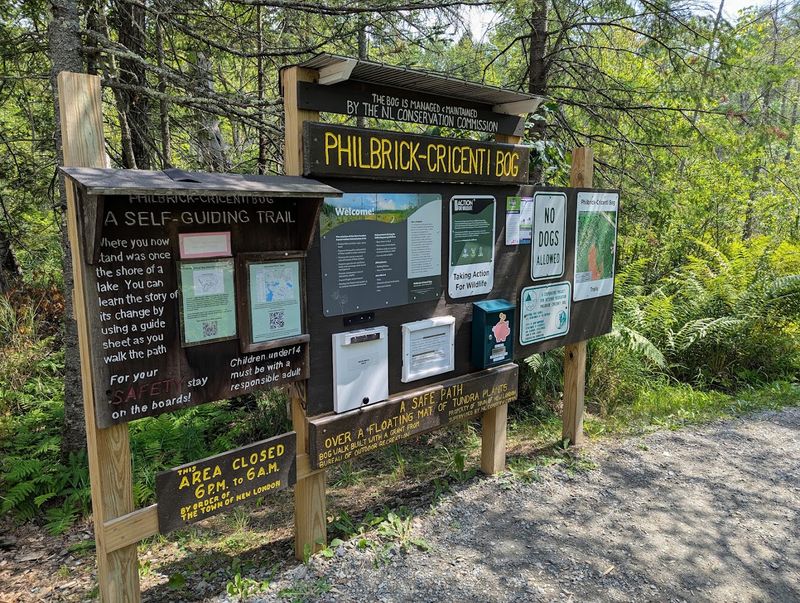
Philbrick-Cricenti Bog rewards visitors who show up prepared and curious. The trail is short, free, and genuinely accessible to most fitness levels, but a few practical details can make a real difference in how much you enjoy the visit.
The bog sits in open sunlight for most of its length, with shade only at the forested edges, so bringing sunscreen and a hat during summer visits is a genuinely good idea. A battery-powered neck fan is not a bad call either on hot days.
Footwear matters more here than on most short trails. After rainy weather, some of the older wooden plank sections can sit partially submerged in water, so waterproof shoes or boots are worth considering.
The newer aluminum sections handle wet conditions better, but mixing old and new sections means you could encounter both on the same walk.
Fall is a particularly beautiful time to visit, when the bog vegetation shifts into deep reds and burnt oranges that make the whole landscape look almost surreal.
Parking along Newport Road is limited, so arriving early on weekends and during peak foliage season helps avoid a frustrating wait.
There is no formal visitor center on site, but the interpretive signs and QR code trail markers provide plenty of context as you walk.
Guided open-house events are occasionally hosted by the New London Conservation Commission, and attending one of those adds an extra layer of depth to the experience.
The bog is a place worth returning to across different seasons, because it genuinely looks and feels different each time.
