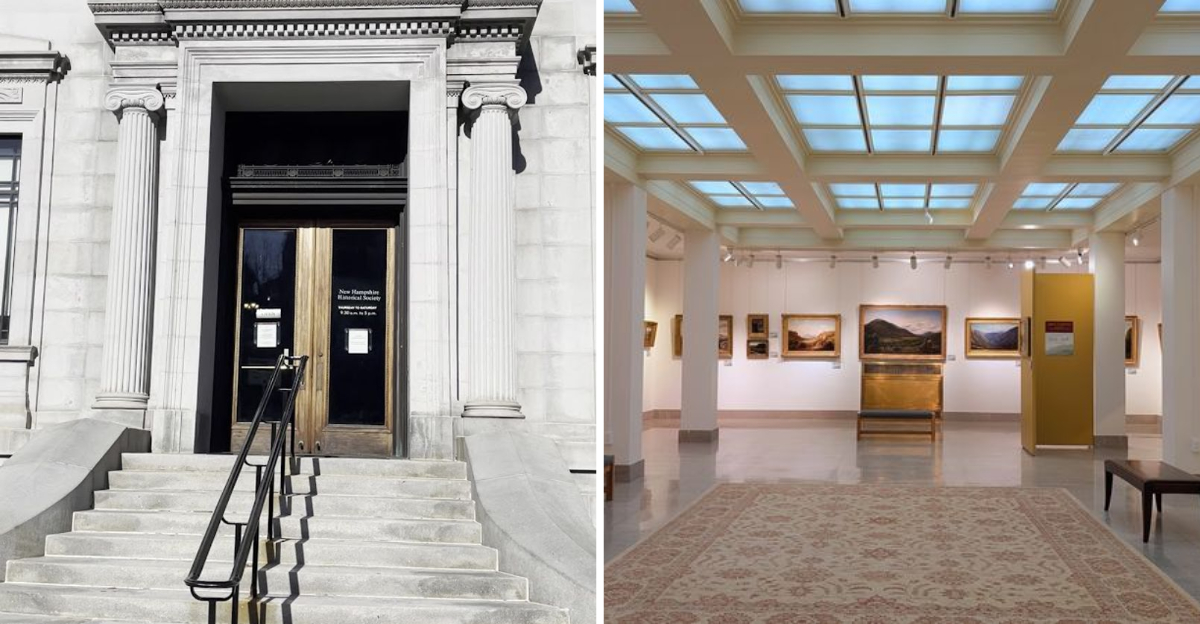
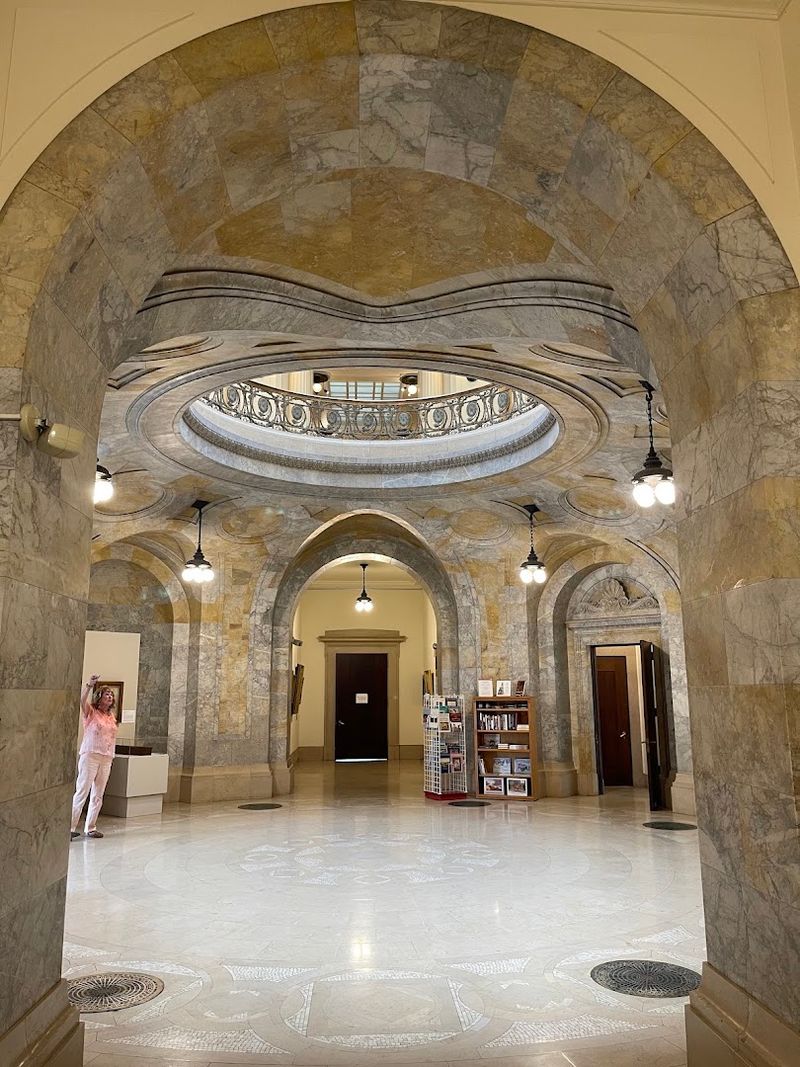
Portraits of royal governors line the walls of that New Hampshire building, and a monumental rotunda soars overhead. The air carries that particular stillness that only old paper and preserved wood can produce.
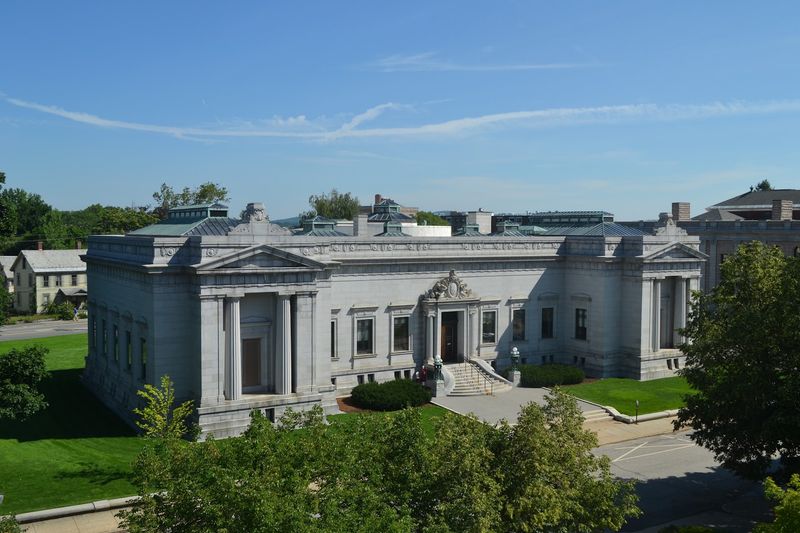
I stepped through the front entrance on Park Street and realized this was no ordinary archive. The building, completed in 1911, feels like a letter written to the future, a deliberate act of preservation by people who understood that history is fragile.
Inside, millions of pages of manuscripts, thousands of books, hundreds of thousands of photographs, and countless museum objects wait quietly for the right visitor to find them.
I stood in the rotunda and watched the light filter through the windows, thinking about all the hands that had touched those documents before me.
If you have ever wanted to hold a piece of New Hampshire history in your hands, this is exactly where you need to be.
A Grand Entrance That Sets the Tone
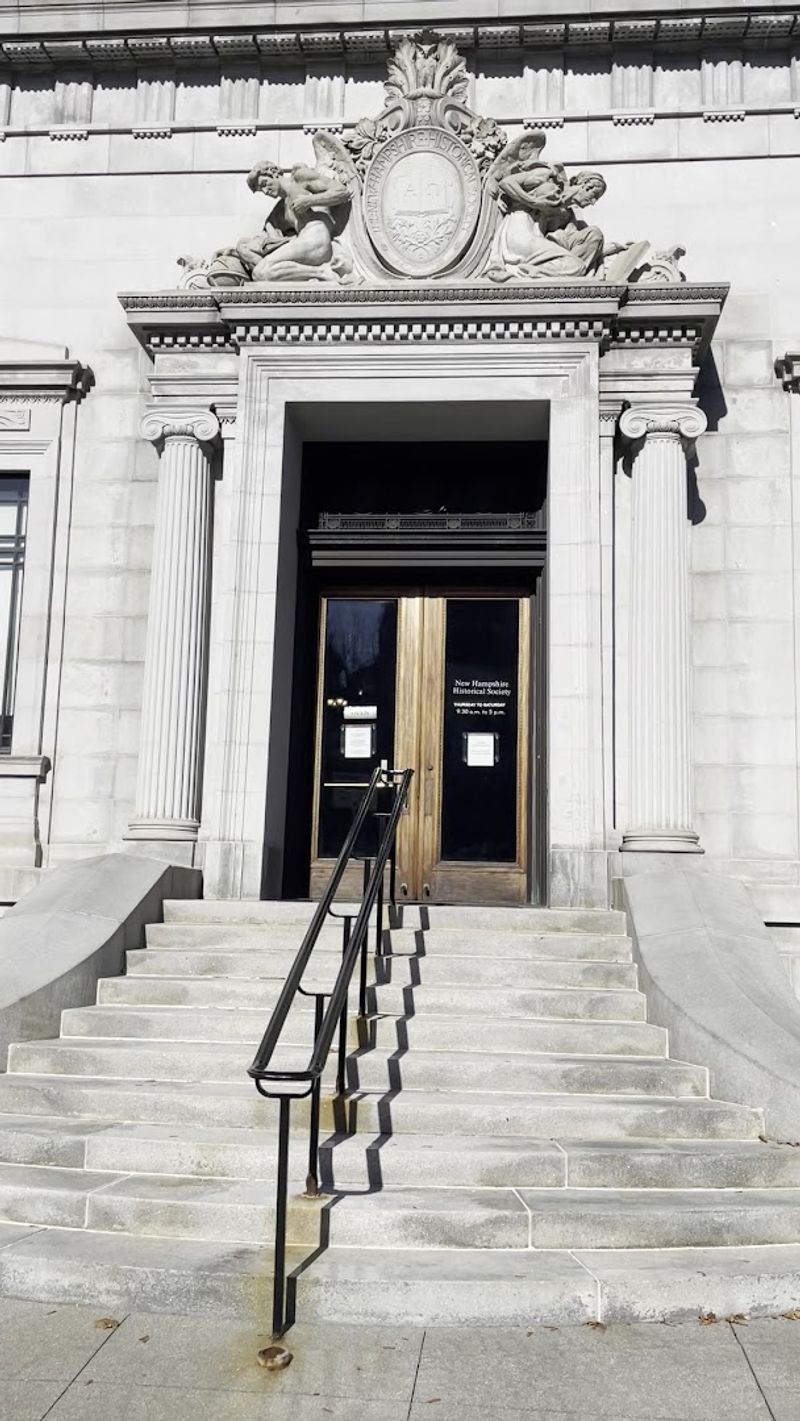
The first thing that catches your eye about the New Hampshire Historical Society building is the granite facade, solid and deliberate, the kind of structure that was built to outlast its builders.
Situated on Park Street in the heart of Concord, the headquarters has anchored this corner since 1911 and still commands quiet authority over the surrounding streetscape.
It does not shout for attention, but it earns it.
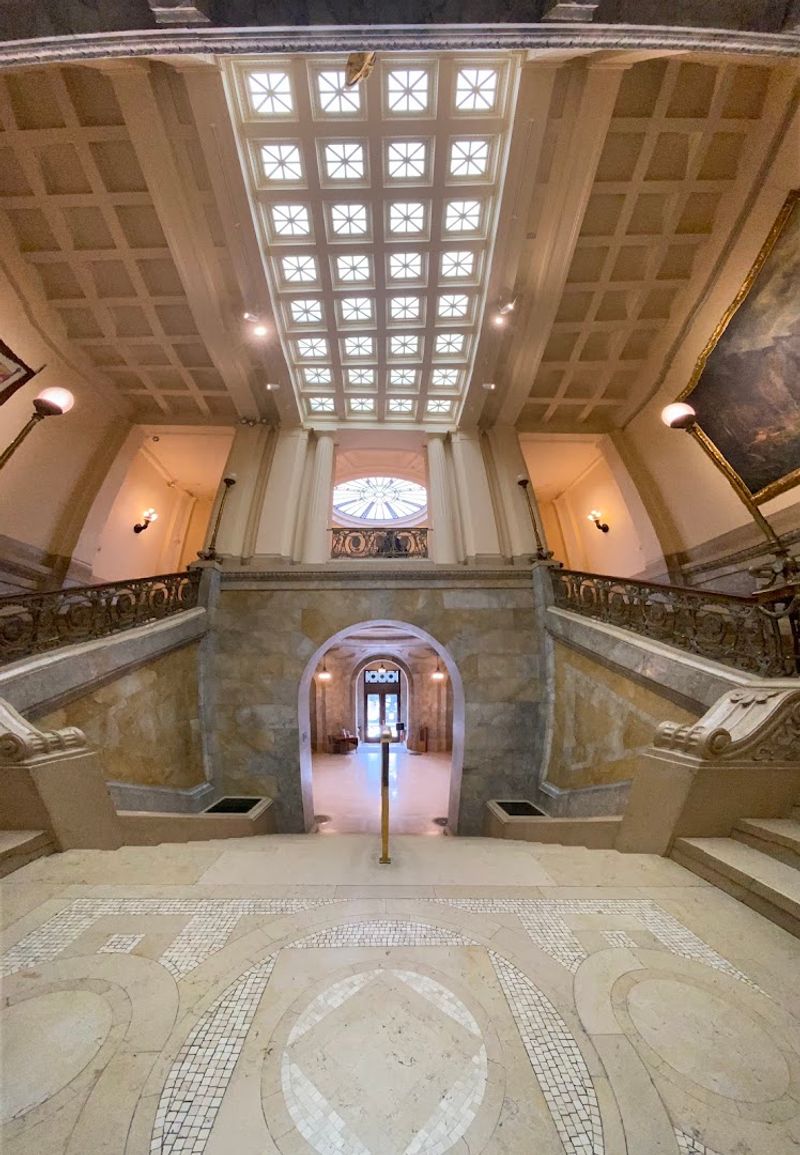
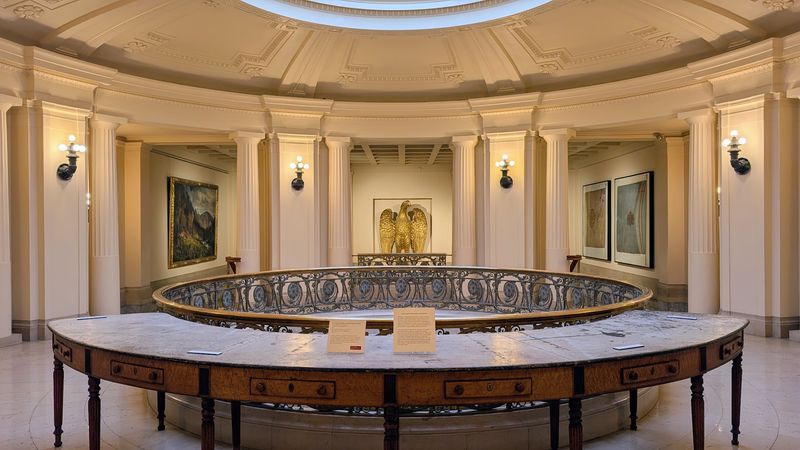
Inside the entrance, the monumental rotunda is the kind of space that makes you pause mid-step. Soaring ceilings carry sound in unusual ways, so even a whispered conversation feels significant.
The architectural details, from the carved stonework to the arched doorways, reflect an era when public buildings were designed to inspire confidence and respect.
One of the first things visitors notice is the original eagle that once perched atop the New Hampshire State House dome, now displayed at eye level where you can actually study it up close.
Portraits of royal governors hang nearby, their expressions serious and composed, as though they are still evaluating the state of things.
The staff break through any sense of intimidation quickly, greeting visitors with genuine warmth and readiness to help.
That combination of grand architecture and approachable people makes the entrance feel like both an arrival and an invitation.
It sets a tone that carries through every room in the building, one of respect for the past paired with real enthusiasm for sharing it.
The Research Library and Its Staggering Scale
Most people picture a modest reading room when they hear the word library, but what the New Hampshire Historical Society has assembled is something on an entirely different scale.
The research library holds 50,000 printed volumes, a number that already sounds impressive until you learn it shares shelf space with two million pages of manuscripts.
That figure is almost too large to process at first.
Those manuscript pages span from the colonial era right up to recent decades, covering everything from personal diaries and family correspondence to business ledgers and legal records. Each one represents a real person navigating a real moment in time.
Flipping through a finding aid and realizing the sheer range of voices preserved here is genuinely humbling.
The collection also includes 800,000 pages of historical newspapers, 250,000 photographic images, 5,000 broadsides, and 3,000 maps.
For researchers tracing family genealogy, those photographic records alone can unlock entire branches of a family tree that seemed lost.
For historians, the newspaper archive offers a ground-level view of events as they were understood by ordinary people, not just official accounts.
Scheduling an appointment before visiting is a smart move, especially if you have specific materials in mind. Some items are stored off-site and require advance notice to retrieve.
The staff are remarkably efficient at pulling requested materials, and several visitors have noted finding artifacts connected to relatives who served in the Revolutionary War. That kind of discovery does not happen by accident.
It happens because of careful, dedicated curation over many decades.
Rare Books and the Allure of Early American Materials
There is a particular thrill that comes from being in the same room as a book that has survived three centuries of New England winters and political upheaval.
he New Hampshire Historical Society Library holds rare books and early printed materials that stretch back to the 17th century, and the care taken to preserve them is evident in every detail of how they are stored and handled.
These are not decorative objects behind glass. They are working historical documents.
The rare book holdings include first editions, volumes with handwritten annotations from their original owners, and titles that exist in very few surviving copies anywhere in the world.
For anyone with a genuine interest in early American publishing history, the collection offers research opportunities that are genuinely hard to find elsewhere in New England.
The finding aids make navigating the collection manageable, even for first-time researchers.
What makes the experience feel almost secret is the nature of the space itself. You request materials, you wait, and then a staff member arrives with a box or a folder containing something that has not been touched in years, possibly decades.
That moment of opening a folder and seeing handwriting from the 1700s is unlike anything a digital archive can replicate.
Personal papers, military records, and business correspondence from New Hampshire’s earliest settlements fill these collections with texture and specificity. Each document is a data point in a much larger human story.
The library does not just store these materials. It actively makes them accessible to anyone willing to engage with the process of discovery.
Presidential Echoes and New Hampshire’s Political Legacy
New Hampshire has always punched above its weight in American political history.
From its early role as one of the original thirteen colonies to its modern status as the first primary state in presidential elections, the Granite State has been at the center of national conversations for centuries.
That political weight is reflected directly in the manuscript holdings of the Historical Society Library.
Within two million pages of archival documents, the probability of finding letters connected to presidents, senators, and national figures is extremely high.
New Hampshire produced politicians who corresponded with sitting presidents, advised administrations, and shaped federal policy on everything from tariffs to territorial expansion.
Those exchanges, written by hand on paper that has somehow survived, are exactly what researchers come here hoping to find.
The society does not curate its collections around celebrity names alone. The real value lies in the density of political material across all levels of government, from town selectmen to congressional representatives.
Reading a letter from a local official discussing a national crisis gives you a perspective that official government records rarely provide. It is unfiltered, personal, and often surprisingly candid.
For anyone with an interest in how political decisions were made and communicated before the telegraph, telephone, or internet, these manuscript collections are a primary source goldmine.
The act of writing a letter was deliberate and considered in ways that modern communication simply is not.
Each surviving letter in this archive represents a conscious decision to put words on paper and trust them to travel. That weight still comes through today.
Museum Objects and the White Mountain Art Collection
Not everything at the New Hampshire Historical Society Library is stored in a folder or shelved in a box.
The museum side of the operation holds 35,000 objects, and some of the most memorable are the ones you simply did not expect to encounter.
A full-size Concord coach greets visitors near the center of the building, a reminder that New Hampshire was once a hub of American transportation manufacturing.
It is an iconic object, and seeing it in person rather than in a photograph is a genuinely different experience.
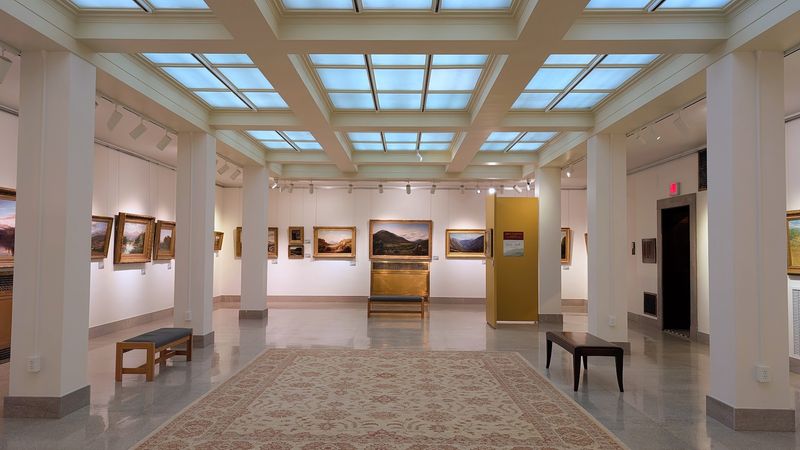
The White Mountain art collection is another standout. These large-format 19th-century landscape paintings capture the region’s dramatic scenery with a vividness that still resonates.
Several are massive in scale, the kind of paintings that seem to pull the room toward them. Visitors have described feeling almost transported by them, which sounds like an exaggeration until you are actually standing in front of one.
A dugout canoe crafted by the Abenaki people, among the indigenous inhabitants of the region, offers a grounding counterpoint to the colonial-era documents and portraits. It is a reminder that New Hampshire’s history did not begin with European settlement.
That object, displayed without excessive commentary, speaks clearly on its own.
The photographic collection of 250,000 images adds yet another layer, providing visual documentation of people and places across centuries.
Old photographs have a unique power to humanize history in ways that written records sometimes cannot.
Faces, postures, and settings in those images make the past feel remarkably close. The society has built something that rewards slow, attentive looking.
Planning Your Visit to This Hidden Historical Gem
Getting the most out of a visit to the New Hampshire Historical Society Library takes just a little advance planning, and that small effort pays off considerably.
The library is open Tuesday through Saturday from 9:30 a.m. to 5 p.m., though it closes on federal holidays.
Checking the society’s website before heading out is always a good idea, as special events and programs occasionally affect regular hours.
Researchers who want to access specific manuscript collections or rare materials are strongly encouraged to contact the library ahead of time. Some items are stored off-site and need to be requested in advance.
Staff members are known for being genuinely helpful, and several visitors have mentioned arriving to find their requested materials already laid out and ready, which makes the whole experience feel remarkably smooth and professional.
Members of the New Hampshire Historical Society enjoy free access to the library, while non-members pay a modest admission fee.
Membership also brings other benefits, including access to monthly programs and a regular newsletter.
For anyone planning to visit more than once, membership is worth considering seriously.
The building on Park Street is wheelchair accessible, and metered parking is available on surrounding streets. From Interstate 93, the directions are straightforward.
Spending an hour or two here is easy, and for serious researchers, a single visit often turns into several.
Whether you are tracing family history, exploring early American politics, or simply curious about the state’s past, this library delivers something real and lasting.
It is the kind of place you leave thinking about for days afterward.
