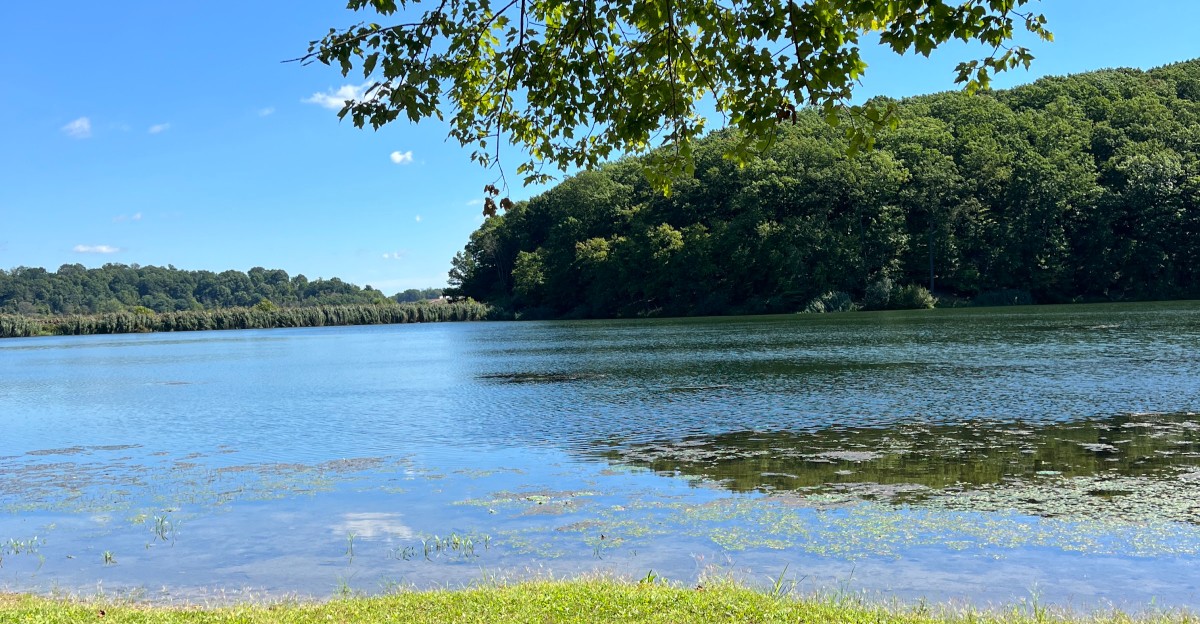
Look across this enormous blue lake and it’s hard to believe farms once stood where the water stretches today.
Before one of New Jersey’s largest reservoirs existed, families lived and farmed across this valley. The state began acquiring the land in the late 1950s, forcing residents to relocate.
Some families actually moved their houses off their foundations to nearby roads, where several still stand.
The reservoir was created in 1960, eventually covering 2,350 acres and holding up to 55 billion gallons of water.
Today, people come for swimming, boating, fishing, hiking, camping, and those striking blue-water views.
Still, knowing what came before changes the scenery. Beneath all that water is the story of a rural community that quite literally had to make way for the lake.
A Valley Shaped Like a Giant Bowl
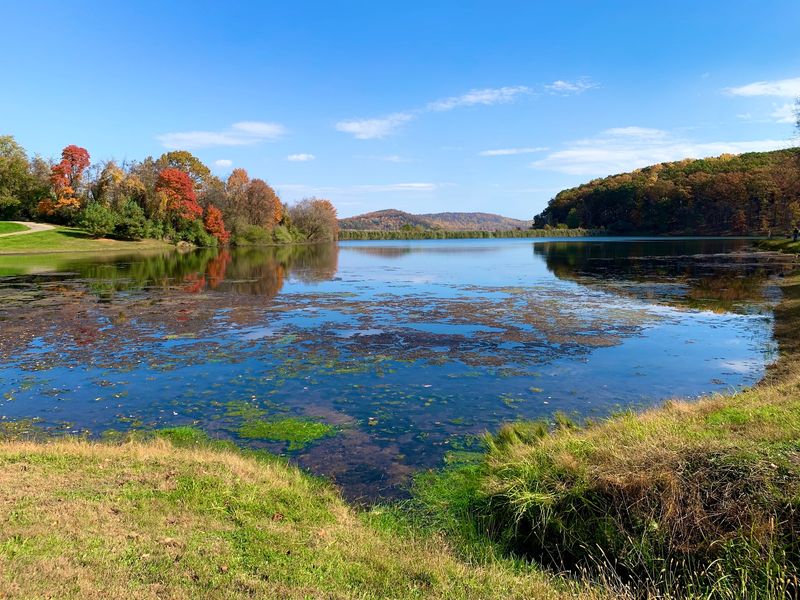
Nature did most of the design work here long before any engineer showed up. The valley is almost perfectly round, and that shape came from ancient erosion.
Soft sedimentary rock in the middle wore away over time, while tougher volcanic rock in the surrounding ridges stayed put.
Those ridges belong to Cushetunk Mountain, which curls around the valley like the rim of a cereal bowl. From higher trails, you can really see how the land dips down and then rises again on every side.
It is a neat geology lesson without a single textbook.
I love how the shape still defines everything today. The reservoir fills the bowl, the woods climb the slopes, and the sky sits on top like a lid.
Pretty tidy, right?
Before European settlers arrived, the valley was a popular hunting ground for Native Americans. Later, it gave shelter to soldiers during the Revolutionary War.
So even before farms appeared, this spot had already collected a few chapters of history.
Keep that round outline in mind while exploring. It explains a lot about how the lake looks and behaves.
Farm Life Before the Flood
Picture barns, cornfields, and dirt lanes winding between farmhouses. That was the everyday scene in this part of Clinton Township, Hunterdon County, for generations.
Families lived by the seasons, planting in spring and harvesting in fall.
The soil was rich enough to grow almost anything. Many households were largely self-sufficient, which meant gardens, livestock, and plenty of hard work from sunrise on.
Neighbors knew each other well, and the scattered farmsteads formed a close community.
Honestly, it sounds a little dreamy. Slow mornings, open fields, and a view of the hills from the kitchen window.
The valley also had its own school and church, the kind of places that tie a small community together. Kids learned there, and families gathered there.
These were not just buildings, they were the center of daily life.
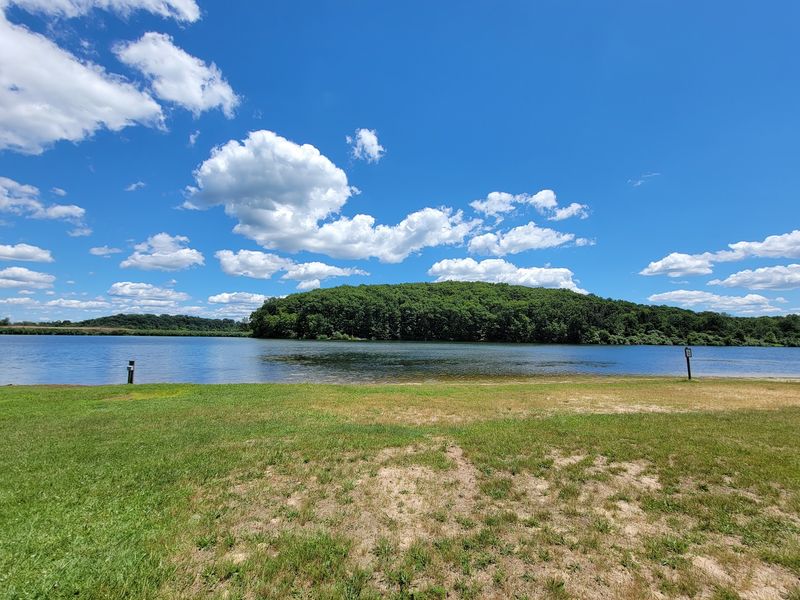
When you look across the water today, try imagining those fields below the surface. The calm lake makes it easy to forget that people once called this valley home.
Remembering them adds real weight to every view, and it makes a simple picnic feel a bit more meaningful.
The Hard Goodbye
Growing towns to the east needed water, and droughts made that need urgent. Central New Jersey leaders looked for a spot to build a huge reservoir, and this round valley fit the plan almost perfectly.
For the farm families, that news landed hard.
The state moved to buy dozens of properties. Many had belonged to the same families for generations, and plenty of residents did not want to sell.
They protested, but the project went forward anyway.
That part stings a little. Progress often comes with a cost, and here it was paid by people who loved their land.
Families received payment and could move their homes to nearby spots, often at their own expense, or leave them behind. About 16 homes and several barns were moved.
Other buildings, including the school and the church, were torn down, and farm equipment and livestock were auctioned off.
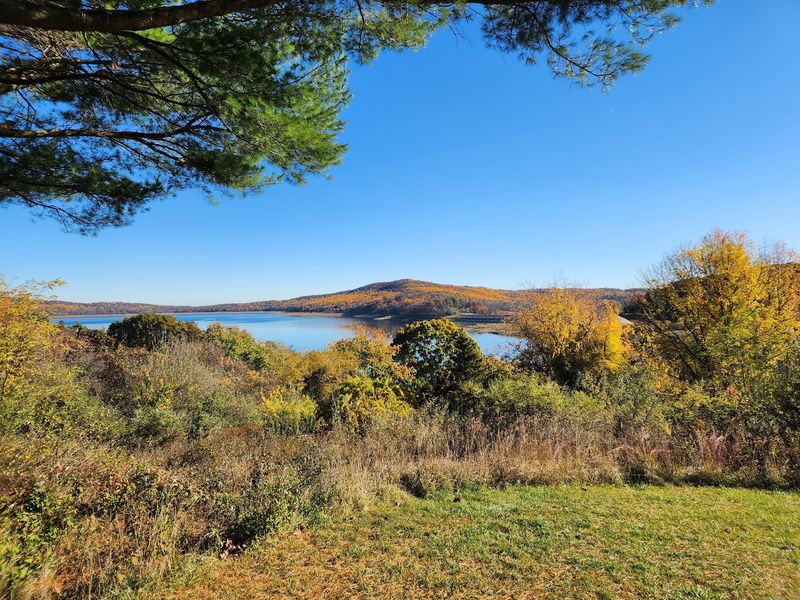
Some families resettled on higher ground nearby. From there, they could watch the valley they knew slowly turn into a lake.
It is a quiet, bittersweet story worth carrying with you on any visit.
Big Dams, Bigger Numbers
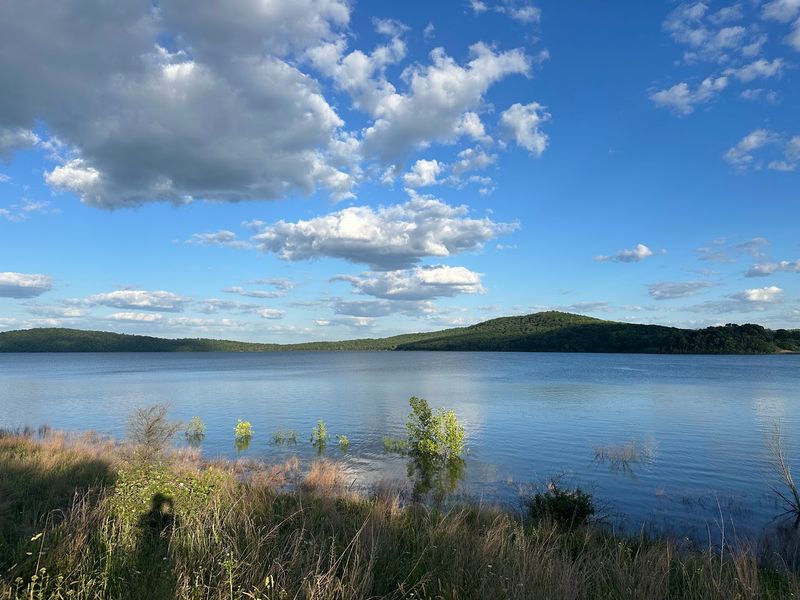
Engineers had a clever advantage. Since the valley was already a bowl, they only needed to seal its natural low exits with dams.
Construction began in 1960 under the New Jersey Water Authority.
Water was pumped in from the South Branch Raritan River, and the valley slowly filled through the early 1960s. By the middle of that decade, the reservoir had reached full capacity.
It took patience, pumps, and a whole lot of earth moving.
Now for the fun stats. The reservoir covers more than 2,300 acres and drops to about 180 feet deep, making it the deepest lake in the state.
At full capacity, it holds around 55 billion gallons of water.
That is a number my brain cannot quite picture. Think of it as enough water to help supply a big chunk of central New Jersey.
When you drive past the dams, they might look like simple grassy hills. Look closer, though.
Those slopes are doing serious work every single day, holding back one of the largest bodies of fresh water in the region.
Water So Clear It Almost Glows
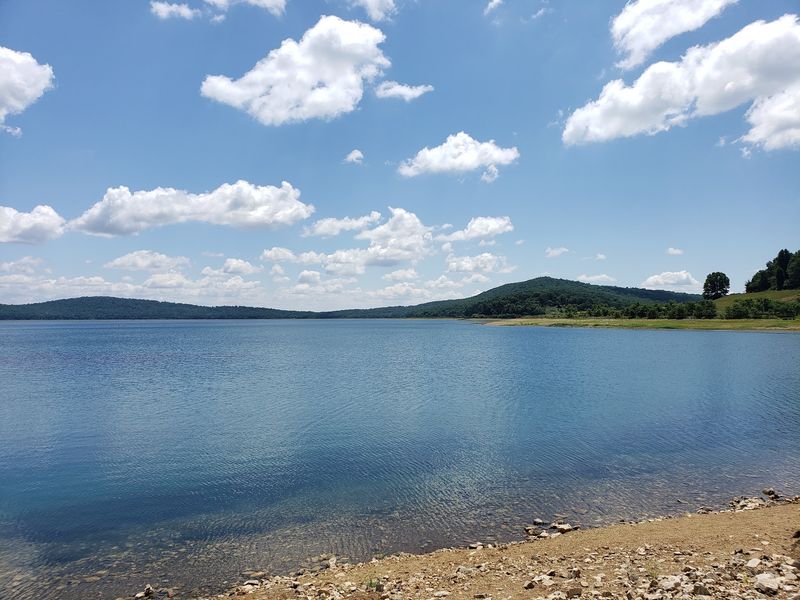
Blue is the first word that pops into my head here. On sunny days the water shifts between bright sapphire and deep green, depending on the light.
It is the kind of color that makes you double check your sunglasses.
That clarity is protected on purpose. The reservoir is a designated Category One waterbody by the state Department of Environmental Protection, which means extra care goes into keeping its water quality high.
Depth plays a role too. Deep water stays cold and holds lots of oxygen, even in the heat of summer, and that helps support a healthy underwater world.
Here is a cool fact. Round Valley Reservoir is one of only two lakes in the state where lake trout reproduce naturally.
These fish love cold, clean water, so their presence says a lot about the lake’s health.
For the best color show, visit on a bright, calm morning. Find a quiet spot along the shoreline, let the ripples settle, and just watch.
Bring a camera, but do not forget to put it down and simply look for a while.
A Ghost Town Under the Waves
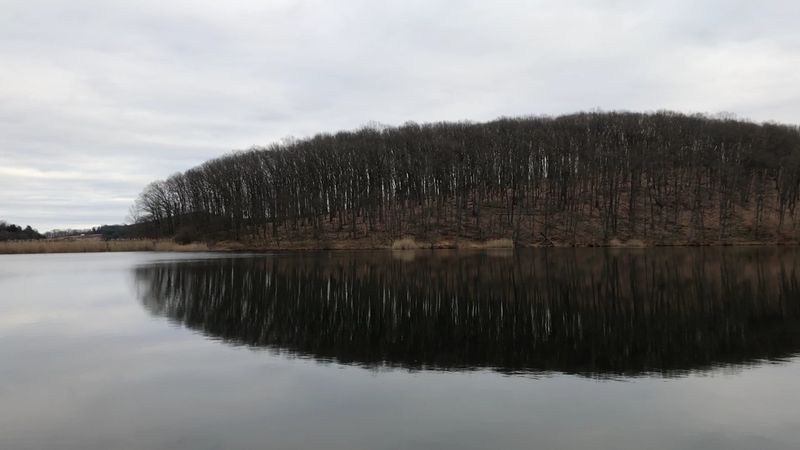
Scuba divers get the rarest view of all. Down below, remnants of the old farming community still rest on the lakebed.
Foundations of homes and barns, old tree stumps, and scattered bits of the past remain in the cold, quiet depths.
Spooky? A little.
Fascinating? Absolutely.
Reports from divers suggest the best places to spot these traces sit roughly 1,500 to 1,800 feet from shore, where the outlines of the old valley are easier to make out. That is a long swim, so this is strictly territory for trained and properly equipped divers.
Even if you never go under, just knowing what lies beneath changes the way the lake feels. The surface looks peaceful and ordinary.
Yet somewhere down there, stone walls that once held family dinners and barn animals are still sitting in silence.
If diving is on your wish list, check park rules and safety requirements before your trip. The water is very cold at depth, even in summer.
Respect for the site matters too, since these remains are a piece of real local history worth leaving undisturbed.
Why This Lake Demands Respect
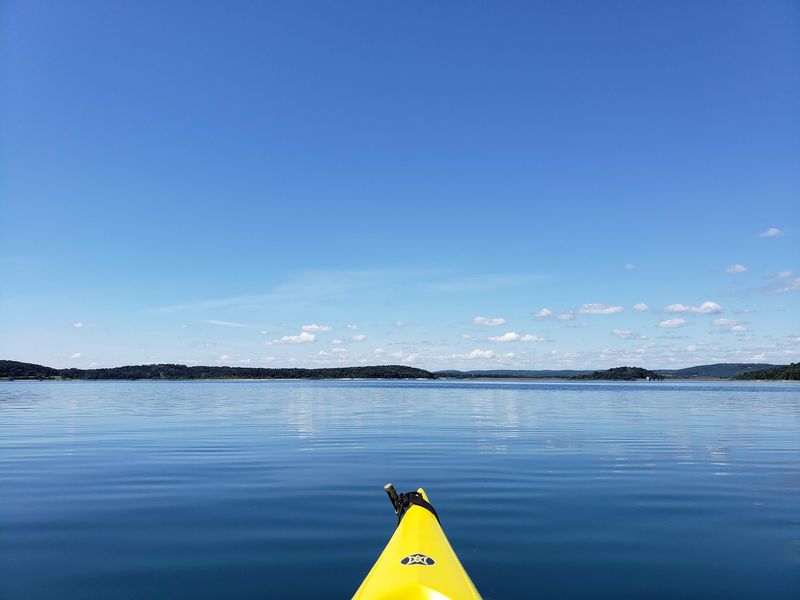
Beautiful water can also be serious water. Round Valley has picked up a spooky nickname over the years, sometimes called the Bermuda Triangle of New Jersey, because a number of people have drowned here since the early 1970s.
Legends have popped up to explain it, but the real reasons are pretty clear. The water is extremely cold below the surface, even in summer.
That cold can cause shock and wear swimmers out fast.
The round shape adds another trick. Across a circular lake, the far shore can look much closer than it really is, which tempts people to swim farther than they should.
Depth and darkness also make rescues very difficult.
So here is my friendly advice. Swim only at the lifeguarded beach, wear a life jacket when boating or paddling, and never try to cross the reservoir on your own.
None of this should scare you away. It just means treating the lake with the same respect you would give an ocean.
Smart choices keep a fun day fun, and that is really the whole point of a visit.
Beach Days, Grills, and Paddles
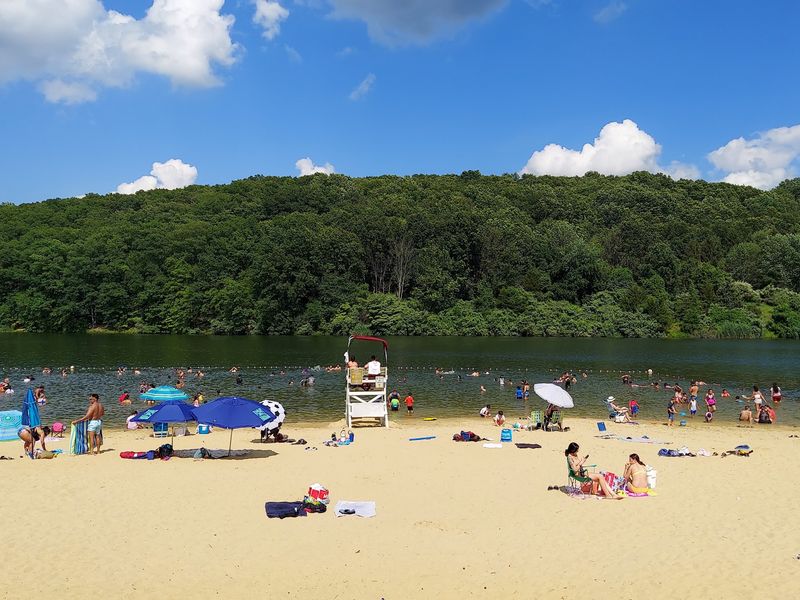
Summer brings a totally different energy. The designated swimming beach, guarded by lifeguards in season, sits separated from the main reservoir by an earth dam, which keeps things safer for families.
Sand between your toes, cool water, happy kids. Easy.
Nearby, you will find picnic areas with tables and charcoal grills, plus grassy spaces for spreading out a blanket. There are playgrounds for younger visitors and a sand volleyball court for anyone feeling competitive after lunch.
Out on the water, kayaks, canoes, and paddleboards glide across the blue. Boating is popular too, though all boating stops when winds hit 25 miles per hour or more.
That rule exists for good reason on such a wide lake.
Anglers have plenty to chase. The reservoir holds lake trout, brown trout, rainbow trout, bass, pickerel, catfish, yellow perch, and even American eel.
Bring the proper license and a little patience.
My tip is simple. Arrive early on warm weekends, since the park can fill up and limit entry.
Pack snacks, sunscreen, and water, then settle in for a long, lazy day.
Planning Your Visit to the Valley
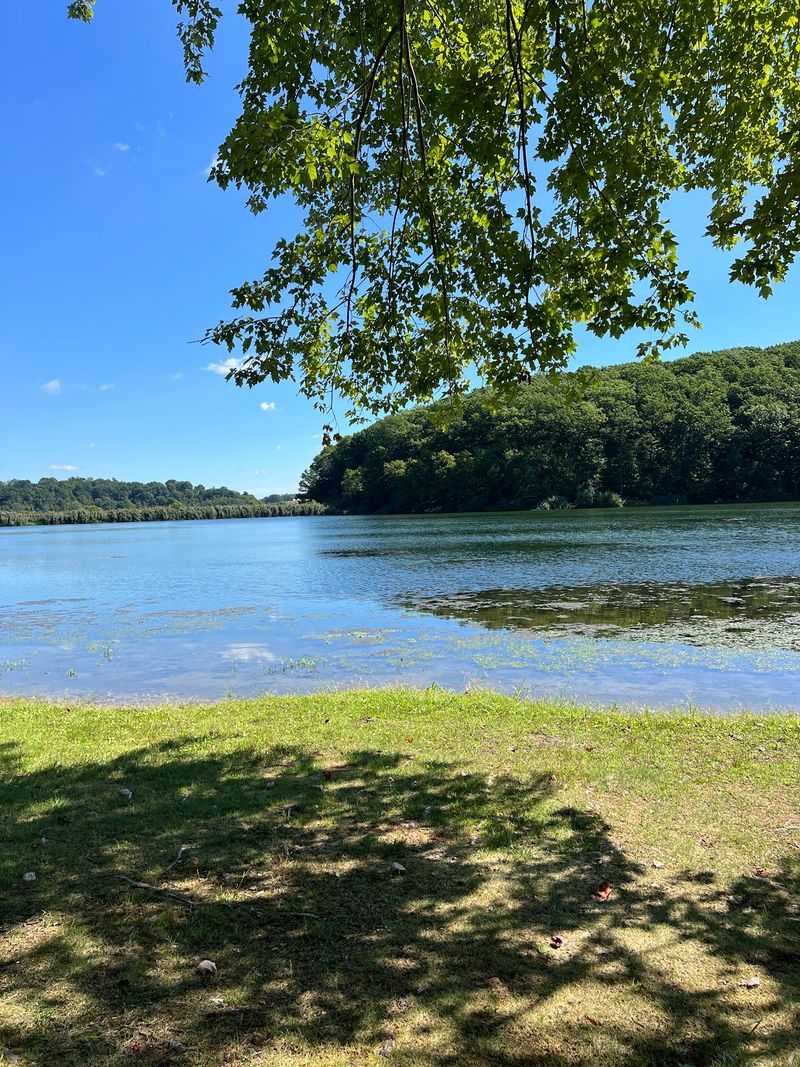
Sunset might be the best time of all. The water turns soft and glowy, the hills darken, and the whole valley settles into quiet.
It is a lovely way to end a day spent swimming, hiking, or paddling.
The park generally opens at 8 AM and closes at 7 PM, though seasonal schedules can shift. Checking current hours and beach status before you go saves disappointment, especially early in the season when swimming may not be open yet.
Leashed dogs are welcome in many areas, but they need to stay off the sand beach. Keep that in mind if your four-legged buddy is coming along.
Restrooms and plenty of parking make longer visits comfortable.
Winter visitors sometimes find a frozen lake and ice fishing opportunities, which gives the place a whole new mood. Yes, it really is a year-round spot.
As you leave, take one last look at the water and remember the farm valley beneath it. That mix of beauty and history is what makes this lake special.
You can find Round Valley Recreation Area at 1220 Stanton Lebanon Rd, Lebanon, NJ 08833.
