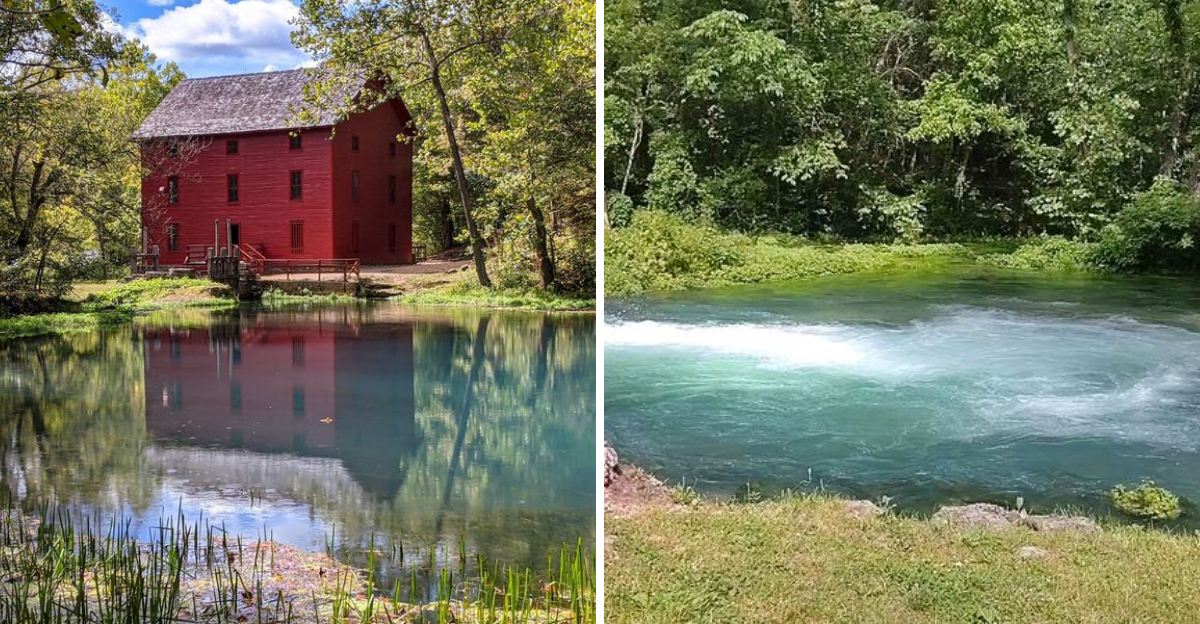
Some places look like they were painted by someone with a vivid imagination. A cherry red mill standing at the edge of water so blue it seems to glow, surrounded by the kind of green hills that belong on a postcard.
This Missouri treasure sits deep in the Ozarks, and it is exactly as magical as it sounds.
The spring behind the mill pushes out 81 million gallons of water every single day, fed by an underground cave network that stretches at least 3,000 feet beneath the surface.
Rain and runoff travel through dissolved dolomite passages before surfacing here, cold and impossibly clear, the blue-green color coming from minerals suspended in the water.
The mill itself was built in 1894, replacing an earlier structure from 1868, and it has been the most photographed spot in the Missouri Ozarks for good reason.
Visitors can walk the short trail behind the mill, tracing the base of a dolomite bluff along the edge of the spring branch. A longer climb takes you up to a ridge where the whole scene opens up below you, the red mill and the turquoise water framed by the forest.
It is the kind of view that makes you forget where you parked the car, the kind of place that feels like a secret even when you know it is not.
The Iconic Red Mill Standing Against the Spring
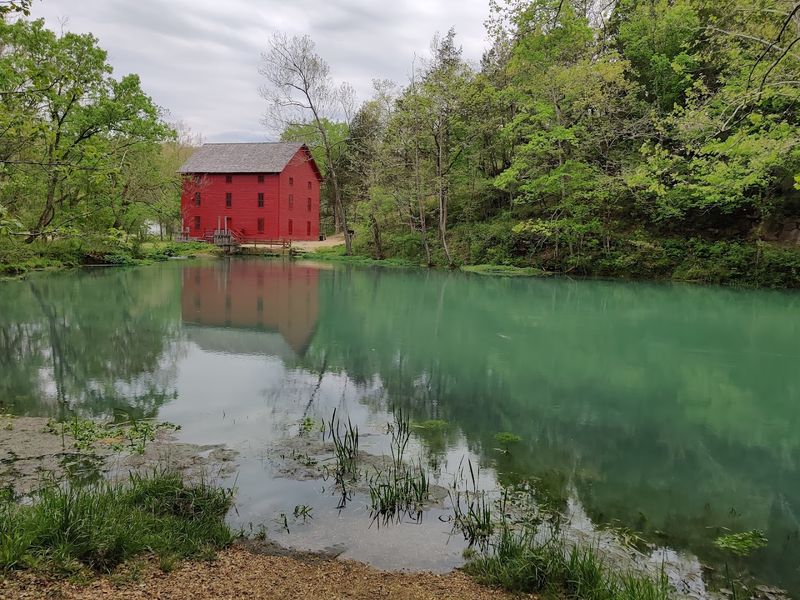
Few buildings in Missouri stop people in their tracks quite like this one. The Alley Mill is a striking red octagonal structure built in 1894, and it still stands in near-perfect condition beside the glowing spring pool.
The mill was built to grind grain for the surrounding Ozark community, and it ran on water power channeled directly from the spring. That engineering was clever for its time, and the building itself has aged beautifully.
From almost every angle, the contrast between the red painted wood and the vivid blue-green water behind it is almost unreal. It genuinely looks like a set designer placed it there on purpose.
Inside, you can see the original milling machinery still in place. The gears, pulleys, and grinding stones give a real sense of how much work went into daily life for Ozark settlers over a century ago.
Park rangers are sometimes on hand inside the mill to walk you through its history and explain how the machinery worked. Even the upper floor is accessible, giving a great view down into the mill’s inner workings from above.
The Turquoise Spring Pool and Its Underground Origins
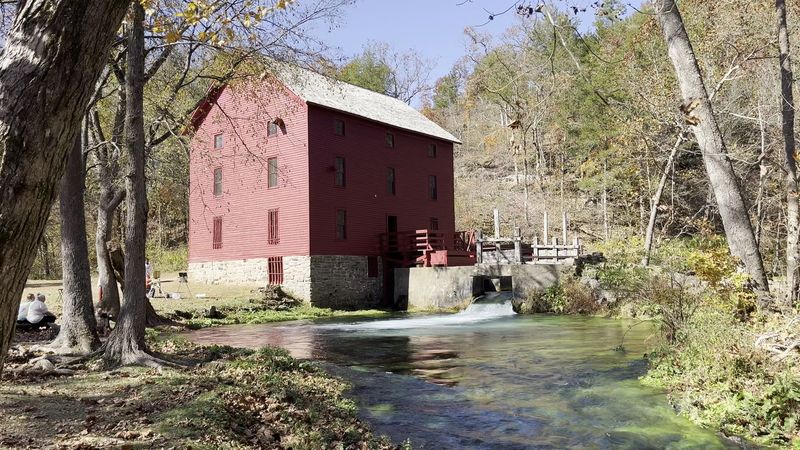
The water here does not look like it belongs in the Midwest. Alley Spring releases around 81 million gallons of water per day, and that constant flow keeps the pool looking impossibly clear and vivid.
The color shifts depending on the depth and angle of sunlight. Near the edges, it runs a pale green-blue, and toward the center it deepens into a rich, almost electric turquoise.
Standing at the edge and looking down feels a little surreal.
All of that water originates deep underground, filtered through a massive cave network beneath the Ozark hills. That natural filtration is what gives the spring its clarity and its famously consistent temperature of around 57 degrees Fahrenheit year-round.
Because the water stays so cold and clear, it supports a thriving ecosystem right at the surface. Fresh watercress grows in thick mats along the shallows, and you can spot small fish moving through the current near the spring’s edge.
Swimming is not permitted here, which helps preserve the natural environment. The spring feeds directly into Jacks Fork River, one of Missouri’s most beloved waterways for canoeing and floating.
The Cave Network Feeding the Spring From Below
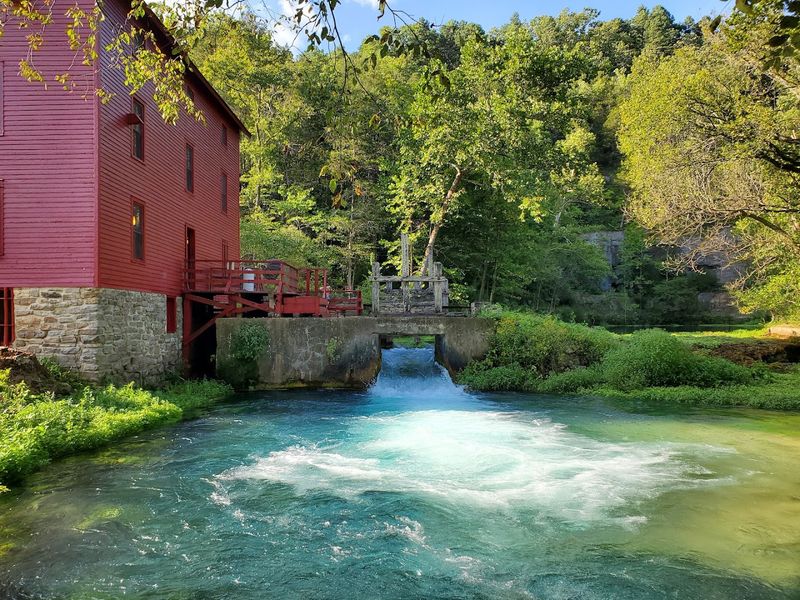
What makes Alley Spring so extraordinary is not just what you see on the surface. The real magic is happening far below ground, where a vast cave system channels water through miles of limestone passages before releasing it here.
The Ozark Plateau is riddled with these underground networks, formed over millions of years as slightly acidic rainwater slowly dissolved the limestone bedrock. The result is a hidden plumbing system that feeds dozens of major springs across Missouri.
Alley Spring is classified as a first-magnitude spring, which means it produces an enormous volume of water. Only a handful of springs in the entire country reach that classification, making this one genuinely rare on a national scale.
The cave openings near the spring are visible but not accessible to the public, which helps protect the sensitive ecosystem inside. Still, knowing that what you are looking at is essentially the exit point of an underground river makes the whole place feel even more dramatic.
Missouri has more first-magnitude springs than almost any other state, and Alley Spring stands among the finest examples of what that underground geology can produce when it finally reaches the surface.
The Walking Trail Around the Spring
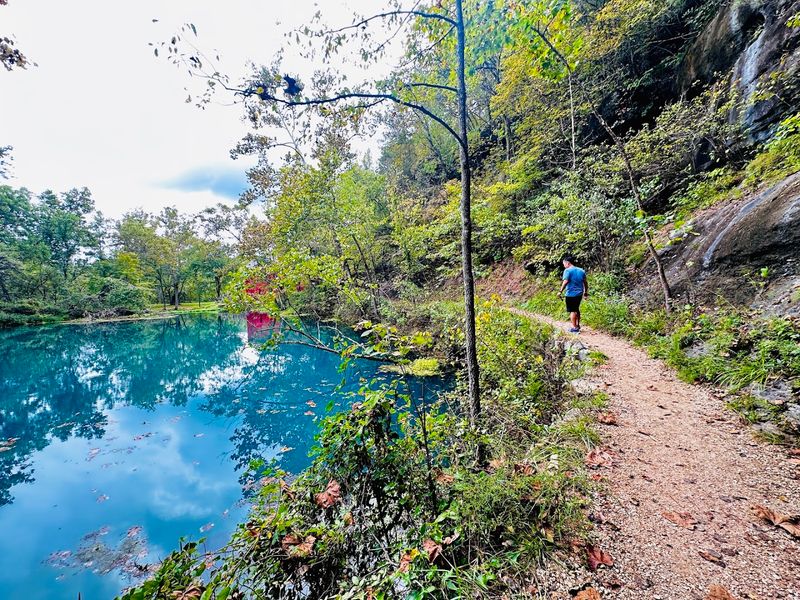
You do not need to be an experienced hiker to enjoy what Alley Spring has to offer on foot. The main loop trail around the spring is just 0.3 miles, paved in most sections, and gentle enough for almost anyone to manage comfortably.
The trail takes you along the edge of the spring pool and across a small bridge, giving you multiple angles and perspectives of both the water and the mill. Every few steps brings a slightly different composition worth photographing.
There is also a longer 1.5-mile Overlook Trail that climbs above the spring and rewards hikers with a sweeping view of the surrounding Ozark landscape. It adds a bit more elevation gain but stays manageable for most fitness levels.
The trails are generally well-maintained, though a little mud after rain is normal in low-lying areas near the water. Wearing sturdy shoes is always a smart call in the Ozarks, even on short walks.
One of the best parts of the trail system is how quiet it stays. Unlike crowded national park destinations, Alley Spring in Missouri feels genuinely peaceful, and the sound of flowing water follows you the whole way around.
The Historic Schoolhouse Near the Mill
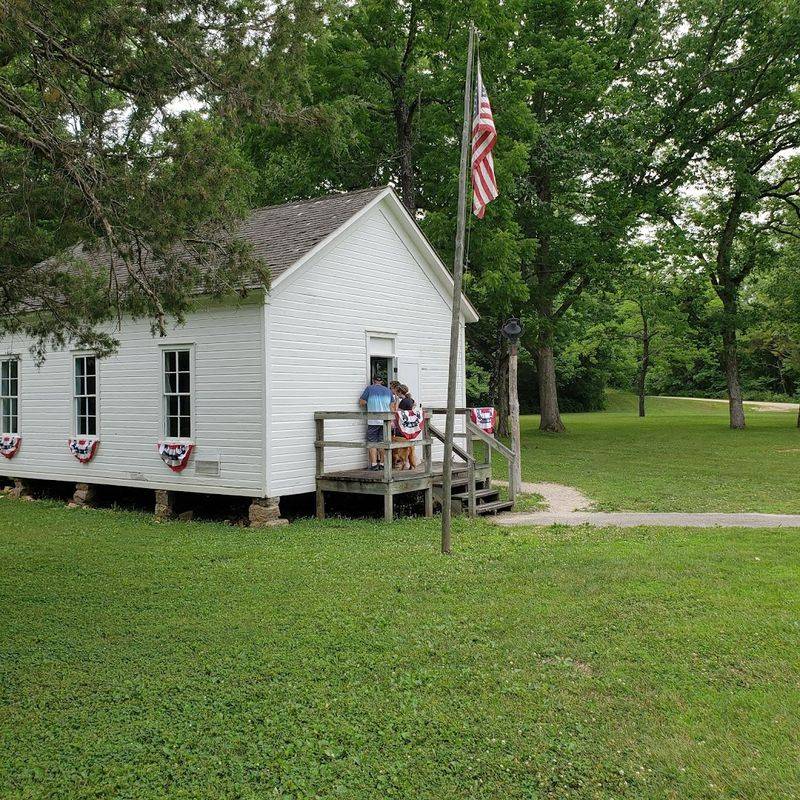
Right near the mill, a small historic schoolhouse sits quietly among the trees, and it is easy to walk right past it if you are not paying attention. It is one of those details that makes Alley Spring more than just a pretty photo stop.
The schoolhouse served the families who lived in the Alley community during the late 1800s and early 1900s. Back then, this remote corner of Missouri had a small but active settlement built around the mill and the resources the spring provided.
Stepping up to the building gives a real sense of how self-contained these Ozark communities once were. They had their grain ground locally, their children educated locally, and their daily lives shaped entirely by the land around them.
The schoolhouse is not open for entry, but informational plaques outside explain its history and the broader story of the Alley community. It only takes a few minutes to read through, but it adds meaningful context to everything else you see at the site.
Pairing a stop at the schoolhouse with a visit to the mill creates a fuller picture of what life in rural Missouri actually looked like more than a hundred years ago.
Fall Colors and Seasonal Beauty at the Site
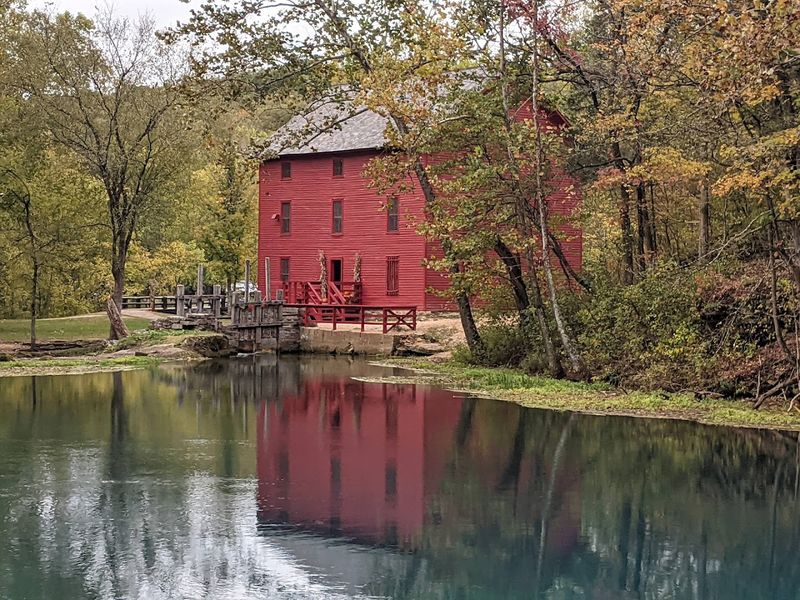
Timing a visit to Alley Spring during fall foliage season takes an already beautiful place and turns it into something almost otherworldly. The red and orange leaves surrounding the spring pool create a color palette that pairs perfectly with the red mill and blue-green water below.
Missouri’s Ozark hills tend to peak in color from mid-October through early November, though the exact timing shifts year to year depending on rainfall and temperature. Either way, the drive into Eminence through winding Ozark roads is part of the experience.
Even outside of fall, the site changes character with the seasons. Spring brings lush green growth right down to the water’s edge.
Summer keeps the pool cool and the surrounding forest dense and shady, making it a refreshing stop on a warm day.
Winter visits have their own quiet appeal. With fewer people around and bare trees opening up longer sightlines, the mill and spring take on a more dramatic, almost stark beauty against the cold sky.
No matter when you go, the water temperature stays right around 57 degrees Fahrenheit, which means the spring itself looks exactly the same in January as it does in July, a constant in an ever-changing landscape.
Picnicking and Relaxing in the Natural Setting
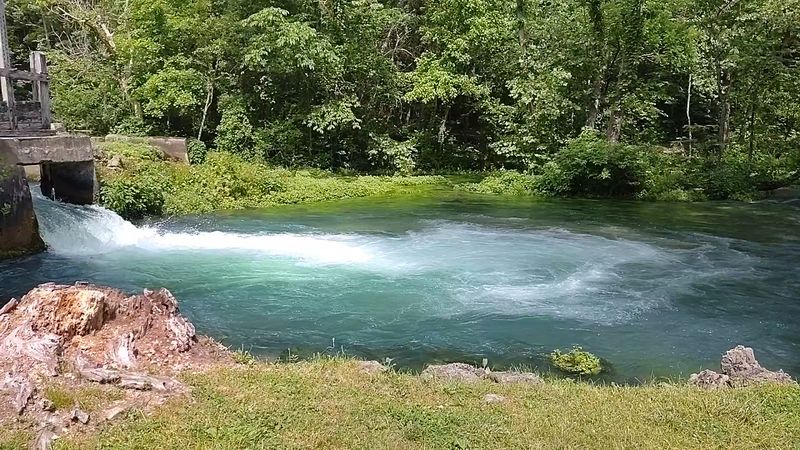
Not every great travel experience needs to involve a packed itinerary. Sometimes the best thing you can do at a place like Alley Spring is slow down, find a picnic table, and just sit with the sound of moving water nearby.
The site has a well-maintained picnic area with plenty of tables spread out under the trees. It is the kind of spot where an hour can pass without you even noticing, especially when the light is filtering through the canopy and the spring is doing its quiet, steady thing in the background.
Clean restroom facilities are available on site, which makes it genuinely practical for families or anyone planning to spend a couple of hours rather than just a quick stop. That kind of basic infrastructure matters more than people expect when they are out in a rural part of Missouri.
Bringing a packed lunch and making Alley Spring a proper midday stop is a great way to structure a longer Ozark road trip. The surrounding area has plenty of other natural attractions, and this spot works well as a relaxed anchor in the middle of a busy day.
The atmosphere here rewards patience, and those who linger tend to leave feeling far more refreshed than those who rush through.
Photography Opportunities at Every Turn
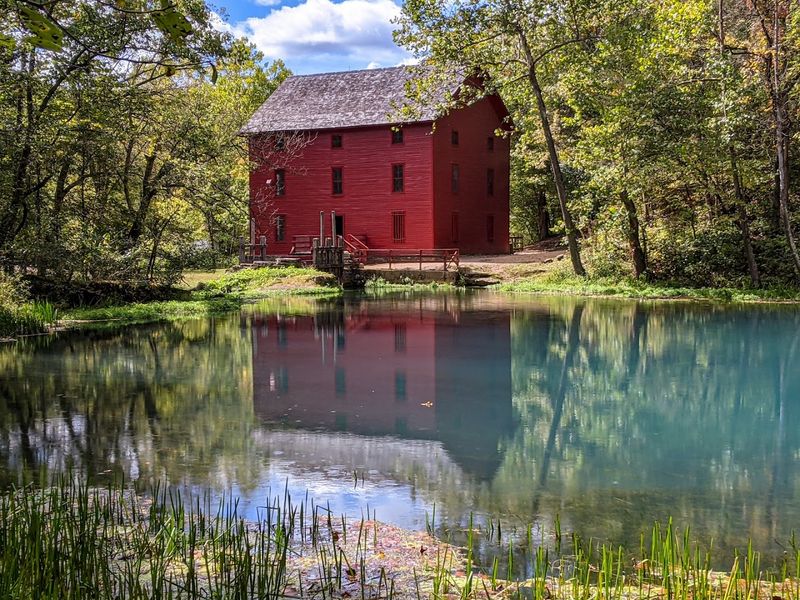
Honestly, it is hard to take a bad photo at Alley Spring. The combination of the red mill, the vivid water, and the surrounding green landscape creates a scene that practically composes itself.
The most popular shot is from the far side of the spring pool, where the mill reflects in the still water and the color contrast between the red structure and the blue-green surface is at its most dramatic. Morning light hits this angle especially well.
The bridge along the short loop trail offers a slightly elevated perspective over the spring, which is great for capturing the full depth and color range of the water. From up there, you can see how the color shifts from pale near the edges to deep blue at the center.
Details around the site reward closer attention too. The weathered wood textures of the mill exterior, the watercress floating in the shallows, and the old machinery visible through the mill windows all make for compelling close-up subjects.
Even on overcast days, the water retains its color well enough for strong images. Missouri light can be moody and dramatic in a way that actually enhances the historic atmosphere of the mill and spring together.
Access, Parking, and Practical Visitor Information
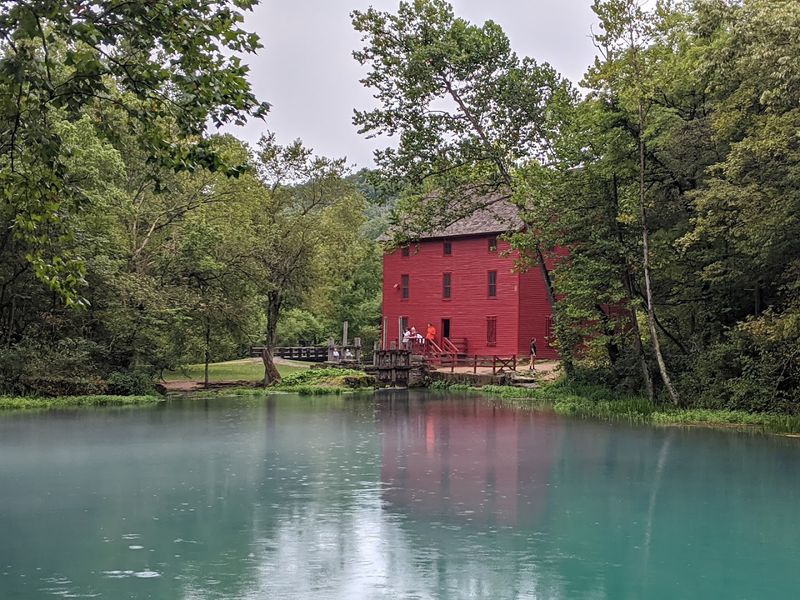
Getting to Alley Spring is straightforward, even though it sits in a rural part of Missouri near Eminence. The roads leading in are paved and manageable for regular passenger vehicles, and the parking lot is large, free, and well-marked.
From the parking area, the walk to the mill and spring is short, somewhere around a hundred yards along a paved path. The path is accessible and easy to navigate, making the site welcoming for a wide range of visitors.
The site is part of the Ozark National Scenic Riverways, which is managed by the National Park Service. There is no entrance fee, which makes it one of the most generous free experiences in the entire state of Missouri.
The mill itself is open for viewing Thursday through Monday from 9 AM to 5 PM, though hours can vary seasonally. It is worth calling ahead at +1 573-323-4236 or checking the official NPS page before making a long drive specifically to go inside.
The address is Eminence, MO 65466, and the site is easy to find using standard navigation apps. Planning a visit mid-week or early in the morning helps avoid the busiest periods, particularly during summer and fall color season.
Why Alley Spring Belongs on Every Missouri Road Trip
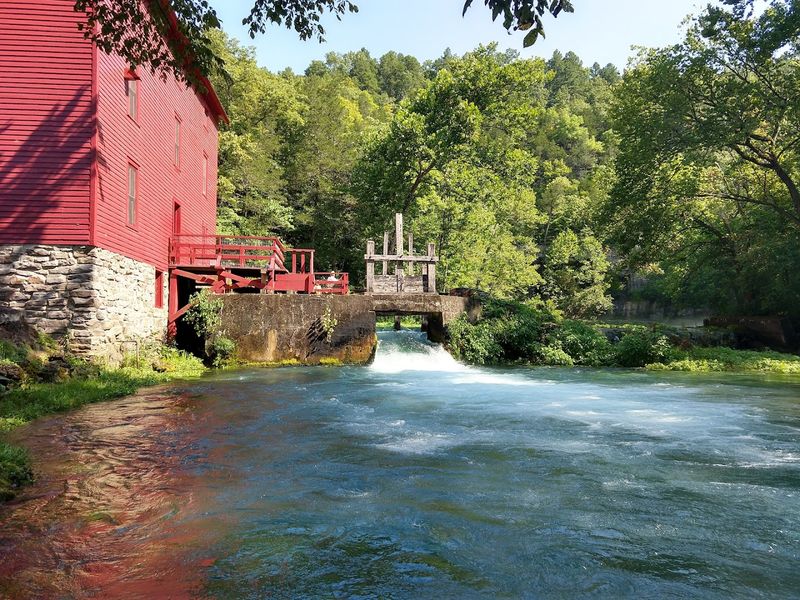
Missouri has no shortage of beautiful natural spots, but Alley Spring earns a place near the top of any list of must-see destinations in the state. It manages to combine natural wonder, genuine history, and practical accessibility in a way that few places can match.
The spring itself is a geological marvel, fed by a cave network that has been quietly doing its work for thousands of years. Pair that with a 130-year-old mill still standing in excellent condition, and you have a destination that offers real depth beyond just a pretty view.
For road trippers moving through the Ozarks, Alley Spring fits naturally into a route that might also include the Current River, Big Spring, or the charming town of Eminence. The whole region rewards slow travel and curiosity.
Because there is no entrance fee and the facilities are well-maintained, the barrier to visiting is almost zero. Missouri does not always get the national attention it deserves as an outdoor destination, but places like this one make a strong case for changing that.
Every season brings something slightly different to this corner of the Ozarks, and the spring’s glowing water and the red mill’s quiet dignity make it worth coming back to more than once.
