Have you ever driven past something amazing without realizing it was there?
That’s exactly how I felt the first time I nearly missed Mount Tabor.
Hidden in Parsippany-Troy Hills, this Victorian village doesn’t wave you down with billboards or flashy signs. Instead, it quietly waits, like a secret portal into another century.
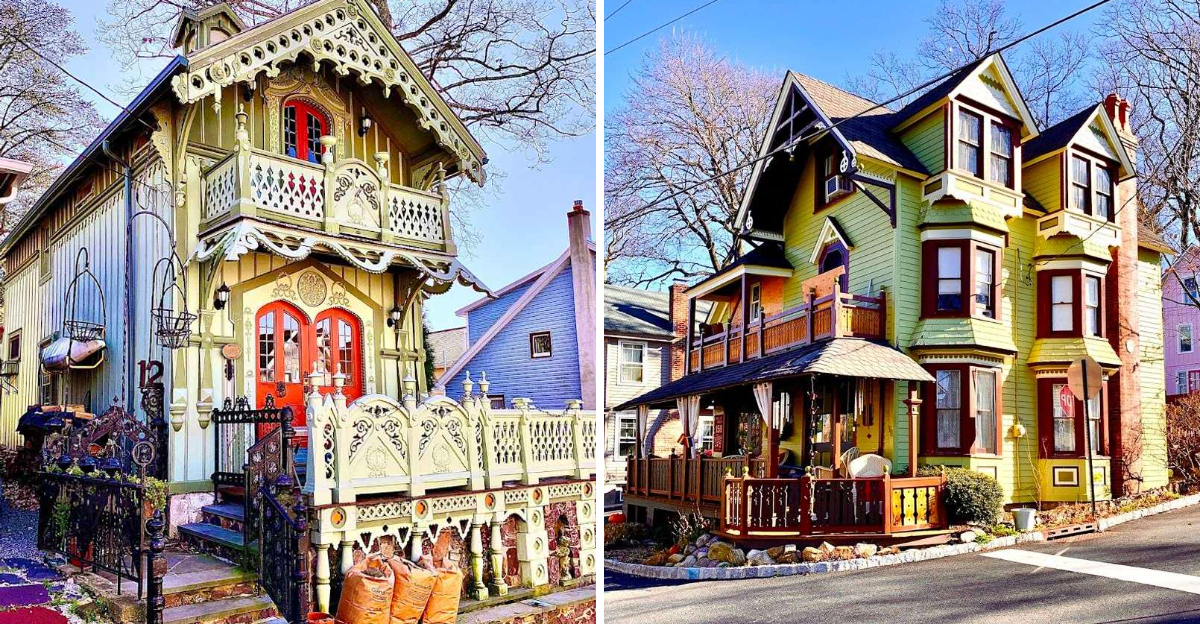
The moment I turned onto those narrow, tree-lined streets and spotted my first gingerbread cottage, I slowed my car to a crawl.
And honestly, wouldn’t you?
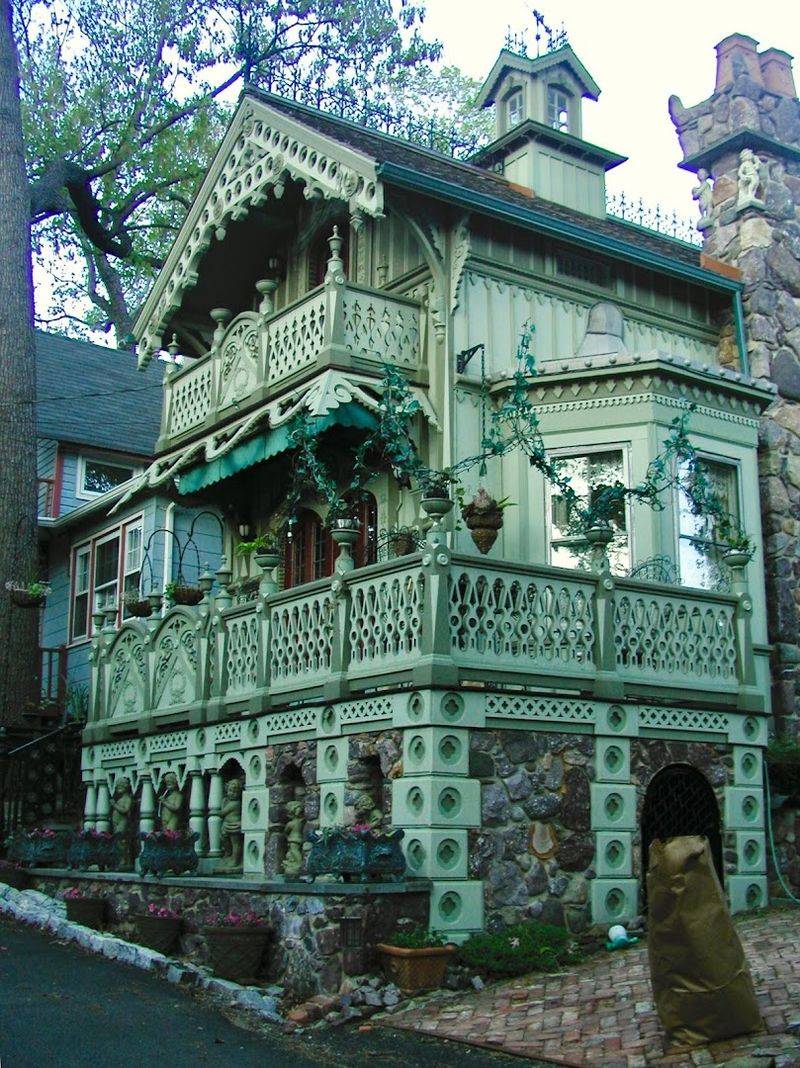
These aren’t replicas or theme-park props; they’re real homes built in the 1800s as part of a Methodist camp meeting retreat. Their ornate trim and pastel colors look like something straight out of a storybook.
Peaceful, charming, and almost frozen in time, Mount Tabor feels like the kind of place you stumble upon once and never forget.
Victorian Architecture Frozen in Time
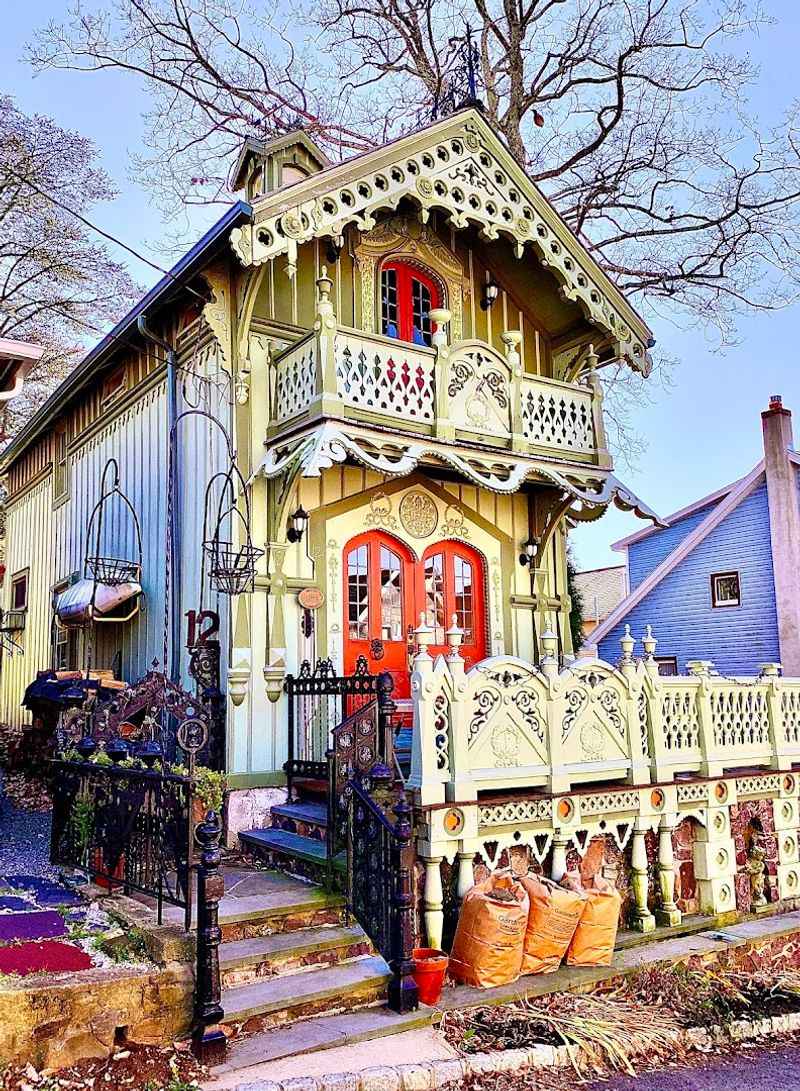
Walking through Mount Tabor feels like flipping through a preserved photo album from the 1870s. The cottages here weren’t built to impress passersby but to house families attending Methodist camp meetings during the summer months.
What started as simple tents eventually evolved into these elaborate wooden structures, each one competing in the friendliest way possible with decorative trim, painted shutters, and front porches perfect for evening conversations.
I spent a good twenty minutes just standing on one corner, counting all the different porch styles within view. Some wrap completely around the house while others jut out just enough for a rocking chair and a potted fern.
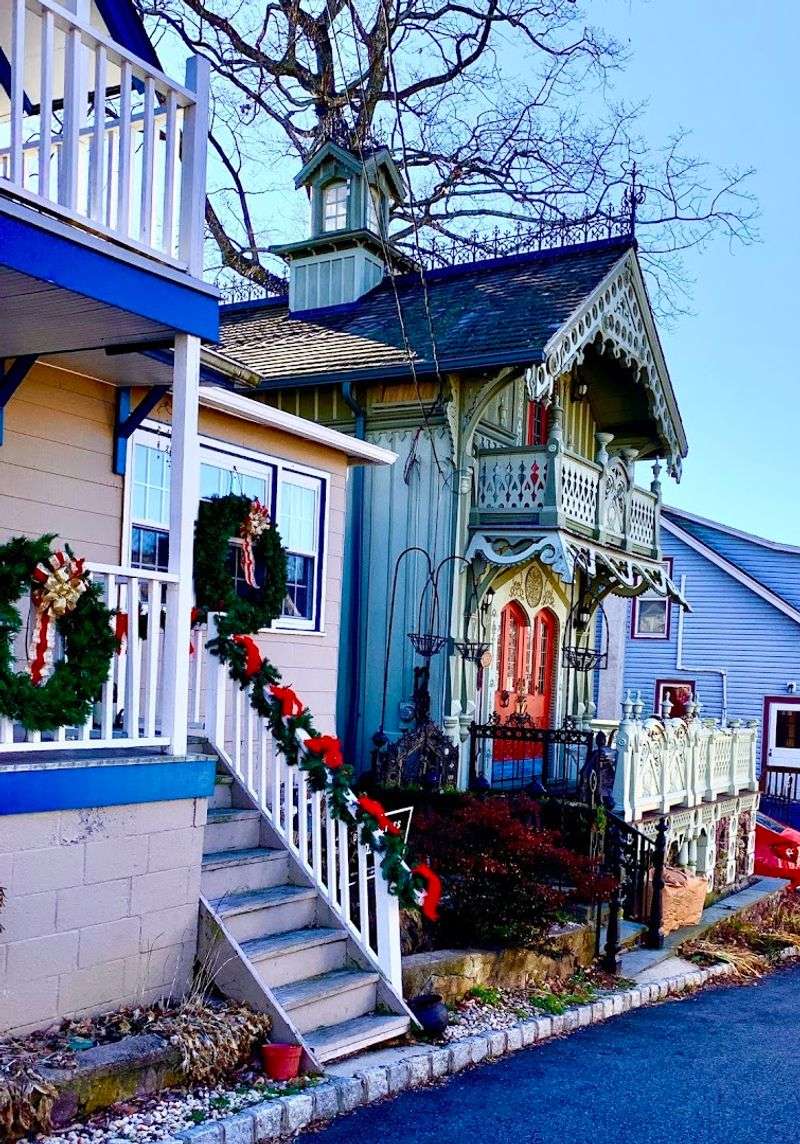
The woodwork is what really gets you, though, all those delicate scrolls and brackets that someone carved by hand over a century ago. It’s the kind of craftsmanship that makes you realize how much patience people used to have.
The colors are another story entirely. Soft yellows, mint greens, powder blues, and the occasional bold purple create a palette that shouldn’t work together but absolutely does.
Each cottage seems to have its own personality, from the prim and proper to the whimsically cheerful. You can tell the residents take serious pride in maintaining these homes because the paint always looks fresh and the trim stays crisp.
Nobody’s letting these beauties fall into disrepair, and honestly, that’s part of what makes visiting feel so special.
Tabernacle at the Heart of the Village
Right in the center of everything sits the Tabernacle, and I’ll admit I didn’t quite understand what I was looking at when I first saw it. This open-air structure with its peaked roof and rows of wooden benches looks like a pavilion, a church, and a community gathering space all rolled into one.
Built in the late 1800s, it was designed specifically for religious services during camp meetings, when hundreds of people would gather to worship together under one roof but still feel the breeze.
The design is ingenious when you think about it. No walls means natural ventilation during those sticky New Jersey summers, and the elevated position gives it a sense of importance without being intimidating.
I walked up the steps and sat on one of those old benches, imagining what it must have been like when the whole community assembled here for evening services. The acoustics are surprisingly good, your voice carries in a way that makes you want to whisper.
These days the Tabernacle still hosts occasional events and gatherings, keeping its original purpose alive while also serving as the village’s symbolic heart. It’s surrounded by the prettiest cottages, creating this natural amphitheater effect where the whole village seems to face inward toward this shared space.
You can walk around it freely, and I recommend doing exactly that because every angle offers a different perspective on how thoughtfully this community was laid out.
Tree-Canopied Streets That Invite Wandering
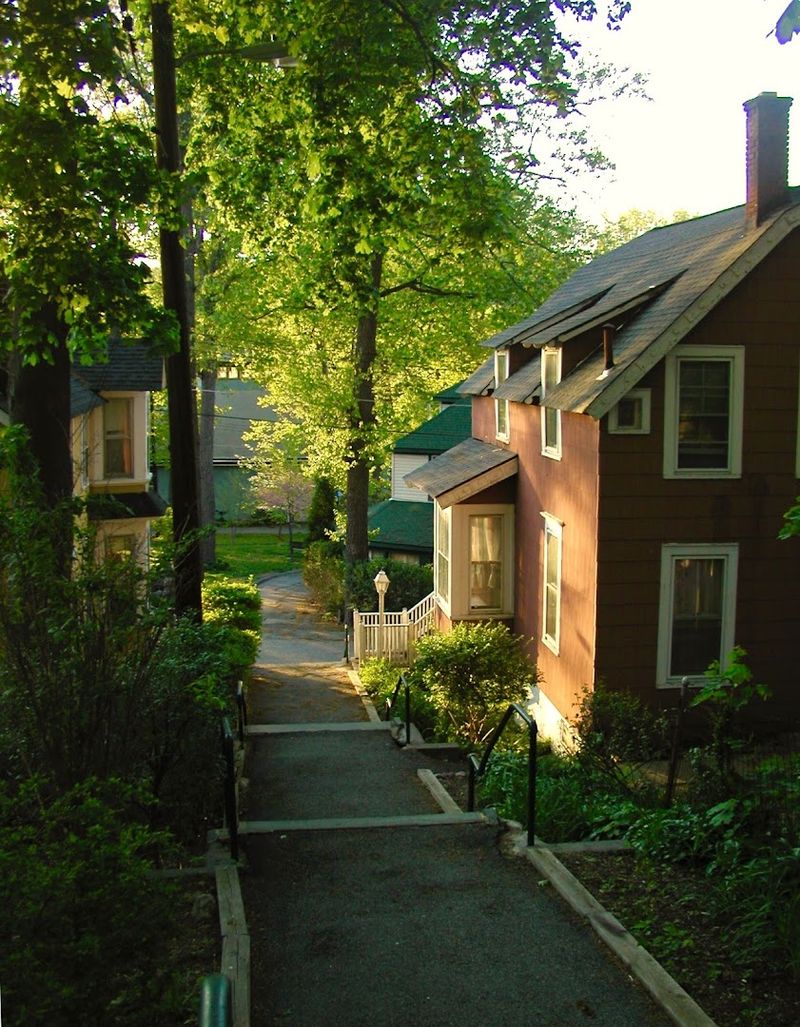
Mount Tabor’s street layout is delightfully simple, just a handful of lanes arranged in a grid that you could walk end to end in fifteen minutes if you didn’t stop every few feet to admire something. But here’s the thing: you will stop every few feet.
The mature trees create this natural tunnel effect overhead, their branches meeting in the middle to form a leafy ceiling that dapples everything below in shifting patterns of light and shadow.
I visited on a warm afternoon in early fall, and the way the sunlight filtered through those leaves made every cottage look like it was glowing from within. The streets are narrow enough that cars naturally slow down, and honestly, most people seem to park at the edges and explore on foot anyway.
There’s something about the scale of everything that makes walking feel like the only appropriate speed. You notice more that way, like the way someone’s planted hostas along their foundation or how another cottage has a tiny fairy garden tucked beside the front steps.
Each street has its own character despite following the same basic pattern. Some are shadier and feel almost secretive, while others open up to let in more sky.
I found myself circling back to certain corners just to see them from different directions. There are no street signs cluttering up the views, no utility poles interrupting the sightlines.
Everything feels intentionally preserved to maintain that sense of stepping back into a simpler, quieter time.
Gardens That Bloom With Victorian Charm
If the cottages are the stars of Mount Tabor, the gardens are definitely the supporting cast that steals every scene. I’m not much of a gardener myself, but even I could appreciate how much thought goes into these little plots of land surrounding each home.
These aren’t the manicured, symmetrical gardens you see in suburban developments but rather cottage gardens in the truest sense, overflowing with flowers, herbs, and greenery that seem to grow however they please within loosely defined borders.
Hollyhocks lean against porch railings like they’ve been there since the beginning. Roses climb trellises with determined enthusiasm.
Hydrangeas burst into pompoms of blue and pink depending on which cottage you’re passing. I noticed a lot of residents favor old-fashioned varieties, the kinds of flowers your grandmother might have grown, which makes perfect sense given the setting.
Everything feels intentionally period-appropriate without being stuffy about it.
What really charmed me were the little touches: a ceramic birdbath painted to match the cottage trim, a wooden wheelbarrow planted with petunias, a miniature white picket fence separating one garden from the path. You can tell people put real love into these spaces, treating them as extensions of their homes rather than just landscaping.
Walking past these gardens on a summer morning when everything’s in full bloom must be absolutely spectacular.
Even in early fall, when some flowers were fading, the gardens still had this abundant, generous quality that made me want to slow down and appreciate every detail.
Porches Designed for Slow Living
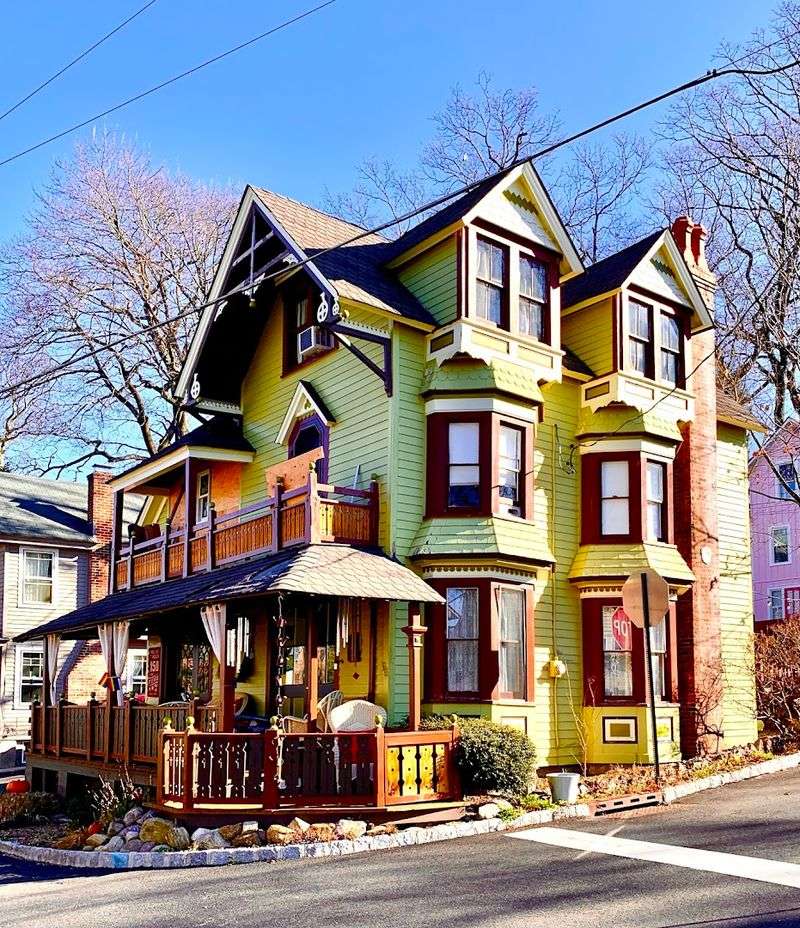
Every single cottage in Mount Tabor has a front porch, and I mean every single one. This wasn’t a design accident but a deliberate feature of camp meeting architecture, where the porch served as your living room, dining room, and social space all rolled into one.
These aren’t the token stoops you see on modern houses but genuine outdoor rooms complete with railings, decorative brackets, and enough space for multiple chairs, a small table, and maybe a porch swing if you’re lucky.
I loved seeing how each household had personalized their porch space. Some kept it simple with a pair of rocking chairs and a welcome mat.
Others went all out with hanging baskets, wind chimes, seasonal wreaths, and coordinated cushions that matched the cottage colors. One porch I passed had a tiny table set up with a chess board, as if inviting anyone who walked by to stop for a game.
Another displayed a collection of vintage watering cans arranged on the steps like a sculptural installation.
The genius of these porches is how they create this seamless connection between private and public space. You’re technically on your own property, but you’re also right there at street level where neighbors walking past can wave hello or stop for a chat.
It encourages a kind of community interaction that feels increasingly rare.
I could easily imagine spending entire summer evenings on one of these porches, watching the light fade through the trees while the village settles into its nighttime quiet.
Methodist Heritage That Shaped the Village
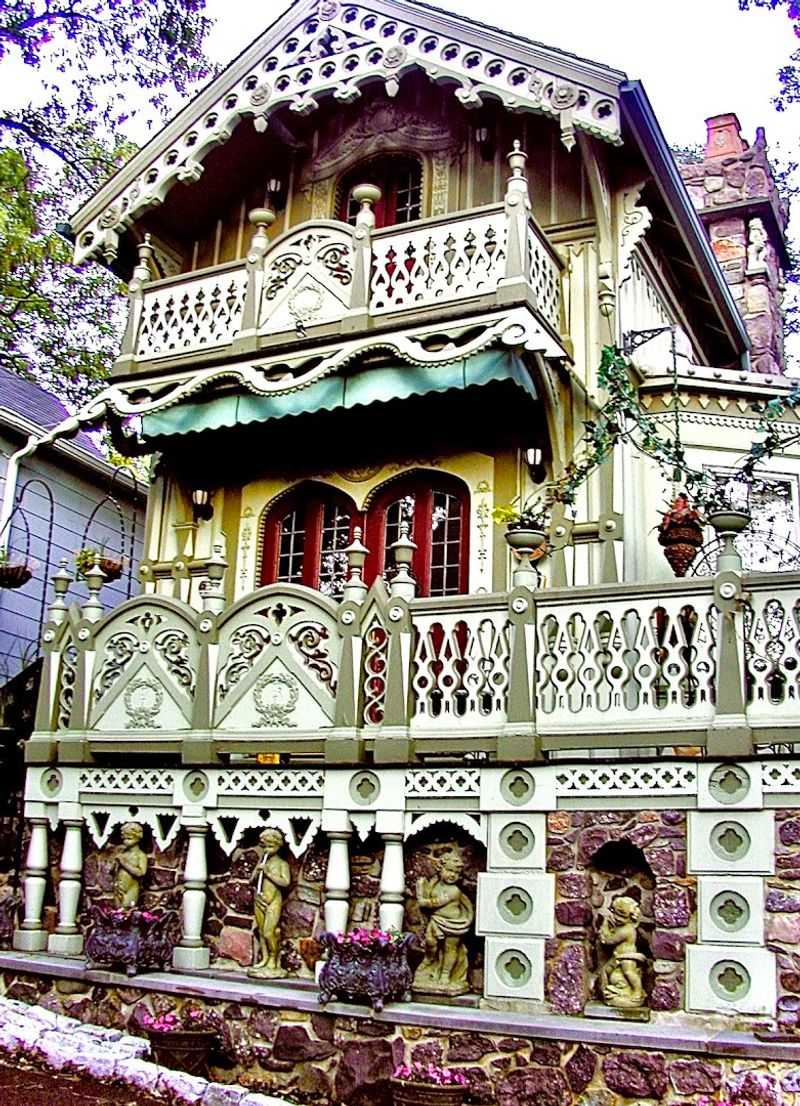
Understanding Mount Tabor’s religious roots helps explain why it looks and feels the way it does. Founded in 1869 as a Methodist camp meeting retreat, the village was intentionally designed to provide families with a peaceful summer escape where they could attend religious services, enjoy nature, and build community away from increasingly crowded cities.
The Methodist movement emphasized simplicity, fellowship, and accessibility, values that got literally built into the village’s architecture and layout.
Camp meetings were huge in the late 1800s, drawing thousands of people who would camp in tents for weeks at a time. As the movement grew and families returned year after year, those temporary tents gradually gave way to more permanent structures, the cottages we see today.
But the original spirit remained: keep things modest, make everything walkable, and design spaces that encourage gathering and conversation. The Tabernacle at the center reinforced this idea that worship and community were inseparable.
While Mount Tabor is no longer exclusively Methodist and functions as a regular residential community, you can still feel that heritage in how the village operates. There’s a quietness here, a sense of respect for shared space that feels different from typical neighborhoods.
No loud commercialization, no flashy signs, nothing that disrupts the peaceful atmosphere the founders intended.
Walking these streets, I kept thinking about how rare it is to find a place that’s stayed so true to its original purpose even as the world around it has completely transformed.
Preservation Efforts Keeping History Alive
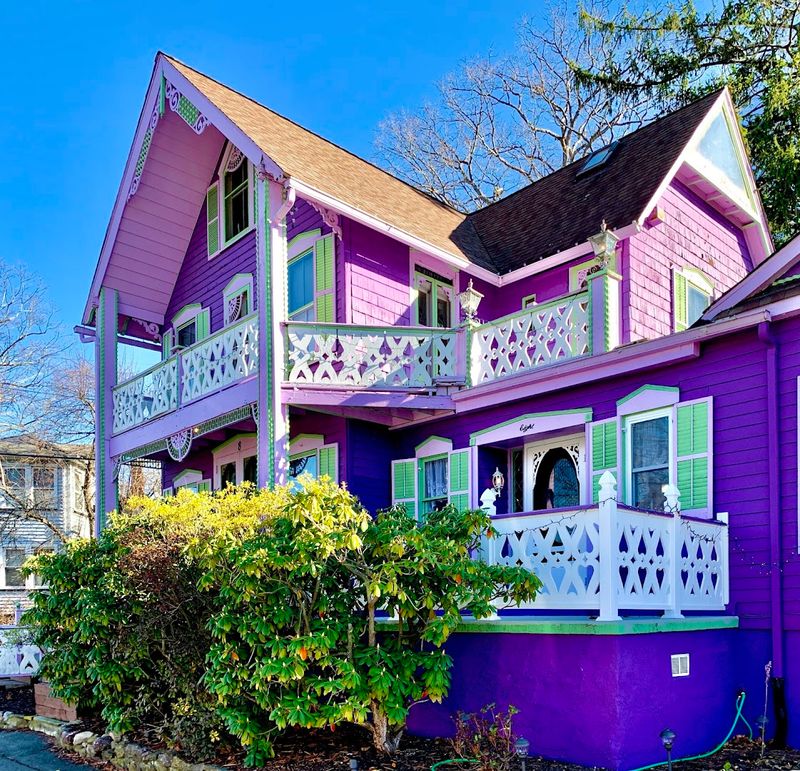
What amazes me most about Mount Tabor isn’t just that these Victorian cottages still exist but that they’re in such remarkably good condition. Maintaining wooden structures from the 1870s requires serious commitment, both financially and in terms of time and effort.
The residents here clearly understand they’re not just homeowners but stewards of something historically significant, and they take that responsibility seriously.
You can see evidence of careful restoration work everywhere you look. Trim that could easily rot away gets repainted regularly in historically appropriate colors.
Original architectural details are preserved rather than replaced with modern alternatives. When repairs are needed, people go out of their way to match materials and techniques to what was originally used.
This isn’t happening because of strict regulations forcing compliance but because the community genuinely values what they have.
I learned that Mount Tabor is listed on the National Register of Historic Places, which provides some recognition and resources but doesn’t automatically protect anything. The real preservation work happens at the individual level, with each cottage owner making daily decisions to maintain rather than modernize, to repair rather than replace.
It’s a labor of love that requires rejecting the easier path of vinyl siding and aluminum windows in favor of the more authentic but demanding option of keeping things original.
The result is a village that feels genuinely historic rather than recreated, where the past isn’t just remembered but actively lived in and cared for.
Photography Paradise for Architecture Lovers
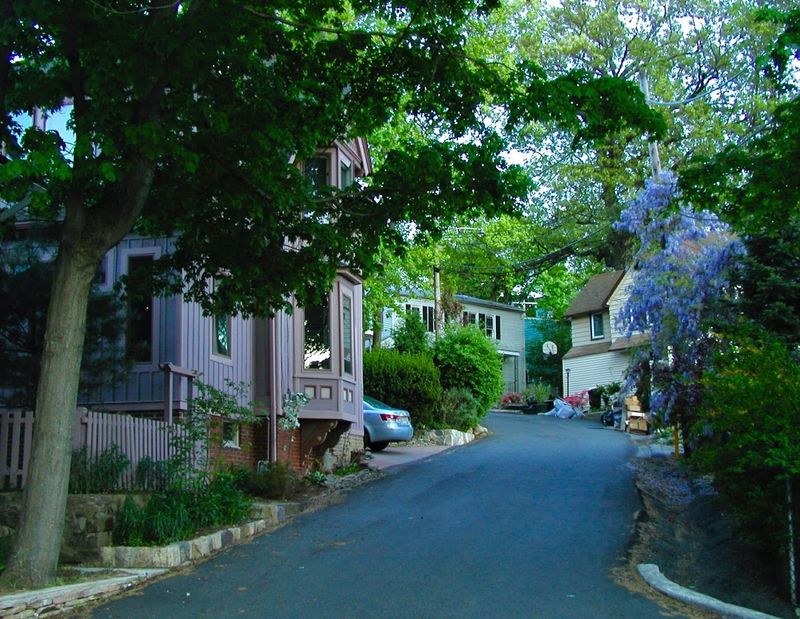
I’m going to be honest: I took way more photos than I needed during my visit to Mount Tabor. Something about the combination of colorful cottages, dappled light, and Victorian details made it impossible to put my phone away.
Every corner offered another perfectly composed scene, whether it was a cottage framed by overhanging branches, a detail shot of ornate porch brackets, or a wider view capturing an entire street of gingerbread houses lined up like a pastel rainbow.
The lighting here changes dramatically throughout the day, which means the same cottage can look completely different depending on when you photograph it. Early morning brings soft golden light that makes everything glow.
Midday sun creates strong shadows that emphasize all those architectural details. Late afternoon bathes everything in warm honey tones that make the painted trim pop.
I found myself mentally planning a return visit just to capture different lighting conditions.
What makes Mount Tabor especially photographer-friendly is how compact and walkable it is. You can cover the entire village in a single visit without getting exhausted, hitting all the best angles and compositions.
The lack of modern intrusions means you rarely have to crop out ugly elements, no power lines cutting through your frame, no big box stores in the background. Just pure Victorian charm in every direction.
Whether you’re shooting with a professional camera or just your smartphone, you’ll leave with a memory card full of images that look like they belong in a historical architecture magazine.
Seasonal Transformations Throughout the Year
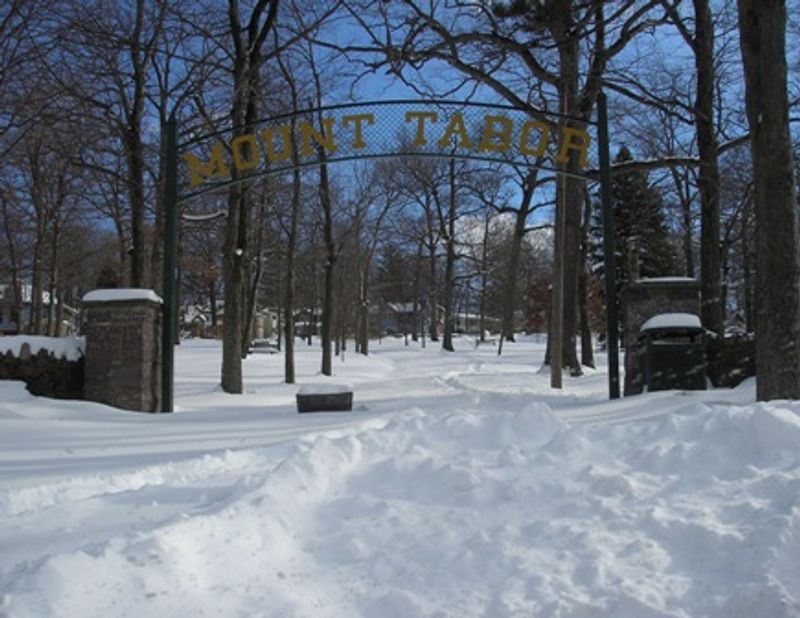
While I visited Mount Tabor in early fall, I kept thinking about how magical this place must look during other seasons. Each time of year would bring its own character to these Victorian streets, transforming the village while keeping its essential charm intact.
Spring would mean those cottage gardens exploding with tulips, daffodils, and early blooming perennials, turning every yard into a riot of color against the pastel cottages.
Summer is probably peak season, when the full tree canopy creates those deep pools of shade and the porches become outdoor living rooms where residents spend their evenings. I imagine the Tabernacle hosting community events, maybe concerts or gatherings where the whole village comes together.
The flowers would be at their most abundant, climbing over railings and spilling out of window boxes. Everything would feel lush and alive, humming with that particular energy summer brings to small communities.
Fall must be spectacular when those mature trees turn and drop leaves across the narrow streets, creating natural carpets of red and gold. The cottages would stand out even more dramatically against autumn foliage.
Winter would bring a completely different mood, especially after a fresh snowfall when those Victorian rooflines and gingerbread trim get outlined in white. The village would look like a Christmas card, all cozy and picturesque.
Each season offers its own reason to visit, its own version of Mount Tabor’s fairytale beauty waiting to be discovered.
Hidden Gem Worth Protecting and Visiting
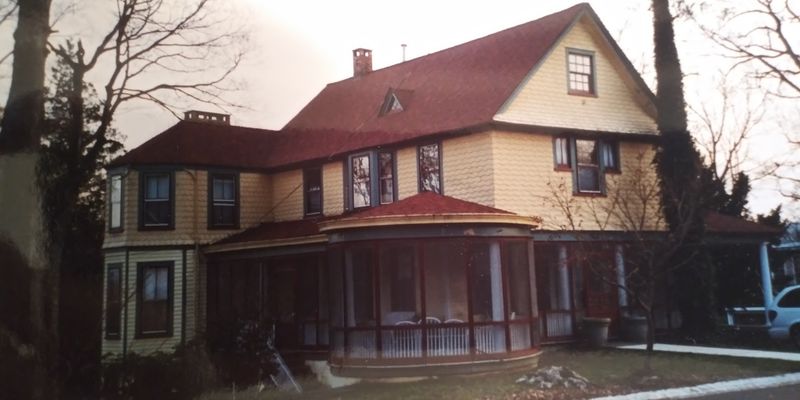
Mount Tabor exists in this interesting space between being completely unknown and being too discovered. It’s not a secret exactly, local history buffs and architecture enthusiasts know about it, but it hasn’t been overrun by tourists or turned into some kind of commercial attraction.
That delicate balance is part of what makes visiting feel so special. You get the sense of discovering something genuinely hidden without the guilt of invading a private space.
The village welcomes respectful visitors who want to walk the streets, take photos, and appreciate the architecture. There’s no admission fee, no designated parking lot, no visitor center selling souvenirs.
You simply show up, park along the edges, and explore on foot. The unspoken rule is to remember that this is a real residential community where people live year-round.
Keep voices down, stay on public streets, respect private property, and basically behave like you would want tourists to behave in your own neighborhood.
What strikes me as important is that Mount Tabor’s survival depends on this balance continuing. Too much attention could ruin the peaceful atmosphere that makes it special.
Too little attention might mean insufficient appreciation for its historical significance. Right now it exists in that sweet spot where enough people care to ensure its preservation but not so many that it loses its quiet charm.
If you visit, and I hope you do, approach it with the reverence it deserves. This isn’t a theme park but a living piece of history that’s been lovingly maintained for over 150 years.
Address: Mount Tabor, Parsippany-Troy Hills, NJ
Dear Reader: This page may contain affiliate links which may earn a commission if you click through and make a purchase. Our independent journalism is not influenced by any advertiser or commercial initiative unless it is clearly marked as sponsored content. As travel products change, please be sure to reconfirm all details and stay up to date with current events to ensure a safe and successful trip.
