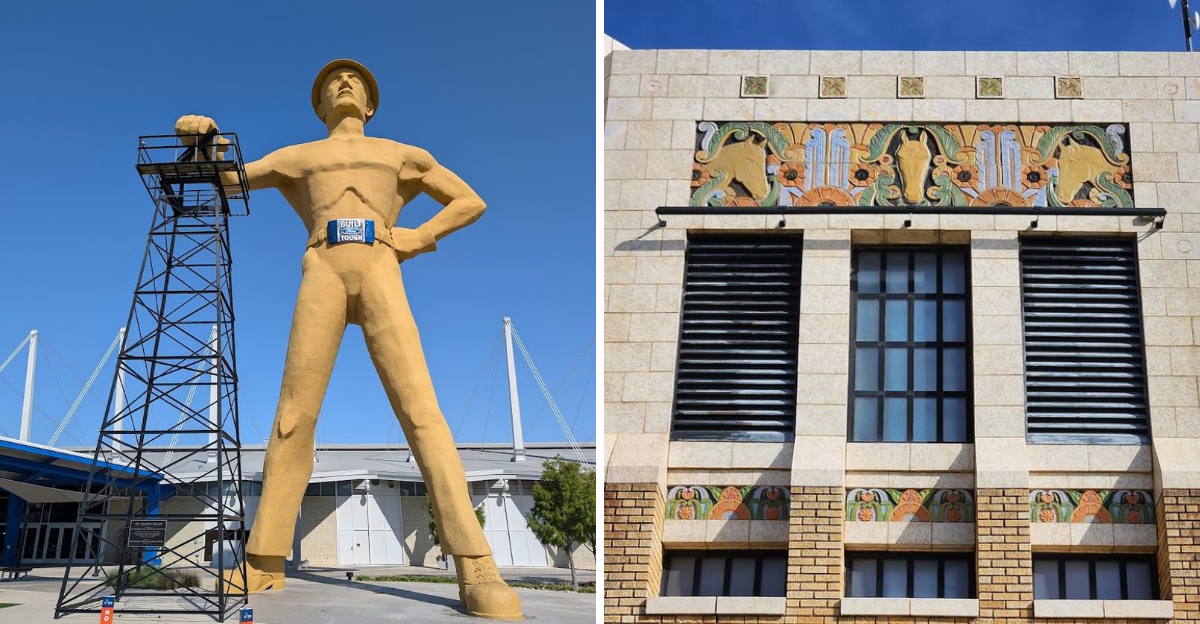
Imagine a golden giant standing 75 feet tall, one hand resting on an oil derrick, staring out over the Oklahoma skyline like he owns the place. He kind of does.
This colossal statue has become one of the most recognizable roadside icons in the American heartland, drawing road-trippers, history lovers, and curious passersby who just cannot drive past without stopping for a look.
What started as a symbol of an industry now stands as a proud, sun-drenched monument to the people who shaped an entire state with their bare hands, their grit, and their drills.
Oklahoma’s oil boom was not just an economic event. It was a cultural earthquake that rattled the land and built cities almost overnight.
The story behind this towering figure is richer than most people expect, and once you know it, you will see the statue in a completely different light. Here is everything worth knowing about this legendary landmark, from its dramatic origins to the little details most visitors completely overlook.
Stick around, because the history here is genuinely worth your time, and so is the adventure of seeing it in person.
A Giant Born From Oklahoma’s Golden Age of Oil
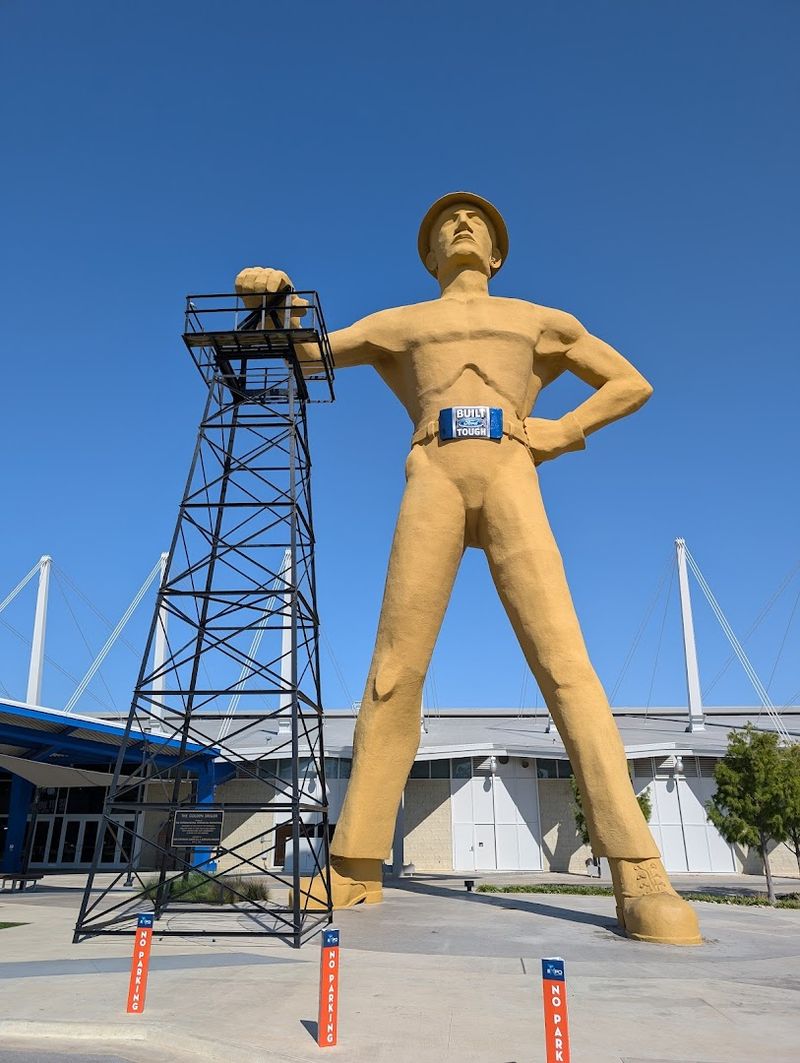
Standing in front of the Golden Driller Statue for the first time feels less like sightseeing and more like being humbled. At 75 feet tall and weighing approximately 43,500 pounds, this is not a statue you glance at and move on from.
Your neck cranes back, your jaw loosens, and you just stand there for a moment trying to process the scale of what you are looking at.
The statue was first created in 1953 for the International Petroleum Exposition held in Tulsa. It was meant to celebrate the oil industry and the workers who powered it, and it delivered on that mission in the most dramatic way possible.
The original version was temporary, but the idea stuck around because the people of Oklahoma fell hard for their golden giant.
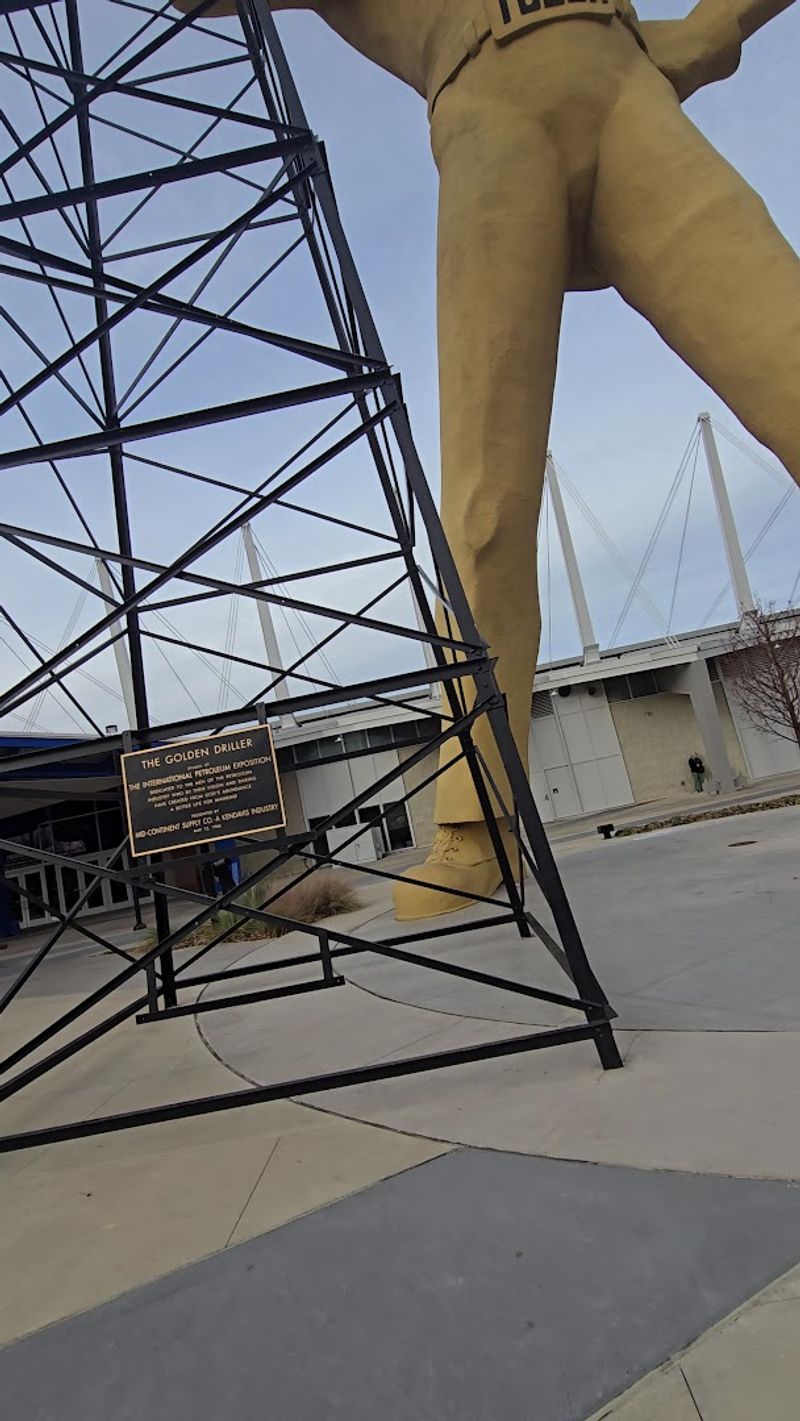
The permanent version of the statue was installed in 1966, and it has stood at the Tulsa Expo Center ever since. The figure depicts a rugged oil field worker in work clothes, helmeted and confident, with his right hand placed firmly on a real oil derrick that serves as part of the structure.
It is a portrait of an era, a people, and a place all rolled into one unforgettable image.
Oklahoma’s Oil Boom Rewritten in Steel and Gold
Oklahoma’s oil story is one of those chapters in American history that deserves way more attention than it gets. The discovery of oil in the early twentieth century transformed a territory of red dirt and prairie grass into one of the wealthiest regions in the country almost overnight.
Towns exploded into cities, fortunes were made before breakfast, and an entirely new class of workers emerged from the fields.
Tulsa, which sits in the northeastern part of the state, became the self-proclaimed Oil Capital of the World during the 1920s. That was not just a marketing slogan.
The city’s wealth during that period funded stunning Art Deco architecture, cultural institutions, and an energy that you can still feel walking around certain neighborhoods today.
The statue captures that spirit in a way no museum exhibit ever quite could. It puts a human face, or rather a human body, on an abstract economic story.
Every time someone stops to photograph it, they are unknowingly paying respect to the thousands of workers who spent their lives in the fields, covered in crude, building something that outlasted them. The statue is not just gold-painted metal.
It is a physical memory of an era that changed the American West forever.
Every Inch of This Statue Has a Story Behind It
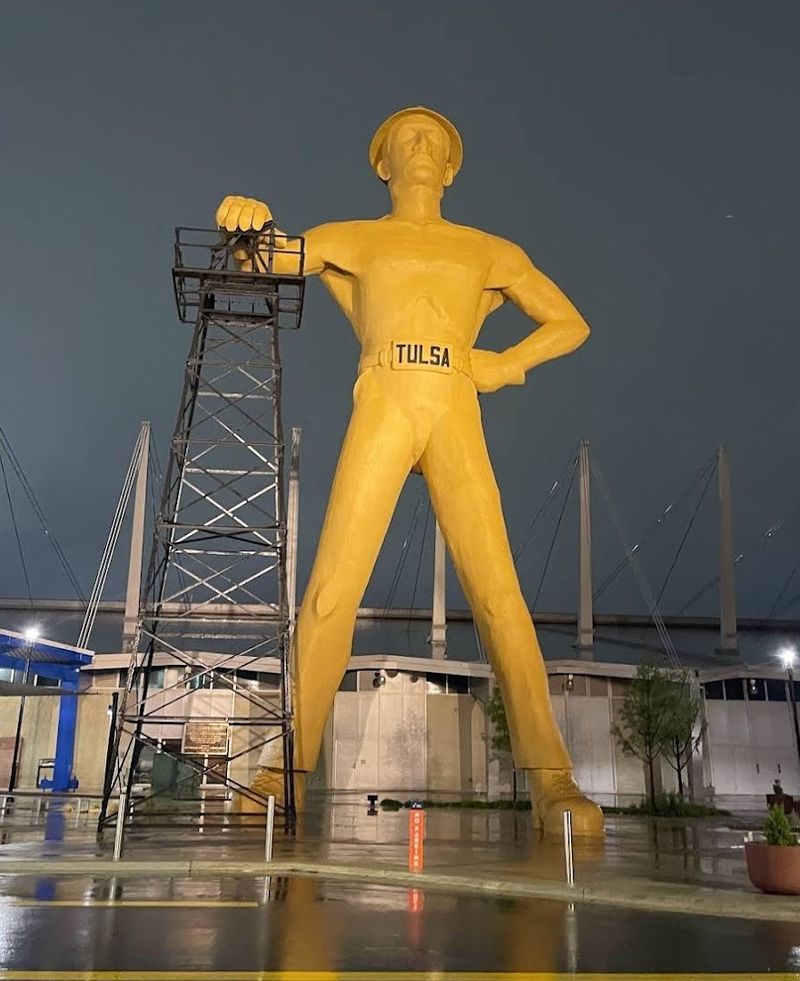
Most travelers pull in, snap a photo, and leave in under five minutes. Nothing wrong with that.
But if you slow down and actually look at the statue, you start noticing details that make the whole experience richer and more interesting than a quick Instagram stop.
The driller’s right hand rests on an actual oil derrick, which is not decorative. It is a structural element that helps support the statue itself.
That is clever engineering dressed up as artistic choice. The figure wears a hard hat, work shirt, and trousers that reflect the standard gear of a mid-century oil field worker.
Every crease and fold in the clothing was sculpted with intention.
The Golden Driller Statue stands on a stone base that adds even more height to an already towering figure. The face, though high above street level, is detailed and expressive in a way that surprises you when you see photos taken from above.
The statue was sculpted by artist Don Unruh, and the craftsmanship holds up impressively well decades later. Even the golden paint job, which gets refreshed periodically, carries meaning.
Gold was chosen deliberately to reflect the wealth and promise that oil brought to the state. Every element here was a conscious decision.
The Expo Center Setting Adds Layers You Would Not Expect
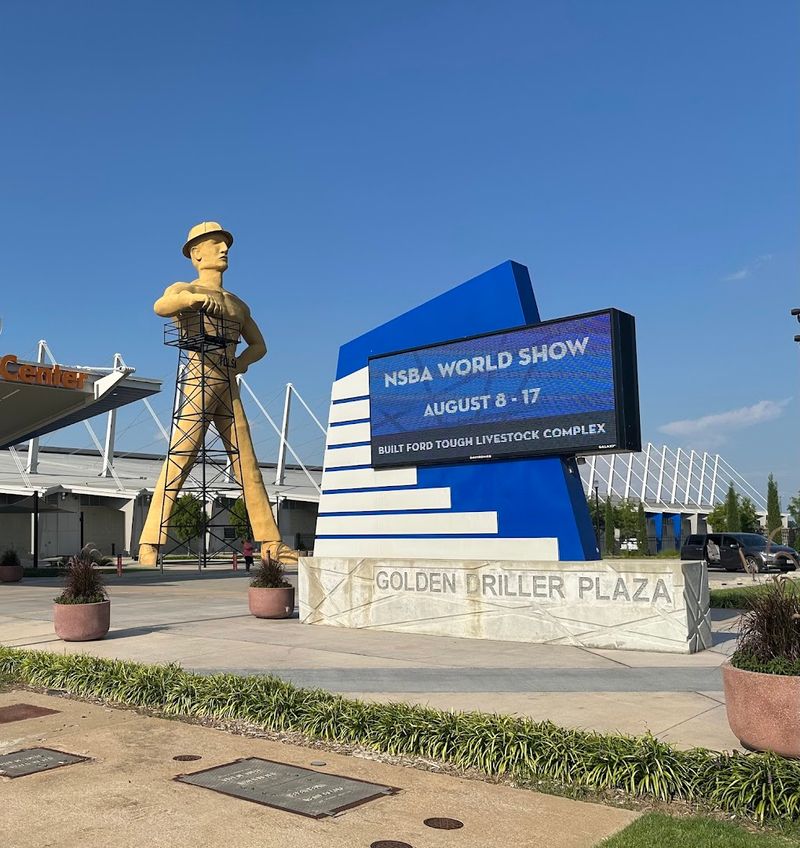
The Golden Driller does not sit in a park or on a quiet pedestal in the middle of a town square. It stands in front of the Tulsa Expo Center, which gives the whole visit a slightly unexpected vibe.
On a quiet weekday, the area feels open and easy to navigate, with plenty of room to walk around and find your best angle for a photo.
On event days, especially during the Tulsa State Fair, the energy around the statue completely changes. The fairgrounds buzz with crowds, food smells drift through the air, and the Golden Driller suddenly looks like a presiding giant watching over the whole celebration.
It becomes part of something bigger and livelier than a simple roadside stop.
The Expo Center itself has an interesting architectural story worth a quick look. The administration building behind the statue features Art Deco ceramic details that are genuinely beautiful and often overlooked by travelers focused entirely on the big golden figure out front.
The Golden Driller Statue is technically open to visitors around the clock, every day of the week, which makes it an easy stop no matter when you are passing through Tulsa. Parking is available on the grounds, though it can get tight when events are running.
Route 66 Runs Right Through This Part of Tulsa
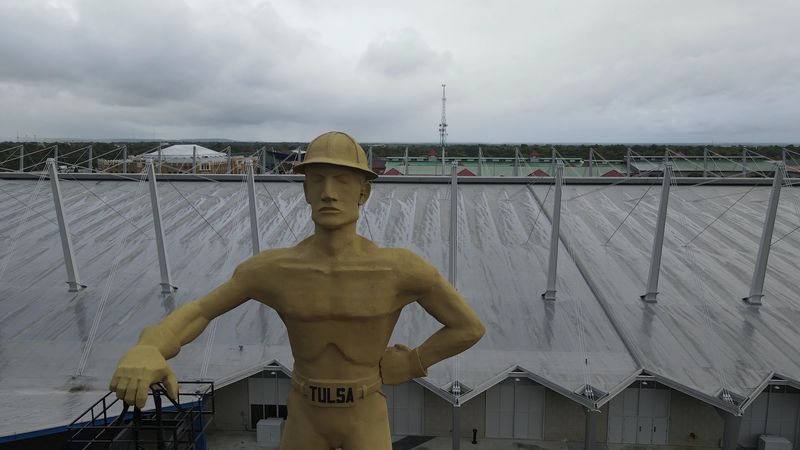
Here is something many road-trippers do not realize until they are already standing in the parking lot: the statue sits very close to historic Route 66. If you are doing any kind of Mother Road journey across the country, this stop practically writes itself into your itinerary.
Tulsa has a strong Route 66 identity, and the area around the Expo Center feeds right into that energy. The surrounding streets have restaurants, diners, and small shops that carry that classic mid-century American road culture.
You get the sense that people have been pulling off this stretch of road for decades, hungry, curious, and ready to stretch their legs after hours of flat Oklahoma highway.
Adding the Golden Driller to a Route 66 road trip makes perfect sense historically, too. The oil industry and the rise of the American highway system are deeply connected stories.
Oil powered the cars, cars needed roads, and roads needed destinations. The driller standing tall near one of America’s most famous roads feels less like a coincidence and more like the universe getting its symbolism right.
If you have never done a Route 66 drive through Oklahoma, the stretch around Tulsa is a strong argument for making the trip happen sooner rather than later.
The View From Ground Level Will Genuinely Surprise You
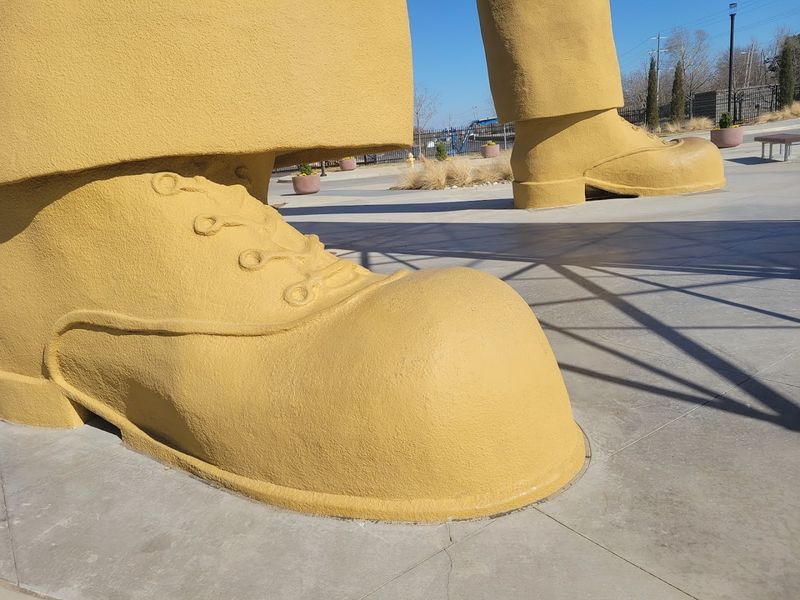
Photos do not prepare you for the real thing. That is just a fact.
You can scroll through hundreds of images of the Golden Driller Statue online and still feel completely unprepared for the moment you step out of your car and look up. The scale is disorienting in the best possible way.
Standing at the base and looking straight up at the driller’s face feels a little like being a cartoon character in a world built for someone much, much larger. A six-foot-tall person standing next to this statue looks roughly the size of one of the driller’s boot buckles.
The perspective shift happens fast and hits hard, and it is one of those travel moments you remember long after the trip is over.
The best photos tend to come from standing back far enough to get the full figure in frame, ideally with a clear sky behind the statue to make the gold pop. Morning light hits the statue beautifully.
Evening light gives it a warmer, more dramatic feel. Nighttime visits are possible since the area is accessible around the clock, but the statue is not lit after dark, so daytime is the move if photos are your main goal.
Bring a wide-angle lens if you have one.
Oklahoma’s Official State Monument Has an Unexpected Title
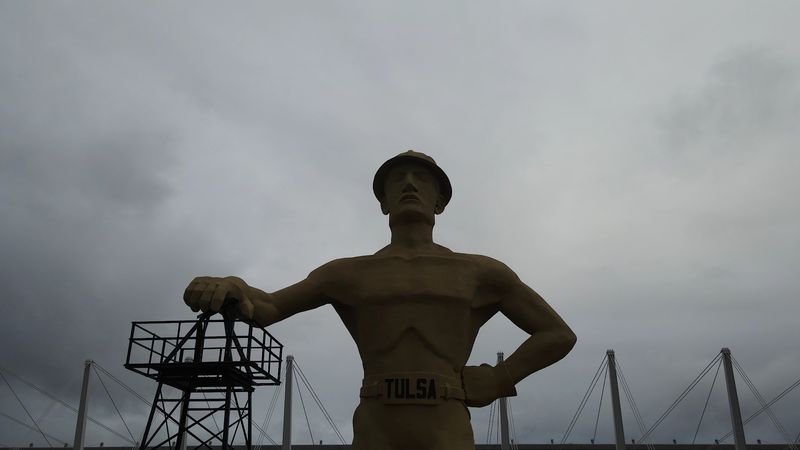
Most states have an official state bird, an official state flower, maybe an official state song. Oklahoma went a step further and gave the Golden Driller Statue an official designation that very few landmarks in the country can claim.
In 1979, the Oklahoma Legislature declared the Golden Driller to be the official State Monument of Oklahoma.
Let that land for a second. Out of everything in the state, this golden oil worker standing in front of a Tulsa expo center was chosen to represent Oklahoma as a whole.
It says a lot about how central the oil industry is to the state’s identity and how much affection Oklahomans feel for this particular landmark.
The designation was not just ceremonial. It reflected a genuine cultural pride in the oil heritage that built the state and the workers who made it possible.
The Golden Driller is not just a tourist attraction. It is a legal symbol of an entire state’s story and values.
For visitors who show up expecting a quirky roadside novelty, this detail tends to reframe the whole experience. Suddenly you are not just looking at a big painted statue.
You are standing in front of Oklahoma’s chosen face to the world, which is a surprisingly moving thing to think about.
Practical Tips for Getting the Most Out of Your Visit
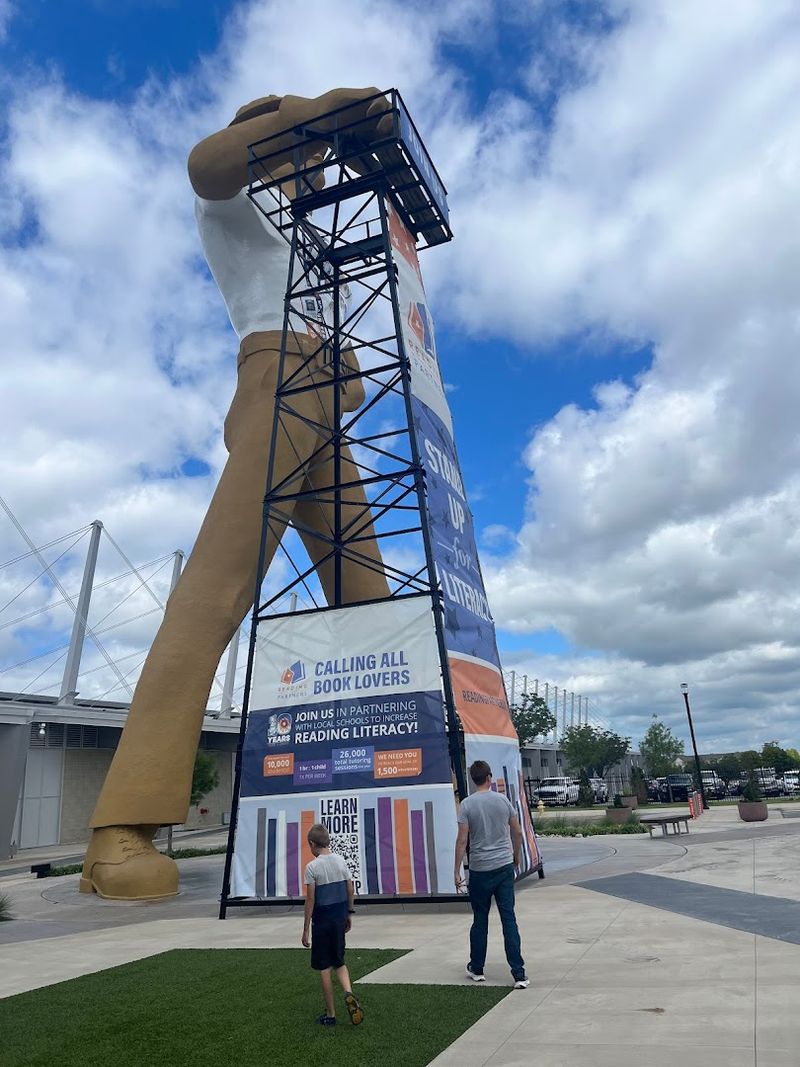
Getting to the Golden Driller Statue is straightforward, but a few small details can make the difference between a smooth stop and an annoying one. The statue is located at the Tulsa Expo Center on East 21st Street, which sits in a neighborhood area.
Traffic can get thick, especially when events are happening at the center, so checking the Expo Center’s event calendar before you go is a smart move.
Parking is available on the grounds, and on quiet days you can pull right in, walk up to the statue, take your photos, and be back on the road in fifteen minutes if that is all you need.
The area around the statue has enough open space to walk around and explore different angles without feeling crowded on most days.
Since the site is open around the clock, early morning visits offer the calmest experience and the best light for photography. Midday light can be harsh and flatten the golden color a bit.
If you are traveling with kids, the sheer size of the statue tends to create a memorable moment that holds their attention in a way that surprises even seasoned road-trip parents. Restaurants and food spots are plentiful nearby, so combining this stop with a meal is easy and worth planning for.
Art Deco Tulsa Surrounds This Landmark in the Best Way
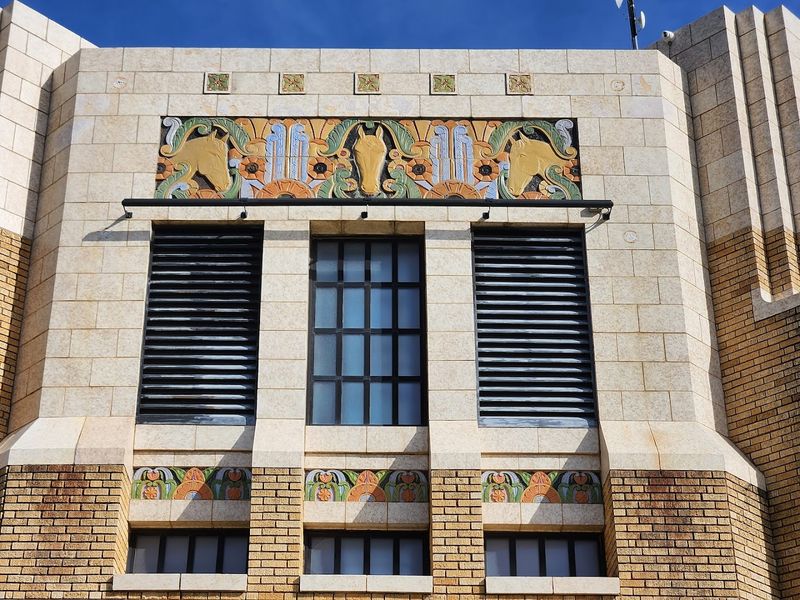
One of the best kept secrets about visiting the Golden Driller Statue is what you find when you turn around and look at the buildings behind it. The Expo Center’s administration building features Art Deco ceramic tile work that is detailed, colorful, and completely stunning in a way that catches you off guard.
Tulsa is actually one of the finest Art Deco cities in the United States, a fact that most people outside of Oklahoma have no idea about. The oil wealth of the 1920s funded an architectural building boom, and the city’s designers leaned hard into the Art Deco style that was defining that era globally.
The result is a downtown and surrounding areas filled with ornate facades, geometric patterns, and buildings that look like they belong in a glamorous old film.
The ceramics on the Expo Center’s admin building are a small but beautiful example of that broader tradition. They are the kind of thing you walk past without a second glance until someone points them out, and then you cannot stop looking.
Pairing the Golden Driller visit with a short drive through Tulsa’s Art Deco district turns a quick roadside stop into a half-day cultural experience that feels surprisingly rich and rewarding for a city many travelers overlook entirely.
Why This Stop Belongs on Every Oklahoma Road Trip List
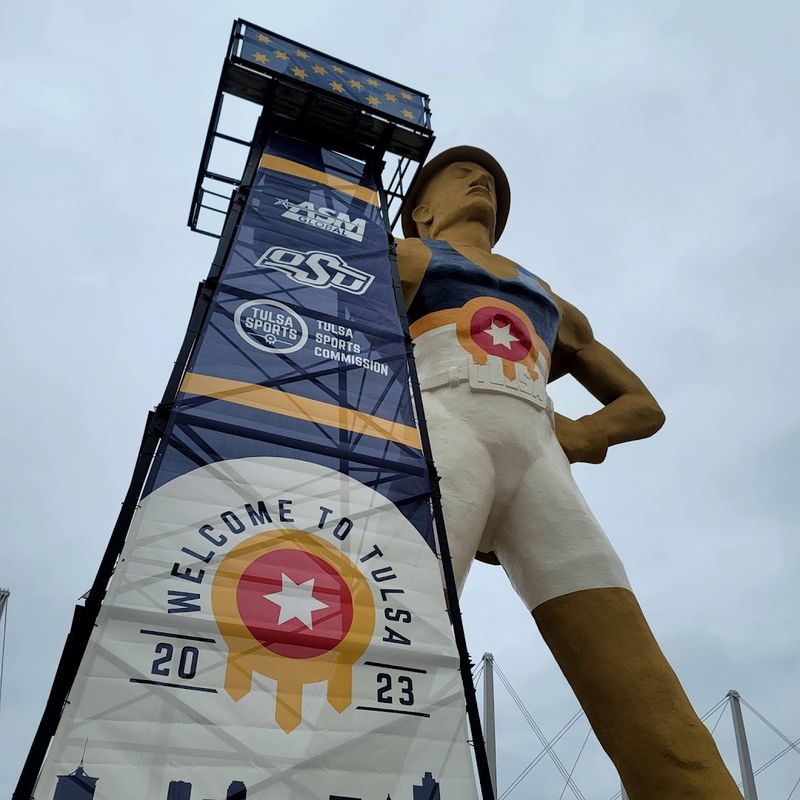
Road trips through Oklahoma tend to get underestimated. Travelers drive through expecting flat land and not much else, and then they stumble onto something like the Golden Driller Statue and realize they had the state completely wrong.
This stop has a way of doing that to people.
The combination of scale, history, accessibility, and surrounding culture makes it one of those rare roadside stops that works for almost any kind of traveler. History enthusiasts get the oil boom backstory and the official state monument designation.
Architecture fans get the Art Deco buildings nearby. Road trip purists get the Route 66 connection.
And everyone gets the primal satisfaction of standing next to something enormous and feeling appropriately small.
The Golden Driller Statue is located at 4145 E 21st St, Tulsa, OK 74114, right at the Tulsa Expo Center in northeastern Oklahoma. The site is open every day of the week, around the clock, making it one of the most flexible stops you can add to any itinerary.
Whether you are passing through on a long drive or making Tulsa a deliberate destination, this landmark earns its spot on the list. Oklahoma has a habit of surprising people, and this golden giant standing watch over the city is one of its finest, most honest surprises.
Dear Reader: This page may contain affiliate links which may earn a commission if you click through and make a purchase. Our independent journalism is not influenced by any advertiser or commercial initiative unless it is clearly marked as sponsored content. As travel products change, please be sure to reconfirm all details and stay up to date with current events to ensure a safe and successful trip.
