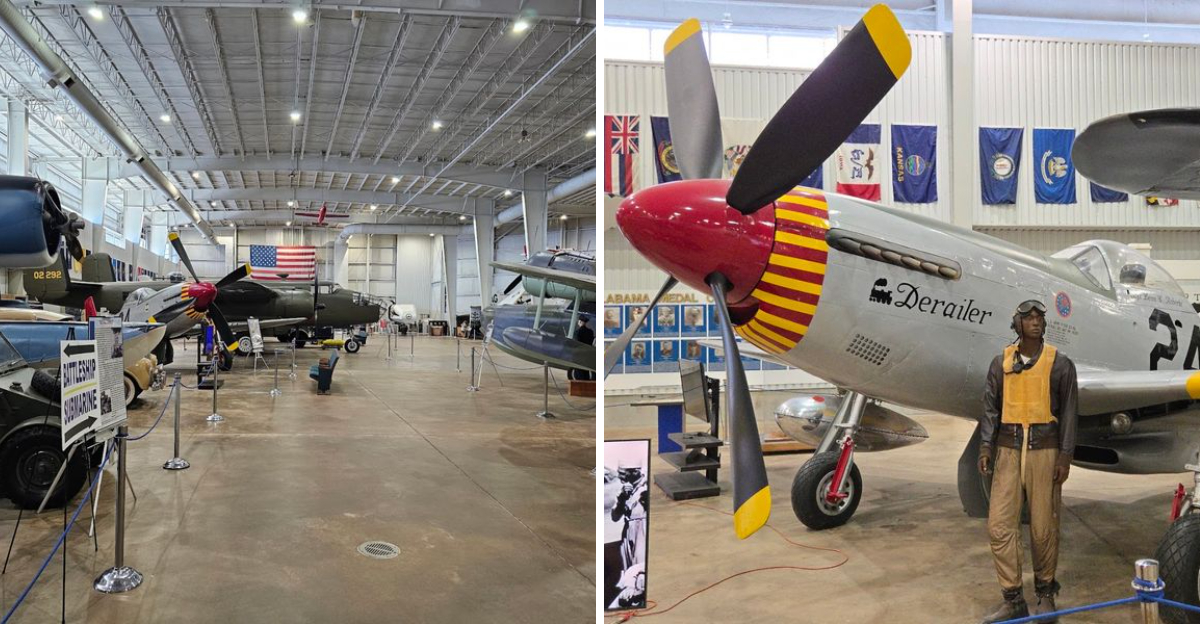
Most people drive past Battleship Parkway in Mobile, Alabama without realizing something extraordinary sits right along the water. An underrated aviation museum along the waterfront deserves far more attention than it gets.
Packed with real spy planes, presidential helicopters, and tributes honoring some of America’s bravest heroes, this destination offers surprises around every corner. From aviation enthusiasts to history lovers and curious families, visitors can discover powerful stories and incredible machines that bring the past to life.
Whether you are looking for a meaningful day out or a unique attraction you will not find anywhere else, this museum delivers an experience that leaves a lasting impression.
You Can Walk Right Up to a Real CIA Spy Plane
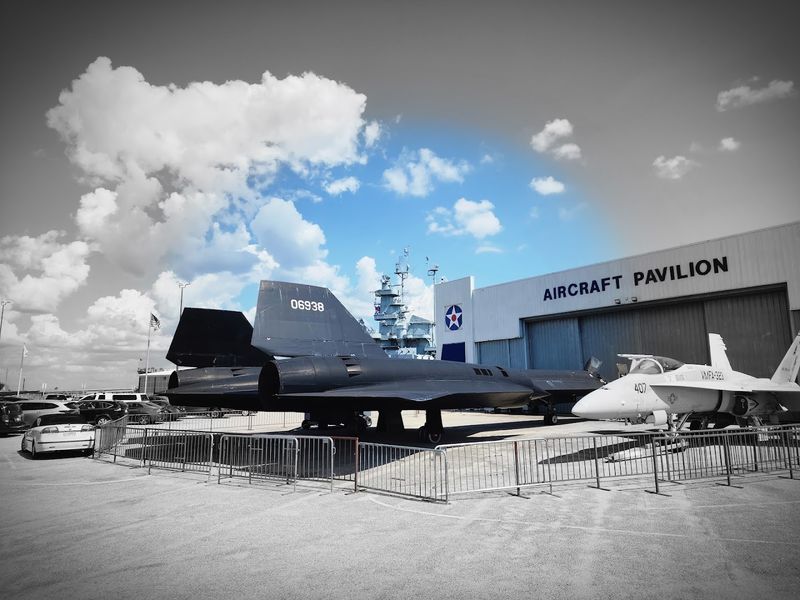
Few things stop you in your tracks like standing next to a plane that was once so secret, most Americans had never heard of it. The A-12 Blackbird on display at the Medal of Honor Aircraft Pavilion is exactly that kind of jaw-dropping encounter.
Located at 2703 Battleship Parkway, Mobile, Alabama 36602, this museum gives you rare access to a machine that once flew missions for the CIA.
The A-12 was the predecessor to the famous SR-71 and could fly at speeds exceeding Mach 3. That means it was moving faster than a bullet.
Its titanium skin was specially engineered to handle the extreme heat generated at those blistering speeds, and you can see that sleek, otherworldly fuselage up close in the outdoor display area.
No glass case. No velvet rope keeping you ten feet back.
You actually get close enough to study the details. The sheer size of this aircraft is something photographs simply cannot prepare you for.
Kids and adults alike tend to stand there quietly for a moment, trying to process what they are looking at. It is the kind of exhibit that makes history feel real and urgent rather than distant and dusty.
Plan to spend extra time here because there is a lot to take in just at this one aircraft alone.
Do Not Miss Army One, the Presidential Helicopter
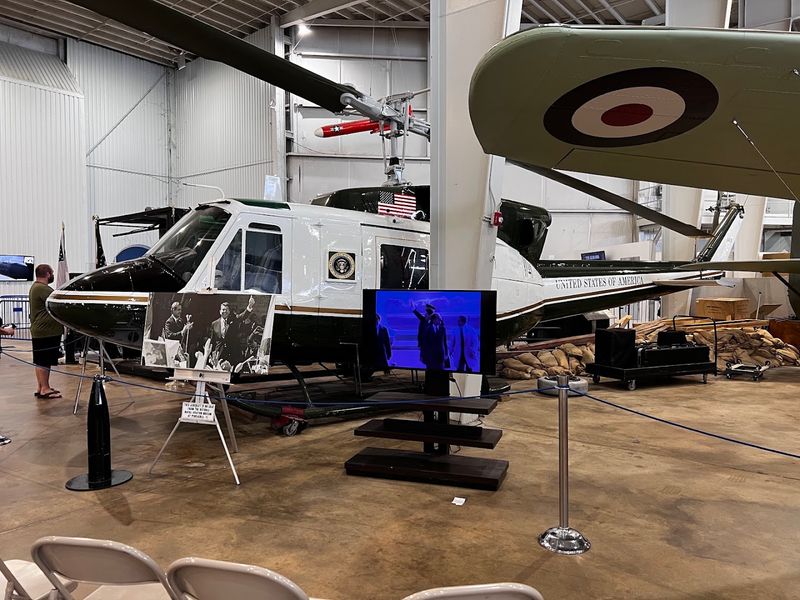
Imagine the helicopter that carried some of the most powerful leaders in the world, now sitting right in front of you in a museum in Alabama. That is exactly what you get when you see Army One, the restored VH-1N Bell 212 helicopter that flew U.S.
Presidents including Nixon, Ford, Carter, Reagan, and George H. W.
Bush. Seeing a machine with that kind of history feels like standing at the edge of something enormous.
The restoration work done on this helicopter is impressive. It looks sharp, clean, and completely believable as the aircraft it once was.
Reading the list of presidents who rode in it adds a surreal layer to the experience. You start doing the mental math of all the moments in history that unfolded around this machine.
For anyone interested in political history, military aviation, or American culture, Army One is a genuine highlight. It sits inside the climate-controlled 36,000-square-foot hangar, which makes viewing comfortable no matter what the weather is like outside.
The pavilion gives you the kind of access that most big-city museums simply would not allow. Getting close enough to study the cockpit design and the exterior markings makes the whole thing feel almost cinematic.
It is one of those rare museum moments where you genuinely forget you are inside a building in Alabama and just let the history sink in.
Plan Your Visit Around the Memorial Wall Inside
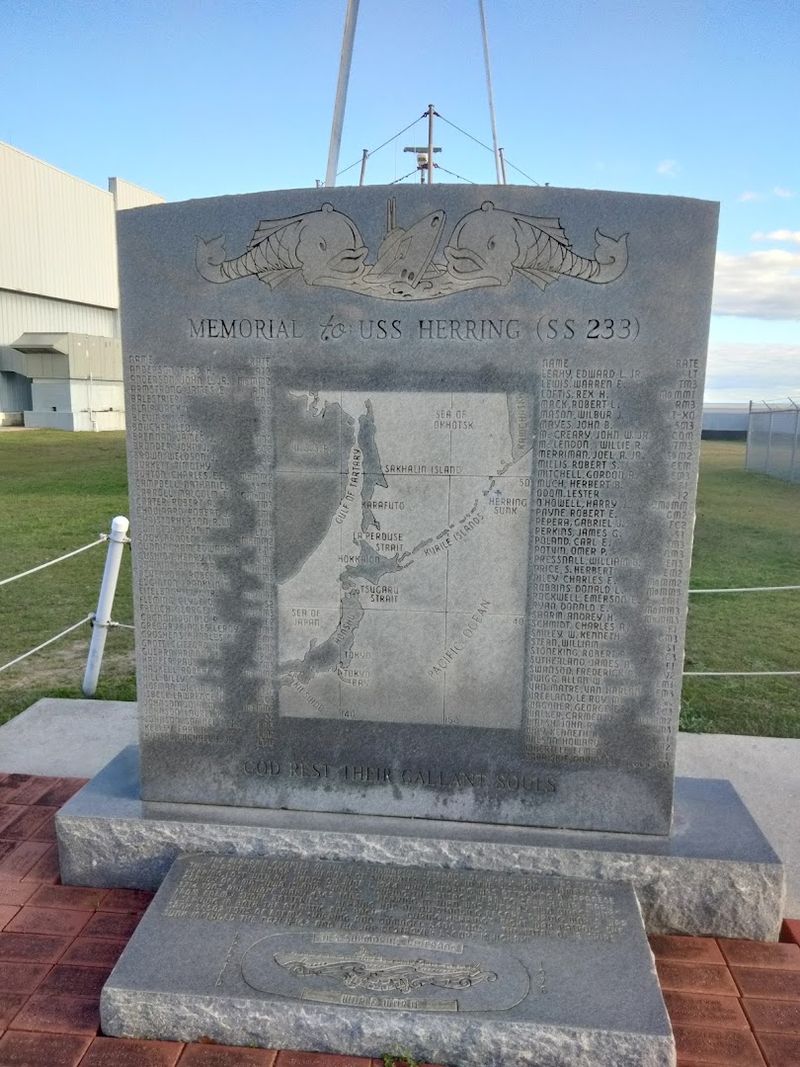
Not every reason to visit an aviation museum is about the aircraft themselves. The memorial wall inside the Medal of Honor Aircraft Pavilion is one of the most quietly powerful features of the entire space.
It honors every Alabama Medal of Honor recipient by name, and many of their portraits and personal stories are displayed alongside it.
Reading those stories while standing near the actual types of aircraft these heroes flew or supported brings history into sharp focus. Some of the accounts describe actions taken inside cockpits nearly identical to the planes on display just a few feet away.
That connection between the memorial and the exhibits around it is intentional and deeply effective.
Alabama has produced an extraordinary number of Medal of Honor recipients, and this pavilion exists in part to make sure their sacrifices are never forgotten. The wall is not loud or flashy.
It is straightforward and sincere, and that simplicity is what makes it so affecting. Visitors of all ages tend to slow down here and actually read, which is saying something in an era of short attention spans.
If you go with children, this is a wonderful spot to have an honest conversation about bravery, service, and what it means to put others before yourself. Give yourself plenty of time at this wall because it genuinely deserves more than a quick glance.
Come See the Red-Tail P-51 Honoring Tuskegee Airmen
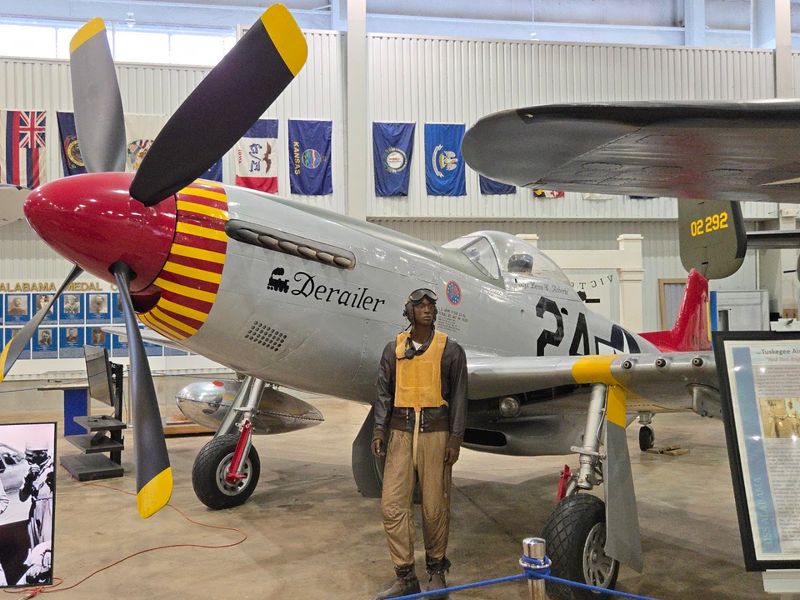
There is a moment inside the pavilion when you spot the red tail of the P-51 Mustang and something about it just hits differently. That bold red paint is not just decoration.
It is a symbol of courage, determination, and one of the most remarkable stories in American military history. The Tuskegee Airmen were Black fighter pilots who fought for their country during World War II while also fighting racial discrimination back home.
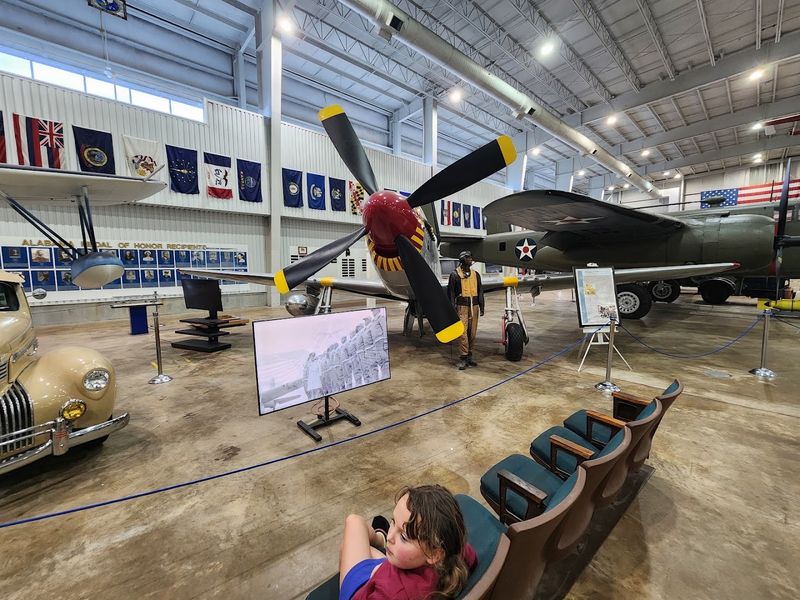
The aircraft on display is similar to the planes those pilots flew in combat. Standing near it while reading about their missions, their training, and their legacy gives the whole experience a weight that is hard to describe.
A video tribute to the Tuskegee Airmen plays inside the pavilion, and it is absolutely worth stopping to watch.
History classes talk about the Tuskegee Airmen, but seeing a Red-Tail up close makes their story feel personal. You start to picture what it took to climb into a cockpit like that and fly into enemy territory with everything stacked against you.
This exhibit does not just inform you. It moves you.
For families with kids, this is a genuinely powerful teaching moment that no textbook can fully replicate. The pavilion handles this tribute with care and respect, which makes the visit feel meaningful rather than simply educational.
Skip Nothing, the Hangar Holds 30 Plus Aircraft
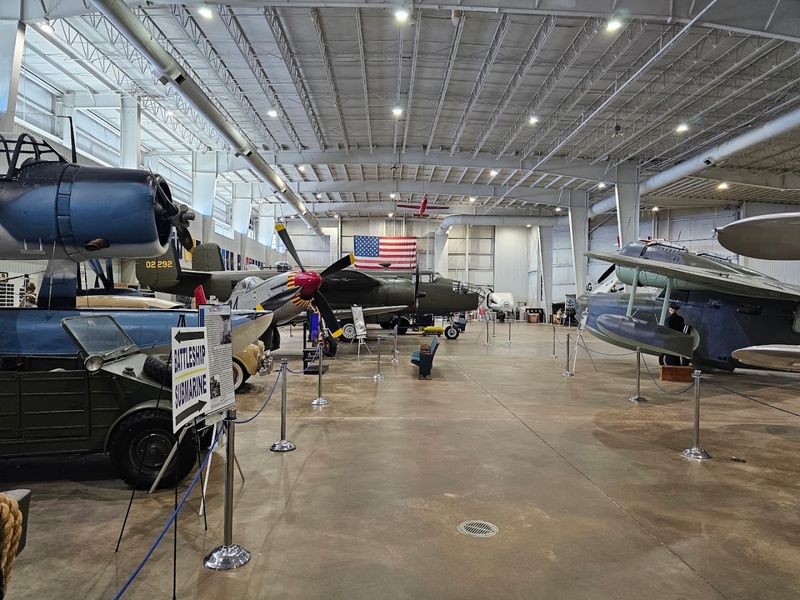
Walking into a 36,000-square-foot climate-controlled hangar packed with more than 30 aircraft, historic vehicles, and war artifacts is a genuinely different experience from your typical museum visit. The sheer variety on display at the Medal of Honor Aircraft Pavilion means there is always something new to discover around every corner.
One moment you are looking at a World War II bomber, and the next you are staring at a Cold War-era jet.
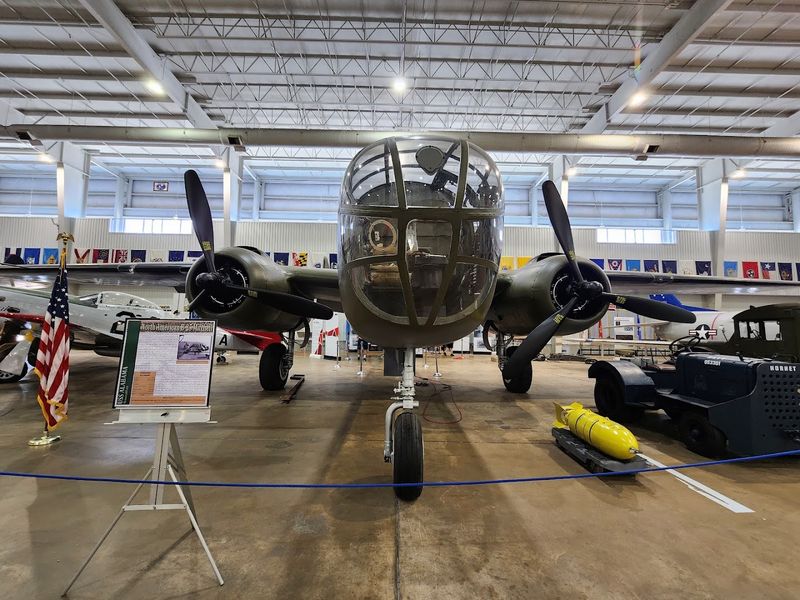
The B-25 Mitchell bomber is a particular crowd favorite inside the hangar. It is a large, rugged aircraft with a history tied to some of the most daring missions of World War II.
The collection spans nearly 80 years of aviation history, covering conflicts from World War I all the way through the Vietnam War and beyond.
Beyond the aircraft, the hangar also contains jeeps, military trucks, uniforms, weapons displays, and memorabilia that fill in the human side of these conflicts. Everything is well maintained and clearly labeled, so you do not need to be a history expert to follow along and stay engaged.
The layout is designed to let visitors get genuinely close to the exhibits, which makes the experience feel immersive rather than distant. Plan to spend at least an hour inside the hangar alone, and honestly, you could easily stretch that into two hours if you stop to read everything on offer.
Try Spotting Coast Guard Aviation History Outside Too
Most aviation museums focus heavily on combat aircraft, so it is genuinely refreshing to find a thoughtful tribute to Coast Guard aviation history right here in Alabama. The bright orange and white HH-52 Sea Guard helicopter parked in the outdoor display area is one of those exhibits that catches your eye immediately.
That vivid color scheme is hard to miss, and it tells its own story about the Coast Guard mission before you even read a single sign.
The outdoor grounds surrounding the pavilion hold several additional aircraft that are viewable even without paying full admission. For just a five-dollar parking fee, you can walk among some of these planes and get a real sense of the scale and variety of the collection.
It is a great way to preview the museum before deciding to head inside.
Coast Guard aviation history often gets overlooked in favor of Army and Navy stories, but the rescue missions those crews flew were just as dangerous and just as critical. The HH-52 was used for search and rescue operations, and the information displayed with the aircraft gives real context to what those missions involved.
Spending time in the outdoor area also gives you a chance to take in the surroundings along Battleship Parkway, where the water and the massive silhouette of the USS Alabama create a backdrop that feels genuinely cinematic. Do not rush through this part of the visit.
Make the Full Park Day Work for Every Age
One of the smartest things about visiting the Medal of Honor Aircraft Pavilion is that it sits inside the larger USS Alabama Battleship Memorial Park, which means one admission gives your group an entire day of connected history. The eighteen-dollar adult ticket covers the aircraft pavilion, the USS Alabama battleship tour, and the USS Drum submarine, all in one visit.
That is an incredible amount of history for the price.
Families with younger kids will appreciate how much variety the park offers. When aircraft start to blur together for little ones, the submarine provides a completely different kind of adventure.
Crawling through the tight compartments of a real World War II sub tends to re-energize even the most museum-fatigued child pretty quickly.
The park also has restrooms, a cafe, and a gift shop, so you do not need to plan around finding food or facilities elsewhere. Seniors and active-duty military receive reduced or free admission, which makes the whole experience even more accessible.
Visitors consistently note that two hours is the realistic minimum for seeing everything, but a half-day is honestly more satisfying if you want to read the displays and soak in the atmosphere. The park is open daily from 8 AM to 5 PM, giving you a solid window to explore at your own pace.
Self-guided tours mean you move through everything exactly as fast or as slowly as you like.
