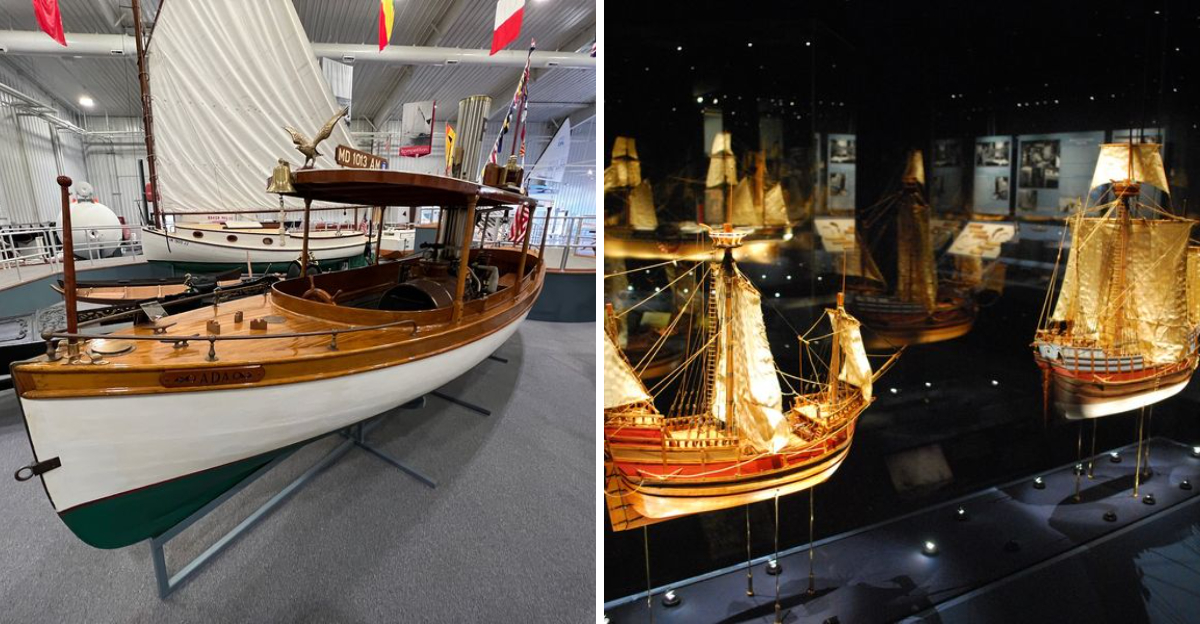
The anchors are massive, the figureheads are carved with care, and the stories of the sea are told in every exhibit. This fascinating museum in Virginia takes you deep into America’s maritime past, a place where the history of the water is preserved and celebrated.
I spent an afternoon wandering through the galleries, stopping at the model ships, the navigation instruments, and the artifacts from shipwrecks and voyages. The museum is vast, with exhibits that cover centuries of maritime history, from the earliest explorers to the modern Navy.
The park outside is equally inviting, with trails that wind along the water and offer views that make you feel connected to the sea. Virginia has plenty of museums, but this one is for people who feel the pull of the ocean.
A Grand Welcome to Maritime Wonders
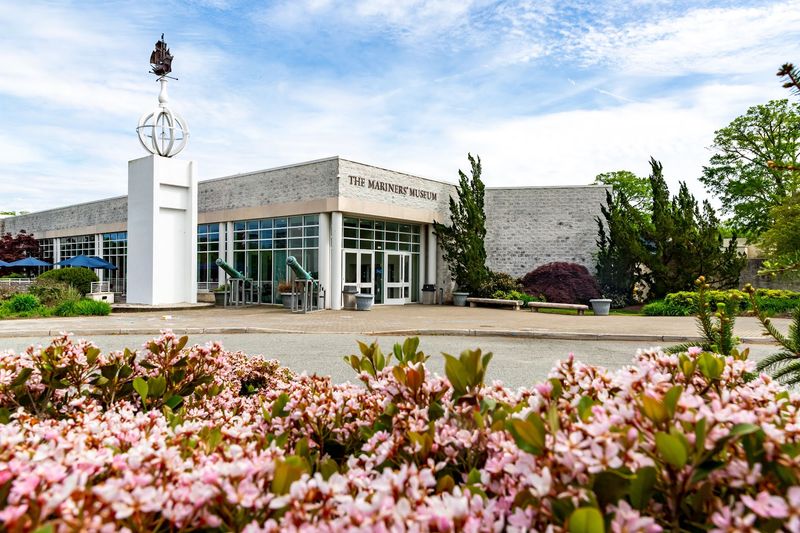
Walking through the front doors of The Mariners’ Museum and Park feels like stepping onto the deck of a ship that has sailed through every chapter of human history. The scale of it hits you immediately.
Tall ceilings, sweeping galleries, and carefully arranged artifacts pull your attention in every direction at once.
Congress officially designated this institution as America’s National Maritime Museum, and you can feel that prestige the moment you arrive. The collection spans centuries of seafaring culture, from ancient navigation tools to modern naval engineering.
Every corner of this place tells a story worth hearing.
My first impression was one of genuine awe. The museum manages to balance grandeur with warmth, making it feel both monumental and completely welcoming.
Families, history buffs, and curious wanderers all find something that speaks directly to them here in Virginia.
The staff clearly love what they do, and that energy is contagious. Before I even reached the first major exhibit, I already knew this visit was going to be something special.
The Mariners’ Museum and Park sets a high bar from the very first step inside.
Unveiling the Ironclad Revolution at the USS Monitor Center
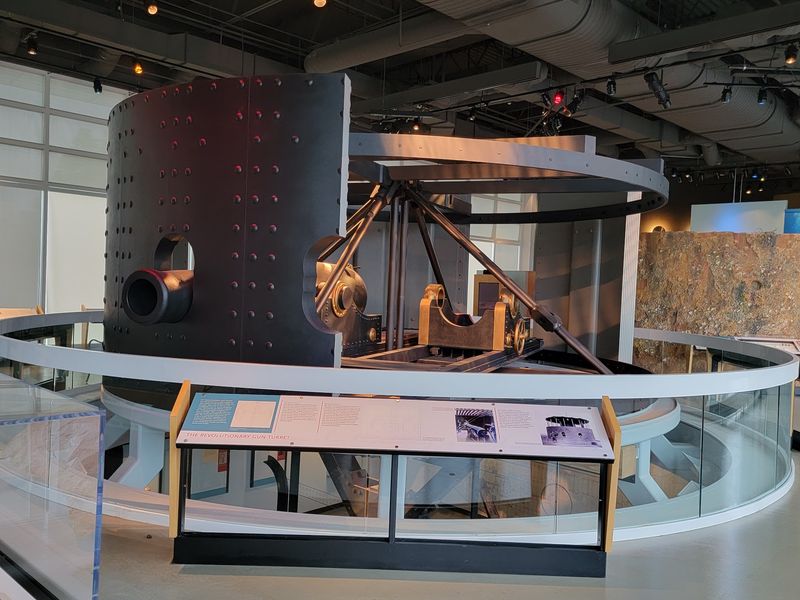
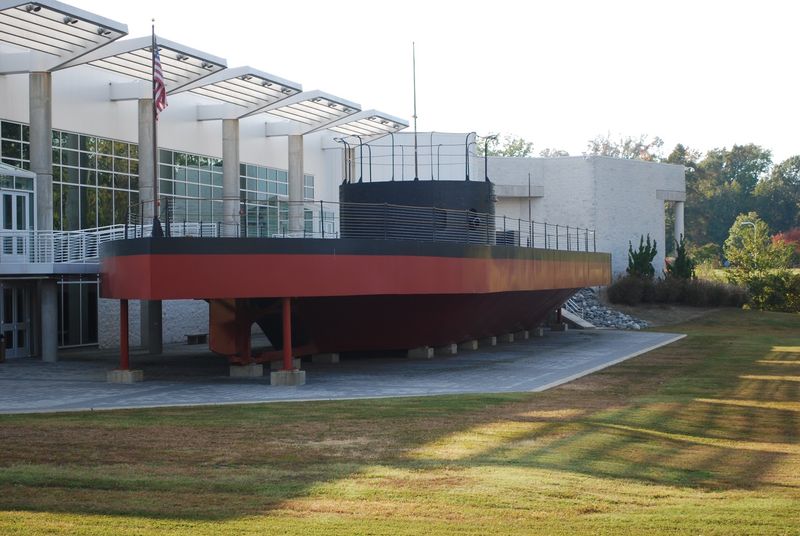
Few exhibits anywhere in the world pack the emotional punch of the USS Monitor Center. Standing face-to-face with the actual artifacts recovered from this legendary Civil War ironclad is a genuinely jaw-dropping experience.
The massive Dahlgren guns and the ship’s iron components carry a weight that photographs simply cannot capture.
The story of the 1862 Battle of Hampton Roads comes alive through immersive displays that recreate the tension of that pivotal naval confrontation. The Monitor’s revolving gun turret was a technological leap that redefined how wars were fought at sea.
Seeing it up close, undergoing meticulous conservation in the Batten Conservation Complex, makes that innovation feel startlingly real.
What sets this exhibit apart is the authenticity. These are not replicas sitting behind glass.
These are actual objects that were submerged on the ocean floor for over a century before being carefully raised and preserved right here in Virginia.
The theater presentation about the battle is an absolute must. Running about seventeen minutes, it condenses the drama of that historic clash into a gripping short film that sets the stage perfectly for everything else you are about to see at The Mariners’ Museum and Park.
Miniature Worlds with Maximum Impact, the Crabtree Collection
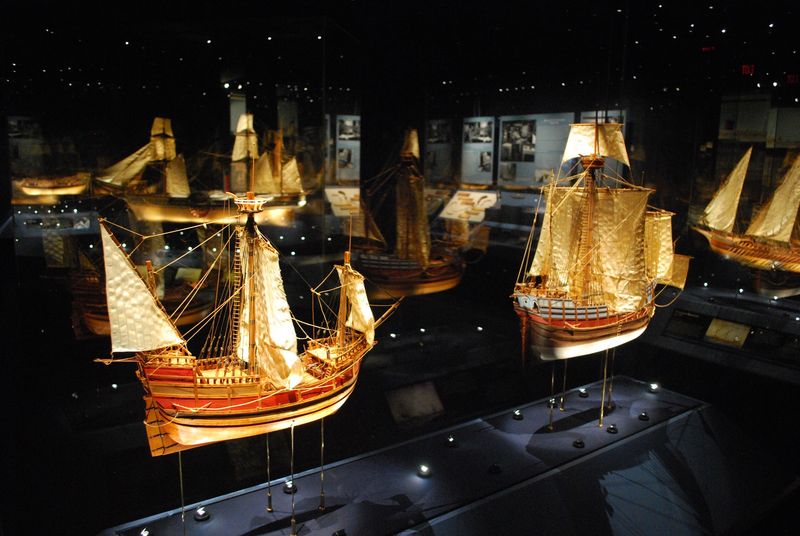
Prepare yourself for a serious case of wonder, because the August and Winnifred Crabtree Miniature Ships collection is one of the most unexpectedly captivating things I have ever seen inside a museum. These tiny vessels are not toys.
They are masterworks of precision, patience, and passion.
Each model replicates a historical ship with astonishing accuracy, right down to the miniature rigging lines and hand-carved hull details. Leaning in close to study them, you start to appreciate the almost impossible skill involved in bringing these microscopic worlds to life.
The craftsmanship is genuinely humbling.
The collection traces the evolution of seafaring vessels across different eras and cultures, offering a surprisingly comprehensive survey of maritime history in a surprisingly compact format. It is the kind of exhibit that makes you slow down and pay attention to every single detail.
Kids tend to absolutely love this section, and honestly, so do adults who thought they were too cool to be impressed by small things. The Crabtree collection proves that great stories can come in the smallest packages.
This alone is worth the trip to The Mariners’ Museum and Park in Newport News.
A World Tour Without Leaving the Building, the International Small Craft Center
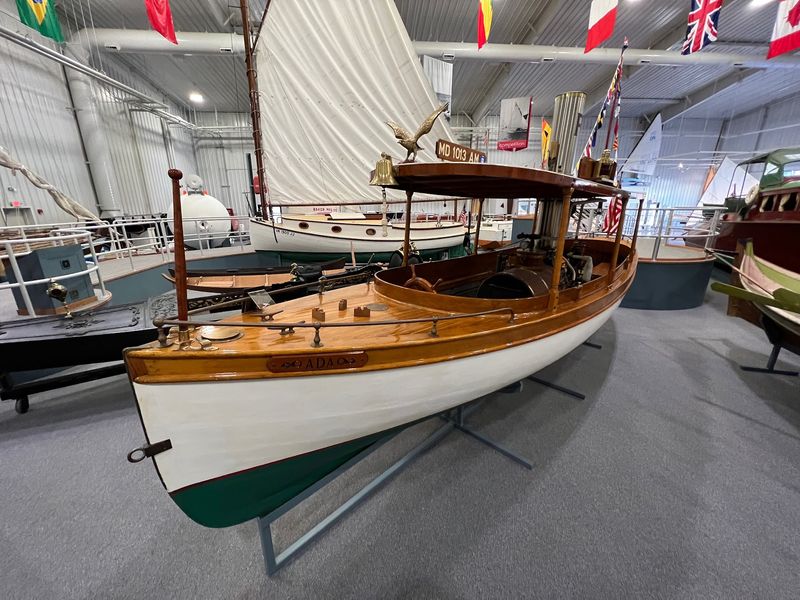
Honestly, the International Small Craft Center stopped me in my tracks. One moment you are in Virginia, and the next you are looking at a traditional fishing boat from Southeast Asia hanging beside a ceremonial canoe from the Pacific Islands.
The sheer diversity of watercraft on display here is nothing short of extraordinary.
Every vessel in this gallery represents a unique cultural relationship with water. Communities across every continent have adapted their boat designs to suit their specific rivers, coastlines, and ways of life.
Seeing them all gathered in one space creates a powerful visual argument for the universality of human ingenuity.
The exhibit does a brilliant job of providing context for each craft. You understand not just what each boat looks like, but why it was built that way, what it carried, and who relied on it.
That storytelling approach transforms a gallery of objects into a genuine cultural journey.
My favorite moment was pausing beside a beautifully preserved traditional vessel and realizing it had crossed actual oceans before ending up here. The International Small Craft Center is one of the most quietly profound stops inside The Mariners’ Museum and Park, and it deserves every minute of your attention.
Defending the Seas, the Story of American Naval Power
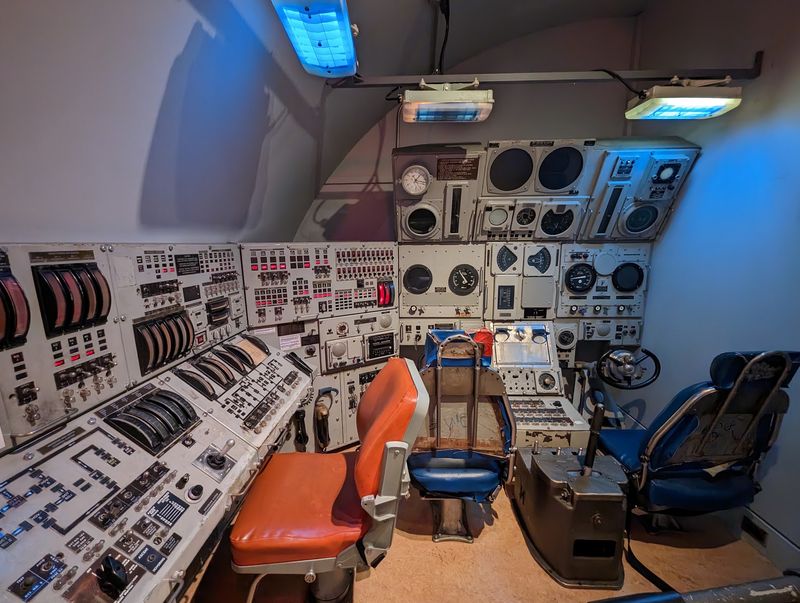
The “Defending the Seas” exhibit delivers an electrifying tour through the history of the United States Navy, and it does not hold back on drama or detail. The moment I stepped inside, the atmosphere shifted completely.
Suddenly the stakes felt real, the history felt urgent, and the stories felt deeply personal.
Scaled replicas of submarine control rooms and aircraft carrier decks give you a genuine sense of what naval service actually looked like from the inside. These immersive environments are designed to put you in the boots of the men and women who served, and they succeed remarkably well at doing exactly that.
The exhibit traces naval history from the earliest days of the Revolutionary War all the way through modern operations. Technological evolution is woven seamlessly into the human stories, so you never feel like you are reading a dry timeline.
Instead, you feel the weight of each decision and each innovation.
Virginia has a deep and proud connection to American naval history, and this exhibit honors that relationship beautifully. By the time I walked out of this section at The Mariners’ Museum and Park, my respect for those who serve at sea had grown considerably.
Powerful stuff.
Lions Bridge and the Serenity of Mariners’ Lake
Stepping outside after hours of indoor exploration feels like a reward all on its own, and the park surrounding the museum delivers in the most spectacular fashion. The five-mile Noland Trail winds through naturally wooded land along the shores of the gorgeous Mariners’ Lake, and every step of it is pure joy.
The Lions Bridge is the crown jewel of the outdoor experience. Four magnificent stone lions, sculpted by the celebrated artist Anna Hyatt Huntington, guard the bridge with quiet dignity.
The views from the bridge across the lake are genuinely postcard-worthy, especially during the golden hours of morning or late afternoon.
Wildlife makes regular appearances along the trail. Herons, turtles, and various woodland creatures seem perfectly comfortable sharing the space with walkers, joggers, and families out for a leisurely stroll.
The natural beauty of this Virginia landscape provides a calming counterbalance to the intensity of the museum exhibits inside.
What I love most about this outdoor space is how seamlessly it connects to the museum’s mission. The park feels like a natural extension of the maritime story, where water, nature, and history all meet in one beautifully maintained setting at The Mariners’ Museum and Park.
Conservation Science on a World-Class Scale, the Batten Conservation Complex
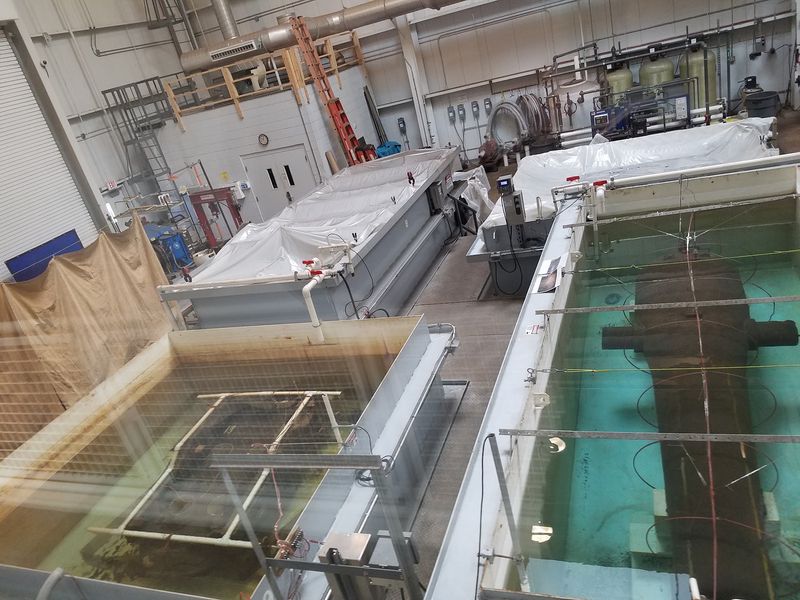
Not every museum lets you watch the actual science of preservation happening in real time, which is exactly what makes the Batten Conservation Complex such an extraordinary stop. This facility is recognized as the largest and most advanced marine archaeological metals conservation center anywhere in the world.
That is not a small claim, and The Mariners’ Museum and Park backs it up completely.
The massive gun turret from the USS Monitor currently sits submerged in conservation tanks, undergoing the painstaking process of removing centuries of saltwater corrosion. Watching trained conservators work with such precision and care is genuinely fascinating.
It reframes how you think about museum collections.
Most people assume artifacts just appear in display cases, perfectly preserved. Seeing the complex chemistry and physical labor involved in actually saving these objects from decay changes your perspective entirely.
History is not just collected here. It is actively rescued, stabilized, and protected for future generations.
The complex also houses the Monitor’s steam engine and various other recovered components, all in different stages of treatment. Seeing them up close, understanding the science keeping them intact, adds a layer of appreciation to every other exhibit in the building.
This is one of the most genuinely educational corners of Virginia’s museum landscape.
Maritime Art That Takes Your Breath Away
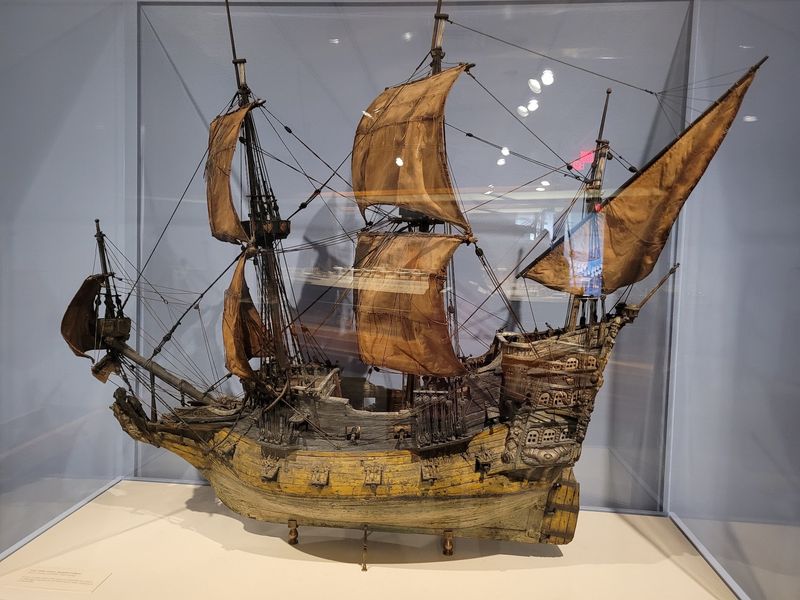
Art lovers who wander into the maritime art galleries at The Mariners’ Museum and Park tend to linger far longer than they planned. The collection is genuinely exceptional, spanning centuries of artistic interpretation of the ocean and the vessels that cross it.
Dramatic seascapes, bustling harbor scenes, and portraits of legendary ships fill the walls with color and energy.
What strikes me most is how varied the artistic approaches are. Some works capture the terrifying power of storms at sea with almost cinematic intensity.
Others focus on the quiet dignity of everyday maritime labor, the fishermen, the dockworkers, the navigators who made ocean commerce possible across the centuries.
Renowned marine artists from multiple countries are represented throughout the collection, giving the galleries an international flavor that mirrors the global scope of maritime history itself. Each painting rewards close attention, revealing details that tell stories beyond the obvious subject matter.
Moving through these galleries feels like reading a visual history of humanity’s relationship with water, told by artists who clearly felt that relationship deeply. The maritime art collection adds an emotional and aesthetic dimension to the museum experience that perfectly complements the historical and scientific exhibits found throughout the rest of this magnificent Virginia institution.
The Age of Exploration Exhibit, Chasing the Horizon
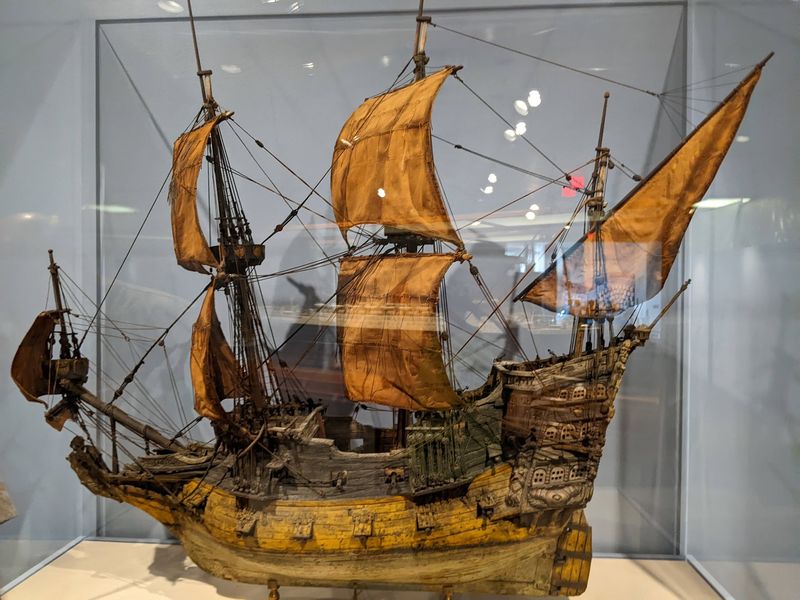
There is something almost magical about standing in front of a navigation instrument that once guided a ship across an unmapped ocean. The Age of Exploration exhibit at The Mariners’ Museum and Park captures that sense of magic with tremendous skill, transporting you directly into the mindset of the great explorers who reshaped the known world.
Astrolabes, compasses, and hand-drawn charts that once helped mariners find their way across vast and uncharted waters are displayed alongside richly detailed interpretive panels. The stories of legendary expeditions unfold with a narrative energy that makes the history feel immediate rather than distant.
My favorite part of this exhibit is how it humanizes the explorers. These were real people, often terrified, frequently underprepared, always audacious.
The exhibit does not shy away from the complexity of exploration history, acknowledging both the remarkable courage and the significant consequences of these voyages.
Virginia has always been a place where exploration narratives resonate deeply, given its own rich history as an early landing point for European settlers. Walking through this exhibit, I felt that history connecting across centuries in a way that only truly great museums manage to achieve.
This section is genuinely unforgettable.
Speed, Innovation, and the America’s Cup Legacy
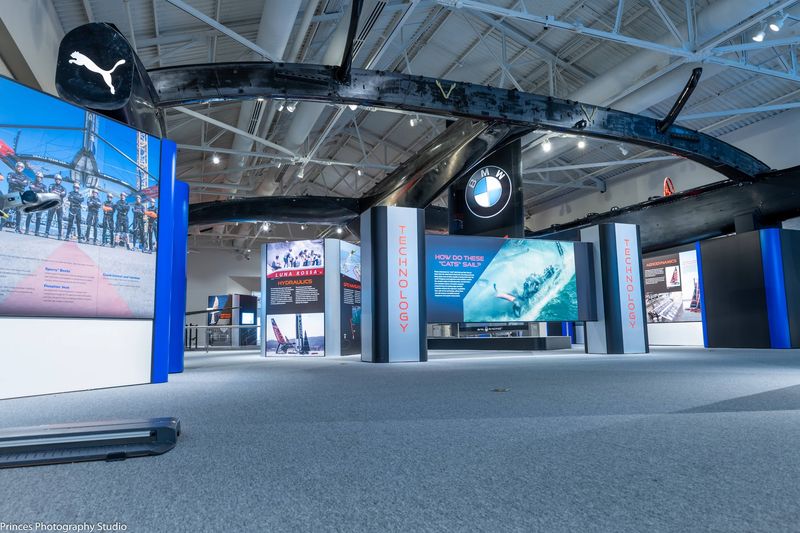
For anyone who has ever felt the thrill of watching a racing yacht slice through open water, the America’s Cup exhibit at The Mariners’ Museum and Park is pure electricity. This legendary international sailing competition holds the title of the oldest sporting trophy in the world, and the exhibit treats that legacy with the reverence it deserves.
Sleek yacht models, archival photographs, and interactive displays trace the evolution of racing design from the earliest competitions to the cutting-edge foiling catamarans of the modern era. The technological leaps involved are genuinely staggering.
Each generation of yacht pushed the boundaries of what engineers believed was physically possible on the water.
What makes this exhibit so engaging is the way it balances technical detail with human drama. The fierce rivalries, the heartbreaking losses, the triumphant comebacks, all of it is woven into the story of how competitive sailing has driven innovation far beyond the racetrack.
Leaving this gallery, I found myself thinking about how much the spirit of exploration and competition connects every single exhibit in this building. Pack a full day for your visit to The Mariners’ Museum and Park at 100 Museum Drive, Newport News, VA 23606, because you absolutely will not want to rush a single moment of it.
