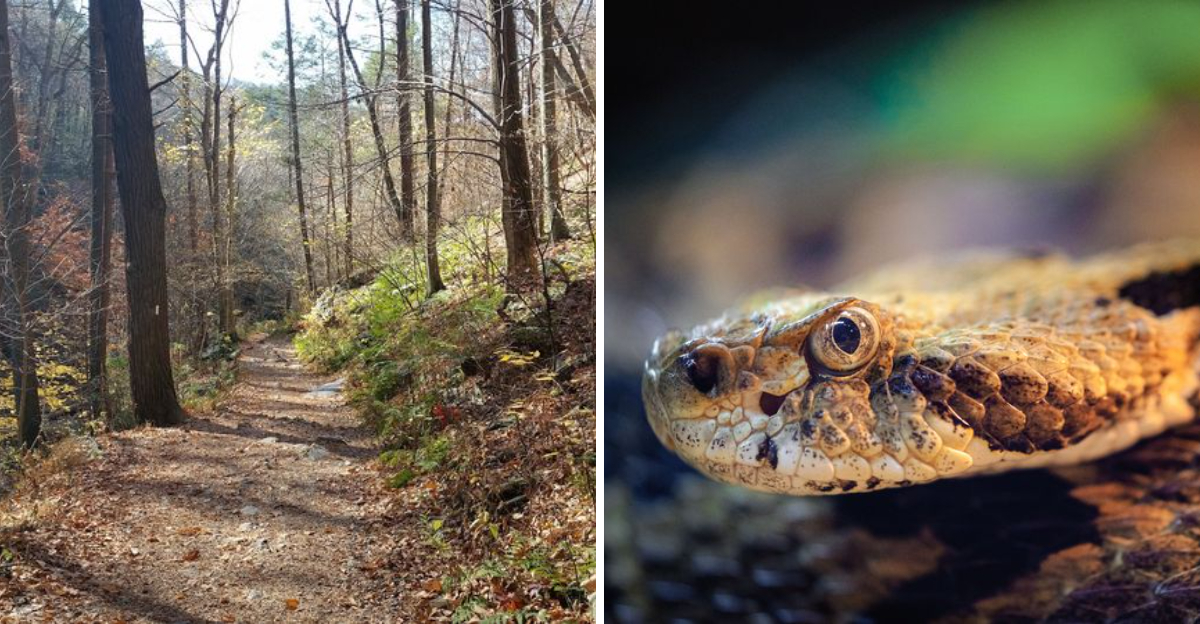
I am not saying you will definitely see a snake on this trail. But I am also not saying you will not.
This New Jersey wilderness area is home to an impressive variety of snake species, including two venomous ones that love sunbathing on the rocky outcrops you will be climbing.
The sign at the trailhead is not there for decoration.
It is there to remind you that you are sharing this mountain with timber rattlesnakes and copperheads, both of which call this place home.
Visitors have reported encounters with black snakes crossing the trail and rattlesnakes warming themselves on the rocks .
The view from the top is absolutely worth the effort. Just keep your eyes on the trail and your hands where you can see them.
And maybe do not sit on any warm rocks without checking first.
Fourteen Snake Species Share These Slopes
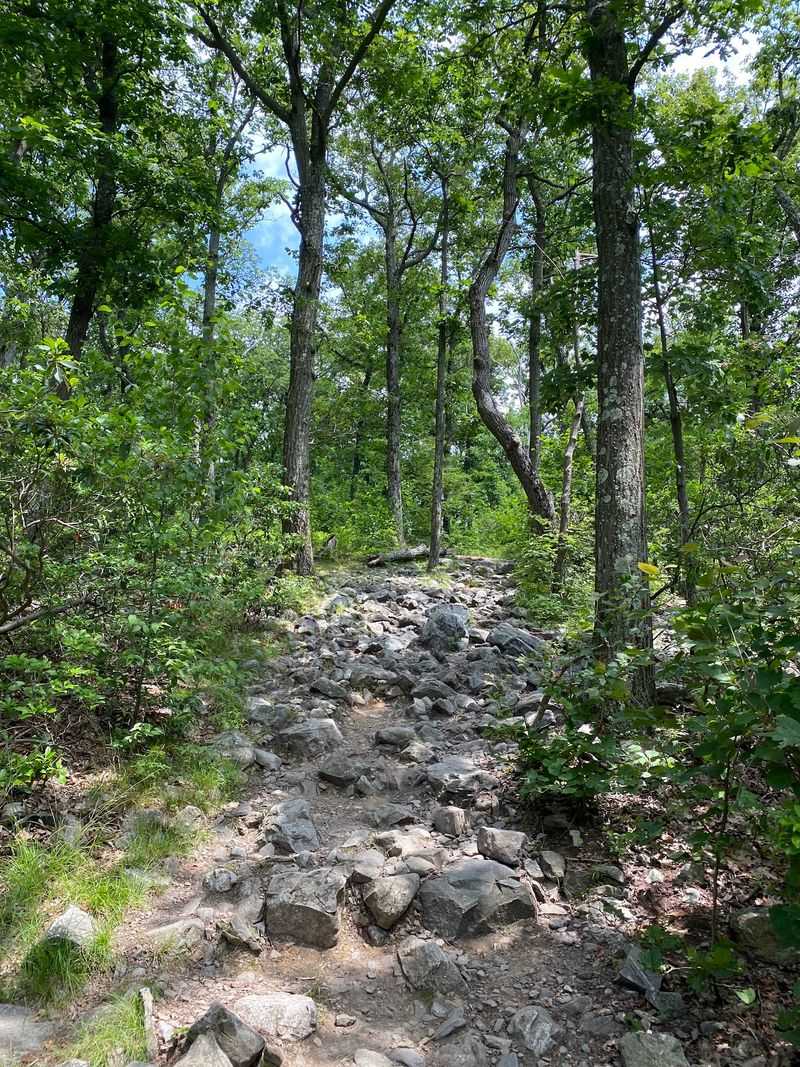
Fourteen species of snakes live within the Delaware Water Gap National Recreation Area, and the mountain sits right in the middle of that habitat. That is a genuinely impressive number for one protected pocket of the Northeast.
Most of the snakes here are completely harmless.
Garter snakes slip through grass near trail edges, eastern rat snakes climb surprisingly well and can grow long enough to make you do a double take, ringneck snakes hide under flat stones, and northern water snakes patrol the creeks and river shallows.
Two species are venomous, the timber rattlesnake and the northern copperhead, and both prefer sunny rock rather than busy footpaths.
Knowing the mix helps more than fearing it. A dark snake stretched across the Red Dot Trail is almost certainly a rat snake going about its business, and it will move on its own if you give it room and a little patience.
Watching your step is less about danger and more about respect for a habitat that is genuinely rich and rare.
Sun-Warmed Quartzite Where Rattlesnakes Bask
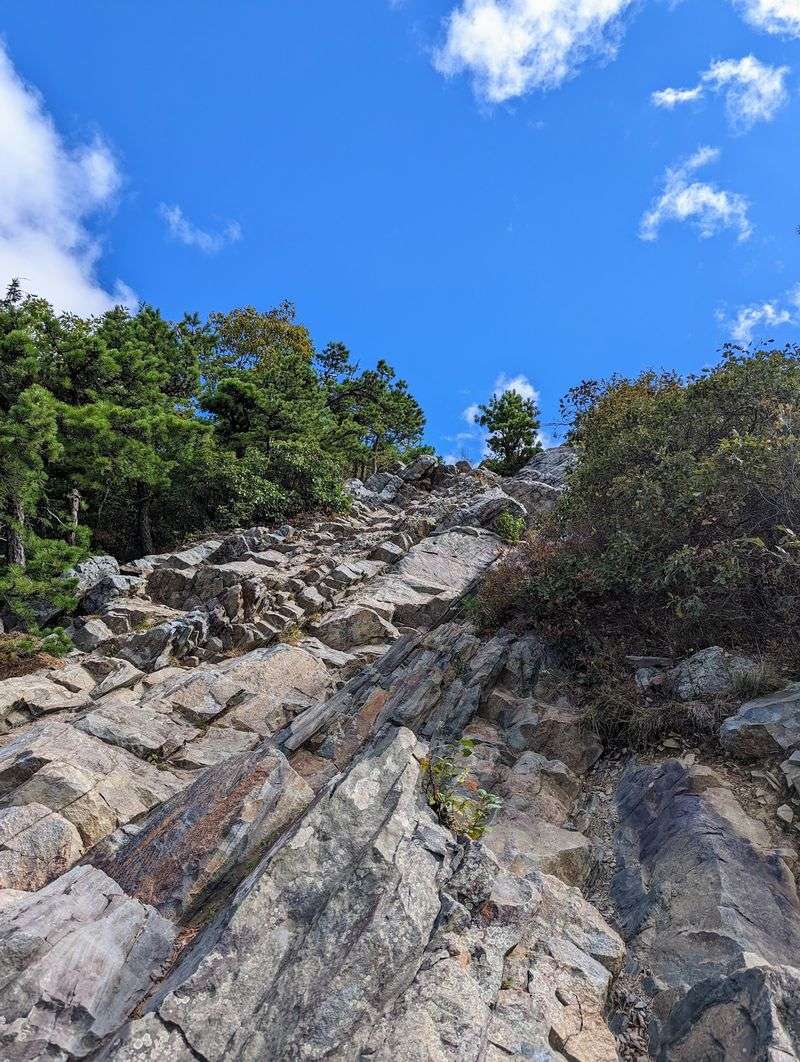
Those pale rock outcrops near the summit look like natural benches, and they are, for hikers and for reptiles alike. Quartzite holds heat beautifully, which makes the exposed ledges prime basking real estate.
Timber rattlesnakes and northern copperheads use these sunny surfaces most heavily from May through September, when they are at their most active.
Practical advice matters here. Scan a ledge before you sit on it, avoid reaching blindly into rock cracks during scrambles, and place your hands where your eyes have already been.
Warm weather can make a resting snake look sluggish or even sleepy, but that is misleading. These are wild animals, and they will bite in self defense if they feel cornered or surprised.
The good news is that snakes are not interested in confrontation. Give them a wide berth, keep moving, and the encounter becomes a story rather than a problem.
I would rather share a ledge with a rattlesnake than never see one at all.
Red Dot Trail And Its Honest, Unrelenting Climb
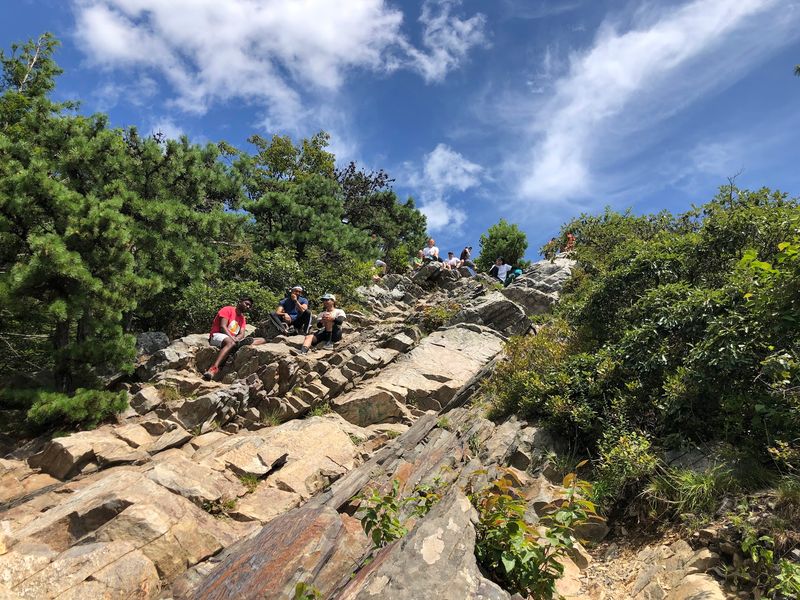
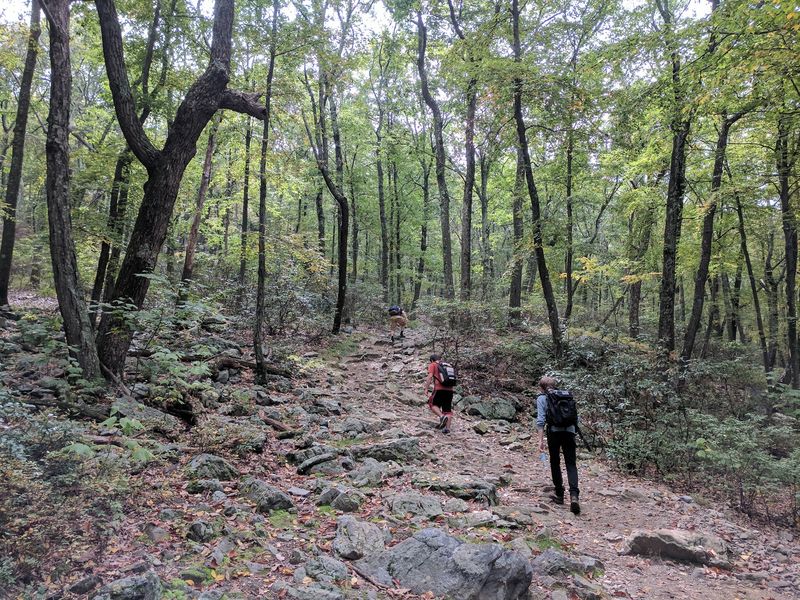
Roughly 1.2 miles and about 1,200 feet of elevation gain, and almost none of it feels gentle. The Red Dot Trail starts climbing near the trailhead and keeps at it.
Sections turn into genuine rock scrambles where hands come into play, and that is exactly where the snake advice becomes practical rather than theoretical.
Boots with real grip make a huge difference on the loose stone and the polished rock faces.
What keeps people coming back is the view that arrives in pieces. Openings in the trees reveal the river below long before you reach the top, so there is always a reason to pause, breathe, and look sideways instead of just up.
Plenty of hikers pick this route for the ascent and save an easier path for the way down, which spares the knees considerably.
Take frequent breaks. Carry more water than you think you need, because the exposed upper stretches can feel much warmer than the shaded start.
Coming Down The Blue Blaze With Easier Footing
Descending is where knees complain, and the Blue Blaze route softens that blow considerably. At roughly 1.8 miles, it trades steepness for distance, which most hikers happily accept.
The grade is more forgiving, the tread is a little kinder, and there is more shade for long stretches.
Combining both trails creates a loop that feels complete rather than repetitive, with a strenuous climb up and a steadier walk back.
Rocks still appear regularly along the way, so ankles need attention even on the gentler side. Loose stone under fallen leaves is the sneaky hazard, especially in autumn.
Because this route passes through cooler, damper forest, the wildlife you notice tends to differ. Chipmunks dart across the path constantly, and water snakes are more likely near the stream corridors than up on the dry ledges.
Slowing down on the descent is the real trick. Rushing downhill on rocky ground is how good hikes turn into sore weeks.
Summit Views Reaching Straight Into Pennsylvania
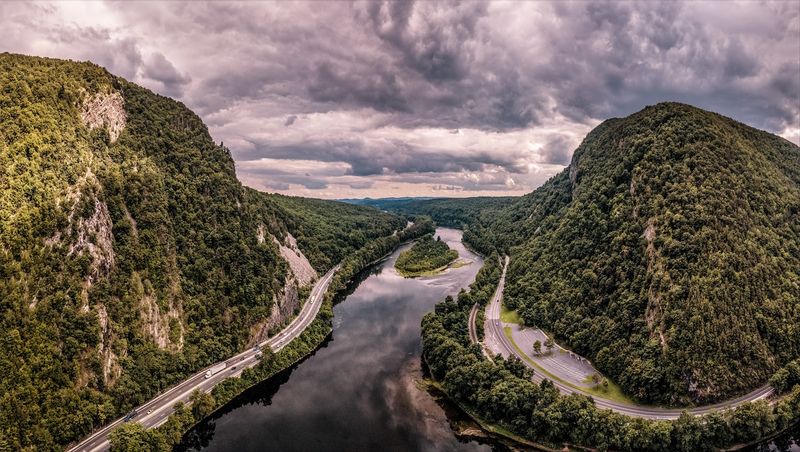
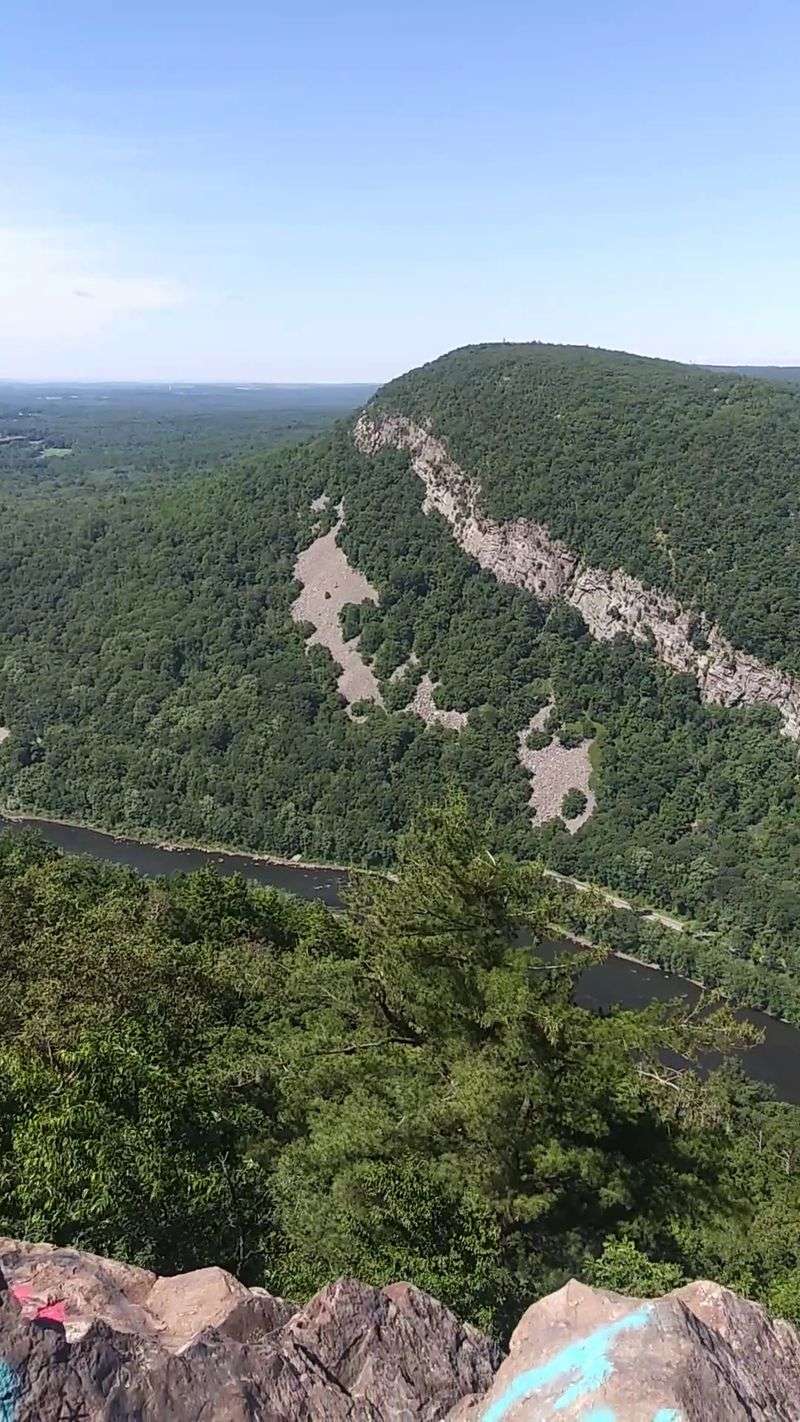
At 1,526 feet, the summit is not tall by mountain standards, yet the payoff punches well above that number. The Delaware Water Gap unfolds below in one long sweep, with the river curving between two green walls of rock.
Directly across sits Mount Minsi on the Pennsylvania side, close enough to trace its slopes with your finger.
Sunlight on the water changes the whole scene through the day, sharp and glittering at midday, softer and hazier toward late afternoon.
Space at the top is limited, and the best perches fill up fast on pleasant weekends. Arriving early or hiking on a weekday gives you room to actually sit and take it in.
Wind up there can feel surprisingly cool even under strong sun, so an extra layer earns its place in the pack.
Snakes sometimes rest on these same summit rocks, so glance around before dropping your bag or stretching out.
It is a view worth lingering over.
Timber Rattlesnakes Are Endangered And Protected By Law
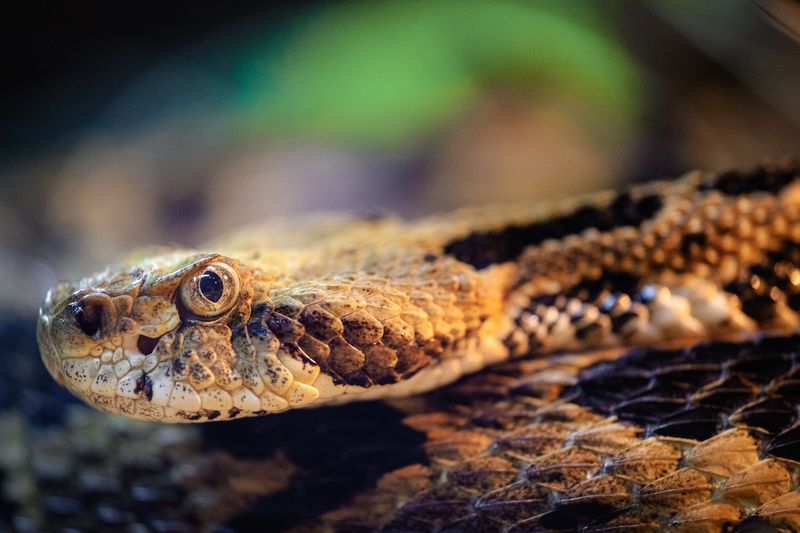
Here is a detail many hikers do not realize until they read the signs. The timber rattlesnake is listed as an endangered species in New Jersey, and the northern copperhead is designated a Species of Special Concern.
Both are legally protected, and it is illegal to harass, bother, or harm them or any other snake in the state.
That changes the whole tone of an encounter. Rather than a threat to remove, a rattlesnake on the trail becomes a rare sighting worth photographing from a safe distance.
Give it space, wait, or step wide around it if the terrain allows.
Copperhead bites can be medically serious, though fatalities are extremely rare. Any venomous bite calls for immediate medical attention, no waiting and no home remedies.
Most bites happen when someone tries to move or handle a snake, which is the easiest risk in the world to avoid.
Look, appreciate, and keep walking. That is the whole strategy.
Parking Fills Early At Dunnfield Creek
The parking situation is the single most practical thing to plan around. The main Dunnfield Creek lot is reached from Interstate 80 westbound, and it is small relative to how popular these trails have become.
On warm weekends and during peak fall foliage, spaces often disappear by 8:30 in the morning or earlier.
An overflow option sits at the Kittatinny Point Visitor Center, roughly a 15 minute walk from the Dunnfield Creek trailhead. Not a bad warm up, honestly.
Skip the temptation to squeeze onto the shoulder of I-80 or the roadside grass. It is unsafe and not permitted.
Early arrival brings bonus rewards beyond a parking spot. Morning fog sometimes settles in the valley below, cooler air makes the steep climb far more pleasant, and the trail feels quieter before the midday crowd arrives.
Setting an alarm for this hike genuinely pays off. Sleeping in usually means circling the lot with growing frustration.
Black Bears Are Part Of The Neighborhood Too
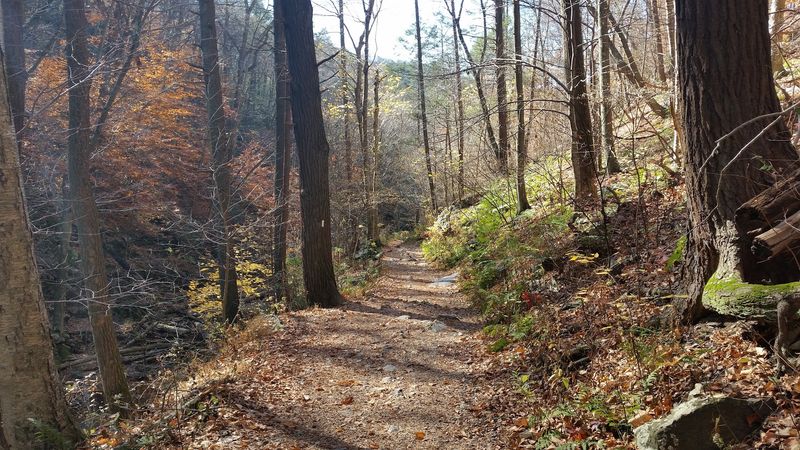
Snakes get the headlines, but bears are common throughout the Delaware Water Gap, and sightings happen on these trails.
Early morning and late afternoon are the likeliest windows, which happens to overlap with the quietest and prettiest hours on the mountain.
Standard precautions cover almost everything. Keep food sealed and packed away, never leave trash behind, and maintain a respectful distance if a bear appears near the path.
Making noise as you hike helps too, since surprising an animal is the main thing you want to avoid.
Alongside bears, the forest here supports deer, rabbits, and chipmunks that seem completely unbothered by foot traffic. The variety is part of what makes the place feel genuinely wild despite the highway humming nearby.
Hikers who pack out every wrapper keep this ecosystem healthy, and the trails here often look impressively clean because people take that seriously.
Bring a small bag for your own garbage. It weighs nothing and matters a lot.
Waterfalls And Creek Pools Along The Way
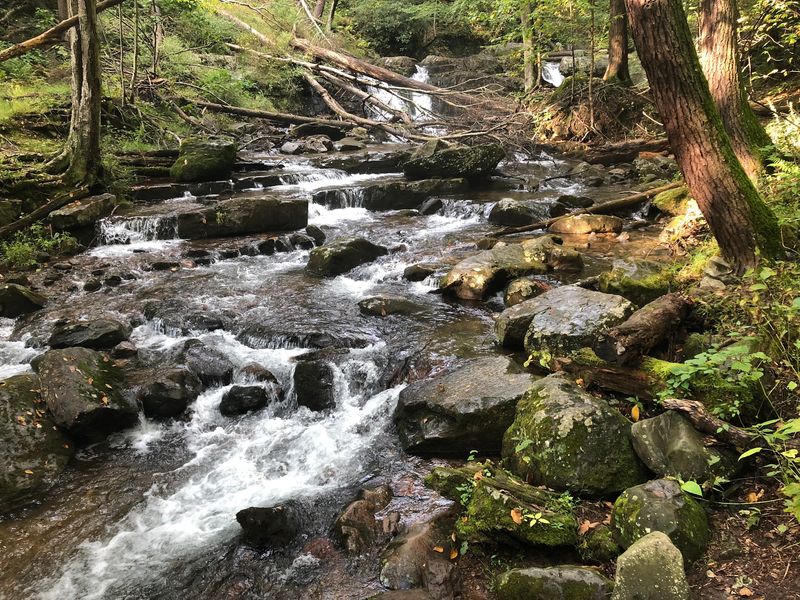
Water is the secret ingredient on this hike. Dunnfield Creek tumbles over rock ledges near the base, forming small falls and clear pools that feel wonderfully cool after a steep descent.
Hemlocks lean over the water, ferns crowd the banks, and the sound alone lowers your heart rate.
Many hikers finish their loop with a stop beside the creek, and it is easily the most restorative few minutes of the day.
Wet rocks near the falls are slick, so tread carefully and avoid climbing on them for photos. Northern water snakes also favor these stream corridors, another gentle reminder to look before settling onto a boulder.
Extending the day is easy from here, since a fire road heading up the ridge connects toward Sunfish Pond for a longer outing.
Portable restrooms are typically found at the blue trail parking area rather than at the red trail start, which is worth knowing before you begin.
Plan a creekside pause. Your legs will thank you.
When To Go And What To Bring
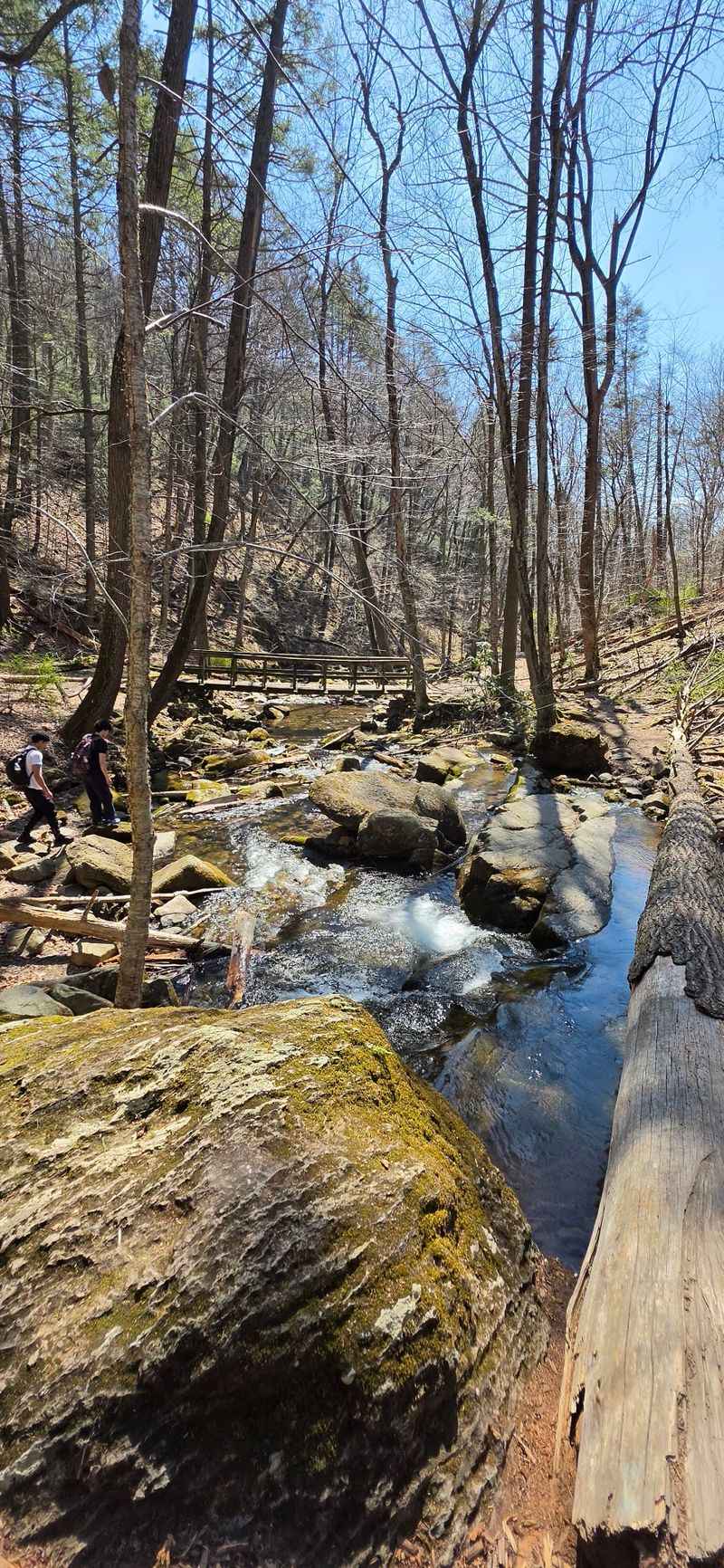
Autumn turns this mountainside into a wall of color, and the cooler temperatures make the climb far more comfortable. Winter brings stark, clear views and icy footing that demands traction and caution.
Spring and summer green everything up, and they also coincide with peak snake activity from May through September.
Footwear does most of the heavy lifting here. Sturdy hiking boots with ankle support handle the endless rock far better than sneakers, and closed shoes add a sensible layer of protection on brushy trail edges.
Pack more water than feels necessary, plus snacks, sunscreen, and a light extra layer for the breezy summit.
Trails are open around the clock, though daylight hours are strongly preferable given the terrain and the wildlife.
Give yourself three to four hours for the full loop with breaks, longer if you plan to sit at the top and watch the river.
Address: Mt Tammany, Unnamed Rd, Columbia, New Jersey
