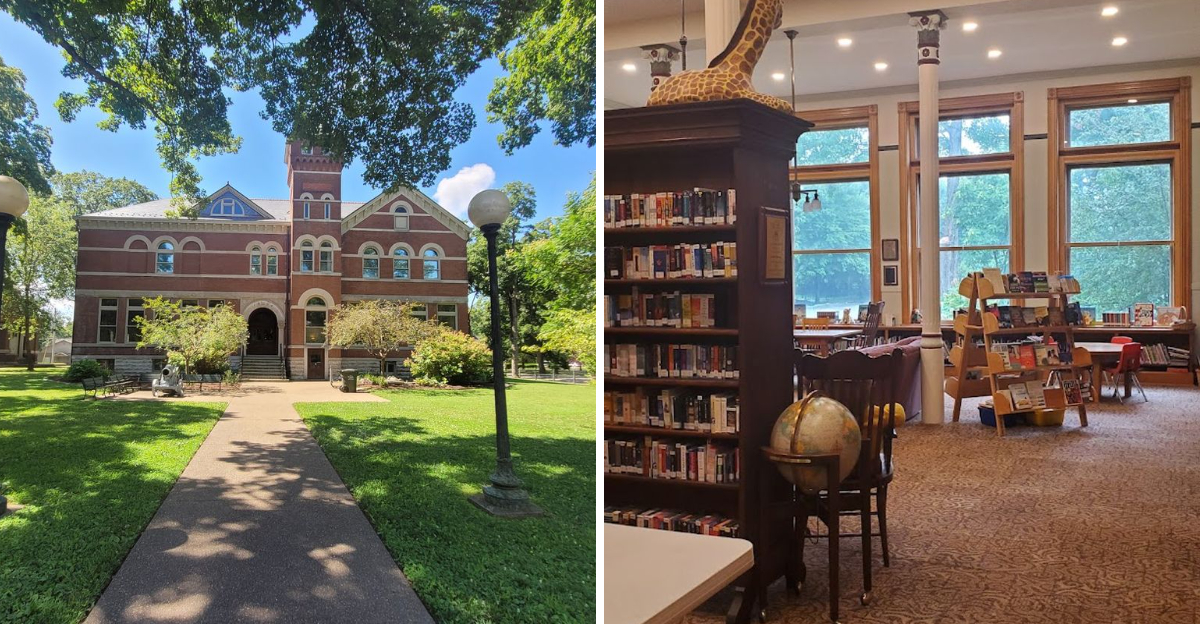
Some places hold history so quietly you almost miss it, and a historic library in New Harmony, Indiana is exactly that kind of place. Established in the early 19th century, it has served generations of readers while preserving a remarkable collection of local history under one roof.
Beyond the bookshelves, visitors can explore museum exhibits filled with antique furnishings, historic artifacts, fossils, scientific specimens, and carefully preserved displays that offer a glimpse into another era.
The atmosphere feels calm and timeless, encouraging visitors to slow down and appreciate the stories hidden throughout the building.
Whether you enjoy history, unusual collections, or simply discovering places with lasting character, this destination offers far more than most people expect from a small-town library.
Plan to Explore the Murphy Gallery Renaissance Art
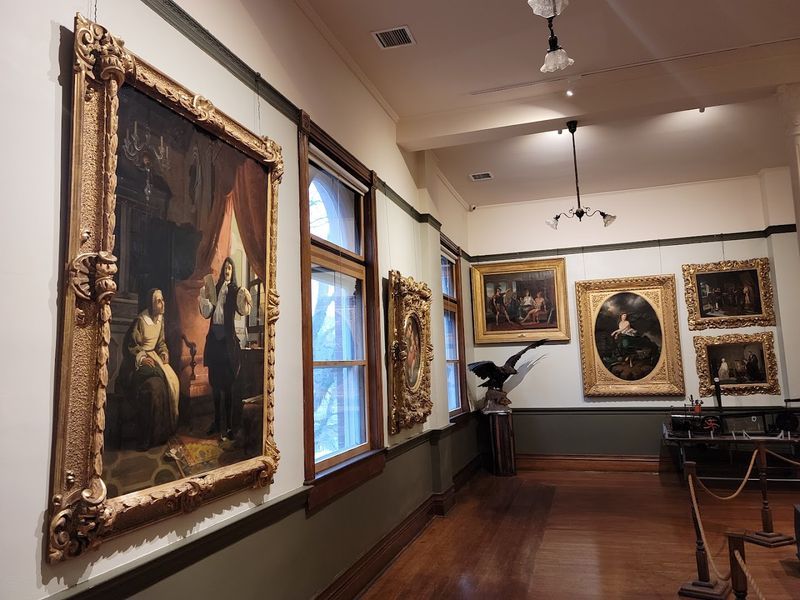
There is something unexpected waiting on the second floor of the Workingmen’s Institute, and it catches most visitors completely off guard. The Murphy Gallery houses a collection of Renaissance art reproductions that are approximately 130 years old.
These were not cheap prints ordered from a catalog. They were commissioned in the late 1800s by a benefactor named Dr. Edward Murphy, who believed that everyday people should have access to great art, not just the wealthy elite.
The reproductions are large, detailed, and displayed in a gallery setting that feels genuinely impressive for a small-town institution. Seeing them in person, framed and hung in a historic building, gives them a weight and presence that digital images simply cannot replicate.
They were created during the same era as the building itself, which means they have aged alongside the space they inhabit.
Dr. Murphy’s intention was generous and democratic. He wanted working people in rural Indiana to experience the beauty of Renaissance masterworks without having to travel to Europe or a major city.
That mission feels remarkably modern even today. The gallery is free to visit, which makes the whole experience feel even more generous.
Whether you know a lot about art history or almost nothing, standing in that gallery is a genuinely enriching moment. It is one of those quiet surprises that makes the Workingmen’s Institute so much more than a library or a small-town museum.
Come See the Antique Cabinets From the 1800s
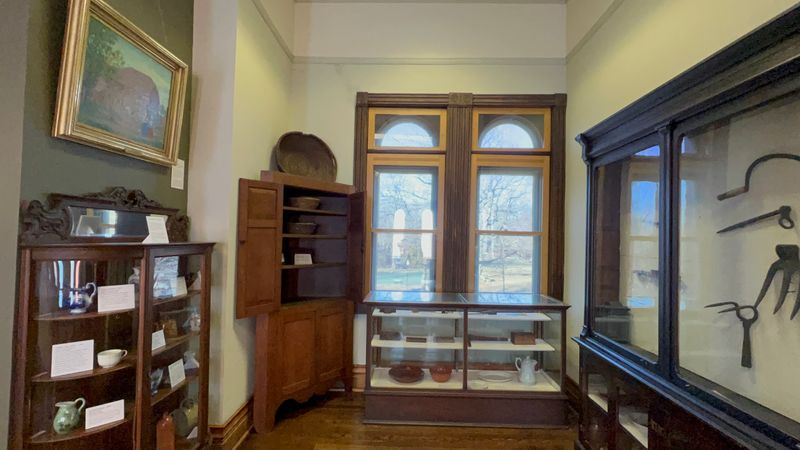
Few museum details stop visitors in their tracks quite like the antique display cabinets lining the upper gallery of the Workingmen’s Institute. These are not reproductions or modern replicas dressed up to look old.
These cabinets date back to the 19th century and have been holding collections since the building opened its museum space. They carry the kind of quiet craftsmanship that modern furniture rarely matches.
Inside those cabinets, you will find an extraordinary range of objects. Natural history specimens, historic housewares, minerals, crystals, animal skulls, and tools from everyday 19th-century life are all carefully displayed.
Some specimens date back to the 1870s and 1880s, meaning the objects and the furniture holding them are roughly the same age. That kind of authenticity is hard to find anywhere.
The museum is sometimes called “New Harmony’s Attic,” and once you see the cabinets up close, that nickname makes perfect sense. Every drawer and glass panel feels like it has a story.
The wood has aged beautifully, and the hardware still works. For anyone who appreciates antique craftsmanship or the material culture of the 1800s, these cabinets alone are worth the trip.
They are a physical connection to a time when things were built to last generations, not just a few years. Seeing them in person is a completely different experience from reading about them.
You Are Standing Inside Indiana’s Oldest Library
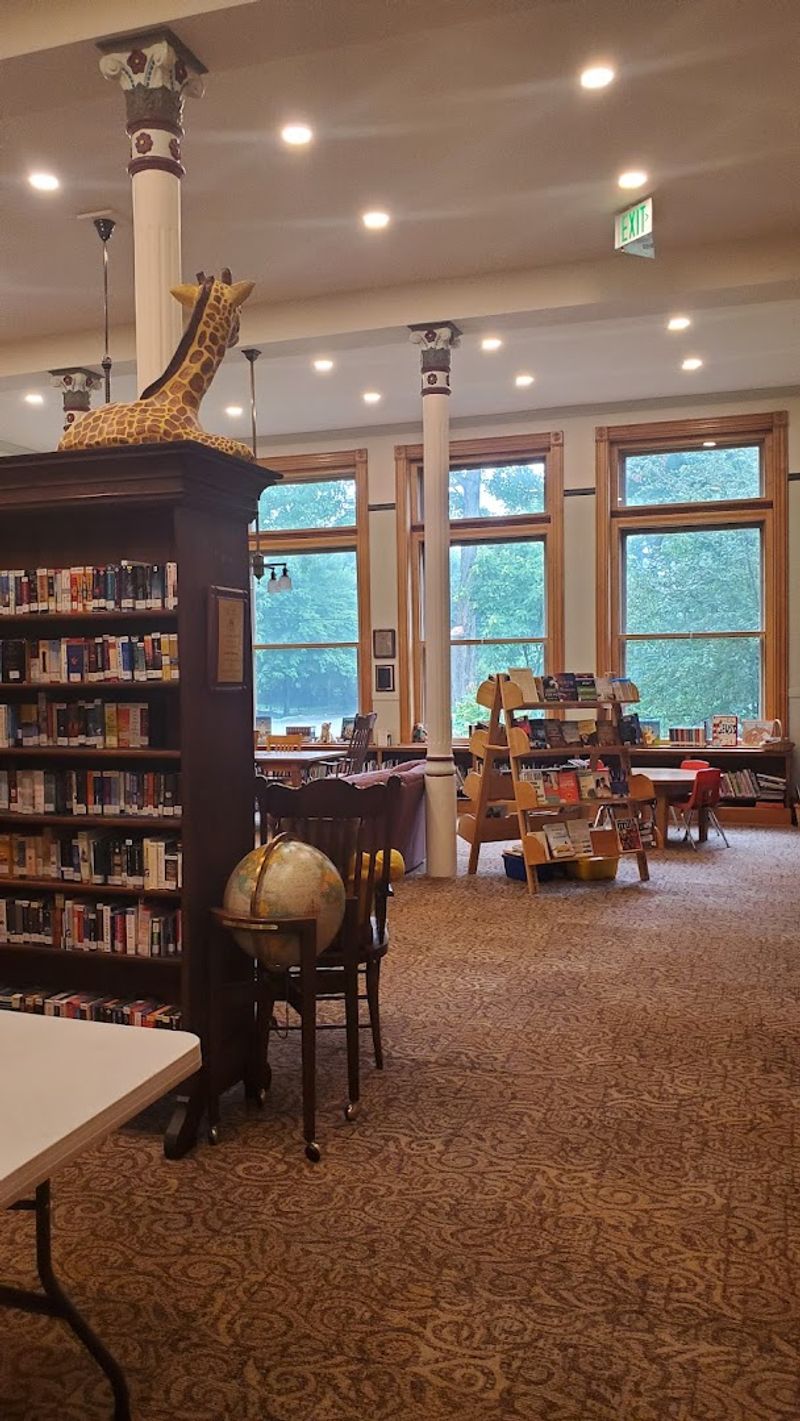
Not many libraries can say they have been open without interruption since 1838. The Workingmen’s Institute at 407 Tavern St, New Harmony, IN 47631 holds that rare distinction, making it the oldest continuously operating public library in the entire state of Indiana.
That is not a small thing. Most institutions from that era have long since closed or been replaced, but this one kept its doors open through wars, economic shifts, and changing times.
William Maclure, a geologist and philanthropist, founded the institute with a clear mission. He wanted to give working people access to knowledge they would not normally have.
His belief was simple: ordinary people who work with their hands deserve education just as much as anyone else. That spirit still lives inside these walls today.
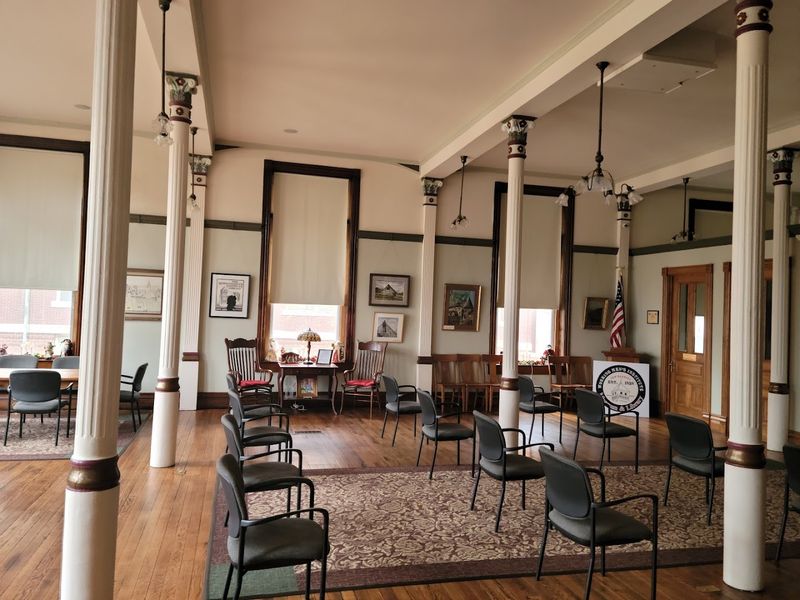
Walking through the library section feels grounded and unpretentious. The shelves are stocked with books for all ages, and the atmosphere is calm and welcoming.
It does not try to be flashy. Instead, it feels like a place that has always known its purpose.
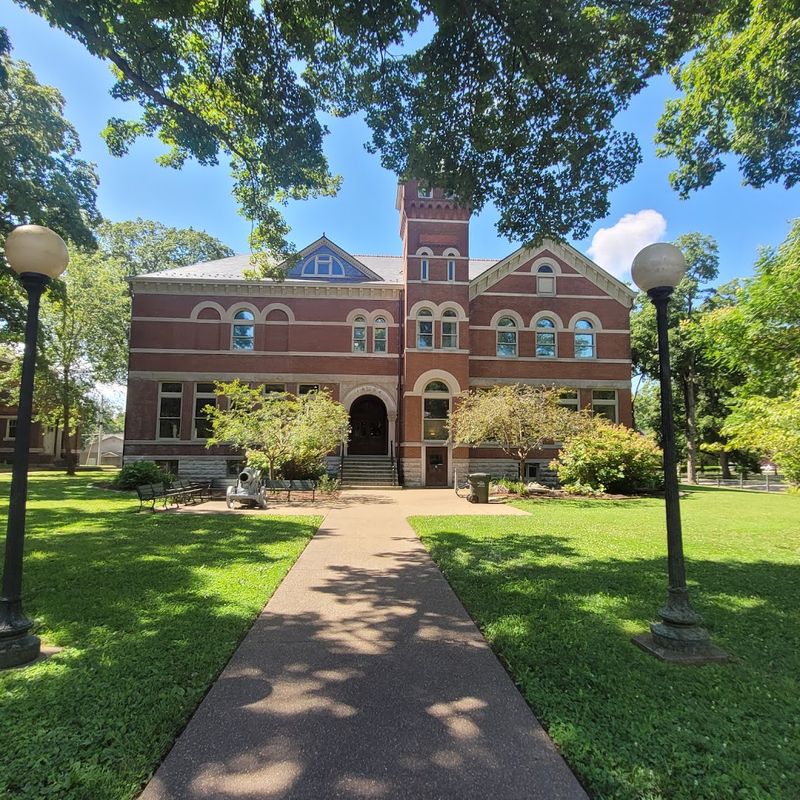
For anyone who appreciates living history, standing inside Indiana’s first public library is genuinely moving. The building itself, completed in 1894 in a Romanesque Revival style, adds another layer of beauty to the experience.
This is not a recreation or a replica. It is the real thing, still functioning exactly as it was meant to.
Skip Nothing, the Museum Upstairs Is Free
Free admission to a museum with this much variety is genuinely rare. The museum on the second floor of the Workingmen’s Institute operates entirely on donations, and yet it holds collections that would make larger institutions envious.
Visitors regularly express surprise at how much is packed into a space that looks modest from the outside.
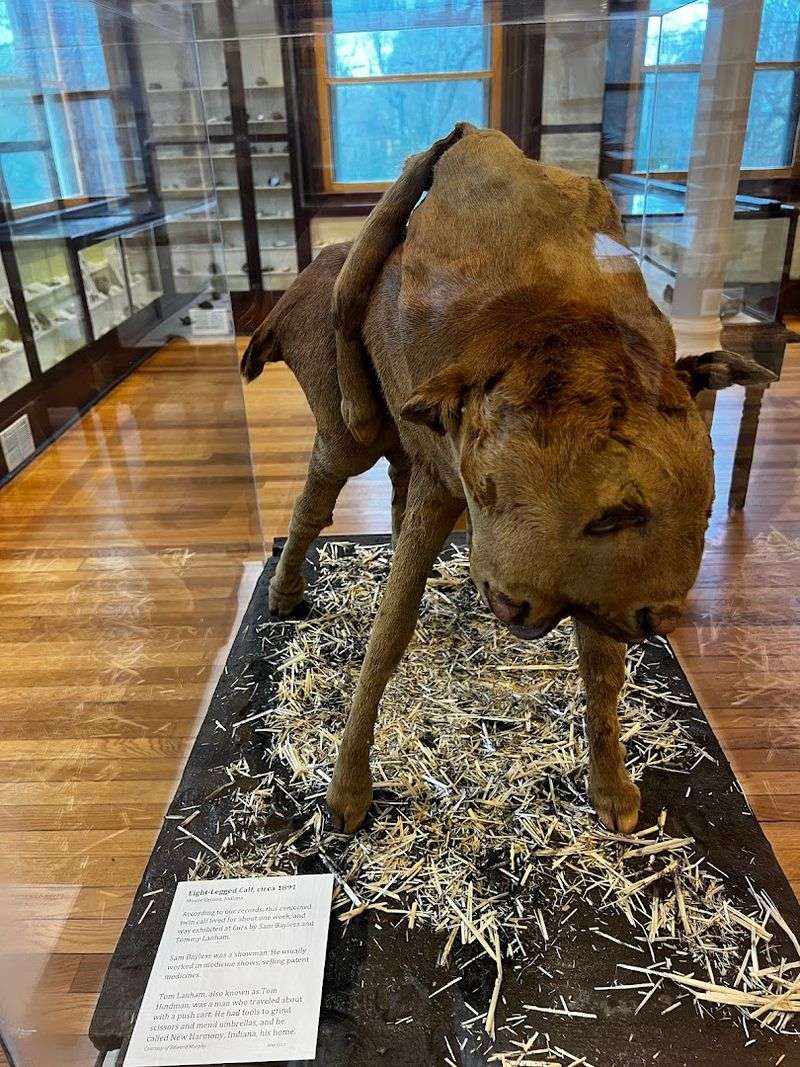
The collections cover an impressive range. You will find Native American artifacts, natural history specimens including a notable mollusk shell collection, taxidermy, historic firearms, minerals, crystals, and even an eight-legged calf that has become something of a local legend.
The natural history section alone draws people who had no idea what to expect. There are glass jars with preserved specimens, animal skeletons, and objects that feel genuinely unusual and memorable.
Because the museum runs on community support, every donation you make goes directly toward preserving these collections for future visitors. The institute actively accepts donations of historical items as well, meaning the collection continues to grow organically over time.
Families with curious kids will find plenty to talk about. History enthusiasts will want to linger.
Even people who do not consider themselves museum-goers tend to spend more time upstairs than they planned. The free access removes any pressure, which makes the whole experience feel relaxed and enjoyable.
You can move at your own pace, ask questions, and genuinely absorb what you are seeing without feeling rushed.
Try Finding a Book Older Than the United States
Most libraries hold books that are a few decades old at most. The Workingmen’s Institute holds rare books and manuscripts that go back centuries.
The oldest book in the entire collection dates to 1538, which means it was printed before the United States even existed as a country. That fact alone is worth pausing on for a moment.
Beyond that remarkable volume, the institute’s archives contain manuscripts, genealogical records, and rare printed materials that researchers and history lovers travel specifically to examine.
The collection documents New Harmony’s unique past as a site of two major utopian community experiments: the Harmonist community and the Owenite community.
These experiments in cooperative living attracted some of the leading intellectuals of the early 19th century, and the records held here are among the most detailed surviving accounts of that period.
Genealogists also find the archives especially valuable. If you have family roots in southwestern Indiana, there is a real chance the institute holds records connected to your own history.
The staff are knowledgeable and genuinely helpful when it comes to guiding research. Whether you come as a casual visitor or a serious scholar, the depth of the library’s holdings is impressive by any standard.
Holding a piece of printed history from the 1500s in your hands, even just knowing it exists in the same building, changes how you think about what a library can be.
Make Time for the National Historic Landmark District
New Harmony, Indiana is not just a small town with an interesting library. The entire community sits within a National Historic Landmark District, a designation it received in 1966.
That means the Workingmen’s Institute is surrounded by other historically significant buildings, streets, and spaces that together tell the story of one of America’s most fascinating early social experiments.
The town itself was first settled by the Harmonists, a religious group from Germany who built an organized and prosperous community in the early 1800s.
When they sold and left, Scottish industrialist Robert Owen purchased the land and attempted to establish a secular utopian society based on education and shared resources.
The experiment attracted scientists, educators, and thinkers from across the country. That intellectual legacy is part of why William Maclure founded the Workingmen’s Institute here in the first place.
Visiting the institute as part of a broader walk through New Harmony gives the experience a fuller context. The streets are quiet and well-preserved.
Historic buildings stand close together, and interpretive markers help explain what you are looking at. The Romanesque Revival exterior of the institute, with its brick facade and arched windows, fits naturally into the surrounding landscape.
Indiana has many historic sites, but few carry the layered meaning that New Harmony does. Spending a half day or full day here rewards curiosity in ways that feel both educational and genuinely pleasant.
Do Not Miss the Community Programs and Events
A library that has been running since 1838 does not survive by standing still. The Workingmen’s Institute continues to offer programs, lectures, and events that serve both local residents and visiting guests.
Story time for children, community lectures, and special exhibitions keep the space active and relevant in ways that honor its original mission without feeling stuck in the past.
William Maclure founded the institute specifically to spread useful knowledge to working people. That mission has never been abandoned.
The programs offered today reflect the same democratic spirit, providing access to learning and culture for anyone who walks through the door. Whether you visit on a Tuesday evening or a Saturday afternoon, there is often something happening beyond the regular library and museum hours.
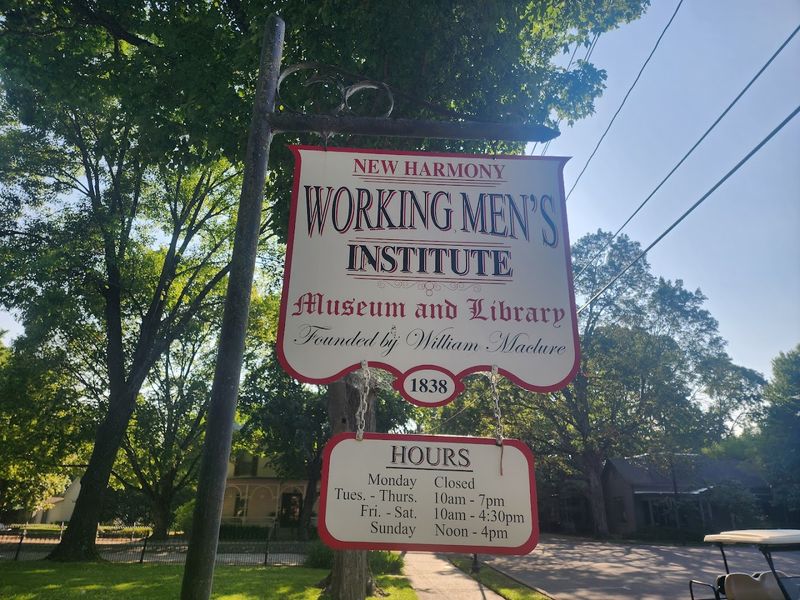
The institute is open Tuesday through Thursday from 10 AM to 7 PM, Friday and Saturday from 10 AM to 4:30 PM, and Sunday from 12 PM to 4 PM. It is closed on Mondays.
The combination of a functioning library, a free museum, an art gallery, an archive, and an active community program schedule makes this one of the most complete cultural institutions in southwestern Indiana.
For families, history buffs, researchers, or anyone simply looking for a meaningful stop on a road trip, the Workingmen’s Institute consistently delivers more than expected.
