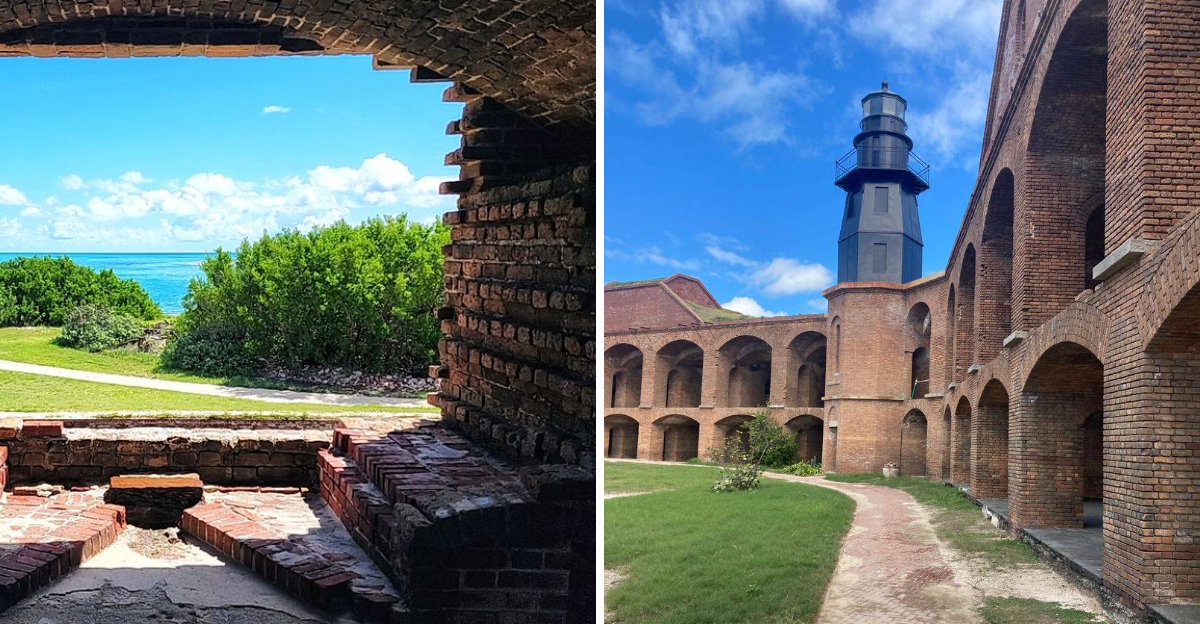
You are about to step into one of the most dramatic chapters of American coastal history, framed by coral blue waters and brick bastions.
Fort Jefferson rises from Garden Key like a mirage of arches and ramparts, anchoring Dry Tortugas National Park with a story you can walk through.
The journey from Key West is part of the magic, bringing you over open water to a fortress that feels both remote and vividly alive.
Florida holds many icons, yet few match this blend of engineering ambition and wild beauty.
Come ready to slow down, look closely, and let the tides of time guide your day.
A remote fortress you can only reach by sea or air
Getting to Fort Jefferson sets the tone for an adventure that feels refreshingly off the grid, since there are no bridges or roads to this remote outpost.
You ride the Yankee Freedom ferry from Key West or soar in by seaplane, watching the water shift from cobalt to neon turquoise.
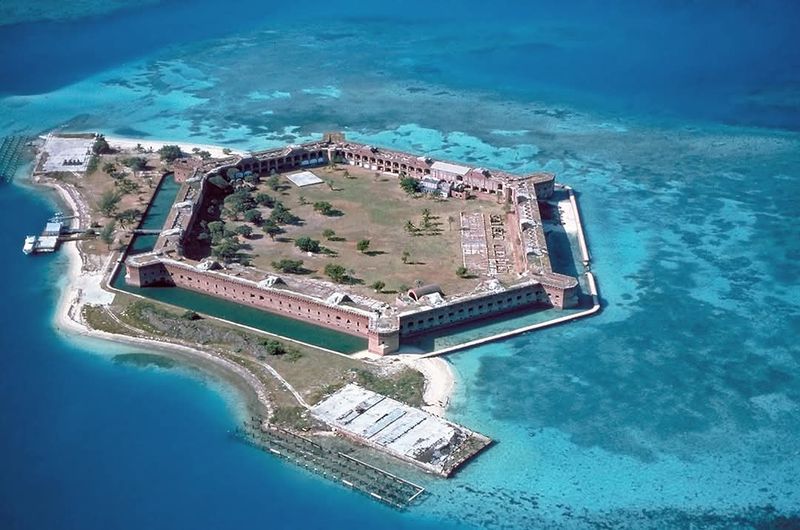
The approach reveals a perfect hexagon of brick rising from Garden Key, with waves winking against the moat like a welcome.
The remoteness is not a gimmick, because the Dry Tortugas sit about 70 miles west of Key West in open Gulf waters.
This isolation once protected shipping lanes and housed a prison, while today it preserves silence and starlight.
You step onto the dock and hear gulls, not engines, and the wind carries a salt edge that instantly clears the mind.
Planning matters here, since ferries and flights can sell out in peak months and weather sometimes shifts schedules.
Pack light layers, strong sun protection, a hat, and closed toed shoes for ramparts and stairs.
The park asks you to carry out all trash, so a compact bag and reusable water bottle help you tread kindly.
As you circle the moat, the view opens to the parade ground, where sea grapes shade sandy paths and brick arches frame the horizon.
Rangers share orientation tips, and maps point to restrooms, swim zones, and the lighthouse on nearby Loggerhead Key, which requires separate arrangements.
The feeling is part expedition and part time capsule.
You sense Florida here, yet also something older that belongs to the wider Gulf and Caribbean.
The sky feels bigger, and the colors seem tuned a notch brighter.
By the time you pass the sally port, the modern world has already receded behind the tide.
Why six million bricks still hold the horizon

Fort Jefferson looks graceful from a distance, but the closer view reveals industrial scale engineering.
The walls are stacked with more than six million bricks, laid in casemates that repeat like a chant along the sea.
You can trace mortar lines with your eyes and imagine the hands that lifted each weight onto boats and then onto the island.
The fort was designed to mount heavy cannon that could close the Straits of Florida to hostile fleets.
Construction began in 1846 and continued for decades, adapting to shifting technology and conditions.
Salt, wind, and heat tested every decision, and the builders learned quickly that the ocean never yields.
Walk the ramparts and you will see embrasures facing green water, with angles that channel fire and minimize blind spots.
The moat helped protect the foundations by diverting waves and allowed defenders to control access.
Even in ruin, the intentions are clear, and the geometry communicates purpose.
Engineering compromises tell their own story, because iron and salt do not get along.
The later Rodman guns demanded stronger platforms, which stressed sections of the brickwork and required reinforcement.
You can spot patches and repairs that record each chapter without erasing the last one.
Interpretive panels outline the design choices in plain language, and rangers can point out where ventilation arches improved living conditions.
The brick stamp marks show different suppliers, hinting at the supply chains that reached across the South and Northeast.
Florida is mentioned throughout those records, yet the labor and materials formed a national web.
Stand at a casemate window and watch the light pour through the arch, warming the brick to a deep red.
The pattern repeats until it becomes soothing, almost musical.
That rhythm is the heartbeat of the place, measured in courses, spans, and sea.
Civil War layers and the prison years
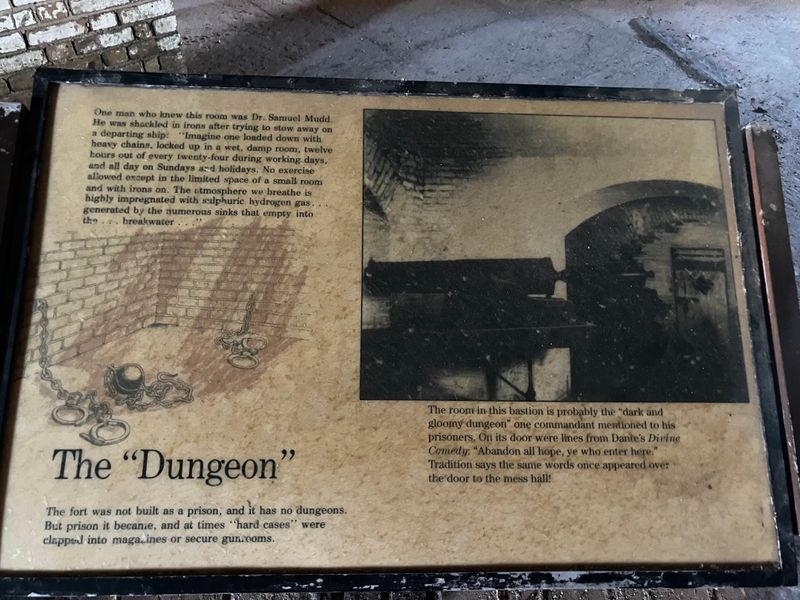
History feels immediate at Fort Jefferson because the Civil War arrived here without a land battle.
The Union held the fort to control the Gulf routes, turning it into a strategic anchor and a prison.
You can walk corridors where soldiers stood watch and prisoners faced long days under tropical sun.
Among the inmates were four men convicted for links to the Lincoln assassination, including Dr Samuel Mudd.
Their presence made the outpost infamous, yet the daily routine was shaped as much by heat, rationing, and disease.
Letters and logs describe fevers, repairs, and duty rosters that left little room for romance.
The powder magazines and casemates preserve echoes of worry about yellow fever, which swept the garrison in brutal waves.
Medical practices evolved, but the germs traveled with ships and supplies.
When outbreaks struck, morale withered and operations slowed to careful steps.
Rangers explain that the prison function coexisted with coastal defense, so spaces changed roles as needs shifted.
A room that stored ordnance might later hold cots or records, and spare brick became barricade or bench as required.
You can read those shifts in scratches, nail holes, and small alterations.
Guided programs sometimes focus on personal stories that anchor big events to single names.
The narrative of Dr Mudd includes his later assistance during a fever crisis, which influenced his pardon.
Sources remain complex, and the park presents them as documented accounts with context.
As the war ended, the fort’s military importance waned and the prison years tapered off.
Supplies dwindled and maintenance lagged, so the structure settled into a slower rhythm.
Standing by the arches, you feel the tug between purpose and place, and time wins that contest gently.
Snorkeling the moat wall and living reef
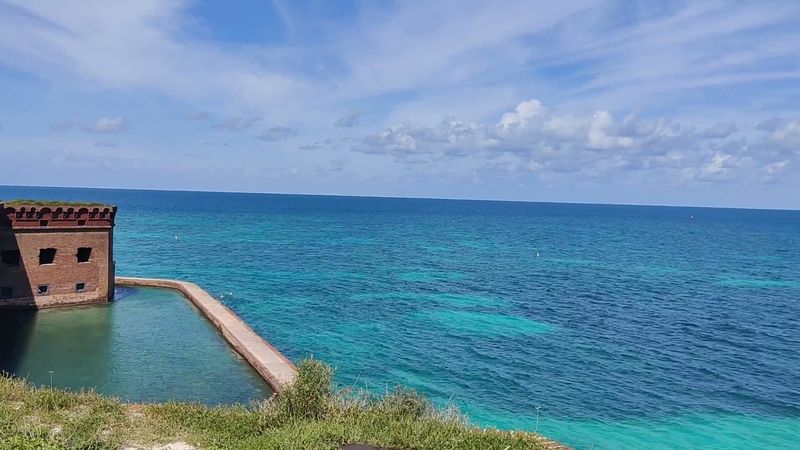
The moat wall looks like a simple barrier until you put on a mask and see how alive the edges are.
Snorkeling along the designated swim areas reveals tangles of sea fans, juvenile fish, and sponges.
The clarity often surprises visitors who came mainly for brick and history.
Conditions change with wind, tide, and season, so visibility can range from glassy perfect to stirred by chop.
Rangers post daily guidance and mark zones that are best for beginners or confident swimmers.
You should never stand on coral or touch wildlife, since even a light tap can harm delicate tissue.
Bring your own gear if possible, because rental options are tied to the ferry and seaplane providers.
A simple rash guard helps with sun while reducing the need for heavy sunscreen on the water.
Florida sun reflects off the surface, so lip protection and a snug strap make the experience more comfortable.
Look for sergeant majors flashing around the pilings and small barracuda cruising like silver needles.
Parrotfish nibble at rock and coral, leaving trails of clean sand, while wrasse dart in and out of cover.
On quiet days you may spot a sea turtle gliding past the moat opening with slow confidence.
The fort frames every scene, so your surface intervals come with postcard views.
The swim ladders make entry simple, yet currents can pull near corners, which is why the park suggests caution.
Even strong swimmers appreciate a buddy and a quick plan before heading out.
When you climb back onto the walkway, the bricks feel warm underfoot and the breeze dries salt on your shoulders.
The sound of water hitting stone becomes a gentle metronome as you catch your breath.
The memories will smell like ocean and brick dust long after the boat ride home.
Birdlife on the Tortugas flyway
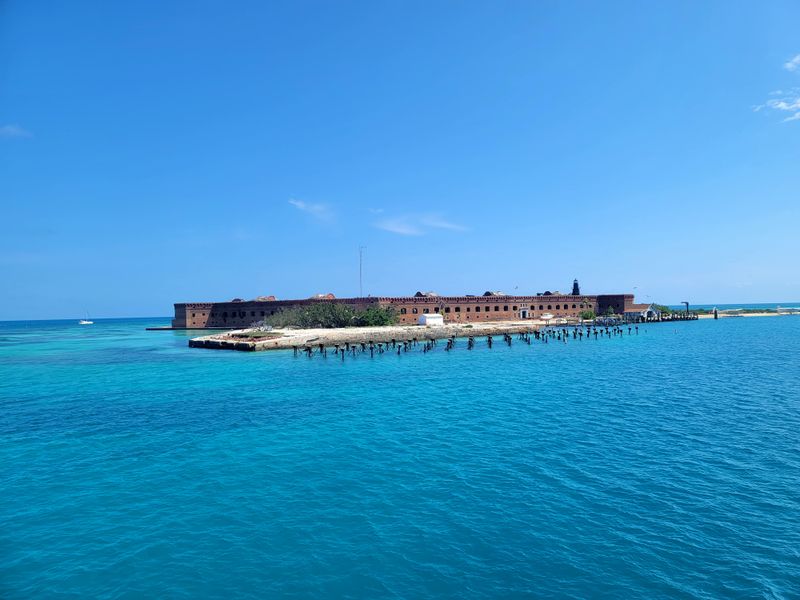
Birds funnel through the Dry Tortugas like travelers at a hub, and Fort Jefferson sits right at the gate.
Spring brings sooty terns, brown noddies, and warblers dropping in for rest and water.
The chorus can swell so much that even casual visitors notice the new soundtrack.
Garden Key hosts the fort, while nearby Bush Key often closes seasonally to protect nesting.
Rangers post updates and set boundaries that keep chicks safe while letting you observe from a respectful distance.
Binoculars reveal details you would miss, like a tern offering a fish in midair.
Migration timing shifts with weather, so trip planning benefits from recent reports.
The park website and birding forums share sightings that help you time your visit.
Calm mornings tend to offer the best light and the most relaxed behavior.
Shorebirds patrol the tide line while frigatebirds soar overhead with effortless glide.
You might catch a flash of color as a warbler flits through sea grape leaves near the parade ground.
Patience pays off, since the best moments arrive when you are quiet and still.
Photography works best with long lenses and careful footwork on the moat path.
The brick backdrop adds a graphic element that sets these images apart from many Florida coastal scenes.
Avoid approaching nests and let the birds choose the distance that feels safe.
When the sun gets high, activity slows and the fort becomes a cool refuge for you.
Step back into the arches and let your eyes adjust to shade while the breeze filters through.
By afternoon you will feel the rhythm of the island, shared with wings you barely hear.
Walk the ramparts for horizon to horizon views

The rampart walk delivers the panorama that everyone imagines, with ocean stretching in every direction.
Stairs lead to the upper level where embrasures frame discrete slices of blue, and the breeze feels steady.
You move slowly because the sightlines reward careful attention.
Some sections may be closed for preservation, so follow signs and respect ropes.
Masonry restoration protects fragile areas that have weathered decades of salt and storms.
A ranger can suggest the safest loop and point out details that hide in plain sight.
Look down and you will see the moat path tracing a perfect outline around the island.
The parade ground spreads like a green carpet inside the hexagon, dotted with ruins and cistern vents.
The lighthouse on Loggerhead Key sits low on the horizon when visibility is good.
Cloud shadows travel across the water and create moving maps of depth and sandbar.
Tarpon sometimes roll near the dock, sending circles outward like soft bells.
The longer you linger, the more layers reveal themselves in color and pattern.
Wear steady shoes because brick edges can be uneven and sandy.
Wind picks up in the afternoon, which feels refreshing but can blow hats toward the sea.
Keep a hand on straps and take your time on stairs that see a lot of salt spray.
The experience leaves a memory that sticks, because it combines height, history, and horizon.
Florida lives in this view, with the Gulf and Atlantic meeting through currents and stories.
When you step back down, the world feels quieter, as if the walls still hold the secrets of the breeze.
Camping on Garden Key under unreal stars
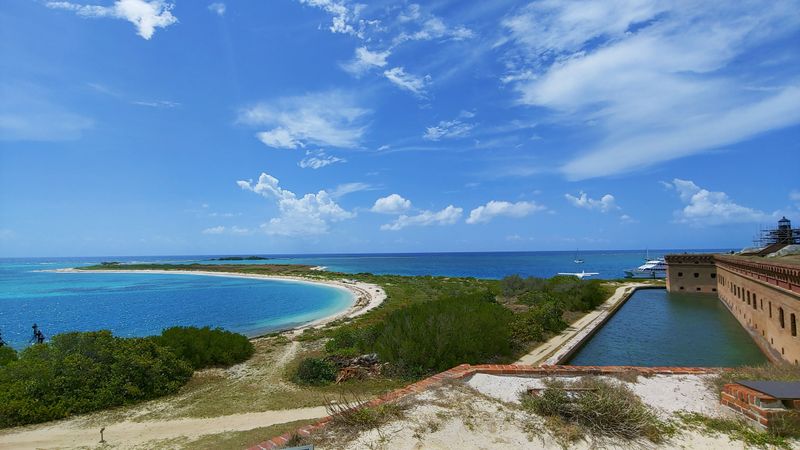
Camping at Fort Jefferson strips travel back to simple pleasures that feel rare in a busy year.
Sites sit near the beach with picnic tables and composting toilets, and capacity stays intentionally small.
You carry in all food, water, and gear, then carry out every scrap when you leave.
Reservations route through the ferry with a limited number of camping spots per sailing.
Seaplane campers coordinate flights and weight limits, since gear loads can add up quickly.
The ranger orientation covers wildlife storage, fire rules, and Leave No Trace practices.
Sunset pours over the brick like copper, and the moat turns to a mirror for a short window.
As evening settles, the sky reveals a river of stars that city eyes rarely see.
Constellations seem close enough to pluck like shells from a calm tide line.
Nights are quiet except for wind and water tapping the wall with a patient rhythm.
Headlamps with red light preserve night vision and keep neighbors comfortable.
A light jacket helps after midnight when breezes carry a cool edge across the sand.
Morning arrives with gull chatter and long shadows that frame the arches like theater.
Coffee tastes better with salt in the air, and the parade ground makes a gentle walking loop.
You can snorkel before day visitors arrive and feel as if the island belongs to you.
Pack a simple repair kit for tent stakes and zippers because salt can be stubborn.
Bring extra water to offset sun and snorkeling, and keep a weather eye on forecasts from the park.
The experience stays with you as a Florida memory shaped by stars, tide, and brick.
Photography tips for brick, light, and water
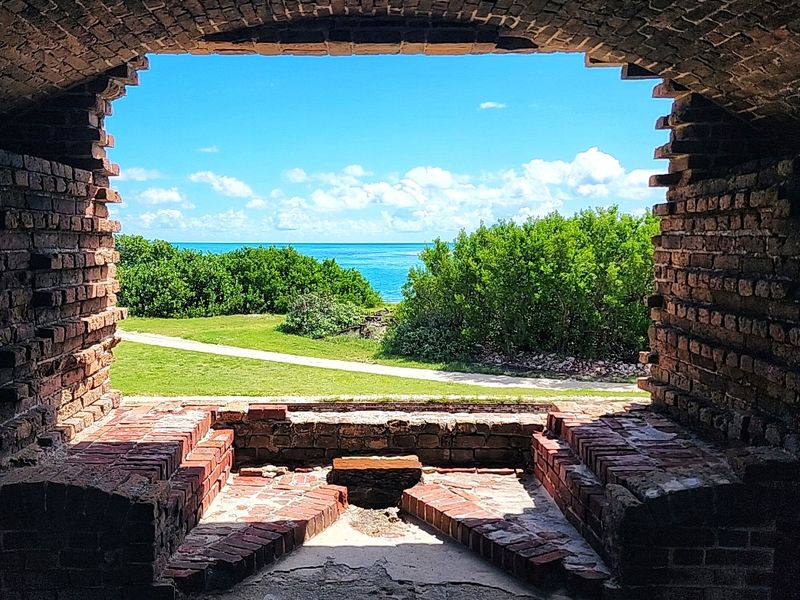
Photographing Fort Jefferson rewards patience, angle play, and a sense for rhythm in repeating arches.
Early and late light paint the brick with warm tones while softening the water’s surface.
Midday turns the sea electric, which suits underwater shots and graphic silhouettes.
Walk the moat path clockwise for consistent reflections that align with the sun.
Each corner opens a new line of sight through embrasures that stack into pleasing depth.
A polarizing filter cuts glare and deepens the color gradient from aqua to blue.
Inside the casemates, look for shadow bands that curve across arches like layered ribbons.
Expose for highlights and let darks go rich rather than lifting noise.
The repeating geometry likes symmetry, yet a person on the edge adds scale.
On the ramparts, brace against the wind and keep straps tidy to avoid unwanted motion.
Lenses can fog when moving from hot sun into shade, so give glass a moment.
A small microfiber cloth is the unsung hero of island photography days.
For snorkeling, secure a floating strap and shoot slightly upward to catch surface texture.
Fish gather near structure, which lets you compose with brick or pilings behind the subject.
Always keep fins off living coral and watch currents near corners where flow can accelerate.
Night photography shines on calm, clear evenings when camping.
Lower light pollution reveals the Milky Way arcing over the silhouette of the fort.
Your best frames will balance stars, wall lines, and a hush that feels almost audible.
Respecting wildlife, reefs, and cultural resources
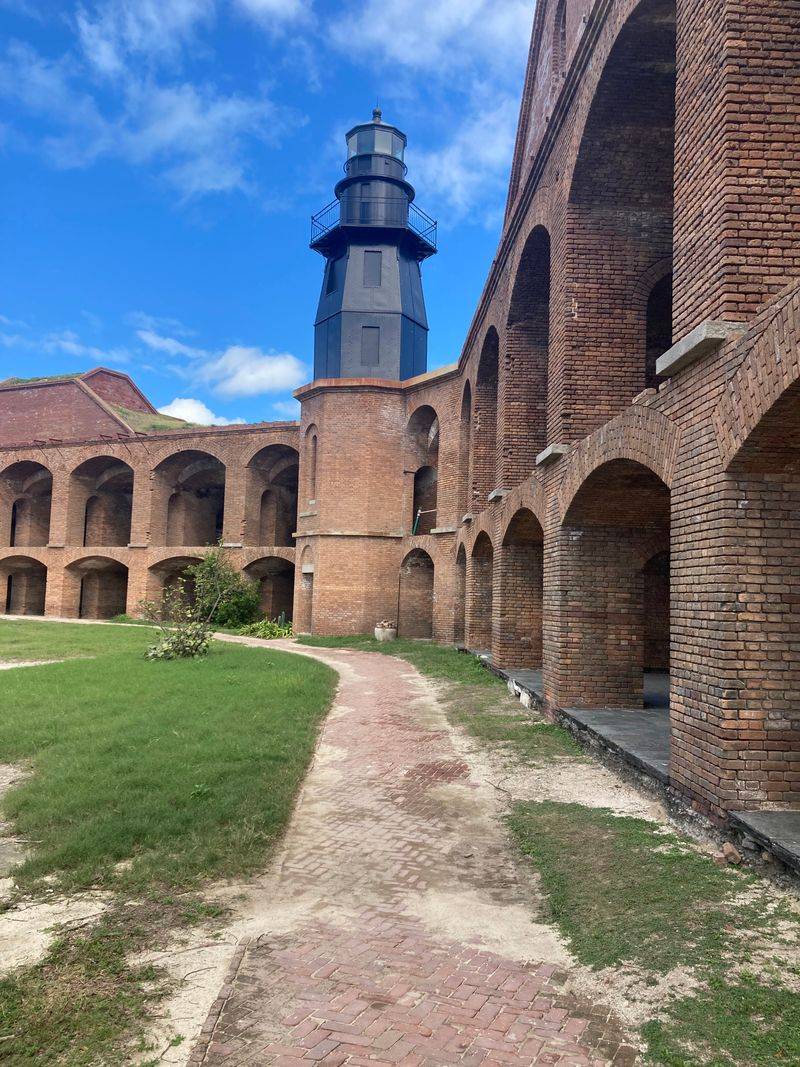
Dry Tortugas National Park protects a web of life and history that thrives only when visitors tread lightly.
Fort Jefferson holds cultural layers while the surrounding reef shelters fish, corals, and nesting birds.
Your choices directly shape how these resources look a year from now.
Stay on marked paths to protect fragile masonry and avoid trampling plants that knit the island together.
Do not climb on walls or restricted ruins, since loose bricks can break and fall without warning.
Signs are placed with care and communicate real risks as well as preservation goals.
In the water, practice perfect float and trim so fins clear the bottom by a comfortable margin.
Choose reef safe sunscreen and let a long sleeve shirt do part of the work.
Never chase or feed wildlife, and give turtles and rays the right of way.
Bird rookeries need distance to prevent stress that can cost energy and nesting success.
Binoculars bring action close without moving your feet, which is a win for everyone.
Rangers can suggest vantage points where you will see behaviors without causing disturbance.
Pack out every crumb of trash and micro plastic, even if it is not yours.
The island’s isolation means cleanup falls to whoever is present that day.
Refill bottles on the ferry and minimize single use items whenever possible.
Respect also extends to stories and artifacts, which belong to the public trust.
Leave shells, bricks, and historical fragments where you find them so others can learn.
When many people make small careful choices, Florida’s wild places stay bright and resilient.
Dear Reader: This page may contain affiliate links which may earn a commission if you click through and make a purchase. Our independent journalism is not influenced by any advertiser or commercial initiative unless it is clearly marked as sponsored content. As travel products change, please be sure to reconfirm all details and stay up to date with current events to ensure a safe and successful trip.
