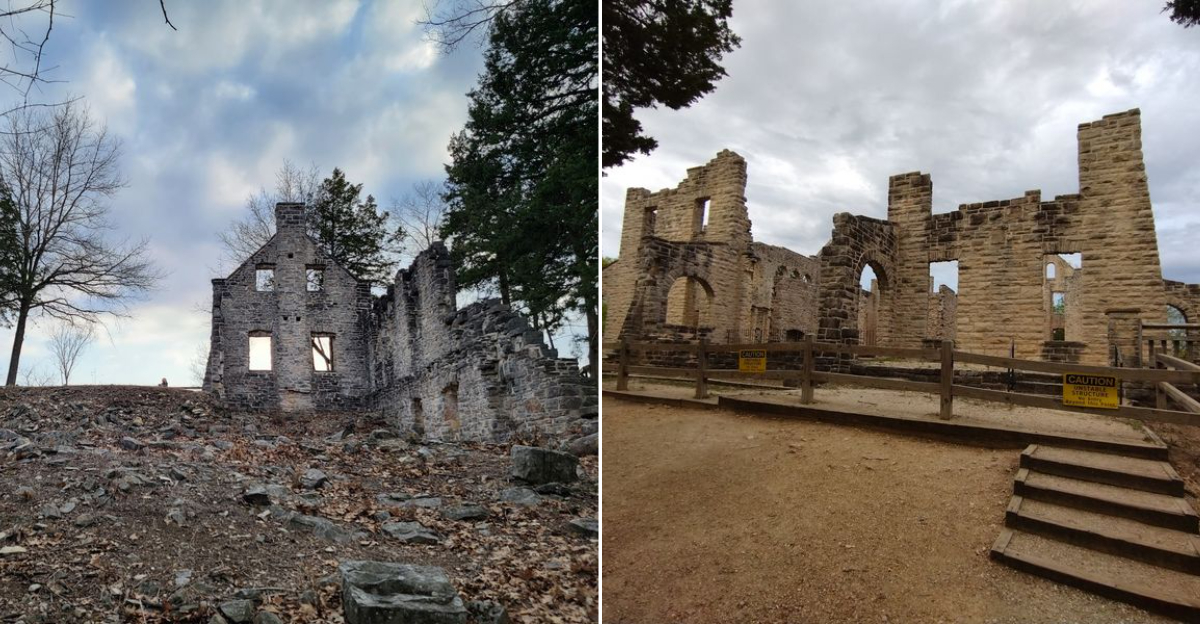
A wealthy businessman once dreamed of a European castle perched on a Missouri bluff. He brought in Scottish stonemasons and quarried stone from the land itself.
The mansion rose above the lake, a show of ambition and old-world craft. Then a fire sparked in a chimney one autumn night in nineteen forty-two.
The flames devoured the wooden interior within hours. The roof collapsed and the grand rooms turned to ash.
But the limestone walls refused to fall. They still stand today, silent and weathered, holding the shape of what once was.
Visitors can walk among the ruins and trace the outlines of rooms that have been open to the sky for decades. The stone arches frame the same view of the lake that the Snyder family once admired from their windows.
It is a place where history feels tangible, a reminder that some structures outlast the people who built them. In Missouri, the past does not always disappear, it just changes form.
An Unusual Name With A Lovely Meaning
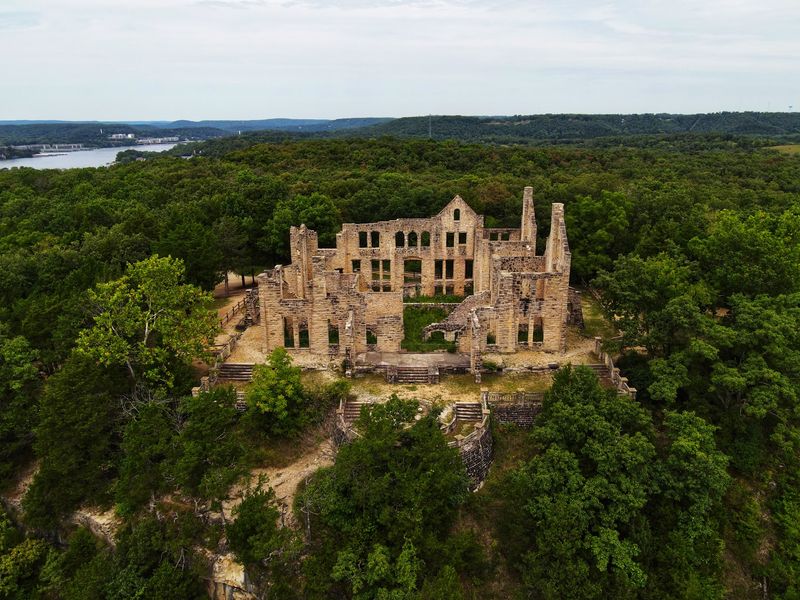
Say the name out loud once and you will probably grin, because Ha Ha Tonka sounds more like a punchline than a park. The meaning behind it, though, is genuinely lovely and has been passed down as something along the lines of big laugh or smiling waters.
Once you learn that, the whole place clicks into focus a little differently. There are natural springs bubbling up all across this property, and water has a way of making a cheerful sound when it moves over rock, so the name feels earned rather than random.
I like that a spot with such a dramatic, fire-scarred history carries a name that sounds so upbeat and friendly. It sets the mood before you even park the car, and it takes some of the gloom out of walking through the shell of a burned mansion.
Kids especially seem to latch onto the name, which makes it an easy sell if you are traveling with a carful of people who normally groan at the word historic. Tell them you are going somewhere called Ha Ha Tonka and watch the mood shift, because the curiosity usually kicks in immediately and sticks around.
A Big Dream That Ended Too Soon
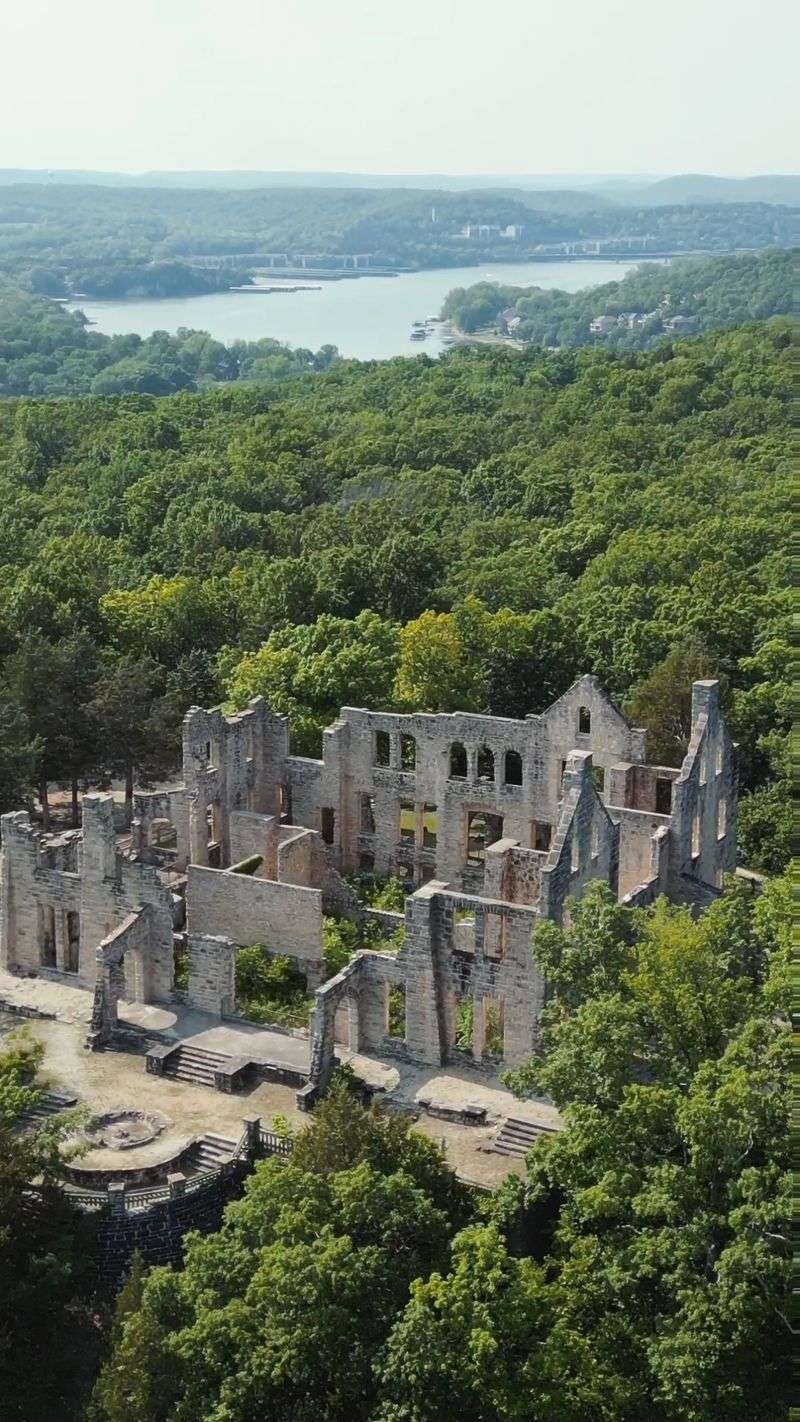
Every wild building has a person behind it, and here that person was Robert McClure Snyder Sr., a wealthy Kansas City businessman who fell hard for this stretch of the Ozarks. He wanted a private retreat that could hold its own against the grand European castles he admired, which is not exactly a modest goal.
His plan called for a sixty-room stone castle with a central atrium rising three and a half stories, and he broke ground on it in the early nineteen hundreds. Standing there now, you can still read that ambition in the sheer scale of the footprint.
If you want to see it for yourself, the ruins sit at 1491 State Road D, Camdenton, MO 65020, tucked in the hills above the water.
What gets me is how personal the whole thing feels when you walk the grounds. This was not a hotel chain or a government project, it was one guy chasing a picture in his head and pouring an enormous amount of money and effort into making it real.
He never got to sit in the finished rooms, which is a hard thing to shake once you know it.
Scottish Stonemasons Working Ozark Sandstone
Here is the detail that always surprises people. Snyder did not just hire whoever was available, he brought in experienced stonemasons all the way from Scotland so the construction techniques would be the real deal.
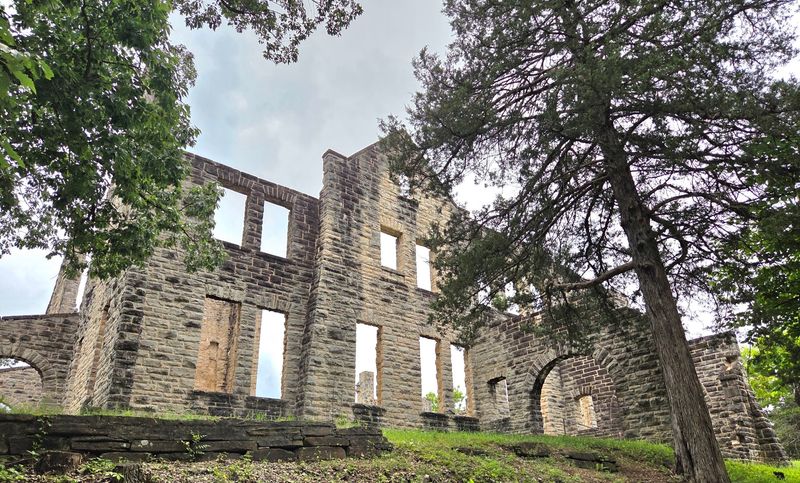
The sandstone came from a quarry right nearby, and the timber was pulled off the estate itself and hauled by mule teams. When you get close to the walls and look at how the blocks fit together, that craftsmanship is impossible to miss.
Think about what building something this size meant back then, with no cranes and no power tools worth mentioning. Every block had to be cut, moved, lifted, and set by hands and animals working long days on a hillside.
That is a big part of why the ruins photograph so well, because the stone has texture and shadow that modern construction rarely gives you. Run your eyes along the window openings and the arches and you can practically trace the tool marks.
Missouri has plenty of pretty scenery, but very few places where you can study old-world masonry outdoors like this. Bring a camera with a decent zoom if you want to catch the fine details from the walkways.
Sons Who Finished What Their Father Started
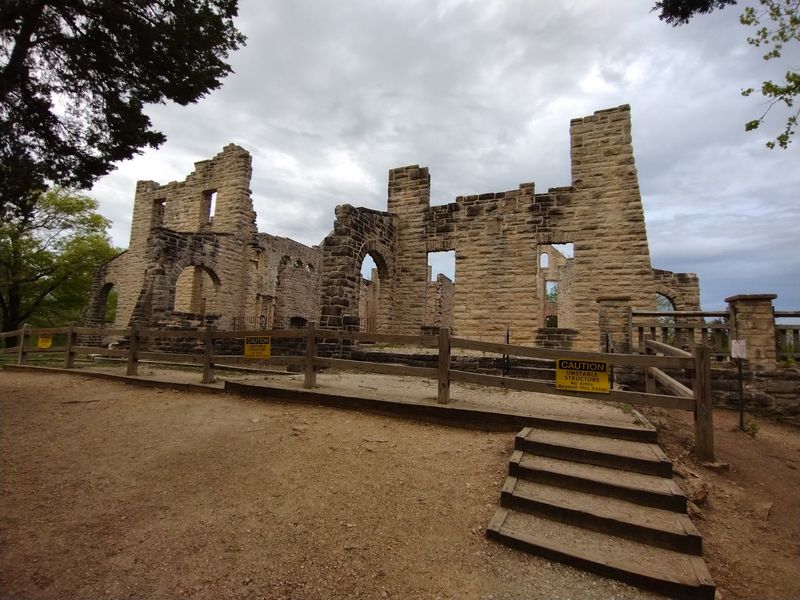
Snyder never saw his castle finished, and the reason is genuinely startling. He was killed in an automobile accident, one of the very first car fatalities recorded in Missouri, while the project was still in its early stages.
Construction stopped cold for a while after that, and you can imagine how a family would struggle to keep momentum on something so enormous and so tied to one person’s imagination.
His three sons, Robert Jr., LeRoy, and Kenneth, eventually took the project back up and pushed the main structure to completion. The finished building was not quite as elaborate as their father had originally drawn it up, but it stood, and that counts for a lot.
I find that part of the story more moving than the castle itself, honestly. Finishing someone else’s dream takes a different kind of stubbornness than starting your own.
When you walk under those tall window openings, it helps to remember that two generations put their backs into this place. The stone you are looking at represents a father’s vision and his children’s determination to see it through, which is not something you get from a typical roadside attraction.
When The Castle Became A Hotel
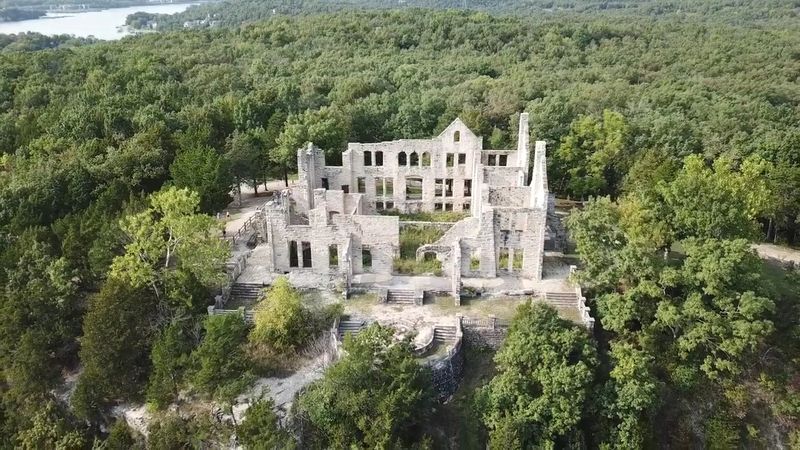
Picture booking a room in a stone castle on a bluff in the Ozarks. For a stretch of time, that was actually possible, because after the Snyder sons completed the building the family used it as a summer escape from Kansas City and later leased it out as a hotel.
Guests stayed in those rooms, walked those halls, and looked out those same windows at the water below.
That chapter always makes me pause when I am standing in the middle of the ruins. The floors are gone, the roof is gone, and there is grass where a lobby used to be, but people once carried suitcases through here and slept upstairs.
It gives the empty shell a warmth that pure ruins usually do not have.
If you are the kind of traveler who likes imagining the past layered over the present, this is the spot to slow down and let your brain fill things in. Stand in one of the big open rooms, look up at the sky through the window frames, and try to place a chandelier or a staircase where the emptiness is now.
Walls That Refused To Fall Down
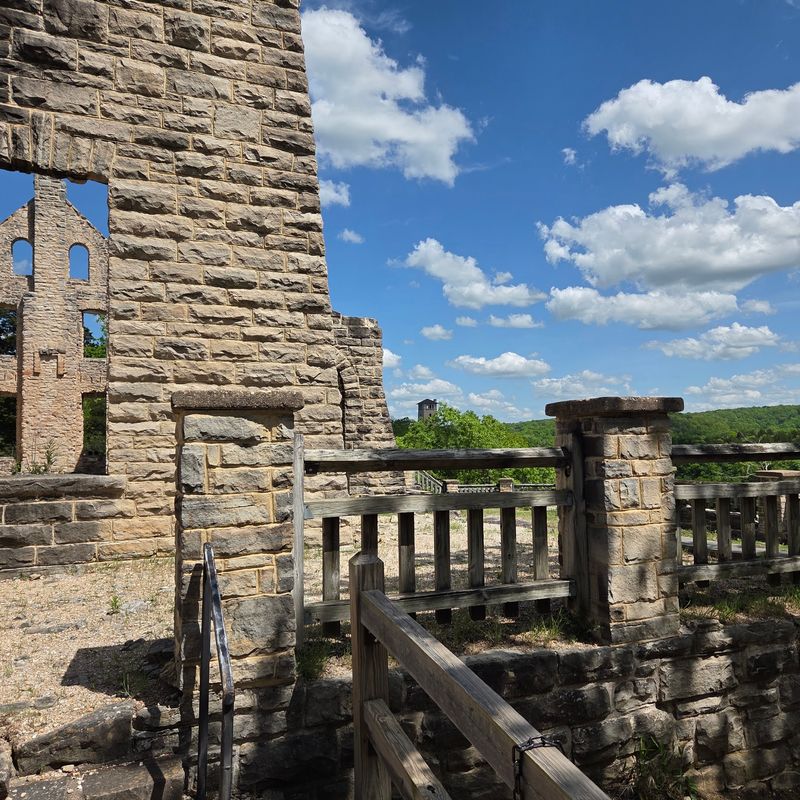
Here is the part that gives the whole article its title. The fire destroyed the interior completely, and yet those thick sandstone walls largely stayed upright, as if nobody had told them the building was finished.
Good masonry does that. When stone is cut well and set well, it does not need the roof to keep standing.
You can still see the stark exterior walls rising several stories, plus the remnants of the stable and the old water tower nearby. The tower took some damage from vandals years after the fire, which is a shame, but it is still there and still worth a look.
Those Scottish masons clearly knew exactly what they were doing.
Walking the paved path around the ruins, you get a real sense of how solid the construction was. The openings are enormous, the corners are sharp, and the whole thing has the stubborn look of something that plans to outlast all of us.
If you only have time for one stop in this part of Missouri, the walls alone justify the drive. They are the rare ruin that looks more dramatic empty than it probably did finished.
How The Ruins Became A Public Park
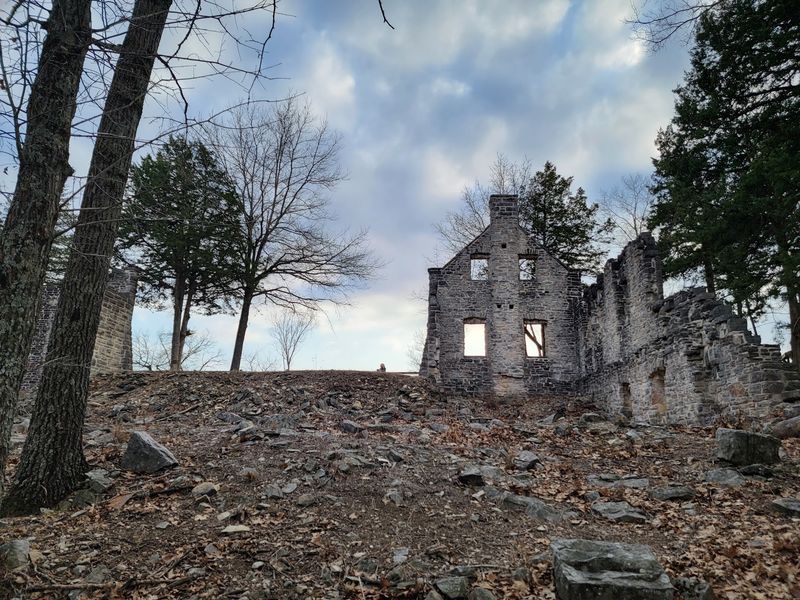
For a long while the ruins sat in private hands, slowly weathering and collecting stories. Then the state of Missouri recognized what it had on its hands, bought the estate, and opened it to the public as Ha Ha Tonka State Park.
That single decision turned a crumbling private property into one of the most photographed spots in the region.
What I appreciate about the way it is managed now is how accessible everything feels. There are paved walkways and overlooks near the castle, interpretive signs that fill in the history, and stairs and trails for people who want to keep going deeper into the park.
You do not need any special gear to see the main attraction.
Parking is straightforward, restrooms are available near the main areas, and the whole layout makes sense without a map, though picking one up at the trailhead never hurts. Because it is a state park, there is no admission charge to walk up and see the ruins.
Come early in the day if you want the overlooks mostly to yourself, since this place gets busy once the afternoon rolls around and the lake crowd starts wandering in.
Sinkholes, Caves, And Serious Ozark Geology
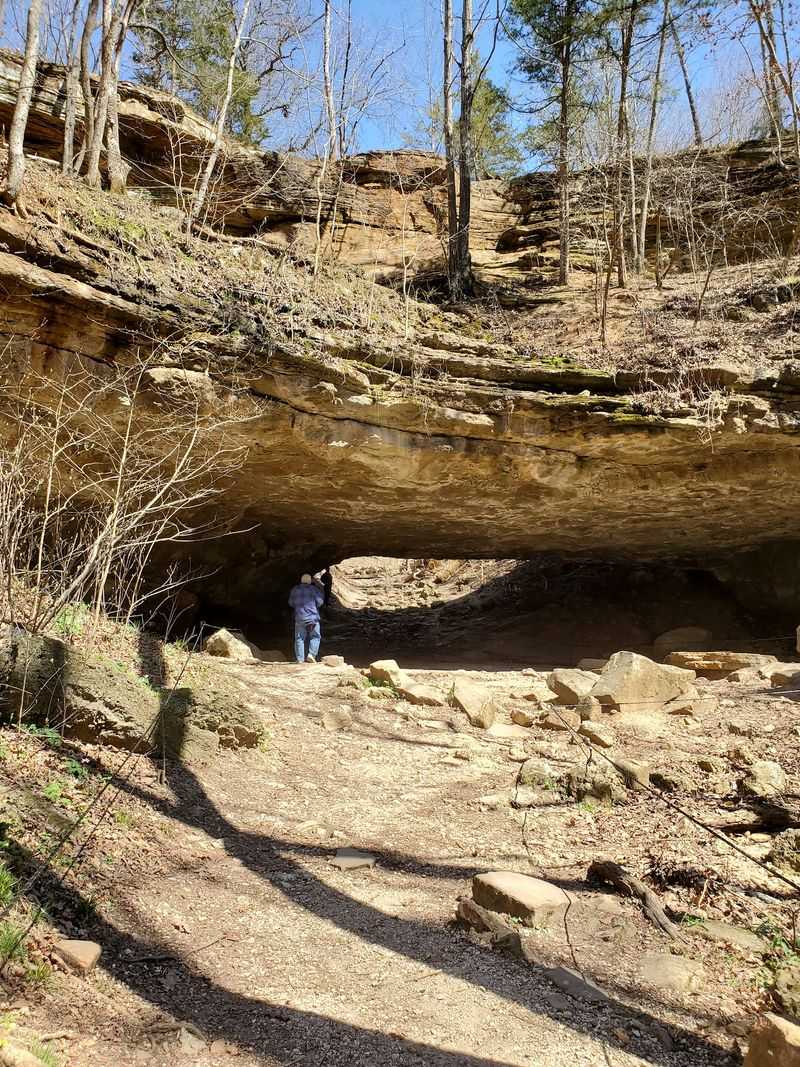
Everybody comes for the castle, but the ground underneath it might be the more impressive story. The park sits on classic karst topography, which is a fancy way of saying the limestone here has been dissolving and collapsing for an incredibly long time.
The result is a landscape full of caves, sinkholes, and sheer bluffs that drop away without much warning.
One of the collapsed features carries the nickname the Colosseum, and once you see the shape of it, the name makes total sense. There are boardwalks and stairways that let you look down into these formations safely, and the scale of them is hard to judge until you are standing at the rail.
Geology nerds will be thrilled, and even people who never think about rocks tend to get quiet at the overlooks.
Wear shoes with real grip, because some of the stairs and trail sections are steep and can be slick after rain. Bring water too, since the climb back up from the lower areas will make you work for it.
This corner of Missouri hides a lot of interesting stuff below the surface, and here you actually get to peek in.
The Natural Bridge And The Big Spring
Save some energy for the natural bridge, because it is genuinely jaw-dropping. This massive rock arch spans roughly sixty feet across and rises more than a hundred feet in the air, and photos never quite capture how much stone is hanging over your head.
Standing underneath it is one of those moments where you just stop talking for a second.
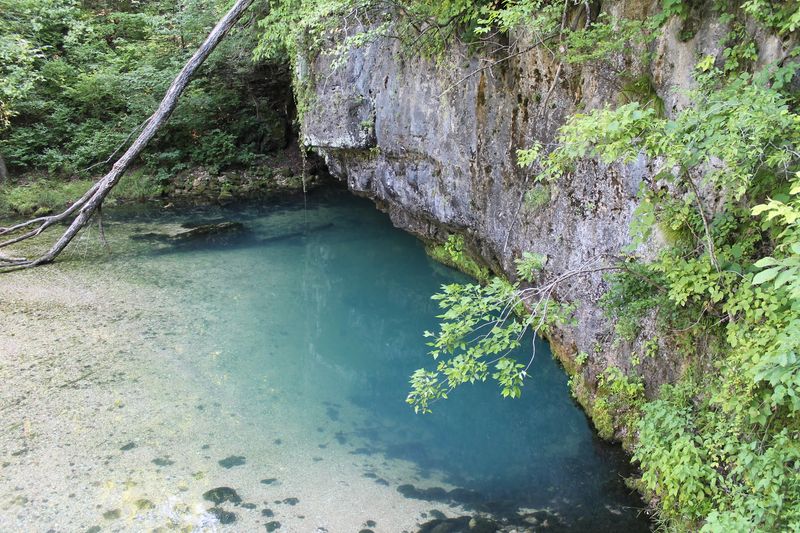
The park is also home to one of the largest springs in the entire state, which pours out an enormous volume of clear water and feeds into the lake below. Springs like that have a color to them that is hard to describe, sort of green and blue at the same time depending on the light.
Miles of trails connect all of these features, so you can piece together a short loop or spend most of a day walking. Some paths are easy and flat while others involve long staircases and steady climbing, so read the trailhead signs before you commit.
Pack a snack, wear a hat in warm weather, and give yourself more time than you think you need. Between the ruins, the bridge, and the spring, this is the rare Missouri stop that keeps rewarding you the longer you stay.
