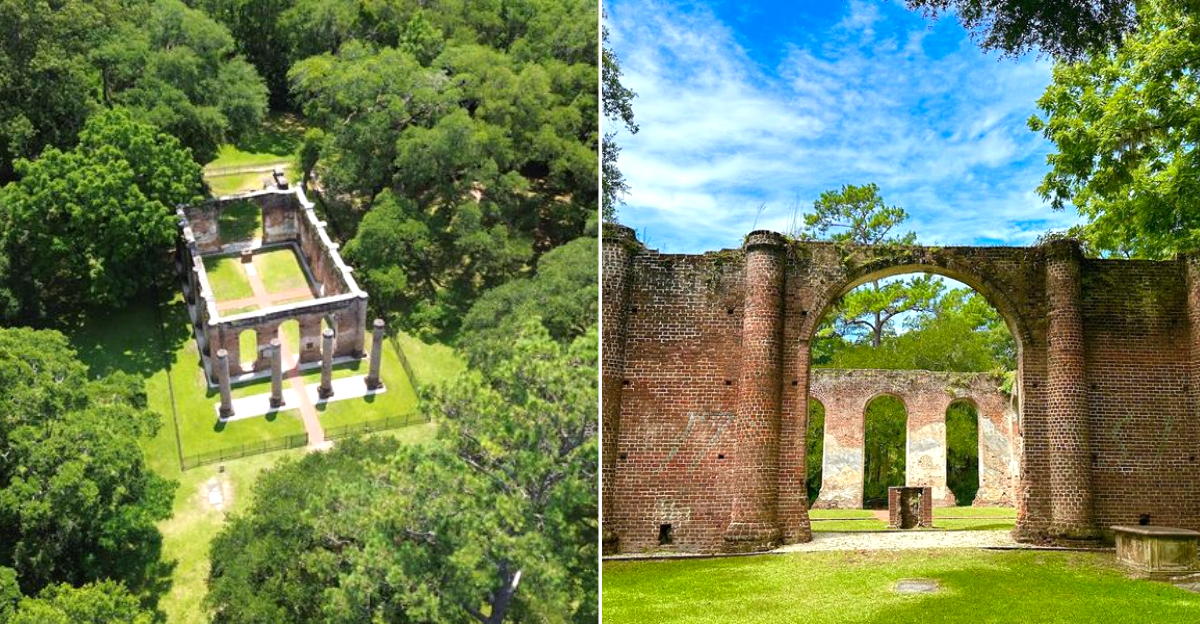
Ready to walk into a ruin that looks staged, even though it is completely real? This forgotten South Carolina church ruin looks like a movie scene in daylight, with open walls, weathered brick, and a quiet that makes you lower your voice without meaning to.
The moment you step closer, the details start doing the work. Arched openings frame the sky, vines creep along the edges, and the floor is more earth than building now, like nature is slowly taking the set back.
You can still read the shape of the place. A main aisle line, old window frames, and the way the structure sits make it easy to imagine services, music, and people filling the space long ago.
That contrast is what makes it hit. It feels peaceful and eerie at the same time, especially when wind moves through and turns the whole ruin into a soft echo chamber.
This is the kind of stop that rewards slow pacing. Take your time, look up, and let the light change, because the ruin looks different from every angle.
You leave with photos that look unreal and the strange feeling that the building is still performing, even without a roof.
Brick Ruins And White Columns That Look Like A Movie Set
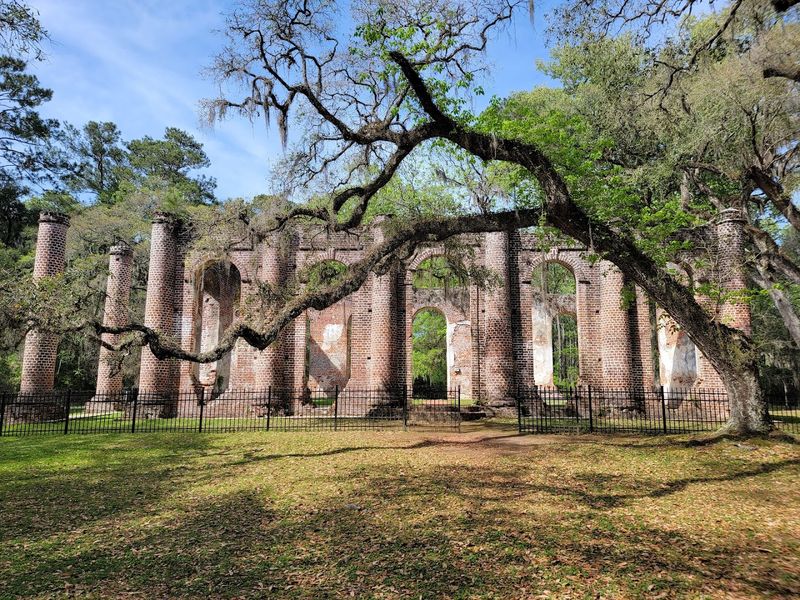
Walk up slowly, and tell me this does not feel staged in the best way? The brick arches stand like ribs of some grand creature, while the pale columns catch the light and look freshly powdered, even though nothing here is actually new.
South Carolina humidity hangs in the air, softening edges so everything feels a touch dreamlike, like the scene is pausing for a cue.
This is the Old Sheldon Church Ruins, Old Sheldon Church Rd, Yemassee, SC 29945, and the approach already sets your pace. The ground crunches a little underfoot, then hushes near the nave, and you start to notice the details that win you over.
Cracked mortar, delicate vines, a broken lintel that still manages a kind of posture, all of it working like set design that forgot it was ever supposed to be pretend.
Stand near one column and listen for the light wind slipping through the openings, because that whisper is what sells the scene. The color palette stays simple, just brick, white, green, and sky, which keeps your focus on shapes and shadows rather than clutter.
It is quiet here, not empty, and that difference matters when you are trying to read a place without words.
Prince William’s Parish Church Origins From The 1700s
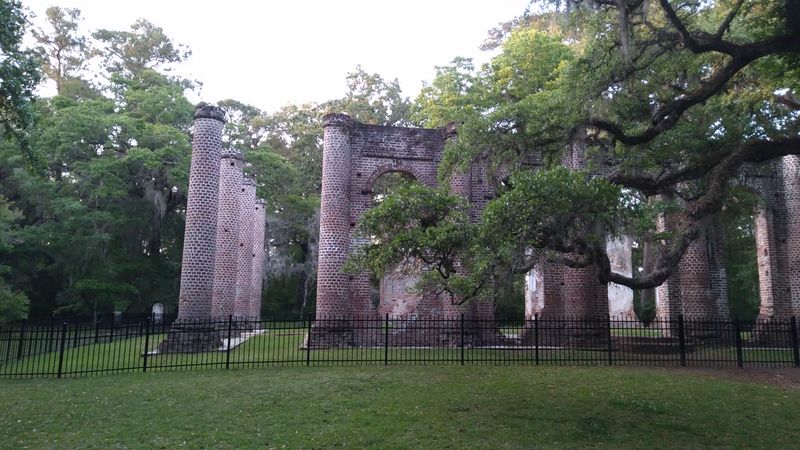
If you back up from the drama for a second, the bones of the design start telling you where it came from. The symmetry, the brickwork, and those temple-like cues come from a time when builders in South Carolina reached for classical lines to make a statement about community and permanence.
You can read that ambition in every course of brick, even with the sky showing through.
Think about the parish that gathered here, because that is the frame for everything else. A rural congregation built with care and intention, tied to land and waterways, shaped by seasons and long distances, and anchored to a church that felt sturdy enough to hold faith and worry together.
The scale feels right for that kind of life, serious without being stern.
What still surprises me is how the style remains legible, even with half the building missing. Stand at one end and line up the arches, and the rhythm clicks, like a song you remember after the first note.
It is the kind of architecture that does not whisper, yet it does not shout either, and that balance is why people still drive out from Beaufort and farther across South Carolina to see what is left and imagine the rest.
Burned In 1779 And Why That First Loss Still Matters
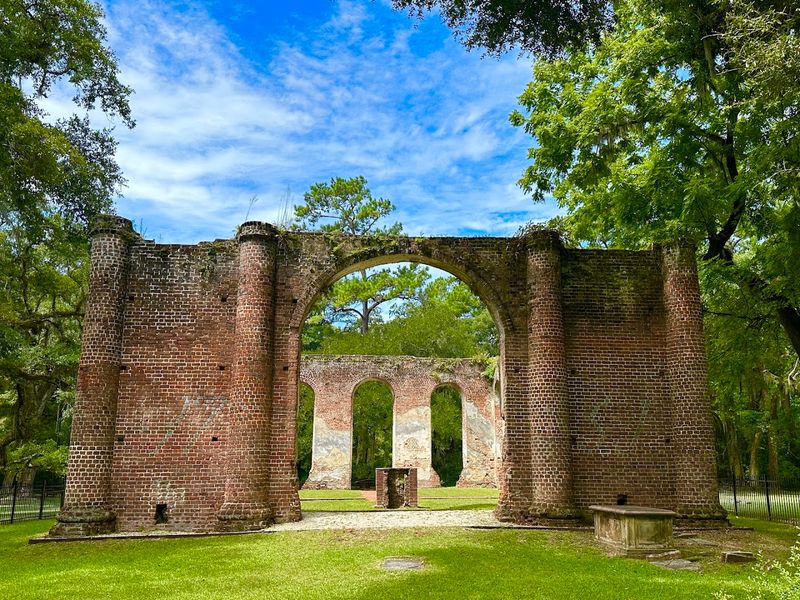
History did what history often does here, which is to test what people believed would last. The first destruction cut deep, and you can sense that in the way locals still talk about the ruin with a kind of guarded tenderness, as if the wound never healed flat.
Loss has a way of outlining what mattered, and those outlines are still visible in brick and memory.
When a building falls to violence, the community carries the echo for a long time. You can stand under the arches and let that echo roll through the space, then out into the trees, and it sounds a little like resolve mixed with grief.
That combination might be why the story keeps getting told across South Carolina, because it feels true to the place.
What makes the first loss matter now is not only the event, but the pattern it set. People came back, rebuilt, and insisted on making beauty the answer to damage, which is not an easy stance to hold.
So when you walk these grounds, the ruin is not only a relic, it is a reminder that communities decide, again and again, what to lift from the ashes and what to leave behind.
The 1826 Rebuild That Gave The Ruins Their Iconic Look
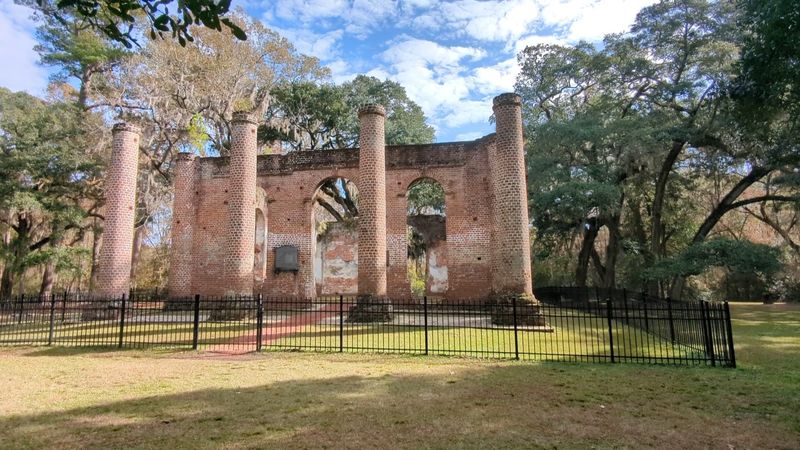
Here is the twist I love sharing when we are standing by the front: the silhouette you photograph today exists because of a later rebuild that stitched ambition back into these walls. Those strong columns and clean lines are the version that settled into everyone’s memory.
It is fascinating how the update became the image, while the original faded to a ghost behind it.
Walk the perimeter, and you can almost feel the decisions baked into the mortar. The way the arches spring from the piers, the careful spacing, and the modest ornament give the shell its calm confidence, like it knows exactly how to hold space without a roof.
That is why even casual visitors sense coherence, not rubble.
So when someone asks why these ruins look so cinematic, the answer is simple and not simple. It is a ruin shaped by a reconstruction that leaned into classical clarity, then weathered into something both elegant and raw.
That is the kind of face the camera loves, and it is the reason travelers drift down from Charleston or across the South Carolina Lowcountry, pull over on the quiet road, and whisper without realizing it, because the place asks for respect without ever needing a sign.
Civil War Damage That Left The Structure Frozen In Time
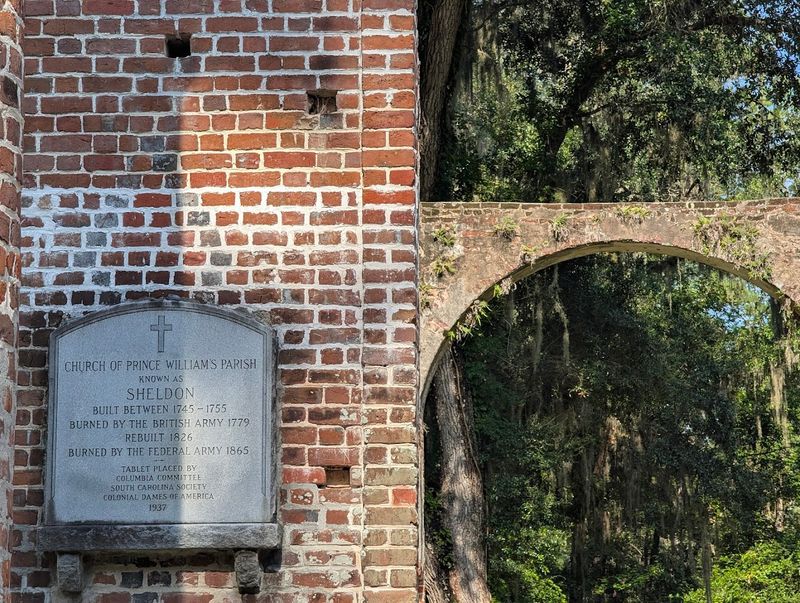
At some point, the story hardened into what you see now, and that shift came with another round of upheaval. Materials were stripped, the interior was opened to wind and rain, and the church became more sky than shelter.
That change locked the building in a pose that still reads like a pause button was pressed mid scene.
There is a stillness to the arches that feels deliberate, even though it was forced by circumstances. You stand there, look up, and the canopy of oaks becomes the ceiling, while light traces the edges like chalk.
The ruin is not trying to be whole anymore, which is probably why it holds together so well in the mind.
I think that is why the place works on photographers and daydreamers the same way. It points you to what remains instead of what is missing, and that is a generous way to tell a hard chapter.
For a quiet stop in South Carolina that manages to be solemn without being heavy, these weathered walls hit the note exactly, letting time pass through while the structure keeps its posture.
Live Oaks And Old Graves That Create The Whole Atmosphere
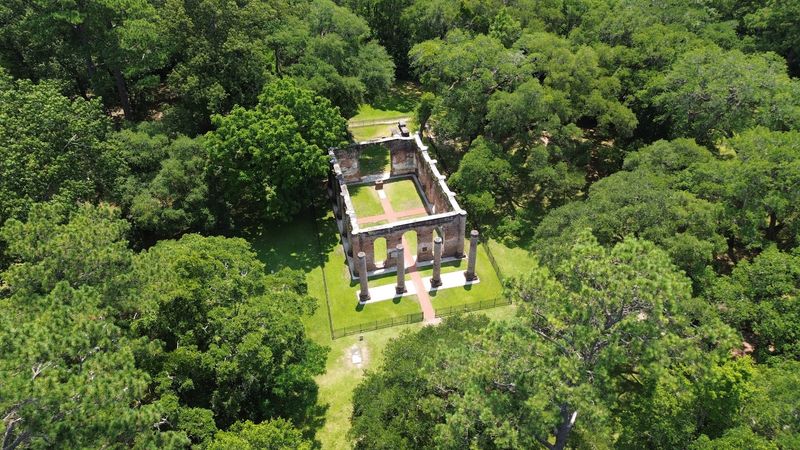
What really seals the mood here is not just the walls, it is the company they keep. Those live oaks reach out like patient guardians, and the moss hangs in these long, gentle curtains that stir with even the smallest breeze.
The effect is theatrical without feeling fake, and it makes you slow down whether you meant to or not.
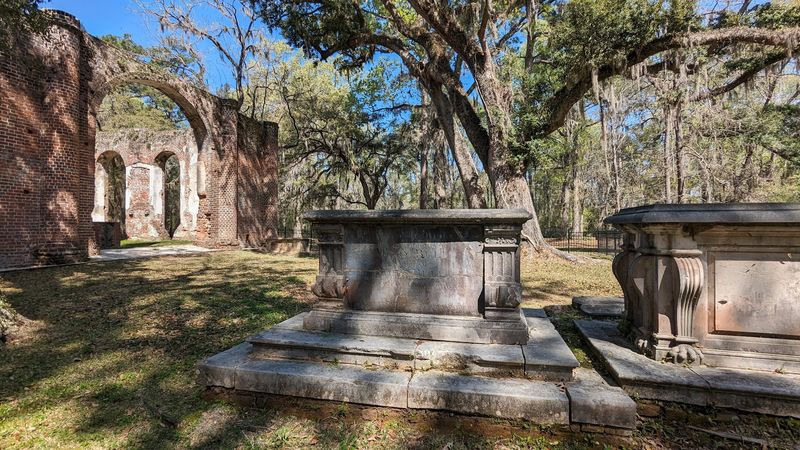
The graves sit quietly along the edges and beneath the trees, and they ask for the kind of respect you can feel in your shoulders. You do not need to read names to understand the weight of memory folding into the ground.
Just move softly, keep your voice low, and let the space do what it does best, which is hold time without rushing it.
Stand off to the side and frame a column between two oak trunks, and the whole composition clicks. The trees, the stones, the brick, the sky, it is all part of one long conversation that started long before us.
That is South Carolina for you, layering history and landscape until the line between them blurs, and you realize the setting is not background, it is a character telling the story.
The Fence And Preservation Rules That Changed How You Experience It

One thing you notice right away now is the fence, and honestly, it makes sense once you stand here for a minute. The boundaries protect fragile details, discourage climbing, and keep the site from turning into a backdrop that gets manhandled.
It shifts the experience from wandering inside to circling slowly, which changes your photos but not the magic.
Signs explain the do’s and don’ts in plain language, and following them feels like being a good guest. Step lightly, keep gear tidy, and find angles from the perimeter, and you realize the exterior views are where the composition was always strongest anyway.
The rhythm of columns and arches reads cleaner from a few paces back.
Is it different from the old days when people were looser with access? Sure, but stewardship beats shortcuts every time, and the place breathes better with a little space around it.
If you are heading through the South Carolina Lowcountry, think of the fence not as a barrier, but as a frame that keeps the story intact for whoever shows up next.
Photo Angles Everyone Chases And Where They Actually Work Best
Let me save you a few laps around the clearing and share what works. The head-on shot from the main approach is the classic, no doubt, but shift a step or two to let an oak branch arc into the frame, and suddenly the columns feel taller.
Low angles help especially when the sky is bright and clean.
Walk to the rear corner and line up two arches so they stack, then tilt just enough to keep the horizon honest. That gives you layers, brick pattern, and a bit of light slip across the floor, which is where the depth shows up.
If you catch soft cloud cover, the brick color saturates without glare, and the moss turns silky.
People ask about drones, but this is one of those places where ground truth wins every time. Knees bent, camera close, eyes up, that simple posture finds the mood these ruins carry.
In South Carolina sunshine, the shade patches paint the columns with gentle bands, and if you wait a beat, a breeze will nudge the moss just enough to make the still frame feel like it is breathing.
Quiet, Respectful Visit Expectations That Keep The Site Intact
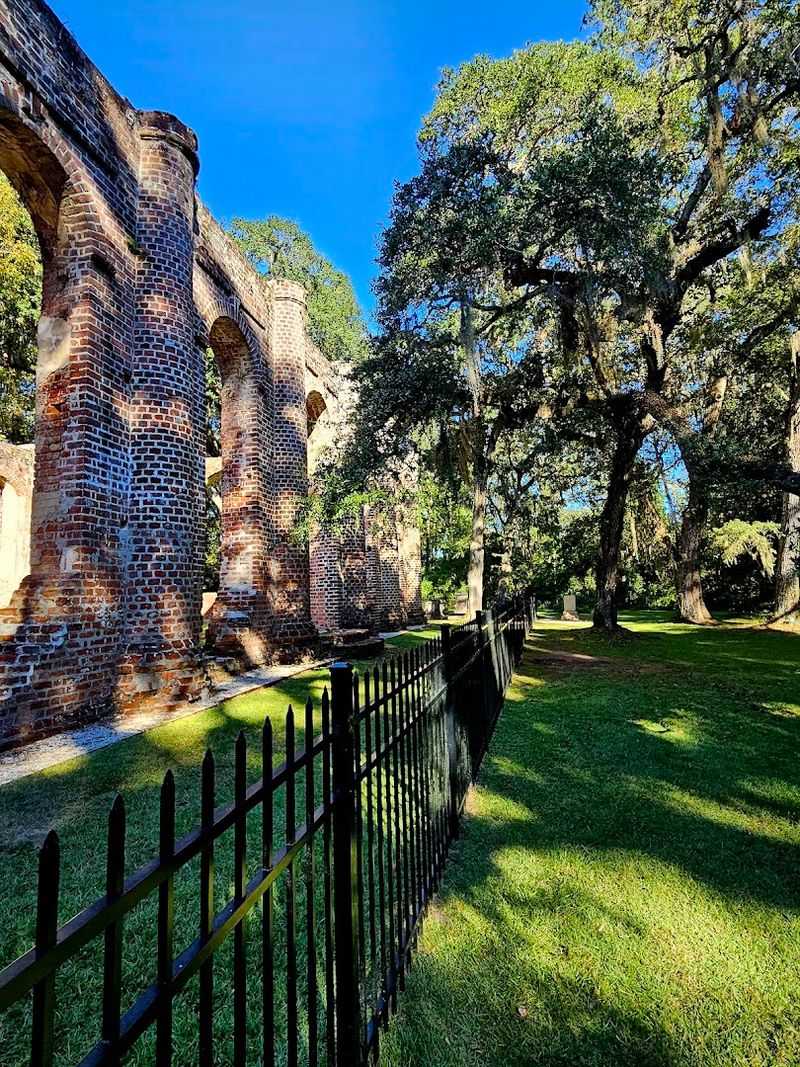
Before you step out of the car, set the tone in your head, because this place asks for it. Voices carry under the oaks, and it only takes a handful of loud moments to break the spell, so keep conversation easy and measured.
Move slowly, stay outside the barriers, and treat the ground like a shared living room with old guests already seated.
Pack light and keep tripods and props tidy, because the less footprint you make, the better the site holds up for the next person. Leave stones where they are, skip the rubbings, and never lean on the brick, since small pressures grow into big damage over time.
It is all common sense, but common sense gets stronger when we agree to it together.
I like to pause before leaving and take one last wide look, because gratitude has a way of sealing memory. This is not an attraction so much as a place of rest, and if you meet it that way, it meets you back.
South Carolina has plenty of grand scenes, but this one stays gentle and steady if we keep our part simple.
Why This Ruin Still Pulls People Back Again And Again
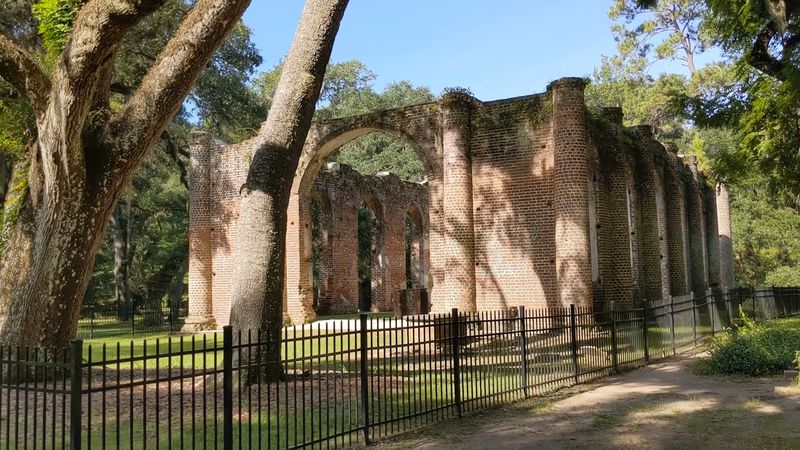
So why does a roofless church down a quiet South Carolina road keep drawing people back? I think it is because the place feels honest about survival, about beauty that is earned rather than polished, and about stories that linger without shouting.
You stand there and the day gets wider, like someone quietly opened a window inside your chest.
There is also the feeling that the land and the building finally agreed on something. The oaks shade the brick, the brick returns the favor by catching light in a way that flatters the trees, and the moss ties the whole thing together like a soft thread.
That partnership settles you without putting you to sleep.
Every time I come back, I notice one more small detail that I somehow missed, and it feels like the place is still working, still teaching, still kind. That is the tug that sends people down Old Sheldon Church Road when they could easily keep driving.
If you have been craving a scene that looks like cinema but behaves like a prayer, this ruin gives you that, and it does it without asking for anything louder than your quiet attention.
Dear Reader: This page may contain affiliate links which may earn a commission if you click through and make a purchase. Our independent journalism is not influenced by any advertiser or commercial initiative unless it is clearly marked as sponsored content. As travel products change, please be sure to reconfirm all details and stay up to date with current events to ensure a safe and successful trip.
