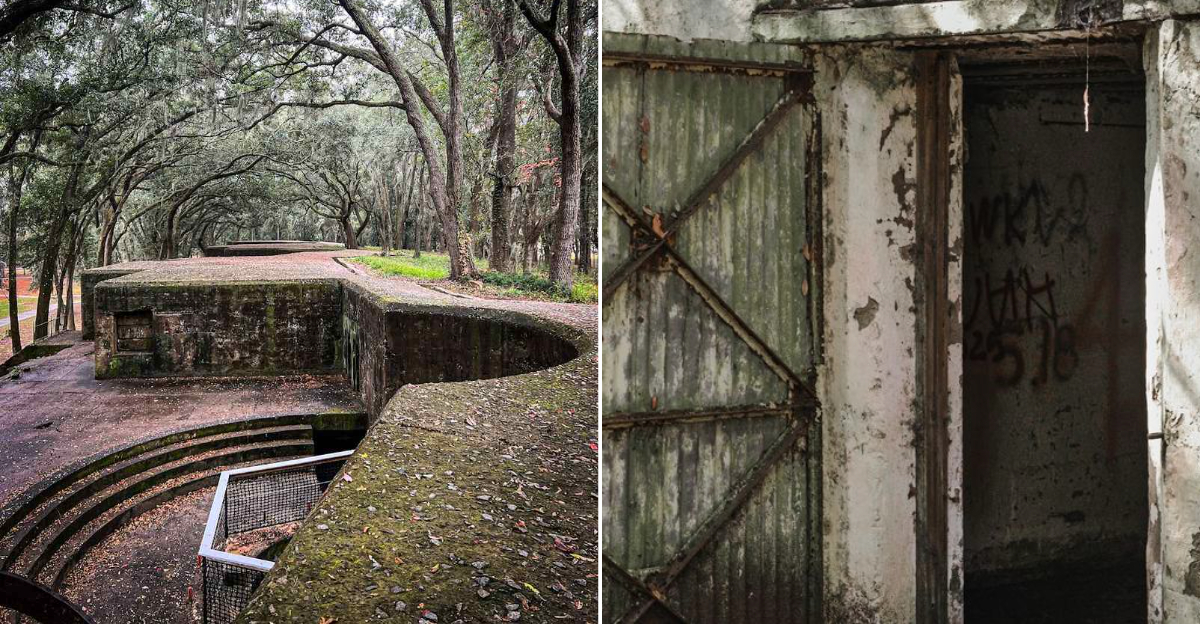
Ready to turn a quiet coastal stop into the kind of find you will talk about all week? This forgotten South Carolina fort has that rare hidden-gem energy that makes you feel like you stumbled onto something much bigger than a simple roadside detour.
The moment you start walking through the ruins, the place begins to open up in a way that feels both peaceful and surprisingly dramatic. You get old brickwork, wide water views, and the kind of weathered history that does not need flashy exhibits to leave an impression.
That is what makes it so fun to explore. It feels calm, a little overlooked, and completely different from the usual polished tourist stop.
One minute you think you are just stretching your legs near the coast, and the next you are imagining soldiers, defenses, and the long story this place has quietly held onto for years. For anyone who loves hidden history with a scenic backdrop, this fort delivers a genuinely memorable walk.
A Low-Key Entrance That Makes The Fort Feel Like A True Find
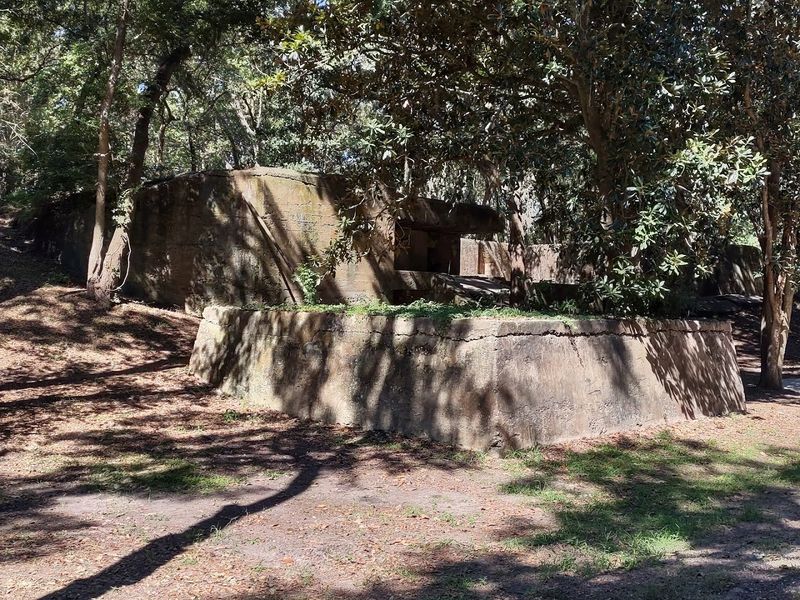
You pull off the main road and the trees fold in, and right away the energy turns from hurry to hush. The entrance is small, almost shy, and you get that little zing that happens when something good is about to be yours alone.
The parking area sits under live oaks where the moss hangs like soft curtains, and the air smells lightly of salt and pine.
This is Fort Fremont Historical Preserve, 1126 State Road S-7-45, Saint Helena Island, SC 29920, and it immediately feels personal. There is no big gate telling you exactly what to feel, just a modest sign and a winding path.
I like the way the edges blur here, the way the woods and marsh seem to claim the place while still letting you step in.
South Carolina has louder historic stops, but this corner speaks in a normal voice you can actually hear. You notice bird chatter, a distant rustle, and the thump of your shoes settling into the sand and pine needles.
It is the kind of arrival that makes you lower your shoulders, breathe a little deeper, and decide to let the place set the pace.
Nothing about this entrance is trying to impress you, which is exactly why it works. You feel like you got let in on something, not sold a package.
That quiet start primes your senses, so by the time you drift toward the fort, you are already tuned to its slower coastal rhythm.
The Short Walk That Builds Curiosity Before You Reach The Ruins
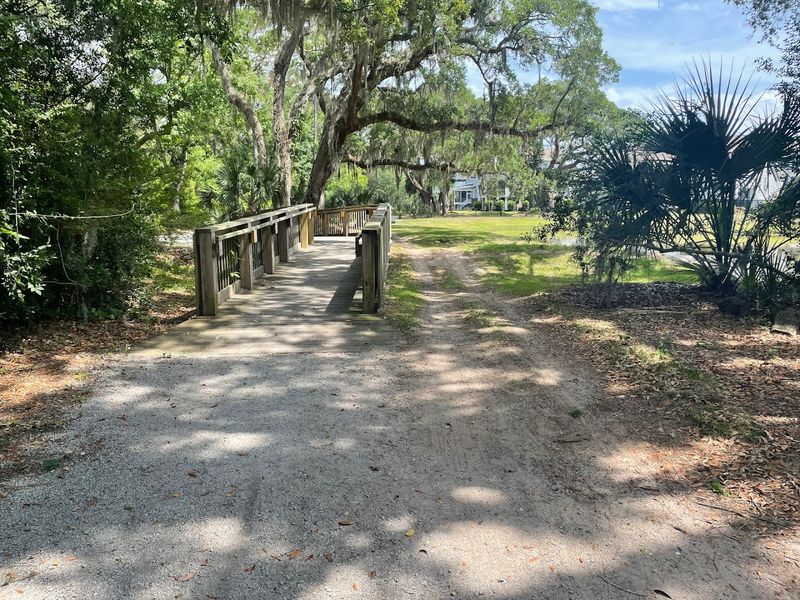
The path starts gently, almost like a suggestion, and then it pulls you forward with just enough curve to make you wonder what is coming next. Palmettos clap softly when the breeze picks up, and the live oaks lean in like they are keeping the fort company.
You can hear the marsh somewhere off to one side, a faint hush that sounds like fabric being folded.
I love how the walk is short but not abrupt, because it gives your eyes time to settle. Your steps find a rhythm, your thoughts slow down, and the layers of the day slide off without effort.
South Carolina trails have a certain swing to them, and this one carries that same easy swing right to the edge of the old works.
A low sign appears, not flashy, just enough to say you are on track. Then the ground changes underfoot, and the trees open just a little more.
That small shift is like a drumroll, light but undeniable, and curiosity clicks a notch tighter.
By the time a wall comes into view, you have earned it, even though you barely broke a sweat. The scale stays human, and that matters because you are not walking into a lecture.
You are walking into a place that reveals itself politely, letting your attention do the work, which somehow makes the first look at brick and earth feel earned and real.
Brick Remains That Still Hint At The Fort’s Original Purpose
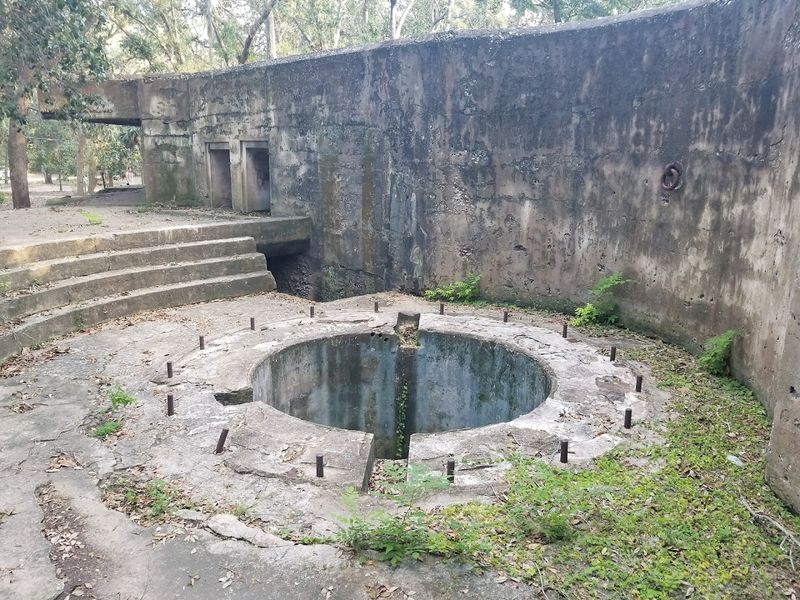
The first time you see the brick and concrete, it hits with a steadier weight than you expect. You can read the lines of purpose in the angles, the way openings face a channel, the way surfaces seem thicker where pressure once mattered.
Even worn down, the walls keep that squared-off confidence that belongs to coastal defense.
Step closer and the textures get personal. Mortar looks like it was squeezed and set by hands that understood tides and storms, and the brick shows scuffs where gear must have moved through.
South Carolina humidity has softened the edges, but not the intent, and that contrast is strangely moving when you stand still and imagine the watch.
Your fingers hover above pitted concrete, feeling the coolness without needing to touch. Shadows cut across the surfaces, showing small shelves and ledges that probably held something functional and heavy.
It is all practical, which is why it still communicates so clearly.
There is no need for a guide to tell you that this place looked outward, always outward, measuring distance and water and threat. The story is baked into the brick, and the mood is in the salt air that keeps passing over the walls.
When you finally step back, the view lines make sense, and the old geometry quietly snaps into place.
Why This Coastal Defense Site Feels So Different From Bigger Historic Stops
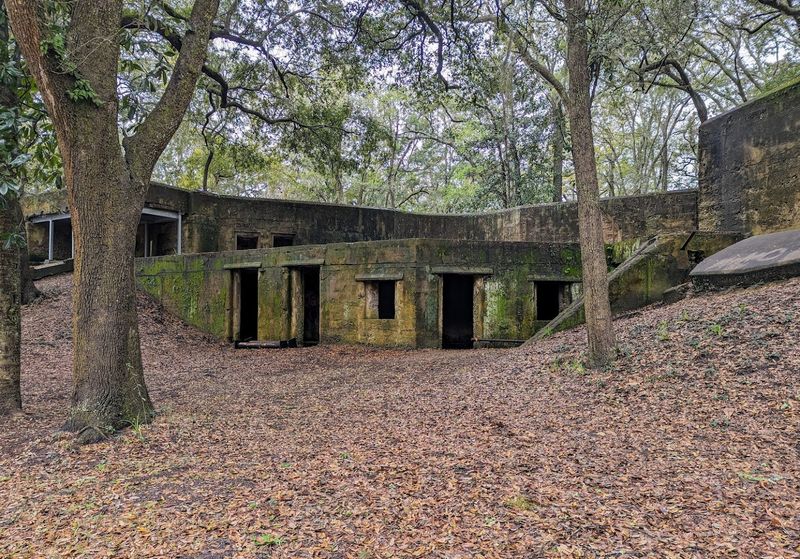
Here is the thing that sneaks up on you. The scale stays relaxed, so you never feel managed, and that lack of spectacle lets your attention wander in the best way.
You notice wind shifts, bird patterns, and the way the fort seems to have grown into its setting instead of standing apart from it.
Bigger places can be great, but they steer you hard. This one suggests instead of insists, which makes your own curiosity the guide.
South Carolina has a long coastal story, and being here lets you hold a small, sturdy piece of it without the noise of crowds or the pressure to gulp information you will not remember later.
Because the site is low key, your time stretches. You can double back, stand in a patch of sun, or take a longer angle on a wall without feeling like you are in the way.
That freedom changes how you learn, because your mind pays attention to what it chooses.
By the end, it feels more like a walk with history than a stop at a museum. You carry the textures and the quiet rather than a checklist.
And honestly, that difference sticks, because the memory forms around your own pace, your own questions, and the patient way the place keeps its voice steady.
Quiet Marsh Views That Add To The Fort’s Hidden-Away Appeal
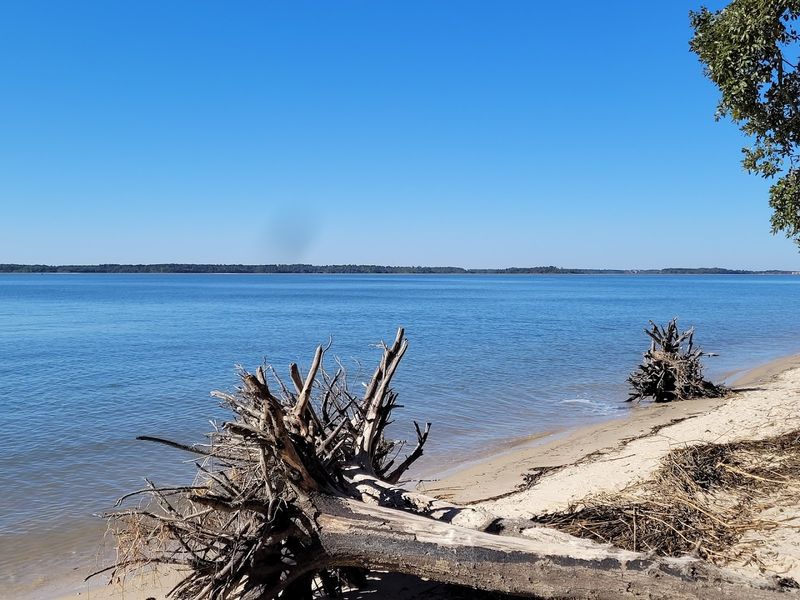
Drift a few steps from the walls and the marsh opens like a long breath. The grass tilts with the wind and then settles, and the water draws silver lines that fade and return.
It is the kind of view that empties noisy thoughts without trying, which is probably why it pairs so well with old brick and earth.
You can stand at the edge and feel the air trade hands between warm and cool. Somewhere a heron lifts off like it forgot to rush, and that unhurried rise sets the tempo for your next stretch of wandering.
South Carolina marshes do that, turning big moods into manageable ones while nothing dramatic actually happens.
I like watching cloud shadows cross the spartina, because it feels like time marking itself gently. The fort holds its place, the marsh keeps its rhythm, and you get to float between them for a few minutes.
There is no stage here, just a shared quiet.
When you finally face the ruins again, the view lines make more sense, because the water is the reason for everything. The marsh is not a backdrop, it is the other half of the story.
You end up carrying both in your head, the soft and the solid, and that balance sticks with you long after the walk back to the car.
The Small Details In The Ruins That Make People Stop And Look Closer
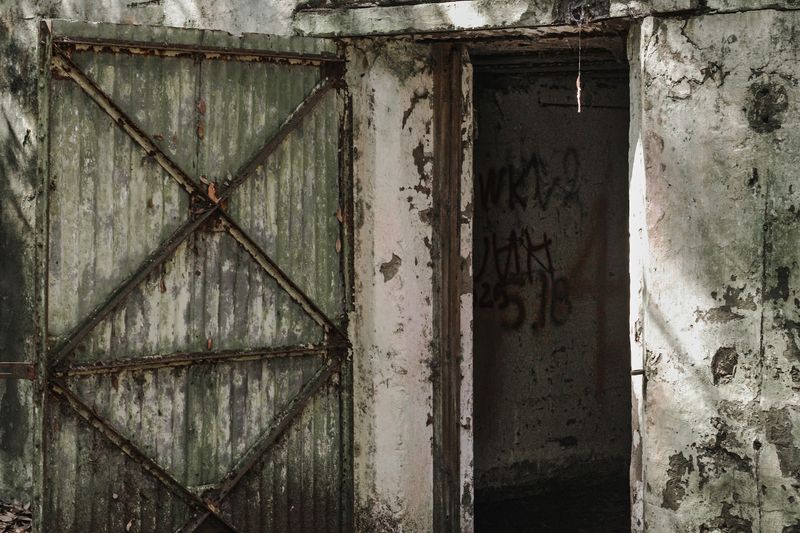
It is the small stuff that hooks you. A rusted bolt circle tells you where a heavy piece once sat, and suddenly the empty space feels full again.
Little drain slots, scraped thresholds, and hairline cracks all read like notes from the past, direct and matter of fact.
Kneel near a seam and you will see sand grains locked in the concrete like freckles. A bit of moss claims a corner, and a tiny fern pushes from a crack that probably did not exist when the crews walked this line.
Those details make the place feel alive rather than abandoned, which is a different kind of respect.
If you trace a finger above a worn edge, you can almost hear the clank of something being lifted. The design is practical and stripped down, and that simplicity turns into clarity for anyone who likes puzzles.
South Carolina weather has softened the surfaces, but the intent still rings clear.
I always take a slow loop just for the little things. They are the pieces that glue the bigger story together in your head, and they are easy to miss if you try to speed through.
Give them a minute, and the fort answers with quiet specifics that feel earned rather than handed over.
A Bit Of History That Gives The Walkthrough More Weight
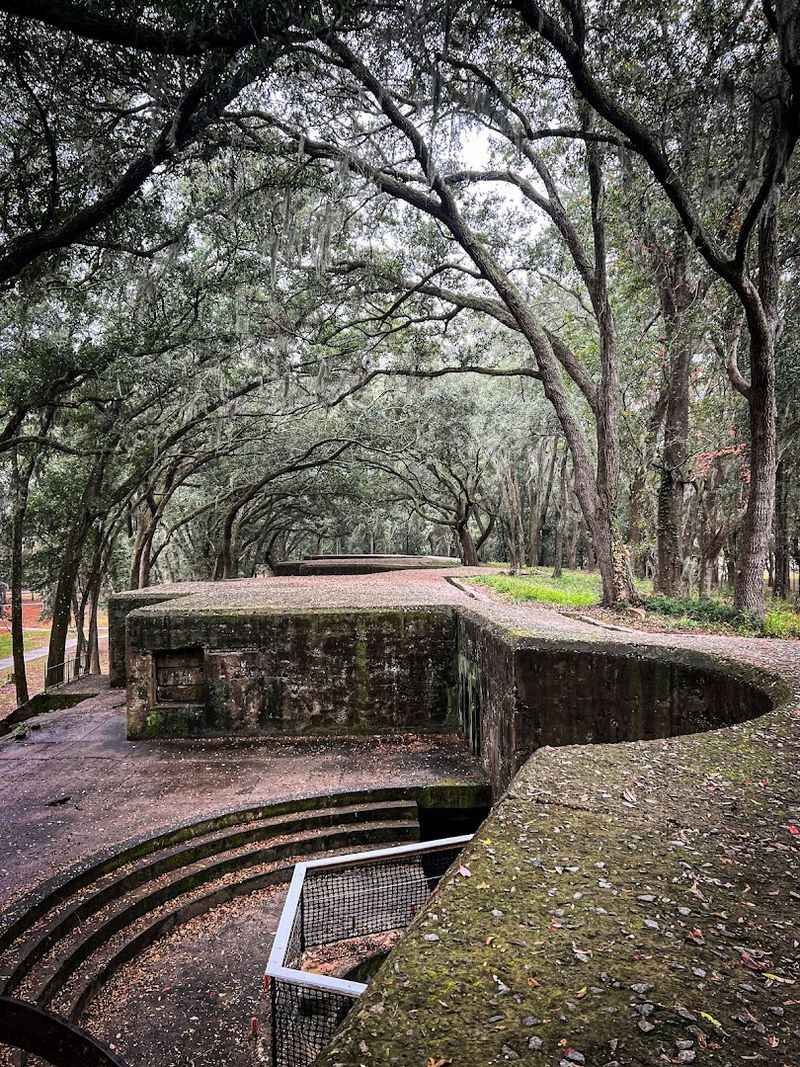
You do not need a lecture here, but a few anchor points help the walk land. A sign near the path sketches the fort’s role on this stretch of coast, and once you picture the channel and the approach, the layout clicks.
The batteries point their chin toward water, and the whole site starts to read like a plan instead of a pile.
I like to keep the facts light and the senses on, because that is how memory works best out here. The history stays close to the ground, tied to sight lines, labor, and the feel of weather.
South Carolina’s coast has been guarded, traded, and argued over, and this small post is one steady page in that thicker book.
It helps to imagine routine, not drama. Think of watches, maintenance, and the discipline of checking angles and keeping equipment ready.
When you frame it that way, the ruins gain weight without needing a reenactment.
By the time you circle back to the entrance, those few facts act like pegs where the day can hang. The story is not abstract anymore, it is tied to walls you touched and wind you felt.
That blend of knowledge and place is what turns a quiet stroll into something that stays with you.
How The Preserve Balances Open Space, History, And A Slower Pace
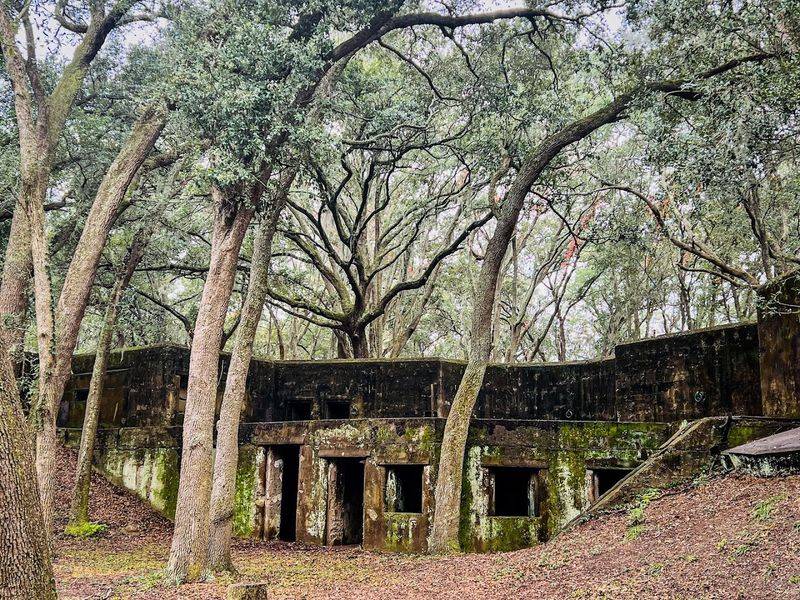
The preserve feels like a conversation between the land and the old work, with you stepping in as a polite third wheel. Paths move you without boxing you, and the big trees hold enough shade to make lingering feel natural.
You can drift from a wall to a clearing, then to the marsh edge, and the whole loop breathes at an easy pace.
I think the balance works because nothing is over explained. The story sits where it happened, and the open space lets you keep your own head while you learn.
In South Carolina, that mix of landscape and history is the sweet spot, especially when you just want a calmer hour that still has spine.
The preserve also gives the ruins room to be themselves. There are no loud props trying to fill silence that does not need filling, just simple markers and honest textures.
That kind of restraint is rare and welcome.
You leave feeling like you matched the place instead of battling it. The slower pace makes decisions easy, and the open space keeps the day flexible.
It is a small thing, but it adds up, and you notice it most when you get back to the road and realize your shoulders have dropped.
Reasons This Stop Works So Well As A Scenic Saint Helena Island Detour
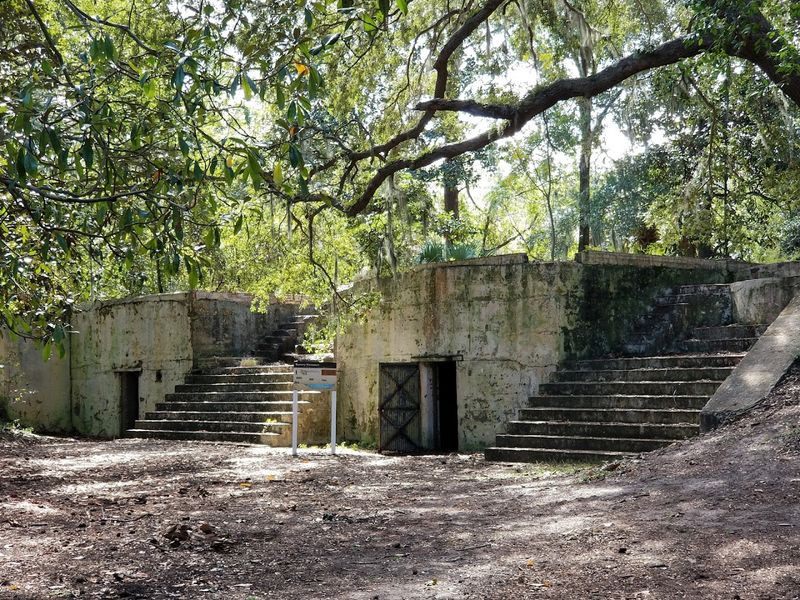
If you are already roaming Beaufort County, this detour slides in without stress. The drive out is pretty on its own, with flashes of water and a steady canopy of oaks that make the miles feel friendly.
You turn down the last stretch and it is quiet enough to hear tires on sand, which is a small luxury.
As a stop on Saint Helena Island, it checks the boxes you care about on a slow day. It is easy to find, easy to wander, and easy to leave on your own timetable.
South Carolina roads can run busy, but this side route loosens the knot and hands you back a pocket of time you thought was gone.
It also pairs well with other low key places if you are building a day that is more drift than schedule. You can keep the vibe easy, swing past the water, and treat the fort as the quiet center.
When you roll out, you will notice the contrast between this calm and whatever comes next. That contrast is the point, really.
A scenic detour should reset the day, and this one does it by making history and landscape sit side by side like old friends who do not need to talk.
Dear Reader: This page may contain affiliate links which may earn a commission if you click through and make a purchase. Our independent journalism is not influenced by any advertiser or commercial initiative unless it is clearly marked as sponsored content. As travel products change, please be sure to reconfirm all details and stay up to date with current events to ensure a safe and successful trip.
