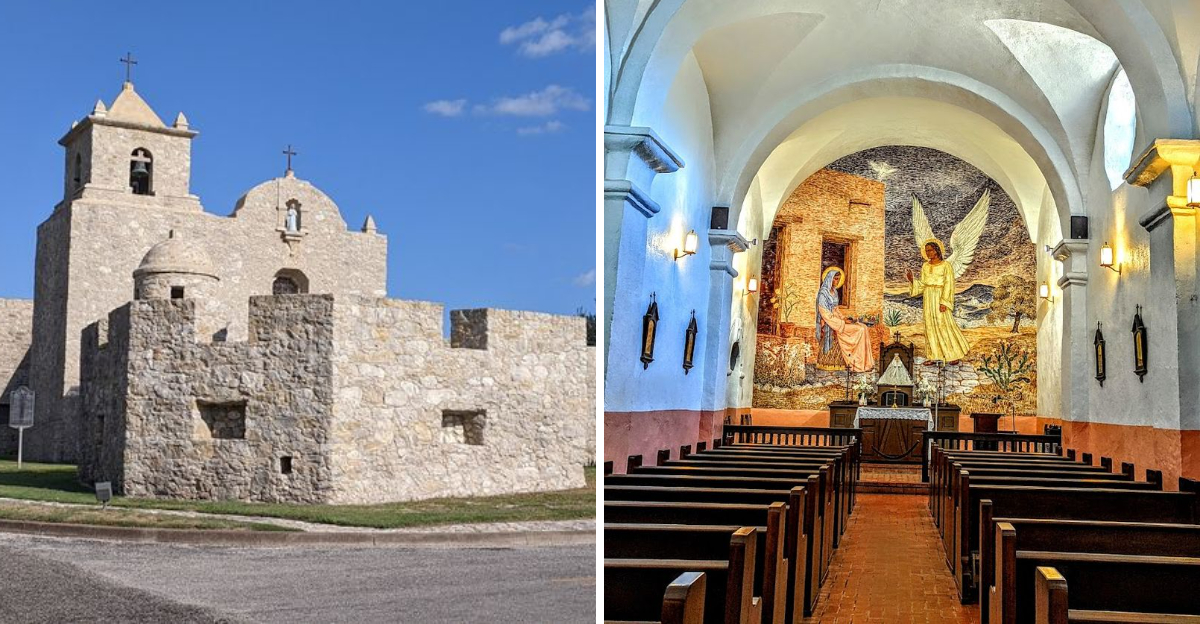
There is a place in South Texas that most people drive right past without a second thought, and honestly, I almost did too. It sits just outside the small town of Goliad, a colonial Spanish fortress with thick stone walls and a quiet chapel that holds centuries of raw, unfiltered history.
The stories layered inside these walls stretch back further than the Alamo, touching on Spanish conquest, Mexican rule, and the blood-soaked fight for Texas independence. Once you visit and feel the weight of that history around you, it becomes clear why this site is so powerful.
This is not just another roadside stop. It is one of the most genuinely moving and historically significant places in the entire state of Texas.
The Fort That Time Nearly Forgot
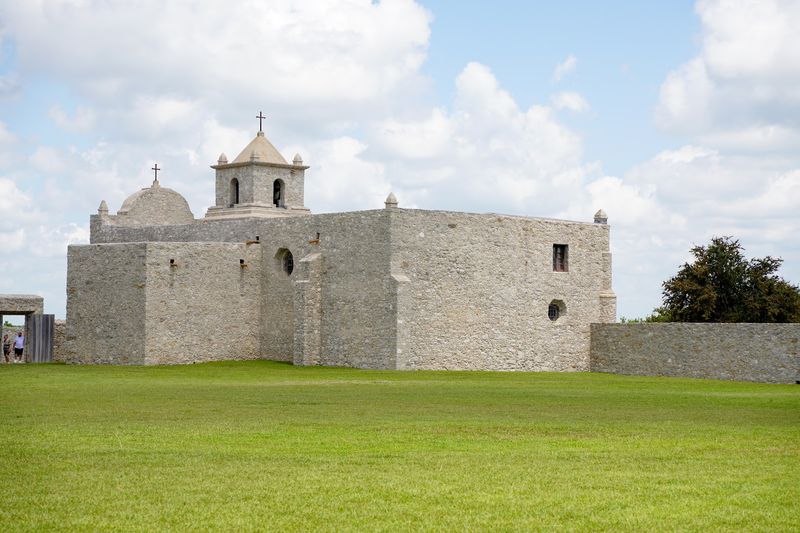
Most people can name the Alamo without hesitation, but ask about Presidio la Bahía and you might get a blank stare. That gap in public knowledge is surprising once you realize how much happened here.
This fortress, originally established in 1721, is considered one of the best-preserved Spanish colonial forts in all of North America.
The original structure was built to protect Spanish missions and trade routes along the Texas Gulf Coast. It moved locations a few times before finally settling on the banks of the San Antonio River near Goliad.
The thick limestone walls you see today were rebuilt over centuries of use, conflict, and restoration.
What makes this place feel different from a typical museum is the sheer physical presence of the fort itself. You are not looking at a replica or a model.
These walls saw real soldiers, real battles, and real decisions that shaped the future of Texas. The fort played roles in multiple revolutions, including the Mexican War of Independence and the Texas Revolution of 1836.
Arriving here and realizing all of that happened in one place is genuinely jaw-dropping.
Centuries of Spanish Colonial Architecture
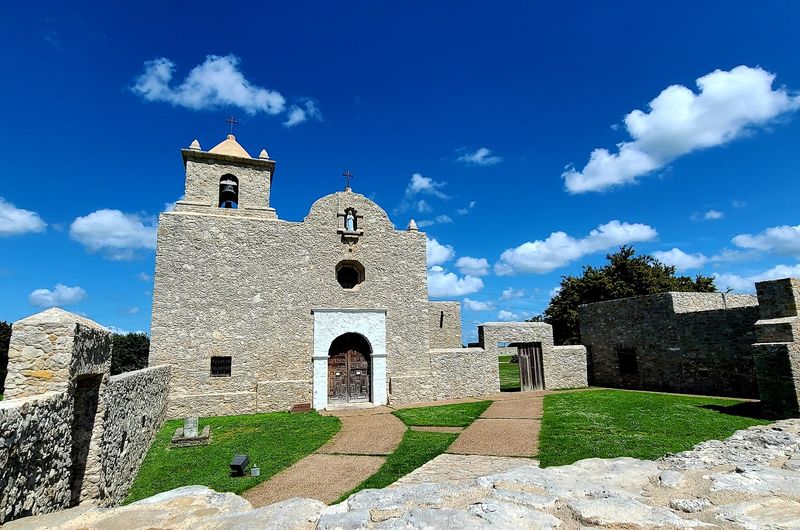
The moment you pass through the main gate, the architecture grabs your attention in a way that feels almost disorienting. You are standing in South Texas, but the thick stone walls, arched doorways, and carefully reconstructed barracks look like something lifted straight from colonial Spain or old Mexico.
It is a rare sight this deep into Texas.
The original construction used local limestone, a material that has held up remarkably well over the centuries. Restoration efforts have stayed faithful to the original Spanish colonial style, which means nothing here feels artificially modern or out of place.
Every corner of the compound reflects the craftsmanship and military logic of 18th-century Spanish builders.
The layout of the fort was designed with defense in mind. Thick walls, a single main entrance, and elevated positions for lookouts made it a formidable stronghold during its active years.
Visitors frequently comment on how much larger the compound feels once you are inside compared to what you see from the road. The scale of the place is impressive, and the architectural details reward anyone who takes the time to slow down and really look.
It is genuinely unlike anything else in the region.
The Chapel of Our Lady of Loreto
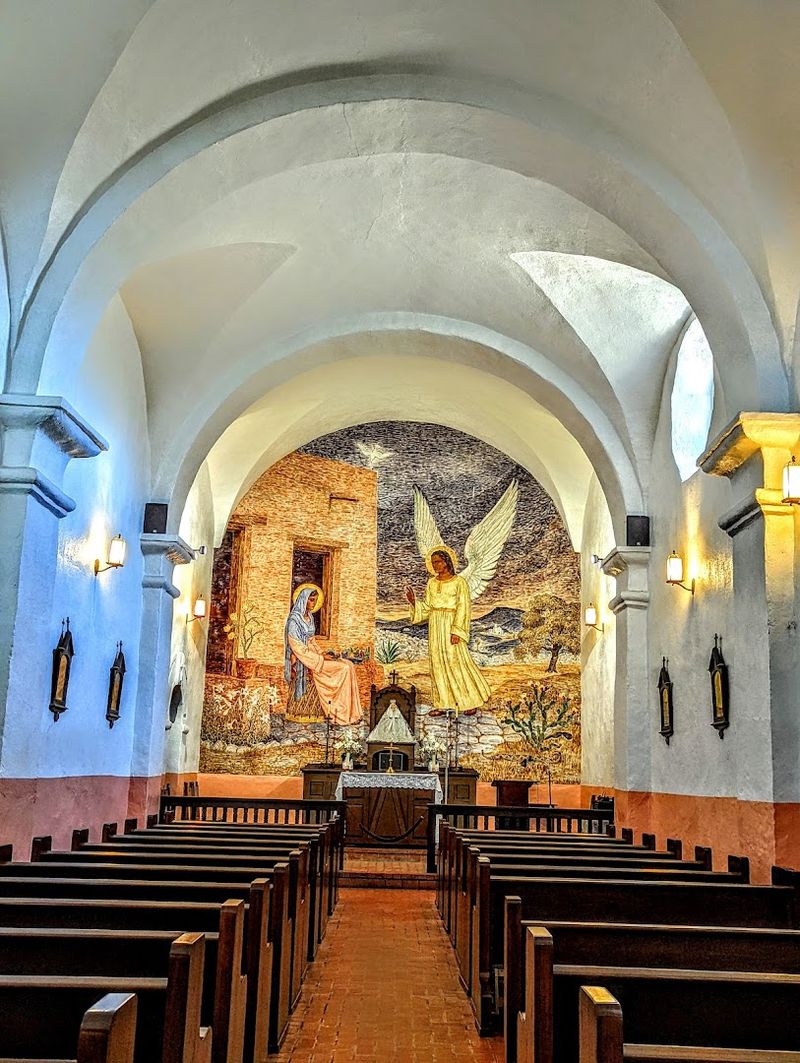
The chapel inside Presidio la Bahía is the kind of space that quiets you down without asking. Light filters through narrow windows and lands on stone floors that have been walked on for hundreds of years.
Several visitors have called it one of the most beautiful small chapels they have ever seen, and after spending time inside, that reaction makes complete sense.
Built in the 18th century, the Chapel of Our Lady of Loreto has been an active place of worship for much of its history. It served Spanish soldiers, missionaries, and local communities through periods of war, political change, and cultural transition.
The interior has been carefully restored to reflect its original appearance, including religious artwork and a simple but striking altar.
One detail that visitors often mention is the acoustic quality of the space. Even a whisper carries in a way that feels intentional, as though the builders understood the power of sound in a sacred setting.
The chapel is open to visitors as part of the general admission tour. Whether you are religious or not, the atmosphere inside is genuinely moving.
It adds a deeply human dimension to a site that is often discussed purely in military or political terms.
The Massacre of Goliad and Its Place in Texas History
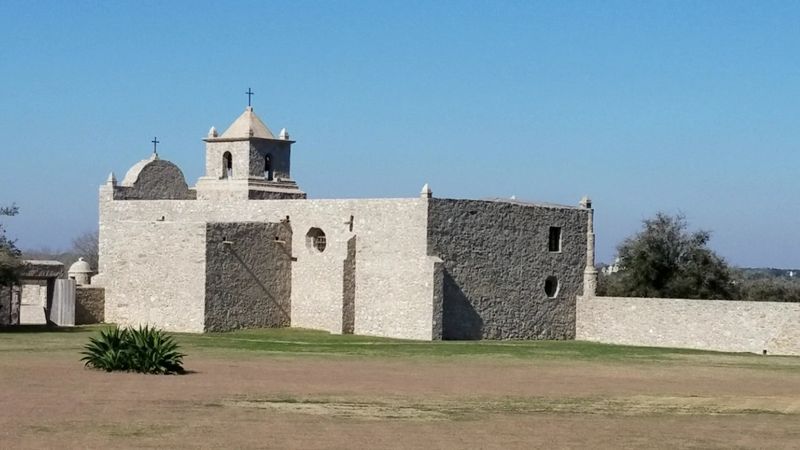
The event that defines this site more than any other is the Goliad Massacre of March 27, 1836. On that day, Mexican General Santa Anna ordered the execution of over 400 Texan prisoners of war who had surrendered after the Battle of Coleto Creek.
Colonel James Fannin and his men were held inside this very fort before being marched out and shot.
The scale of that loss was staggering. More Texans died at Goliad than at the Alamo, yet the Alamo tends to dominate the popular memory of the Texas Revolution.
The cry of “Remember Goliad” was just as fierce as “Remember the Alamo” in the weeks that followed, fueling Sam Houston’s army toward the decisive victory at San Jacinto.
Visiting this site knowing that history gives the whole experience a heavier, more somber quality. The educational video shown at the start of the tour does an excellent job of framing the events clearly and honestly.
The museum exhibits add further detail through artifacts, documents, and period displays. It is not a comfortable history, but it is a necessary one.
Understanding what happened here changes how you see the entire Texas Revolution narrative.
The Museum and Its Remarkable Artifact Collection
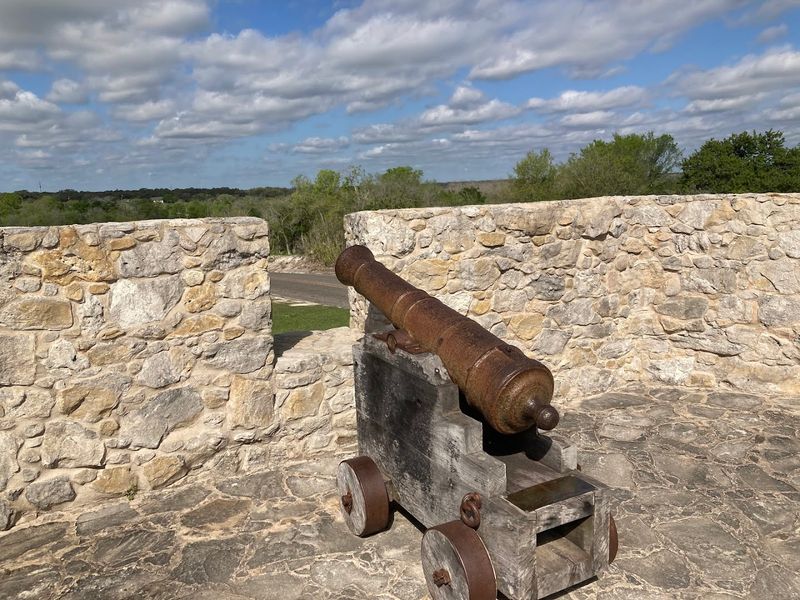
The museum housed within the fort walls is more substantial than most first-time visitors expect. Display cases hold original artifacts recovered from excavations on the grounds, including weapons, tools, ceramics, and personal items that date back to the Spanish colonial period.
Holding your attention is not a challenge here. Each exhibit pulls you further into the timeline.
The collection covers multiple chapters of the site’s history, from its earliest days as a Spanish military outpost to its role in the Texas Revolution. Interpretive panels are written clearly enough for younger visitors to follow, but detailed enough to satisfy adults with a serious interest in history.
The educational video screened at the beginning of the visit ties all the exhibits together in a way that makes the museum feel cohesive rather than scattered.
Staff members are consistently praised by visitors for their knowledge and enthusiasm. They are genuinely happy to answer questions and often share details that go beyond what the displays cover.
The gift shop near the exit stocks a solid range of books, maps, and souvenirs at various price points, making it easy to bring something meaningful home. For history lovers, this museum alone is worth the trip to Goliad.
Annual Reenactments That Bring History to Life
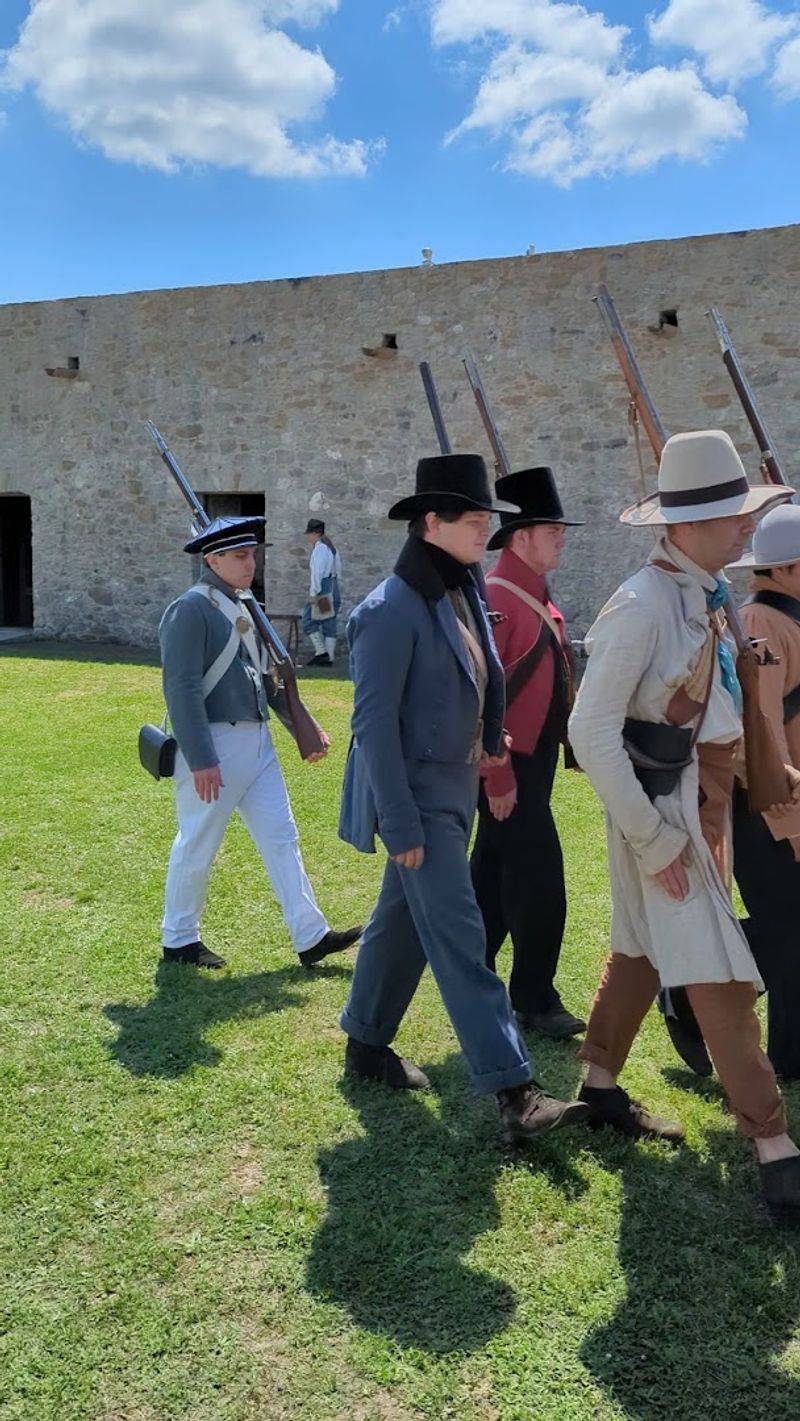
Once a year, the grounds of Presidio la Bahía transform into something extraordinary. The annual reenactment weekend draws costumed participants who set up period-correct camps, demonstrate 19th-century military life, and interact directly with visitors throughout the event.
It is one of the most immersive history experiences available anywhere in Texas.
The weekend programming includes a candlelight tour on Saturday evening that takes on a genuinely atmospheric quality inside the old fort walls. Sunday features a dramatic reenactment of the final hours of the Texan prisoners, including a memorial service at the Fannin monument nearby.
The emotional weight of those performances is real. Several visitors describe it as one of the most memorable experiences of their lives.
The reenactment also connects to the Battle of Coleto Creek, the engagement that led directly to the Goliad Massacre. Understanding the sequence of those events in a physical, living format hits differently than reading about them in a textbook.
Visitors are encouraged to bring lawn chairs and a packed lunch to enjoy on the grounds during the event. Free parking is available on site.
If your schedule allows, planning a visit around the reenactment weekend is absolutely worth the extra effort.
The Connection to Cinco de Mayo You Never Knew About
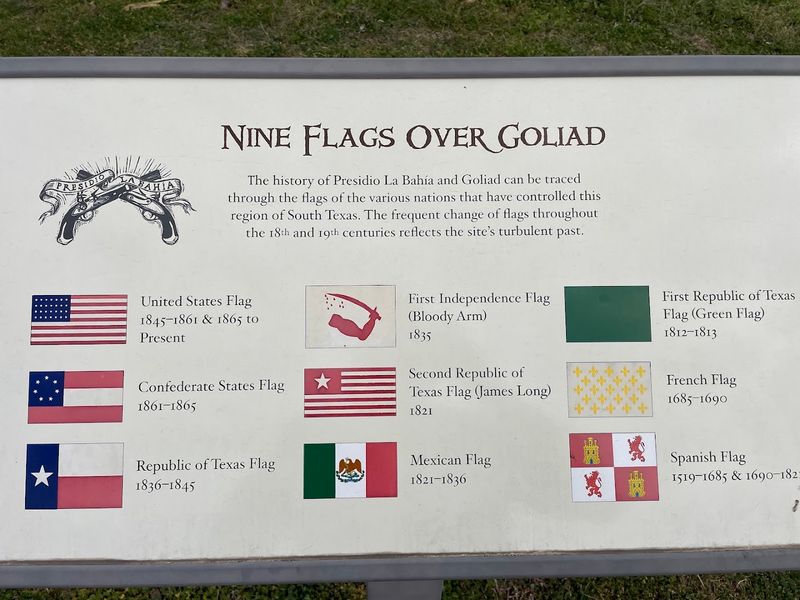
Here is a historical thread that surprises almost every visitor: the events at Goliad and the broader Texas Revolution played a direct role in the political chain of events that eventually led to the Battle of Puebla in 1862, which is what Cinco de Mayo commemorates.
The instability caused by years of conflict in the region reshaped Mexican politics in ways that echoed for decades.
The fort itself changed hands multiple times between Spanish, Mexican, and Texan forces, making it a physical record of shifting power across the entire region. Each flag that flew over these walls represented a different government, a different vision for what this land should become.
That layered political history is part of what makes the site so rich and so underappreciated.
The staff at Presidio la Bahía are well-versed in these broader historical connections and enjoy discussing them with curious visitors. The educational programming at the site does not shy away from complexity, which is refreshing.
History is rarely clean or simple, and the presentations here reflect that honestly. Knowing that a small fort in Goliad, Texas connects in some way to a Mexican national holiday celebrated around the world adds yet another dimension to an already remarkable place.
Staying Overnight in the Quarters
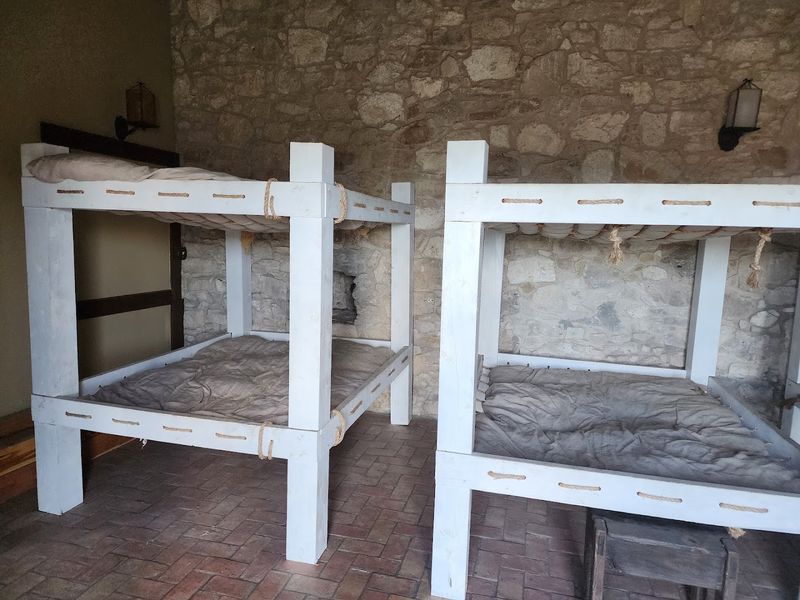
Most people do not know that you can actually spend the night inside Presidio la Bahía. The site offers overnight accommodations in the historic Quarters, a section of the fort that gives guests exclusive after-hours access to the entire compound.
No Wi-Fi, no television, no phone signal. Just stone walls, candlelight, and centuries of history surrounding you in complete quiet.
The experience is described by those who have done it as genuinely unlike anything else. When the day visitors leave and the gates close, the fort takes on a completely different character.
The sounds change. The light changes.
The sense of being connected to something much older than yourself becomes hard to ignore.
This kind of overnight option is rare at any historic site in Texas, and the fact that it exists here says a lot about how the people who run Presidio la Bahía approach their mission. They want visitors to feel the place, not just observe it.
Booking in advance is strongly recommended since availability is limited. If you are the kind of traveler who wants a story worth telling for years, a night inside these walls will absolutely deliver that.
It is a genuinely special opportunity.
Accessibility, Practical Details, and Planning Your Visit
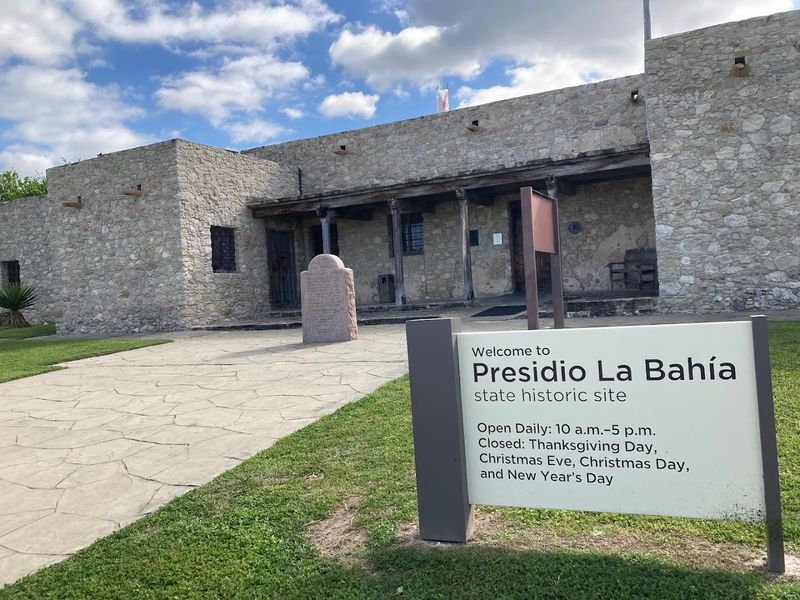
Getting to Presidio la Bahía is straightforward whether you are coming from San Antonio, Austin, or the Gulf Coast. The site sits right on US Highway 183, making it an easy stop on a longer road trip.
The drive through South Texas on that stretch of highway is genuinely scenic, with wide open skies and rolling countryside that sets the mood before you even arrive.
The site is open every day of the week from 10 AM to 5 PM, which gives you a comfortable window for a half-day visit. The admission fee is modest, with discounts available for veterans and seniors.
The grounds are wheelchair accessible, which is a detail worth noting since many historic sites of this age are not. Parking is free, though the main lot is small, so arriving early on busy weekends is a smart move.
The educational video shown at the start of the tour runs about 15 minutes and is highly recommended before exploring the museum and grounds. It provides context that makes every exhibit more meaningful.
The staff are knowledgeable, approachable, and clearly passionate about the site. Bringing a light jacket is sensible since the stone buildings stay cool even on warm days.
Plan for at least two to three hours to do the place justice.
Why This Place Deserves More Attention Than It Gets
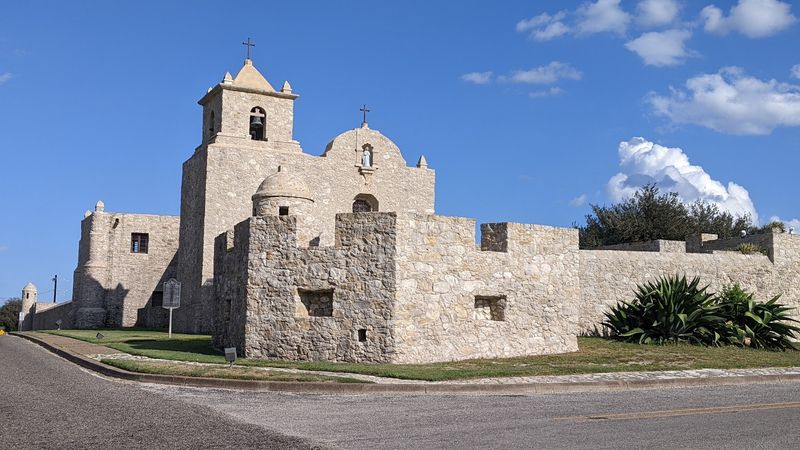
There is something quietly frustrating about how little attention Presidio la Bahía receives compared to the Alamo. Both sites were central to the Texas Revolution.
Both sites saw tremendous sacrifice. Yet one is internationally famous and the other is known mainly to history enthusiasts and locals who grew up hearing the stories.
Part of what makes this place so valuable is precisely that it has not been over-commercialized. The experience here feels honest and grounded.
The staff genuinely care about the history they are sharing. The artifacts are real.
The atmosphere is not manufactured for tourism. It is a place that trusts visitors to engage with difficult, complicated history without needing it to be packaged into something easier to swallow.
Families come for a quick stop and end up staying for hours. First-time visitors become advocates who recommend it to everyone they know.
That kind of organic enthusiasm is the best possible endorsement a historic site can earn. If you care about Texas history, American history, or just extraordinary places that reward curiosity, Presidio la Bahía belongs on your list.
Address: 217 US-183, Goliad, TX 77963
Dear Reader: This page may contain affiliate links which may earn a commission if you click through and make a purchase. Our independent journalism is not influenced by any advertiser or commercial initiative unless it is clearly marked as sponsored content. As travel products change, please be sure to reconfirm all details and stay up to date with current events to ensure a safe and successful trip.
