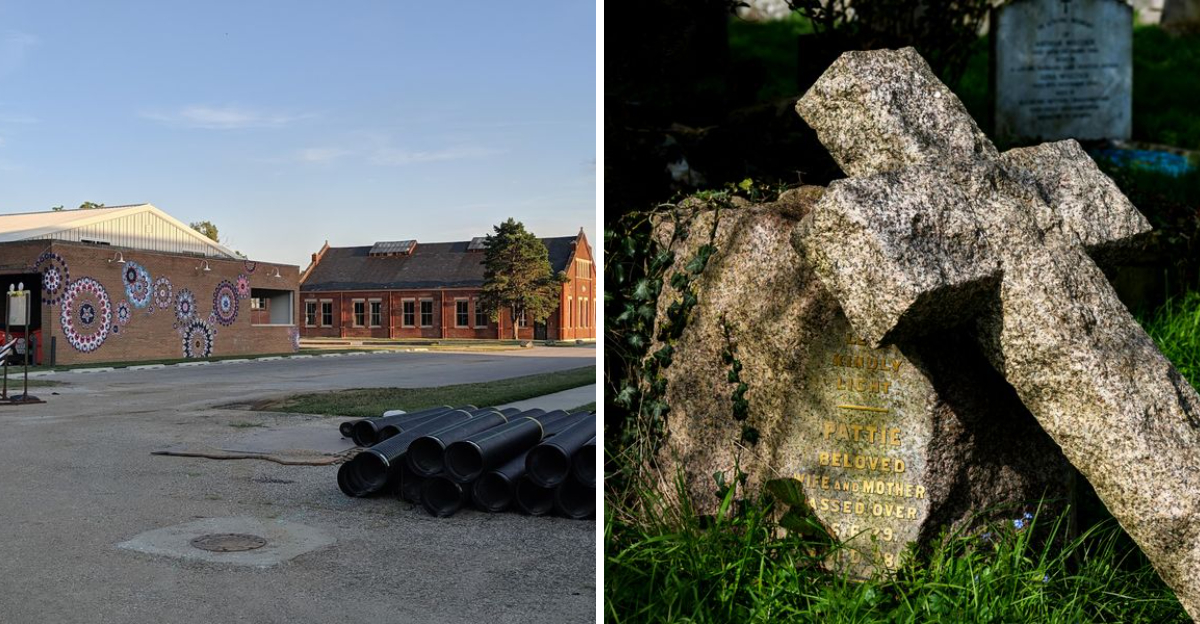
There is something about this former psychiatric hospital in Indianapolis that stays with you long after you learn its history. Opened in the 19th century and operating for well over a century before closing in the 1990s, it holds a complicated legacy shaped by changing eras of mental health care, shifting standards, and institutional life over generations.
For decades, thousands of patients lived within its walls, and its long history reflects both the evolution of treatment practices and the difficult realities of how mental health was once handled in large state-run facilities. Today, its story is often discussed as part of broader conversations about medical history, ethics, and how care systems have changed over time.
For many in Indiana, it represents a piece of local history that is not always fully covered in textbooks, which is part of why it continues to draw curiosity. It stands as a reminder of how institutions evolve, and how important it is to understand the past in order to better shape the future.
The Haunting History of Psychiatric Treatments
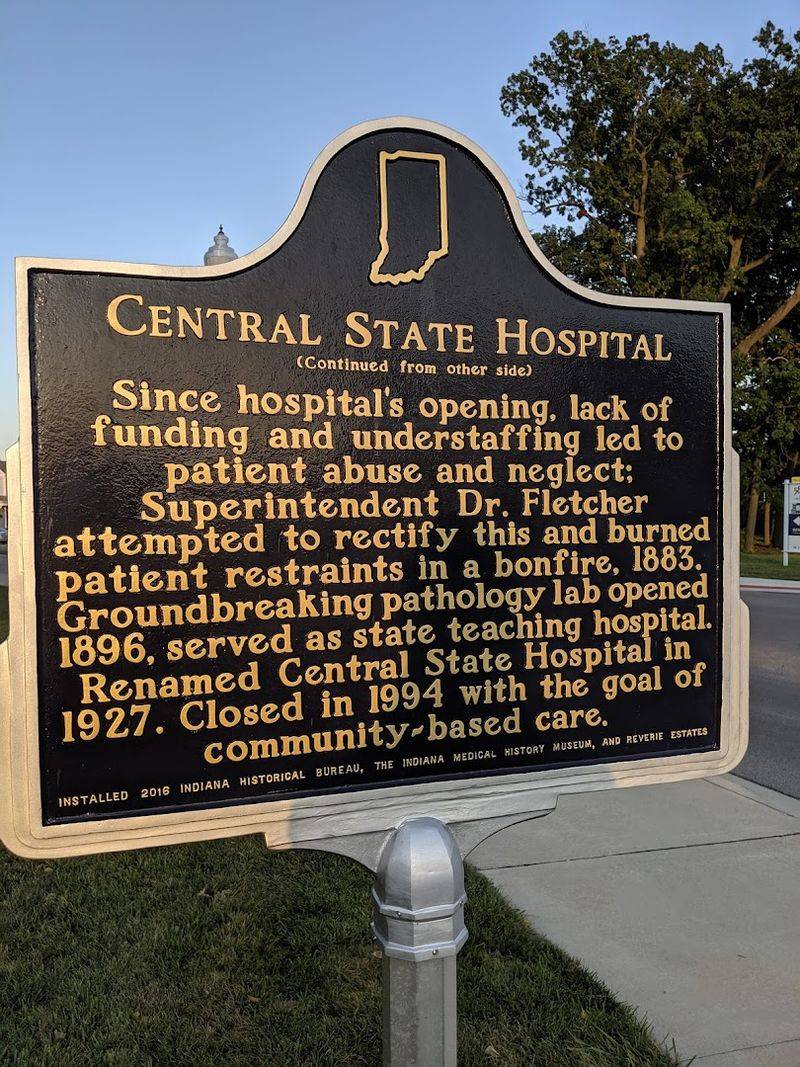
Before modern medicine gave doctors better tools, Central State Hospital was using methods that would make anyone cringe today. Flawed standard practices of the era, such as lobotomies, electroshock therapy, and hydrotherapy, were all used on real people inside these walls.
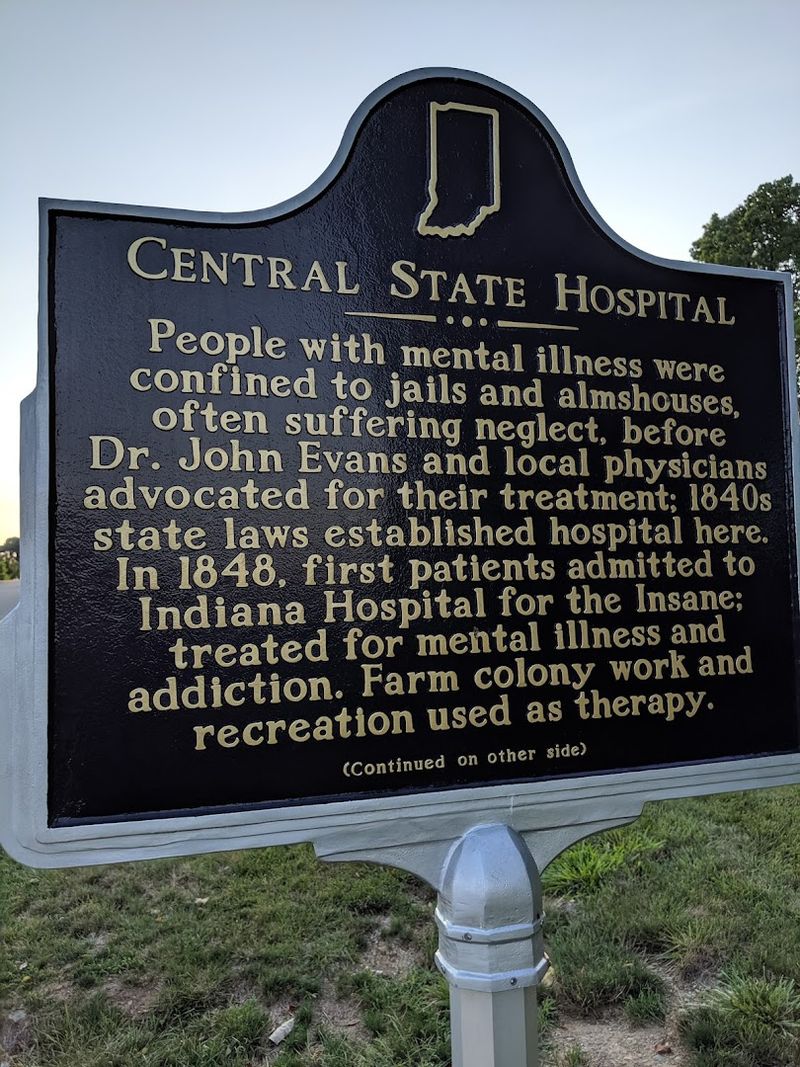
Some of those patients were suffering from conditions that did not even have official names yet. The hospital opened in 1848 under the name Indiana Hospital for the Insane, and for a while, it was considered a forward-thinking facility.
But good intentions do not always survive the pressure of overcrowding and limited resources. By the early 1900s, the so-called treatments had shifted from therapeutic to something far more troubling.
What makes visiting the remaining structures so powerful is that you are standing in the same rooms where those decisions were made. You can almost feel the desperation in the walls.
The Indiana Medical History Museum, located in the Old Pathology Building at 3045 W. Vermont Street in Indianapolis, does an honest job of presenting this history without sugarcoating it.
Walking through that building, I found myself pausing at exhibits that described procedures I had only read about in textbooks. Knowing they happened right here in Indiana changes something in you.
It is not just dark tourism. It is a reminder of how far we have come, and a warning about what happens when we stop treating vulnerable people with dignity.
The Preserved Brains at the Indiana Medical History Museum

Of all the unsettling details tied to Central State Hospital, the collection of preserved human tissues might be the one that stops people cold. The hospital’s pathology department gathered and preserved specimens from roughly 2,000 autopsies for research purposes over the decades.
In a bizarre modern twist, a man named David Charles broke into the facility multiple times in 2013, stole dozens of jars of these preserved brains, and sold them on eBay. Today, visitors can see the remaining returned specimens at the Indiana Medical History Museum, housed in the Old Pathology Building at 3045 W.
Vermont Street in Indianapolis. The building itself is a National Register of Historic Places site, and it is one of the oldest surviving pathology facilities in the entire country.
That alone makes it worth the trip. The museum does a thoughtful job of framing this collection within the broader history of medical research and mental health care.
You are not just looking at jars on a shelf. You are confronting the ethics of a time when patients had little say over what happened to their bodies, even after death.
Visitors regularly report an uncomfortable feeling in certain rooms of the museum, a sense of being watched or a sudden drop in emotional temperature that is hard to explain. Whether you attribute that to grief, history, or something more unexplainable, the experience is genuinely moving.
I left with more questions than answers, and I think that is the mark of a truly meaningful place to visit.
Disembodied Screams Heard Across the Campus
Ask anyone who has spent time near the old Central State Hospital campus after dark, and the screaming is almost always the first thing they mention. Visitors, security personnel, and residents of buildings converted from the original campus have all reported hearing sounds described as absolute terror and despair, coming from no visible source.
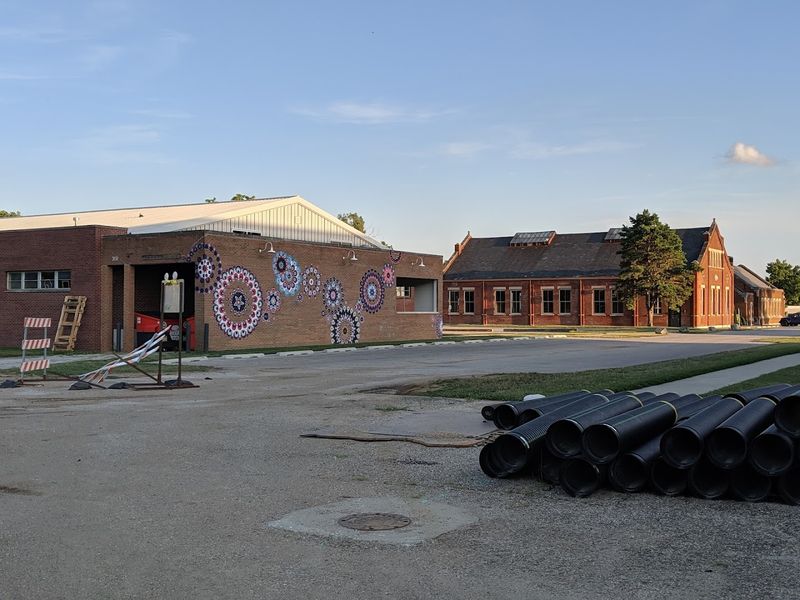
The old power house and former worker dormitories are cited most often. There is no easy rational explanation that satisfies everyone.
The buildings in question have been inspected, and no obvious acoustic quirks or wildlife explanations have fully accounted for what people hear. That ambiguity is part of what draws so many paranormal enthusiasts to this site year after year.
For Indiana locals who remember when the hospital was still operating, these reports carry extra weight. This was not some distant haunted house from a movie.
This was a real institution in the heart of Indianapolis, and the suffering that happened inside it was very real too. The screams, real or imagined, feel like an echo of that history.
Ghost hunting groups have recorded audio in and around the campus that they believe captures these sounds. Whether you are a skeptic or a true believer, hearing those recordings is genuinely unsettling.
The area around the former power house, situated near the Central State Mansion residential complex on Steeples Boulevard, remains a focal point for anyone brave enough to listen carefully after sunset.
Over 10,000 Forgotten Lives on the Grounds
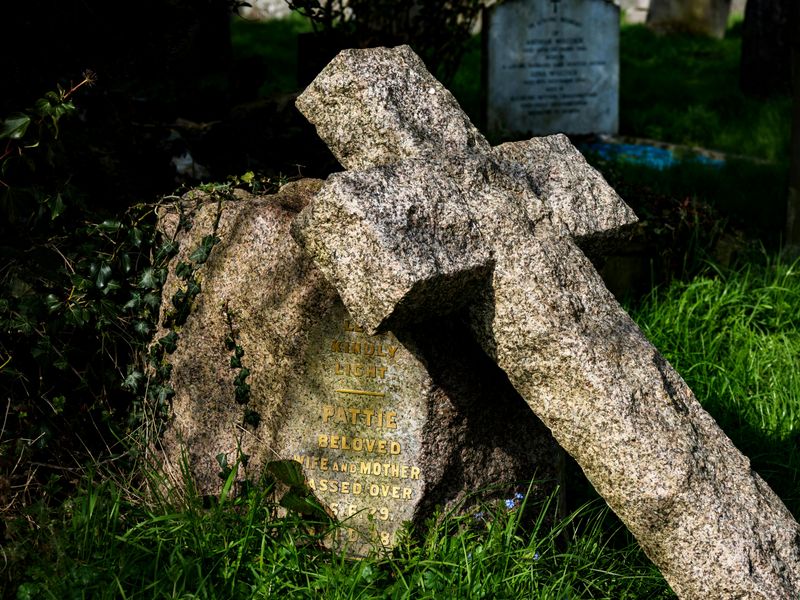
Few facts about Central State Hospital hit harder than this one: while an estimated 10,000 patients died here over the course of 146 years, upwards of 575 of them were buried in unmarked graves right on the hospital grounds. These were people who had families, names, and stories, yet they ended up forgotten beneath the Indiana soil.
Construction projects over the years have disturbed some of those graves. Workers have reportedly uncovered skeletal remains, and in some cases, those remains were not handled with the care you would hope for.
That kind of discovery has a way of making a place feel permanently unsettled. For Indiana locals, this is not abstract history.
These were our neighbors, our relatives, people from our communities who were sent away and never came back. The cemetery that remains on the property is a quiet but deeply emotional place to visit.
It forces you to reckon with how society once treated people who needed help the most. Paranormal investigators and history enthusiasts alike point to the burial grounds as one of the most active areas on the former campus.
Whether you believe in ghosts or not, there is an undeniable heaviness to standing near a place where so many lives ended without acknowledgment. It is the kind of visit that stays with you, and maybe that is exactly the point.
Shadowy Figures and Apparitions Reported by Visitors
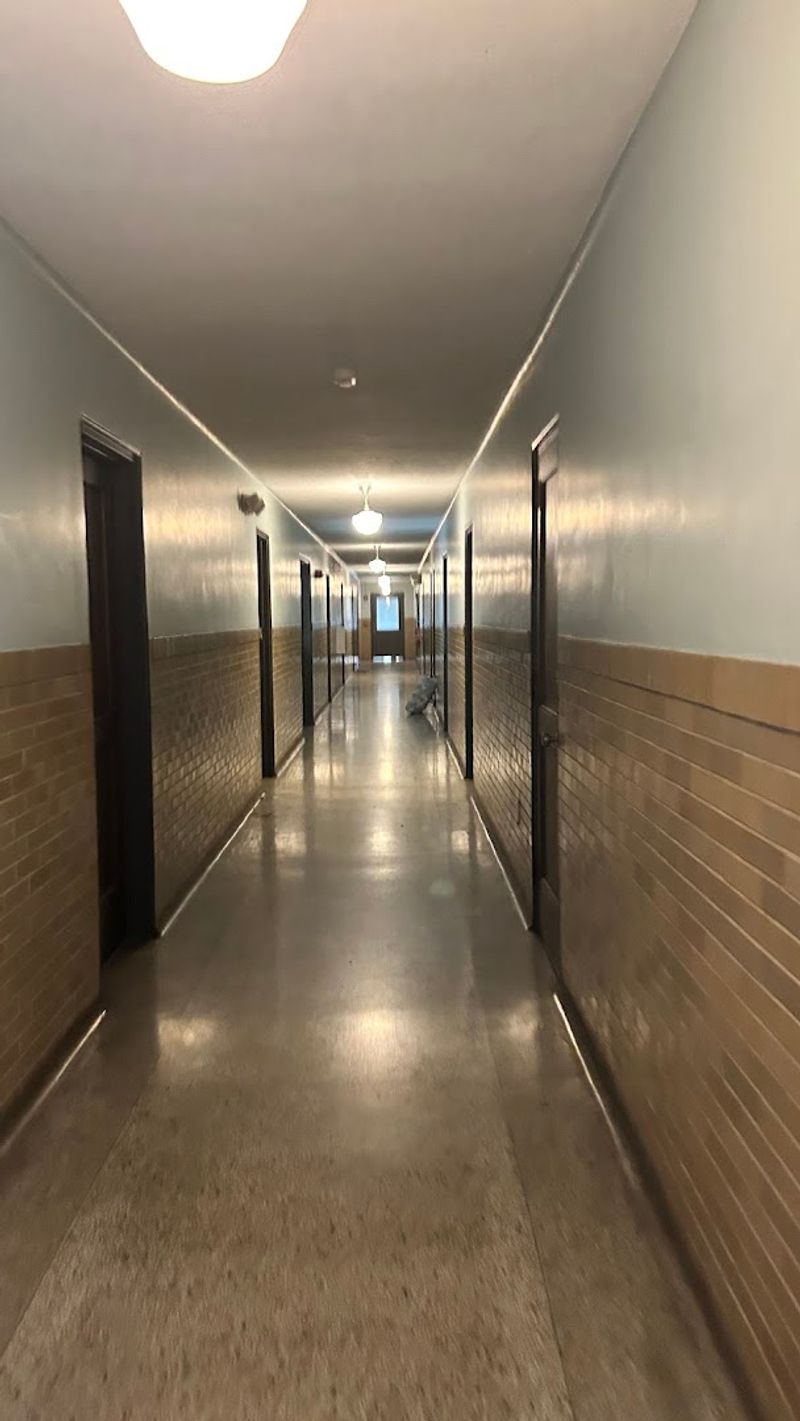
Reports of shadowy figures on the former Central State Hospital grounds go back decades, and they have not slowed down. People describe seeing human-shaped silhouettes lingering near doorways or at the ends of long hallways, only to vanish the moment anyone moves closer.
Some accounts specifically describe ghostly figures wearing nurse uniforms or patient robes.
What makes these reports especially interesting is how consistent they are across different witnesses who had no contact with each other. Strangers visiting the site on separate occasions have described nearly identical figures in the same locations.
That pattern is hard to dismiss entirely, even for the most grounded skeptic.
The Indiana Medical History Museum tours occasionally draw visitors who come specifically hoping to catch a glimpse of something unexplained. Staff members have shared their own stories over the years, though always with the careful disclaimer that they cannot confirm what people are actually seeing.
That honesty somehow makes the accounts feel more credible.
A few blocks from the old campus, you can visit Riverside Park along the White River, a good place to decompress after an intense tour. The park sits near the 3000 block of Riverside Drive in Indianapolis and offers a completely different kind of atmosphere.
But many visitors say they keep glancing over their shoulder on the walk back to their cars, half expecting to see one of those robed figures following at a distance. I completely understand why.
The Underground Tunnels and Their Unexplained Whispers
Beneath the Central State Hospital campus runs a network of underground tunnels that once connected the various buildings. These tunnels were used to move patients and supplies without exposing them to the elements, which sounds practical enough until you consider what was happening above ground.
Down in those passages, reports of whispered voices and rattling chains have circulated for years.
The tunnels are not open to the general public for safety reasons, but their existence is well documented and widely discussed among paranormal investigators who have studied the site. Several audio recordings made near tunnel access points have captured sounds that researchers describe as low murmurs and what sounds like chains being dragged across stone floors.
Historically, the tunnels represent something more than just infrastructure. They were part of a system designed to keep the hospital functioning as a self-contained world, cut off from the rest of Indianapolis.
Patients lived, suffered, and died in that world, and the tunnels were part of what kept them sealed inside it.
For those who want to explore the surrounding neighborhood after a museum visit, the nearby Haughville neighborhood offers some genuinely interesting local history. The area around West Washington Street has seen significant community investment in recent years, with local spots like Patachou on the Park at 4901 North Pennsylvania Street in Indianapolis offering a welcoming stop after an emotionally heavy afternoon.
Sometimes you need good food and a quiet moment to process what you have just experienced.
The DOJ Investigation and the Civil Rights Violations That Shocked Indiana
By 1984, the situation at Central State Hospital had deteriorated so badly that the United States Department of Justice stepped in. Federal investigators charged the facility with civil rights violations, citing patient abuse, neglect, and conditions that were described as inhumane.
For Indiana, this was a moment of reckoning that many people would prefer to forget, but should not.
Reports from that era describe patients living in filth, sleeping on floors and in hallways, and enduring physical abuse from staff. The hospital had gone from being a progressive institution in the mid-1800s to a cautionary tale about what happens when a system is underfunded, overcrowded, and left without proper oversight.
The patient population at its peak far exceeded what the facility was ever designed to handle.
Understanding this chapter of Central State Hospital’s history is arguably the most important reason to visit the Indiana Medical History Museum. The exhibits do not shy away from the institutional failures that led to federal intervention.
Facing that history honestly is uncomfortable, but it matters.
After a visit, many people walk over to the nearby Crown Hill Cemetery at 700 West 38th Street in Indianapolis, one of the largest cemeteries in the United States and the resting place of several notable Indiana figures. The contrast between that well-maintained space and the unmarked graves of Central State Hospital patients is striking and sobering.
It says something meaningful about who society chooses to remember and who gets left behind.
