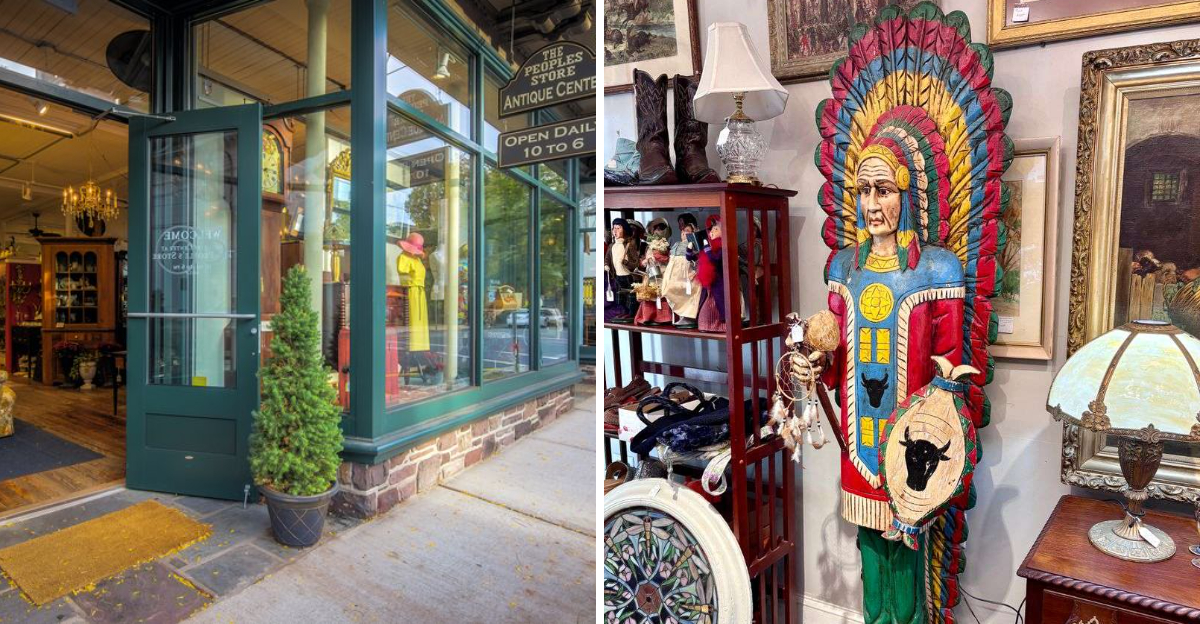
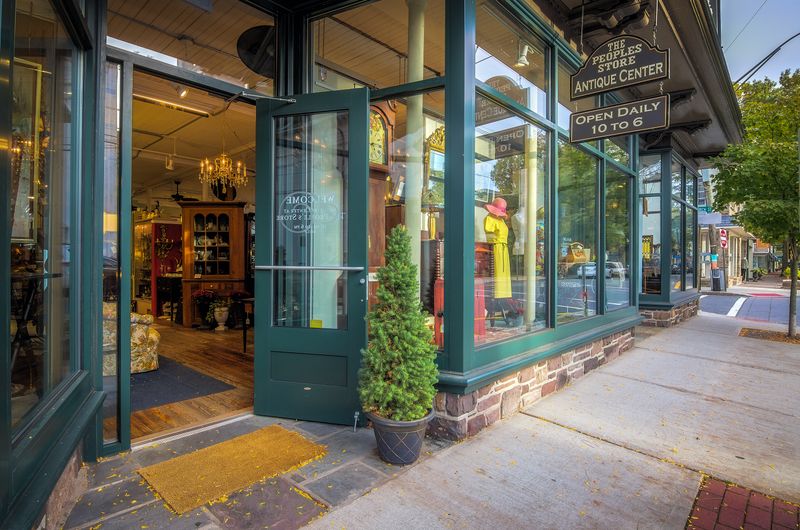
I’ve wandered through countless antique stores across the country, but nothing quite prepared me for this treasure trove.
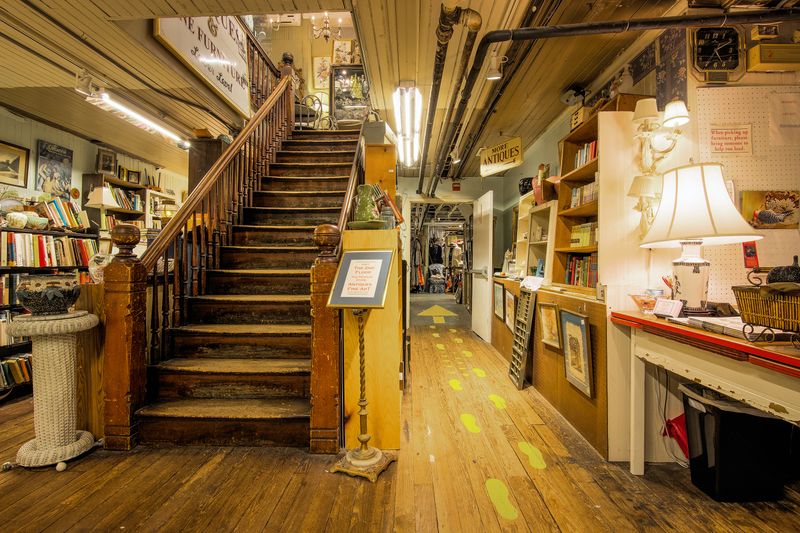
The Antiques Center at the People’s Store stands as a four-story monument to the strange, the beautiful, and the downright puzzling, housing one of New Jersey’s most eclectic collections of vintage oddities.
Each level reveals another layer of history, with over 40 dealers showcasing their most peculiar finds in a building that’s been serving the community since 1868.
I’ve asked myself plenty of times where all those strange objects from my great-grandmother’s basement ended up.
They’re probably here, and they’ve brought friends. This place delivers oddities by the truckload.
Victorian Mourning Jewelry Collection
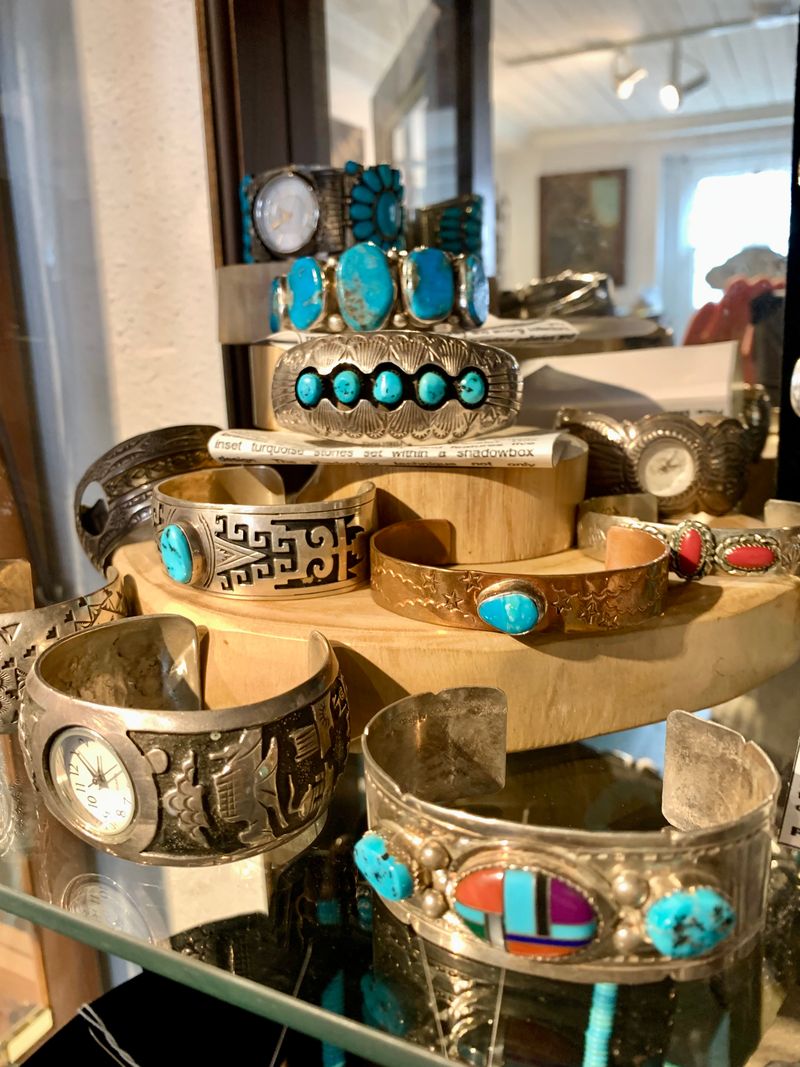
Walking past a glass case on the second floor, I stopped dead in my tracks when I spotted an entire collection dedicated to Victorian mourning jewelry. These weren’t your typical antique baubles but rather intricately crafted pieces made from human hair, woven into bracelets, brooches, and lockets that families once wore to remember their deceased loved ones.
The craftsmanship is absolutely stunning, with some pieces featuring tiny braided patterns so delicate they look like miniature works of art.
During the Victorian era, mourning customs were elaborate and highly ritualized, and jewelry played a central role in expressing grief. Families would commission jewelers to incorporate locks of hair from the departed into wearable keepsakes, creating tangible connections to those they’d lost.
What strikes me most about these artifacts is how they transform something we might find morbid today into objects of genuine beauty and sentiment. The dealer who curates this section has clearly done extensive research, providing detailed cards explaining each piece’s origin and significance.
You’ll find everything from simple hair rings to elaborate brooches featuring multiple family members’ hair woven together in complex patterns.
Antique Medical Equipment Display
On the third floor, tucked between vintage furniture and old signage, sits a cabinet that looks like it belongs in a medical history museum rather than an antique store. The collection of early 20th-century medical instruments here will make you incredibly grateful for modern healthcare.
I’m talking about bone saws, bloodletting equipment, trepanning tools, and devices whose purposes remain mysteriously unclear even with the handwritten labels attempting to explain them.
One particularly unsettling piece is an electroshock therapy device from the 1920s, complete with its original leather straps and adjustment dials. Nearby, you’ll find a complete set of amputation saws that look more suited to carpentry than surgery, their handles worn smooth from use.
Glass syringes the size of turkey basters sit alongside dental extraction tools that could double as medieval torture implements.
The truly bizarre items are the diagnostic tools that seem based more on guesswork than science. There’s a phrenology head mapping supposed personality traits to skull bumps, and several devices claiming to measure everything from nerve energy to spiritual wellness.
Taxidermy Menagerie From Another Era
Rounding the corner on the fourth floor, I came face-to-face with what can only be described as a Victorian naturalist’s fever dream. The taxidermy section features everything from birds frozen mid-flight under glass domes to a two-headed duckling that defies both nature and explanation.
Some pieces showcase genuine artistry, with animals posed in lifelike positions that capture their essence, while others look like the taxidermist maybe had one too many before picking up their tools.
Glass-eyed owls stare from their perches with unsettling intensity, their feathers still remarkably preserved despite being over a century old. A fox caught mid-pounce displays the skill of a master craftsman, every hair positioned perfectly to suggest motion.
Then there are the oddities that make you question everything, like the jackalope-style creations where someone clearly decided reality needed improvement.
The collection includes several pieces that were originally educational displays for natural history museums across New Jersey and Pennsylvania. Labels indicate some specimens date back to the 1880s, representing species that were common then but rare now.
There’s something both sad and fascinating about seeing creatures preserved long after their kind has dwindled or disappeared entirely from local ecosystems.
Vintage Ventriloquist Dummy Collection
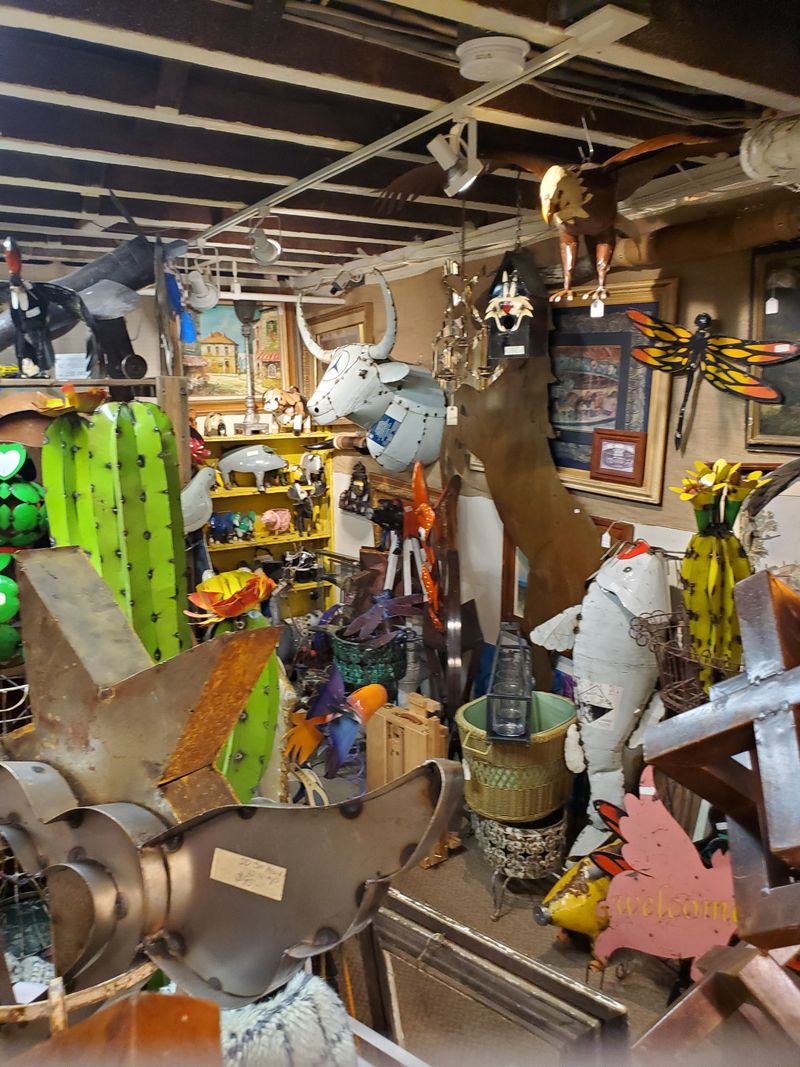
If you’re looking for something guaranteed to haunt your dreams, head straight to the entertainment memorabilia section where a small army of vintage ventriloquist dummies awaits. These aren’t the relatively friendly-looking modern versions but rather the genuinely unsettling wooden-faced performers from vaudeville’s golden age.
Their paint has cracked and faded over decades, giving them an even more eerie appearance than they probably had when new.
Each dummy has its own personality frozen in time, from gap-toothed grins to expressions of permanent surprise. Some wear their original costumes, complete with tiny bow ties and miniature suits that show the wear of countless performances.
The mechanisms that once made their mouths move and eyes roll still function on several, though I wasn’t brave enough to test them all.
These artifacts represent a form of entertainment that’s largely disappeared from mainstream culture. Before television, ventriloquists traveled from town to town, their wooden partners serving as comedic foils in variety shows and theaters.
Prohibition-Era Speakeasy Artifacts
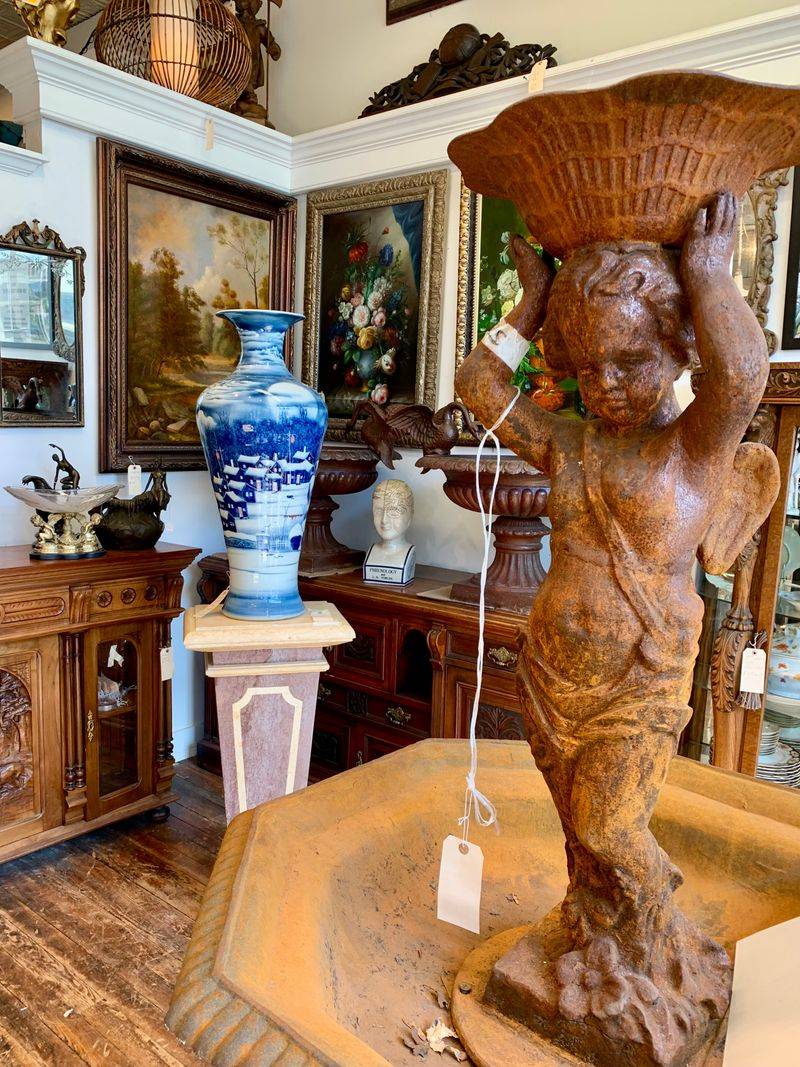
New Jersey played a fascinating role during Prohibition, and the collection on the first floor proves it with artifacts that tell stories of secret drinking establishments and creative law-dodging. You’ll find everything from hollowed-out books designed to hide flasks to elaborately disguised bottles that masqueraded as innocent household items.
My favorite piece is a cane with a hidden compartment that could hold enough whiskey for a proper evening out, all while maintaining the appearance of a simple walking stick.
The collection includes several items from actual speakeasies that operated in Lambertville and surrounding areas during the 1920s. Membership tokens, some no bigger than a dime, granted entry to establishments that officially didn’t exist.
Hand-painted signs advertising legitimate businesses contain hidden symbols that would have directed those in the know to the real party happening in back rooms or basements.
Bizarre Patent Medicine Bottle Collection
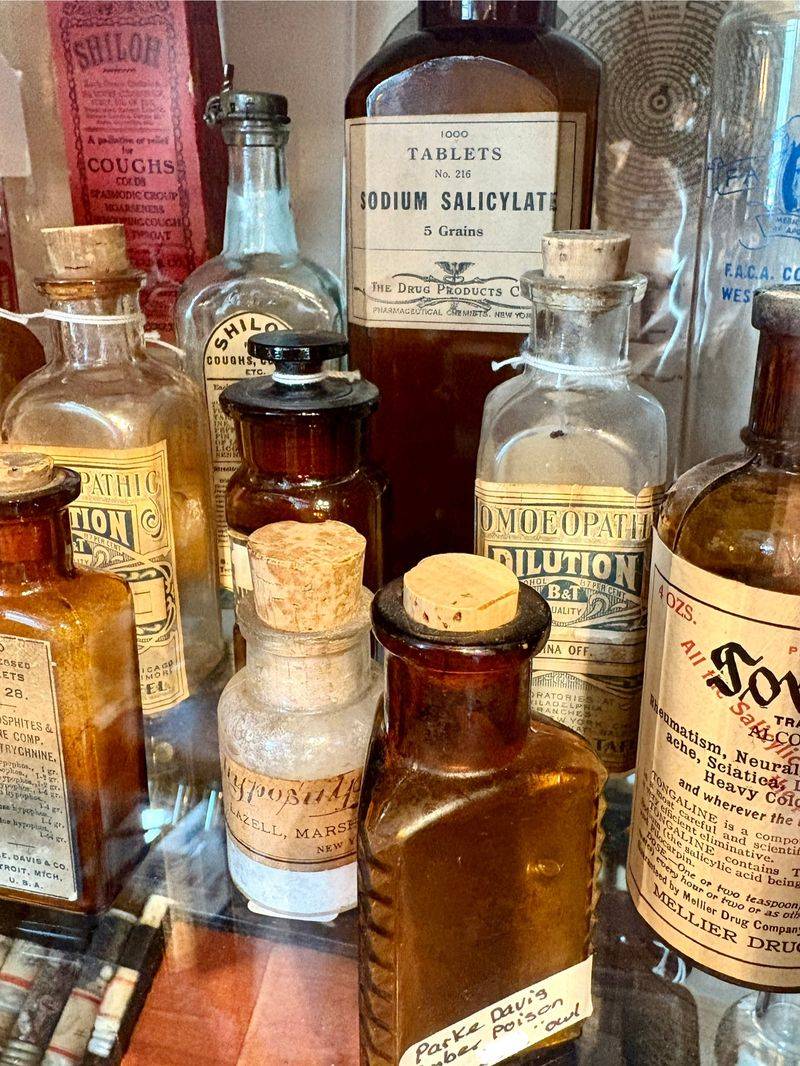
Before the FDA regulated what could be sold as medicine, entrepreneurs bottled everything imaginable and promised miraculous cures. The patent medicine collection here showcases hundreds of bottles with labels making claims so outrageous they’re hilarious by modern standards.
The bottles themselves are works of art, with embossed glass featuring elaborate designs and company logos. Colors range from deep cobalt blue to emerald green, with some featuring unusual shapes designed to stand out on crowded pharmacy shelves.
Many retain their original labels, now faded but still readable, advertising tonics, elixirs, and cure-alls with ingredients lists that would horrify any modern pharmacist.
Several bottles come from New Jersey pharmaceutical companies that operated during the late 1800s and early 1900s. Some achieved genuine success before regulations shut them down, while others disappeared quickly when their miracle cures failed to deliver.
This collection serves as a sobering reminder of how recently consumer protections became standard, and how vulnerable people were to snake oil salesmen peddling dangerous concoctions as medicine.
Early 1900s Fortune Telling Equipment
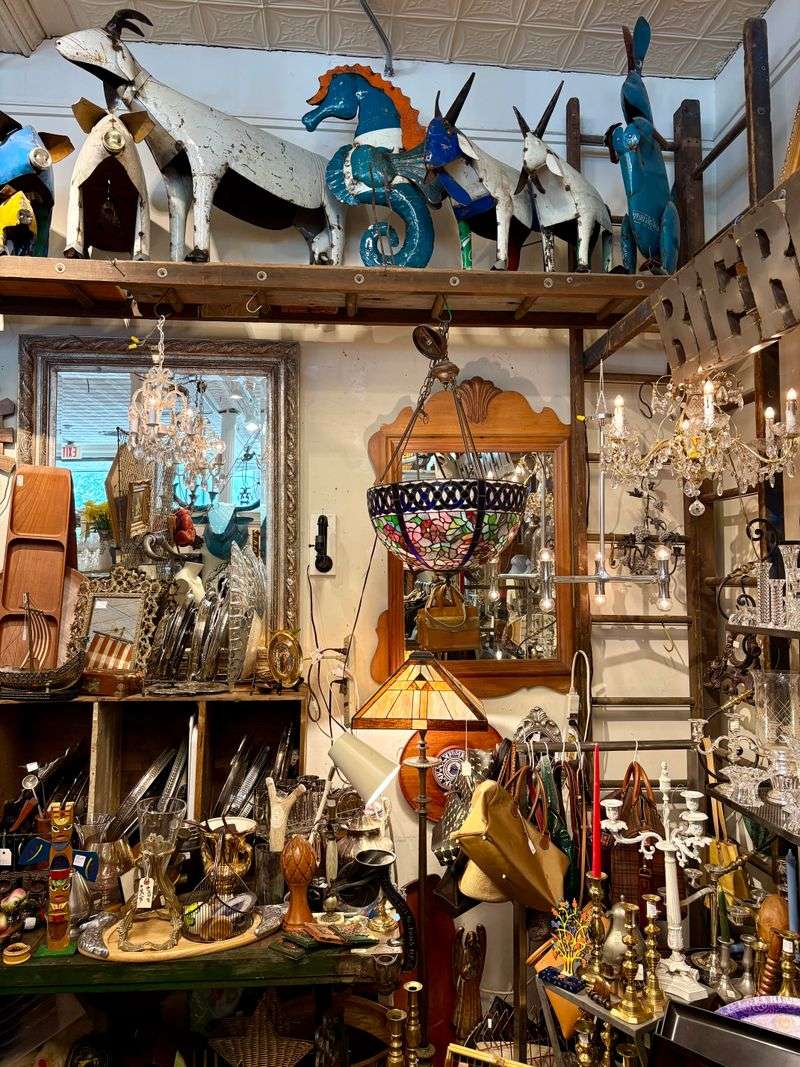
Mysticism and spiritualism peaked during the early 20th century, and the fortune telling equipment collection captures that era’s fascination with the supernatural. Crystal balls of various sizes sit alongside elaborately illustrated tarot decks whose artwork reflects the aesthetic sensibilities of their time.
Palmistry hands made of plaster show detailed line mappings, and several mechanical fortune-telling machines promise to reveal your destiny for a penny.
One particularly fascinating piece is a complete traveling fortune teller’s kit from the 1920s, containing everything needed to set up shop at carnivals and fairs. The leather case holds card decks, a folding table cover decorated with mystical symbols, and instruction booklets explaining various divination methods.
Newspaper clippings tucked inside document the kit’s original owner, a woman who traveled throughout New Jersey offering readings.
What strikes me most about this collection is how it represents humanity’s eternal desire to know the future and find meaning in randomness.
Peculiar Mechanical Coin-Operated Devices
Before smartphones and video games, entertainment came in the form of mechanical coin-operated devices, and the People’s Store houses some genuinely peculiar examples.
These aren’t your typical arcade games but rather bizarre contraptions that tested strength, measured love compatibility, analyzed personality through grip strength, or promised to reveal your ideal career path based on reaction time.
Each machine is a mechanical marvel of gears, springs, and creative thinking.
One device claims to measure your nerve strength by delivering increasingly intense electric shocks while you maintain your grip on metal handles. Another promises to determine romantic compatibility by having couples each turn a crank while the machine calculates their love percentage through some mysterious internal mechanism.
A particularly strange machine offers to read your character by analyzing how you squeeze a rubber bulb, with results printed on a card.
These devices were fixtures at boardwalks, penny arcades, and amusement parks throughout New Jersey during the early to mid-1900s. They represent an era when mechanical ingenuity created entertainment through physical interaction rather than screens and electronics.
Vintage Funeral Home Memorabilia
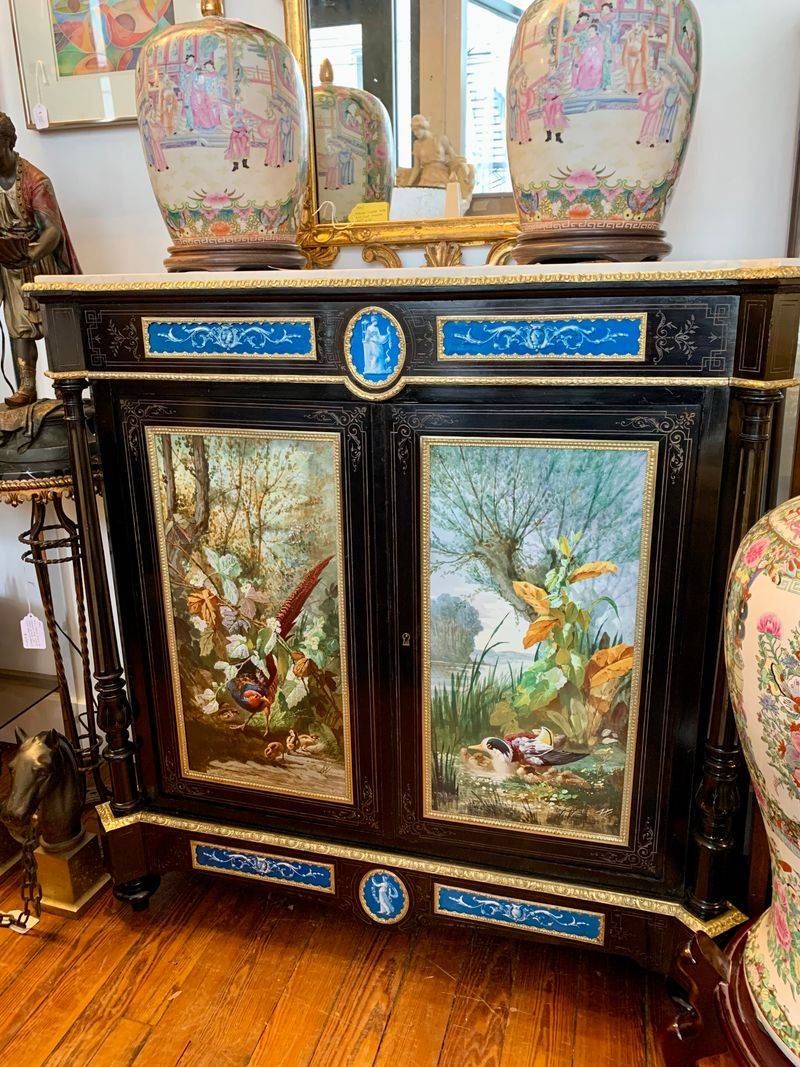
Death culture has changed dramatically over the past century, and nowhere is that more apparent than in the funeral home memorabilia collection.
Victorian and early 20th-century Americans approached death with a frankness that modern sensibilities find uncomfortable, creating elaborate rituals and keepsakes that seem strange to contemporary eyes.
This collection includes post-mortem photographs, ornate casket hardware, memorial cards with remarkably detailed death information, and even fragments of elaborate funeral decorations.
Post-mortem photography was common practice when cameras were expensive and many families had no other images of deceased loved ones, particularly children. These photographs, while unsettling to modern viewers, represented precious family treasures and final opportunities to preserve someone’s likeness.
The collection includes several examples showing how photographers posed subjects to appear peaceful or even lifelike, sometimes with eyes painted onto closed lids.
This collection might seem morbid, but it offers valuable perspective on how Americans once confronted mortality with ceremony, community, and elaborate material culture that honored the deceased while comforting the living.
Oddball Advertising Mascot Figures
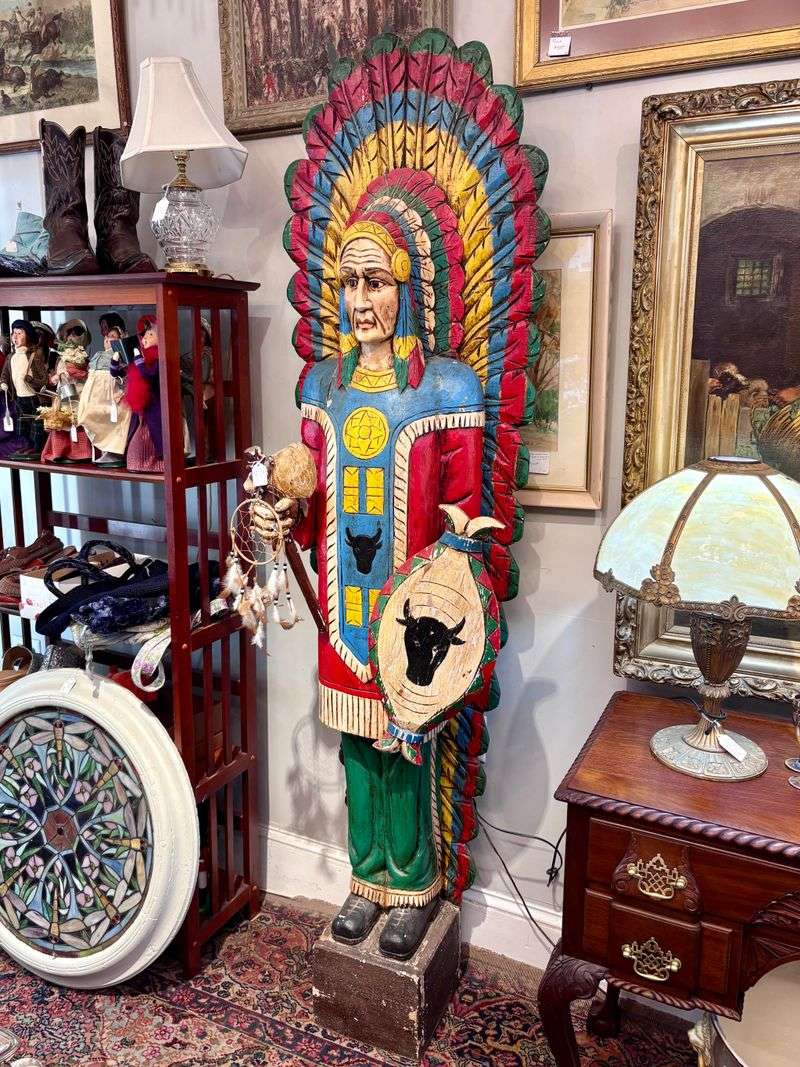
Corporate mascots have been selling products for over a century, but the vintage versions collected here are far stranger than their modern descendants.
Life-sized and miniature figures representing everything from breakfast cereals to industrial lubricants populate this section, their painted faces frozen in expressions ranging from cheerfully manic to vaguely threatening.
These weren’t subtle marketing tools but rather bold, bizarre attempts to make products memorable through characters that often had little logical connection to what they were selling.
A three-foot-tall figure of a grinning chef holds a product that’s been discontinued for decades, his paint chipped to reveal the plaster underneath. Nearby, an anthropomorphized light bulb with disturbingly human features advertises an electrical company that went bankrupt in the 1960s.
There’s a collection of smaller counter-top figures that store owners would display near cash registers, each representing regional brands that once competed with national names.
What makes these figures particularly fascinating is how they reveal changing advertising strategies and cultural attitudes. Some mascots used ethnic stereotypes that would be completely unacceptable today, while others promoted products we now know are harmful, like cigarettes and questionable patent medicines.
The figures themselves show remarkable craftsmanship despite their often unsettling appearances, with hand-painted details and sturdy construction meant to withstand years of retail display.
Address: 28 N Union St, Lambertville, NJ 08530, United States.
Dear Reader: This page may contain affiliate links which may earn a commission if you click through and make a purchase. Our independent journalism is not influenced by any advertiser or commercial initiative unless it is clearly marked as sponsored content. As travel products change, please be sure to reconfirm all details and stay up to date with current events to ensure a safe and successful trip.
