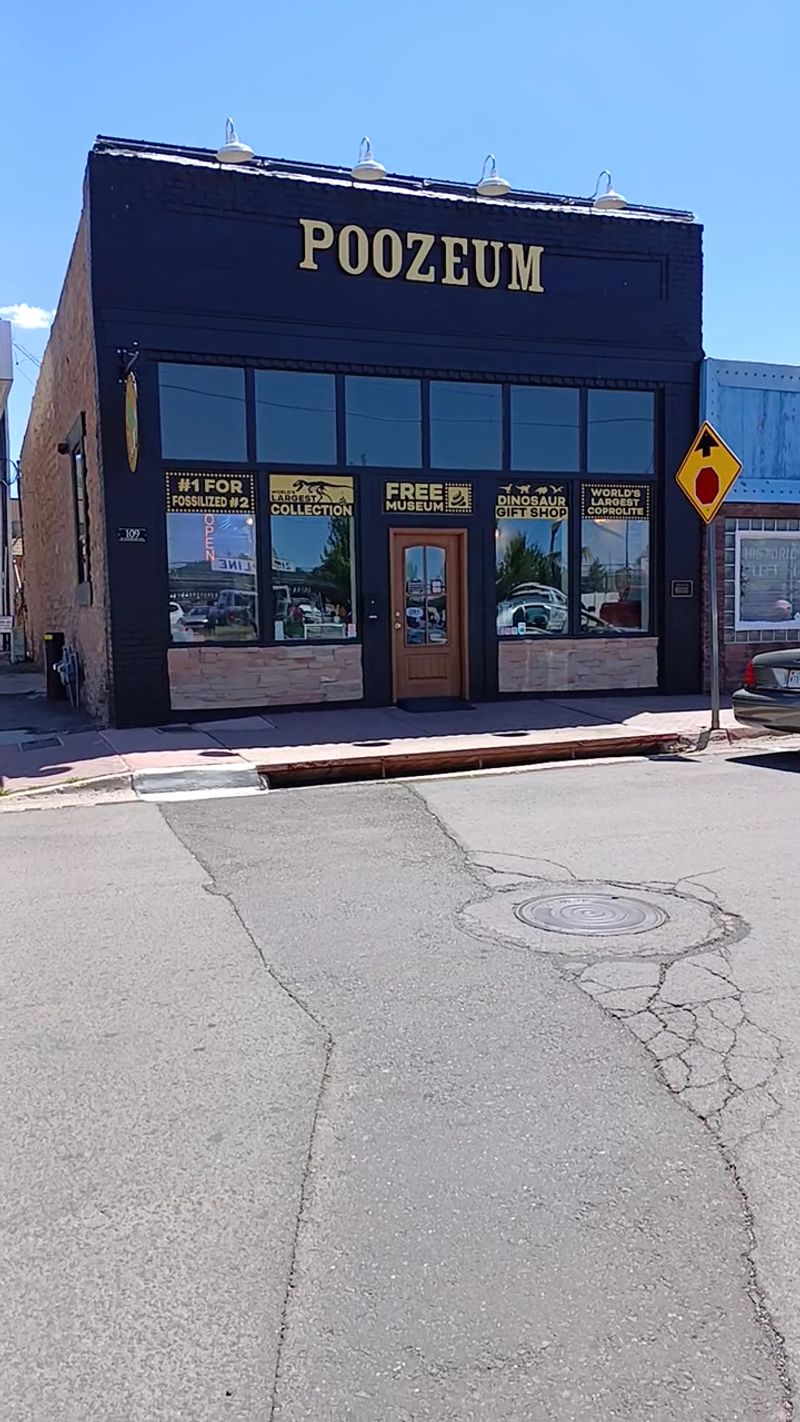
That sign near the railroad tracks made me laugh out loud and hit the brakes, which is not a reaction I usually have to a museum. Inside that small Arizona storefront, what I thought would be a five?minute giggle turned into a solid hour of genuinely fascinating science.
This place is a museum built entirely around coprolites, the scientific word for fossilized droppings, and it holds some of the largest and most complete specimens in the world. One display features a piece of fossilized dung nearly two feet long, preserved in stone for millions of years.
The owner greets you at the door himself, and his enthusiasm for the subject is infectious, walking you through the exhibits with the kind of pride you usually see in someone showing off a collection of rare art. Admission is free, the placards are filled with the best puns I have ever read in a museum, and the whole place hums with the energy of someone who found his weird passion and ran with it.
I had expected nothing more than a gas stop and maybe a milkshake before heading north, and instead I left with a t?shirt, a head full of facts, and a story I have told about a hundred times since.
Barnum, the Record-Breaking T. rex Specimen
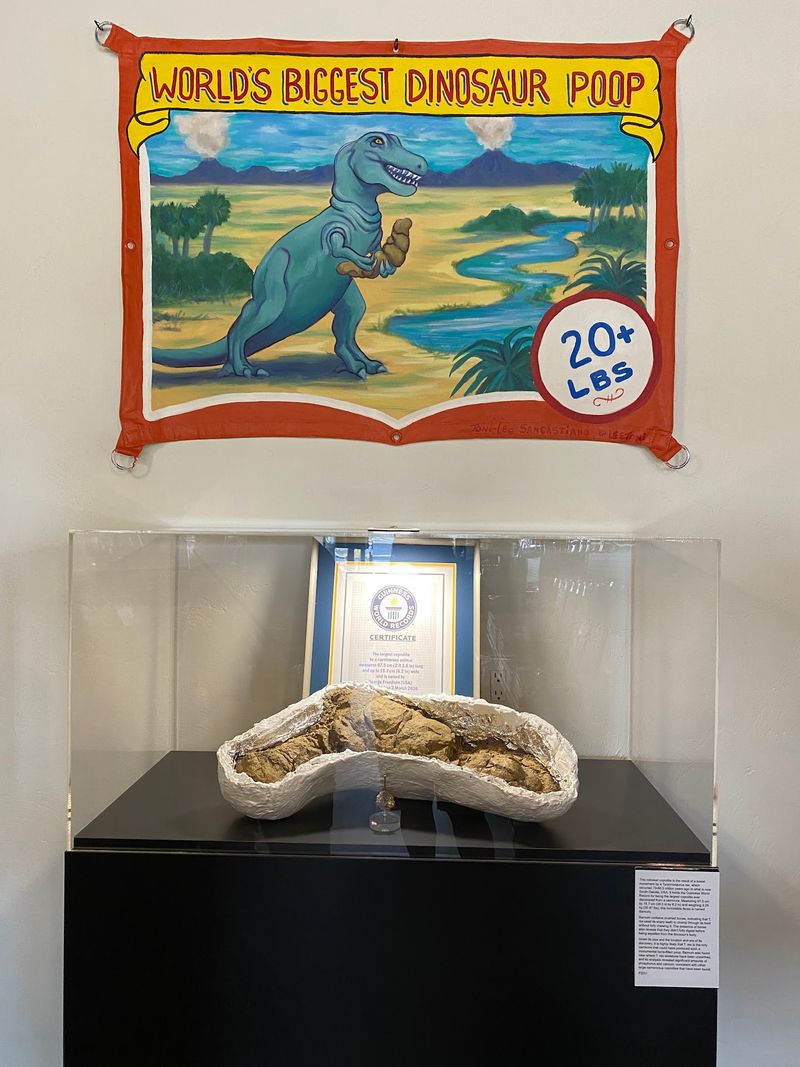
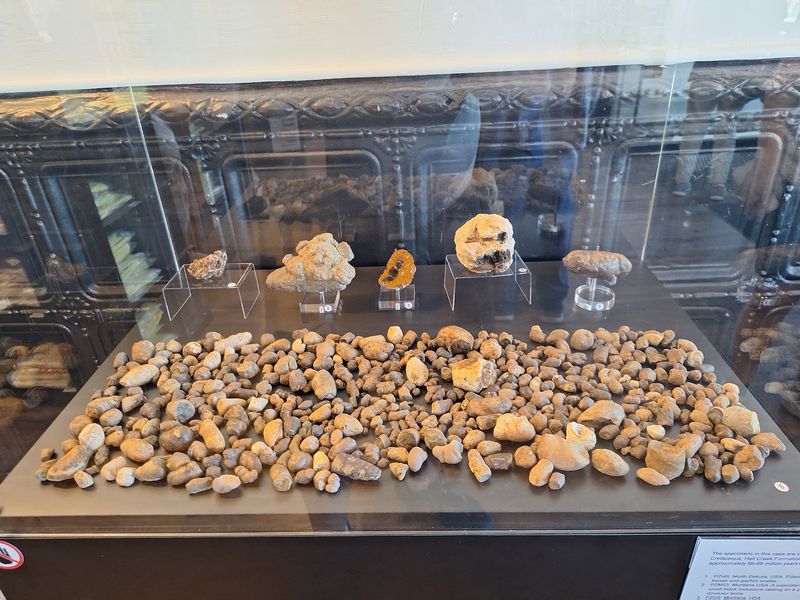
The star of the whole collection sits behind glass and looks, at first glance, like a very long, very lumpy brown rock. Then you read the label and your brain does a somersault.
Barnum is the world’s largest coprolite from a meat-eating animal, certified by Guinness World Records in 2020. It weighs 20.5 pounds and stretches 26.6 inches long by 6.2 inches wide, and researchers believe it came from a Tyrannosaurus rex.
I stood there doing mental math about the size of the animal that produced it, which is exactly the kind of thought you cannot un-think.
What surprised me most was how detailed the surface texture is. You can see the pinch marks at the ends, the little ridges and folds, all the physical evidence that this was once soft and is now solid stone.
George, the owner and curator, will happily walk you through what makes Barnum scientifically valuable rather than just impressively large.
Bone fragments inside carnivore coprolites tell paleontologists what a predator actually ate, not just what scientists assume it ate based on teeth.
Kids tend to press their faces against the glass. Adults tend to pull out their phones and start texting friends.
Give yourself a few extra minutes at this case because the accompanying signage explains the certification process and why this particular find matters so much to the study of Cretaceous predators.
It is genuinely the highlight of the room, and it earns that title honestly.
Nearly 10,000 Specimens and Two Guinness World Records
Numbers usually go in one ear and out the other for me, but this one stuck: somewhere between 8,000 and nearly 10,000 fossilized droppings live in this collection.
George Frandsen earned his first Guinness World Record back in 2015 with 1,277 verified specimens. The collection has ballooned enormously since then, which is a sentence I never expected to write.
He started collecting when he was 18 years old, which means this has been a decades-long obsession rather than a sudden novelty idea.
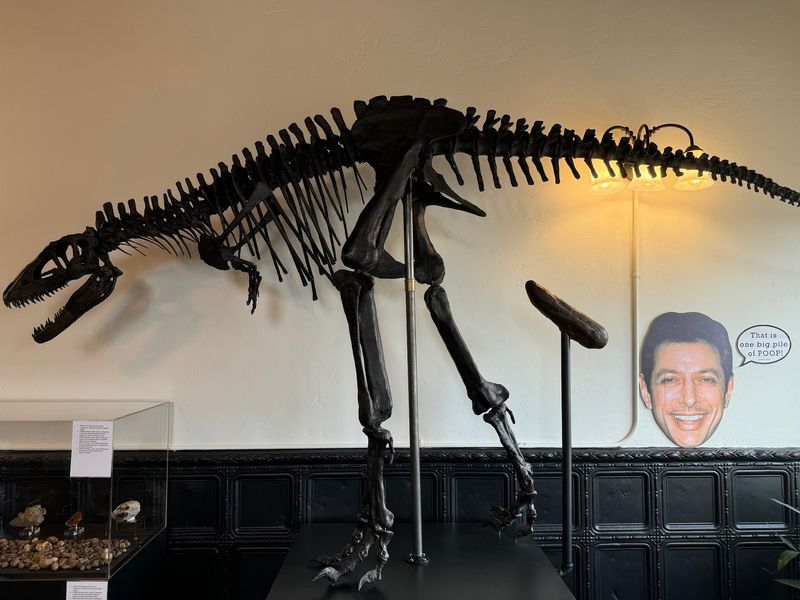
The specimens on display span an almost unbelievable stretch of time, from around 10,000 years ago all the way back to 400 million years ago.
Not all of them come from dinosaurs either. You will spot coprolites from crocodilians, sharks, fish, termites, and even shrimp, some of them tiny enough to fit on a fingernail.
Seeing them lined up together gave me a strange sense of scale about life on Earth. Everything that ever lived also, well, did this.
The cases are arranged with real care, grouped by era and animal type, with labels that explain what each piece reveals about the creature behind it.
What impressed me is that the collection is not just a pile of curiosities. It is organized, documented, and treated like the scientific resource it actually is.
Take your time on this wall. It rewards slow looking far more than you would guess from the outside.
The Science Hiding Inside Ancient Droppings
Here is the thing nobody tells you about coprolites: they are basically time capsules. Whatever an animal ate got trapped inside, and stone preserved it for millions of years.
Paleontologists slice these fossils open and find bone shards, plant fibers, scales, seeds, and sometimes traces of parasites that lived inside the animal.
That last detail stopped me in my tracks, because it means we can study ancient diseases through fossilized waste.
The signage throughout the museum explains this beautifully without getting bogged down in jargon. My reading level felt respected rather than talked down to.
One display walks you through how experts tell a real coprolite from an ordinary rock, which turns out to be trickier than it sounds.
They examine shape, size, surface texture, contents, where it was found, and its chemical makeup. A telltale sign called the pinch off, where one end tapers, is often the first clue.
And no, they do not smell bad. I asked, because of course I did.
They smell like rocks, faintly earthy, since all the organic material has long since been replaced by minerals.
Learning that ancient environments can be reconstructed from these fossils changed how I think about paleontology entirely. Bones tell you what an animal looked like, but coprolites tell you how it lived.
That shift in perspective is worth the stop all by itself, jokes aside.
The Stinker, the Titanosaur Replica, and Other Photo Ops
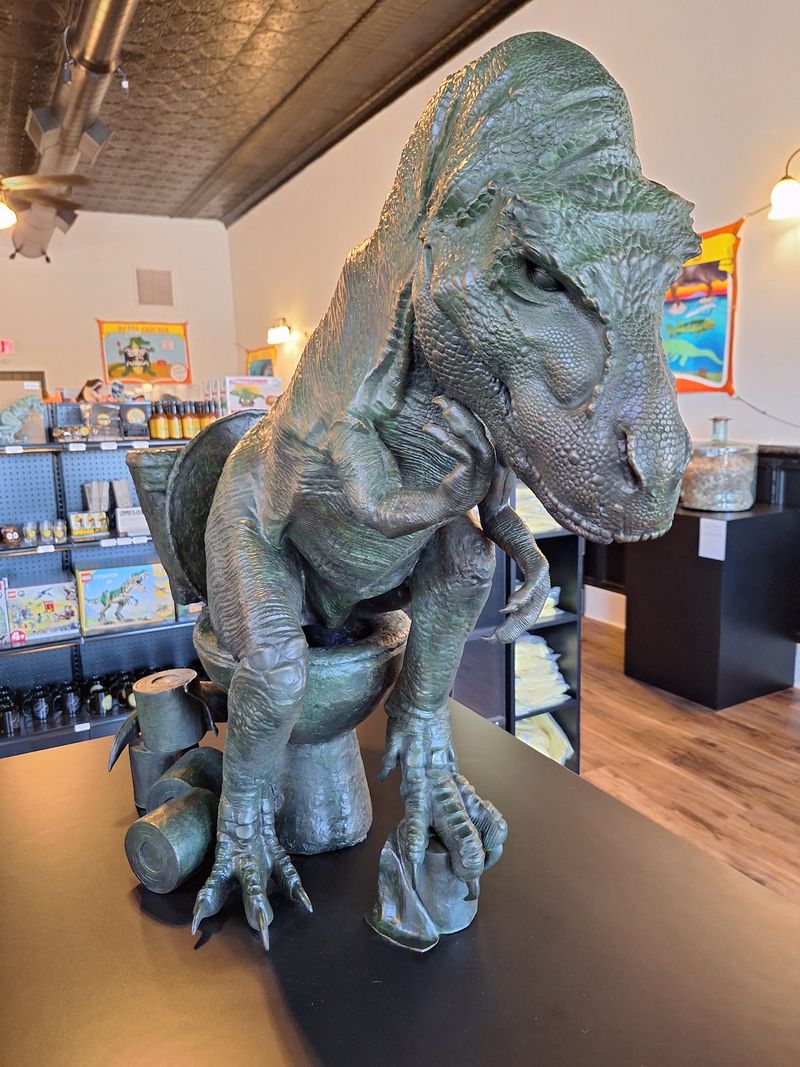
Somebody in this building has a wonderful sense of humor, and it shows up the moment you walk past the front counter.
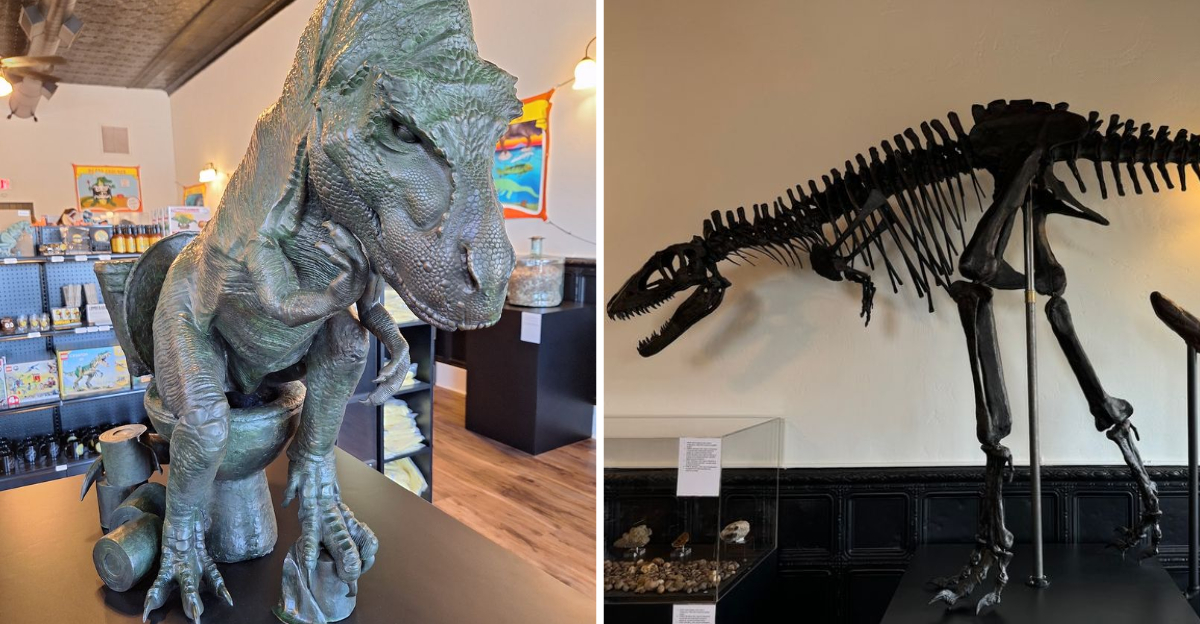
A bronze T. rex sits on a toilet, chin resting thoughtfully on one tiny arm. It is called The Stinker, a nod to Rodin’s famous sculpture The Thinker, and it is easily the most photographed thing in the room.
I laughed harder than a grown adult probably should have.
Nearby sits a four-foot-wide replica of what a Titanosaur might have left behind. Visitors crouch next to it for scale photos, and the results are ridiculous in the best way.
The replica does serve a real purpose though. Titanosaurs were among the largest land animals ever, and seeing that size comparison drives the point home faster than any chart could.
Souvenir penny machines sit near the entrance, and pressing one makes a decent little keepsake for kids who want something tangible.
What I appreciated is how the humor never undercuts the science. The jokes pull you in, and then the actual information keeps you there longer than you planned.
Families with young kids seem to have the best time here because the subject matter is inherently hilarious to anyone under twelve, and honestly to most of us over twelve too.
Bring a camera and zero self-consciousness. You will use both.
Carnival Banners, Vintage Prints, and Unexpected Artwork
What I did not expect from a museum about Dinosaur droppings was genuinely good art on the walls.
Bright hand-painted carnival banners hang above the display cases, the kind you would have seen outside a traveling sideshow a century ago. Bold colors, dramatic lettering, cheerful chaos.
They give the whole space a personality that feels closer to an old Route 66 roadside attraction than a stuffy institution.
Framed prints of prehistoric animals line other sections, styled like something you would find in an art gallery rather than a science hall.
The combination works surprisingly well. Part natural history museum, part gallery, part carnival, all squeezed into one modest storefront.
The piece that genuinely made me pause was an original 1830 print of Duria Antiquior, widely recognized as the first artwork ever to depict prehistoric animals in a scene together, including animals in the middle of defecating.
That print connects directly to Mary Anning, the pioneering fossil hunter whose work inspired the scene, and there is a display in the museum acknowledging her contributions.
Finding a genuine piece of nineteenth century scientific illustration tucked inside a museum with this name felt like discovering a secret.
The visual style makes the whole visit feel curated rather than thrown together, and it explains why so many people describe the signage here as being on par with much larger museums.
Look up while you wander. The walls are doing real work.
Free Entry, a Friendly Curator, and the Gift Shop Detour
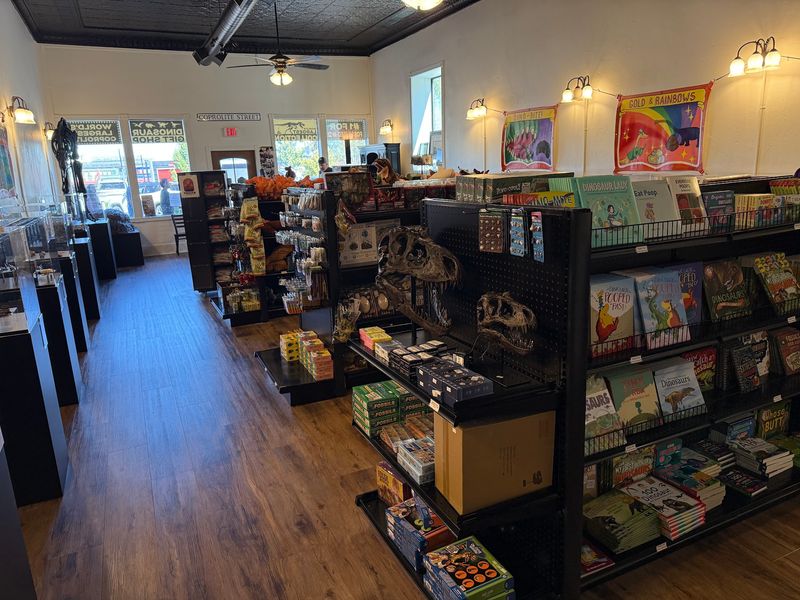
Free admission at a museum this well put together honestly caught me off guard.
George Frandsen quit his corporate job and sold his house to open this place permanently in May 2024, after running it as a website and traveling exhibit since 2014. He keeps entry free because he believes everyone should get to learn from these fossils, no matter their budget.
He is usually the one behind the counter, and he answers questions with the patience of someone who genuinely loves the topic.
The gift shop takes up a good chunk of the space and it is far better stocked than you would expect. Fossils, trilobites, dinosaur teeth, children’s books, and plush dinosaurs made by Navajo Diné artisans.
There is Route 66 Centennial merchandise too, plus a truly excellent supply of poop-themed shirts and novelties that make solid gifts for anyone with a juvenile streak.
Plan on thirty minutes to an hour. The space is small, so it does not take long, but the conversations tend to stretch things out.
Hours run 9 AM to 5 PM Wednesday through Sunday, with Monday and Tuesday closed, so check before you drive up.
Williams, Arizona sits right on the road to the South Rim of the Grand Canyon, which makes this an easy detour on a trip you were probably taking anyway.
Address: 109 W Railroad Ave, Williams, Arizona 86046
