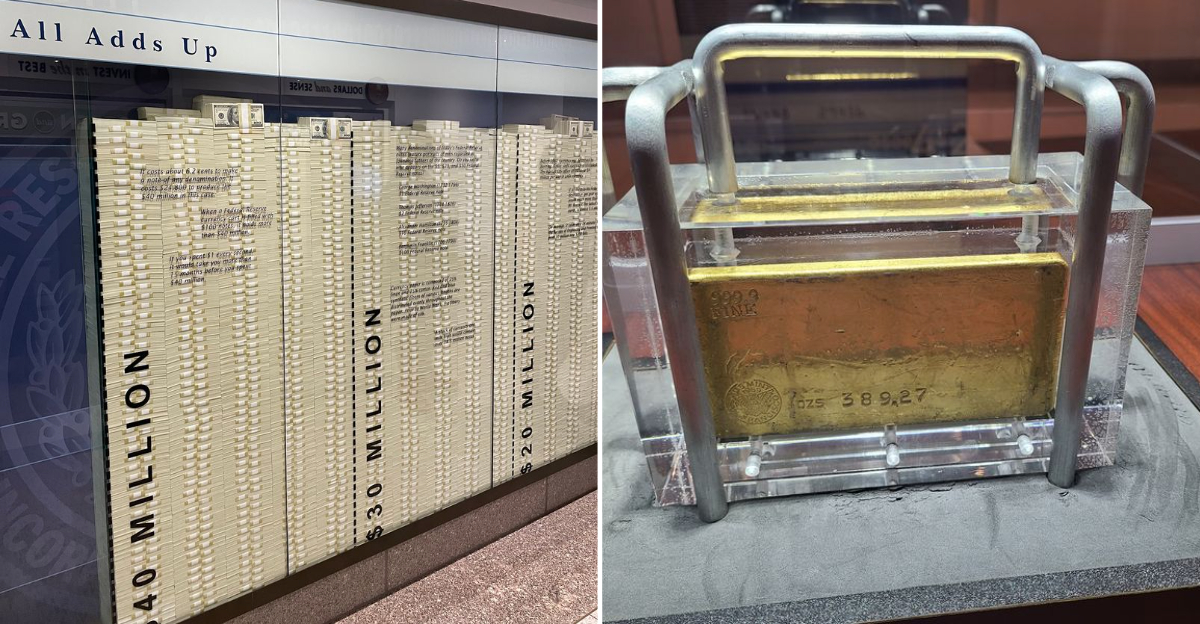
A solid gold bar, worth nearly half a million dollars, sits inside a glass case. It weighs twenty-seven pounds.
And you are allowed to try and lift it. This free museum in Missouri offers a rare chance to test your strength against a piece of the nation’s gold reserve.
But the experience goes beyond that single heavy moment. You can watch millions of dollars in currency being processed in real time, peer into a massive cash vault, and explore a coin collection once owned by President Harry S.
Truman. The museum is housed inside a working Federal Reserve Bank, adding a layer of authenticity to every exhibit.
It is a place where the inner workings of the economy become something you can see, touch, and almost lift.
Where To Actually Find The Place
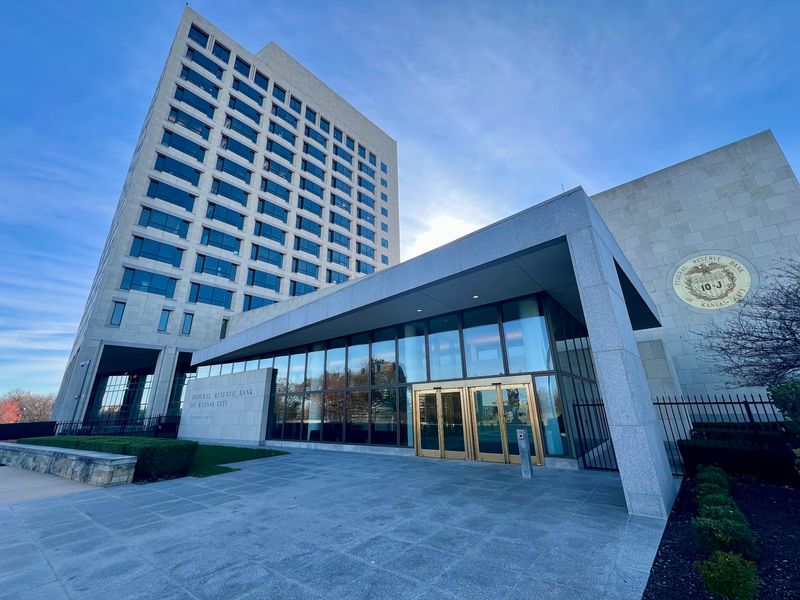
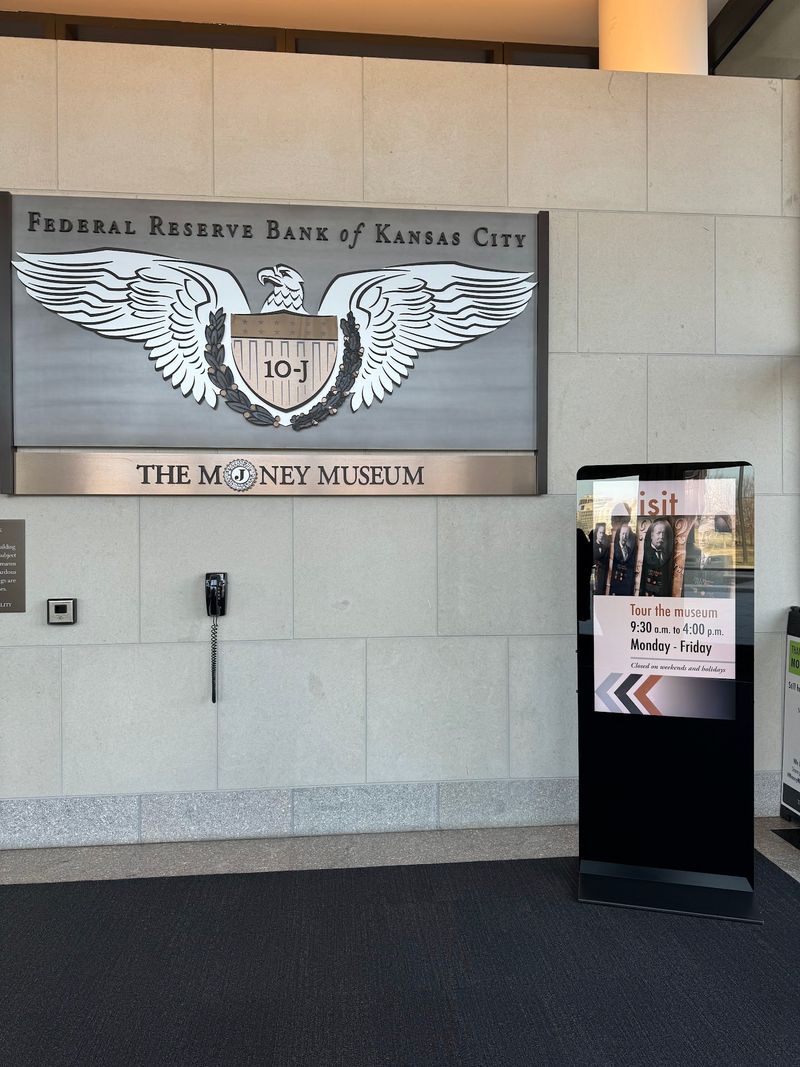
Finding it is easier than you would guess for a building that holds that much cash. The Money Museum lives inside the Federal Reserve Bank of Kansas City at 1 Memorial Drive, Kansas City, MO 64198, right near the Liberty Memorial area, so you can pair it with other stops without driving all over town.
Here is the part people forget, and I do not want you to be the one caught off guard. It is a federal building, which means you go through airport-style security when you walk in, and every adult needs to bring a valid government-issued photo identification card.
Leave anything questionable in the car, keep your bag light, and the whole entry process moves along without drama.
The building itself is worth a look before you even step inside, since it sits up on a rise with a wide view back toward downtown. Parking is straightforward, and the walk from the lot to the entrance takes almost no time at all.
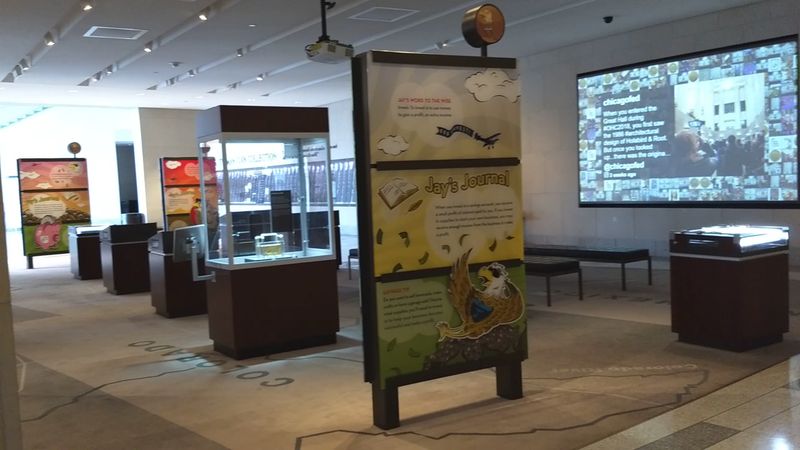
Once you clear security, the museum opens up in front of you, and the whole tone shifts from serious government building to genuinely playful learning space, which is a fun little whiplash.
Peeking Toward One Of The Country’s Biggest Cash Vaults
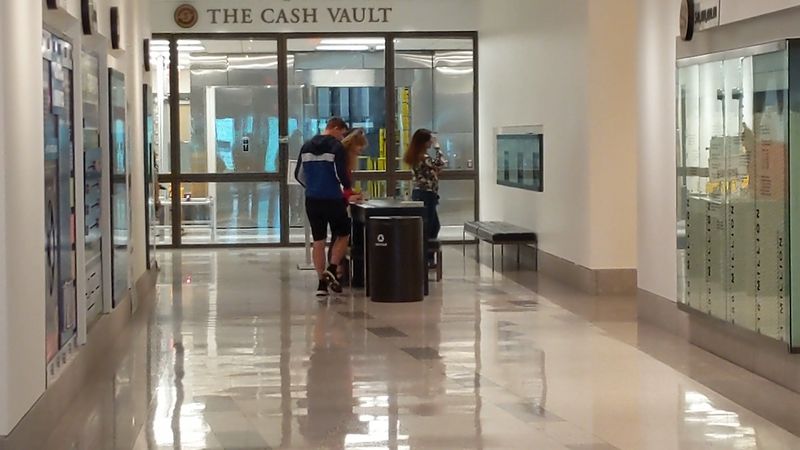
Ever wonder where the actual money lives? The museum gives you a vantage point toward one of the largest cash vaults in the United States, and while nobody is letting you stroll through it, seeing the operation from a distance is plenty.
Pallets, machines, and organized stacks of currency stretch out in a space that looks more like a warehouse than a bank, which is exactly the point that hits you. Money at that scale stops looking like money and starts looking like inventory, boxed and moved around like any other product.
I think that is the sneaky lesson of the whole exhibit, and it reframes how you think about the bills folded in your pocket.
Take your time at the window and watch the movement instead of snapping one photo and walking on, because the rhythm of the place is the interesting part. Currency comes in from banks all over the region, gets checked, and heads back out again in an endless loop.
Standing in Missouri watching billions get shuffled around like cardboard boxes is a genuinely odd feeling, and it is the sort of thing you cannot see in many places at all.
Robots Shredding Worn-Out Bills
Old money does not just disappear, and watching what actually happens to it turns out to be weirdly hypnotic. Automated machines sort bills at a pace your eyes cannot really follow, checking each one and pulling out anything too worn, torn, or damaged to stay in circulation.
Whatever fails the test gets shredded, and yes, you can watch that part happen too. There is something almost funny about seeing serious amounts of currency reduced to confetti by a machine that does not care in the slightest.
The robotic arms moving trays around add to the whole sci-fi feeling of it.
What I like about this exhibit is that it answers a question most of us never bothered to ask, which is what happens to a dollar bill at the end of its life. Paper money takes a beating in wallets, pockets, and cash registers, and eventually it simply wears out like a pair of shoes.
The Federal Reserve pulls those tired bills, destroys them, and sends fresh ones back out into the world. Stand there a while and you start recognizing how much invisible work keeps ordinary spending running smoothly across Missouri and everywhere else.
The Gold Bar That Fights Back
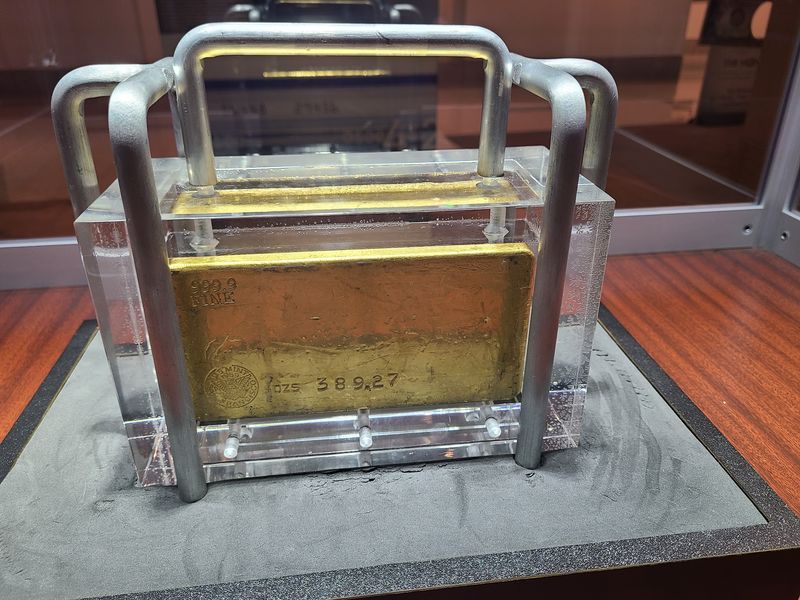
Everybody walks toward the same display first, and honestly, I would too. The gold bar sits in a secure case with openings that let you slide your hand in and try to lift the thing yourself, which sounds simple until your arm actually attempts it.
It weighs somewhere around twenty-seven pounds, and because gold is so dense, all of that heaviness is packed into a brick small enough to look harmless. Your eyes tell you one thing and your wrist immediately tells you another, and that mismatch is the whole fun of it.
What makes the moment stick with you is not the weight, though. It is standing there realizing you are touching something worth more than most cars, sitting casually in a museum you did not pay a cent to enter.
Give yourself a minute with it instead of rushing off to the next exhibit, because it is the kind of thing you will describe to people later and they will not quite believe you. Kids especially lose their minds over it, and grown adults quietly try three or four times before walking away.
That single bar does more teaching about value than any wall of text ever could.
Harry S. Truman’s Coin Collection Under Glass
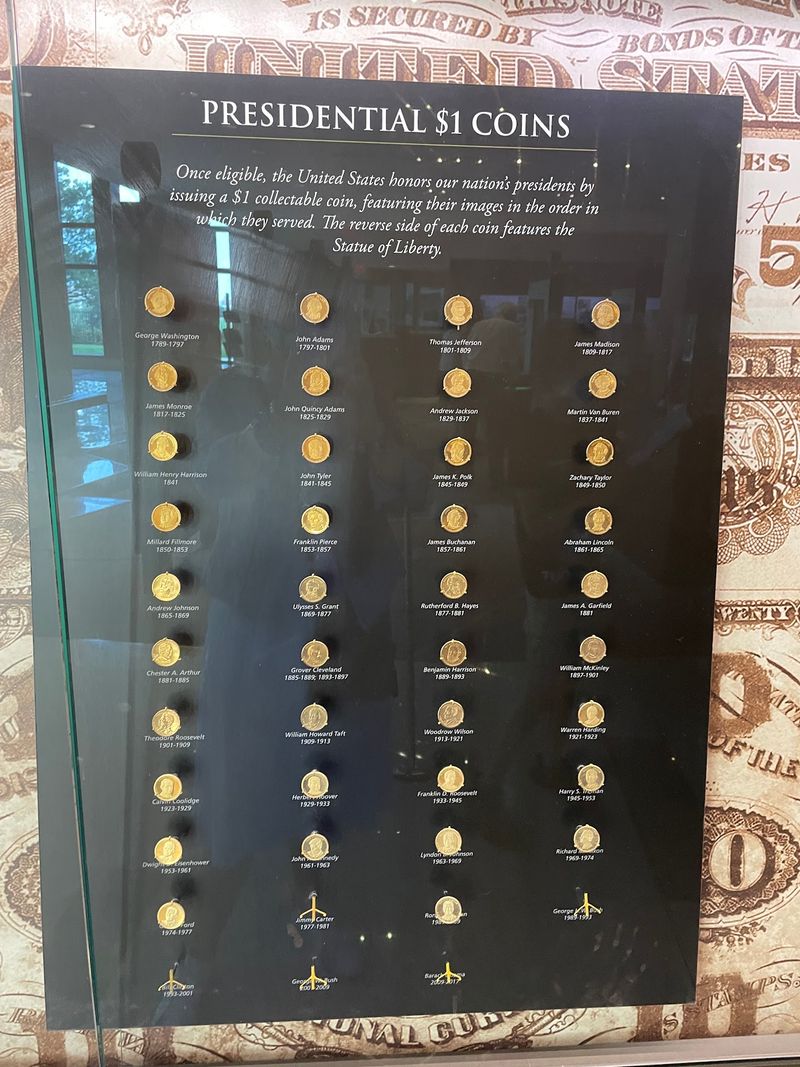
History folks, this is your section. The museum displays a collection of historic coins connected to Harry S.
Truman, on loan from the Truman Library, and it turns a room about economics into something much more personal.
Coins have a way of carrying stories that paper never quite manages, since each one passed through hands during a specific stretch of American life. Looking at the designs change over the decades shows you shifting tastes, shifting metals, and shifting ideas about what a country wants to put on its money.
Truman being a Missouri man makes the whole display land a little harder in this particular building.
Read the labels on this one rather than breezing past, because the details are where the interest lives. Some pieces are older than you would expect, and the craftsmanship on certain coins is genuinely beautiful up close.
If you are already planning a trip out to the Truman Library in Independence, seeing this collection first gives you a nice thread connecting the two stops. It is a quieter corner of the museum compared to the shredding machines, but it might be the part you remember longest once you are back home.
Finally Understanding What The Fed Actually Does
Most of us hear the Federal Reserve mentioned on the news and nod along without a clue what it means. This museum fixes that problem without making you feel talked down to, which is a harder trick than it sounds.
Exhibits walk you through why the system was created, how it tries to keep prices steady, and what role it plays when the economy gets wobbly. The explanations lean on visuals and interactive screens instead of dense paragraphs, so the ideas actually land.
By the time you finish that section, terms like inflation and interest rates stop feeling like background noise and start making practical sense.
The thing I appreciate is how relevant it feels to regular life. Decisions made in buildings like this one affect what you pay for groceries, what a car loan costs, and whether your savings account earns anything worth mentioning.
Seeing that connection laid out plainly is useful for teenagers especially, since nobody teaches this stuff well in school. Kansas City happens to host one of the regional banks in the system, so learning about it here in Missouri comes with a bit of local pride attached to the lesson.
The Wall Of Cash That Stops Everyone Cold
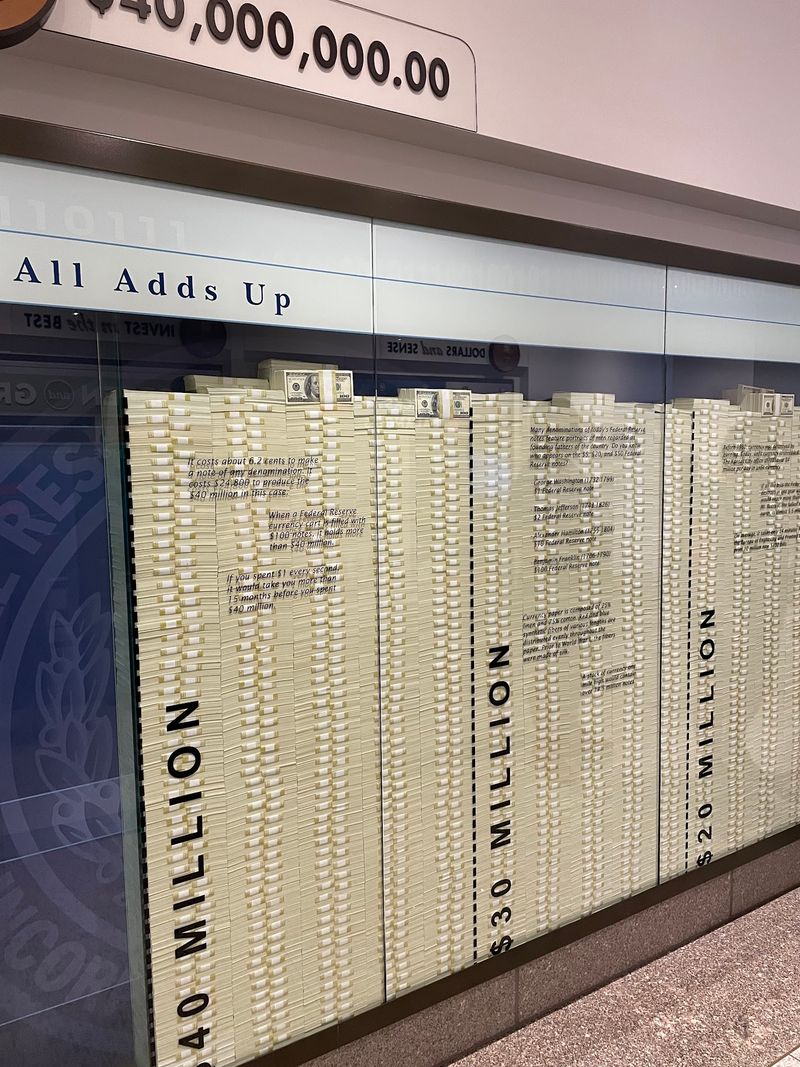
Picture a glass case packed floor to top with banded stacks of currency, and you have got the display people call the money wall. It is the kind of sight that makes conversation stop for a second while everyone just stares.
Numbers on a page never really mean anything to the human brain, but a physical wall of cash absolutely does. You can see how much space that much money takes up, and it turns out to be both bigger and smaller than you imagined at the same time.
That gap between what you pictured and what is actually there is the whole point of putting it behind glass.
It also pairs nicely with the vault view, since one shows you money as a warehouse operation and the other shows it as a wall you can stand next to. Photos never quite capture it, so I would look with your eyes first and worry about pictures after.
Bring somebody who likes guessing games, because everyone in your group will absolutely try to estimate the total before reading the sign. Nobody guesses correctly, which is somehow the most satisfying part.
Walking Out With A Bag Of Shredded Money
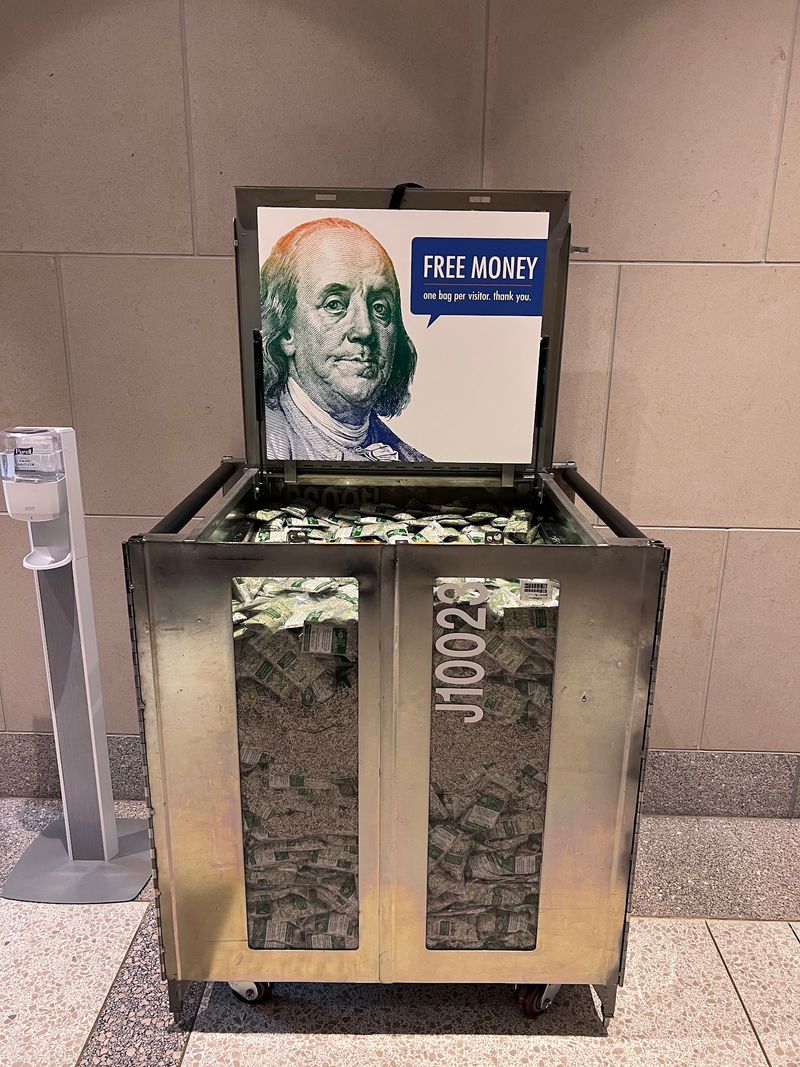
Here is the detail that makes people laugh out loud when I mention it. On your way out, you get a free little bag of shredded United States currency to take home, which is easily the strangest souvenir I know of in Missouri.
The shreds come from real bills that were pulled from circulation and destroyed, so you are holding actual money that no longer counts as money. It sits on a shelf and does absolutely nothing useful, and that is exactly why it is fun.
Anyone who spots it at your house is going to ask about it, guaranteed.
Grab one for each person in your group, since somebody always regrets not taking one once they see how good a conversation piece it turns out to be. Teachers, in particular, love bringing these back for classrooms, because handing kids a bag of destroyed cash gets attention immediately.
For a stop that costs nothing to enter, walking out with a physical keepsake feels like an unreasonably good deal. Just do not lose it in the car, because those shreds scatter fast and you will find them for weeks.
