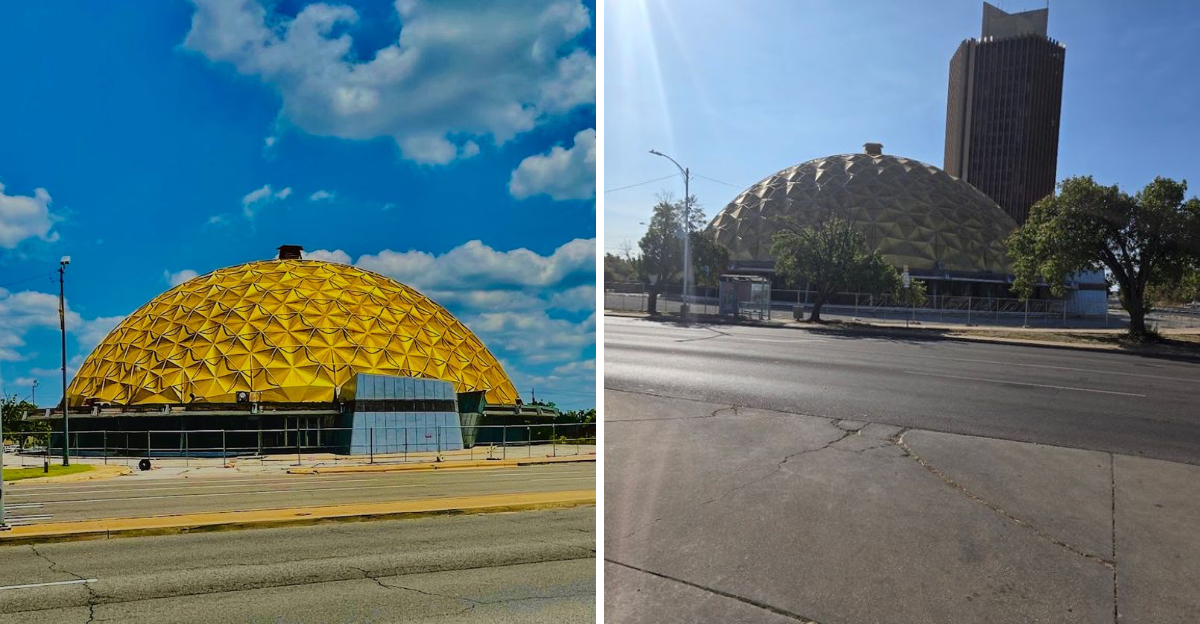
Picture a giant golden orb sitting along a historic American highway, catching sunlight like something that crash-landed from the future.
You’d probably assume it belongs in a science fiction movie set, not on a street corner in the middle of Oklahoma.
Yet here it is, bold and unapologetic, turning heads and sparking conversations since 1958.
The Gold Dome Bank Building in Oklahoma City is one of those rare places where architecture feels less like construction and more like a statement, and once you know its story, you’ll wonder how it ever flew under your radar.
A Bank Built to Look Like the Future
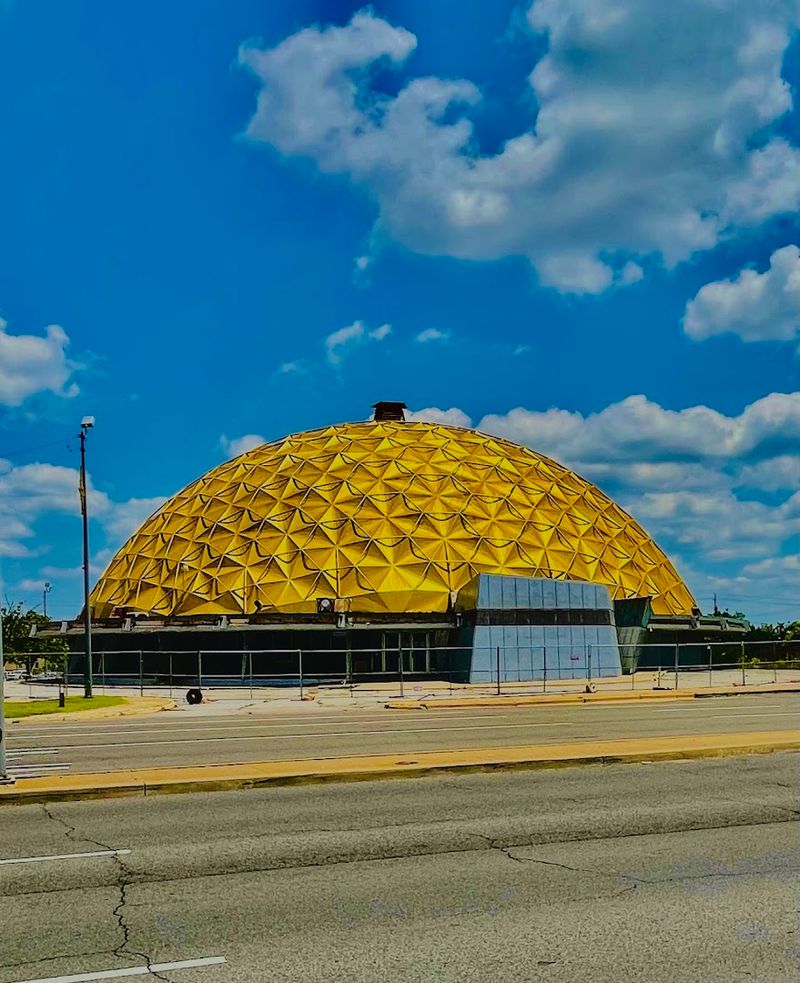
Back in 1958, most banks looked like marble temples with columns and serious faces carved into the stone. Then someone in Oklahoma City said, forget all that, and commissioned a building that looked like it was designed on another planet.
The Gold Dome was originally built as Citizens State Bank, and from day one it was called the Bank of Tomorrow. That nickname was not just marketing fluff.
The building genuinely looked like nothing else on the block, or anywhere else in the country for that matter.
Designed by the architectural firm Bailey, Bozalis, Dickinson and Roloff, the structure drew inspiration from the geodesic dome concepts pioneered by the legendary architect Buckminster Fuller.
Fuller had been pushing the idea that domes were the most efficient shape for enclosing space, and this building ran with that idea in a very public and very golden way.
What makes it even more remarkable is that this was among the first geodesic domes ever used for commercial purposes. Most people were still building rectangular boxes with flat roofs.
Oklahoma City went ahead and built a shimmering sphere. The boldness of that decision still resonates today, and the building remains one of the most visually striking pieces of mid-century architecture anywhere in the American heartland.
625 Panels and One Very Big Statement
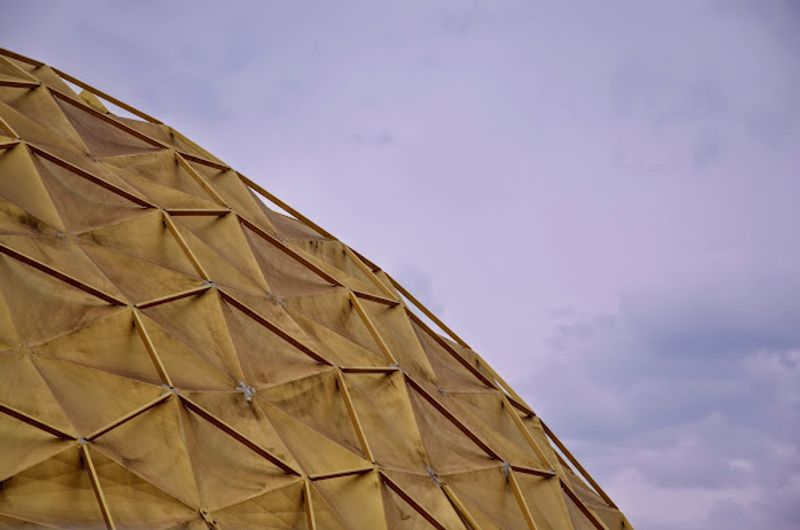
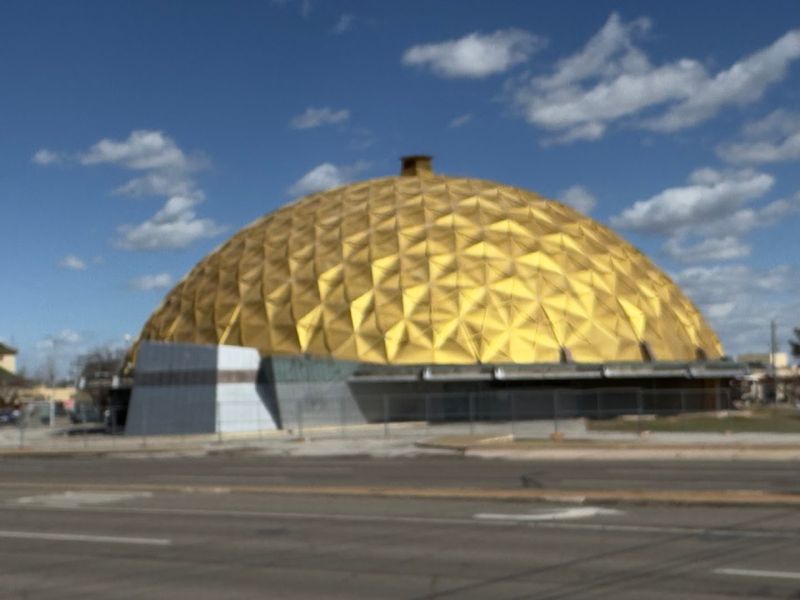
Numbers can be boring, but sometimes they tell a story better than words. The Gold Dome is made up of 625 individual panels, and each one measures somewhere between 7.5 and 11.5 feet in length.
Every single panel weighs between 60 and 70 pounds.
Now think about that for a second. Someone had to design, manufacture, and assemble all 625 of those pieces into a structure that not only holds together but also looks like a seamless golden orb from a distance.
The engineering required to pull that off in the late 1950s was genuinely ahead of its time.
The dome spans a diameter of 145 feet, and the interior covers roughly 27,000 square feet of usable space. That is a lot of room hiding under what looks like a decorative hat from the outside.
The scale surprises most people who see it for the first time, because photos never quite capture how large the thing actually is.
Each panel catches light differently depending on the time of day and the angle of the sun, which means the dome almost seems to shift and glow as hours pass. Morning light makes it look warm and amber.
Midday sun turns it almost blinding. It is the kind of building that rewards patience and multiple visits, each one offering a slightly different visual experience.
Route 66 Has Never Looked This Glamorous
Route 66 is full of roadside wonders. Quirky diners, giant statues, neon signs that flicker like old memories.
But the Gold Dome sits among all of them with a kind of quiet confidence, like the coolest person in the room who does not need to shout to get attention.
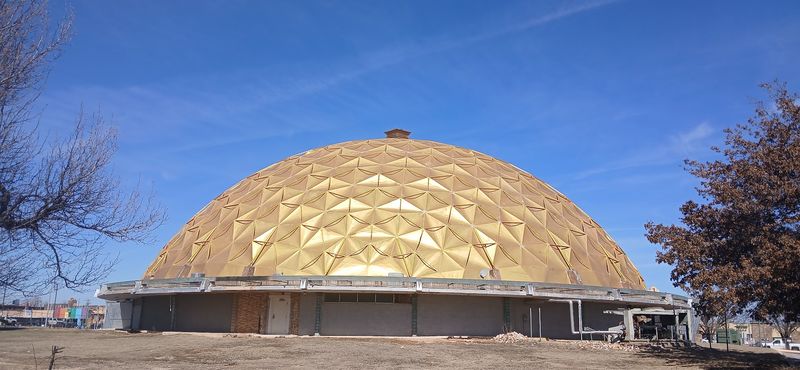
Sitting along NW 23rd Street in Oklahoma City, the dome falls directly on the historic Mother Road corridor, making it a natural stop for anyone driving the legendary highway from Chicago to Santa Monica. Most Route 66 landmarks lean into nostalgia and retro charm.
The Gold Dome leans into something else entirely: pure architectural audacity.
Seeing it from a moving car is one thing. Pulling over and standing across the street to really look at it is something else.
The dome does not blend into its surroundings. It dominates them, in the best possible way, rising above the neighborhood like a futuristic crown that somehow landed in the middle of a regular Oklahoma City block.
For Route 66 road-trippers, this stop adds a layer of architectural history to what can sometimes feel like a purely nostalgic journey.
It reminds you that the road has always attracted dreamers and risk-takers, and that sometimes those dreamers build a golden geodesic dome on a corner lot and just see what happens.
The Buckminster Fuller Connection Worth Knowing
Buckminster Fuller was the kind of thinker who made other people feel like they had been living in a very small box, which is ironic, because he spent his career arguing everyone should live in a dome instead.
His geodesic designs changed how architects and engineers thought about space, structure, and efficiency.
Fuller’s core argument was elegant: a sphere encloses the most volume with the least surface area of any shape. That means less material, less weight, and potentially lower costs.
In theory, it was brilliant. In practice, very few people had actually tried to build a large-scale geodesic dome for commercial use before Oklahoma City did it in 1958.
The Gold Dome became one of the earliest real-world examples of Fuller’s principles applied to everyday commercial architecture. It was not a science fair project or a prototype.
It was a fully functioning bank where people deposited checks and applied for loans, all under a geodesic roof that most of the world had never seen used this way before.
Fuller himself became something of a countercultural icon in later decades, celebrated by architects, engineers, and futurists alike.
Knowing that his ideas helped shape a building sitting on a Route 66 corner in Oklahoma adds a layer of intellectual depth to what might otherwise seem like just a very shiny dome.
Context changes everything.
A Building With More Lives Than a Cat
Most buildings have one story. This one has several, and they keep adding chapters.
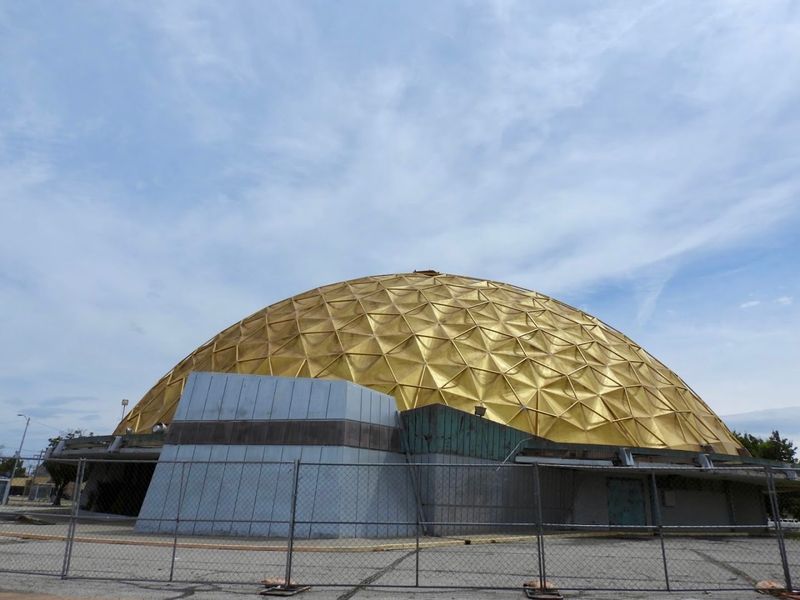
The Gold Dome started as Citizens State Bank in 1958, which makes perfect sense for a structure that called itself the Bank of Tomorrow. It was bold, modern, and optimistic in a way that matched the postwar American spirit perfectly.
Over the decades, the building changed hands and purposes more than once. In 2013, an environmental engineering firm called TEEMCO purchased it with plans to preserve and repurpose the space.
By 2015, the property was back on the market again, which tells you something about how complicated it can be to restore a building this architecturally unique.
In 2016, Land Run Commercial Properties acquired the dome and filed for a building permit worth 2.5 million dollars to convert it into a Natural Grocers store while keeping the dome structure intact. That plan also did not fully materialize as envisioned.
In 2021, there were conversations about transforming it into a concert venue, which honestly sounds like it could have been spectacular.
As of December 2024, a redevelopment proposal was under review by a city committee, with a reported 3 million dollars from the TIF budget and at least 7 million in private investment potentially on the table.
The dome’s story is far from over, and that feels very fitting for a building always called the Bank of Tomorrow.
Standing Outside and Feeling Something Unexpected
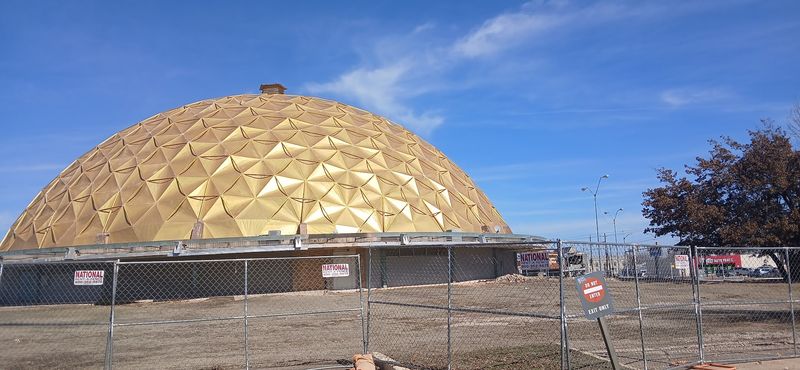
Here is the honest reality of visiting the Gold Dome right now: you are going to be standing on a sidewalk, across the street, looking through a chain-link fence. The building is currently fenced off and not open to the public.
And yet, somehow, it is still absolutely worth stopping for.
There is something almost poetic about seeing a building this extraordinary in a state of waiting. It feels like catching a famous performer backstage before a comeback show.
The potential is palpable, and the structure itself is so visually striking that even a view from across the street delivers a memorable moment.
The best photo opportunities come from standing directly across NW 23rd Street, where you can frame the entire dome against the sky. Early morning light gives the panels a warm golden glow that almost makes the building look radioactive in the most beautiful way possible.
Late afternoon has its own magic, casting long shadows across the geometric surface.
Even without going inside, the exterior alone communicates something important about ambition and imagination. It makes you think about what a city chooses to build and why, and what it says about the people who decided a geodesic golden dome was the right move for a bank in 1958 Oklahoma.
Some decisions age perfectly. This one has.
Mid-Century Modern Magic Frozen in Time
Mid-century modern architecture has had a massive comeback in recent years. People are obsessed with the clean lines, the optimistic geometry, and the sense that design could actually change how people felt about the world.
The Gold Dome is mid-century modern taken to its logical, slightly unhinged extreme.
Most mid-century buildings play it cool with flat roofs, open floor plans, and big windows. The Gold Dome decided cool was not enough and went full cosmic.
The result is a building that looks like it belongs in a 1950s vision of the year 2000, which is exactly the kind of aesthetic that design lovers go absolutely wild for today.
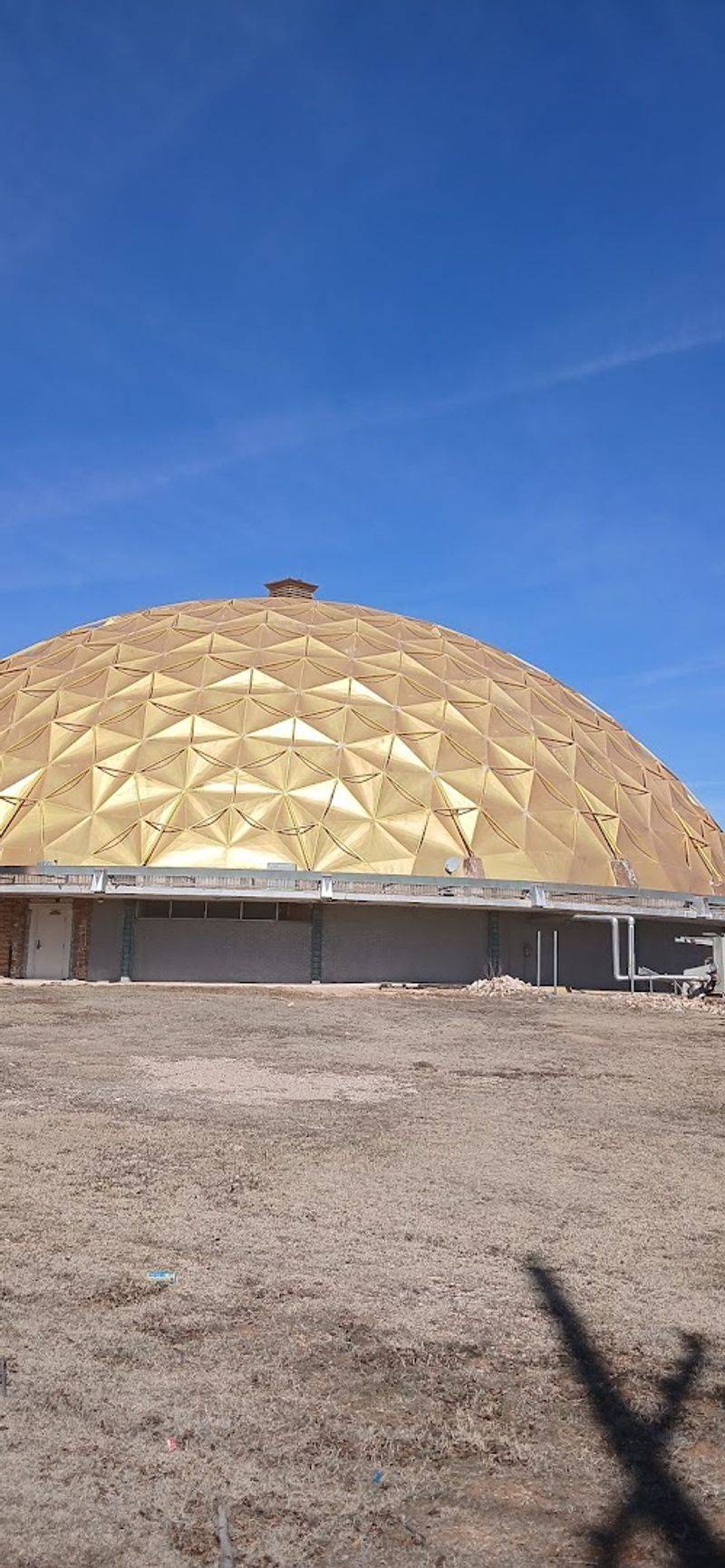
Walking around the perimeter, you notice how the dome’s panels shift in texture and reflectivity. Some catch direct sunlight and blaze like polished metal.
Others sit in shadow and look almost matte. The overall effect is dynamic and alive in a way that flat-faced buildings simply cannot achieve.
Oklahoma City has a surprisingly rich collection of mid-century architecture scattered throughout its neighborhoods, but the Gold Dome is the undisputed showstopper of the bunch. It is the building that makes architecture enthusiasts plan entire road trips around a single stop.
If you care at all about design history, this one earns its place on any serious itinerary without question or hesitation.
The Neighborhood Around the Dome Deserves Attention Too
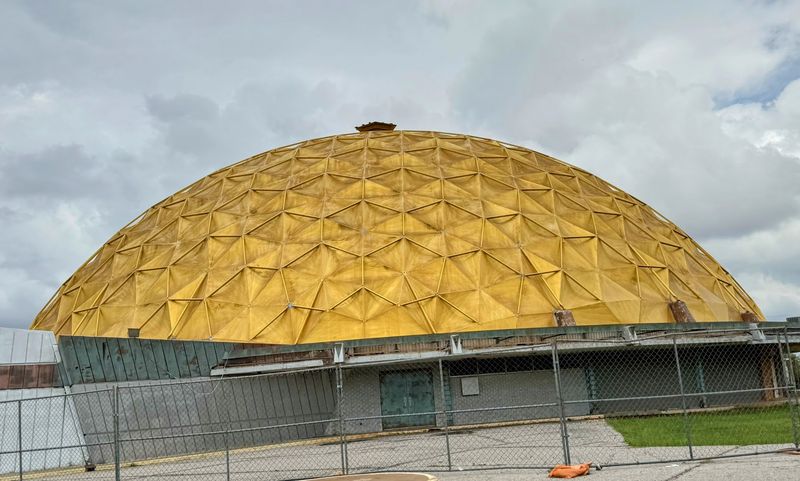
A landmark does not exist in a vacuum. The Gold Dome sits in a neighborhood that has its own personality, and spending a little time exploring the surrounding blocks adds real depth to any visit.
NW 23rd Street is one of those corridors in Oklahoma City where history and present-day energy overlap in interesting ways.
The street has seen a lot of change over the decades, and you can feel it as you walk around. Older buildings sit alongside newer businesses, and the whole stretch carries the kind of lived-in character that makes urban exploration genuinely rewarding.
The dome anchors the area visually, but the surrounding blocks fill in the human story.
Oklahoma City as a whole has been investing heavily in its urban core, and areas near historic Route 66 landmarks have benefited from renewed interest and foot traffic.
Being in this part of the city means you are also close to other points of interest that reward wandering with an open mind and comfortable shoes.
The dome’s presence on this street feels like a reminder that great architecture elevates everything around it. Even fenced off and awaiting its next chapter, the Gold Dome makes NW 23rd Street feel more significant, more worth paying attention to.
Great buildings do that. They make the whole neighborhood stand a little taller, and this one has been doing exactly that since Eisenhower was president.
Why This Golden Dome Belongs on Your Oklahoma Itinerary
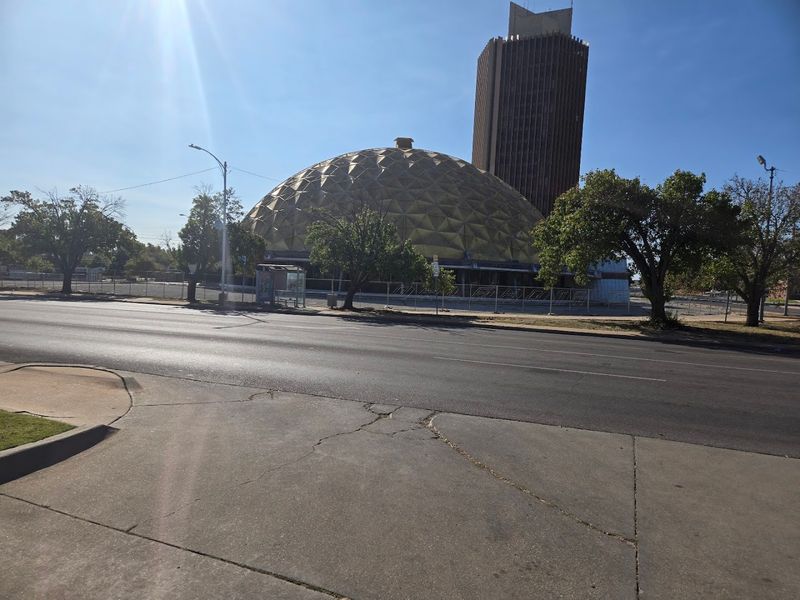
Oklahoma does not always get the architectural credit it deserves, and the Gold Dome is a perfect example of why that needs to change. This is a building with a real story, real engineering ambition, and a visual presence that sticks with you long after you have driven away.
For road-trippers following Route 66, it fits naturally into any itinerary. For architecture enthusiasts, it is a pilgrimage stop that connects directly to one of the most influential design movements of the twentieth century.
For anyone who simply appreciates the unexpected, it delivers that rare combination of surprise and substance.
The current fencing means the experience is primarily visual, but visual experiences can be deeply powerful.
Standing in front of something this unusual and thinking about who built it, why they built it, and what they hoped it would become is a genuinely worthwhile way to spend twenty minutes on a road trip.
The Gold Dome Bank Building is located at 1112 NW 23rd St, Oklahoma City, OK 73106, in the heart of Oklahoma City, Oklahoma, United States. It sits along the historic Route 66 corridor and is accessible as an exterior landmark around the clock.
The dome is a proud piece of Oklahoma City’s architectural soul, and it is absolutely worth a detour, a stop, and a long, appreciative look from across the street.
Dear Reader: This page may contain affiliate links which may earn a commission if you click through and make a purchase. Our independent journalism is not influenced by any advertiser or commercial initiative unless it is clearly marked as sponsored content. As travel products change, please be sure to reconfirm all details and stay up to date with current events to ensure a safe and successful trip.
