Mountain air rolled in through the open window on that drive through northern Georgia, and somewhere along those curves I started daydreaming about fried chicken.
That daydream had a name, a place people in the region talk about the way they talk about family reunions.
Long tables, endless bowls of vegetables, and chicken cooked the old way in heavy cast-iron skillets, that is what I had heard about before I ever pulled into the parking lot.
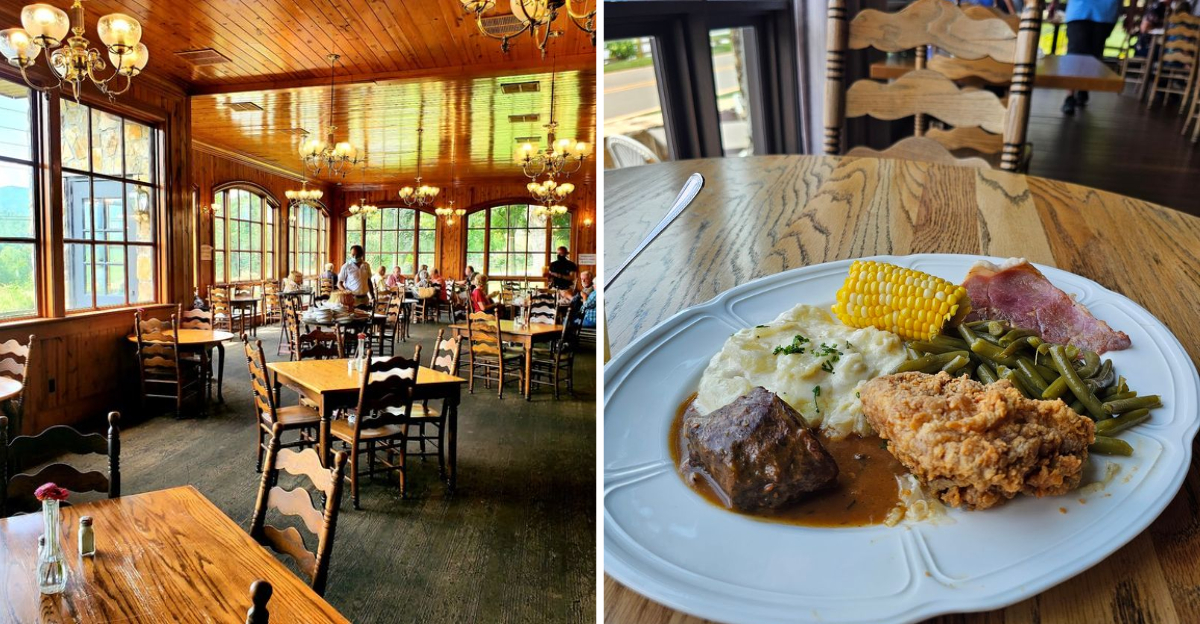
What I did not expect was how much the setting itself would win me over, with the river valley spread out beyond the windows and the mountains rising in the distance.
The dining room is built around shared tables, and the food arrives in platters that move from hand to hand, the kind of meal that forces you to slow down and actually talk to the people next to you.
By the time the first platter hit our table, I understood why folks drive an hour each way for lunch here.
Some meals fill you up, and a few, like this one, stick with you long after the plates are cleared.
A Mountain Boarding House That Grew Into a Legend
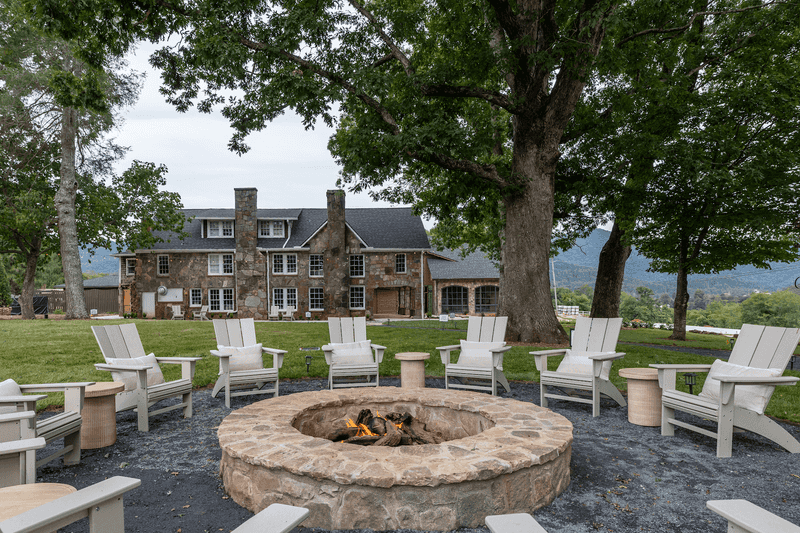
My first surprise came before I even sat down, because the grounds feel less like a restaurant parking lot and more like someone’s very well loved farm. The story here goes back to the 1910s, when Carrie and Arthur Dillard began taking in boarders at their stone house in the mountains.
Six rooms and honest hospitality were the entire business plan.
Word spread slowly at first, then much faster after World War II, when better roads brought travelers deeper into Rabun County. What had been a quiet mountain home turned into a destination people planned whole vacations around.
The original Rock House still stands, and it carries enough historical weight that it was nominated for the National Register of Historic Places in 2007.
Knowing all that changed how the meal tasted, honestly. You are not just eating Southern food, you are eating recipes that have been repeated thousands of times in the same valley.
Here is a fun bit of trivia for your table: the property has grown to more than 110 acres, a long way from those first six rooms. Generations of the same family kept the tradition going, and the current stewards have leaned into that history rather than erasing it.
Cast-Iron Skillets and the Chicken That Made the Reputation
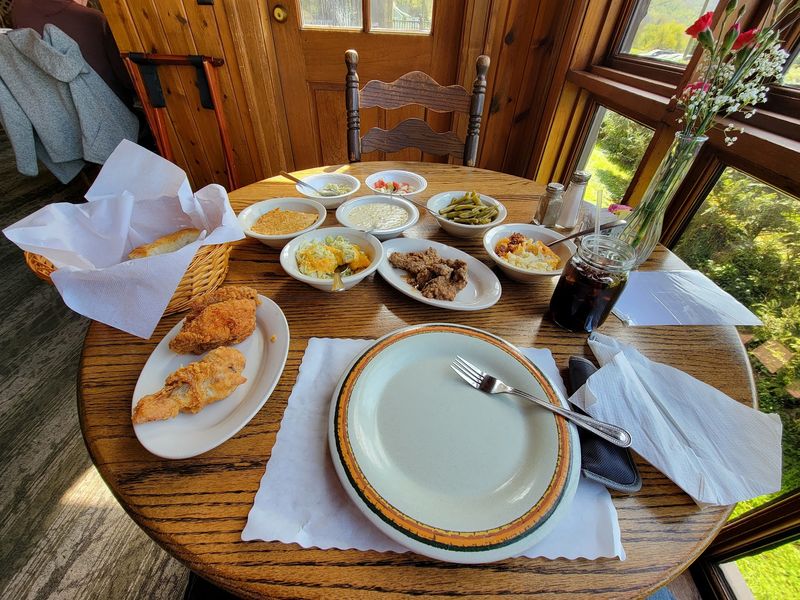
Fried chicken is the headline act, and it earns the billing. The method is old fashioned in the best sense: pieces seasoned with salt, pepper, Creole seasoning and paprika, dipped in a buttermilk, milk and egg mixture, then coated and lowered into hot fat in a heavy skillet.
Cast iron holds steady heat, and steady heat is the whole secret.
What you get is a crust that crackles a little when you bite it, with meat underneath that stays juicy instead of drying out. The restaurant even nods to this openly, calling it their cast-iron roots, which tells you how central the technique is to their identity.
I liked that nobody tried to reinvent it. There is no fancy glaze, no trendy hot honey, just chicken cooked the way mountain cooks have done it for a century.
A small tip from my visit: take a piece early, because platters keep circling and it is easy to fill up on side dishes first. Ask for more when you finish, since they are happy to bring another round.
Simple food, done with practice, beats complicated food nearly every time.
Family-Style Service Turns Strangers Into Dinner Guests
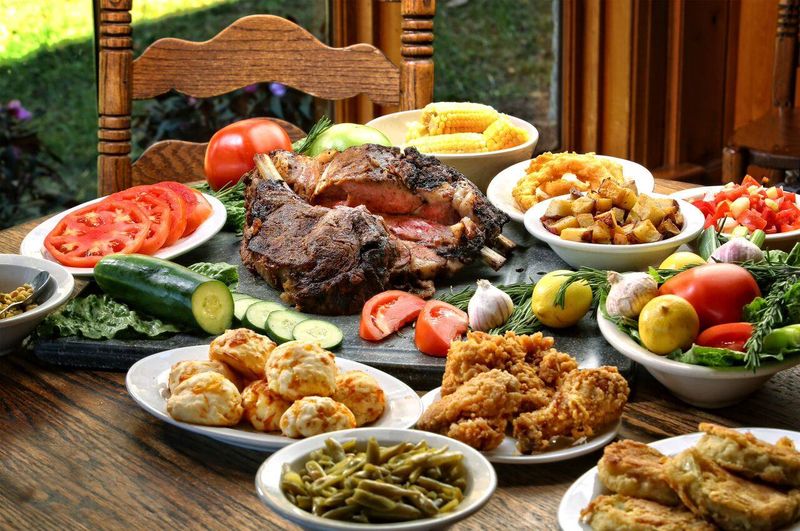
Nobody hands you a stack of individual plates here, and that took me a second to adjust to. Instead, bowls and platters arrive in waves, set down in the middle of the table so everyone reaches, passes, and negotiates over the last biscuit.
It feels like Sunday dinner at a relative’s house, minus the dishes.
The all-you-can-eat approach means anything you empty gets refilled, and the servers move quickly enough that you rarely wait long. Large groups thrive in this setup, which explains why you see so many multi-generation families spread across two or three pushed-together tables.
Family-style dining is the single most talked about feature of the place, and for good reason. Sharing food changes the mood of a meal, loosening people up and getting conversation going.
If you would rather keep things simple, there is also a meat-and-three option, so solo travelers are not stuck ordering a feast for six. I went the shared route and would do it again.
Just pace yourself. Between vegetables, breads, meats and dessert, the table keeps offering, and stopping is entirely your responsibility.
Views of the Little Tennessee River Valley From Your Seat
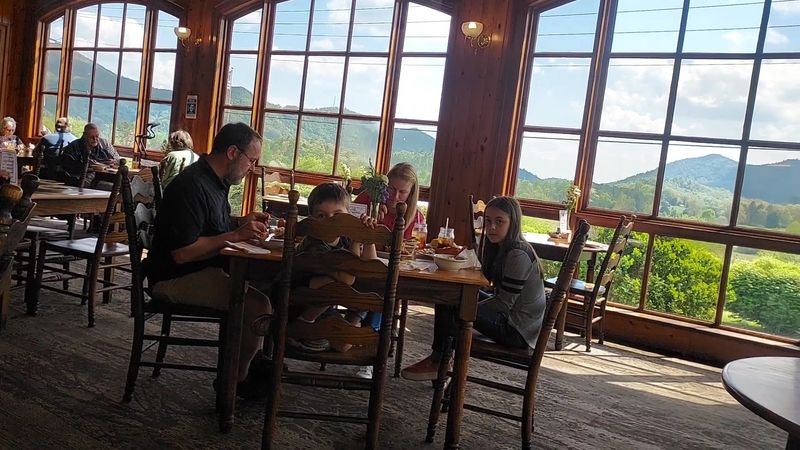
Somewhere between the second helping of green beans and dessert, I gave up on conversation and just looked out the window. The restaurant sits on a plateau above the Little Tennessee River Valley, so Georgia’s Blue Ridge ridgelines stack up in layers beyond the pastures.
That famous blue-gray haze drifts through the peaks, shifting colors as clouds pass.
Morning light turns the hills silver and soft, while late afternoon brings out deeper purples and blues. Fall is obviously the showstopper, though I found spring green just as pretty and far less crowded.
Outdoor dining has been added, which is a genuinely smart move given what there is to look at. The front porch is a fine spot to sit for a few minutes before or after eating, especially if you need to let a big meal settle.
Mountain views mean mountain weather, so bring a light layer even in warm months. Evenings up here cool off faster than you expect.
Food tastes better with scenery like this, and I do not think that is only in my head. Setting is half the meal.
Vegetables Straight From Local Fields
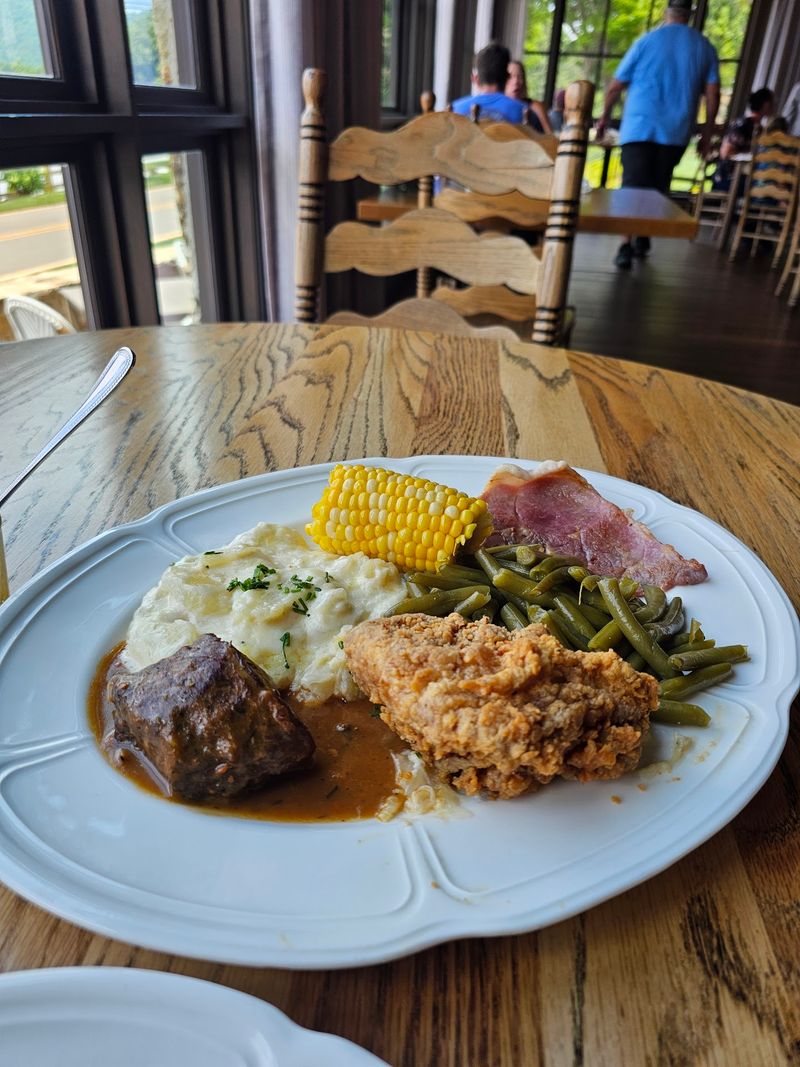
Farm-to-table language gets thrown around a lot these days, which is funny considering this kitchen has been doing it since the early 1900s. Fresh fruits and vegetables have come from nearby farms for well over a century here, long before anyone printed the phrase on a menu.
Dishes are prepared fresh daily rather than held over.
That shows up in the details. Creamed corn tastes sweet instead of starchy, and things like stewed Harvard beets or acorn squash soufflé have real flavor behind them.
Collard greens come up constantly when people describe eating here, and cabbage casserole has its own loyal following. I understood why after one bite of the casserole, which is homier than it sounds.
Because the spread rotates, no two visits are identical. Calling ahead to ask what is being served that day is a genuinely useful move if you have a favorite.
The vegetables surprised me more than anything else on the table, and I say that as someone who came for chicken. Growing things nearby, cooking them the same day, then serving them warm in big bowls is not complicated, but it works beautifully.
The Renovated Dining Room Keeps Its Old Warmth
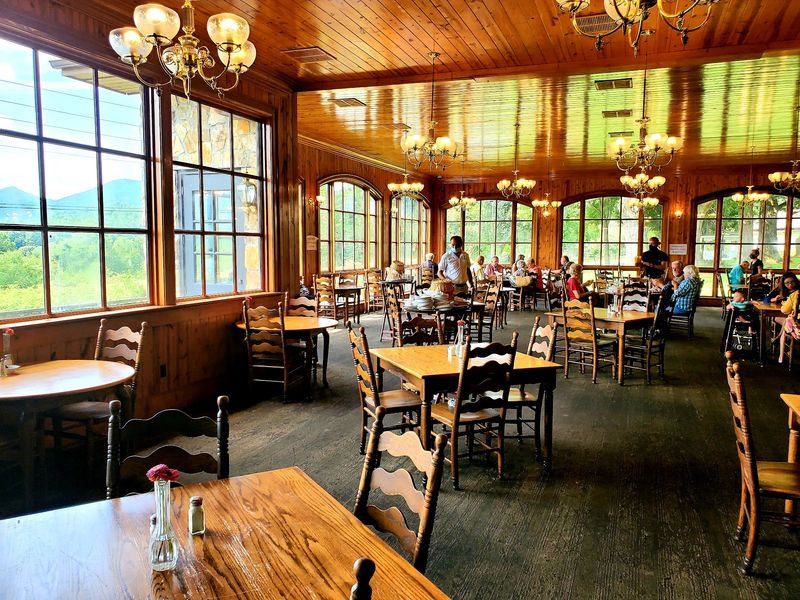
Regulars who have been coming since the 1980s will notice the refresh right away, because the main dining room got a serious update under new ownership. The space looks brighter and more polished now, with clean lines and big windows framing those valley views.
What impressed me is how little of the comfort got lost.
Old country charm survived the remodel, so it still feels like a mountain restaurant rather than a hotel chain dining hall. Wooden warmth, plenty of room between tables, and that easy casualness are all intact.
Broader renovations across the property have been underway, including hotel buildings and new gathering spots, and the restaurant portion reopened first. Fire pits and s’mores have become part of the routine for guests staying overnight.
Service kept pace with the upgrades, which matters more than paint colors. Servers here tend to be attentive without hovering, and they cheerfully explain how the whole family-style thing works to first timers.
Wait times can stretch during peak hours and leaf season, so arriving a little before the rush pays off. Or just enjoy the porch while you wait.
Horses, a Petting Farm, and Reasons to Stay Longer
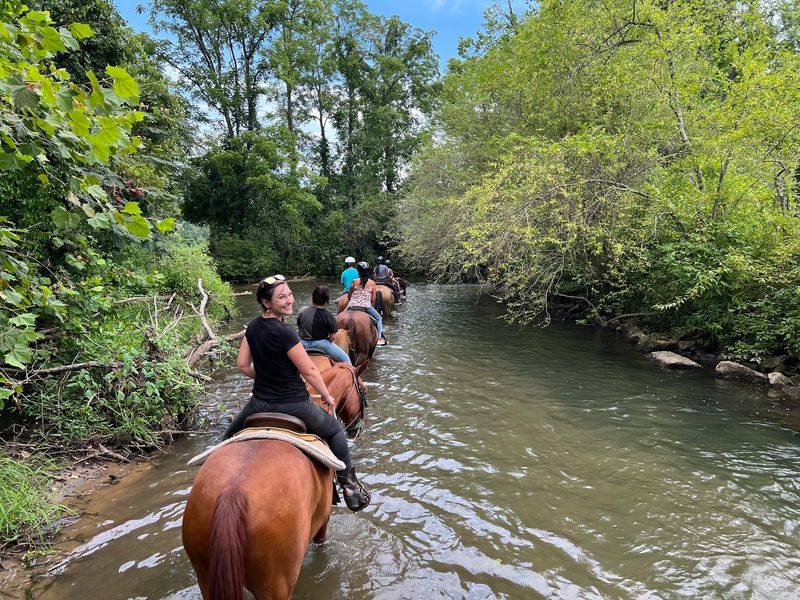
Lunch was supposed to be the whole plan, and then I saw the horses. The property stretches across more than 110 acres, with pastures, trails, and a petting farm that kids gravitate toward immediately.
Guided rides even cross a mountain stream, which sounds made up until you see the trail.
Trout fishing, an outdoor pool, and plenty of open ground give you reasons to linger after eating. Lodging options range from hotel rooms to cottages and chalets, plus rooms in the original Rock House for anyone who wants the historic version.
Families with wide age ranges seem to do especially well here, since a one-year-old and a grandparent can both find something to enjoy. That flexibility is rare.
My honest recommendation is to treat the restaurant as the anchor of a longer day rather than a quick stop. Eat, then walk the grounds, then sit somewhere with a view until you feel like moving again.
Rabun County has waterfalls and hiking nearby if you want more, but you could easily never leave the property. Either way, come hungry and unhurried.
Address: 768 Franklin St, Dillard, Georgia 30537
