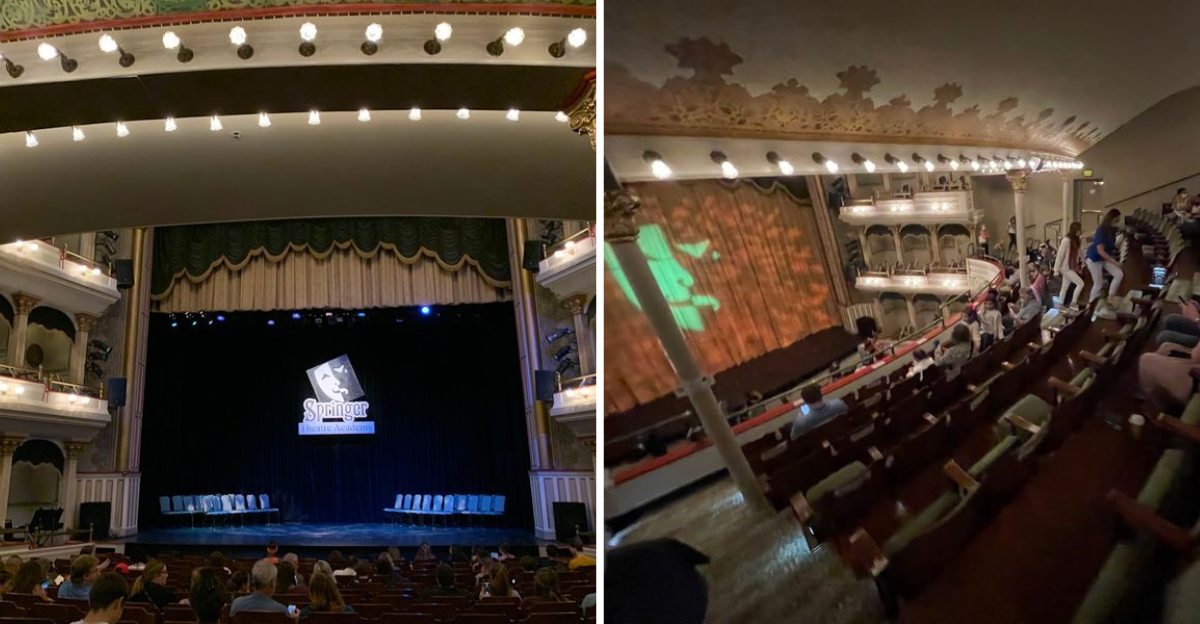
You step through the doors and the air feels different. Heavier.
Layered with decades of applause, laughter, and something else that is harder to name. This Georgia theater opened in 1871 and was once considered the finest opera house between New York and New Orleans. Edwin Booth performed here, along with Oscar Wilde, Will Rogers, and Ma Rainey.
His ghost is said to have stayed behind, playful rather than threatening, most often felt near the prop room. A little girl who passed in the lobby still runs through empty hallways and counts buttons in the costume shop. The building is alive in a way that has nothing to do with the productions on stage.
No matter if you come for a show or a ghost tour, this place delivers something genuinely hard to forget.
A Theater Built to Impress From Day One
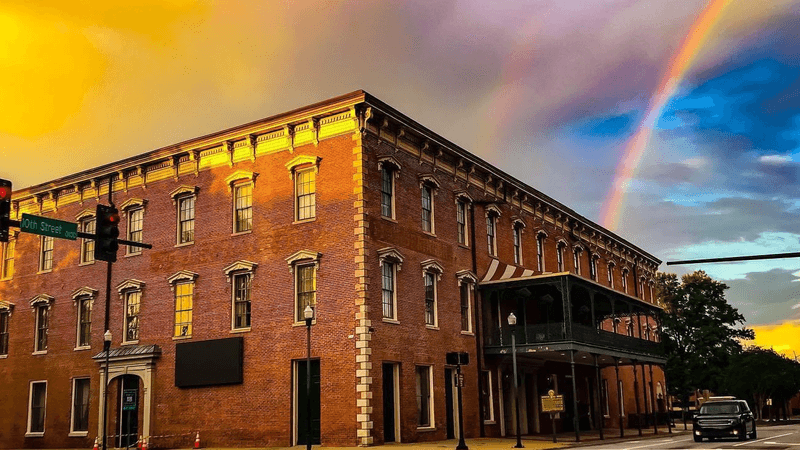
Francis Joseph Springer did not build a simple community playhouse when he opened this theater on February 21, 1871. He built something that turned heads across the entire country.
The Springer Opera House was once considered the finest opera house between New York and New Orleans, and that reputation was not handed out lightly.
Springer himself was an immigrant who had built a successful career as a grocer in Columbus. He poured serious ambition into this project, and the result was a venue that attracted performers and audiences from far beyond Georgia.
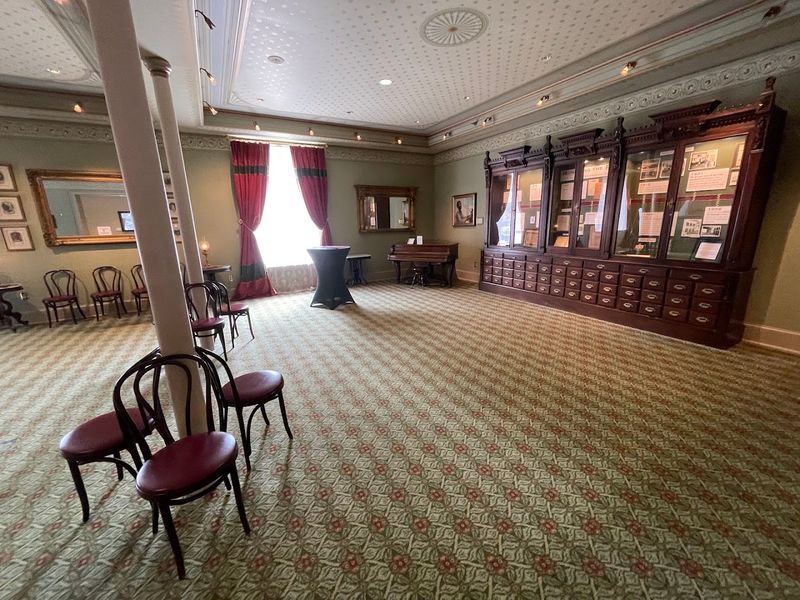
The craftsmanship inside the building reflects that original vision, with details that feel almost too refined for a mid-sized Southern city.
In 1971, exactly one hundred years after opening night, Governor Jimmy Carter designated it the State Theatre of Georgia. That honor was made permanent by the Georgia General Assembly in 1992, which tells you everything about how seriously the state takes this place.
It also holds National Historic Landmark status, a designation received in 1978, making it one of only seven theaters in the entire United States with that recognition.
Touring the building, you notice how thoughtfully it has been preserved. The bones of the original structure are still very much present, even as modern upgrades have made it fully functional for contemporary productions.
There is a real pride of ownership here that shows up in every polished surface and carefully maintained detail. This is a place that people genuinely love and protect.
Legendary Names Who Graced This Stage
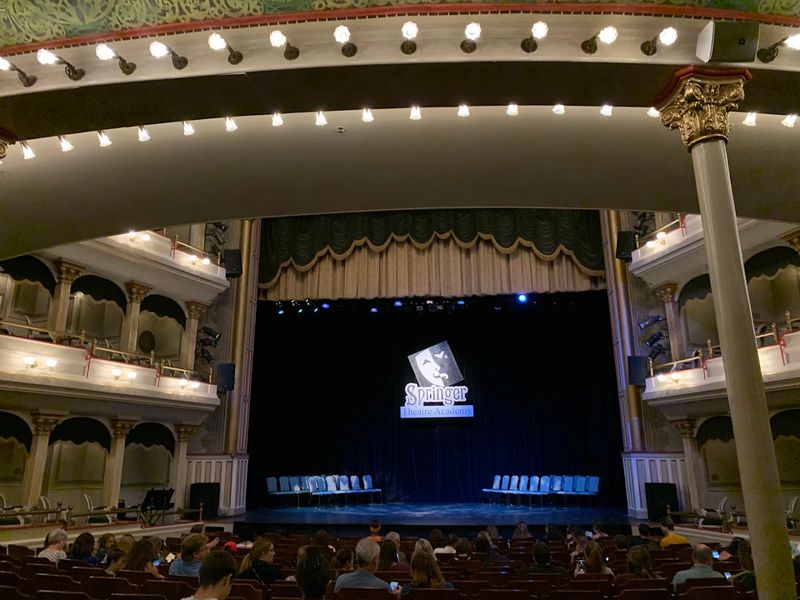
The guest list at the Springer Opera House reads like a roll call of American cultural history. Edwin Booth performed here, one of the most celebrated Shakespearean actors of the 19th century.
Lily Langtry, Oscar Wilde, Will Rogers, Ethel Barrymore, John Philip Sousa, and Ma Rainey all took their turns on this stage, and even Franklin D. Roosevelt visited at some point during the theater’s storied run.
Think about that for a second. A stage in Columbus, Georgia, hosted figures who shaped American theater, music, and public life.
That is not a small thing. Most cities with far larger profiles never attracted a lineup like that, which is a testament to how seriously the Springer was taken in its prime.
Each of those names brought a different kind of energy to this space. Ma Rainey’s blues and John Philip Sousa’s marching band compositions could not be more different, yet both found a home here.
That range speaks to the theater’s flexibility and its willingness to welcome all kinds of performance and all kinds of audience.
Today, the Springer stages between ten and fifteen productions each year across three distinct series: the Mainstage Series in Emily Woodruff Hall, the Studio II Series in the Dorothy McClure Theatre, and the Children’s Theatre Series. The tradition of presenting high-quality, varied programming is very much alive.
Visitors who attend a modern production are essentially stepping into a continuum of excellence that stretches back over 150 years.
Edwin Booth and the Ghost That Never Left
Of all the spirits said to roam the Springer Opera House, Edwin Booth is the most talked about. He was one of the greatest actors of the 19th century and the older brother of John Wilkes Booth, a connection that haunted him for the rest of his living days.
His ghost, according to countless accounts from staff and visitors, never quite moved on from this stage.
Reports describe his presence as playful rather than threatening. He seems particularly fond of interacting with female cast members and crew, and his energy is most often felt near the prop room.
Some stories suggest he may have placed a kind of curse on the theater, and a theater light that crashed during a production of Hamlet is one incident frequently connected to his restless spirit.
Former Artistic Director Paul R. Pierce started out as a complete skeptic.
After enough personal experiences inside the building, he changed his mind entirely and wrote “The Springer Ghost Book,” a collection of documented paranormal accounts from staff, performers, and visitors over the years. A second edition with new stories was released in December 2025, which suggests the experiences have not slowed down.
Whether you believe in ghosts or not, there is something undeniably atmospheric about a theater that carries this kind of layered history. The stories feel earned rather than manufactured.
They grew organically from real encounters that real people could not easily explain away, and that makes them far more interesting than any scripted haunted house attraction.
The Little Girl Who Still Counts Buttons
Not every ghost story has to feel dark or unsettling. The tale of the little girl at the Springer Opera House is one of the more bittersweet ones.
She is said to have passed tragically in the lobby after being struck by a horse, and her spirit apparently found comfort in the theater itself rather than moving on.
Staff and visitors over the years have reported hearing the sound of small running feet in empty hallways. Laughter with no obvious source echoes through certain rooms when no children are present.
The costume shop seems to be her favorite spot, where she is sometimes seen or sensed counting buttons, as if she found a quiet little task that keeps her occupied.
There is something oddly sweet about the idea of a child ghost who is helpful rather than frightening. The button-counting detail is one of those specific, strange details that is hard to invent, and it has been reported consistently enough to become a real part of the theater’s lore.
The costume shop now feels like it belongs to her just as much as to anyone else.
Ghost tours at the Springer give visitors a chance to explore these stories in depth. Guides walk guests through the spaces connected to reported activity and share accounts that have accumulated over decades.
Based on visitor reviews, the tours are genuinely engaging and led by knowledgeable guides who clearly love the material. It is a completely different way to experience this building, and honestly, a memorable one.
Three Stages and a Season Full of Surprises
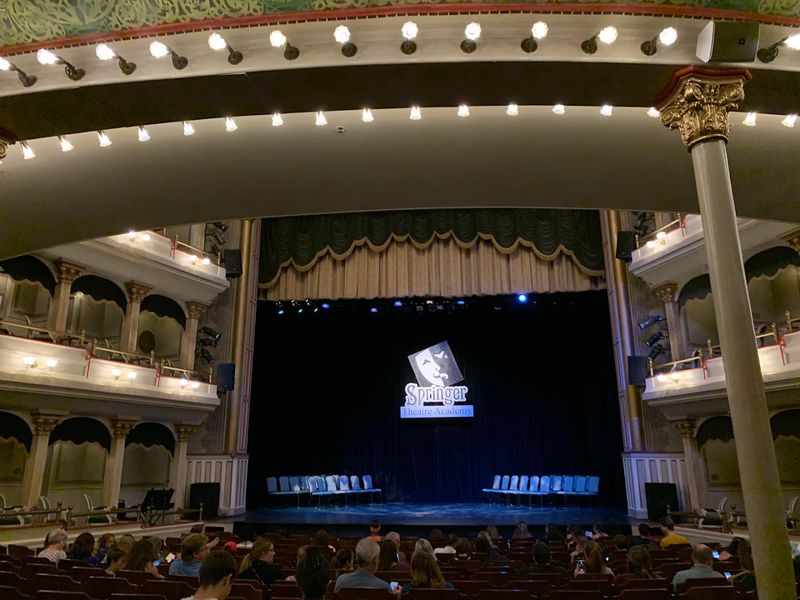
One of the things that genuinely surprised me about the Springer Opera House is how active it remains as a working theater. This is not a preserved relic that you admire from behind velvet ropes.
It produces ten to fifteen shows every single season across three distinct performance spaces, each with its own character and programming focus.
Emily Woodruff Hall serves as the main stage, where the big productions land. The Dorothy McClure Theatre, added during a 2013 capital campaign, hosts the Studio II Series, which tends toward more intimate and experimental work.
The Children’s Theatre Series rounds things out, making the Springer genuinely family-friendly across the full calendar year.
Visitor reviews mention productions ranging from classics like Newsies and Annie to more adult-oriented shows and concerts. The acoustics earn consistent praise, and the seating puts you close enough to the stage that even a mid-tier seat feels like a premium experience.
A few reviewers noted minor sightline issues with certain box seats, but the overall consensus is that this is a seriously well-run venue.
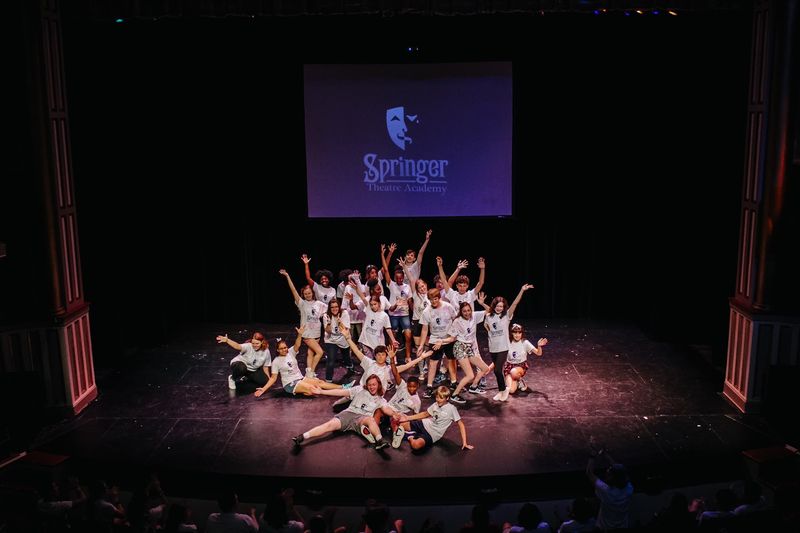
The performing arts academy connected to the theater also deserves a mention. It has developed a loyal following over the years, with some students describing it as a second home.
The academy focuses on building life skills through stage work, which is a genuinely thoughtful approach to arts education. Families in the Columbus area have clearly embraced it, and that community investment helps keep the Springer thriving season after season.
Planning Your Visit to Columbus Georgia’s Crown Jewel
Getting to the Springer Opera House is straightforward once you are in Columbus. The theater sits at 103 E 10th St, right in the heart of the city, and it is the kind of landmark that anchors the surrounding neighborhood with a sense of purpose.
Parking information is typically included in pre-show emails, which is a small but genuinely appreciated touch for first-time visitors.
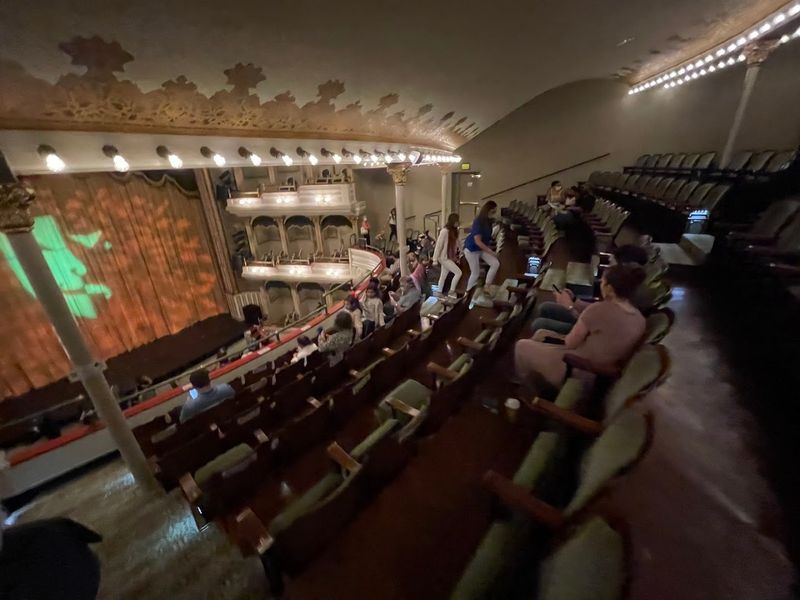
Historical tours run regularly and give you access to parts of the building that a standard show visit would not cover. The costume room, the backstage areas, and the third-floor balcony that was used during the era of segregation are all part of the tour experience.
Seeing that balcony in person adds a layer of real historical weight to the visit that goes beyond the glamour of the performances.
Ghost tours run separately and are clearly popular based on the feedback they generate. If you can time your visit to include one, it is worth doing.
The guides are knowledgeable, the stories are genuinely compelling, and the building itself provides all the atmosphere you could ask for without any artificial enhancement.
Whether you come for a Friday night musical, a weekend ghost tour, or a quiet historical walkthrough on a Tuesday afternoon, the Springer rewards every kind of visitor. It is one of those rare places that holds multiple layers of meaning at once, beautiful, historically significant, artistically alive, and just a little bit haunted.
That combination is not easy to find anywhere, let alone in a single building.
Address: 103 E 10th St, Columbus, Georgia
