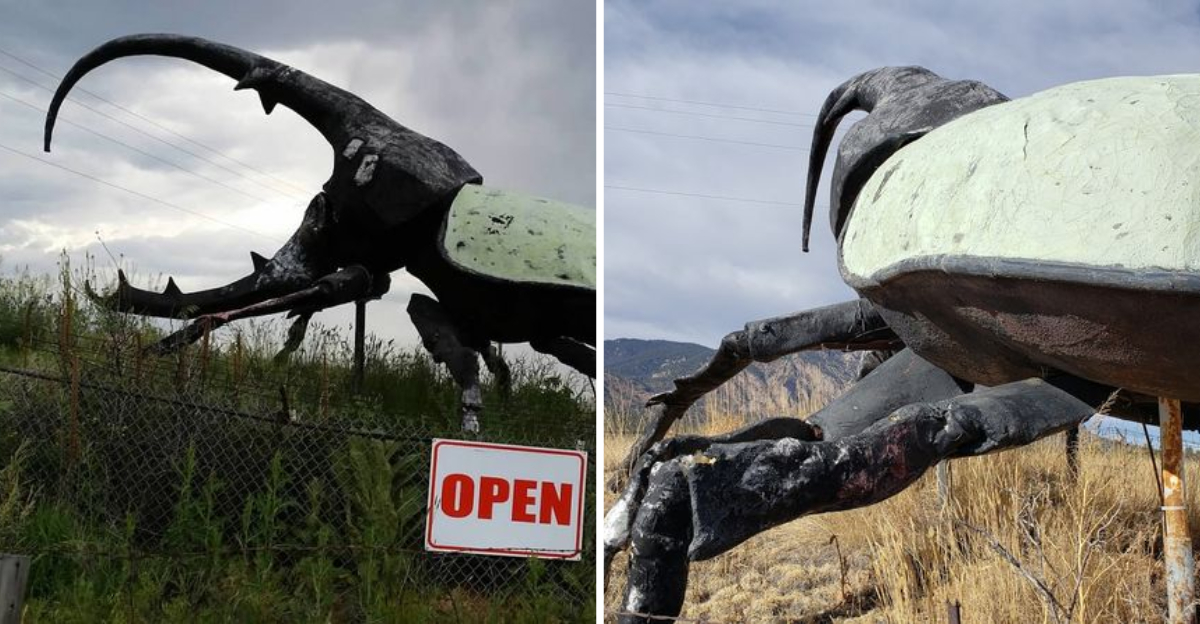
Cruising down a Colorado highway on a perfectly ordinary afternoon, something stopped me cold.
A massive beetle, easily the size of a small car, perched right there at the roadside like it had been waiting for me specifically. My brain took a solid three seconds to catch up with my eyes.
That towering fiberglass giant has that effect on people, and honestly, it never gets old. It guards the entrance to a museum that turns out to be just as jaw-dropping as the statue itself.
I pulled over and spent the next hour wandering through rooms filled with specimens from around the world, each one more unbelievable than the last.
You do not need to be a bug enthusiast or a roadside attraction hunter to appreciate this spot; anyone who loves genuinely weird and wonderful things will find this place worth a detour.
Meet Herkimer: The World’s Largest Beetle Statue
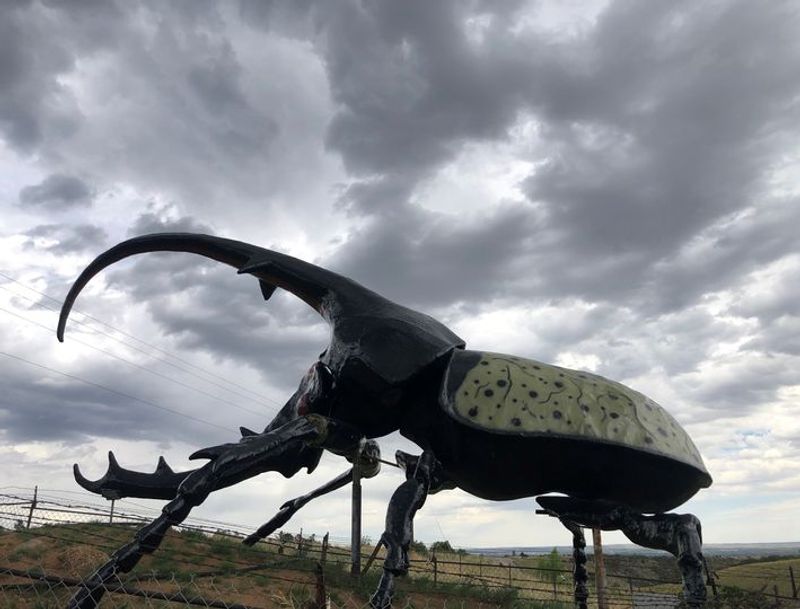
You almost do not believe what you are seeing at first. Herkimer stands 10 feet high and stretches 16 feet long, a fiberglass replica of a male West Indian Hercules Beetle scaled so that one foot equals one-quarter inch, making it 48 times the size of a real Hercules beetle.
That math alone is enough to make your head spin.
John May, the founder of the May Natural History Museum, built Herkimer back in 1949. The statue started out as part of the traveling May Tropical Exhibition, which means Herkimer has seen more of America than most people have.
During the 1950s, it even marked the entrance to an exhibit at Weeki Watchee Springs in Florida before making the trip back to Colorado Springs in 1963.
Herkimer has been standing guard at 710 Rock Creek Canyon Road for over 60 years now. That kind of staying power says something.
The statue has survived vandalism, graffiti, and even had its legs stolen at one point, which is a sentence that is genuinely wild to type. A full restoration in 2022, with help from fiberglass artist Mark Cline, brought Herkimer back to its former glory.
Visitors can now get up close for photos, and the dirt parking lot nearby makes that easy enough, though you will want to take your time pulling in and out. Herkimer is officially recognized as the World’s Largest Beetle Statue, a title it wears with quiet, six-legged dignity.
The 2022 Restoration That Gave Herkimer a Second Life
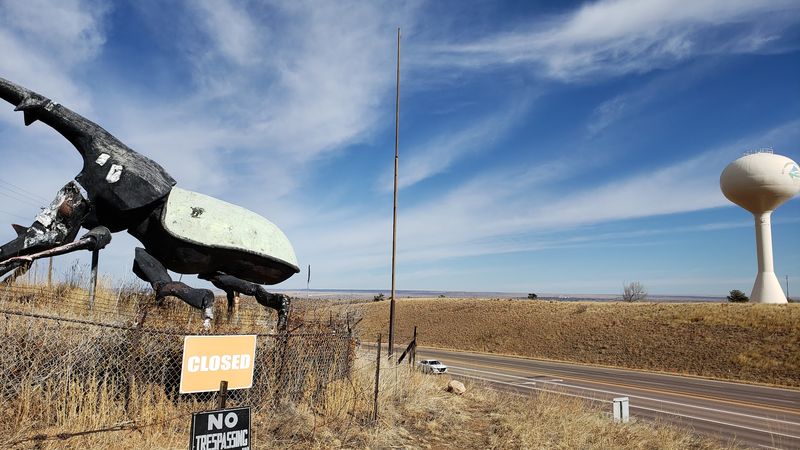
Not every roadside icon gets a second chance, but Herkimer earned one. By the time 2022 rolled around, decades of Colorado weather, the occasional act of vandalism, and the general wear of being a giant outdoor sculpture had taken their toll.
The statue needed serious attention, and the May family made sure it got exactly that.
On April 18, 2022, Herkimer was carefully disassembled and sent off for repairs. Fiberglass artist Mark Cline, who has a reputation for working on larger-than-life sculptural projects, stepped in to handle the restoration work.
It was the kind of hands-on, detail-oriented effort that a statue of this importance genuinely deserved.
Herkimer returned to its post on June 6, 2022, looking better than it had in years. The restoration was not just cosmetic.
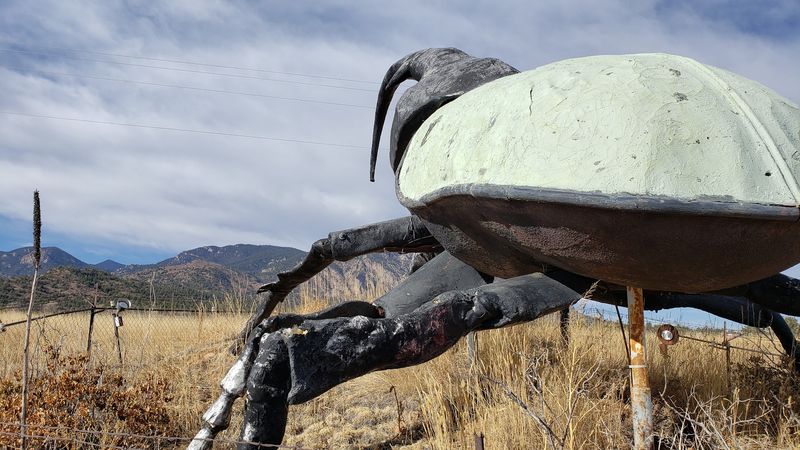
It addressed structural issues that had built up over time, making the statue safer and more accessible for visitors who want to get close. Before the restoration, getting a good photo meant keeping a respectful distance.
Now you can stand right next to those impressive legs and really appreciate the scale of the thing. The whole project was a love letter to a Colorado Springs landmark, carried out by people who understood what Herkimer means to the community.
For a statue that has been through as much as this one has, the comeback feels genuinely earned. It is one of those restoration stories that makes you root for the inanimate object involved.
Why Herkimer Became a Roadside Legend
Roadside attractions have a special kind of magic that is hard to explain and even harder to resist. Herkimer taps into that magic completely.
There is something about a 16-foot beetle crouching at the edge of a canyon road that bypasses logic entirely and goes straight to the part of your brain that just wants to pull over and stare.
The statue sits right at the entrance to Rock Creek Canyon along Highway 115, which means it catches drivers completely off guard. You are looking at the scenery, maybe thinking about lunch, and then suddenly there is a giant beetle.
The shock of it is part of the charm. Herkimer does not ease you in.
It just shows up, enormous and unapologetic, and lets you deal with the consequences.
Part of what makes Herkimer legendary is the sheer specificity of it. This is not a giant ball of twine or a oversized chair.
It is a scientifically accurate replica of a real species, the West Indian Hercules Beetle, built by a man who genuinely loved insects and wanted the world to share that enthusiasm. That backstory adds a layer of meaning that most roadside attractions simply do not have.
Herkimer is quirky and fun, yes, but it is also the mascot of a real natural history collection that has been educating visitors for decades. The combination of spectacle and substance is exactly what turns a roadside curiosity into a genuine legend worth driving out of your way to see.
The May Natural History Museum: What Waits Beyond the Beetle
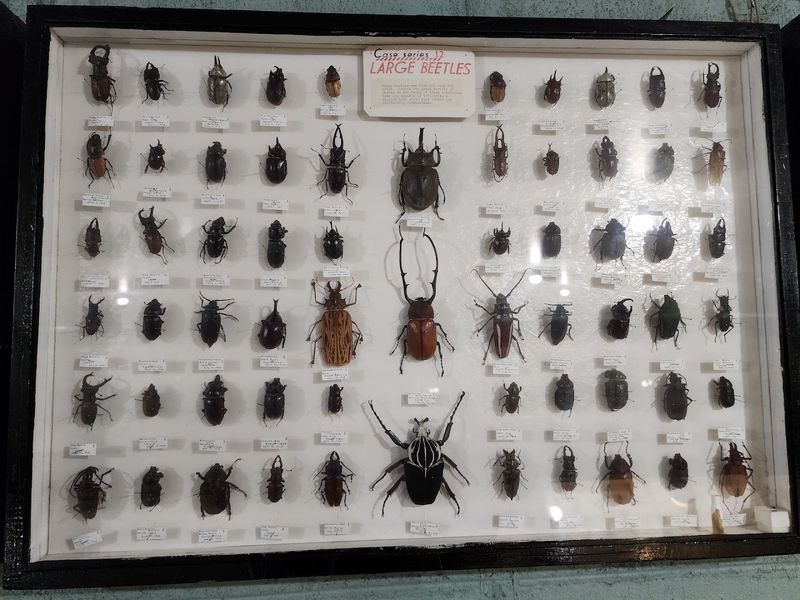
Once Herkimer has your attention, the May Natural History Museum is right there ready to keep it. Known locally as the bug museum, this place holds one of the largest private insect collections in the world, with somewhere between 7,000 and 8,000 species of tropical insects, arachnids, butterflies, and beetles all on display.
The numbers are staggering, but what really gets you is seeing them in person.
The atmosphere inside is genuinely one of a kind. Antique display cases line the walls, each one filled with specimens that are often over a hundred years old and still in remarkable condition.
Handwritten labels identify every single bug. Vintage light fixtures cast a warm glow over the whole room, giving the museum the feeling of a place that time treated gently rather than forgot entirely.
John May acquired most of this collection during expeditions to remote tropical regions in the early twentieth century, which makes the whole thing feel like an adventure story as much as a natural history lesson. The museum is open daily from May through September, running from 9 a.m. to 6 p.m., and the May family also operates the Golden Eagle Campground on the same property.
Some visitors come for the beetle outside and end up spending two hours inside without meaning to. That kind of unexpected depth is exactly what separates a good road trip stop from a genuinely memorable one.
The museum earns its 4.6-star rating the old-fashioned way, by being exactly what it promises.
Getting Up Close: Tips for Visiting Herkimer and the Museum
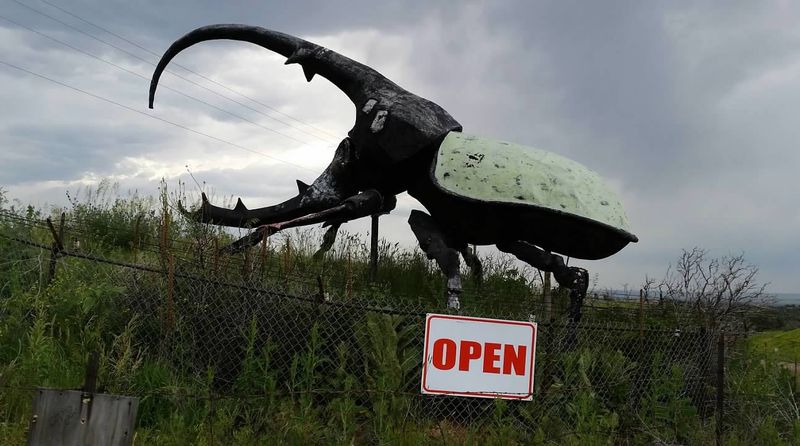
Visiting Herkimer is straightforward, but a few practical details make the experience smoother. The statue sits at 710 Rock Creek Canyon Road, just off Highway 115, and there is a dirt parking lot nearby.
It is small and a bit uneven, so take your time pulling in and give yourself extra space when you leave, especially if you are driving anything larger than a standard sedan.
The best time to visit is during the museum’s operating season, which runs from May through September. That way you can pair your Herkimer photo stop with a full tour of the insect collection inside.
The museum opens at 9 a.m. and closes at 6 p.m. every day of the week during that period. Getting there earlier in the day tends to mean smaller crowds and better light for outdoor photos of the statue.
A few visitors have mentioned that the museum’s preserved specimens carry a distinct scent from the preservation process, so if you are sensitive to strong smells, bringing a mask along is genuinely good advice. The building itself is on the smaller side, which makes it feel cozy rather than overwhelming, but it can get warm in the summer months.
Comfortable shoes are helpful since the parking area and surrounding grounds are unpaved. The staff is consistently described as friendly and knowledgeable, and the gift shop at the end of the tour has some genuinely unique items worth browsing.
Phone service is available on the property for anyone who needs to stay connected during the visit.
Why This Colorado Springs Hidden Gem Belongs on Your Road Trip List
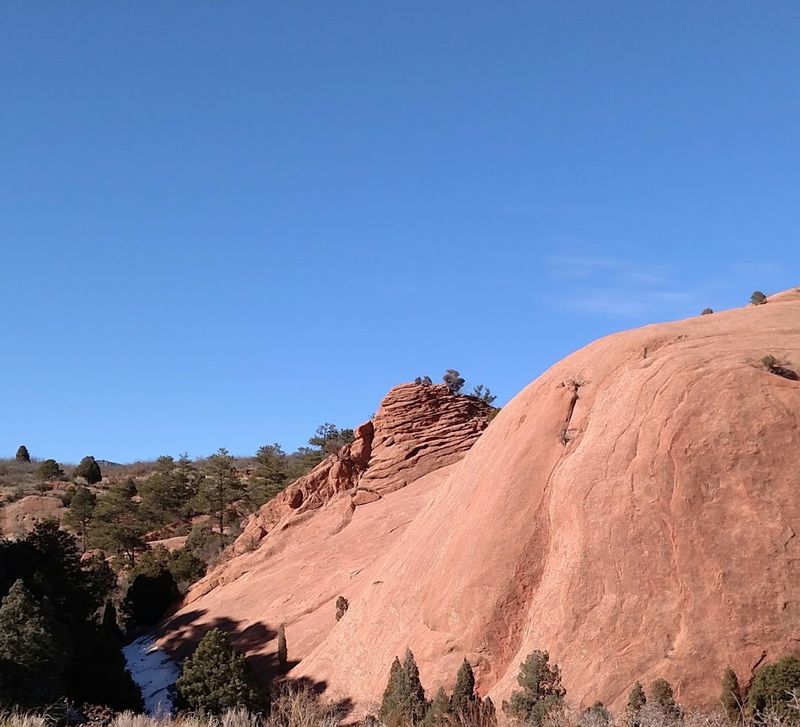
Colorado Springs has no shortage of things to see, from the towering formations at Garden of the Gods to the summit of Pikes Peak. But Herkimer and the May Natural History Museum occupy a completely different lane, one that is quieter, weirder, and somehow more personal than the big-ticket attractions.
There is something refreshing about a place that has been doing exactly the same thing for over sixty years without chasing trends or reinventing itself. The May family built something real here.
John May spent his life collecting these specimens from the farthest corners of the world, and his descendants are still sharing that collection with anyone curious enough to make the drive down Rock Creek Canyon Road. That continuity feels rare and worth supporting.
Herkimer itself is the kind of thing that sticks with you. You will find yourself describing it to people later, trying to explain the scale and the absurdity and the oddly moving fact that someone cared enough to build a 10-foot beetle and keep it standing for decades.
Road trips are made of moments like that, the unexpected stops that end up being the ones you actually remember. If you are anywhere near Colorado Springs between May and September, this is the detour worth taking.
Bring a camera, keep your eyes open on Highway 115, and do not be surprised when Herkimer makes you hit the brakes. That is exactly what it is supposed to do.
Address: 710 Rock Creek Canyon Rd, Colorado Springs, CO
