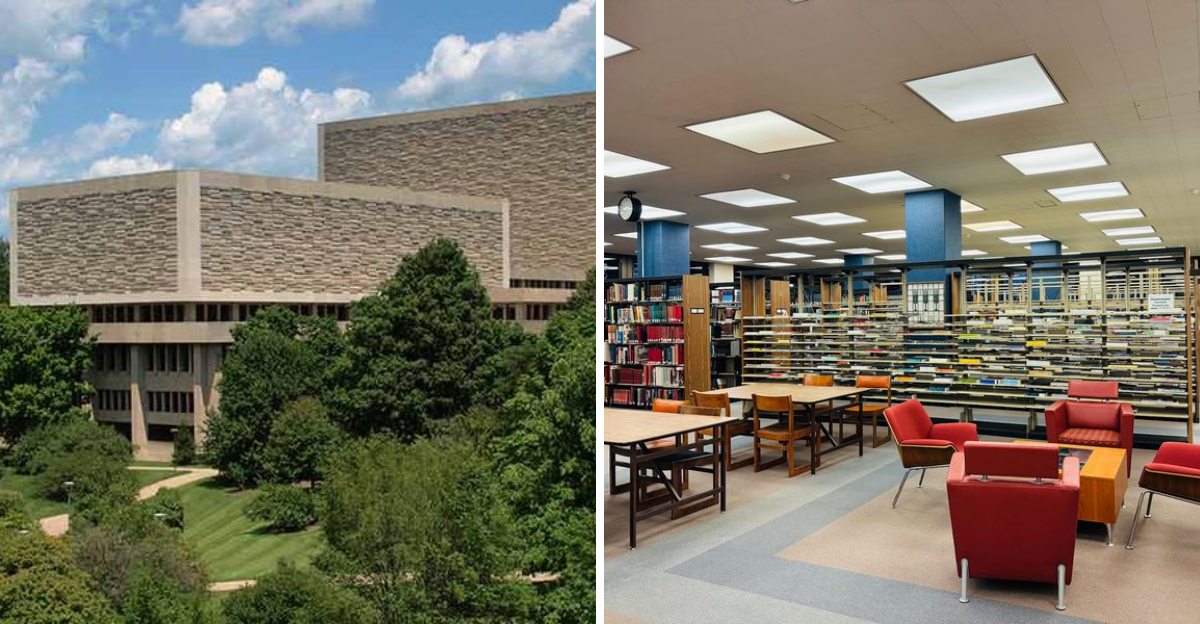
Some buildings are impressive because of what they look like. Others become unforgettable because of what they hold.
One Indiana library manages to do both, combining a bold architectural style with a collection that spans millions of books and countless subjects. The unusual exterior catches your attention first, but the incredible amount of knowledge inside is what makes the visit truly memorable.
Whether you love architecture, books, or simply exploring unexpected attractions, this destination offers a rare combination of creativity and discovery.
The Monumental Architecture That Makes You Stop and Stare
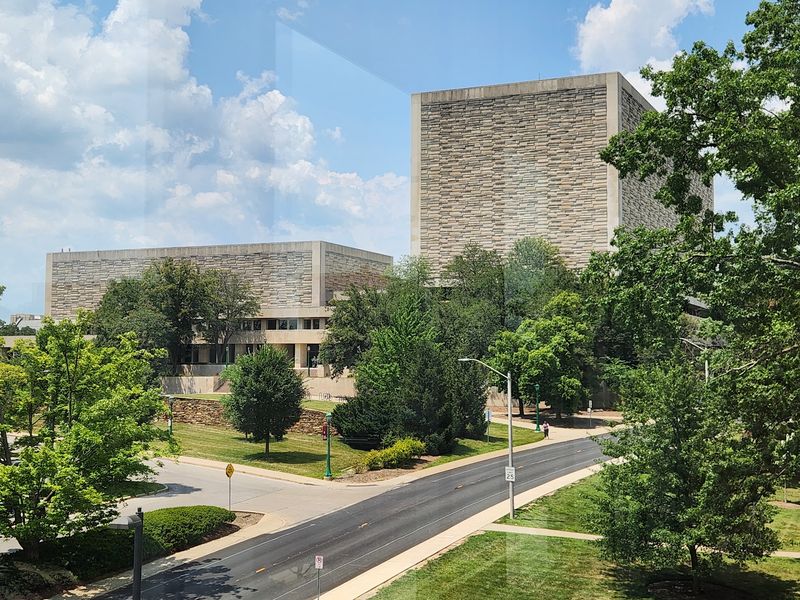
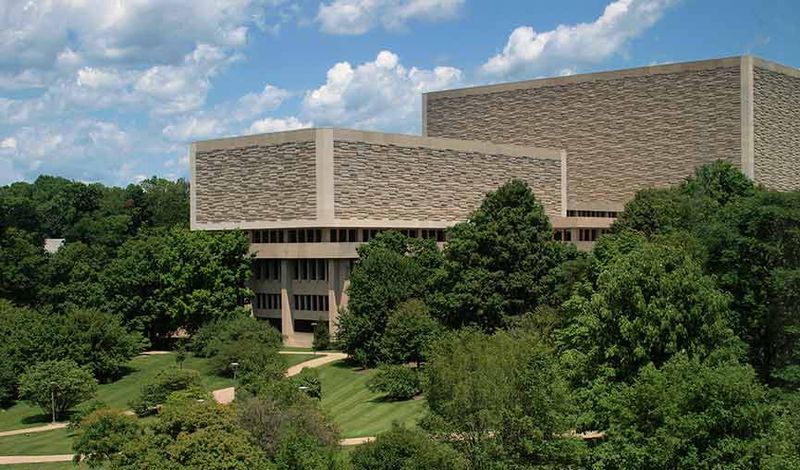
There is something almost cinematic about the moment you first spot the Herman B Wells Library rising above the Indiana University Bloomington campus. The building does not whisper its presence.
It announces itself with two commanding towers built from solid Indiana limestone, carrying a mid-century modern design that feels both timeless and slightly otherworldly. People have compared it to a sci-fi bunker, and honestly, that comparison holds up.
The structure is enormous. Its footprint stretches across a significant portion of the campus, and the sheer height of the towers demands your attention from a distance.
There is a myth, apparently well-known around campus, that the building is slowly sinking under its own weight. The university has since clarified that it rests on a bedrock of limestone, which explains why the “towers of silence” architectural style created that impression in the first place.
Up close, the textures of the stone walls and the geometry of the windows give the exterior a kind of quiet drama. The building feels permanent, deliberate, and deeply serious about its purpose.
I remember circling it slowly before going in, just taking it all in from different angles. That bold cubist silhouette is genuinely unlike anything else on campus.
Visiting just for the architecture alone would be worth the trip, but what waits inside makes the experience even richer.
Over 4.5 Million Volumes Waiting to Be Discovered
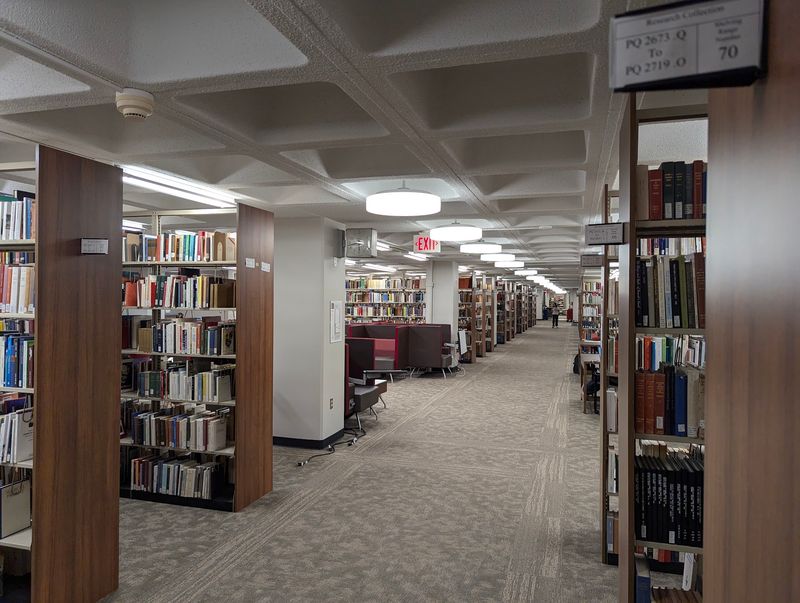
Most libraries feel big until you visit Wells Library. Then your whole sense of scale shifts completely.
The collection housed here tops 4.5 million volumes, and that number does not fully register until you find yourself walking through the East Tower stacks, surrounded by shelves that stretch upward further than feels reasonable for a building that contains human knowledge.
The upper floors of the East Tower are dedicated to research collections, and the quiet up there is a different kind of quiet. It has weight to it.
You pass row after row of texts covering subjects from medieval history to contemporary political science, from rare botanical studies to decades of international journalism. Every spine represents something someone thought was worth preserving.
What makes this especially meaningful is that the collection is genuinely accessible. Students, faculty, and visiting researchers can request materials, browse freely through the open stacks, and follow a curiosity wherever it leads.
I found myself pulling books off shelves just to flip through them, following one interesting thread to another like a rabbit hole with no bottom. There is something deeply satisfying about being surrounded by that much accumulated human thought.
The digital age has not made this feel outdated. If anything, standing among millions of physical books feels more remarkable now than it ever did before.
This is a collection that rewards exploration.
Rare and Specialized Collections That Researchers Dream About
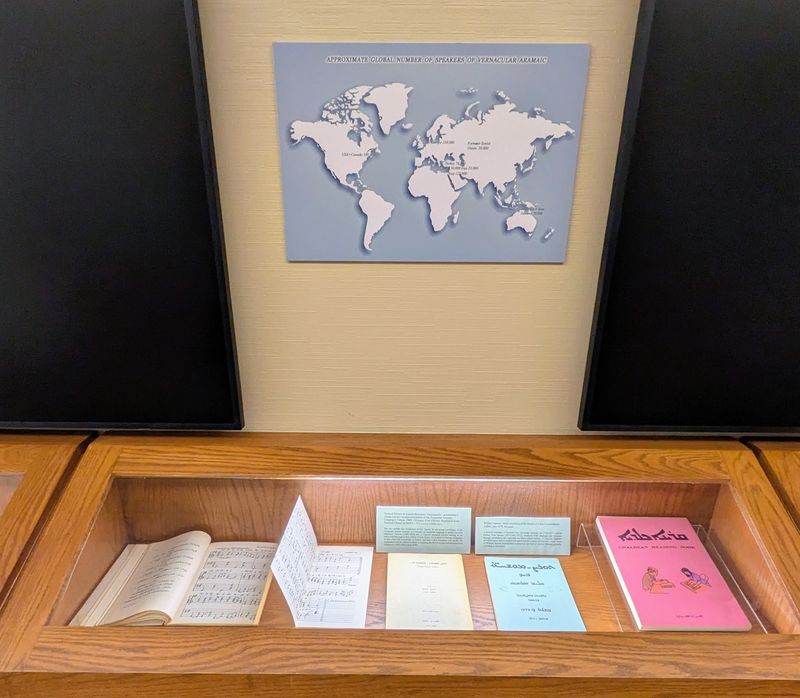
Beyond the general stacks, the Wells Library holds some genuinely rare and specialized collections that set it apart from most university libraries in the country.
Indiana’s largest map collection lives here, and for anyone fascinated by geography, exploration history, or cartography, it is an extraordinary resource.
Old maps have a way of making history feel tactile and real.
The Folklore Collection deserves its own spotlight. It is recognized as one of the largest and most comprehensive folklore archives in the entire world, preserving oral traditions, cultural practices, and folk narratives from communities across the globe.
Researchers travel specifically to Bloomington to access it. That kind of reputation does not happen by accident.
The University Archives, located on the fourth floor of the East Tower, trace Indiana University’s history all the way back to 1820. For anyone connected to IU, browsing through those records feels personal and surprisingly moving.
The library also maintains impressive area studies collections covering African Studies, Russian and East European Studies, East Asian Studies, and even rare Tibetan and Estonian materials. These are not token inclusions; they represent serious, deep holdings built over many decades.
Each specialized collection feels like its own world contained within the larger library. For researchers, this place is a destination.
For curious visitors, it is a reminder that knowledge takes more shapes than most of us ever consider.
A Makerspace and Scholars Commons That Bring Modern Learning to Life
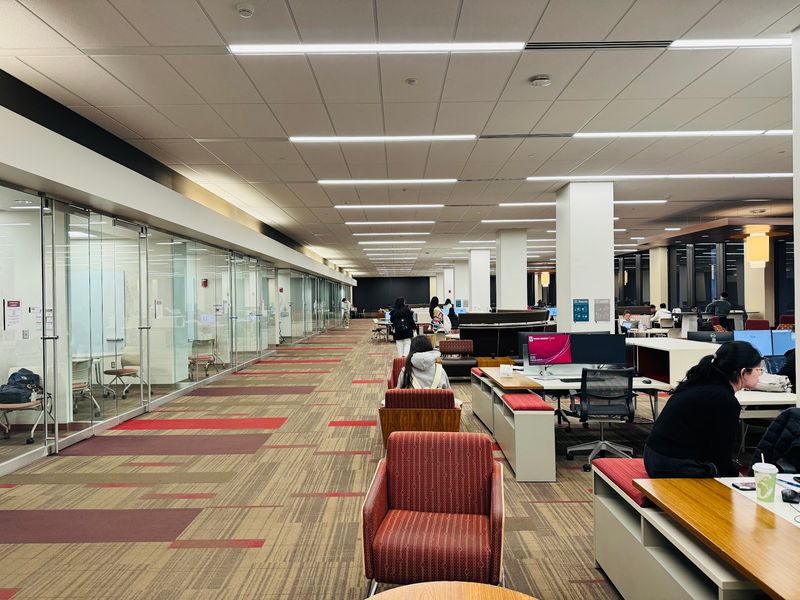
Anyone who still pictures libraries as purely silent, dusty repositories has not been to Wells Library recently. The Creator Commons, the library’s expanded makerspace, is one of the most energizing spaces on the entire campus.
It offers 3D printers, design tools, and technology resources that go far beyond what most people expect to find inside a library building.
The idea is straightforward: learning by making is just as valid as learning by reading. Students and faculty can access the Creator Commons to prototype ideas, build projects, and experiment with technology in a supported environment.
It bridges the gap between traditional academic research and hands-on creative work in a way that feels genuinely forward-thinking.
Then there is the Scholars’ Commons, tucked into the East Tower’s main floor. This area offers reservable collaboration rooms and study spaces designed specifically for group work.
I noticed how naturally students gathered there, spreading out laptops and notebooks, talking through ideas with an ease that the space seemed to encourage. The library clearly understands that not all learning happens alone.
Some of the best intellectual breakthroughs come from two people arguing over a shared document at a table. These spaces reflect a library that has evolved thoughtfully alongside the needs of its community, without abandoning what makes a library irreplaceable in the first place.
The balance feels right.
Cinematic History Lives Here, From a Film Archive to Breaking Away
Not many libraries can claim a connection to an Academy Award-winning film, but Wells Library pulls it off effortlessly. The 1979 movie “Breaking Away,” which won the Oscar for Best Original Screenplay, features the library in a memorable cameo.
Recognizing the building on screen after visiting in person gives you a small, satisfying thrill.
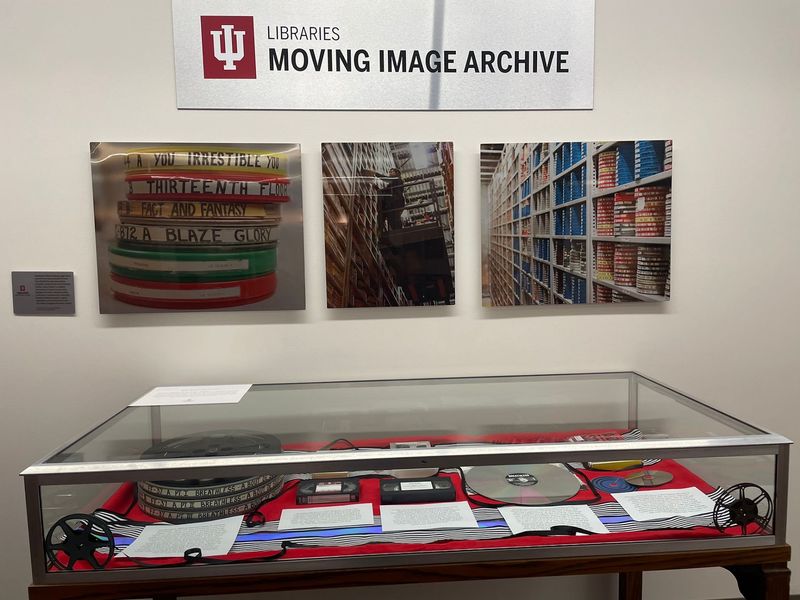
Beyond that cinematic footnote, the library is home to the Moving Image Archive, which contains one of the world’s largest collections of educational film and video.
The archive spans nearly 80 years of film and television production, with over 86,000 items covering documentary films, instructional videos, and cultural media from across the decades.
A dedicated screening room allows researchers and students to access these materials in an appropriate viewing environment.
The Black Film Center and Archives also resides within Wells Library, representing a vital preservation effort focused on films by and about Black artists and communities.
This collection holds deep cultural and historical significance, and its presence within the library reflects a serious commitment to representing diverse voices in the archive.
For anyone interested in media history, film studies, or cultural preservation, this combination of resources is genuinely exceptional. Most people visit Wells Library for the books, which makes perfect sense.
But discovering that it also holds decades of moving image history adds a whole new dimension to what the building quietly contains.
You Will Want to Spend the Whole Day in These Study Spaces
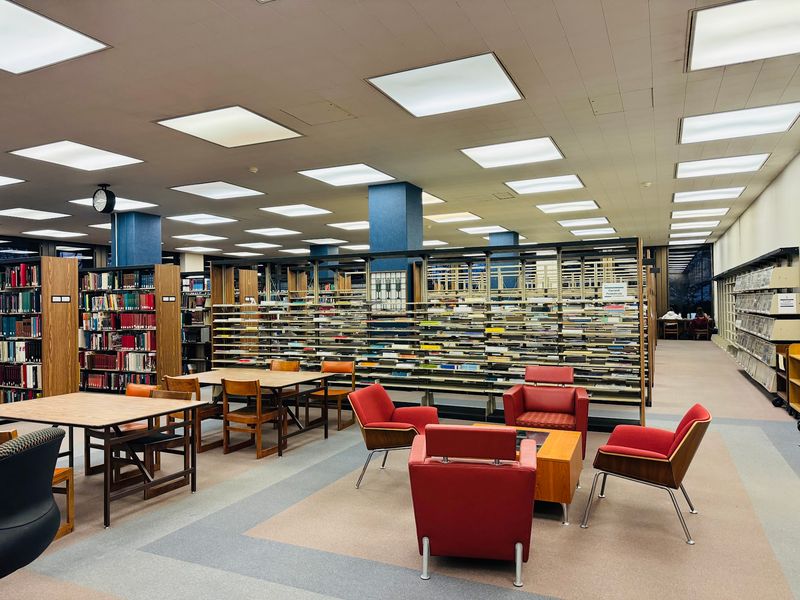
There is a real art to designing a space that makes people want to stay and think. Wells Library has figured it out across multiple floors and in multiple modes.
The East Tower’s upper levels, particularly floors four through ten, are dedicated to quiet study. Up there, the atmosphere shifts noticeably.
The sounds of campus life fade away, and what remains is the kind of focused calm that serious work requires.
Some of those floors have been recently renovated, and the ninth floor in particular comes highly recommended for its fine arts holdings and refreshed environment. The views from those upper floors over the Bloomington campus are a quiet bonus that most visitors do not expect.
Looking out over the tree-lined grounds from that height, surrounded by books, feels unexpectedly peaceful.
The West Tower operates with a different energy. Floors one, four, and five are set up for group study, and the hum of collaboration there is productive rather than distracting.
Students work on presentations, debate ideas, and review research together in a setting that genuinely supports that kind of activity.
The Learning Commons on the first floor adds academic support services like tutoring and writing help, making the library a full-service intellectual environment.
Whether you need deep solitude or the spark of working alongside others, this building has a space calibrated exactly for that mood. Few libraries offer that range so deliberately.
Are You Ready to Explore Everything Else This Library Hides
The Wells Library has a way of revealing itself in layers. Every time you think you have seen the main attraction, another corner of the building offers something unexpected.
The Bookmark[et] Eatery on the ground floor is one of those pleasant surprises, a spot to grab a coffee or a quick bite without having to leave the building mid-study session. It keeps the rhythm of a long research day from breaking.
Media Services offers something genuinely fun: the ability to check out video games, DVDs, and board games alongside the more expected academic lending.
There is something charming about a library that holds millions of scholarly volumes and also lets you borrow a board game for an afternoon.
It signals that the library understands its community as whole people, not just researchers.
Tech support is available on the first floor, which has apparently saved more than a few students from deadline-related disasters. The staff throughout the building have a reputation for being genuinely helpful, the kind of helpful that feels personal rather than scripted.
A statue of Herman B Wells himself stands as a daily landmark for students passing through, a quiet reminder of the legacy behind the name. This library is a living, breathing part of campus life in Bloomington.
Visiting it means stepping into something that generations of students and scholars have called their second home, and that history is palpable.
Address: 1320 E. Tenth Street, Bloomington, IN 47405
