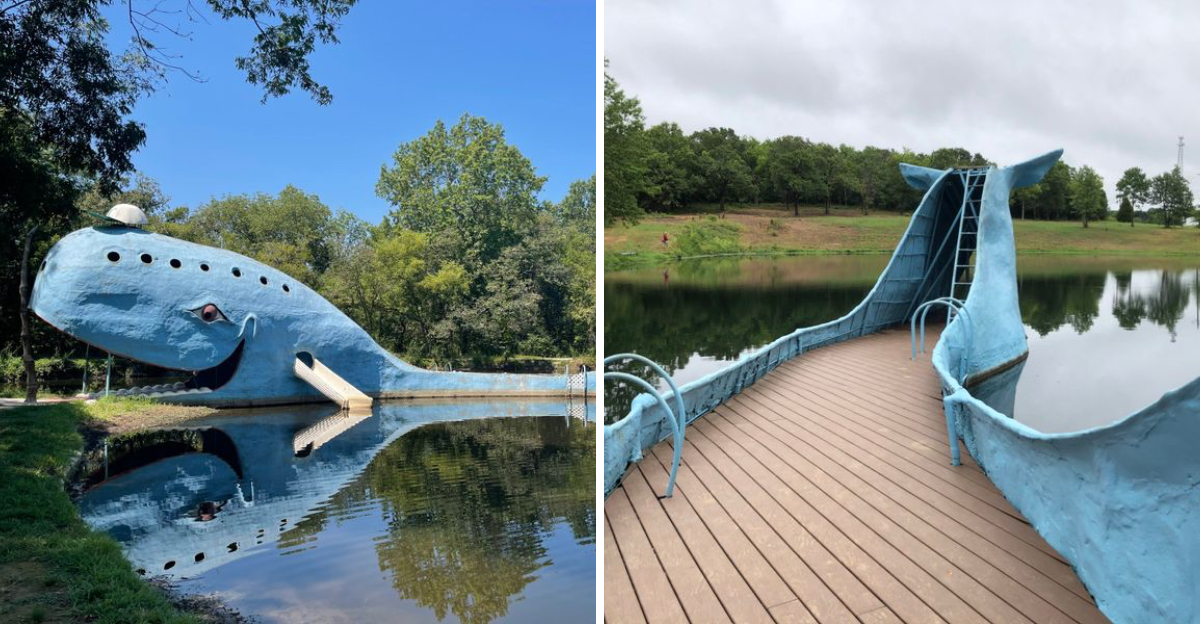
Along the historic ribbon of Route 66 in northeastern Oklahoma stands a massive concrete creature that has captured hearts for more than five decades. The Blue Whale of Catoosa rises from a quiet pond just outside Tulsa, its cheerful grin and bright blue paint welcoming travelers from across the country.
Built in the early 1970s as a surprise anniversary gift, this whimsical roadside sculpture has grown far beyond its humble origins to become one of the most photographed landmarks along the Mother Road.
What started as one man’s labor of love has transformed into an enduring symbol of Oklahoma’s quirky charm and its deep connection to American road trip culture. Families pull off Highway 66 to snap photos, feed turtles in the pond, and step inside the whale’s open mouth.
The site embodies the playful spirit of mid-century Americana, when roadside attractions dotted the landscape and invited weary drivers to pause and explore.
Today, the Blue Whale stands as more than just a tourist stop. It represents the nostalgia of simpler times, the creativity of ordinary people, and the enduring appeal of destinations that exist purely to bring joy.
Its status as an unofficial state symbol speaks to Oklahoma’s pride in celebrating the unexpected and preserving the magic of the open road.
A Gift Born from Love and Imagination
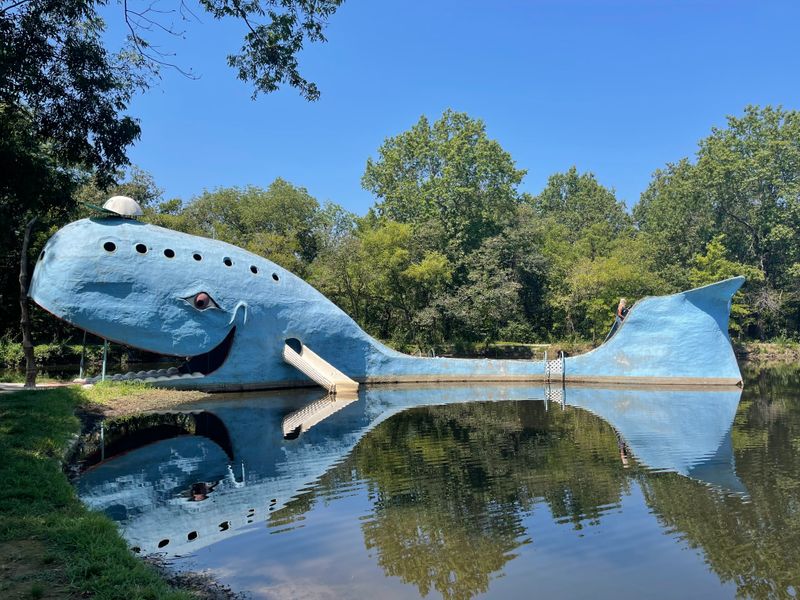
Hugh Davis built the Blue Whale between 1970 and 1972 as an anniversary present for his wife, Zelta, who collected whale figurines.
Working with his own hands and a vision that seemed outsized even by roadside attraction standards, Davis constructed the 80-foot-long creature from steel and concrete on the edge of a spring-fed pond he had created on their property.
The project took nearly two years to complete, with Davis shaping every curve and detail himself.
Zelta’s reaction to the finished whale exceeded even Hugh’s hopes. The couple opened the site to the public almost immediately, and local families began arriving to swim in the clear pond water and slide down the chutes built into the whale’s sides.
What began as a private gesture of affection quickly became a beloved community gathering spot.
The Davis family welcomed visitors without charging admission, embodying the generous spirit that defined much of Route 66 culture. Children splashed in the pond while parents picnicked under nearby trees, and the Blue Whale became woven into the fabric of countless summer memories.
Hugh’s creation reflected his background as a zoology professor and his lifelong fascination with animal behavior and design.
The whale’s cheerful expression and accessible location made it an instant landmark. Hugh continued to maintain and improve the site for years, adding picnic tables, landscaping, and other features that enhanced the visitor experience.
His devotion to sharing this unique space with strangers demonstrated the kind of openhearted hospitality that made Route 66 attractions so special. The whale became inseparable from the Davis family story, a testament to what one person’s creativity and generosity can accomplish.
Community Restoration Brings New Life
By the late 1990s, the Blue Whale had deteriorated significantly. Vandalism, weather damage, and years without maintenance left the structure cracked and faded.
The pond had become overgrown, and the surrounding grounds looked abandoned. Many locals feared the landmark would be demolished or simply collapse from neglect, taking a piece of Oklahoma history with it.
Hampton and Linda Davis, Hugh’s son and daughter-in-law, decided to take action. They formed a restoration committee and rallied community support to save the family treasure.
Volunteers donated time, materials, and expertise to repair the concrete, repaint the whale in its signature bright blue, and clean up the property. The effort required thousands of hours of work and demonstrated the deep affection Oklahomans felt for this quirky monument.
Local businesses contributed supplies and funding, while Route 66 preservation organizations spread the word nationally. The restoration project became a model for how communities could save endangered roadside attractions through grassroots organizing and volunteer labor.
News coverage of the effort brought even more visitors to Catoosa, eager to see the revitalized whale and support its continued maintenance.
The City of Catoosa eventually assumed ownership and responsibility for the site, ensuring its long-term preservation. Public ownership meant dedicated resources for upkeep and improvements while maintaining free public access.
The arrangement honored Hugh Davis’s original vision of sharing his creation with everyone while providing the organizational structure needed to protect it for future generations. The successful restoration inspired similar efforts at other Route 66 landmarks across Oklahoma and beyond.
Route 66 Heritage and Cultural Significance
The Blue Whale sits along one of the most storied stretches of pavement in American history. Route 66, dubbed the Mother Road by John Steinbeck, connected Chicago to Los Angeles and served as a main artery for westward migration, commerce, and tourism throughout the mid-20th century.
Oklahoma claims more drivable miles of the original route than any other state, and the Blue Whale became one of its most recognizable landmarks.
During Route 66’s heyday, roadside attractions competed for the attention of passing motorists. Giant statues, quirky museums, and themed restaurants lined the highway, each one promising a memorable detour.
The Blue Whale stood out not because of commercial ambition but because of its authentic charm and the genuine warmth of its creators. Travelers appreciated the lack of gimmicks and the simple pleasure of encountering something unexpected.
As interstate highways replaced Route 66 in the 1970s and 1980s, many roadside attractions fell into disrepair or disappeared entirely. The Blue Whale faced a similar fate after Hugh Davis passed away in 1990.
The pond grew murky, the paint faded, and the structure showed signs of neglect. For years, it seemed the whale might become just another forgotten relic of a bygone era.
The resurgence of interest in Route 66 during the 1990s and 2000s brought renewed attention to surviving landmarks. Preservationists, historians, and nostalgic travelers began championing efforts to restore and protect these pieces of Americana.
The Blue Whale emerged as a symbol of that movement, representing both the fragility of roadside heritage and the power of community commitment to keep history alive.
Architectural Design and Construction Details
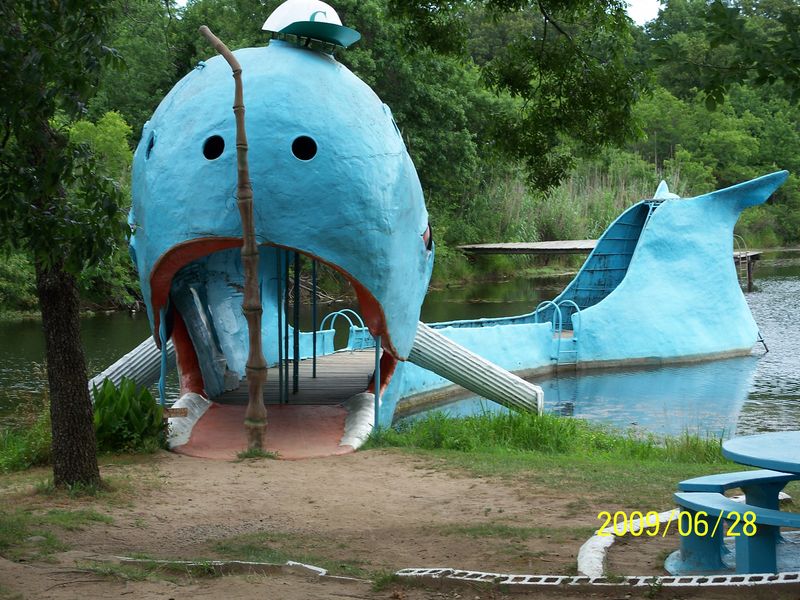
The Blue Whale’s construction showcases impressive amateur engineering and artistic vision. Hugh Davis created a steel frame that he covered with wire mesh and then coated with layers of concrete, a technique similar to that used for many folk art environments and roadside sculptures of the era.
The finished structure measures approximately 80 feet long and 20 feet high, with walls thick enough to support visitors walking through its interior.
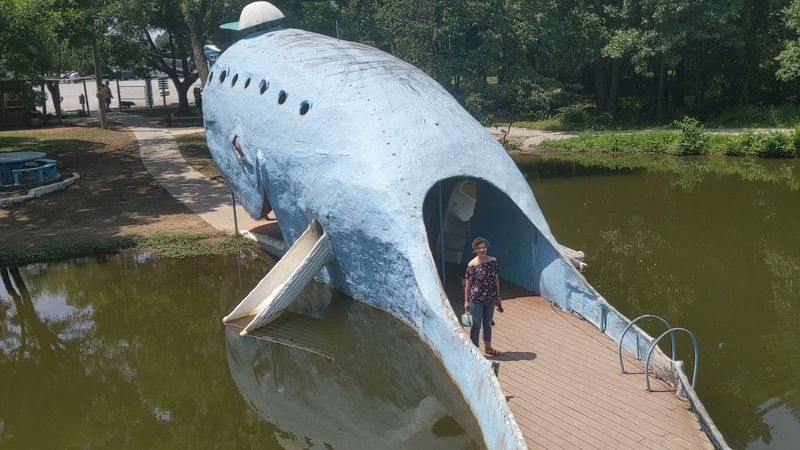
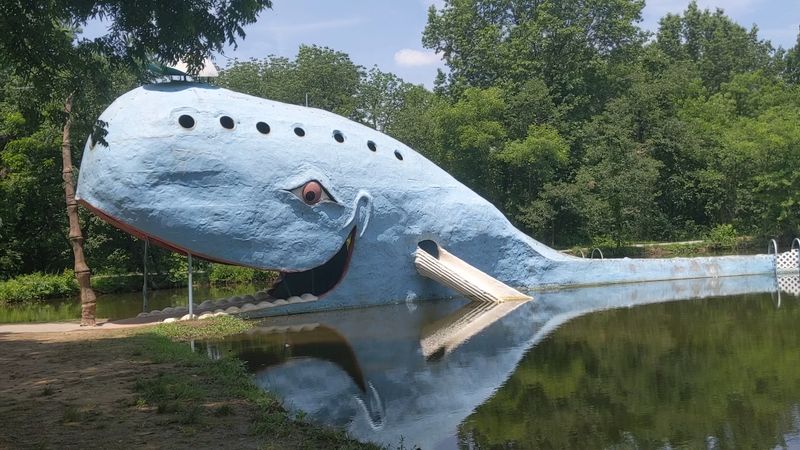
The whale’s open mouth serves as an entrance, leading to a hollow interior space where visitors can stand and look out through the mouth opening toward the pond. Slides once extended from openings in the whale’s sides down to the water below, allowing swimmers to enter the pond with a splash.
Though swimming is no longer permitted, the slide openings remain visible as reminders of the site’s former function as a swimming hole.
Davis positioned the whale at the edge of the pond so its tail extends over the water, creating the illusion that the creature is partially submerged. The placement maximizes the sculptural impact and provides excellent photo opportunities from multiple angles.
Visitors can walk around the entire structure and even climb onto the whale’s back for pictures, though safety concerns now limit some access.
The bright blue paint has become the whale’s signature feature, regularly refreshed by maintenance crews to keep it vibrant. The color choice was deliberate, meant to evoke the ocean and make the whale visible from the highway.
The cheerful expression painted on the face gives the sculpture a friendly, approachable character that appeals especially to children and reinforces the playful spirit Davis intended.
The Pond and Its Wildlife Residents
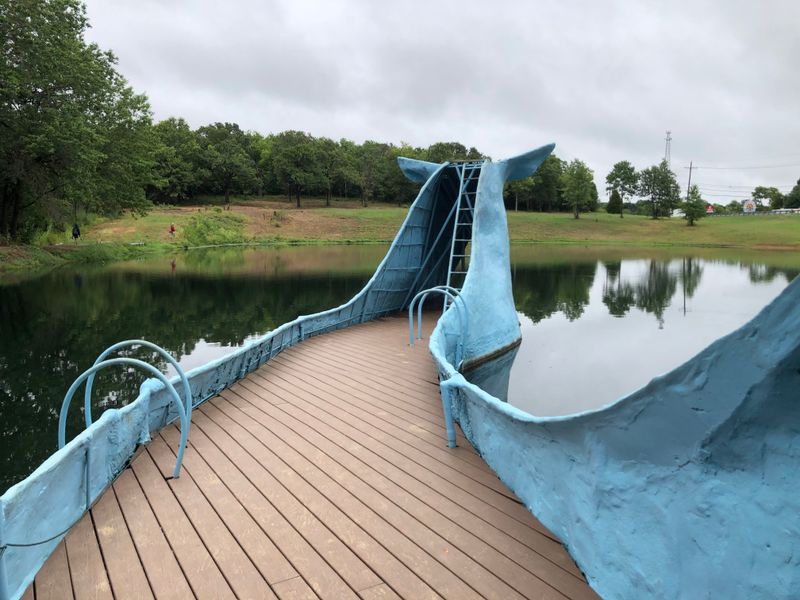
The spring-fed pond that surrounds the Blue Whale was originally crystal clear and deep enough for swimming. Hugh Davis excavated and shaped it specifically to accompany his whale sculpture, creating a realistic aquatic setting for the massive creature.
Families spent summer afternoons diving from the whale’s slides into the cool water, making the site a popular local swimming destination throughout the 1970s and early 1980s.
After the spring stopped flowing and maintenance lapsed, the pond’s water quality declined, eventually leading to the closure of swimming activities. Today, the pond remains but serves primarily as a scenic backdrop and wildlife habitat.
Turtles have claimed the water as their territory, with dozens of them basking on logs and swimming near the surface, especially when visitors arrive with food.
The gift shop sells turtle and fish food, and feeding the pond residents has become one of the site’s most popular activities. Children delight in watching turtles paddle over to gobble up the pellets, and catfish occasionally surface to join the feeding frenzy.
The interaction provides an unexpected hands-on element that enhances the visit beyond simply photographing the whale.
Visitors are encouraged to practice catch-and-release fishing from the pond’s edges, adding another recreational dimension to the site. The presence of wildlife gives the Blue Whale a living, dynamic quality that static roadside sculptures lack.
Birds nest in surrounding trees, dragonflies skim the water’s surface, and the sound of frogs creates a peaceful ambiance. This natural setting distinguishes the Blue Whale from more commercialized attractions and contributes to its enduring appeal as a place to relax and connect with both history and nature.
Photography Opportunities and Social Media Fame
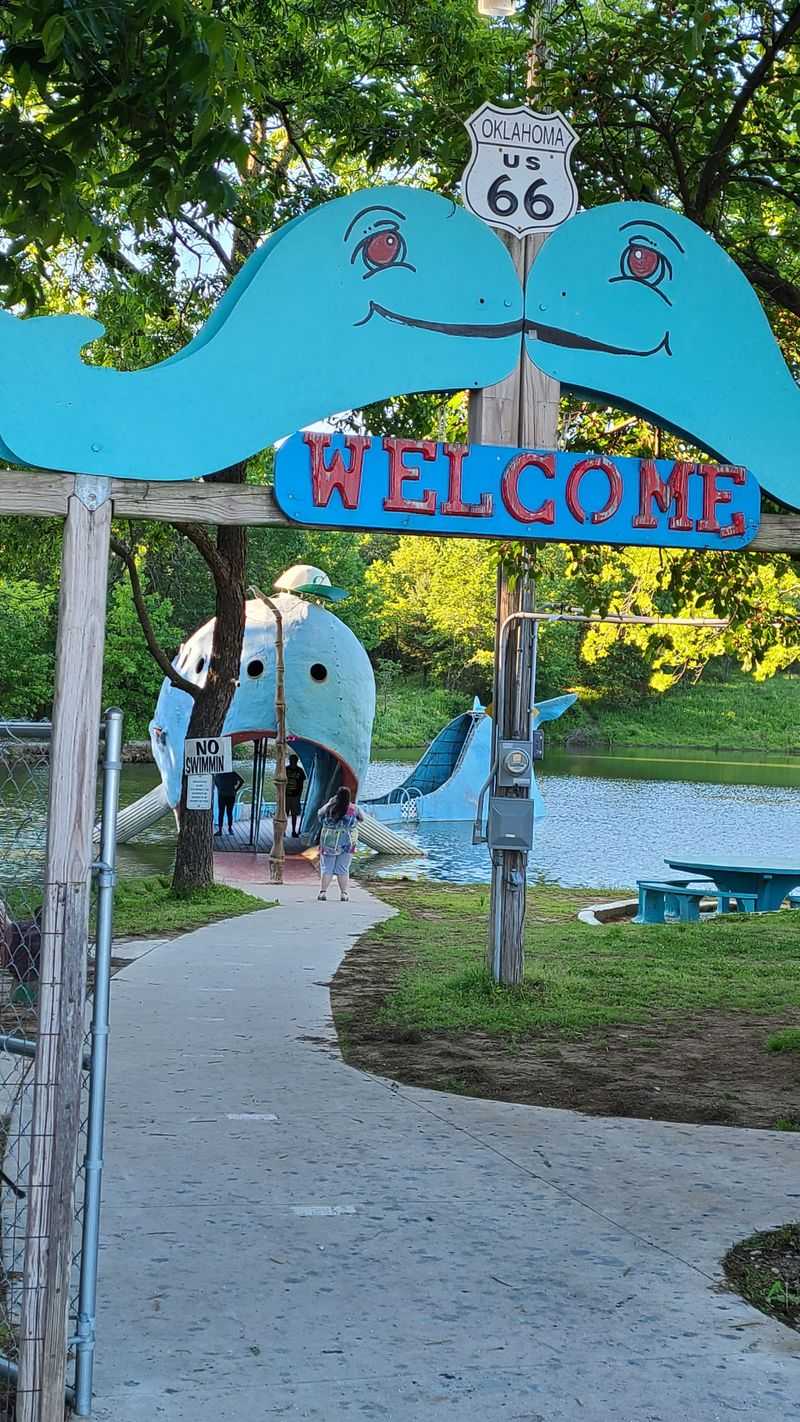
The Blue Whale has become one of the most photographed locations in Oklahoma, its distinctive appearance making it instantly recognizable and highly shareable on social media platforms.
Instagram, Facebook, and travel blogs feature countless images of the smiling blue creature, each photo helping to spread awareness and attract new visitors.
The landmark’s photogenic qualities have given it a second life in the digital age.
Photographers appreciate the variety of angles and compositions the site offers. Wide shots capture the whale in its pond setting with surrounding trees and sky, while close-ups emphasize the texture of the weathered concrete and the bold blue color.
Visitors pose inside the whale’s mouth, sit on its back, or frame themselves beside the massive structure for scale. Sunset and sunrise visits yield particularly dramatic lighting conditions.
The Blue Whale’s popularity on social media has introduced it to generations who never experienced Route 66’s golden age firsthand. Young travelers seek it out specifically for photos to share with their followers, creating a new kind of pilgrimage that parallels the original roadside attraction phenomenon.
This digital word-of-mouth has proven remarkably effective at driving visitation and raising the whale’s profile nationally.
Professional photographers and artists have featured the Blue Whale in exhibitions, books, and documentary projects about American roadside culture. Its image appears on everything from coffee table books about Route 66 to fine art prints celebrating vernacular architecture.
This artistic attention has elevated the whale’s status from simple roadside curiosity to recognized cultural icon, cementing its place in the broader story of American visual and architectural history.
Seasonal Changes and Year-Round Appeal
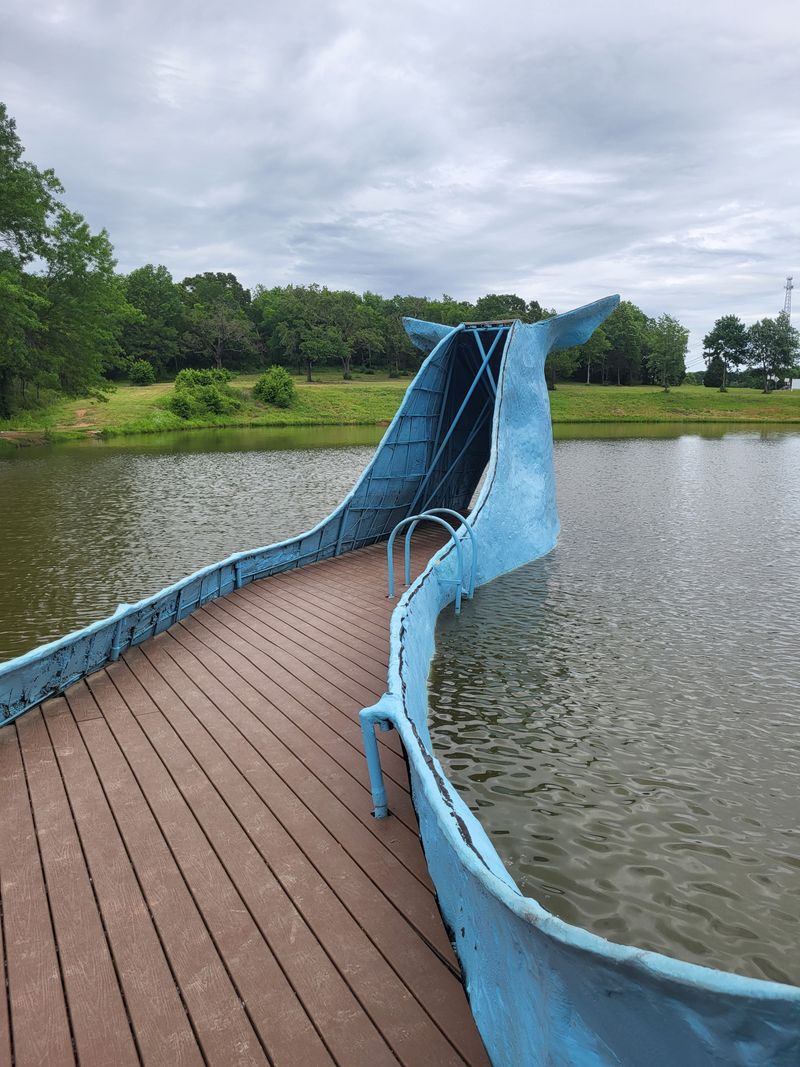
Each season brings a different character to the Blue Whale of Catoosa. Spring arrives with blooming wildflowers around the pond and fresh green leaves on the trees, creating a lush backdrop for the bright blue sculpture.
Migrating birds stop at the water, and the turtles emerge from winter dormancy to bask in warming sunshine. The mild temperatures make spring an ideal time for picnicking and extended outdoor visits.
Summer transforms the site into a popular family destination, with the shaded areas providing respite from Oklahoma’s heat. Though swimming is no longer allowed, the pond still evokes a sense of coolness, and the whale’s association with water feels especially appropriate during hot months.
Summer also brings the longest daylight hours, giving visitors more time to explore and photograph the landmark in varied lighting conditions.
Autumn paints the surrounding trees in gold and crimson, creating a stunning contrast with the whale’s blue exterior. The cooler weather makes outdoor activities more comfortable, and the site takes on a nostalgic quality as the landscape transitions toward winter.
Fall visits often coincide with Route 66 festivals and events, bringing increased traffic and a festive atmosphere to Catoosa.
Winter visits offer solitude and a different kind of beauty. The whale stands out starkly against bare trees and occasional snow, creating dramatic photo opportunities.
Fewer crowds mean visitors can take their time exploring without feeling rushed. The site remains open year-round, and hardy travelers who venture out during colder months are rewarded with a more intimate experience of this Oklahoma treasure.
The changing seasons ensure that repeat visitors encounter something new with each trip.
Ongoing Improvements and Future Vision
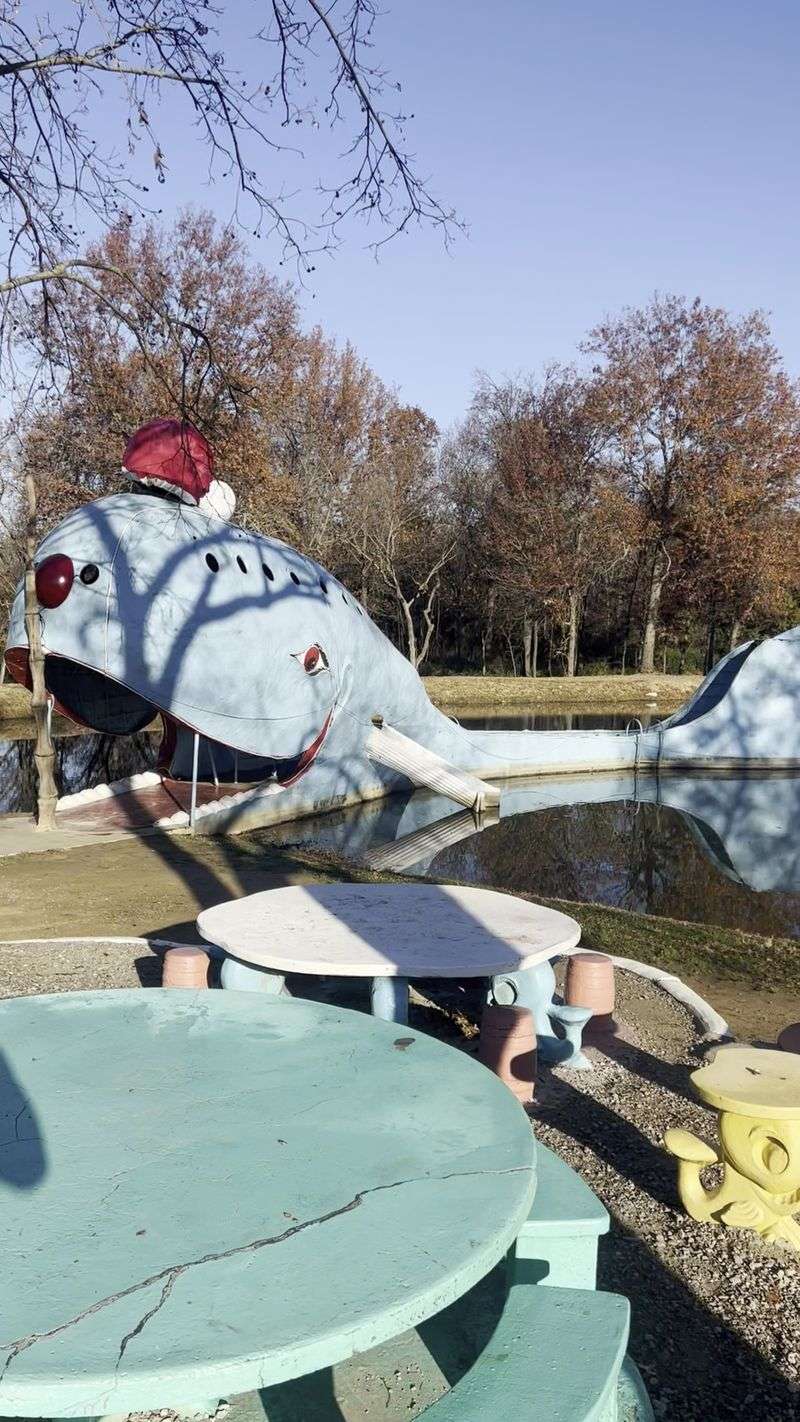
Recent visitor reviews mention construction and improvements underway at the Blue Whale site, signaling continued investment in this beloved landmark.
Plans reportedly include enhanced visitor facilities and possibly a new diner, additions that would expand the site’s appeal and functionality while respecting its historic character.
These improvements reflect a commitment to ensuring the Blue Whale remains relevant and accessible for future generations.
Balancing preservation with modernization presents challenges for any historic site. The Blue Whale’s caretakers must maintain the authentic roadside attraction atmosphere that gives the place its charm while addressing contemporary visitor expectations for amenities and accessibility.
Thoughtful planning aims to enhance the experience without overwhelming the simple, unpretentious qualities that made the whale special in the first place.
The addition of a diner would connect the Blue Whale to another classic Route 66 tradition, the roadside restaurant where travelers could refuel both their vehicles and themselves.
Mid-century diners were social hubs along the Mother Road, and recreating that atmosphere at the Blue Whale site could provide both practical benefits and historical resonance.
Such a facility would likely feature period-appropriate design elements and serve as another draw for Route 66 enthusiasts.
Long-term preservation requires ongoing funding, maintenance, and community engagement. The City of Catoosa has demonstrated its commitment through the improvements and regular upkeep, but continued support depends on sustained visitation and public interest.
As Oklahoma’s unofficial symbol of roadside Americana, the Blue Whale carries the responsibility of representing not just Catoosa but the entire state’s connection to Route 66 heritage and the spirit of creative, quirky, homegrown attractions.
Impact on Route 66 Tourism and Oklahoma’s Identity
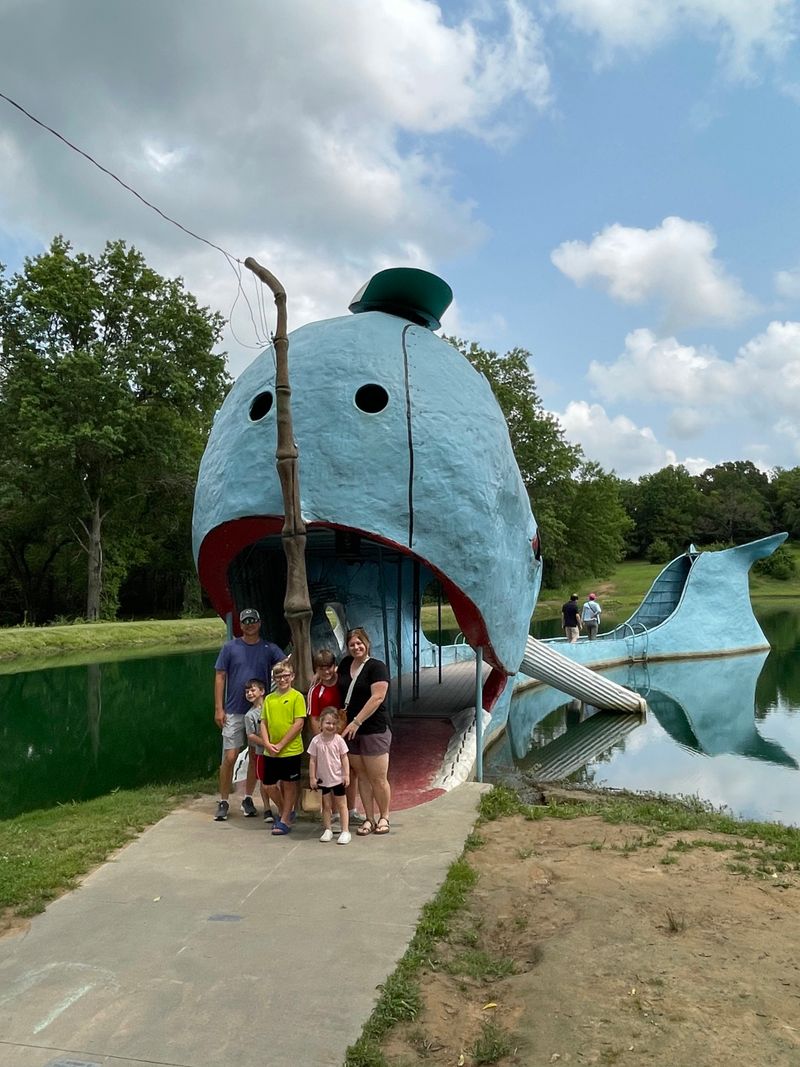
The Blue Whale has become synonymous with Oklahoma’s stretch of Route 66, appearing in guidebooks, documentaries, and promotional materials as a must-see stop. Its image helps brand Oklahoma as a state that values its roadside heritage and maintains a sense of humor about its attractions.
This association benefits the entire state’s tourism industry by creating a memorable landmark that encourages travelers to explore further.
Route 66 tourism generates significant economic activity for communities along the route. Travelers who stop at the Blue Whale often continue to other nearby attractions, eat at local restaurants, and sometimes stay overnight in the area.
The whale serves as an anchor attraction that helps draw people off the interstate and onto the historic highway, where they discover smaller businesses and lesser-known sites.
Oklahoma has embraced its Route 66 heritage more enthusiastically than some other states along the route, investing in preservation, promotion, and celebration of its Mother Road history.
The Blue Whale represents the success of these efforts, demonstrating how a single well-maintained landmark can become a powerful symbol and economic driver.
Its fame extends Oklahoma’s reputation beyond oil and agriculture to include cultural tourism and roadside Americana.
The designation as an unofficial state symbol reflects genuine affection from Oklahoma residents and recognition of the whale’s importance to the state’s image.
While Oklahoma has official state symbols ranging from the scissor-tailed flycatcher to the redbud tree, the Blue Whale holds a special place in the popular imagination.
It represents Oklahomans’ appreciation for individuality, creativity, and the kind of grassroots cultural expression that defines the best of American roadside architecture and folk art traditions.
Dear Reader: This page may contain affiliate links which may earn a commission if you click through and make a purchase. Our independent journalism is not influenced by any advertiser or commercial initiative unless it is clearly marked as sponsored content. As travel products change, please be sure to reconfirm all details and stay up to date with current events to ensure a safe and successful trip.
