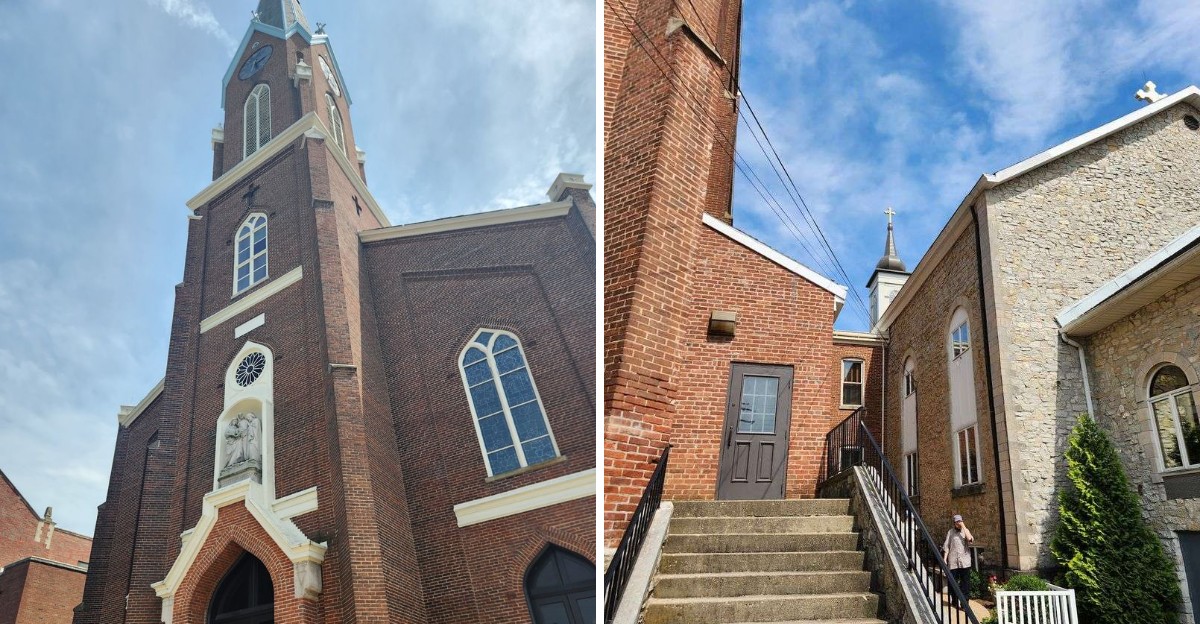
You see the church. Then you see the rooflines.
Then the sign. Wait.
Was that German? For a few seconds, the whole drive becomes a geography quiz nobody expected to take.
This tiny community was settled by German immigrants in the 1800s, and their influence is still written into the streetscape, from bilingual signs to steep-roofed brick buildings.
At the center, a Gothic Revival church rises with a 187-foot steeple that makes the surrounding farmland look almost theatrical.
But there is no theater here. There is no recreated village.
It is simply a real place where an old European identity somehow survived in the middle of Indiana.
A Steeple That Rules the Skyline
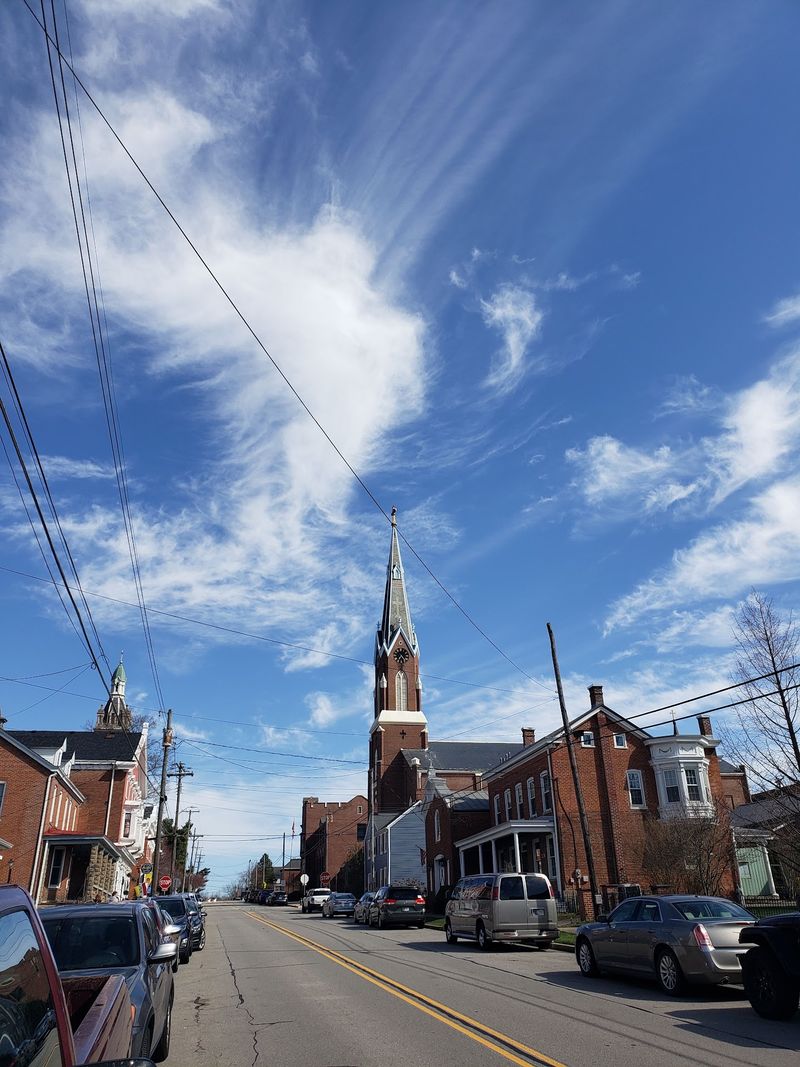
Long before the town itself comes into view, the spire announces it. Rising 187 feet, the tower of Holy Family Parish pierces the tree line and gives drivers on the surrounding county roads a landmark they can spot from a distance.
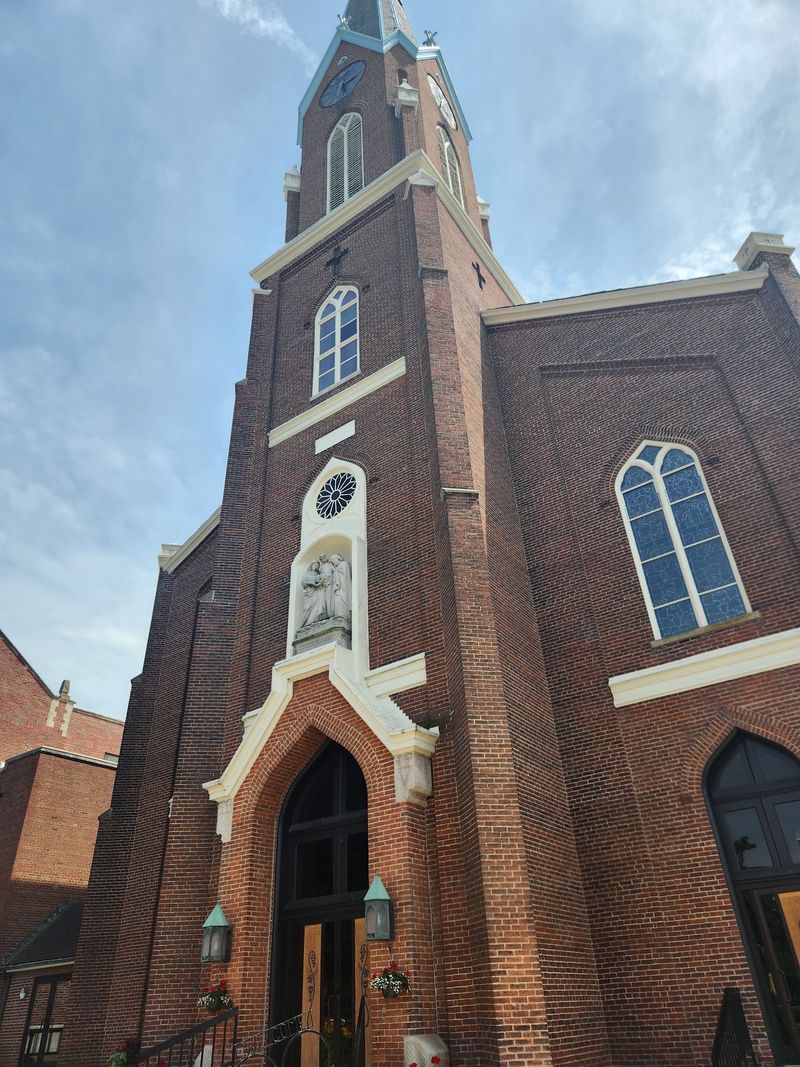
Getting closer only makes it better. The proportions are steep and confident, with pointed arches and vertical lines that pull the eye upward exactly the way Gothic Revival architecture was designed to do.
Photographers tend to hover near the corner of Pearl Street, where the tower lines up neatly against open sky. Morning light hits the front face and softens the brickwork, while late afternoon throws long shadows across the lawn and sharpens every edge.
The nickname makes sense once several towers appear at once. Oldenburg is called The Village of Spires because more than one steeple crowds this tiny skyline, and Holy Family leads the group by a comfortable margin.
Bring something with a decent zoom if possible. Details near the top, including the louvered openings and the slender finials, are easy to miss with a phone camera alone.
Parking sits close by, and the walk from car to church takes under a minute. Few landmarks in Indiana deliver this much visual payoff with so little effort required from the visitor.
Gothic Revival Craftsmanship Consecrated in 1862
Consecrated in 1862, the current church replaced earlier and far humbler buildings, and the ambition behind it still shows. Pointed arches, tall windows, and careful masonry reflect a congregation that wanted permanence rather than convenience.
Step inside and the temperature drops a few degrees. Sound behaves differently too, with footsteps carrying softly toward the ceiling instead of bouncing around.
Colored glass throws patches of red, blue, and amber across the floor depending on where the sun sits, which means the room genuinely looks different at nine in the morning than it does at four in the afternoon. Patient visitors notice this.
Woodwork deserves a slow look. Pew ends, altar details, and trim were shaped by hands working without modern power tools, and small irregularities give the surfaces warmth that machine work rarely achieves.
Visitors should check parish schedules before arriving, since access depends on services and events. Quiet respect matters here because Holy Family remains an active worship space rather than a museum.
Photography is usually best handled without flash. Natural light does a better job anyway, and it avoids disturbing anyone praying nearby.
Allow at least twenty minutes indoors. Rushing through defeats the entire point of a building designed to slow people down.
The Old Stone Church That Became the Rectory
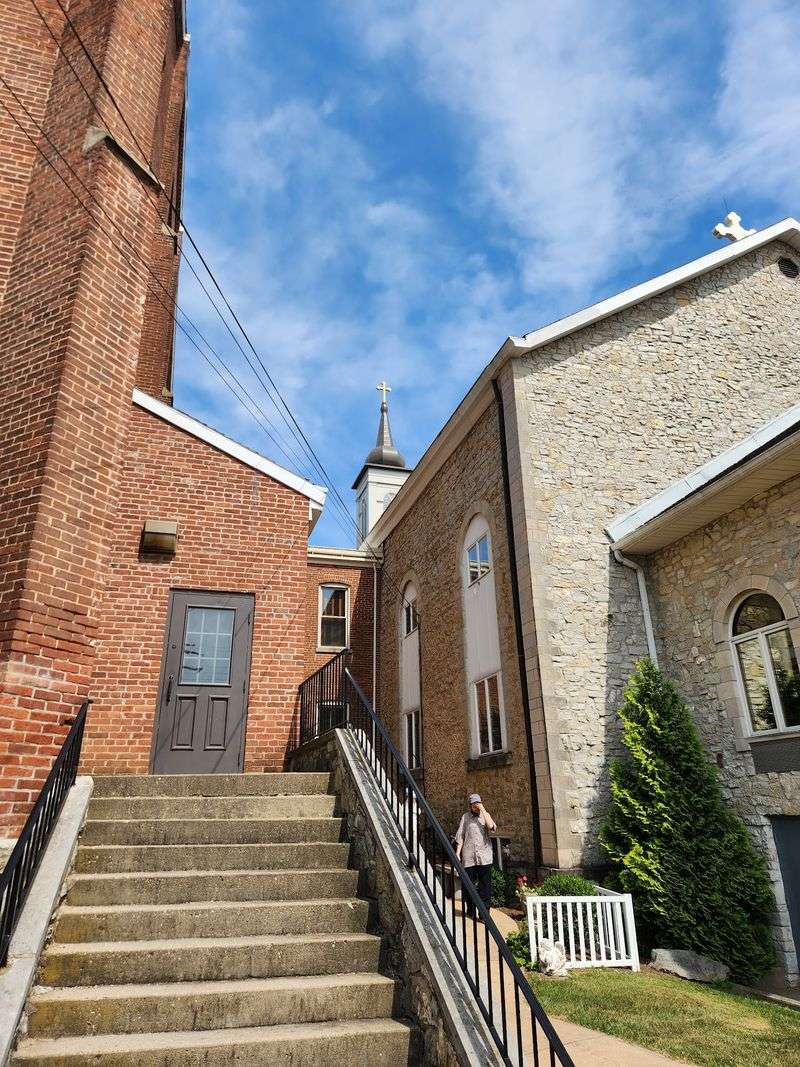
Next door to the main church sits a building with its own quiet résumé. Built in 1848 and consecrated in 1850, the stone church served the growing German congregation before the larger Gothic Revival structure took over.
Today it functions as the rectory. Reusing it rather than tearing it down kept a piece of the town’s earliest chapter standing.
Here is the detail most visitors miss. An onion dome once crowned the structure, a shape far more common in central European villages than in Indiana farmland, and it stayed in place until its removal in 1949.
Picture it back on top and the whole streetscape shifts even further toward Bavaria. Old photographs of the town show how dramatic that silhouette once looked.
Stonework on the walls rewards a close look, especially where weathering has revealed variations in color and texture. Compare it to the brick of the newer church and the leap in scale and ambition between the 1840s and the 1860s becomes obvious.
Keep in mind that the rectory is a private residence and office. Admiring it from the sidewalk is the respectful approach, and honestly the exterior is where the story lives anyway.
Small buildings sometimes carry the biggest surprises.
German and English Street Signs Around Every Corner
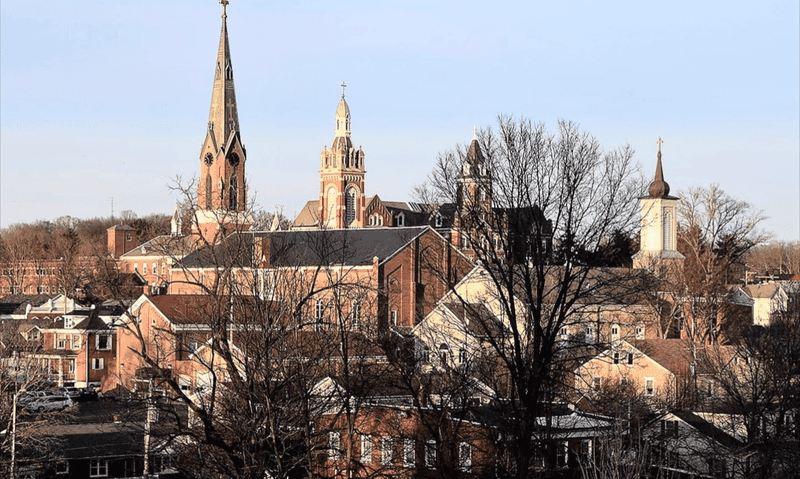
Bilingual street signs appear at intersections throughout Oldenburg, and they do something clever. Instead of explaining the town’s heritage in a plaque, they simply let visitors walk through it.
Wander a few blocks and the pattern becomes a game. Spotting each German name alongside its English counterpart turns an ordinary stroll into a scavenger hunt that kids usually enjoy more than adults expect.
The church sits at 3027 Pearl Street, which makes a natural starting point for exploring the grid of surrounding lanes. From there, the village unfolds in a handful of easy directions.
Houses along the way carry their own European accents, with steep gables, tidy brickwork, and details that feel imported rather than invented. Flower boxes and painted trim add color in warmer months.
Distances are short. Most of the historic core can be covered comfortably on foot in an hour or so, which suits travelers making a quick detour off the highway.
Comfortable shoes help since some sidewalks are uneven and streets slope gently. Nothing here is strenuous, though.
Weekday mornings tend to be peaceful, with little traffic and plenty of quiet for photos. That stillness is part of the appeal, and it lets the German character of the place register properly.
Father Rudolf, the Priest Who Shaped a Town
Every village with real character usually has one person behind it. In Oldenburg, that person was Father Franz Joseph Rudolf, a German priest who arrived in 1844 and is widely regarded as the father of the town.
His influence reached well beyond Sunday services. Under his guidance the community grew, buildings rose, and the German Catholic identity that still defines the place took firm root.
He rests in a crypt beneath Holy Family Church, which links the building directly to the story of its own creation. Few churches keep their founding figure quite so close.
Knowing that detail changes how the church feels. The architecture stops being decoration and starts reading as a record of decisions made by real people facing real challenges in a young frontier settlement.
Reading a bit of local history before arriving pays off enormously. Names and dates that would otherwise slide past suddenly attach to specific stones, windows, and streets.
Parish materials and local historical resources cover the timeline in more depth for anyone curious. History buffs will find plenty to chew on.
Take a moment outside afterward and look at the town from the church steps. The view basically shows one man’s long-term project, still functioning generations later.
The Franciscan Sisters Across the Street
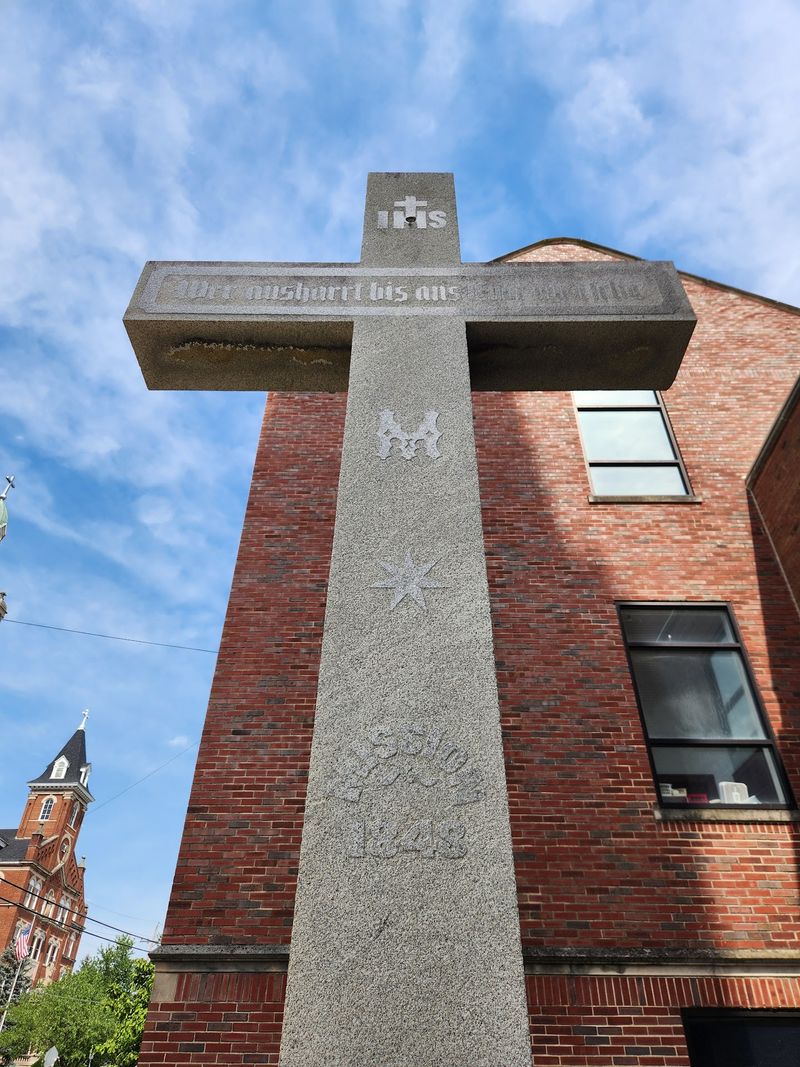
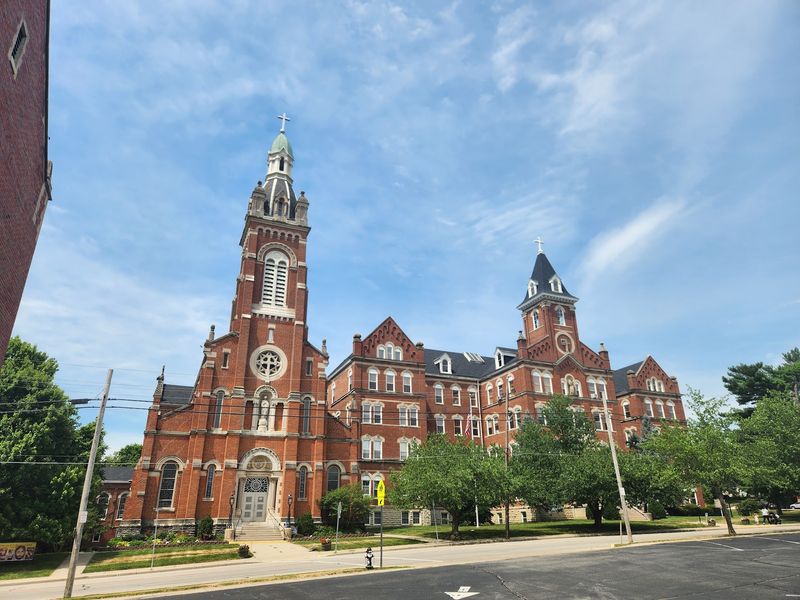
Directly opposite the parish stands a complex that doubles the town’s sense of scale. The convent of the Franciscan Sisters of Oldenburg occupies a commanding spot, and its presence explains why such a small village holds so many large buildings.
Mother Theresa Hackelmeier started it all. She arrived from Vienna in 1851 at Father Rudolf’s invitation and founded the community that has served the area ever since.
Education, faith, and service shaped the sisters’ work across generations, and the physical campus reflects that long commitment. Brick walls, arched windows, and mature trees create grounds that feel settled rather than staged.
Walking the perimeter gives visitors the best sense of proportion. From certain angles, the convent and the church frame each other, and photographs taken from the street capture both spires in a single shot.
Portions of the property are private, so checking posted signage and respecting boundaries is essential. Sightlines from public sidewalks are generous enough that nothing important gets missed.
Autumn suits this corner of town especially well, when the trees turn and the brick warms up under low sunlight. Spring runs a close second.
Two institutions facing each other across one street, both over a century old, still anchoring the same village. That’s a rare arrangement anywhere in the Midwest.
Munich Stained Glass in the Convent Chapel
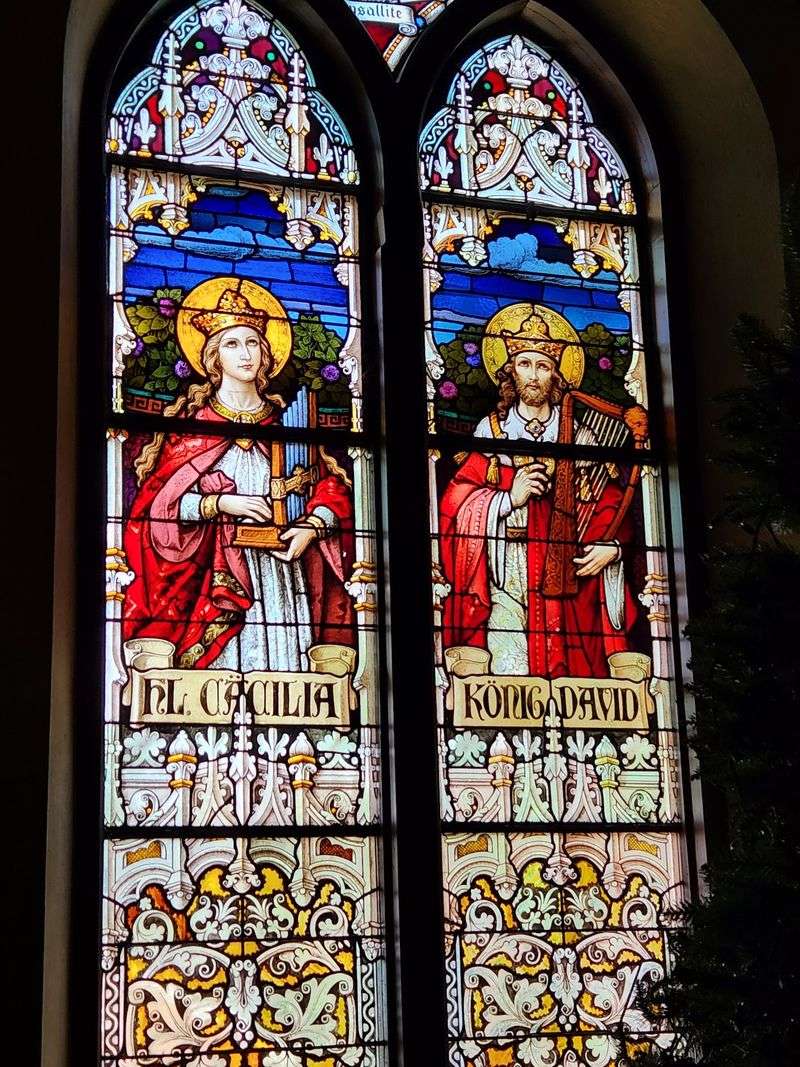
Glass makes or breaks a chapel, and the Chapel of the Immaculate Conception had its shipped in from Munich. Built between 1889 and 1890, the chapel sits within the convent grounds and carries a level of artistry that surprises first-time visitors.
German craftsmen produced those windows during a period when Munich workshops supplied churches across America. Their colors run deep and saturated, particularly the blues and reds.
Sunlight does the rest. When the angle is right, the whole interior takes on a jewel-box quality that no photograph fully captures.
Access depends on the schedule set by the sisters, so contacting the community in advance is the sensible route. Availability varies with seasons and events.
Anyone who makes it inside should look closely at the figures and borders. Faces, fabric folds, and small decorative details reveal the skill involved, and they reward standing still for a while.
Pair the chapel with the parish church and the contrast becomes fascinating. One space feels sturdy and towering, the other more intimate and luminous.
Finishing a visit here ties the whole trip together neatly. Bavaria, Vienna, Munich, and rural Indiana all end up in the same afternoon, roughly a mile of walking from start to finish.
