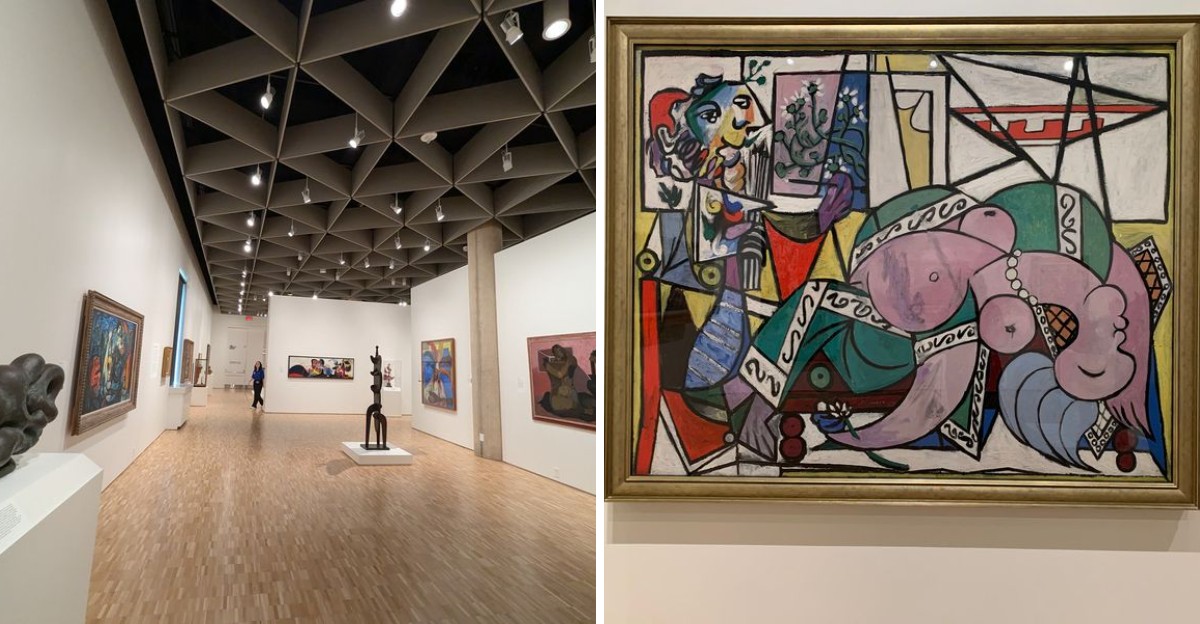
Somebody is walking past a Picasso carrying a sandwich. That feels unfair.
The painting has traveled farther than the sandwich ever will, yet both are sharing the same ordinary university afternoon.
This Indiana museum sits directly in the flow of campus life, where students cut through its spaces while visitors stop to take in a collection spanning tens of thousands of objects and about 5,000 years.
The famous names barely fit on one list. Picasso.
Monet. Hopper.
O’Keeffe. Pollock.
Then there is the building, designed by I.M. Pei, whose work also includes the Louvre’s glass pyramid.
The strangest part is that nobody has to pay to walk in.
An I.M. Pei Building That Shares DNA With the Louvre Pyramid
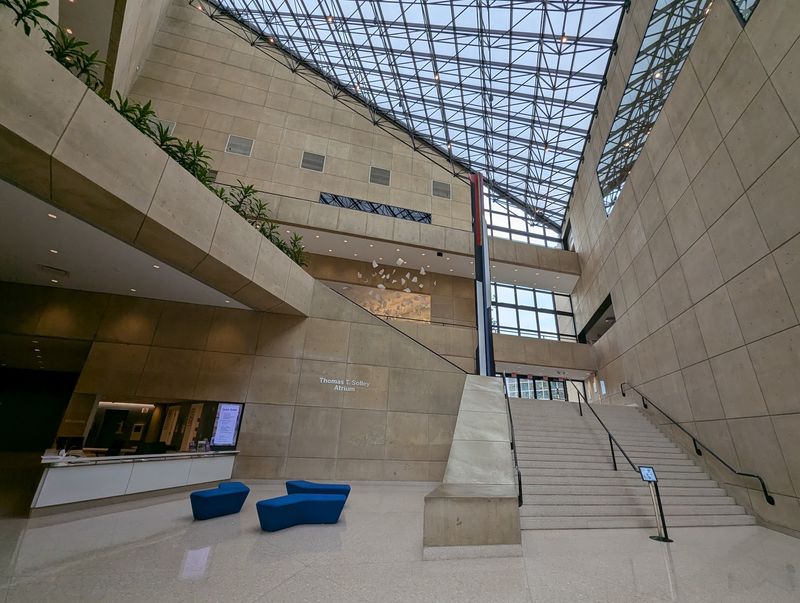
Sharp angles hit first. The structure completed in 1982 came from the drafting table of I.M.
Pei, the architect behind the glass pyramid at the Louvre and the Rock and Roll Hall of Fame.
Two concrete triangles anchor the design, joined by a soaring atrium capped in glass. Light pours down through that ceiling and shifts across the floor as the day moves along.
Very few right angles appear anywhere inside, which throws off a person’s sense of direction in the most enjoyable way. Staircases cut diagonally.
Balconies overlook open space rather than hallways.
Photographers tend to spend as much time aiming upward as they do studying the paintings, and honestly, that seems fair. The building qualifies as an exhibit in its own right.
Finding it takes little effort since it sits centrally at 1133 East Seventh Street, Bloomington, Indiana, 47405, surrounded by limestone academic buildings that make the modernist shape stand out even more.
Plan a slow lap around the exterior before heading in. The way the concrete catches afternoon shadow rewards a few extra minutes outside.
Architecture fans sometimes travel specifically for Pei structures, ticking them off across continents. Getting one in southern Indiana, with no ticket line and no admission fee, ranks as a genuinely lucky break for anyone passing through the state.
Picasso Hangs Here, No Boarding Pass Required
Word gets around campus that a real Picasso lives upstairs, and skeptics usually go quiet once they see it. The Studio counts among the most significant paintings in the collection, and it hangs where anyone can walk up to it.
No velvet rope crowd. No shuffling line of tour groups pressing forward with phones raised.
Standing close enough to notice brushwork and layered edges changes how the work registers. Reproductions flatten everything, while the actual surface shows decisions and corrections.
Picasso’s cubist thinking broke objects into planes and reassembled them, and seeing that logic in person makes the idea click faster than any textbook diagram ever could.
Guards keep a respectful distance, and the gallery stays quiet enough for thinking. Benches sit nearby for anyone who wants to settle in for a while.
Art history students sketch from the floor on weekday afternoons. Families with curious kids stop too, usually with someone asking why the face looks the way it does.
The museum welcomes those questions rather than shushing them, which fits its stated mission of using art to deepen understanding of human experience.
Skipping international travel and still standing before a Picasso feels like a small victory. Bloomington makes that possible on an ordinary Tuesday.
Free Admission, Every Single Day It Opens
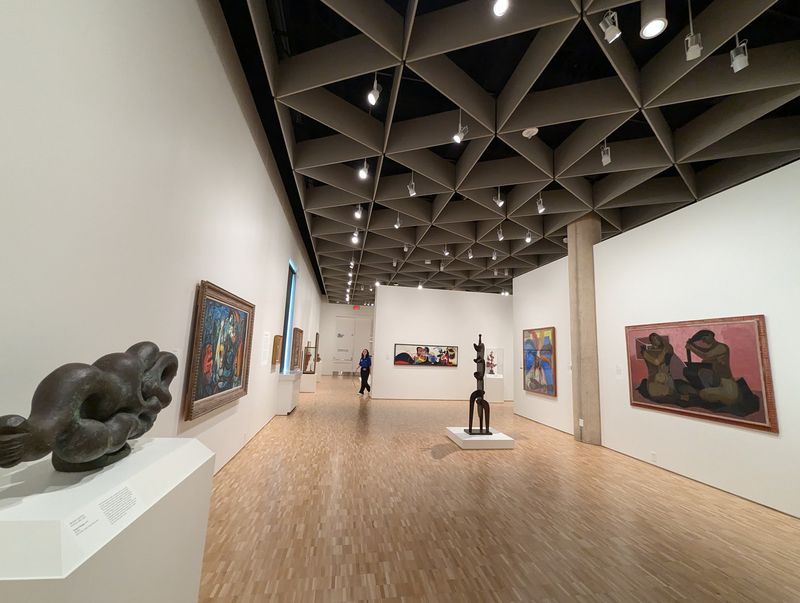
Zero cost at the door changes the whole rhythm of a visit. Nobody feels obligated to squeeze value out of a ticket by marching through every gallery in one exhausting sweep.
Drop in for twenty minutes. Come back the next afternoon for twenty more.
Locals treat the place like a reading room, stopping by between errands to sit in the atrium or revisit one favorite painting. Students duck in during gaps between lectures.
Travelers passing through southern Indiana benefit most, since a spontaneous detour costs nothing beyond parking and the walk across campus.
Free entry also lowers the pressure for families. Small children lose interest quickly, and leaving early stings much less when no money went into getting in.
The café and gift shop sit inside for anyone who wants a break or a souvenir, though neither is required to enjoy the collection.
Accessibility matters here beyond the price. Guided and self-guided tours are available, including specialized accessible tours designed to fit different learning styles and mobility needs.
K-12 field trips run regularly, built around conversation rather than lecture. Kids get asked what they notice instead of being told what to think.
Generosity like that keeps art from feeling like a members-only club.
Monet, Hopper, O’Keeffe and Pollock in the Same Building
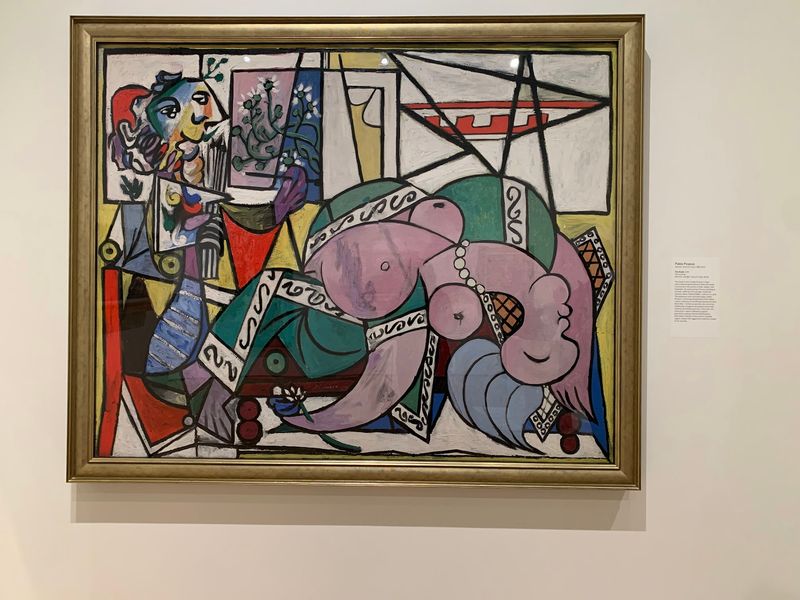
Picasso gets the headline, but the supporting cast is stacked. Claude Monet’s impressionist light sits within the same collection as Jackson Pollock’s poured, tangled energy.
Edward Hopper’s The City brings his familiar stillness, all quiet buildings and unspoken tension. Georgia O’Keeffe’s Red Canna fills its frame with blooming color that seems to push past the canvas edges.
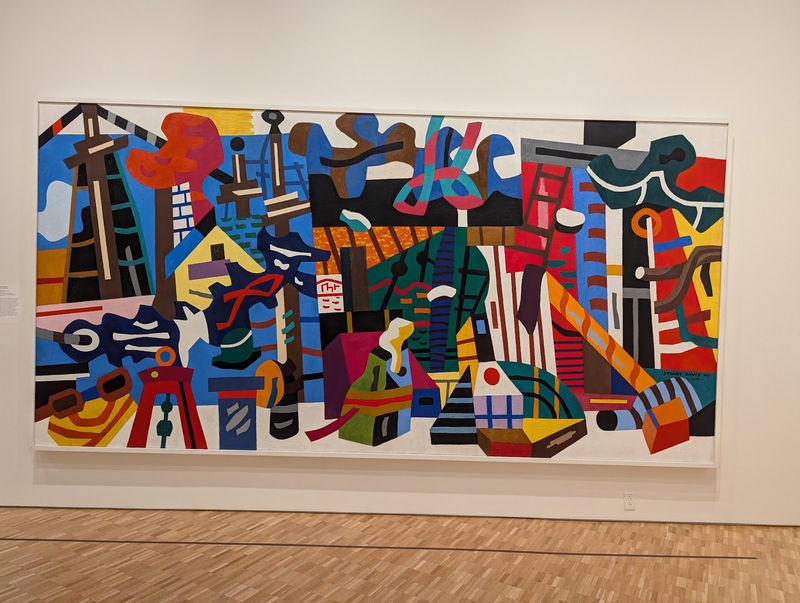
Stuart Davis contributed Swing Landscape, a mural bursting with jazz-influenced shapes and blocks of bright color. The scale of it alone stops people mid-step.
Then there is the complete set of Marcel Duchamp’s Readymades, the only full set in the United States. Everyday objects declared art, still causing arguments a century later.
Walking from impressionism to abstract expressionism takes a couple of minutes here, which would take a full day in a larger institution.
Roughly 1,400 objects appear on display at any given time, drawn from a holding of about 45,000 to 47,000 pieces. Rotations mean repeat visits rarely look identical.
Seven galleries spread the collection across floors without ever feeling crowded or maze-like.
For anyone building a mental list of famous artworks seen in person, an afternoon here adds several names at once. Not bad for a stop in a college town.
Five Thousand Years of Objects Under One Roof
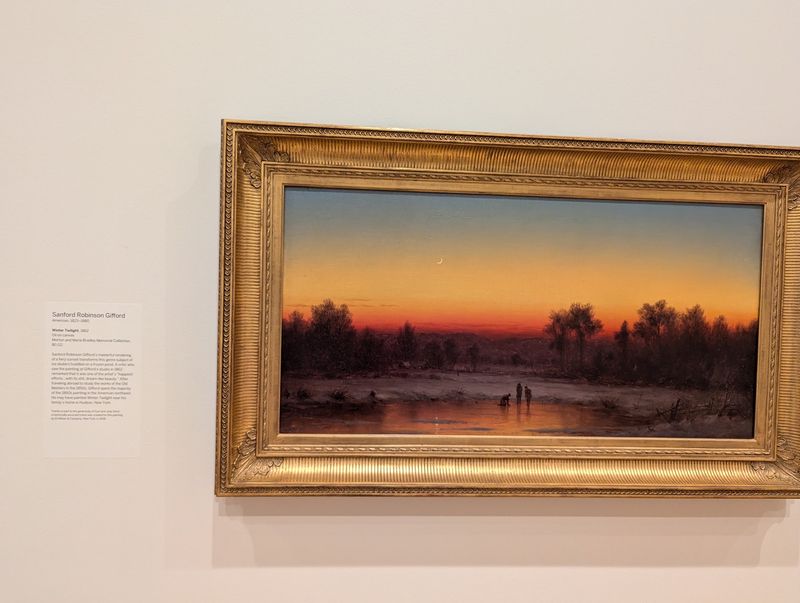
Ancient Egypt shares a floor with contemporary art here, and the jump between them lands harder than expected. The collection covers nearly every art-producing culture across recorded history.
Greek pottery shows painted figures frozen mid-motion. Egyptian artifacts carry the weight of thousands of years in small, worn details.
Asian holdings reach back to the third millennium BC, with pieces that predate almost everything else in the building. Renaissance panels glow with gold ground and careful tempera work.
African, Oceanic, and Indigenous Art of the Americas each hold their own galleries and their own stories, presented as living traditions rather than dusty curiosities.
Coverage that wide means visitors with wildly different interests can wander together and each find something worth lingering over.
History teachers love it for exactly that reason. A single visit can touch on units students spent months studying.
Object viewing rooms add another layer for the seriously curious, offering a chance to study pieces not currently on public display. Arranging that ahead of time is worth the effort for researchers and hobbyists alike.
Rather than racing through, try picking two or three cultures and going deep. The collection rewards attention far more than speed.
Five millennia in one building. That is a lot of ground for a free ticket.
The Light Totem Turns the Building Into a Color Show
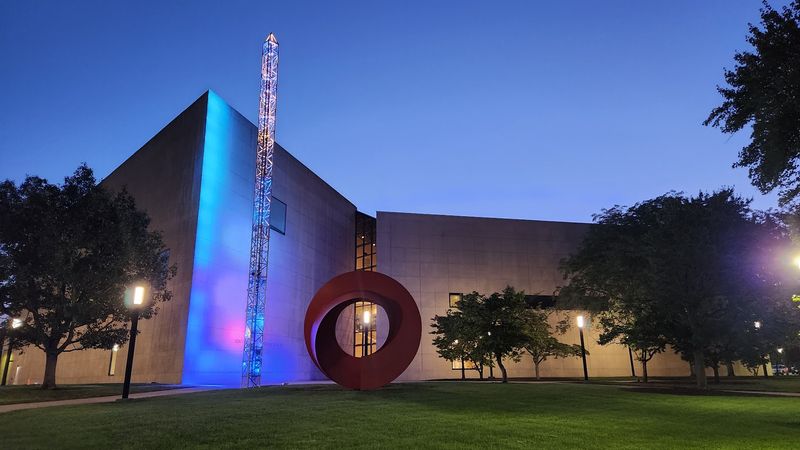
Evening arrivals get a bonus. The Light Totem, an LED installation created by artist Robert Shakespeare, has been a permanent fixture since 2010.
Colors shift through a computerized display, washing the exterior and the interior atrium in changing hues. Blues melt into purples, then something warmer.
The effect turns Pei’s hard concrete geometry into something almost soft. Angles that read as stern in daylight take on a completely different mood after dark.
Students crossing campus at night barely glance up anymore, having grown used to it, though visitors tend to stop and watch for a while.
Timing a walk past the building around dusk gives the best of both versions. Daylight architecture first, then the color show as the sky drops.
Inside, the atrium picks up the glow through its glass ceiling, and the whole open space feels less like a lobby and more like an installation.
Light as an artistic medium fits the museum’s broader story, connecting older works to newer ideas about what art can be made from.
Bring a camera, though phone photos rarely capture the saturation properly. Some things just work better in person.
Small detail, big impression. It gives the museum a personality after closing time.
Bloomington Itself Makes the Trip Worth Stretching Out
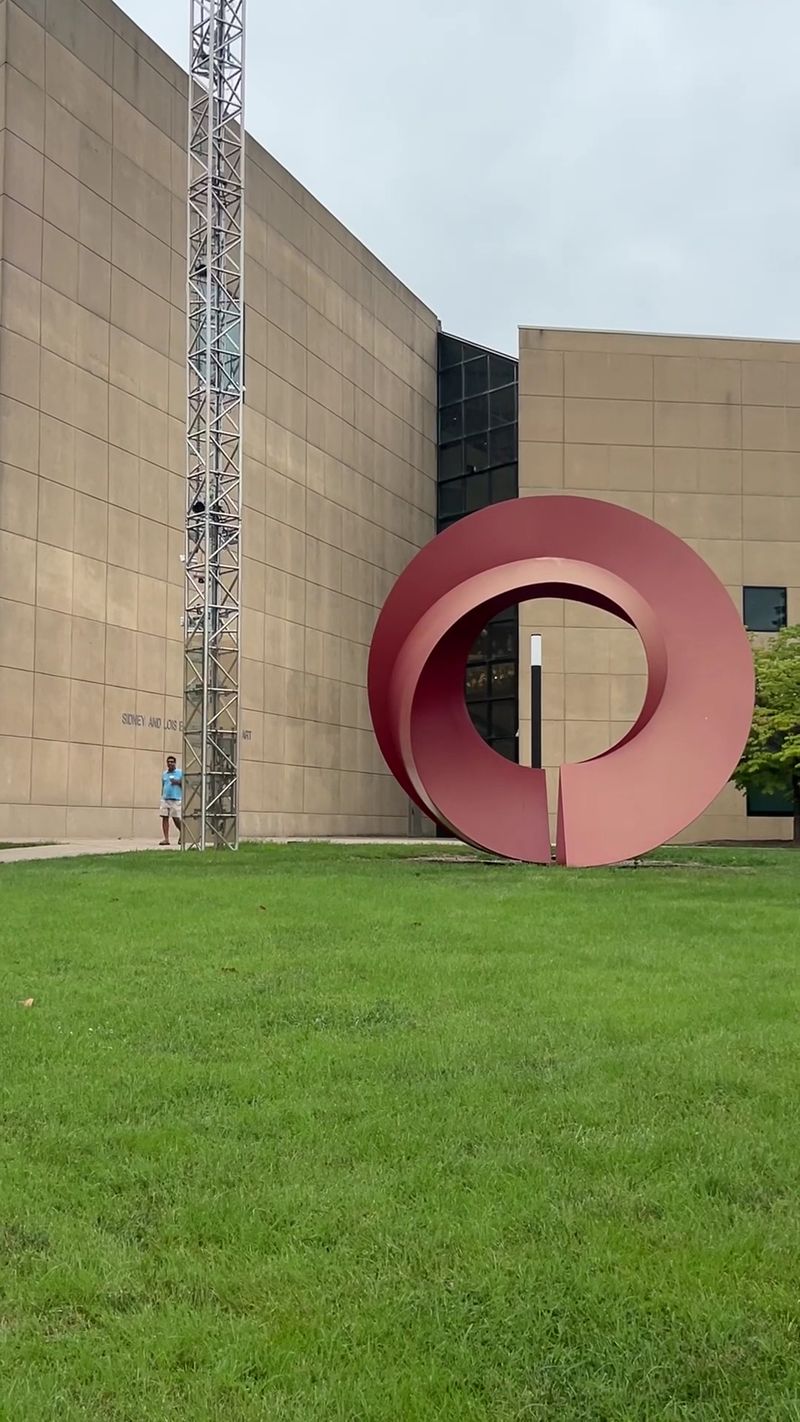
One museum rarely fills a whole weekend, and Bloomington knows it. The walkable downtown square sits a short stroll from campus, ringed by shops and a limestone courthouse.
A $30 million renovation recently expanded the museum with new centers for education and for prints, drawings, and photographs, plus a conservation analytical laboratory. Those additions turned it into more of a working learning space than a quiet display hall.
Once outside, options multiply fast. The Lilly Library holds rare books worth seeing, and the historic Wylie House Museum offers a look at nineteenth century domestic life.
Quieter moments wait at the Tibetan Mongolian Buddhist Cultural Center, where the grounds encourage slow walking and slower thinking.
Outdoor types head to Griffy Lake Nature Preserve or Switchyard Park. The B-Line Trail threads through downtown and links back toward the university, making car-free days genuinely realistic.
Food here punches above the city’s size, shaped by the university’s international student population. Cuisines from several continents sit within a few blocks of each other.
Pairing gallery hours with trail time and a good meal makes for a balanced trip. The art stays with you.
So does the town.
