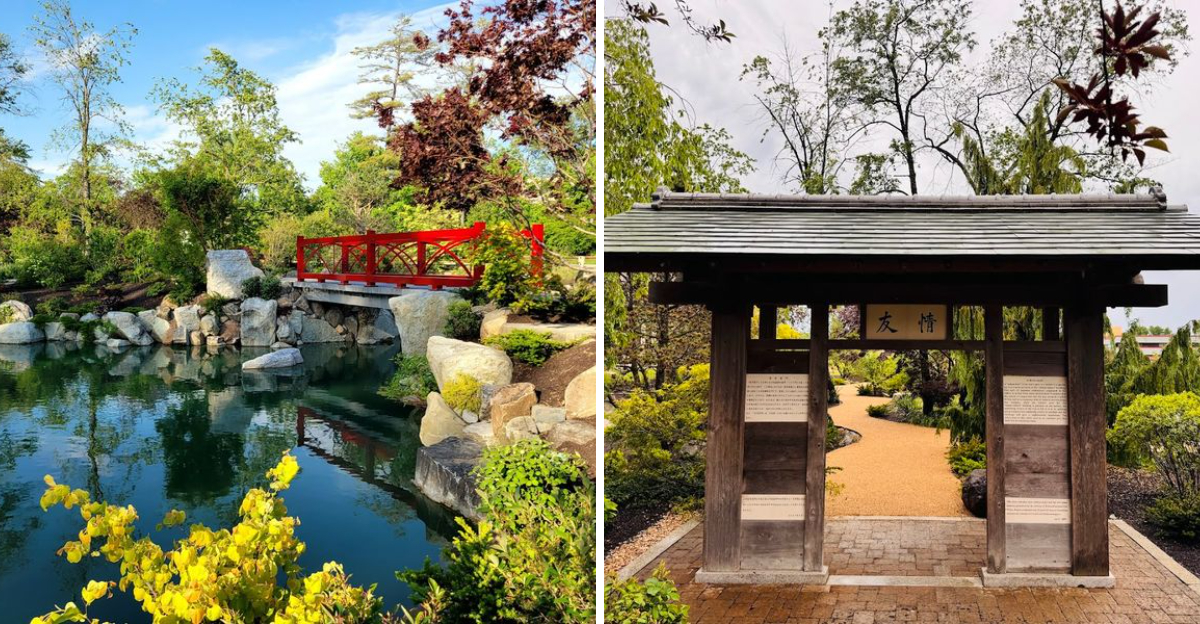
Most people walk right past it without a second glance. Tucked beside city offices and just steps from a popular trail, a Japanese garden in Carmel, Indiana is one of the state’s most quietly stunning outdoor spaces.
Built to honor a lasting friendship between Carmel and its Sister City in Japan, every corner of this peaceful retreat tells part of that meaningful story. From carefully placed stones and tranquil pathways to beautiful landscaping that changes with the seasons, the garden offers a rare chance to slow down and reconnect with nature.
Whether you are looking for peace, beauty, or something genuinely unexpected in the Midwest, this hidden gem delivers all three.
Plan to See Cherry Blossoms Bloom Each Spring
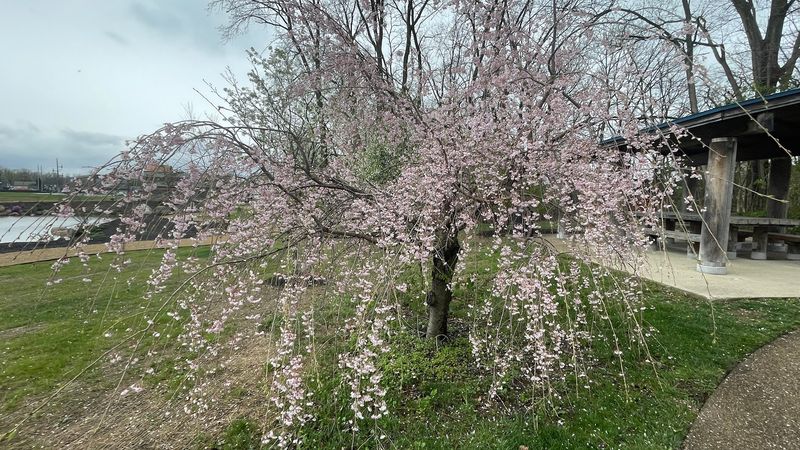
Spring in Indiana takes on a completely different feeling when cherry blossoms are in bloom. The Kawachinagano Japanese Garden is one of the very few places in the entire state where you can witness sakura trees flowering in a setting designed to complement them.
The soft pink blossoms against the garden’s stone paths and wooden structures create a scene that feels far removed from everyday life.
The blooming window typically runs from late March through early May, depending on the year’s temperatures. Timing your visit during peak bloom is worth planning ahead for.
Early morning visits during this period offer the best light for photos and the most peaceful atmosphere before the Monon Trail gets busy with cyclists and joggers.
Cherry blossoms carry deep cultural meaning in Japanese tradition. They represent the beauty of impermanence, the idea that something precious does not last forever.
Experiencing them in a garden built specifically to honor a Japanese-American friendship adds another layer of meaning to the moment. Even if you are not a photography enthusiast, standing under those blooming branches for a few minutes is the kind of memory that sticks with you.
Mark your calendar and check local bloom forecasts before heading out for the best chance of catching the garden at its most spectacular.
Make Time for the Azumaya Tea Gazebo Visit
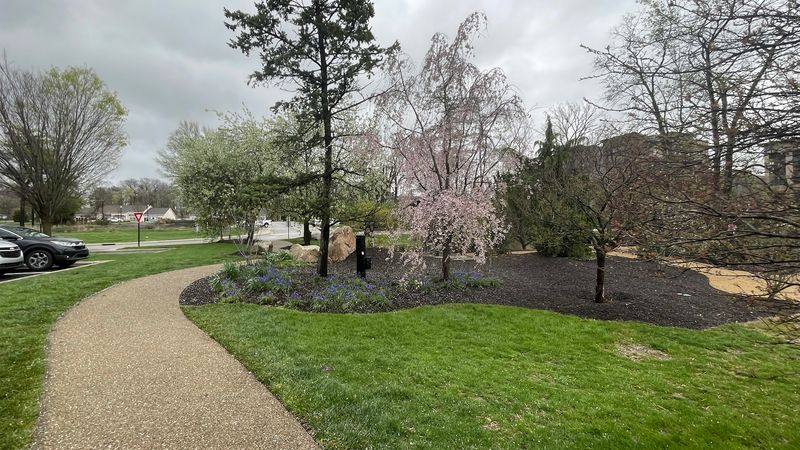
Not every garden in America has a structure like this one. The Azumaya Style Japanese Tea Gazebo, also known as the Summer Tea House, is one of the most charming architectural elements within the Kawachinagano Japanese Garden.
Its open-sided design and curved roofline give it an elegant, airy presence that feels authentic to Japanese outdoor architecture.
Construction of the tea gazebo began in 2010 through a joint effort between the Kawachinagano Rotary Club and the Carmel Rotary Club. The layout was designed by Mr. Tsuji from Kawachinagano, Japan, ensuring the structure stayed true to traditional proportions and style.
That cross-cultural collaboration is visible in every detail, from the roof pitch to the way the structure sits within the surrounding landscape.
The gazebo offers a shaded resting point inside the garden. On a warm afternoon, it is an ideal spot to pause and take in the surrounding plantings without standing in direct sun.
The structure also photographs beautifully from multiple angles, especially with the pond or garden paths in the background. If you enjoy architecture or cultural design, spending a few minutes studying the joinery and proportions of this gazebo is genuinely rewarding.
It is a small building with a big story behind it, and most visitors pass it without knowing the international effort it took to build it.
You Must Discover the Hidden Sukiya Gate
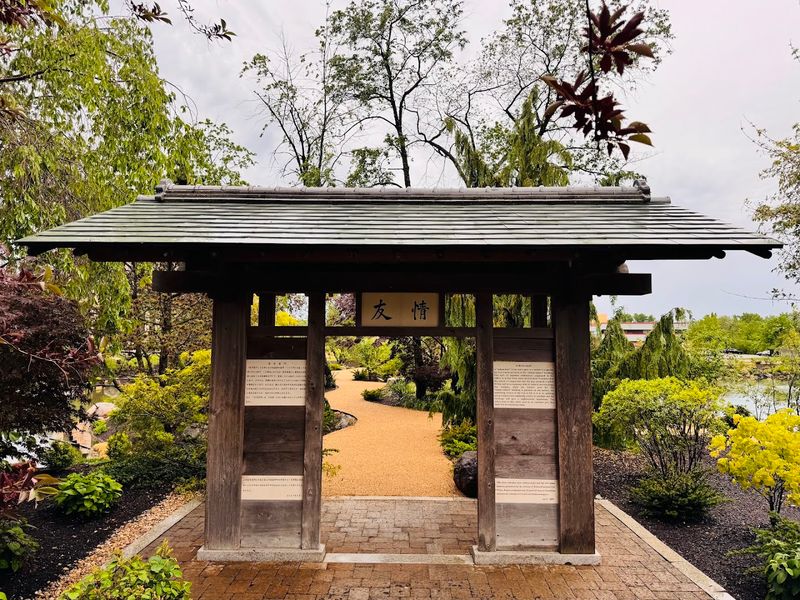
Most visitors walk right by it without realizing what they are looking at. The Sukiya gate at Kawachinagano Japanese Garden is not just a pretty entrance.
It is a handcrafted piece of living history, built on site using traditional Japanese woodworking techniques and Hinoki cypress wood.
Members of the Kawachinagano International Friendship Association traveled to Carmel specifically to assemble this gate. Every joint and beam reflects centuries of Japanese craftsmanship.
No power tools or shortcuts were used in its construction. That level of dedication is rare to find anywhere in the United States, let alone in Indiana.
The ribbon-cutting ceremony for the redesigned garden was held right at this Sukiya Entrance Gate, which tells you how central it is to the entire experience. Standing in front of it, you can feel the weight of the cultural intention behind every detail.
It is the kind of architectural moment that stops you mid-step. If you only notice one thing during your visit, make it this gate.
Bring your camera because the natural wood tones against the surrounding greenery make for a photograph you will actually want to keep.
Come Watch Koi Fish in the Tranquil Garden Pond
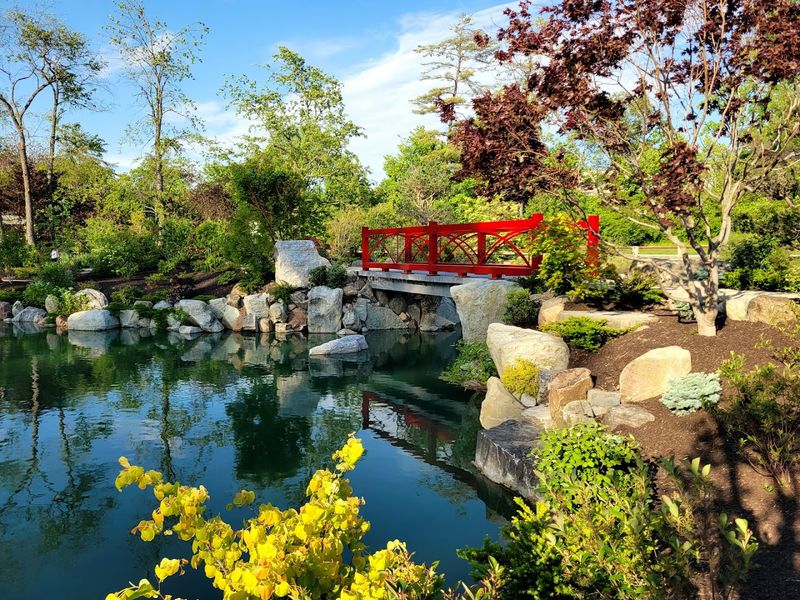
There is something almost meditative about watching koi fish move through still water. At Kawachinagano Japanese Garden, the koi pond sits at the heart of the entire space.
The water is clear enough to follow each fish as it glides beneath the lily pads, and the colors range from bright orange to white to spotted black and gold.
After the recent redesign led by world-renowned landscape designer Hoichi Kurisu, the pond received significant refinements. The edges were reshaped, the water quality improved, and the surrounding plantings were adjusted to frame the view more naturally.
A Phase 2 improvement is also anticipated to add a new southern pond, which will expand the water features even further.
Visitors often bring a blanket to sit on the grass nearby since some benches have been removed during the renovation updates. It is a great spot to slow down, especially on a weekday morning when the garden is quiet.
Kids love spotting the fish near the surface, and adults tend to linger longer than they planned. The pond area is located at Monon Trl, Carmel, IN 46032, right beside the Monon Trail pedestrian bridge with the red railings.
A short walk from the trail entrance puts you directly in front of this peaceful water feature.
Try Reaching the Garden via the Red Railing Bridge
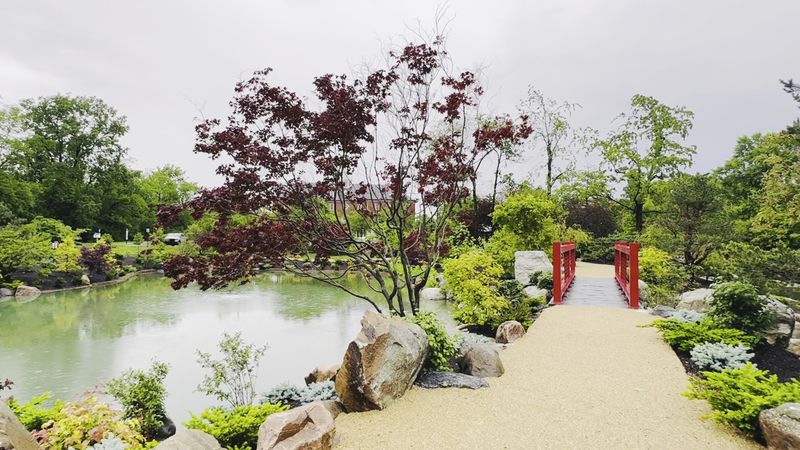
Getting to the garden is part of the experience itself. If you are already exploring the Monon Trail, the most scenic way to reach Kawachinagano Japanese Garden is by crossing the pedestrian bridge with the distinctive red railings.
The red color is a traditional Japanese design choice, and spotting it along the trail gives you that first hint that something special is just ahead.
The bridge sits just south of the Carmel Fountain along the Monon Trail. Once you cross it, the shift in atmosphere is immediate.
The sounds of the trail fade, and the garden begins to reveal itself through the plantings and stone work. It feels like a deliberate transition, which is exactly what good Japanese garden design intends.
For cyclists and walkers using the Monon Trail regularly, the red bridge is actually a well-known landmark, though many people still do not stop to explore what is on the other side. For those arriving by car, free parking is available at Carmel City Hall, located at One Civic Square, Carmel, Indiana 46032.
Either way, the approach to the garden sets the tone for the whole visit. Choosing the bridge route adds a small sense of arrival that the parking lot entrance simply cannot match.
It is a detail worth seeking out on your first visit.
Explore the Sister City Story Behind This Place
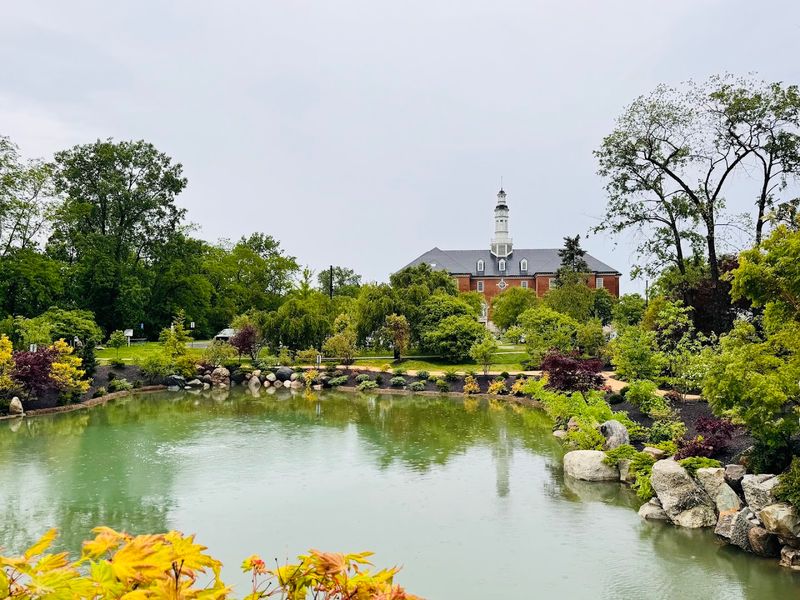
Every garden has a reason it exists. The Kawachinagano Japanese Garden was not built simply to add greenery to a city block.
It was created to honor a decades-long friendship between Carmel, Indiana and Kawachinagano, Japan. That Sister City agreement was first signed in 1994, making it one of the more enduring international partnerships in the region.
A groundbreaking ceremony for the garden took place in March 2007, and the space was completed in 2009. That timeline reflects real commitment.
Building an authentic Japanese garden in the American Midwest required coordination between cultural organizations, city officials, and craftspeople from both countries. The result is a space that carries genuine meaning rather than just aesthetic appeal.
Understanding this history changes how you experience the garden. The Sukiya gate, the tea gazebo, the pond, and the crane sculptures are not random decorations.
Each element was chosen to reflect values and traditions from Kawachinagano. When you walk through the space knowing its background, you start to notice the intentionality behind every placement.
The garden is free to visit and open daily from dawn to dusk, so there is no barrier to spending time here. It is one of those rare public spaces where the story behind it is just as interesting as the space itself.
Indiana has few places quite like it.
Skip Nothing and Find the Crane and Lantern Sculptures
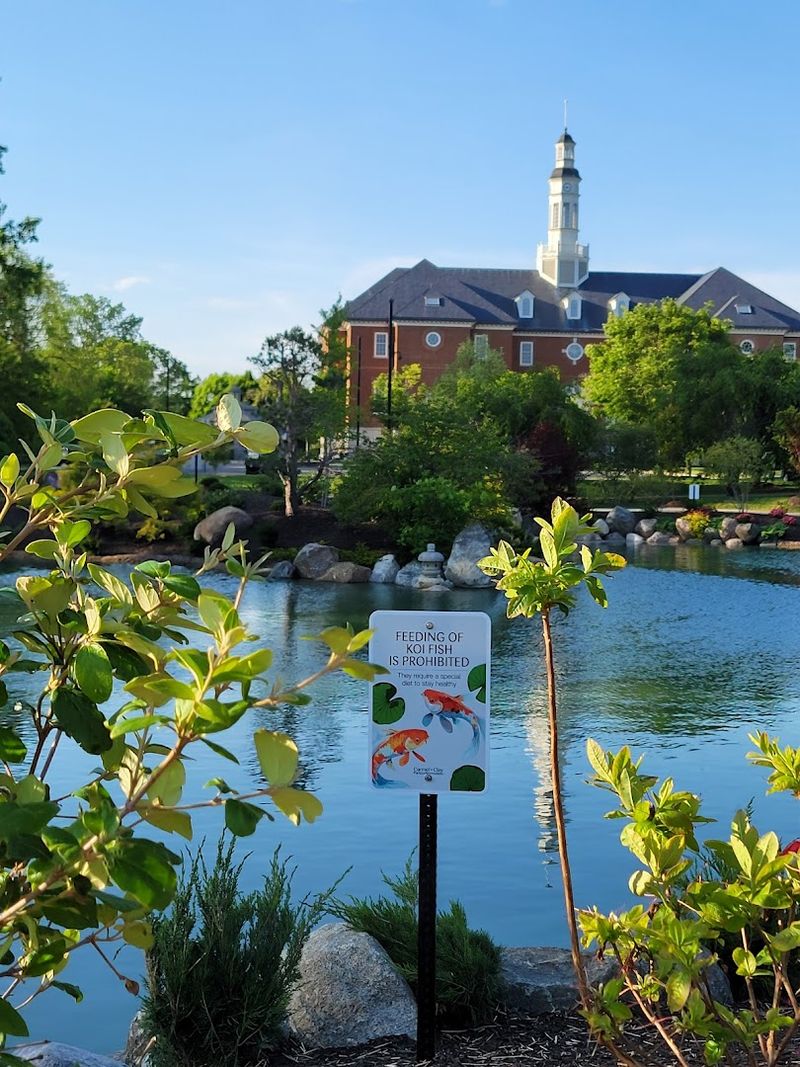
Scattered throughout the garden are traditional Japanese sculptures that reward slow, attentive visitors. Stone lanterns and crane sculptures appear at various points along the paths, each one placed with purpose rather than at random.
Cranes hold a particularly meaningful place in Japanese culture. They symbolize longevity, good fortune, and loyalty, and seeing them here adds a layer of cultural depth that transforms a simple walk into something more thoughtful.
The lanterns are designed in classic Japanese styles, with their stone surfaces developing a natural patina over time. On overcast days, the muted tones of the stone blend beautifully with the surrounding moss and plantings.
On bright sunny days, the contrast between the pale stone and the deep green garden creates striking visual compositions that photographers genuinely appreciate.
What makes these sculptures feel different from typical decorative garden art is the context. They exist within a space that was designed by Hoichi Kurisu, a landscape designer whose work has been recognized internationally.
His background includes serving as landscape director for the Japanese Garden Society in Oregon, and his influence on this garden is evident in how each element relates to the others. Nothing feels placed without reason.
The sculptures, the water, the paths, and the plantings all work together as a unified composition. Visiting with that in mind helps you appreciate just how carefully this small Indiana garden was built.
