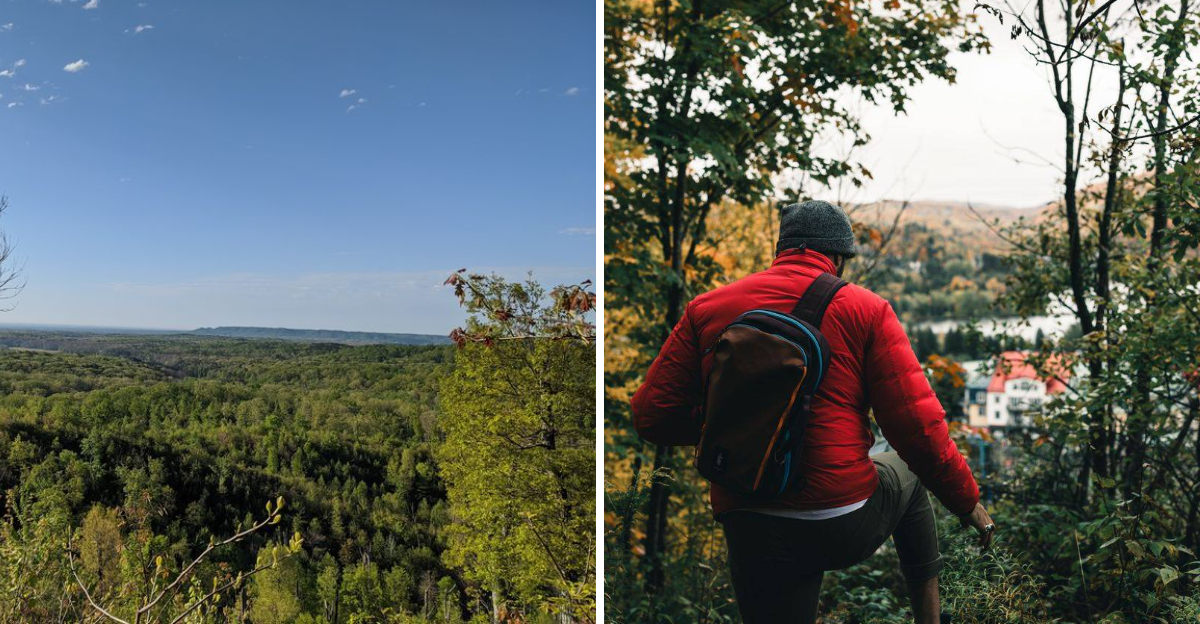
The windows come down first. Then the phone disappears into a pocket.
A few curves later, the person in the passenger seat has stopped talking because the view has become more interesting than the conversation. That is when a simple drive turns into one of those rare stretches of road where nobody is eager to reach the other end.
Indiana has a route that manages exactly that. About three miles of winding pavement climb through forested ridges, with five overlooks opening onto long green views.
The landscape gets surprisingly rugged, with steep knobs and wooded hollows shaped by ancient geology. There is an old steel tower, quiet lakes tucked below the ridges, and trails leading past traces of former peach orchards.
The road is short. The distraction is not.
Five Overlooks, Five Completely Different Moods
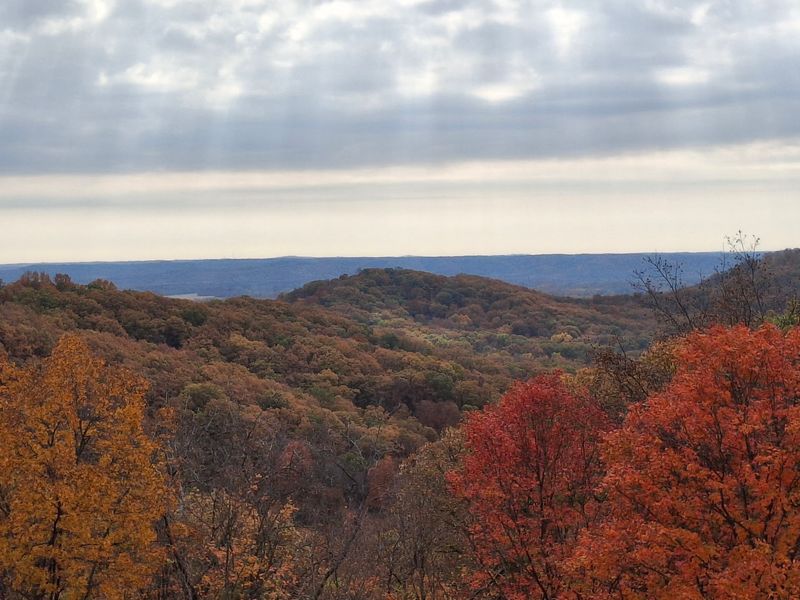
Each pullout along Skyline Drive gives up a different slice of Jackson County, and that is the quiet trick of this road. Five overlooks sit spaced along the three-mile route, none of them repeating the same view.
One frames farmland flattening out toward the East Fork of the White River. Another looks straight into a fold of forested hollow, so close the treetops seem touchable.
The pavement climbs a steep grade before the best of them, which means the reveal comes suddenly rather than gradually. Drivers who stop at only the first pullout end up missing the good stuff, so plan on parking at every single one.
Mornings bring haze pooling in the low valleys, thin and silver, burning off slowly. Evenings turn the ridges into layered silhouettes, each one paler than the last.
Benches and open shoulders give room to linger without blocking traffic, and traffic here is light enough that lingering feels natural. Bring binoculars if birds are the goal, because hawks ride the thermals along these ridge edges constantly.
The whole loop takes maybe twenty minutes if rushed. Give it ninety instead and the road stops feeling like a drive and starts feeling like a slow exhale.
Cell reception wavers up here, which honestly improves the experience considerably.
An 80-Foot Steel Tower Built by the CCC
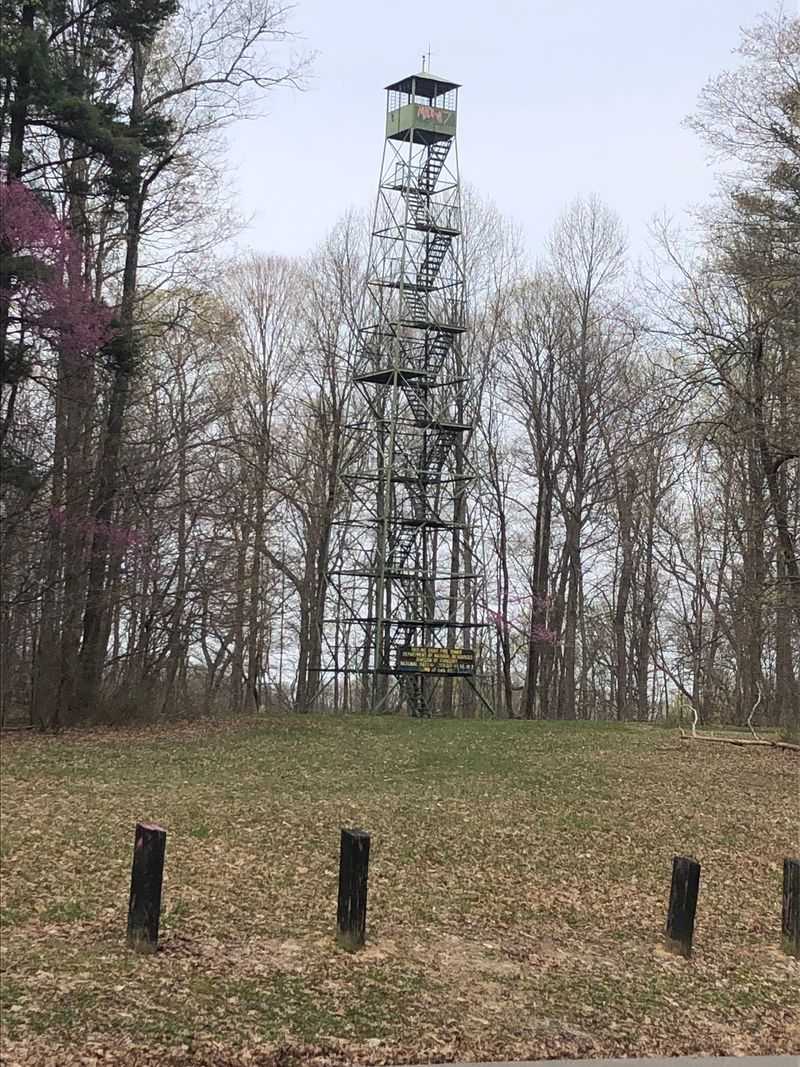
Rising out of the ridge at 908 feet elevation, the old lookout tower is the single most memorable structure in the forest. Crews from the Civilian Conservation Corps put it up somewhere between 1931 and 1935, back when spotting smoke meant climbing stairs rather than checking a screen.
Eighty feet of steel does not sound tall until the climb starts. Each landing pushes the treetops a little further below, and the ridge lines widen with every flight.
The Indiana Department of Natural Resources maintains it as a public viewing site, so the tower is not a relic behind a fence. It is meant to be used.
From the top, Jackson County spreads out in a way no roadside pullout can match, with the knobs rolling toward the horizon in overlapping ridges. Autumn turns the whole scene into patchwork, though even a bare-branch winter view has its own stark appeal.
Grip the rails, take the steps at a steady pace, and let anyone nervous about heights wait at the base without shame. Wind moves differently up there, cooler and a little louder.
Photographers should aim for the hour before sunset, when shadows carve depth into the ridges.
Few structures in Indiana pack this much history and altitude into one climb.
The Knobs Make Indiana Look Like Somewhere Else Entirely
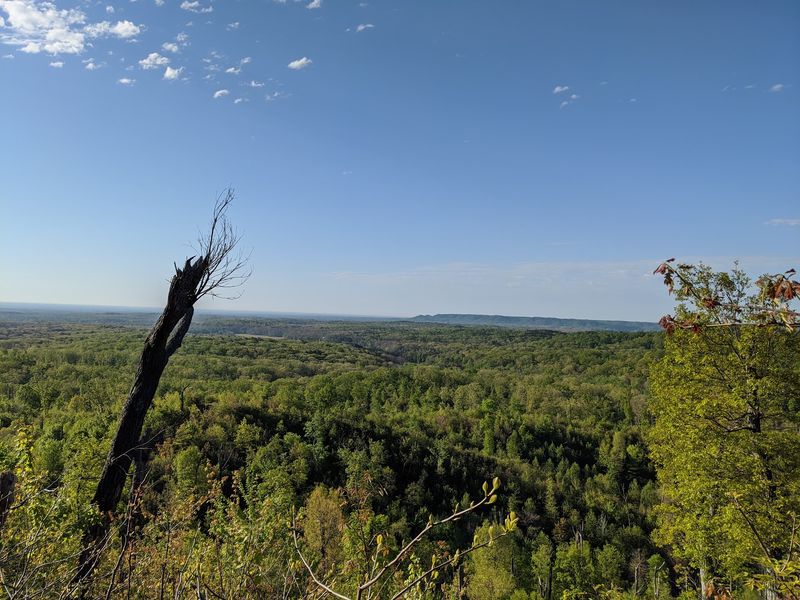
Flat cornfields are what most people picture when Indiana comes up in conversation. The knobs quietly wreck that assumption.
Known formally as the Knobstone Escarpment, this band of steep, rounded hills gives southern Indiana some of its most rugged terrain. Slopes drop sharply, hollows cut deep, and the whole landscape wrinkles up like fabric pushed together.
Jackson-Washington State Forest sits right in the middle of it, spreading across nearly 18,000 acres in Jackson and Washington counties. That is a lot of room for ridges to stack up behind one another.
Geology explains the shape. Erosion carved away softer rock and left harder caps behind, which is why the summits stand out so distinctly against the valleys.
Driving through, the road constantly rises and falls, banking around curves that hug the contours instead of cutting through them. It feels less like Midwest highway and more like foothill country.
Anyone who enjoys landscapes with vertical drama will find plenty here. Anyone who assumed Indiana had none will need a new theory.
The overlooks exist precisely because of this terrain, since flat ground offers nothing to look down from. Elevation changes also mean cooler pockets of air in the hollows on hot afternoons.
Pack water regardless of season, because those grades work harder on legs than they appear to from a car window.
Nearly 14 Miles of Trails That Wander Through Old Peach Orchards
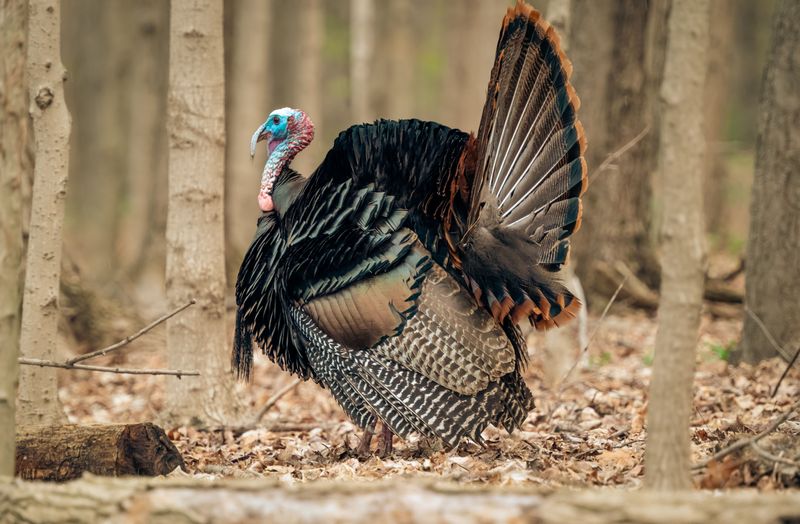
Hikers get roughly 13.9 miles of marked trail to work with, and the range runs from gentle strolls to genuinely rugged climbs. Some paths follow ridgelines with long views on both sides.
Others drop into valleys where the air turns cool and still, then grind back up to a ridgetop. Legs will notice the difference.
One of the more curious features is the remnant of old peach tree orchards along certain routes, leftovers from a farming era that the forest slowly reclaimed. Wildlife habitat areas appear along the way too, planted and managed to draw deer, turkey, and songbirds.
Trail markers keep navigation straightforward, though a paper map from the office at 1278 East State Road 250 in Brownstown helps on the longer loops. Footwear matters more than most visitors expect on the steeper sections, where loose rock and roots take over.
Not everyone wants dirt underfoot, and that is fine. Walking the paved surface of Skyline Drive itself counts as a legitimate hike, complete with overlooks built right into the route.
Spring brings wildflowers across the slopes, while late October delivers the color show. Summer hikes go better early, before humidity settles into the hollows.
Start with a short loop, see how the grades feel, then commit to something longer next visit.
Indiana’s Longest Footpath Runs Right Through Here

Serious backpackers already know the name. The Knobstone Trail holds the title of Indiana’s longest footpath, and part of it passes straight through Jackson-Washington State Forest.
Difficulty is the point with this one. The route climbs and descends relentlessly across the knobs, offering backcountry conditions rather than groomed park paths.
Day hikers can sample a section without committing to the full experience, which is a smart way to test whether the terrain suits them. Even a few miles reveals how much elevation hides in these hills.
Water sources are unreliable, so carrying enough is non-negotiable. Sturdy boots, a real map, and honest fitness expectations round out the list.
What makes the trail special is solitude. Long stretches pass without another person, just ridge after ridge and the sound of leaves shifting overhead.
Backcountry camping is permitted in designated areas of the forest, which opens up overnight options for anyone wanting to stretch a hike across two days. Registering and following posted rules keeps everything simple.
Autumn and spring make the best windows, since summer humidity turns those climbs brutal and winter can ice the steeper pitches.
Anyone building toward longer thru-hikes elsewhere could hardly find better local training ground.
The reward is not a summit sign. It is the quiet.
Five Lakes, Fishing Lines, and Electric Trolling Motors
Water has a way of anchoring a forest visit, and this one comes with five lakes open to fishing. Knob Lake, Spurgeon Hollow Lake, Potter Lake, Plattsburg Pond, and Cypress Pond each offer something a little different.
A valid Indiana fishing license is required, so handle that before arriving. Rules are posted and worth reading.
Knob Lake and Spurgeon Hollow Lake allow boating with electric trolling motors, which keeps the surface calm and the noise level pleasantly low. No roar of engines, just the soft hum of a motor and water lapping the hull.
Shore fishing works well too, especially in the early hours when mist still hangs above the water. The hills reflect on the surface and everything goes glassy.
Plattsburg Pond and Cypress Pond feel smaller and more tucked away, better suited to a folding chair and a slow afternoon. Kids tend to love these spots because the action stays close to the bank.
Bring shade, bug spray, and patience. That combination covers most Indiana summer days.
Even non-anglers benefit from the lakes, since the shorelines make natural rest stops between drives and hikes. Frogs, herons, and dragonflies keep things interesting.
Pair a morning at the water with an afternoon on Skyline Drive for a full day that never once feels rushed.
Camping Under the Knobs and Timing the Seasonal Closure
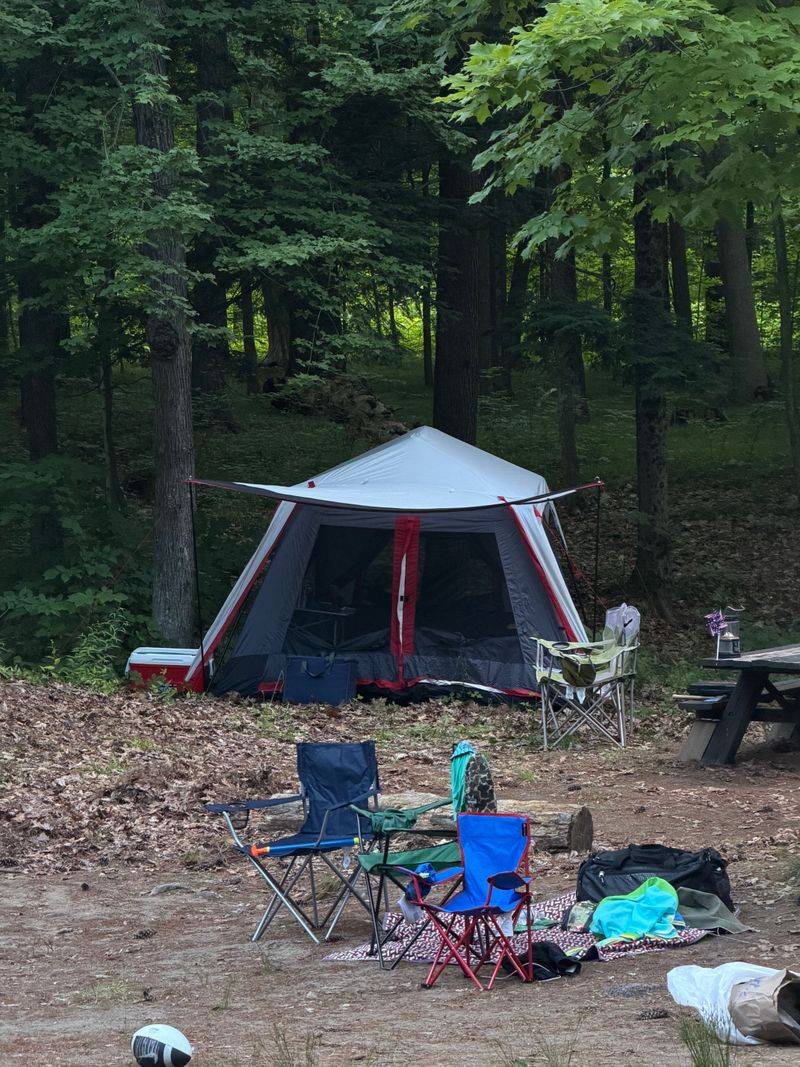
Knob Lake Campground keeps things simple in the best way. Primitive Class C camping runs year-round, with somewhere between 56 and 62 sites depending on layout, and a handful sit right along the water.
Several sites are designed to be wheelchair accessible, which widens the door for more visitors. A youth tent campground handles larger groups.
Picnic areas scatter across the forest, including a picnic shelter and an oven shelter directly on Skyline Drive. Day use runs first-come, first-served, so arriving early on a bright weekend pays off.
Now the detail that trips people up. Skyline Drive closes annually from the first measurable snowfall until April 1, which means winter visitors need a different plan.
Trails and camping stay open through the cold months, and the bare ridges reveal shapes hidden under summer leaves. Just do not count on driving to those overlooks.
October remains the headline month, when the rolling ridge lines turn gold, rust, and deep red across every direction. Weekends fill faster then, so weekday mornings offer the calmer version.
Fall campfire evenings with cool air settling into the hollows are hard to beat. Bring extra layers.
Hunting is permitted in designated areas with an Indiana state hunting license, so checking seasons before hiking is simply good sense.
