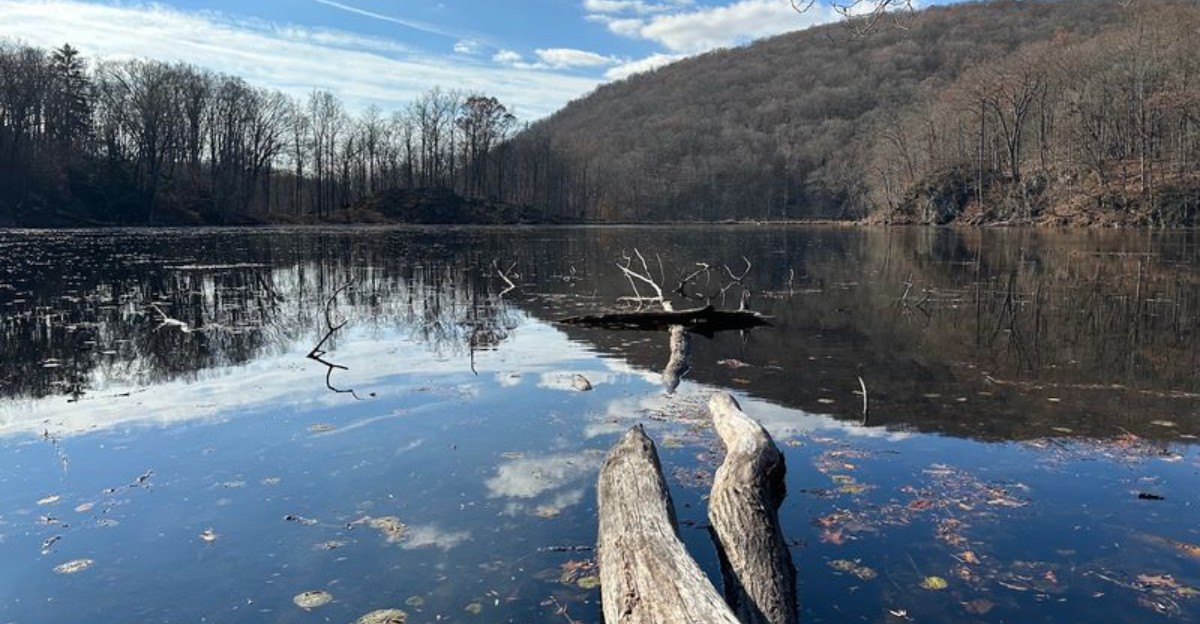
Listen, some lakes are peaceful, some are pretty, and some come with a reputation that makes you glance over your shoulder. This one has all three.
In New Jersey, a quiet lake has become wrapped in local tales of ghostly figures, strange lights, and eerie sightings. During the day, it hardly looks spooky.
The water is calm, the woods are lush, and the scenery feels made for a relaxing afternoon. Then dusk arrives, the shadows stretch, and the atmosphere changes completely.
Much of the lake’s reputation belongs to local folklore, but that hardly makes the stories less fun.
Add drifting mist, fading light, and a famously eerie road nearby, and you have the perfect recipe for a spooky evening.
Believe the legends or not, this lake certainly knows how to set a mood.
The Fog That Gave The Lake Its Name
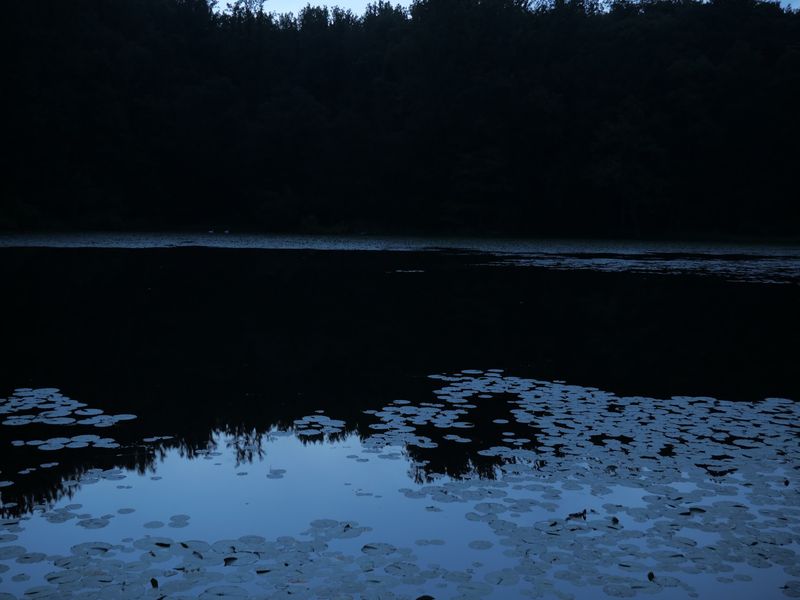
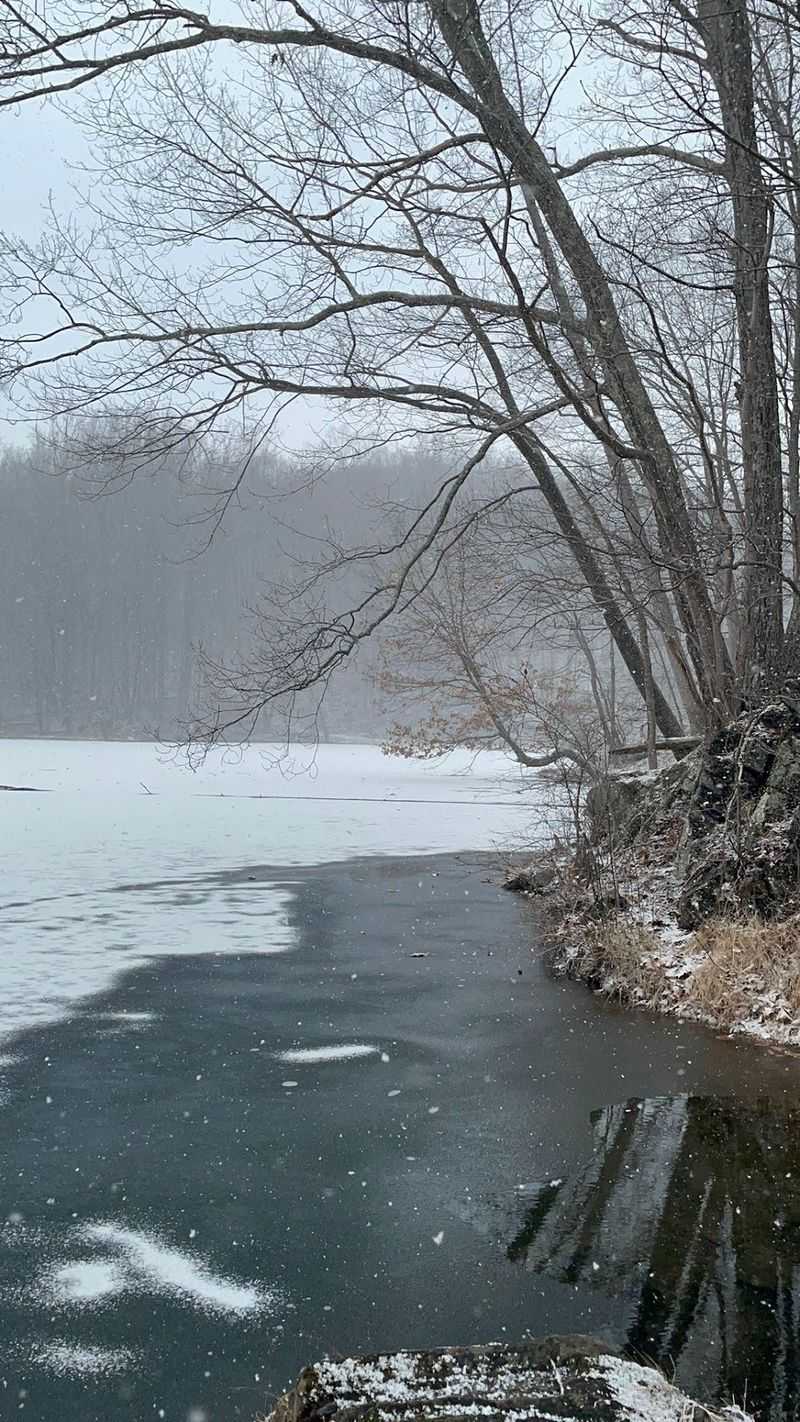
Cold mornings in autumn are when the magic happens here. Warm water meets crisp air, and a low white fog gathers across the surface in curling shapes that drift without much wind to push them.
Ghost Lake earned its name from exactly that sight. People passing by in the early hours described the mist as ghostly, and the label stuck for good.
Science explains it simply enough. Evaporation fog forms when water stays warmer than the air above it, and a sheltered valley basin traps the whole show in place.
Knowing the reason does not make it less eerie. There is something genuinely unsettling about watching pale shapes glide across black water while frogs call from the reeds.
For the best view, aim for sunrise between late September and early November. Bring a jacket, because the air near the shoreline bites harder than you expect.
Photographers love this window, and honestly, so does anyone who enjoys a little atmosphere with their morning walk.
Shades Of Death Road, The Drive In
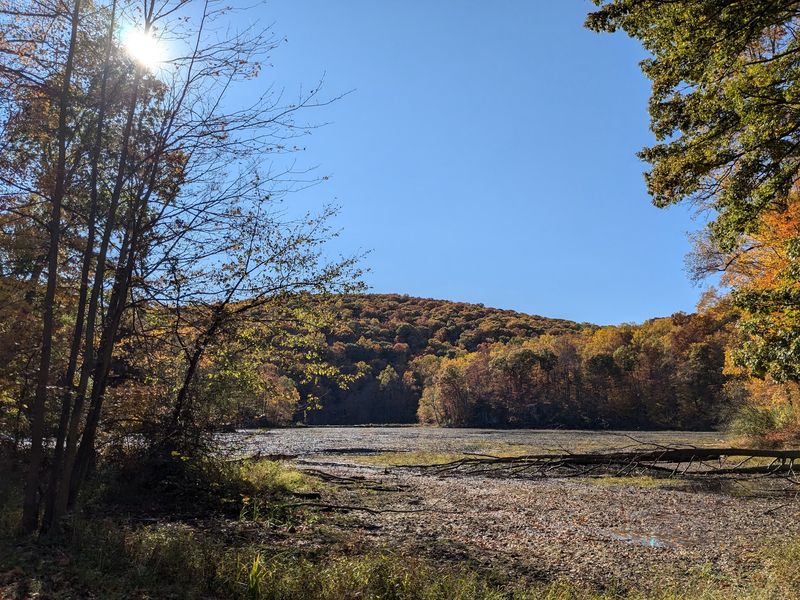
Few roads announce themselves quite like this one. Shades of Death Road runs roughly seven twisting miles through Warren County, and the name alone has fueled campfire talk for well over a century.
Theories about the name pile up fast. One of the most repeated points to the 1800s, when the swampy Great Meadows area suffered severe malaria outbreaks carried by mosquitoes.
Other versions mention highway robbers targeting travelers along the isolated stretch, plus a scattering of grim crimes tied to the corridor.
Driving it during daylight, the road feels more scenic than sinister. Farm fields open on one side, dense woods crowd the other, and the pavement curves just enough to keep you alert.
After sunset, the mood flips completely. Headlights only reach so far into that tunnel of branches.
Take it slow, because the shoulders are narrow and deer wander out without warning. The road eventually delivers you toward the turnoff for Ghost Lake, which feels like a fitting introduction to what waits below the hillside.
Jenny Jump State Forest And Its Own Old Story
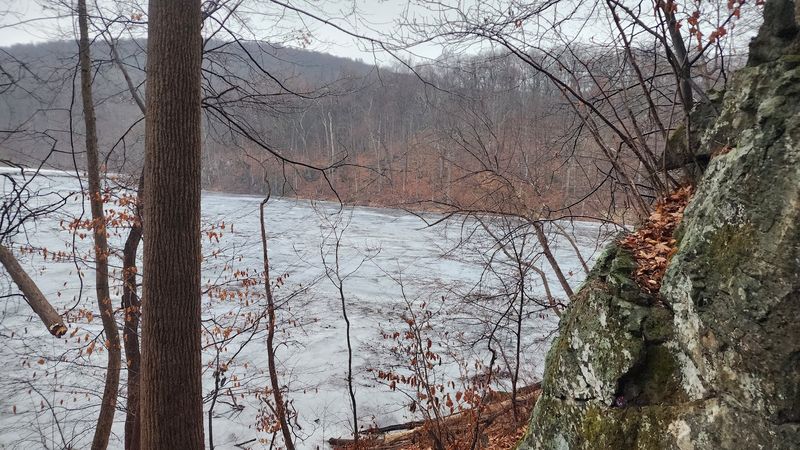
The lake sits inside Jenny Jump State Forest, a rugged pocket of ridges and glacial boulders in the New Jersey Highlands. Views from the higher ground stretch toward the Kittatinny range on clear days.
The forest name comes with its own piece of folklore. According to long-repeated local lore, a young settler girl named Jenny was picking berries on a cliff when danger approached from the woods.
Her father is said to have shouted for her to jump, and the fall killed her.
Historians treat the tale carefully. Some accounts claim she survived, while others suggest the name is an anglicized version of an older Lenape word, with the dramatic story attached much later.
Either way, the legend has become part of how visitors experience the place. You feel it in the quiet.
Rocky outcrops here were shaped by ancient glaciers, and the terrain rises sharply from the valley floor. Trailheads, picnic tables, and parking areas make it easy to spend a full day exploring without ever feeling rushed.
Lily Pads, Frogs, And A Very Alive Shoreline
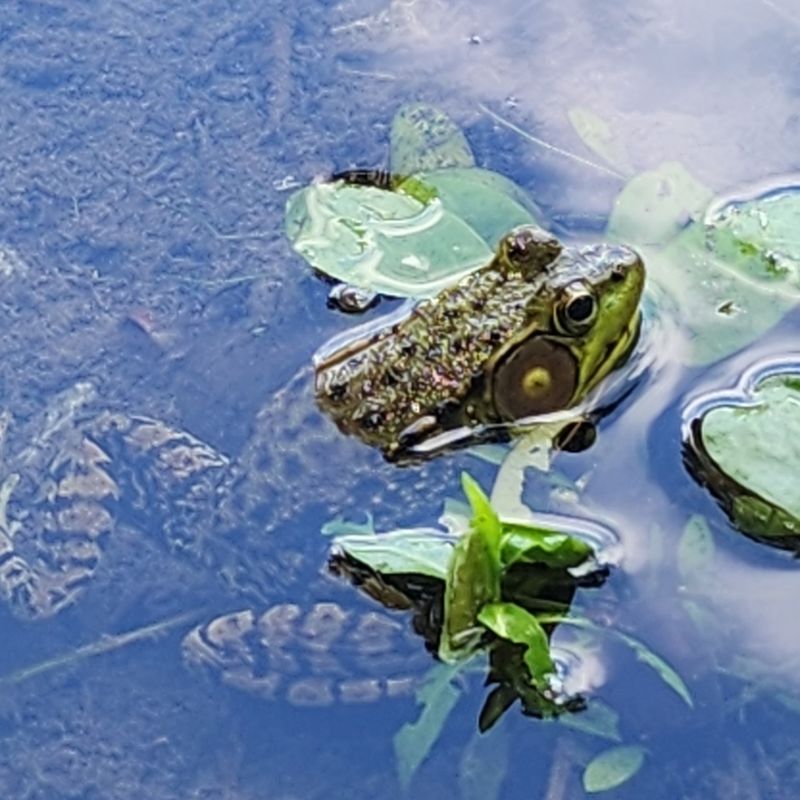
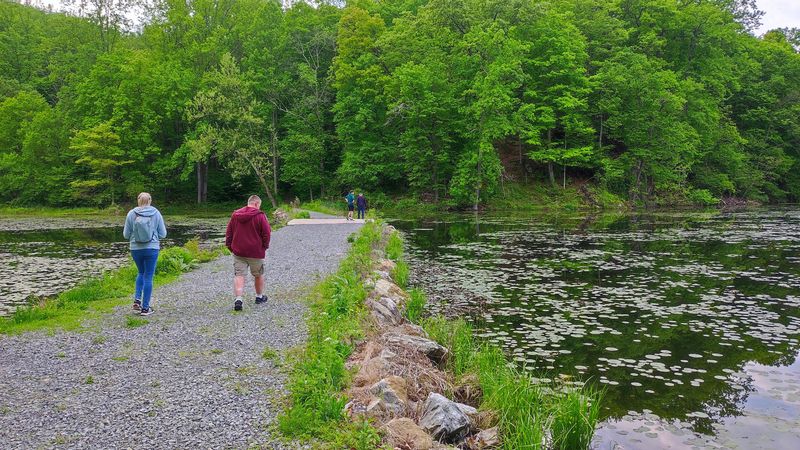
Summer changes the whole character of the water. By June, lily pads spread across the shallows in thick green mats, some dotted with pale blossoms that open in the sunlight.
Frogs are everywhere along the edges, plopping into the water the second you get close. Dragonflies patrol the reeds, turtles sun themselves on half-sunken logs, and the whole shoreline hums.
Snakes live here too, including copperheads, so watch where you step and stay on cleared ground near the banks.
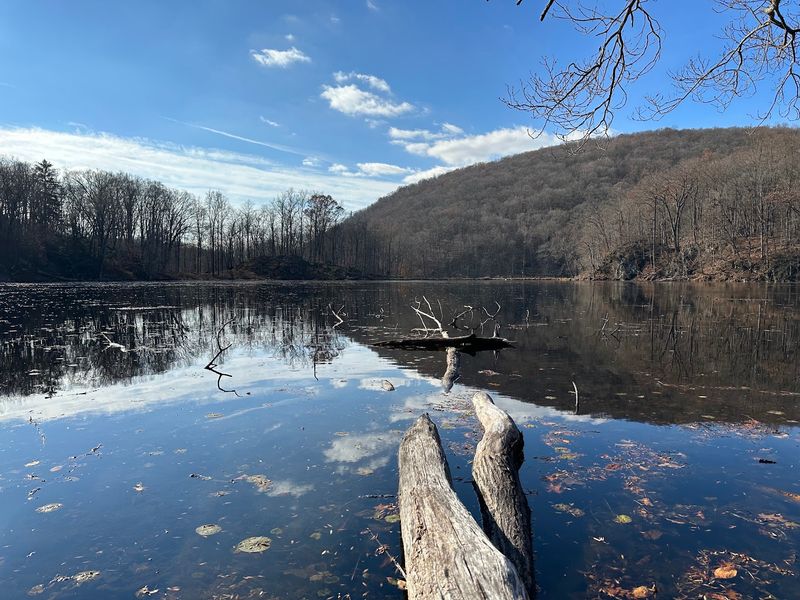
The water carries a tea-colored tint from tannins leaching out of leaves and roots, which gives the surface that dark, mirror-like quality people notice right away.
Vegetation gets dense enough by late summer that floating islands of plant matter drift around the middle. Some visitors find it overgrown, others find it beautifully wild.
Bring bug spray. Mosquitoes take the marshy setting very seriously, and they will absolutely find you if you linger near the reeds at dusk.
Fishing From The Bank On A Slow Afternoon
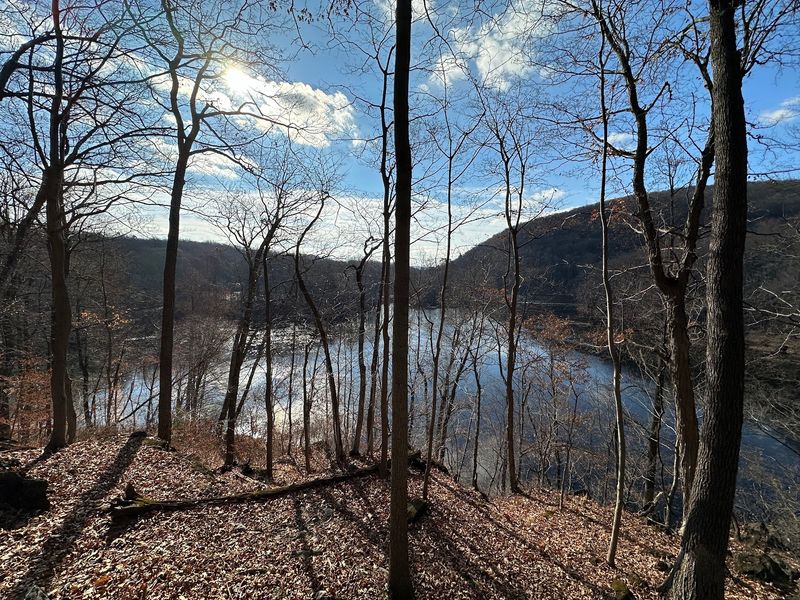
Anglers know this spot for largemouth bass, sunfish, and catfish, all of which thrive in the shallow, weedy conditions. The deepest water sits near the dam end.
Casting here takes patience and the right gear. Heavy lily pad coverage means standard lures snag constantly, so weedless setups earn their keep from mid spring through fall.
Multiple shoreline access points spread around the perimeter, and a walkway trail cuts across, effectively splitting the water into two sections you can work separately.
Winter opens another option entirely, since the surface freezes solid enough in cold stretches for ice fishing when conditions allow.
Success varies wildly. Some visitors pull in solid bass, others spend an hour untangling weeds and call it a day.
A car-top boat launch lets you bring a canoe or kayak, which helps you reach pockets of open water the bank never touches. Paddling across a fog-lit surface at Ghost Lake is a memory that sticks with you long after the drive home.
Fairy Hole Cave Hiding Along The Shore
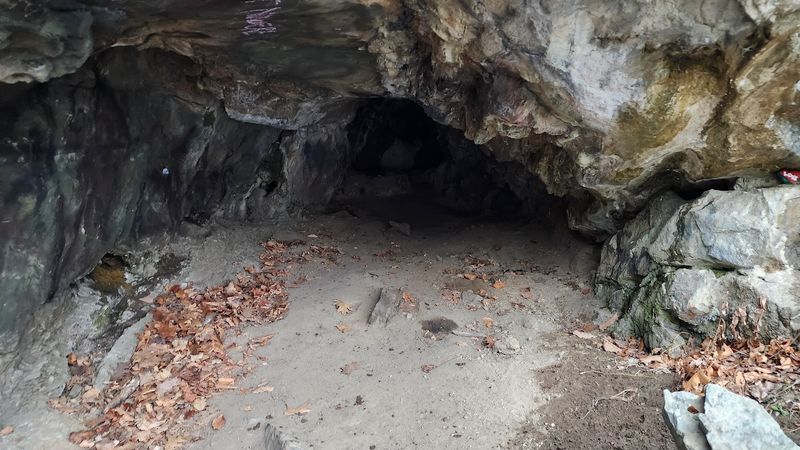
Across the water sits a dark opening in the rock that most people spot before they know what it is. Fairy Hole Cave, sometimes called Faery Cave, reaches roughly thirty feet into the hillside.
Getting there involves an unmarked path that traces the shoreline. Footing turns rocky and uneven, so decent shoes matter more than you might think.
The archaeology is the genuinely remarkable part. A 1936 excavation led by Dr. Dorothy Cross of the New Jersey State Museum recovered more than ten thousand bones and fragments representing twenty-three mammal species, along with Native American artifacts.
Findings like that suggest people used this shelter long before anyone dammed a creek nearby.
Standing at the mouth, the temperature drops noticeably. It smells like wet stone and old leaves.
A second small parking area sits closer to the access point, which shortens the walk considerably. Bring a flashlight if you plan to peek inside, and leave everything exactly where you find it.
Trails That Climb Higher Than They Look
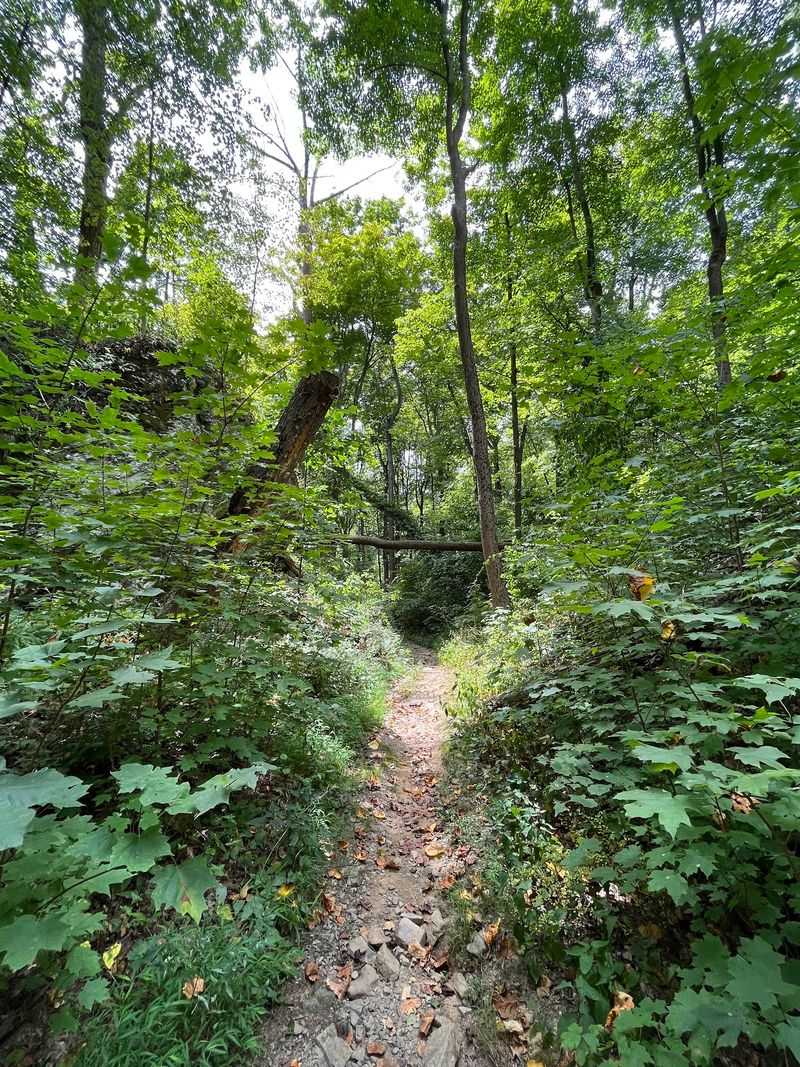
Trail mileage across Jenny Jump State Forest runs somewhere between eleven and fourteen miles, which is plenty for a full day on foot. Terrain varies from mellow woodland paths to rocky scrambles.
The Summit Trail, marked with yellow blazes, covers about 1.5 miles and rewards the climb with wide views toward the Delaware Water Gap and the Pequest Valley.
Another route, the Ghost Lake Trail, wears teal-blue blazes and runs roughly 1.8 miles toward a campsite inside the park.
Be aware that the main trail does not loop. You climb up, then retrace the same ground back down, so plan your energy accordingly.
Sections get steep and rocky in patches. Hiking boots beat sneakers here without question.
An overlook appears around a mile and a half in, and it is worth the sweat. Elevation gain sneaks up on you gradually rather than all at once, which makes the whole thing manageable for anyone with moderate fitness and a bit of stubbornness.
Darker Folklore Tied To The Water
Not every story attached to the lake is gentle. One persistent piece of local folklore claims that during conflicts between early European settlers and Indigenous people, bodies were disposed of in these waters.
The legend continues that when the heavy Great Meadows fog rolls in, figures are said to appear above the surface, lit by no visible source.
Whether any of it holds up historically is another matter, and there is no verified record confirming the tale.
What is undeniable is how the story colors the atmosphere. Once you have heard it, the mist stops looking like simple weather.
Folklore like this tends to grow around places that already feel strange, and a fog-covered lake at the end of a road named Shades of Death is practically an invitation.
Treat the legend as part of the region’s storytelling tradition rather than fact. The grim backdrop is a reminder that this landscape carried human history long before it became a weekend hiking destination.
Stargazing With The Astronomy Club
Here is a detail most people never expect from a haunted-sounding valley. The United Astronomy Clubs of New Jersey operate an observatory inside Jenny Jump State Forest, tucked among the trees on higher ground.
Elevation and distance from major city lights make the sky here noticeably darker than what you get closer to the coast.
Public observing sessions run on select evenings during the warmer months, giving visitors a chance to look through telescopes at planets, star clusters, and whatever else is favorably placed.
Pairing a fog-shrouded lake with a night of stargazing makes for a strangely perfect combination. Ancient rock below, distant light above.
Check the club’s schedule before driving out, since sessions depend on weather and season.
Dress warmer than the forecast suggests, because standing still on a ridge after dark gets chilly fast. Red-filtered flashlights help preserve night vision, and patience pays off once your eyes fully adjust to the darkness around you.
Planning A Visit Without The Guesswork
A few practical notes make the trip smoother. Parking areas are small, so arriving early on weekends saves you from circling or squeezing onto a narrow shoulder.
Shaded picnic areas with tables and grills sit within the forest, and they make a solid base for a lazy afternoon between hikes.
Mountain Lake, also inside the park, offers shoreline fishing and swimming during the warmer season if you want a second stop.
Interstate 80 runs close enough that traffic noise occasionally drifts in, which does slightly dent the wilderness illusion. Peaceful, just not silent.
Cell service can be spotty in the valley, so download maps before you lose signal. Ticks and mosquitoes are active from spring into fall, making long pants and repellent smart choices.
Access is open around the clock, though hiking unfamiliar rocky trails after dark is not recommended. You will find Ghost Lake at Great Meadows, NJ 07838, waiting quietly at the bottom of its wooded hillside.
