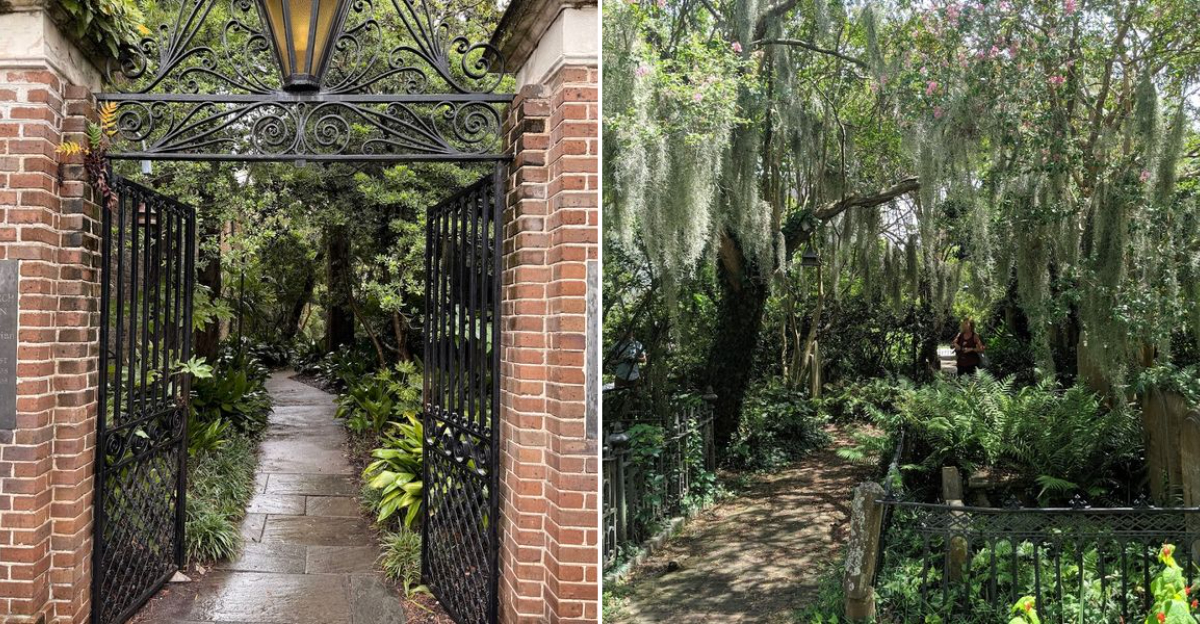
The iron gate does not lock, but some places do not need locks to keep people out. This South Carolina churchyard looks peaceful in the daylight, with moss draping over headstones and sunlight filtering through live oaks.
But locals have a simple rule: do not be here when the sun goes down. The graves date back to the seventeen hundreds, and the stories that come with them are older than the state itself.
Footsteps on gravel when no one walks. A whisper in a language you cannot name.
The church is beautiful, but the yard has a feeling that settles into your bones. You are not scared. Not exactly. But you will find yourself walking a little faster toward the gate.
Charleston has many historic spots, but this one asks for respect and daylight.
Visit in the morning, read the old stones, and leave before the shadows get long. That is not superstition. That is just good advice.
Why The Silence Feels So Strange
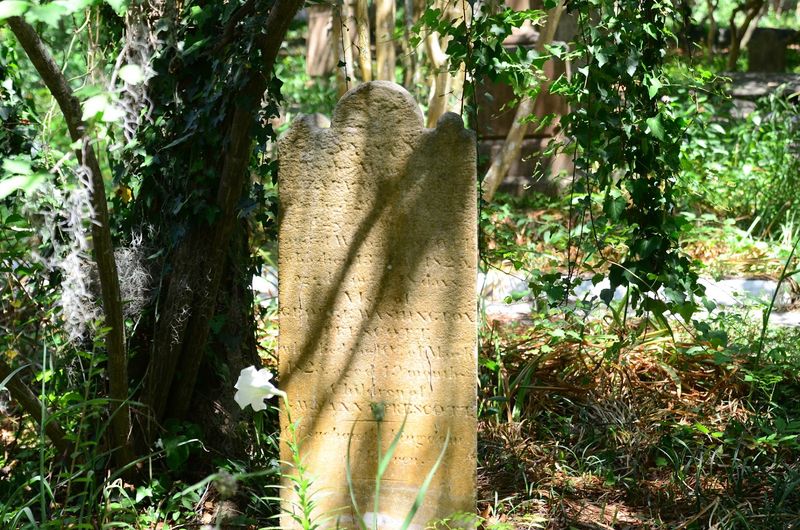
The first thing that got me here was not some dramatic chill or a creaking gate, but the silence, because it does not feel empty the way a normal quiet place feels empty. It feels layered, like the vines, the brick, and the old stones are all holding onto their own version of the same story.
You walk in expecting a peaceful churchyard, and instead you get that odd little sensation that the place is listening back.
Part of that feeling comes from how nature has been allowed to settle in around everything. The paths are shaded, the markers lean at angles, and the whole graveyard has that enclosed look that makes the outside city seem farther away than it really is.
In Charleston, that contrast is especially strange, because just beyond the walls there is everyday life, and in here there is stillness that feels much older.
That is what makes it so memorable in daylight, and what makes it a place I would not push my luck with after sunset. When a place already feels this hushed and watchful under the afternoon sun, you do not need much imagination to understand why so many people decide darkness is where the charm ends.
Where You Are Actually Standing
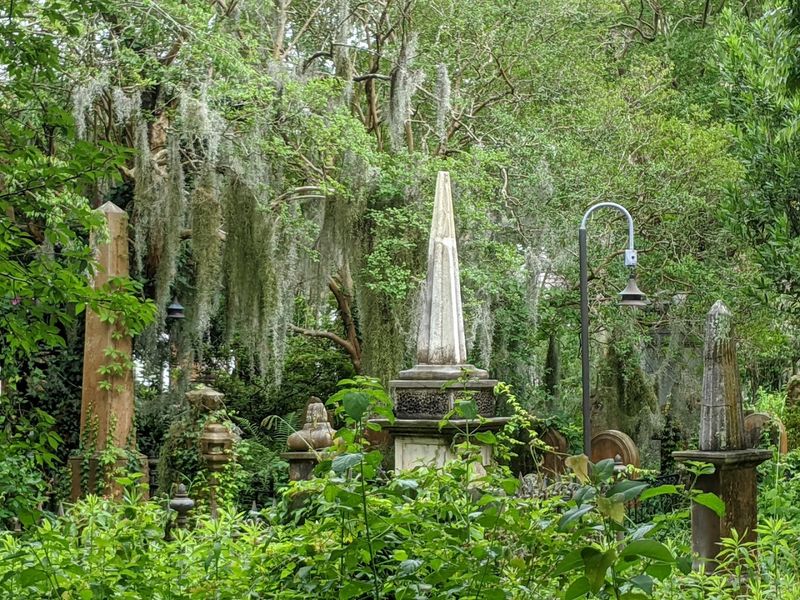
Let me put you right where this is, because the setting matters more than you might think. The Unitarian Church sits at 4 Archdale St, Charleston, SC 29401, tucked into the historic center in a way that makes you feel like you have slipped behind the usual version of the city.
You are not out in the countryside chasing ghost stories here, which is exactly why the mood sneaks up on you.
The church itself is a real landmark, and the graveyard behind it has become one of those Charleston spots people talk about in a lower voice. It is enclosed, overgrown in places, and full of old burial markers that look as if time stopped bothering to keep them upright.
Even if you care nothing about hauntings, the atmosphere is enough to make you slow down and pay attention.
That is also why I think people underestimate it at first. You come in expecting architecture, history, and a little garden gloom, and then suddenly you are aware of how narrow the paths feel and how quickly the light seems to leave.
South Carolina has no shortage of haunted legends, but this one gets under your skin quietly.
The Garden Look That Tricks You
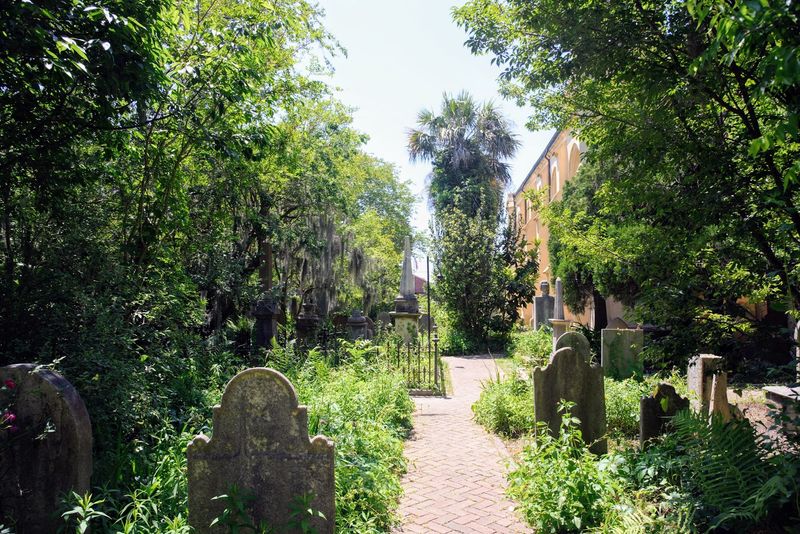
Honestly, this graveyard can look almost beautiful enough to fool you, especially if you arrive when the light is soft and the greenery is glowing. The plants spill around the stones, the pathways curve gently, and the whole place has that romantic South Carolina churchyard look people love in photos.
For a minute, you might think the spooky reputation has been exaggerated by people who just scare easily.
Then you notice how the beauty is doing a lot of heavy lifting. The markers are worn, the corners are shadowed even in daytime, and the walls make the space feel closer and more secretive than you expected.
It is not polished or staged in that neat historic way, which is exactly why it feels more affecting in person.
I think that contrast is what makes the place so unnerving after dark in local stories. During the day, the tangled greenery softens everything and makes the churchyard feel dreamlike.
At night, that same overgrowth would turn every edge and opening into the kind of shape your brain keeps trying to identify, and that sounds like a miserable game to play with yourself.
The Lady In Black Story Lingers
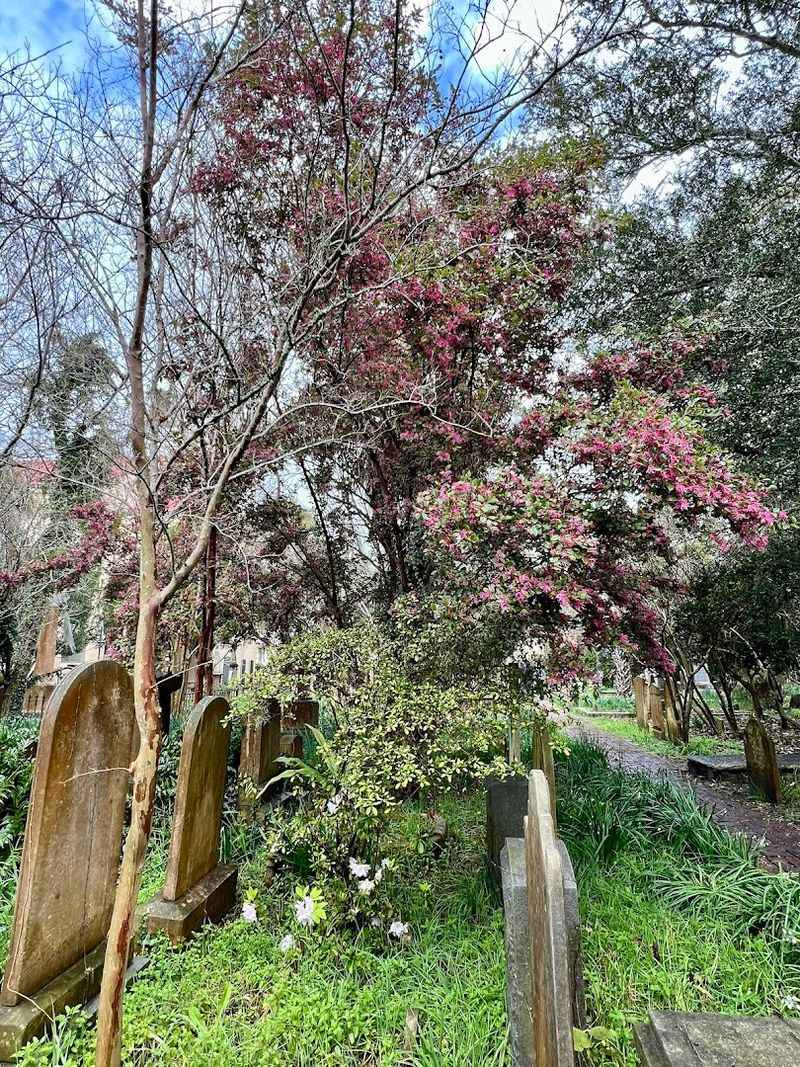
If you spend even a little time reading about this churchyard, you are going to run into the story of the Lady in Black. People connect her with Anna Nettles, a woman said to have mourned a fiancé lost at sea and to have remained wrapped in grief long after everyone else moved on.
Whether you believe that story literally or not, it has attached itself to these paths in a very stubborn way.
Visitors and guides have long described seeing a dark female figure moving between graves in the evening hours. The details are usually restrained, which weirdly makes them more convincing, because it is less about a theatrical apparition and more about a brief sighting, a sense of someone nearby, or footsteps that do not match your own.
That kind of account feels harder to laugh off.
What gets me is how well the legend fits the setting. This is not a flashy place with dramatic ruins and open views, but a quiet churchyard where a dark silhouette could disappear in a second.
In Charleston, stories like that tend to stick because the physical space already feels prepared to hold them.
Why The Paths Make People Nervous
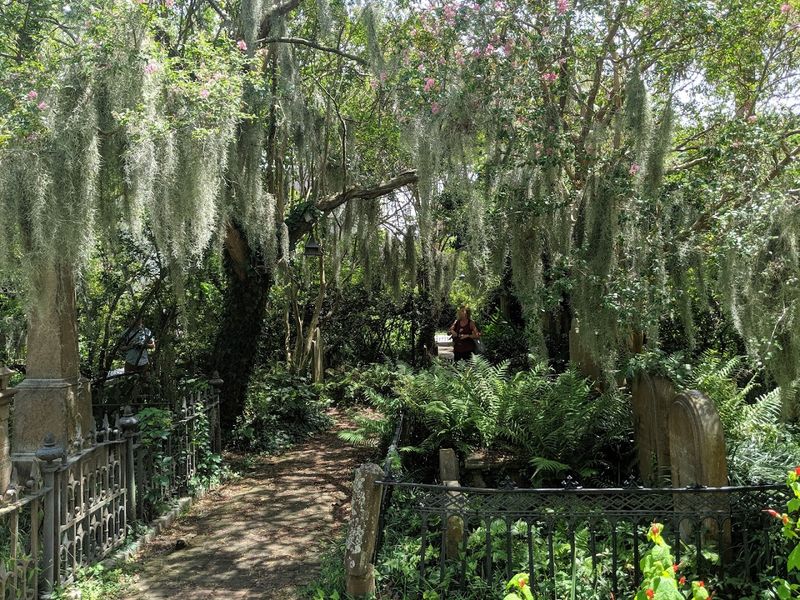
There is something about the paths here that really gets to people, and I completely understand why. They are not grand avenues that let you see everything at once, but quieter little routes that bend, narrow, and disappear behind foliage and tilted stones.
When you are walking through a churchyard with a haunted reputation, that kind of layout is already doing half the work.
You never feel wildly lost, but you do feel gently separated from the rest of the city, and that can be enough. A turn in the path, a sudden patch of deeper shade, or the sound of your own steps hitting differently can make your brain go into alert mode before you even notice it happening.
In South Carolina heat and humidity, the air can also feel thick enough to make that enclosed quality more intense.
I think this is why so many stories connected to the graveyard are subtle rather than dramatic. People talk about sensing someone behind them, hearing slow footsteps, or catching movement where there should be none.
In a place built like this, those experiences feel possible enough that you start arguing with yourself, and that is not the mood you want after dark.
Charleston Makes The Mood Hit Harder
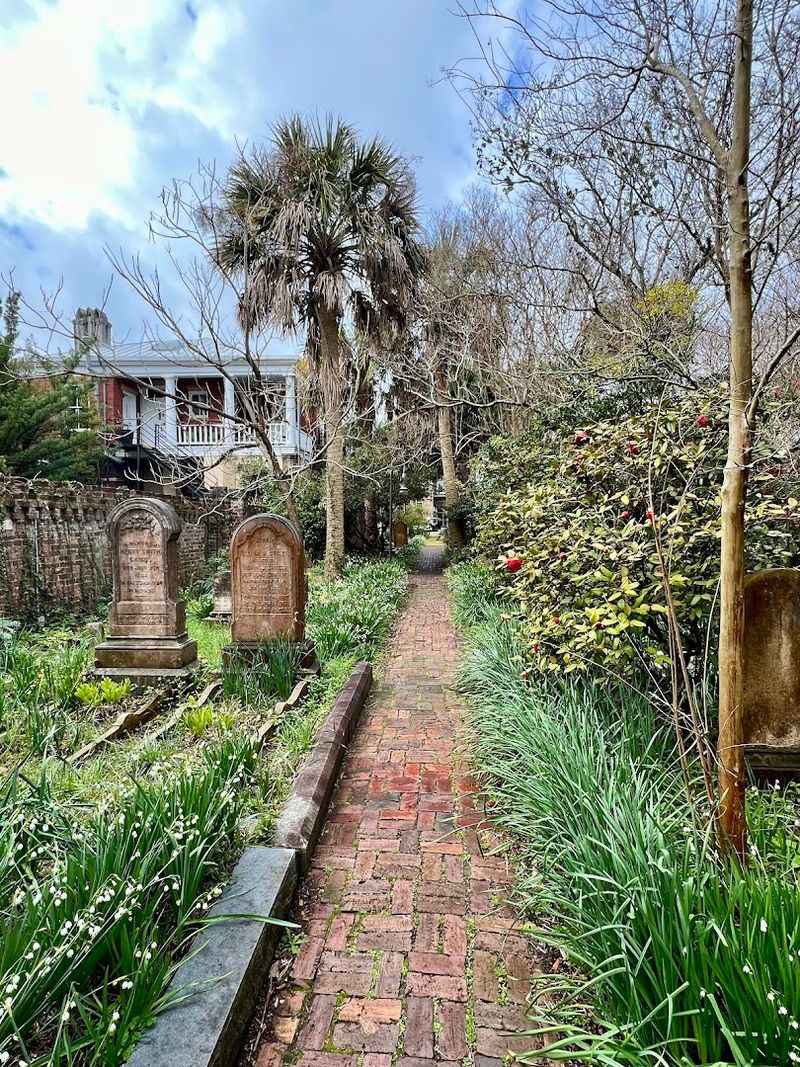
I think part of what makes this churchyard so effective is that it sits in Charleston, where beauty and unease already live pretty close together. You can spend the day admiring old facades, gardens, and church steeples, and then step into a burial ground like this and feel the whole mood turn inward.
That shift is what stays with you, because it happens without any warning or spectacle.
Outside the walls, the city keeps moving in its usual graceful way. Inside, the air feels slower, the greenery feels heavier, and the old stones create this sense that memory is piled up in layers all around you.
You do not need a ghost to appear for that contrast to become emotionally intense, and maybe that is why the ghost stories keep surviving.
If this same graveyard were sitting somewhere wide open, I do not think it would land the same way. Here, the historic surroundings give it context, while the enclosed churchyard strips away all the comfortable distance you usually keep from the past.
South Carolina has places that scare you with drama, but this one unsettles you by being intimate.
The Stories Stay Small And That Matters
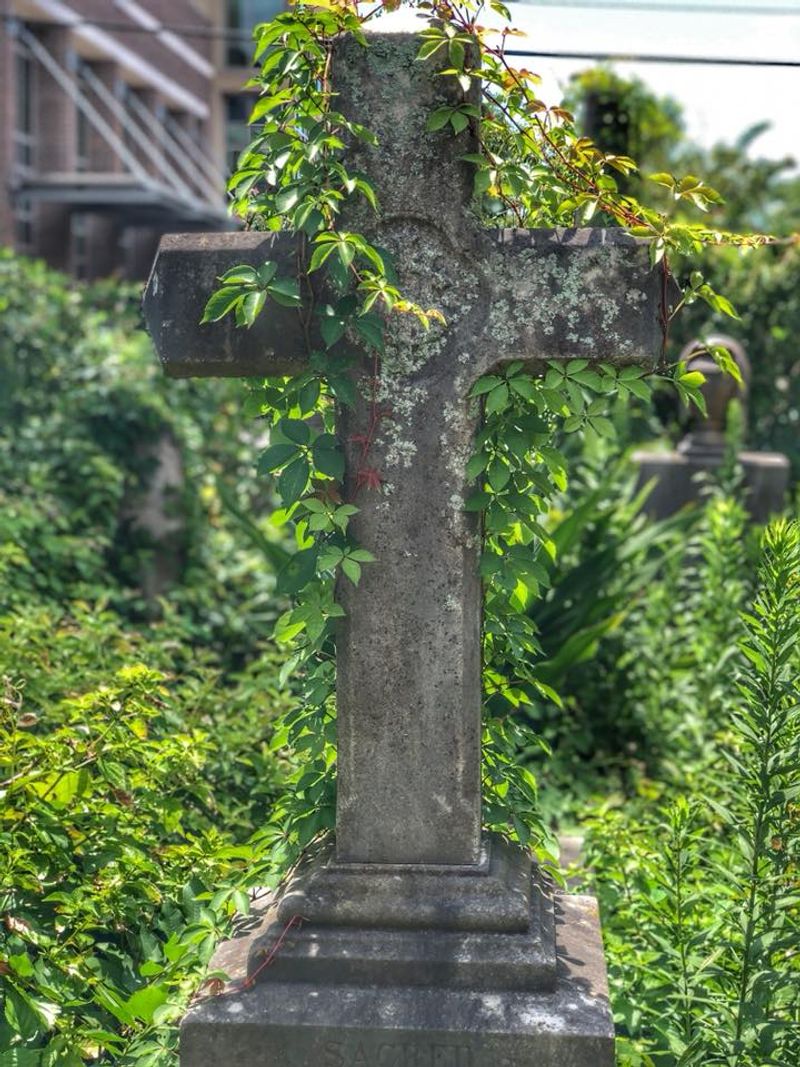
One reason this place gets under my skin is that the stories tied to it are usually small. You hear about brief sightings, the sense of someone walking nearby, or footsteps that seem to trail a little too neatly behind you.
Those are not big theatrical tales, and that is exactly why they feel like the kind of thing a real person might quietly admit after leaving.
There is something believable about a haunting legend that does not oversell itself. The graveyard is old, secluded, and shaped in a way that naturally heightens your awareness, so even mild experiences start carrying extra weight once people compare notes.
In Charleston, where local storytelling is practically woven into the streets, those understated accounts have had plenty of room to stick.
I also think the churchyard earns a different kind of respect because it never feels like an attraction first and a burial place second. You notice the age, the care, and the gravity of the space even while taking in its beauty.
That makes the haunted reputation feel less like entertainment and more like one more layer of human feeling attached to a very real place.
Why I Would Leave Before Sunset
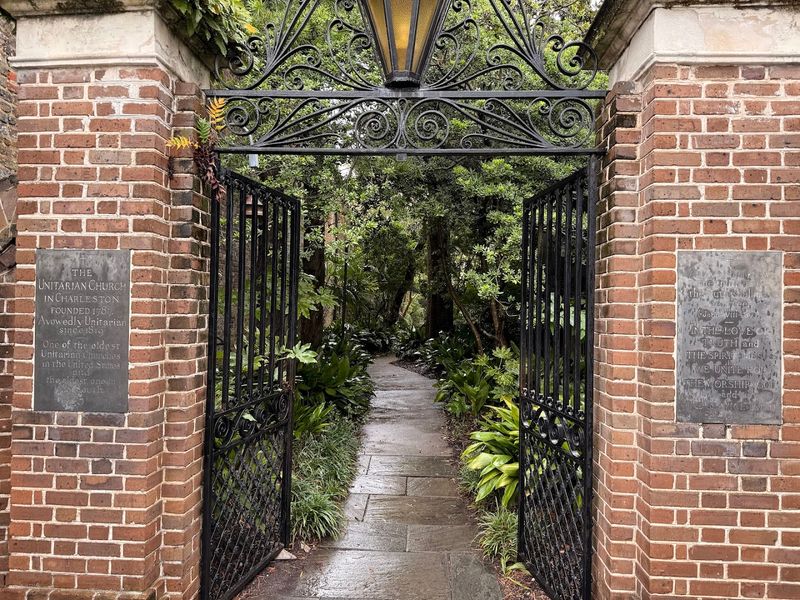
If you asked me when to go, I would tell you to visit in daylight and head out well before the sky starts fading. That is not me trying to sound dramatic, because the churchyard is genuinely fascinating, but there is a point when the atmosphere shifts from reflective to deeply uneasy.
You can feel it in the shadows first, and then in the way every little sound suddenly seems personal.
By late afternoon, the greenery stops looking soft and starts looking dense. The narrow paths feel less inviting, the leaning stones become harder to read at a glance, and the whole place seems to gather itself inward.
For a graveyard already linked to stories of the Lady in Black and unseen footsteps, that change is enough to make common sense sound pretty wise.
South Carolina has no shortage of spooky places people love to test themselves in after dark, and I get the temptation. Still, this churchyard does not strike me as the kind of place that wants to be challenged, and honestly, I do not see the appeal in pushing that.
Some places are best appreciated while you can still clearly see the way out.
