I have walked through a lot of forests in New Hampshire, but I have never walked through anything quite like this. Deep inside a quiet state forest, hidden by the trees, there is a ghost town.
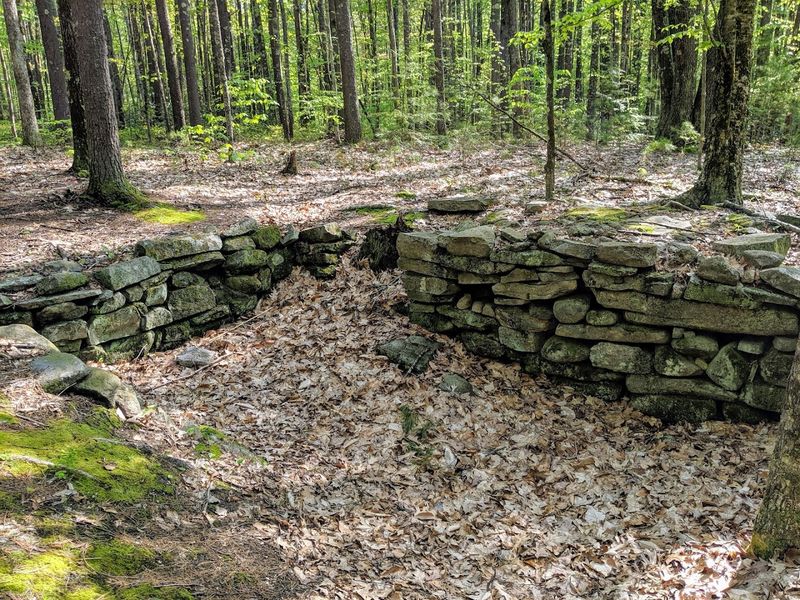
The buildings are long gone, collapsed or burned or taken apart piece by piece. But the stone cellars remain.
Dozens of them, scattered across the hillside, sunken into the earth. Each one was once the foundation of a home.
A family lived there. They cooked and slept and raised children in that spot.
Now there is nothing but mossy stones and a hole in the ground. I wandered from cellar to cellar, trying to imagine what life was like here.
The settlement was founded in the 1700s and abandoned by the mid 1800s. The soil was too poor, the winters too harsh.
The people left, and the forest took over. But the cellars stayed.
They are all that is left of a dream that did not work out. That is haunting and beautiful at the same time.
New Hampshire has many hidden places, but this one feels like a secret.
The Ghost Town That Time Forgot
Most ghost towns exist out West, right? Wrong.
New Hampshire has one of its own, and it is far more atmospheric than anything you would find in a Hollywood western. Monson’s First Settlement was once a thriving colonial village, active from the late 1730s and incorporated as a proper town in the mid-1700s.
By 1770, the whole community had quietly disbanded, its residents scattering to neighboring towns.
Walking through the site today feels genuinely surreal. The forest has reclaimed almost everything, yet the bones of the settlement remain.
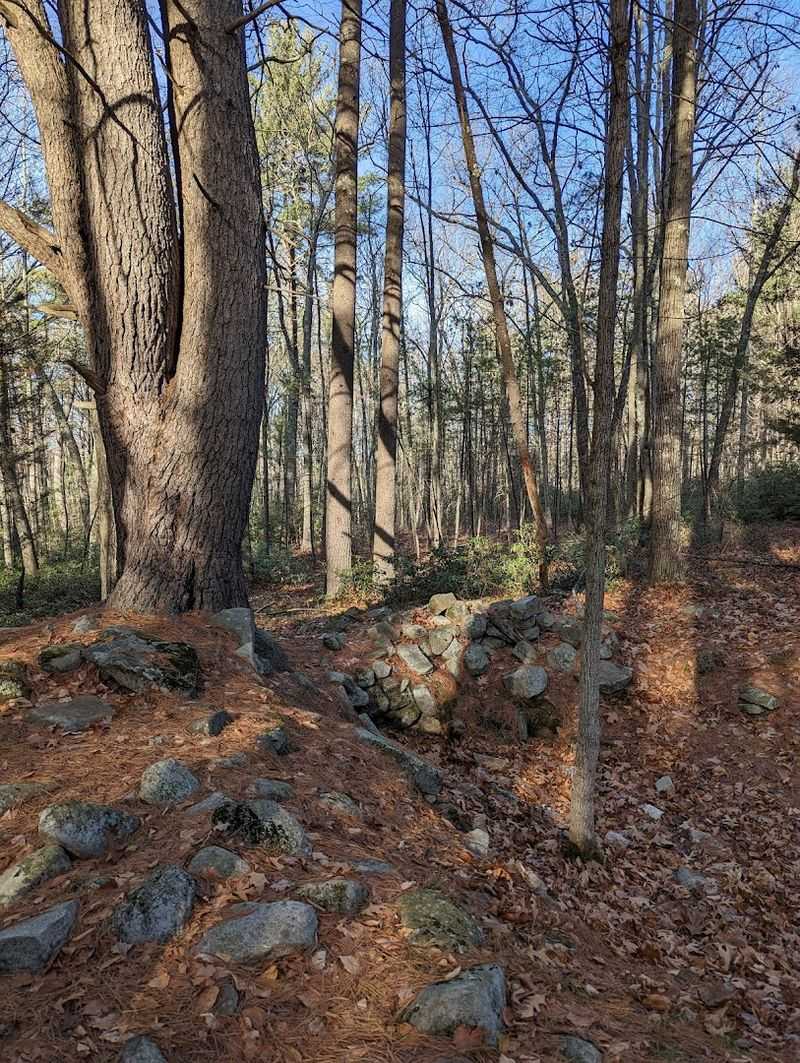
Stone cellar holes yawn open beneath the leaf litter, and long stretches of original stone walls still snake through the trees like quiet sentinels.
What makes Monson so compelling is the mystery surrounding its end. Historians point to poor soil quality, harsh living conditions, a lack of a central church, and political disagreements as possible causes.
Nobody knows for certain, and that ambiguity is part of the magic. New Hampshire does not advertise this place loudly, which makes stumbling upon it feel like a genuine discovery every single time.
Stone Cellars Hidden Beneath the Forest Floor
There is something deeply eerie about finding a stone cellar in the middle of a forest with no house above it. That is exactly what you encounter repeatedly along the trails at Monson Center.
These cellar holes are what remain of the original homesteads, hand-dug foundations built by colonial settlers who hauled granite stones without any modern equipment.
Each hollow in the ground represents a family, a kitchen fire, a winter survived or not. The craftsmanship is remarkable even in ruin.
The granite blocks fit together with a precision that has kept them in place for nearly three centuries, outlasting the wooden structures that once sat above them.
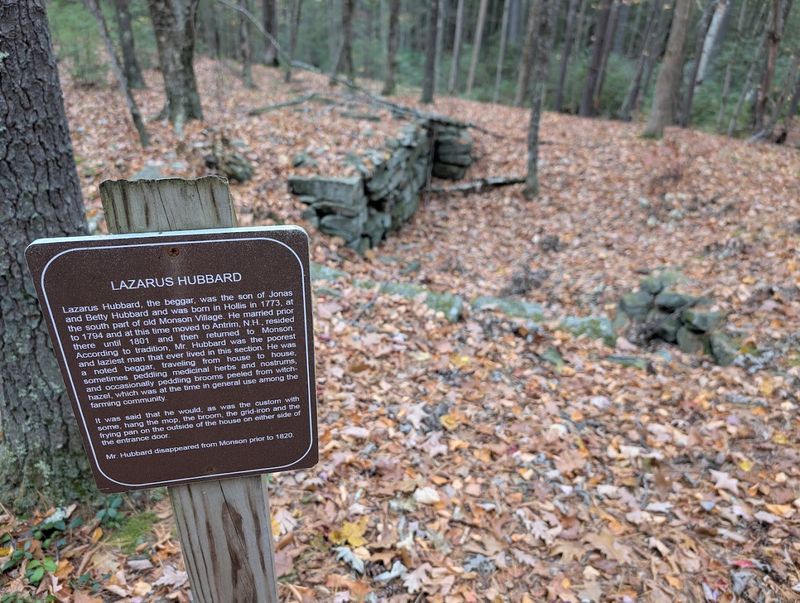
Interpretive signs placed near each foundation tell you who lived there and something about their lives, which transforms what could be a simple nature walk into a genuinely moving historical experience.
My favorite moment on the trail was standing inside one of the deeper cellar holes. I was surrounded by mossy walls, and realizing that the last person to stand in that exact spot probably did so over two hundred and fifty years ago.
That thought hits differently in real life than it does on paper.
A Trail System That Connects Seven Homesteads
The trail system at Monson’s First Settlement is modest in length but enormous in character. A roughly three-mile loop connects all seven of the original homestead sites, each marked with signage that provides biographical details about the colonial families who once called this place home.
It is part history lesson, part nature walk, and completely free to explore.
The terrain is mostly flat and manageable, making it accessible for a wide range of fitness levels. Tree roots and rocks pop up occasionally, so solid footwear is a smart call.
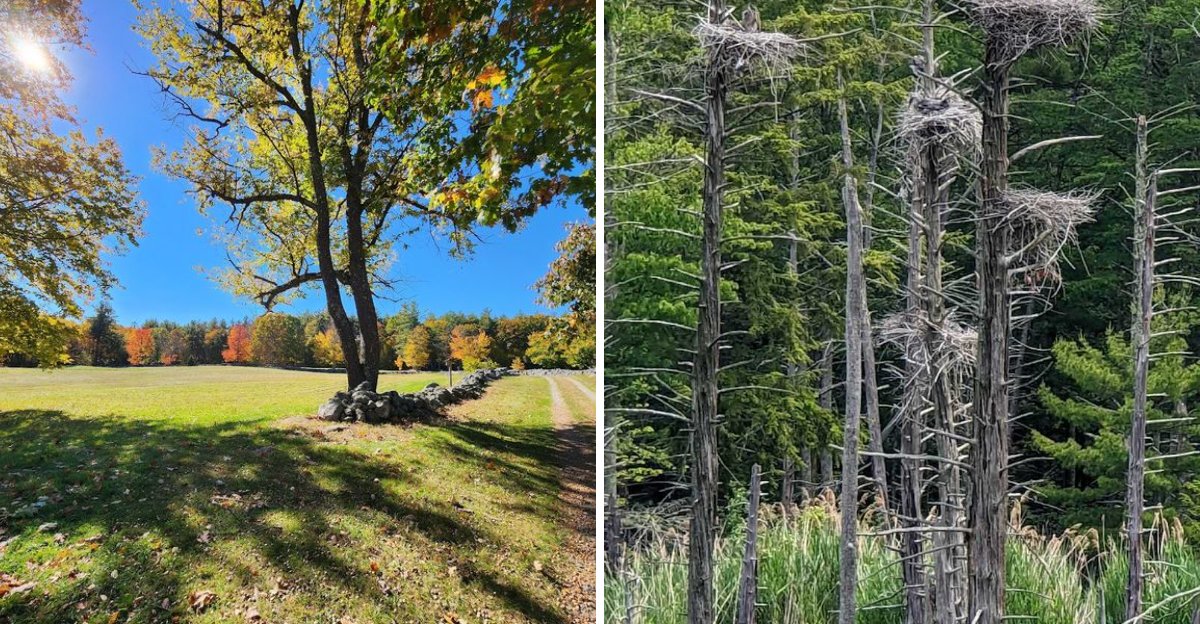
Spring brings wildflowers and the chance to spot great blue herons nesting in the dead trees near the pond at the northern end of the trail.
One thing I appreciated was how unhurried the whole experience felt. There are no timed entry windows, no audio tour blasting in your ears, just you, the trees, and the quiet.
New Hampshire forests have a particular quality of stillness that is hard to put into words. At Monson Center, that stillness feels amplified by history, as if the land itself is holding its breath, waiting to see who notices what was once here.
The Joseph Gould House, a Rare Surviving Relic
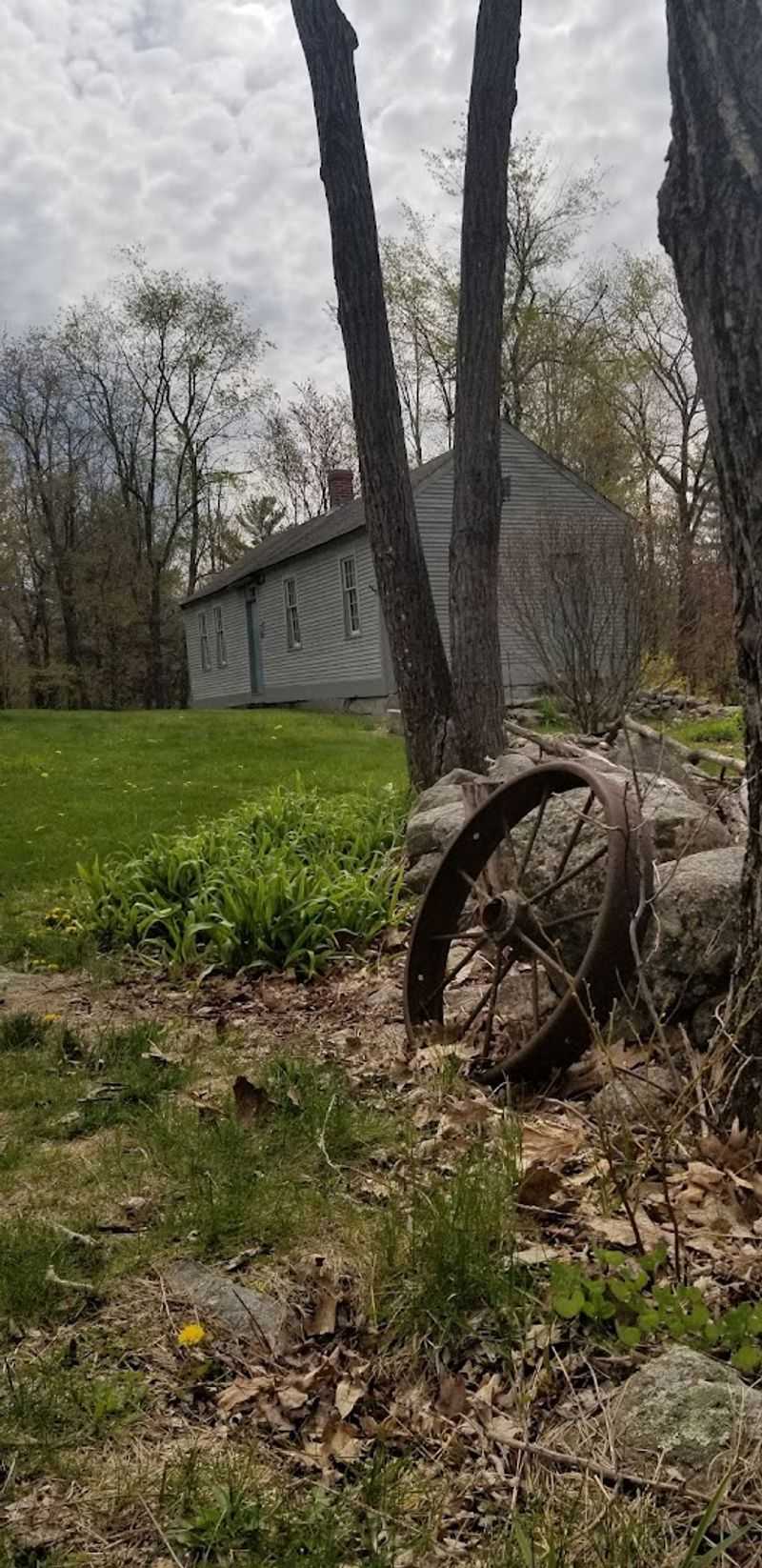
Amid the cellar holes and crumbling stone walls, one structure actually survived. The Joseph Gould house, built in 1756, has been carefully restored and now serves as a small museum on the property.
Stepping inside feels like crossing a threshold into another century, with period antiques and artifacts filling the modest interior.
Access to the museum interior depends on the caretaker’s availability, so timing your visit can be a bit unpredictable. Going on a weekend and arriving with some patience gives you the best shot at getting inside.
Even if the door is locked, the exterior alone is worth examining closely. It is one of the few tangible reminders that real people built real homes here.
Outside the Gould house, you will find a collection of old farm implements and tools that add another layer of context to the site. Monson’s First Settlement might be a ghost town, but the Gould house gives it a heartbeat.
It is a rare, honest piece of New Hampshire colonial history that has not been polished into a tourist attraction. It still feels raw, real, and genuinely old in the best possible way.
The Mystery Behind the Abandonment
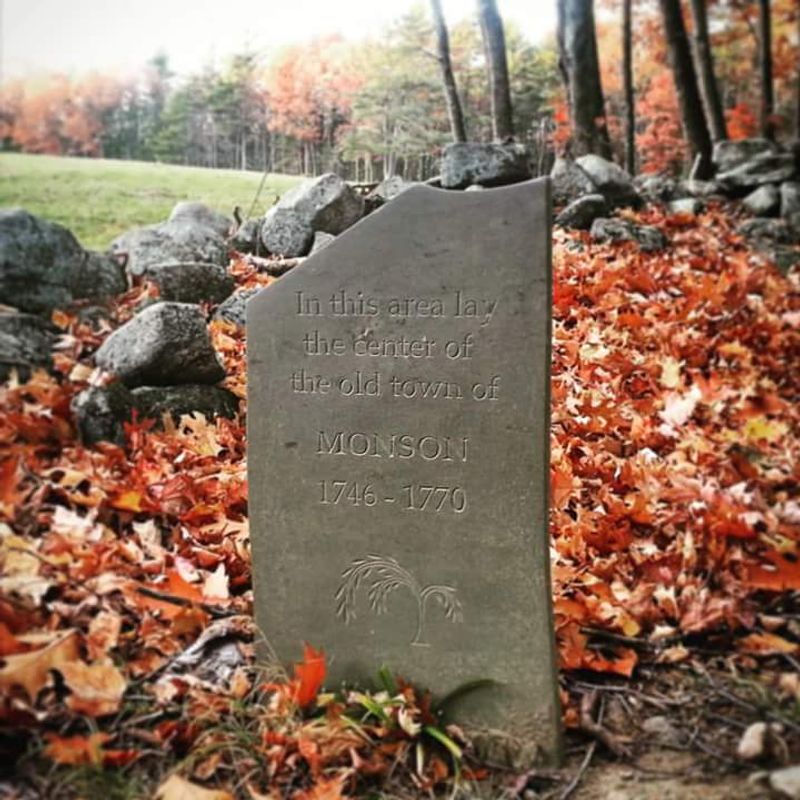
Ghost towns usually have a dramatic story attached to them. A fire, a flood, a plague.
Monson’s First Settlement has none of those. The town was simply disbanded in 1770 at the request of its own inhabitants, and historians have been puzzling over why ever since.
That quiet, self-directed disappearance is genuinely unsettling in a way that a disaster never could be.
The leading theories point to a combination of factors. The soil in this part of New Hampshire was notoriously poor for farming.
Without a central meeting house or church, the community lacked a social anchor. Political friction between residents may have made cooperation increasingly difficult.
And the brutal New England winters likely wore people down over time.
None of these explanations fully satisfies, which is precisely what makes Monson Center so fascinating to think about. A whole community chose to walk away from everything they had built, and nobody wrote down exactly why.
Walking those trails, passing those stone walls, you cannot help but wonder what the conversations sounded like in those final months before everyone packed up and left. New Hampshire has many historical mysteries, but this one feels particularly personal and close to the ground.
Paranormal Legends and Eerie Autumn Evenings
Naturally, a place like this attracts ghost stories. Monson’s First Settlement has developed a quiet reputation for paranormal activity, with reports of strange sounds, odd lights, and an overall feeling that something unseen is paying close attention.
October visitors in particular seem to come away with stories worth telling around a campfire.
Taking a dusk hike through the property in autumn is a genuinely memorable experience. The light drops fast once the sun dips below the tree line, and the forest takes on a completely different personality.
Shadows pool inside the cellar holes, and the stone walls seem to stretch further into the dark than they should. It is atmospheric in a way that no haunted house attraction could replicate.
Whether you believe in the paranormal or not, the psychological weight of the place is undeniable. You are walking through the remains of a community that chose to vanish, and that knowledge colors everything you see and hear.
A snapping branch or an owl call lands differently here than it would anywhere else. Monson’s First Settlement earns its eerie reputation honestly, through history and atmosphere rather than manufactured spookiness.
Wildlife and Natural Beauty Worth the Trip Alone
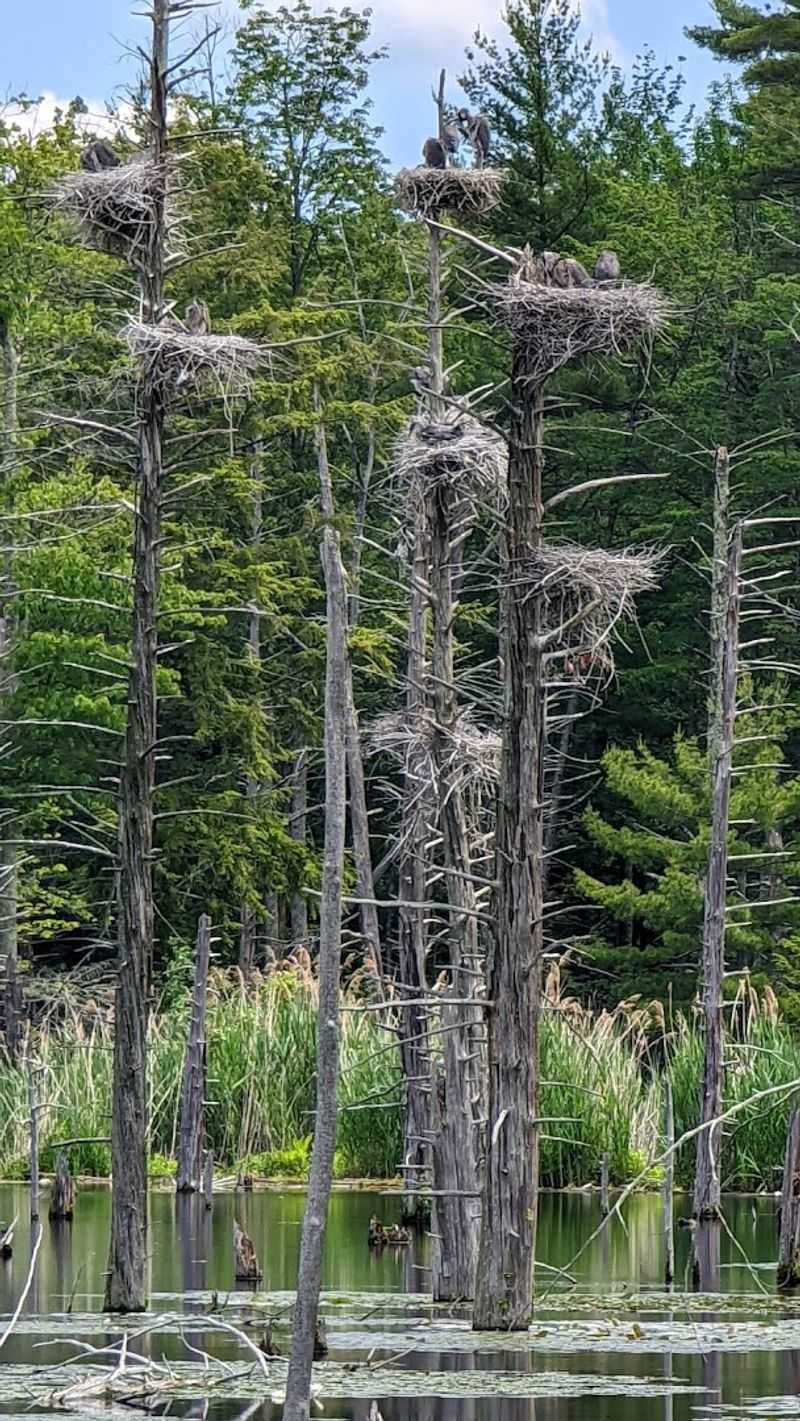
Even setting aside the history entirely, Monson’s First Settlement is a genuinely beautiful piece of New Hampshire wilderness. The property encompasses meadows, dense woodland, and a large pond at its northern end that becomes a spectacular wildlife watching spot during spring.
Great blue herons nest in the dead trees above the water, and watching them is a surprisingly moving experience.
Wildflowers push up through the meadow grasses in warmer months, and mountain laurels create dense, gorgeous thickets along sections of the trail.
Birdwatchers will find plenty to occupy their attention throughout the year, and the pond draws a variety of waterfowl that make early morning visits particularly rewarding.
The property covers close to three hundred acres, which means you can wander without feeling crowded even on busy days. Dogs are welcome and seem to love the combination of open meadow and shaded woodland trail.
Bringing binoculars is a genuinely good idea, especially if you visit between late spring and early summer when the heron colony is most active. New Hampshire has no shortage of beautiful natural spaces, but few of them come packaged with this much historical depth alongside the scenery.
How the Site Was Saved From Development
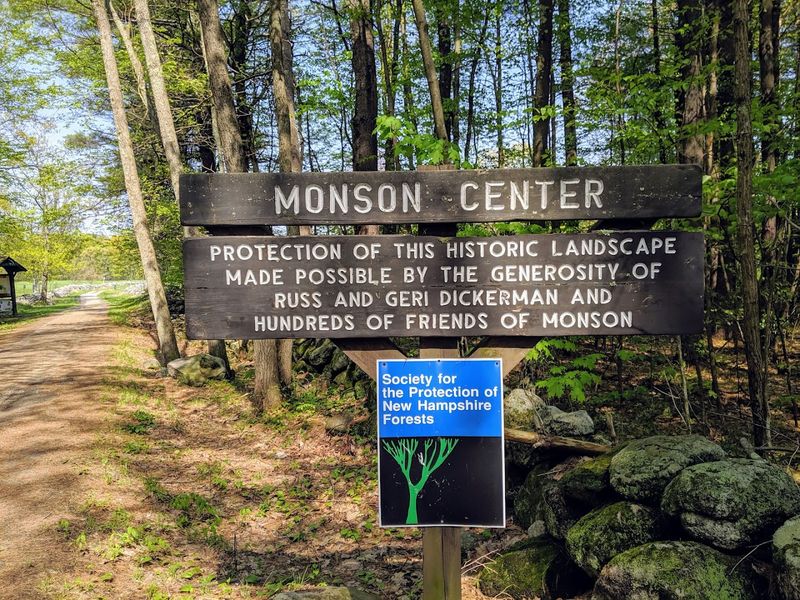
Monson’s First Settlement almost became a subdivision. In the late 1990s, a proposal to develop the land into nearly thirty new housing lots threatened to erase what remained of the colonial settlement forever.
What happened next is the kind of story that restores your faith in communities.
A grassroots campaign rallied local residents and conservation advocates to fight the development plan. The Society for the Protection of New Hampshire Forests stepped in to purchase the property.
They gave critical contributions and land donations coming from local residents Russ and Geri Dickerman, whose connection to the land ran deep and personal.
Their generosity transformed a near-disaster into a lasting public treasure.
Today the site operates as a historic park, free and open to all. The preservation effort is a reminder that places like this do not protect themselves.
They survive because people care enough to act. Visiting Monson Center and making a donation to the Society for the Protection of New Hampshire Forests is one of the most direct ways to support that ongoing work.
The site depends on public goodwill to stay maintained, accessible, and alive for future generations of curious wanderers.
Stone Walls That Outlasted Everything
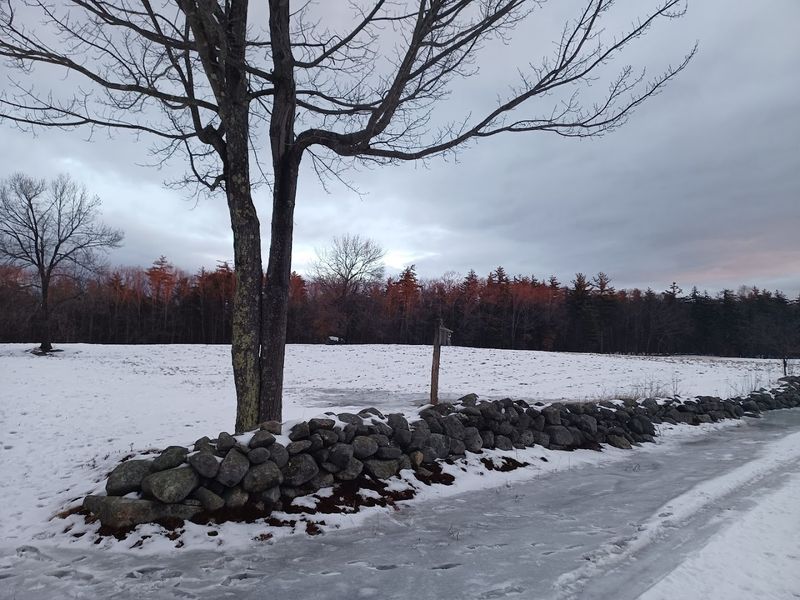
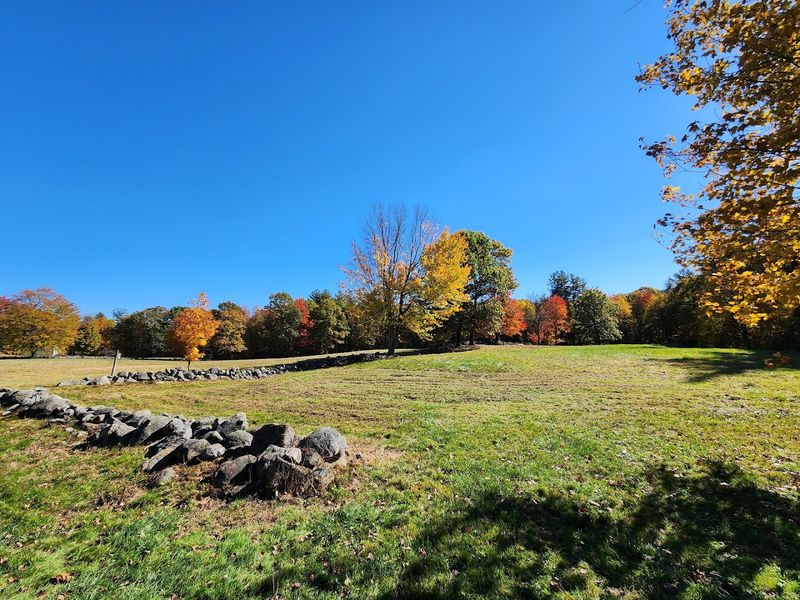
Few things in New England are as quietly iconic as a stone wall running through a forest. At Monson Center, these walls are everywhere, threading through the trees in patterns that reveal the old property lines and field boundaries of a colonial farming community.
They are made from granite pulled out of the earth by hand, stacked without mortar, and they have stood for the better part of three centuries.
The walls tell a story of extraordinary labor. Every stone was lifted, carried, and placed by settlers who were simultaneously trying to farm difficult land, raise families, and survive brutal winters.
The scale of the work becomes more impressive the longer you look at it. Some of these walls stretch for hundreds of feet through terrain that is now dense woodland.
Ecologically, they have become something beautiful in their own right. Mosses and lichens coat the granite surfaces, small animals den beneath them, and ferns grow in the gaps between stones.
The walls have become part of the forest ecosystem in a way their builders never imagined. At Monson’s First Settlement, the line between human history and natural history has blurred into something genuinely poetic.
Plan Your Visit to Monson Center
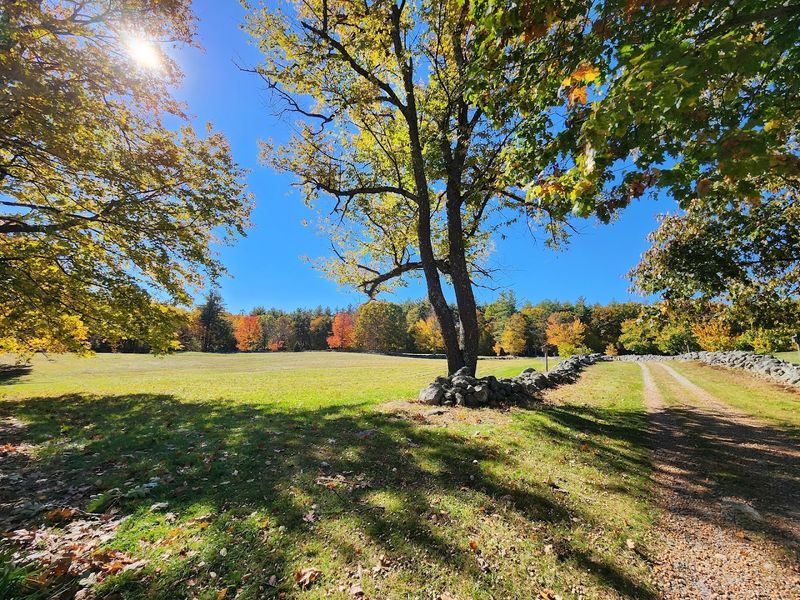
Getting to Monson’s First Settlement is straightforward once you know where to look. The site sits on Federal Hill Road in Hollis, New Hampshire, with a small parking area near the trailhead.
Plugging Monson Center into your map app will get you there reliably. The address is Federal Hill Rd, Hollis, NH 03049.
Admission is completely free, which makes it one of the best-value historical experiences in the state. The trails are open year-round, though spring and fall are the most rewarding seasons to visit.
Spring brings nesting herons and wildflowers, while fall wraps the whole site in the kind of foliage that makes New Hampshire famous.
Wear sturdy shoes, bring water, and consider downloading an offline map before you arrive since trail signage can be sparse in places. A pair of binoculars is a smart addition to your pack, especially near the pond.
If the Joseph Gould house is open when you arrive, do not pass it up. Before you leave, drop a donation in the box to help keep Monson Center preserved and accessible.
This place deserves to be around for another three hundred years, and that takes a little help from everyone who loves it.
