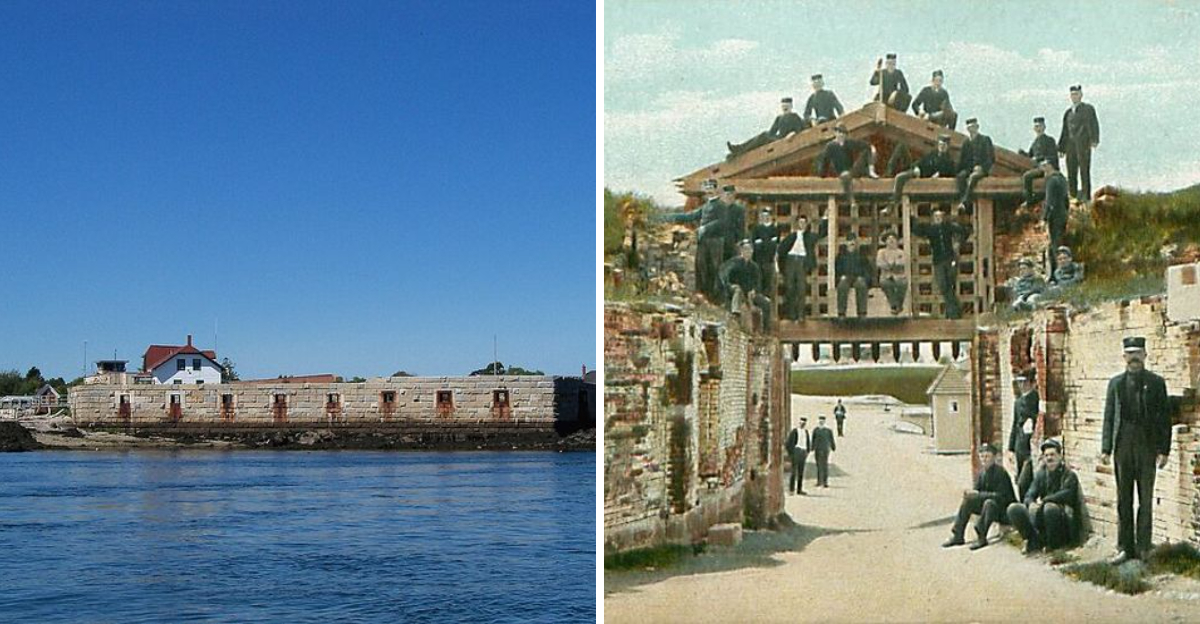
You have to take a short walk across a stone breakwater to reach it. The waves crash on either side, and the salt spray hits your face.
Then you are there. A hauntingly beautiful island fortress that has been guarding the coast of New Hampshire for centuries.
The stone walls are thick and weathered. The cannons still point out to sea, aimed at enemies that never came.
I walked through the dark tunnels and up the winding staircases, trying to imagine what it felt like to be stationed here. The men who served on this island were far from home, surrounded by cold water and cold stone.
They watched and waited, year after year. The fortress has been through wars and peace and everything in between.
It has stood empty and it has been restored. Now it is open to visitors who want to touch history.
I stood on the ramparts and looked out at the ocean. The wind was strong and cold.
I thought about all the soldiers who had stood in that same spot, looking at that same water. New Hampshire holds its history close.
The Oldest Military Post You Have Probably Never Heard Of
Most people can name a handful of famous American forts without blinking. Fort Sumter, West Point, the Alamo.
But Fort Constitution Historic Site? That one tends to get a blank stare, and that is genuinely baffling once you know the backstory.
This spot in New Castle, New Hampshire, may be the oldest continuously occupied military installation in the entire United States, with roots stretching back to 1631. That predates the Boston Tea Party by nearly a century and a half.
The British first fortified this strategic peninsula to guard the Piscataqua River and the approach to Portsmouth Harbor, calling it simply “The Castle.”
Standing here today, looking out at the Atlantic, it is easy to feel the weight of all those centuries pressing down around you. The stone walls have absorbed storms, cannon fire, and the salt air of countless winters.
New Hampshire does not always get credit for its military heritage, but Fort Constitution quietly holds one of the most remarkable records in the country. Discovering this place feels less like a tourist stop and more like stumbling onto a secret the rest of America forgot to tell you about.
Paul Revere Rode Here Too, And This Raid Changed Everything

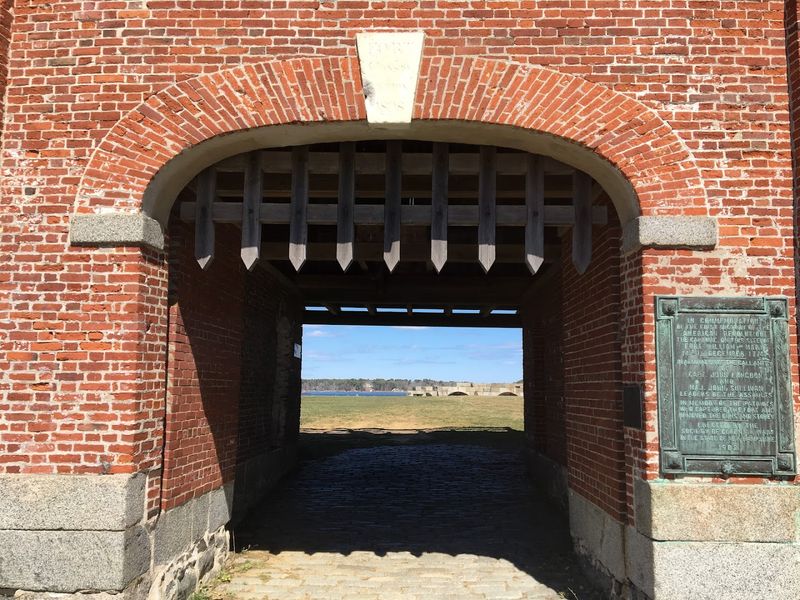
Everyone knows about Paul Revere’s midnight ride warning of British troops marching toward Lexington and Concord. Far fewer people know he made an earlier, equally critical ride to New Castle, New Hampshire, in December 1774.
Revere galloped north to warn local patriots that the British planned to reinforce Fort William and Mary, as the site was then known. The message landed like a spark in dry grass.
Within days, roughly 400 colonists from Portsmouth, Rye, and New Castle stormed the fort, overwhelmed the small British garrison, and made off with 16 small cannons and 98 barrels of gunpowder. They also hauled down the British flag, which was a bold, almost theatrical act of defiance.
Historians widely regard this raid as the first overt military act of the American Revolution, beating Lexington and Concord by several months. Some of that captured gunpowder is believed to have been used at the Battle of Bunker Hill.
Fort Constitution Historic Site is literally where the Revolution started heating up, and yet most Americans have never been told. Standing inside these walls with that knowledge feels electric in a way no museum exhibit can fully replicate.
A Fort With Three Names And A Story For Each One
Not many landmarks get to reinvent themselves three times and keep getting more interesting with each chapter. Fort Constitution has done exactly that, wearing each of its names like a different uniform depending on the era.
It started as “The Castle,” a no-frills British stronghold planted here in the early colonial period. Then, around 1692, it was rechristened Fort William and Mary to honor the reigning English monarchs, a name it carried through the turbulent years leading up to the Revolution.
After the young United States got its footing and renovations swept through the site in 1808, the fort received its current name, Fort Constitution, a title that felt like a declaration of intent.
Each name marks a turning point in New Hampshire history and, by extension, American history. The fort did not just witness these changes passively.
It was actively central to them, serving as a munitions depot, a military training ground, and a symbol of whoever held power at the time. Tracing the name changes is almost like reading a compressed timeline of the country’s founding struggle.
It is the kind of layered history that makes this New Castle landmark genuinely addictive to explore.
The Walbach Tower And The War Of 1812 Chapter
After the Revolution, you might think a fort that had already seen so much action would get a well-earned rest. Fort Constitution had other plans.
When the War of 1812 rolled around, this New Hampshire coastal stronghold got back to work in a serious way.
The fort was manned, expanded, and upgraded to meet the new military realities of the early nineteenth century. The most striking addition from this period is the Walbach Tower, a round stone defensive structure built in 1814 and armed with a 32-pounder cannon.
The tower was designed to cover approaches that the older fortifications could not adequately address, and it still stands today as one of the most visually striking features on the entire site.
Walking up to the Walbach Tower on a clear morning, with the Piscataqua River glittering below, you get an immediate sense of why this position was so strategically prized. Whoever controlled this narrow approach controlled access to one of New England’s most important harbors.
The tower is compact, sturdy, and quietly impressive, built by people who understood that the young republic’s survival might depend on exactly this kind of coastal defense. It is a fantastic piece of military architecture that rarely gets the attention it deserves.
The Unfinished Granite Giant That Time Forgot
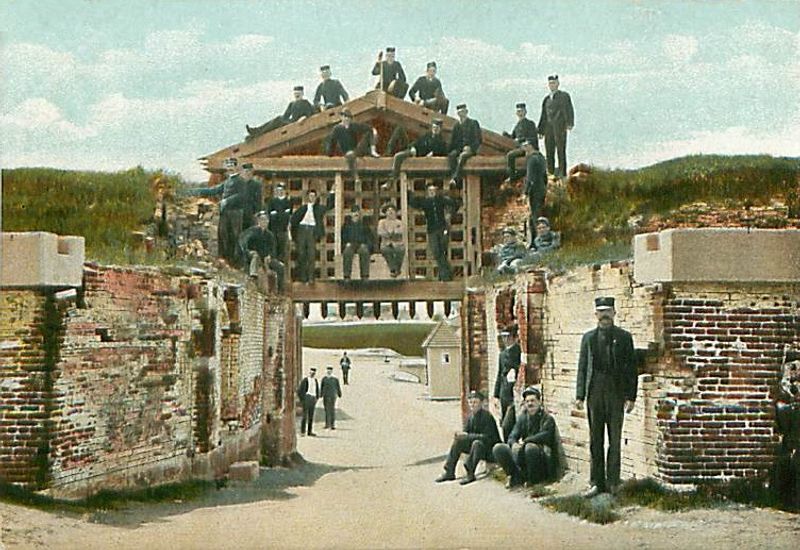
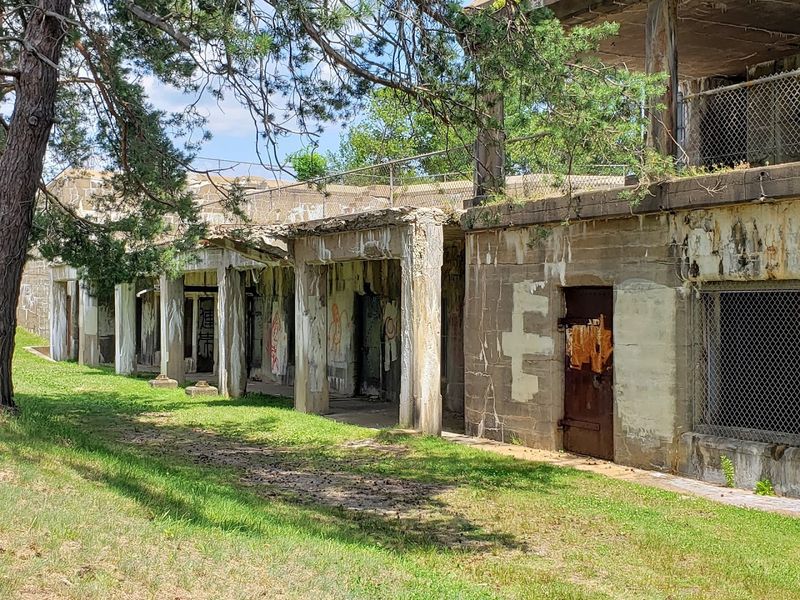
There is something genuinely haunting about a project that was abandoned mid-construction, especially when that project was meant to be a massive, three-tiered granite fortress. During the Civil War era, Fort Constitution underwent ambitious expansion plans that never reached completion.
Construction began on a grand new fort designed to dominate Portsmouth Harbor with serious firepower. The granite walls started rising, tier by tier, in the style of the great coastal fortifications being built across the country at the time.
Then military technology made a sudden, dramatic leap forward. Rifled artillery and explosive shells rendered thick masonry walls vulnerable in ways that smooth-bore cannons never could, and the enormous granite project was quietly shelved.
What remains today is a fascinating architectural ghost, a structure frozen mid-sentence, telling the story of how quickly warfare evolved during that era. Walking through the partially completed sections at Fort Constitution Historic Site is a strangely moving experience.
You can see exactly where the ambition ran headlong into obsolescence. New Hampshire’s coast is full of beautiful scenery, but this particular ruin carries an emotional weight that pure natural beauty simply cannot match.
It is history interrupted, preserved in stone for anyone curious enough to pay attention.
Portsmouth Harbor Light And Its Centuries Of Coastal Duty
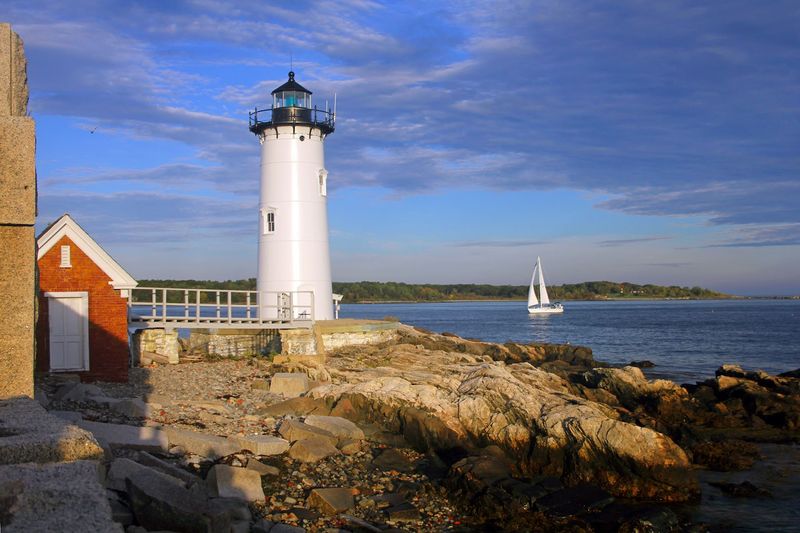
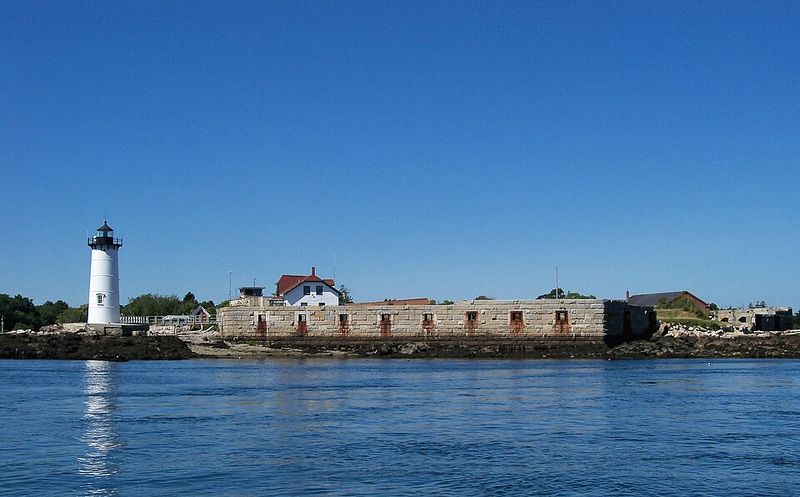
Sharing the grounds with all those layers of military history is one of New Hampshire’s most photographed landmarks, the Portsmouth Harbor Light. It is the kind of lighthouse that looks exactly like a lighthouse should look, tall, dark, and dignified against the open sky.
The current cast-iron tower, standing 48 feet tall, was built in 1877, replacing an earlier wooden lighthouse that had guided mariners since 1771.
That original lighthouse was one of the earliest in the American colonies, which tells you just how critical this harbor entrance has always been to coastal navigation.
The light remains a functioning aid to navigation to this day, still doing its job after all these years.
Photographing the lighthouse against the backdrop of the Atlantic is practically a rite of passage for anyone visiting Fort Constitution Historic Site.
The contrast between the sleek Victorian-era iron tower and the weathered colonial stonework surrounding it creates a visual tension that feels uniquely New Hampshire.
Morning light hits the tower beautifully, and on clear days the views across the harbor toward the open ocean are genuinely breathtaking. Many people come specifically for the lighthouse and leave having discovered an entire fortress they never knew existed.
That is a very good surprise.
Strategic Location On The Piscataqua River
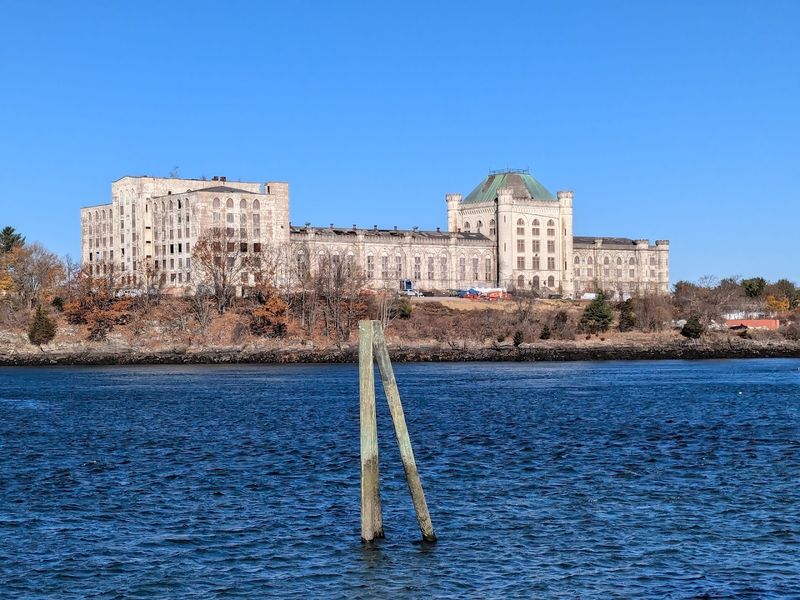
Geography is destiny, and nowhere does that feel more true than standing at Fort Constitution and looking out over the Piscataqua River as it opens into the Atlantic. This spot was not chosen randomly.
It was chosen because whoever controls this narrow waterway controls everything behind it.
Portsmouth Harbor sits just upstream, and for centuries it was one of the most economically vital ports in colonial America. Timber, fish, and trade goods flowed through here in enormous quantities.
Protecting that harbor meant protecting the colony’s economic lifeline, and Fort Constitution sat at exactly the right chokepoint to do that job effectively.
The river itself is famously fast-moving, with powerful tidal currents that made navigation tricky for unfamiliar ships. That natural feature worked in the defenders’ favor, slowing potential attackers and giving the fort’s gunners more time to engage incoming vessels.
Standing on the old ramparts today, watching the current swirl below, you get an immediate visceral understanding of why generation after generation of military planners kept investing in this exact location.
New Hampshire’s coastline is relatively short, but this particular stretch of it has shaped American history in ways that are still being fully appreciated.
The view alone is worth the visit.
From Active Duty To State Park And What That Means For You
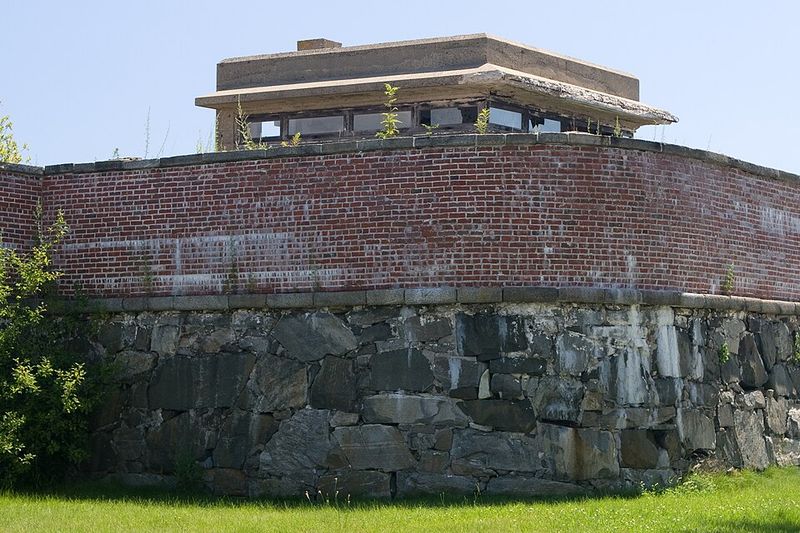
Fort Constitution’s active military career finally wound down in the twentieth century, and in 1961 the site was returned to the State of New Hampshire. It was placed on the National Register of Historic Places in 1973, a recognition that felt long overdue given everything that had happened here.
Today, Fort Constitution Historic Site operates as a New Hampshire State Park, which means the public can walk these storied grounds freely. The site sits adjacent to a U.S.
Coast Guard Station, so there is still an active maritime presence here, which adds to the atmosphere rather than detracting from it.
Picnicking on the grounds while looking out at the same water that colonial patriots once crossed by rowboat is an experience that is hard to describe without sounding slightly dramatic.
The park is free to access and genuinely welcoming, with enough space to wander, explore, and find your own quiet corner of history. Families, solo explorers, history enthusiasts, and casual strollers all seem to find something meaningful here.
The site does not oversell itself with flashy signage or heavy-handed interpretation. It simply lets the stone walls, the lighthouse, and the Atlantic do the talking, and they are very convincing speakers.
New Hampshire parks rarely disappoint, but this one genuinely exceeds expectations.
Planning Your Visit To New Castle And Making The Most Of It
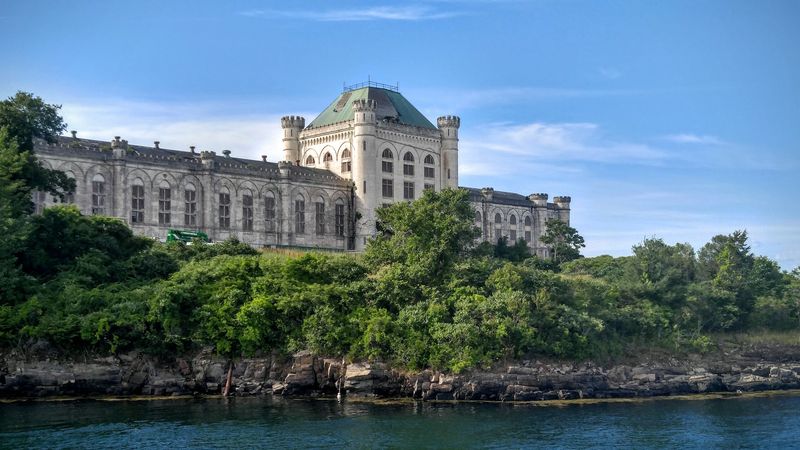
New Castle is a tiny island community connected to the mainland by a short causeway, and getting there is half the fun. The drive through the island feels immediately different from the rest of coastal New Hampshire, quieter, more deliberate, with the ocean visible at almost every turn.
Fort Constitution Historic Site is located in New Castle, NH 03854, right at the end of Fort Constitution Road, adjacent to the Coast Guard Station. Parking is available nearby, and the walk to the fort entrance is short and flat, making it accessible for most visitors.
Morning visits reward you with softer light on the stone walls and fewer crowds, which gives the place an almost eerie peacefulness that pairs perfectly with its history.
Pair your visit with a walk along the island’s shoreline roads, which offer stunning views of the harbor and surrounding marshes. New Castle village itself is charming and worth a slow stroll before or after exploring the fort.
Bring layers regardless of the season, because coastal New Hampshire has a way of reminding you who is in charge when the wind picks up off the water. Pack your curiosity, leave the rush behind, and give yourself at least two hours here.
You will absolutely want them.
