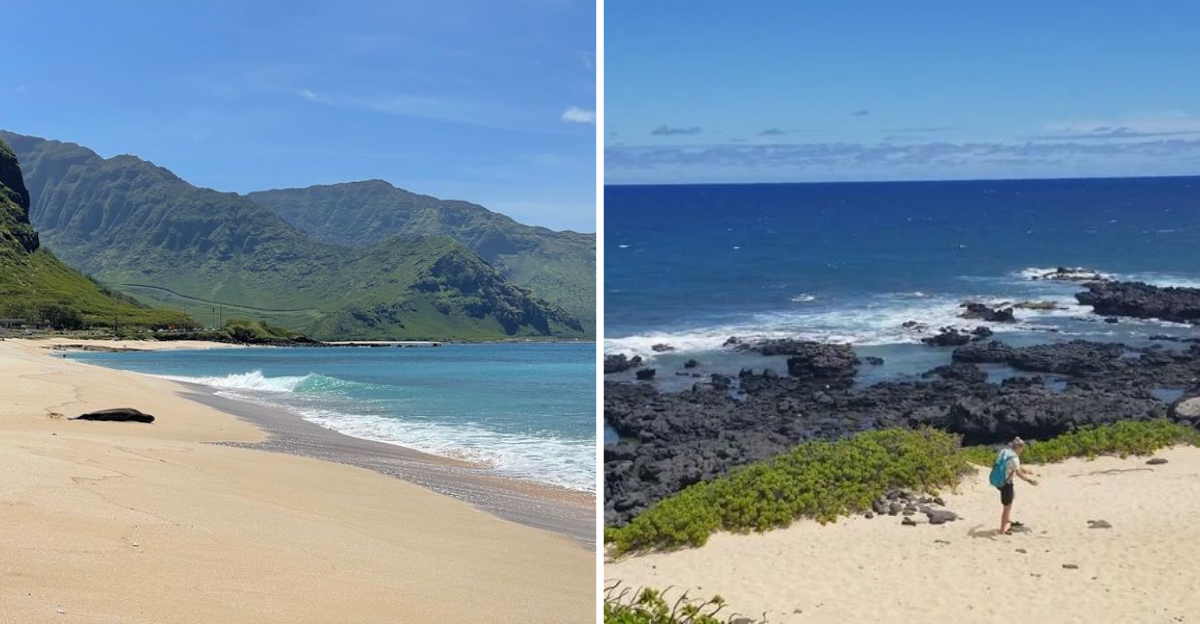
The road literally ends, and from there, you have to earn the view on foot. That is what awaits at this Hawaii coastline, a rugged volcanic trail where monk seals nap on sun-warmed rocks and albatross soar overhead like something out of a nature documentary.
I made the hike on a warm Tuesday morning, and it genuinely felt like stepping off the edge of the map. The path winds along the coastline, the wind constant, the sun beating down, with no shops, no lifeguard stands, and no shade to speak of.
Just raw, windswept shoreline stretching as far as you can see. I passed hikers heading back with sunburned shoulders and satisfied smiles, and I understood why.
The ocean crashed against the rocks below, the sky opened up in every direction, and I felt like I had found the wildest, most untouched corner of the island. If you have ever wanted to see Hawaii without the crowds, this is the place.
Where the Road Ends and the Adventure Begins
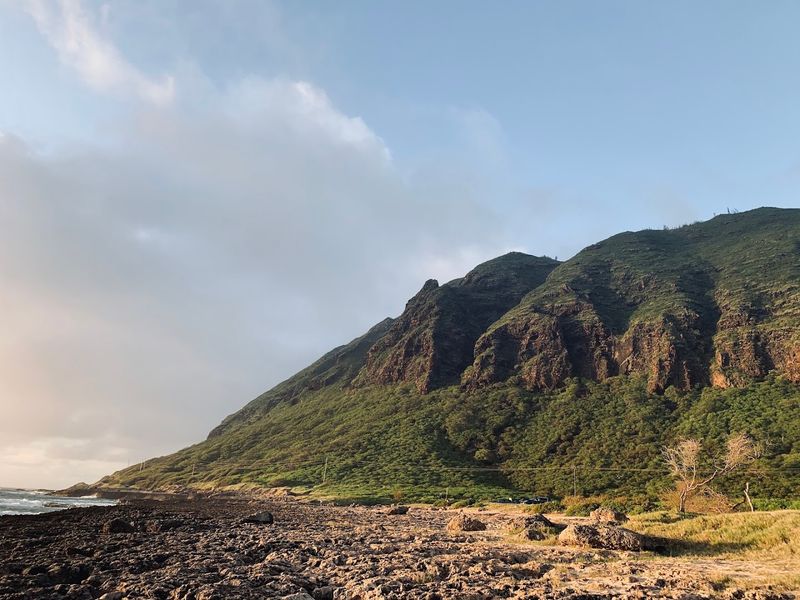
The trailhead at the end of Farrington Highway feels like a place most people drive right past on a map without noticing. There are two ways to reach Kaena Point: from the North Shore via Highway 930 through Waialua, or from the Leeward Coast via Highway 93 through Waianae.
Both routes dead-end at a dirt parking area where pavement gives way to gravel and the ocean takes over the view.
Parking is free, which is a nice surprise. From the Mokuleia side on the North Shore, the lot is small and fills up on weekends, so arriving early is a smart move.
The Waianae side has a beach area with restrooms nearby, making it a slightly more comfortable starting point if you are planning a longer day out.
Neither trailhead has drinking water along the route, so filling up before you arrive is not optional, it is essential. The trail itself follows an old railroad bed and former dirt road that hugs the coastline.
Some sections are sandy and smooth, while others get rocky and uneven, especially closer to the point. The whole round trip clocks in around five miles, taking most hikers between two and four hours depending on pace and how many times you stop to watch a monk seal do absolutely nothing and somehow make it look fascinating.
Wear sturdy, closed-toe shoes and slather on sunscreen before you leave the car, because the sun out here has zero mercy.
The Trail Itself, Rocky, Windy, and Completely Worth It
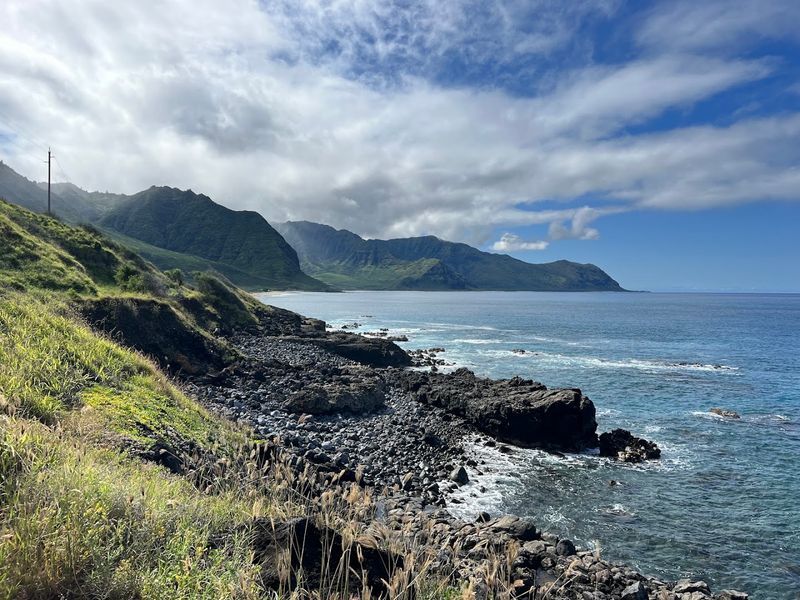
The path out to Kaena Point is not a manicured nature walk. It is a real hike on real terrain, and that is exactly what makes it memorable.
The trail follows the old route of a railroad that once ran along this stretch of coastline, and you can still feel that history beneath your feet in the flat, worn surface of the path. But do not let that fool you into thinking it is easy the whole way through.
Closer to the point, sections of the old road have eroded, and hikers have to pick their way across rocky stretches near the waterline. The wind picks up noticeably as you get farther out, which is actually a relief given how exposed and shadeless the trail is.
On one side, the Waianae mountain range rises sharply, its ridges draped in deep green. On the other, the Pacific crashes against lava rock with a sound that never quite gets old.
There are several spur trails branching off toward the ocean, and taking at least a few of them is highly recommended. They bring you closer to tide pools, rocky coves, and stunning geological formations including a natural rock arch and blowholes that erupt dramatically during swells.
The trail is open to hikers and mountain bikers, and the park operates from 6 AM to around 6:45 PM daily. Getting an early start means cooler temperatures and a much more comfortable experience overall.
The Wildlife Encounter You Will Not Stop Talking About
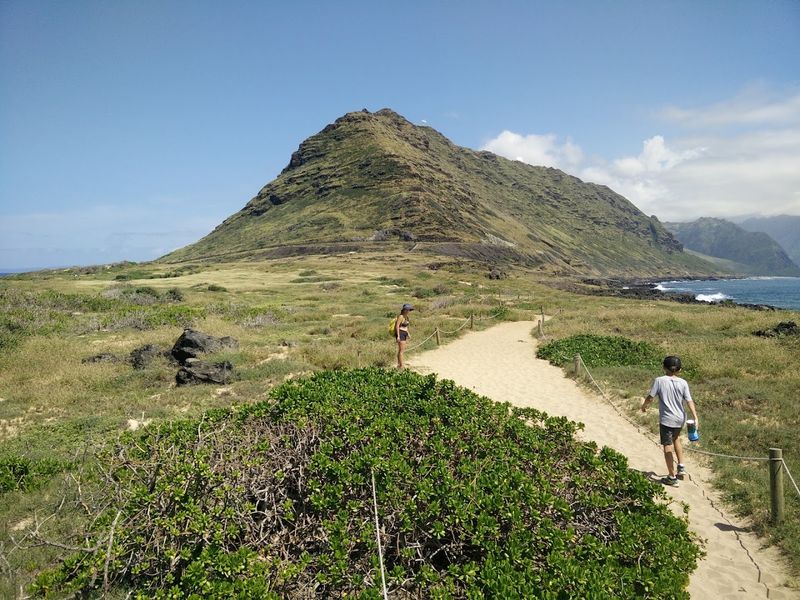
Nothing quite prepares you for rounding a bend on the trail and nearly tripping over a Hawaiian Monk Seal. These animals are federally protected and critically endangered, and they have absolutely no interest in your schedule.
They stretch out on the rocks like they own the place, which, honestly, they kind of do. Federal regulations require staying at least 50 feet away, and that rule exists for good reason.
The Laysan Albatross is the other showstopper out here. With a wingspan that can reach six feet, these birds nest in the dunes and shrubs within the Kaena Point Natural Area Reserve from December through July.
Watching them glide in from the ocean on a stiff breeze, barely moving their wings, is something genuinely jaw-dropping. Adults and fluffy brown chicks can sometimes be spotted side by side near the nesting areas inside the predator-proof fence.
Hawaiian Green Sea Turtles rest along the shoreline with some regularity, and Spinner Dolphins are often visible offshore, especially in the early morning hours. Between November and May, Humpback Whales pass through the waters just off the point, and spotting a breach from the trail is not unheard of.
The Kaena Point Natural Area Reserve supports over 2,000 seabirds across multiple species, making it one of the most important seabird colonies in the main Hawaiian Islands. Dogs are not permitted inside the fenced reserve, so leave your furry hiking companion at home for this one.
The Sacred Ground Beneath Your Feet
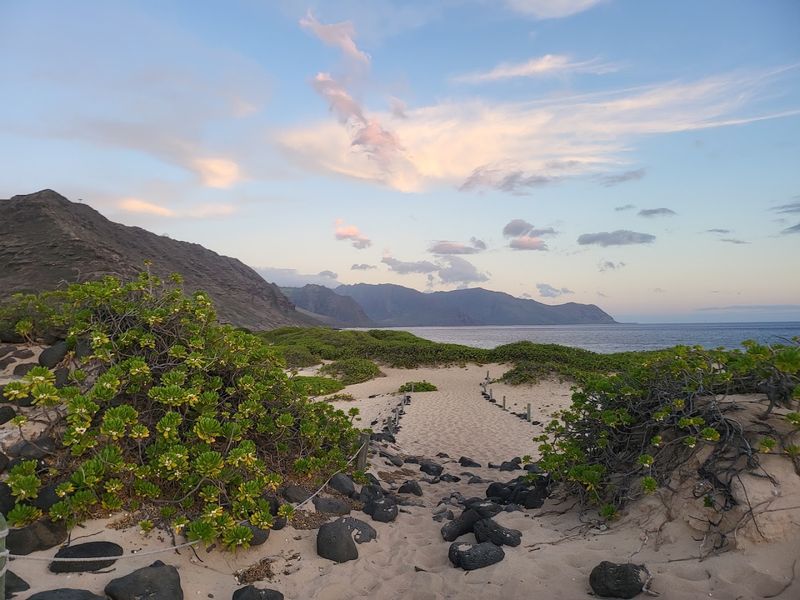
Kaena Point carries a weight to it that goes beyond the scenery. In Hawaiian culture, this place is known as leina a ka uhane, which translates to the leaping place of souls.
Ancient Hawaiians believed that the spirits of the recently deceased would travel to this point at the edge of the island and leap from the rocks into the spirit world to reunite with their ancestors. That belief gives the landscape a quiet, contemplative quality that is hard to put into words.
The name Kaena itself is thought to mean the heat or glowing in Hawaiian, possibly connected to the volcano goddess Pele. The area is also tied to the legend of the demigod Maui, who is said to have stood at this very point and attempted to pull the island of Kauai closer to Oahu using his magical fishhook.
Whether or not you know these stories before you arrive, there is something about the raw, elemental quality of this coastline that makes them feel entirely believable.
Historically, early Hawaiians used Kaena Point for fishing, feather collecting, salt-making, and gathering opihi, a type of limpet found on the rocks. The native plants growing throughout the area were integral to cultural practices and continue to be carefully protected today.
Visitors are asked to stay on marked trails, not only for their own safety but out of respect for the land and its deep cultural significance to the Hawaiian people.
What to Bring and How to Prepare for the Hike
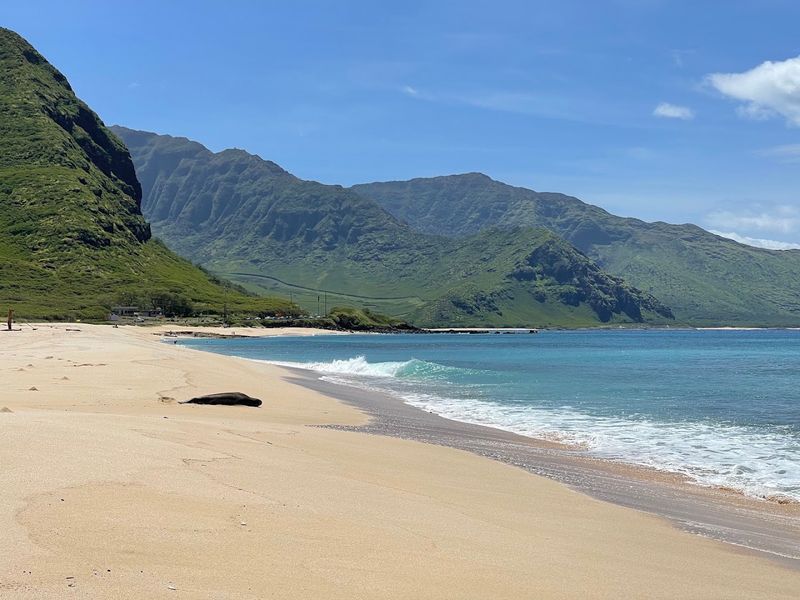
Underestimating Kaena Point is a mistake that a lot of visitors make exactly once. The trail looks manageable on paper, five miles round trip with minimal elevation gain, but the combination of direct sun, rocky terrain, and zero shade turns it into a genuine physical challenge if you are not ready for it.
Preparation is the thing that separates a great day from a miserable one.
Water is the top priority. There is no drinking water available anywhere along the trail from either trailhead, so bringing more than you think you need is the right call.
A general guideline is at least half a liter per mile, and more if you are hiking during midday when temperatures peak. Sunscreen is non-negotiable, and a wide-brimmed hat makes the whole experience significantly more bearable.
Light, moisture-wicking clothing helps too.
Footwear matters more than people expect. The trail transitions from gravel to sand to rough lava rock, and sandals or flip-flops are a recipe for twisted ankles.
Closed-toe hiking shoes or trail runners with decent grip are the practical choice. Starting early in the morning or arriving in the late afternoon are the most comfortable windows, as the midday heat can be intense even in cooler months.
The park opens at 6 AM and closes around 6:45 PM daily, so planning your turnaround time before the gate closes is important. A small first aid kit and a fully charged phone round out the essentials nicely.
The Reward at the End, Kaena Point Natural Area Reserve
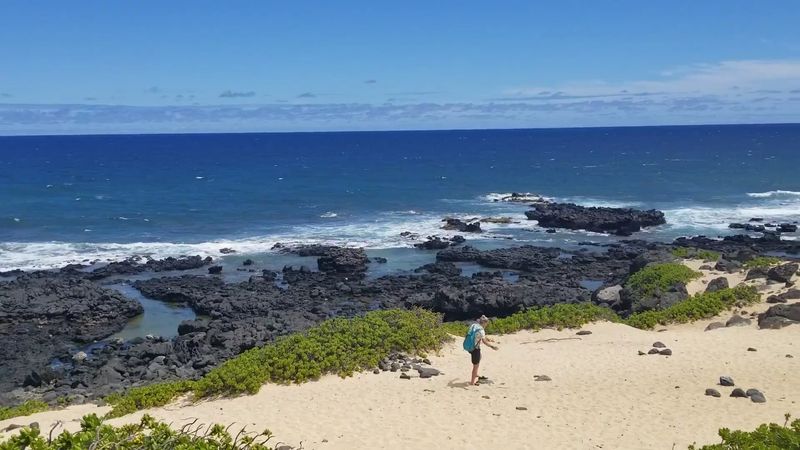
Reaching the end of the trail at Kaena Point Natural Area Reserve feels earned in the best possible way. The path passes through a predator-proof fence, and the moment you step inside, the energy shifts.
Seabirds move through the air above you, monk seals rest on the rocks below, and the Pacific stretches out in every direction with nothing between you and the horizon.
From the point itself, you can look south toward the dramatic cliffs of the Waianae coast and north toward the green slopes above Mokuleia. On clear days, the island of Kauai is sometimes faintly visible on the horizon.
An old, non-operational lighthouse structure stands at the point, a quiet reminder of the area’s maritime history. The tide pools here are rich with marine life, and peering into them is a surprisingly absorbing way to spend twenty minutes.
The reserve is home to native Hawaiian plants that have largely disappeared elsewhere on the island, and the conservation work happening here is genuinely impressive. Volunteers and park staff maintain the predator-proof fence and monitor nesting seabirds throughout the season.
Swimming directly at the point is strongly discouraged due to powerful currents and unpredictable waves, but shoreline fishing is permitted in designated areas. The whole experience, the hike, the wildlife, the views, the cultural weight of the place, adds up to something that is hard to find anywhere else on Oahu.
Address: End of Farrington Highway (Route 930), Waialua, HI 96791
