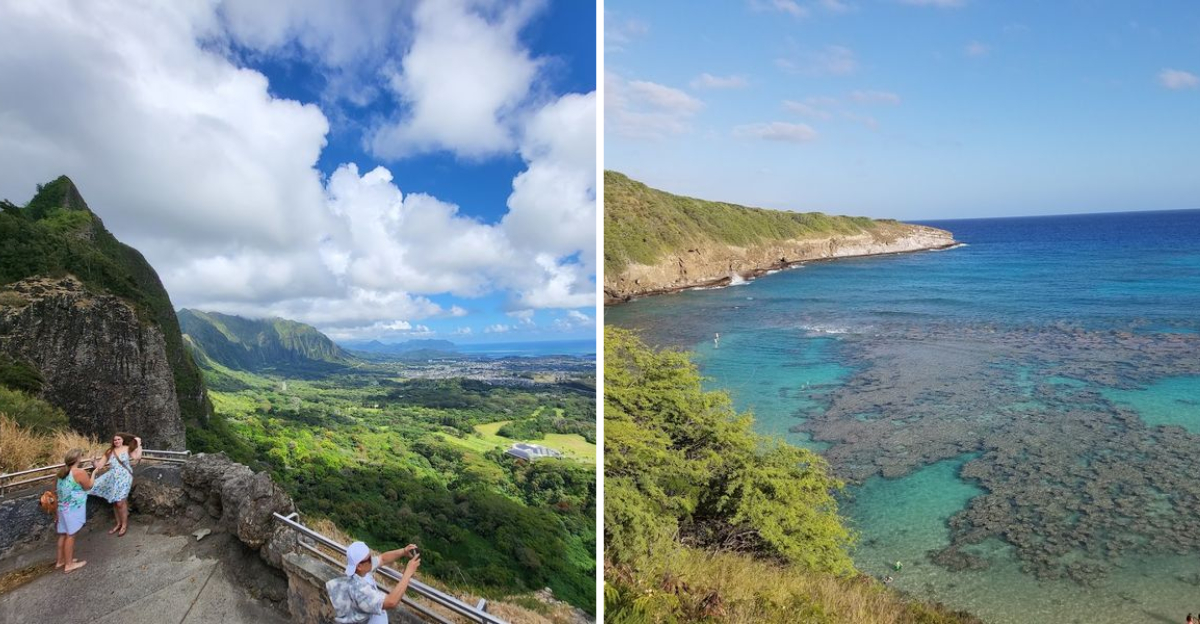
Wind hits that Hawaii lookout so hard it feels personal, like the island itself is trying to tell you something.
I gripped the railing at the edge while my hair whipped in every direction, but beneath all that noise, a strange stillness held me there.
Emerald ridgelines and turquoise water stretched toward the horizon, almost too beautiful to process. Then I learned what happened beneath my feet.
That cliff witnessed a defining battle in Hawaiian history, a moment when hundreds of warriors chose to leap from a thousand-foot precipice rather than surrender.
I stood there a long time, staring out at the coast, feeling the weight of that story settle into the wind around me.
That place is not just a lookout. It is a living memorial, and once you know its story, you will never look at a view the same way again.
The Battle That Shaped a Kingdom
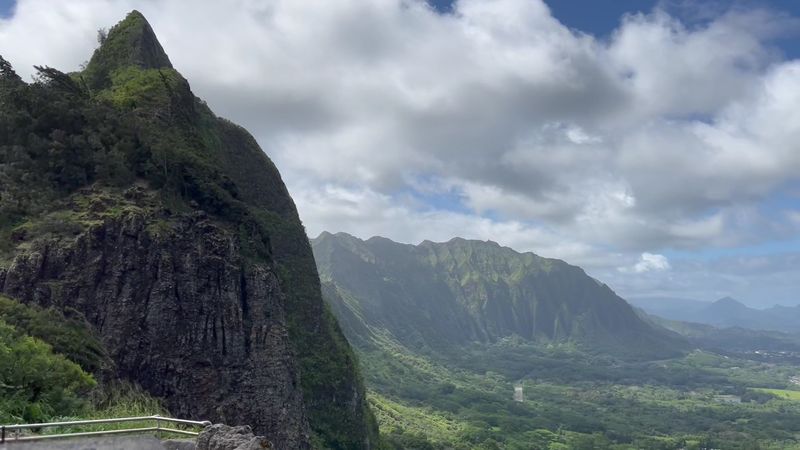
Few battles in Pacific history carry the weight of what happened in Nuuanu Valley in May 1795. King Kamehameha I had already conquered Maui and Molokai, and Oahu was next.
His army, estimated between 10,000 and 16,000 warriors, landed on Oahus southeastern shores near Waikiki and Waialae, moving inland with disciplined, relentless momentum.
What gave Kamehameha a decisive edge was not just numbers.
He had allied with European advisors, including John Young and Isaac Davis, who helped him deploy cannons and muskets, a technology completely foreign to the defending Oahu forces led by Chief Kalanikupule.
The combination of modern firepower and traditional Hawaiian combat tactics made Kamehamehas army nearly unstoppable.
The Oahu warriors initially held their ground near Punchbowl Crater, but Kamehameha split his forces in a flanking move that broke their defensive line. Retreat became the only option.
Over several brutal days, the fighting pushed northward through the narrow corridor of Nuuanu Valley. Each mile gained by Kamehamehas army pushed Kalanikupules forces closer to the cliffs edge.
Kalanikupule himself was wounded during the conflict and eventually fled into the mountains, only to be captured months later. His warriors, however, had nowhere left to go.
The valley grew narrower, the cliffs grew taller, and the battle grew more desperate with every passing hour.
What happened next at the edge of the Pali became one of the most haunting moments in Hawaiian history, remembered for generations in chant, story, and stone.
Kalelekaanae: The Leaping Mullet and the Cliff’s Grim Legacy
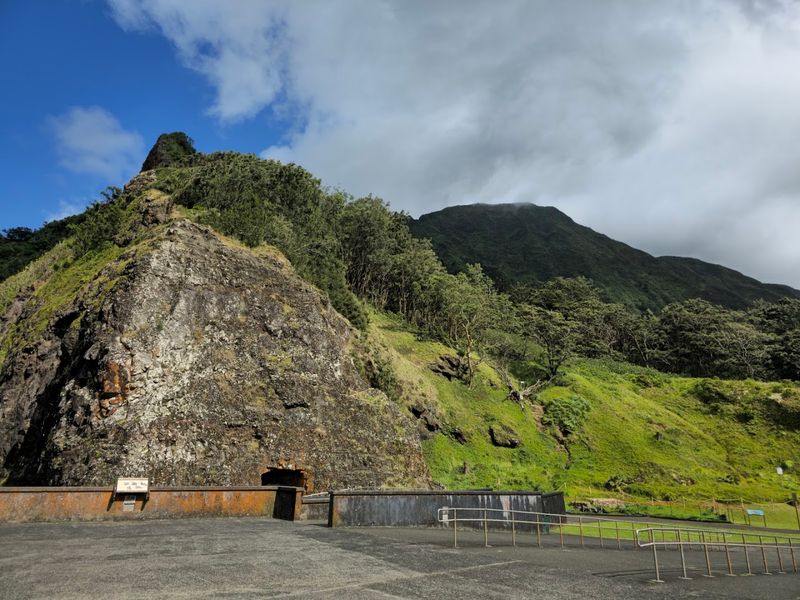
The Hawaiian name for this battle, Kalelekaanae, translates to “the leaping mullet,” a phrase that sounds almost poetic until you understand what it describes.
Mullet fish are known for leaping from the water when pursued by predators, a desperate, instinctive act of survival.
The name captures exactly what happened to the Oahu warriors driven to the edge of the Pali.
Trapped between Kamehamehas advancing forces and a sheer thousand-foot drop, hundreds of warriors faced an impossible choice. Many were driven over the edge in the chaos of close combat.
Others, unwilling to surrender and face capture or enslavement, chose to leap.
The distinction between being pushed and choosing to jump matters deeply in Hawaiian cultural memory, because choosing death over dishonor carried its own form of dignity.
The scale of the tragedy was not fully understood until 1898, when construction crews building the original Pali Road began unearthing human remains at the base of the cliffs.
Approximately 800 skulls were recovered, a stark and sobering confirmation of the battle accounts passed down through oral tradition.
That discovery stopped workers in their tracks and sent a chill through the entire island.
Today, interpretive signs at the lookout share this history with visitors, and the site is treated with the reverence it deserves.
The name Kalelekaanae is not just a label for a battle; it is a tribute to the courage and desperation of those final moments, preserved in language long after the valley fell silent.
The Wind That Never Stops Talking
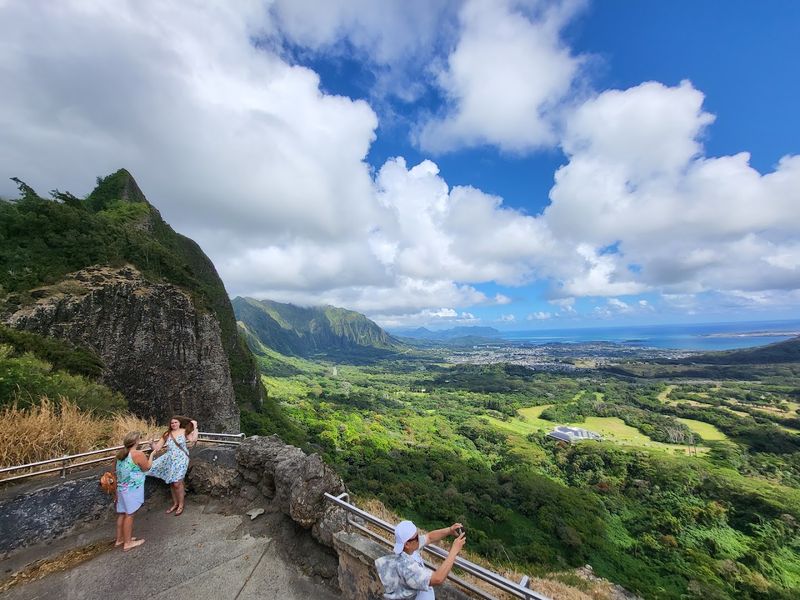
Nothing prepares you for the wind at Nuuanu Pali. I had read about it, heard people laugh about it, even watched videos where hats went sailing into the valley below.
But the moment I stepped out onto the stone terrace, a gust hit me square in the chest and I actually laughed out loud. It is that kind of wind.
These are the Northeast Trade Winds, and the Nuuanu Pass acts like a natural funnel, compressing and accelerating the airflow as it pushes through the gap in the Koolau Range.
The result is a near-constant blast of cool, moist air rushing up from the Windward Coast.
On calmer days it is exhilarating. On gustier days, you lean into it like you are bracing against a wave.
The wind is also a sensory anchor to the history here. There is something deeply evocative about standing at this edge, feeling that raw, unrelenting force, and knowing that warriors stood on this same ground over two centuries ago.
The landscape has not changed all that much. The cliffs are still just as steep, the valley still just as green, and the wind still just as insistent.
Visitors often joke that Nuuanu Pali doubles as a free hair dryer, and honestly, that comparison is not far off. But beneath the humor is a real physical reminder that this place operates on its own terms.
Bring a jacket, hold onto your hat, and let the wind do what it has always done here: make you pay attention.
A View That Stops You Mid-Sentence
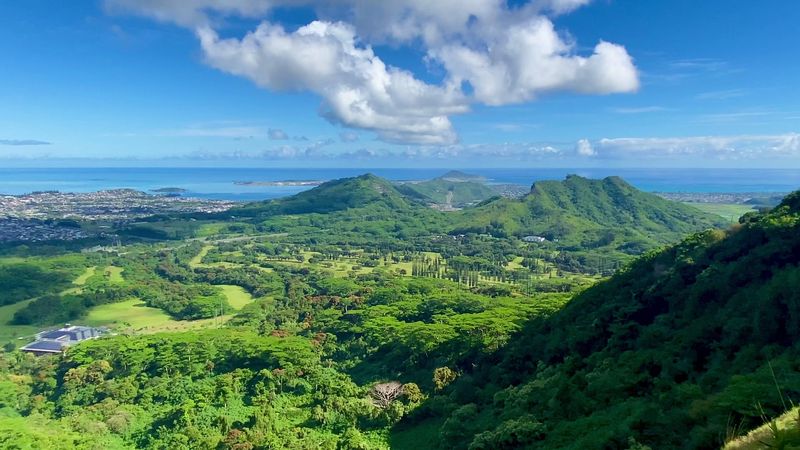
The view from the Nuuanu Pali Lookout is the kind that makes people go quiet mid-conversation. I have seen it multiple times now, and it still does that to me.
The terrace sits roughly 1,200 feet above sea level, and from that vantage point, Oahus Windward Coast unfolds like a map drawn by someone who really loved their job.
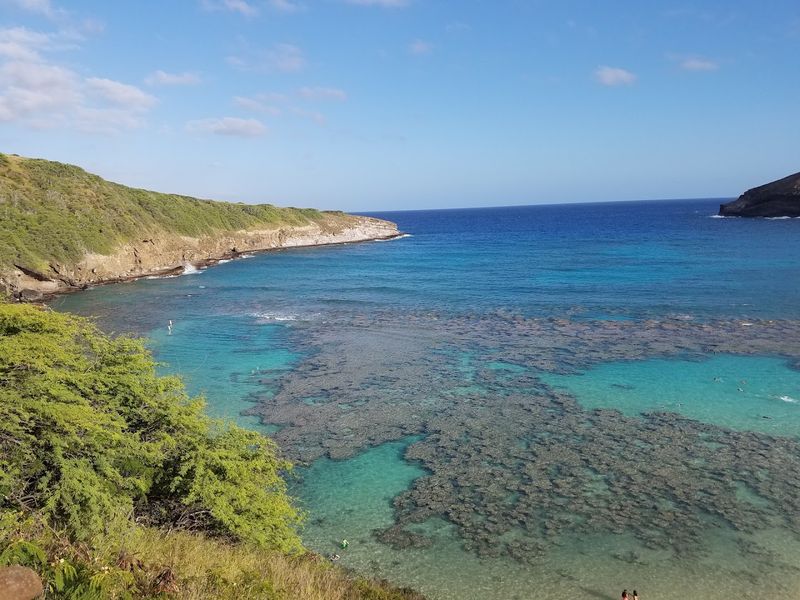
Kaneohe Bay dominates the foreground, its shallow reef flats turning the water into shades of blue and green that look almost too saturated to be real.
Further along the coast, Kailua Town sits nestled against the shoreline, and on clear days you can spot the small, distinctive silhouette of Mokolii, the islet locals call Chinamans Hat, rising from the water near Kualoa.
The contrast between the dense jungle of the valley below and the open expanse of the ocean beyond is genuinely stunning.
Photographers set up here at all hours. The light in the late afternoon, when the sun angles across the ridgeline and turns the mountains gold, is particularly spectacular.
Early mornings bring a different mood entirely, with mist often clinging to the peaks and the valley below wrapped in soft grey light that feels almost cinematic.
Even on foggy days, the view holds its own kind of magic. The clouds roll through the pass, sometimes obscuring the coast entirely, and then parting just enough to reveal a sliver of blue water far below.
Every visit offers something slightly different, which is part of why this lookout keeps pulling people back.
Mana, Memory, and the Sacred Ground of Nuuanu
Hawaiian culture holds that land carries memory. Not just in a metaphorical sense, but in a deeply spiritual one.
The concept of mana, a kind of sacred energy or power, flows through people, objects, and places.
A site where warriors fought, where blood was spilled and choices were made, accumulates mana in ways that continue to shape how the land is experienced and respected.
Nuuanu Pali is widely regarded as one of the most spiritually charged locations on Oahu. The violence of the battle did not diminish the sacredness of the valley; in many ways, it deepened it.
For the warriors who leapt from the cliff, death in battle was not defeat. It was a preservation of honor, a final assertion of identity that could not be taken by any conquering army.
Every year, ceremonies are held in the Nuuanu Valley to honor those who fought and died here.
These are not tourist events; they are genuine acts of cultural remembrance, organized by Hawaiian communities who maintain a living connection to this history.
The practice of honoring ancestors through ritual and chant keeps the past from becoming abstract.
When I visit, I try to take a few minutes away from the lookout railing and just stand quietly. There is a particular kind of stillness that settles in beneath the wind, a feeling that the place is aware of you.
Whether you frame that in spiritual terms or simply as the weight of history, Nuuanu Pali asks something of its visitors: respect, attention, and a willingness to really listen.
Getting There, Old Roads, and the Valley That Connects Two Worlds
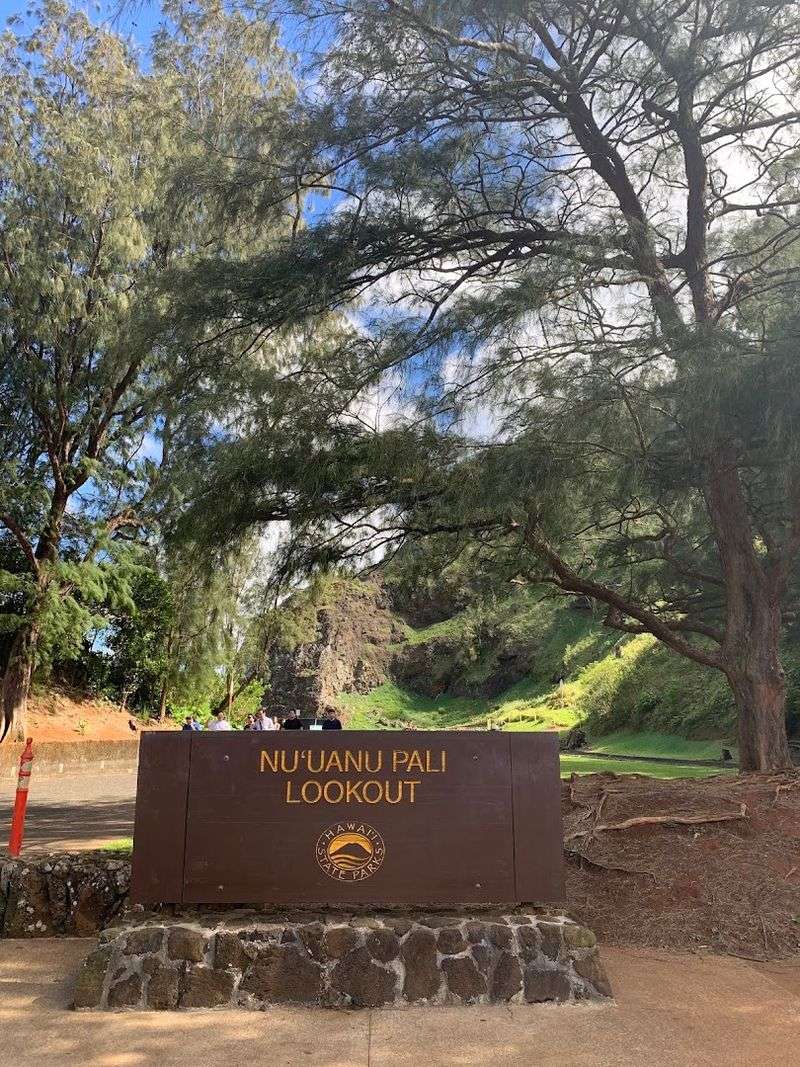
Getting to the Nuuanu Pali Lookout is part of the experience. The drive up from Honolulu follows the Pali Highway, which winds through the increasingly lush and narrow Nuuanu Valley.
The air gets noticeably cooler and damper as you climb, the roadside vegetation thickening into dense jungle. By the time you reach the turnoff for the lookout, the city feels very far away.
The modern highway passes through two tunnels that cut directly through the Koolau Range, the first of which opened in 1957. Before those tunnels existed, the old road over the Pali was the only way to cross the mountains by vehicle.
That road dates back to 1845, an ambitious engineering effort that dramatically improved travel and commerce between Honolulu and the Windward Coast.
Portions of the original Old Pali Road still survive and are now a popular hiking trail through the forest.
Parking at the lookout requires a small fee, payable via a QR code system at the lot.
It is worth arriving early, especially on weekends, since the lot fills up quickly and the walk from the parking area to the terrace is genuinely short, just a few minutes at most.
Wild chickens roam the area freely, completely unbothered by visitors, which adds an unexpectedly charming touch to the whole scene.
The lookout is accessible from both the Honolulu side and the Kailua side of the highway, making it a natural stop on any circle-island route. Once you arrive, plan to linger.
Five minutes is never quite enough.
Address: Nuuanu Pali State Wayside, Pali Highway, Honolulu, Hawaii 96817
