
White sand stretches for nearly half a mile along a Hawaii coast, and the sun hits it in a way that makes you stop mid-step. I stood there for a minute, just taking it in, before I even thought about finding a spot to sit.
The breeze carried that clean ocean smell, warm and steady, and the whole beach somehow stayed relaxed no matter how many people showed up.
I have visited beaches all over Hawaii, and that one is the one I keep coming back to in my mind.
It earns a permanent spot in your travel memories without even trying. I spent an afternoon there, swimming in water so clear I could see my toes, and left already planning my next return.
The Gentle Embrace of Half a Mile of White Sand
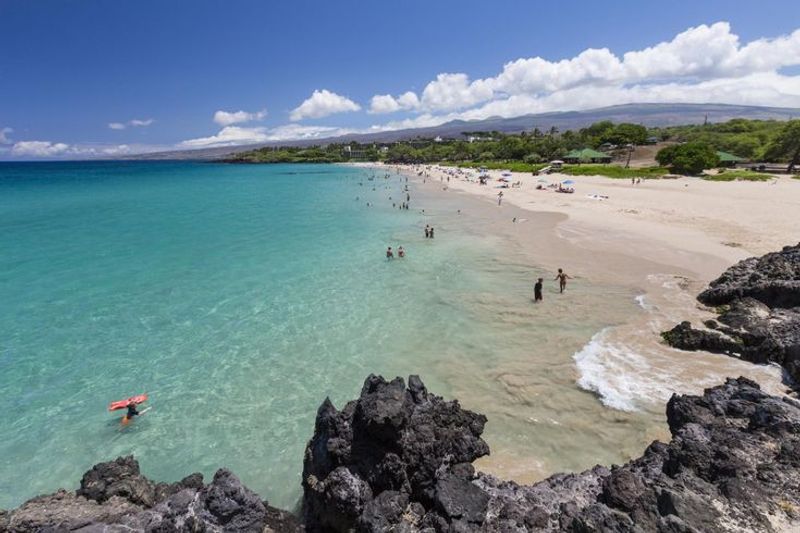
There is something almost disorienting about seeing Hapuna Beach for the first time. The sand is so white and the water so blue that your brain takes a second to catch up with what your eyes are seeing.
At nearly half a mile long, it holds the title of the largest white sand beach on the Big Island, and that size is something you genuinely feel when you are standing on it.
During summer months, the beach can expand to over 200 feet wide, giving everyone plenty of room to spread out. I found a spot far from the parking lot one morning, and it felt like having my own private corner of Hawaii.
The fine coral sand is soft underfoot, the kind that squeezes between your toes and stays warm long after the sun has shifted.
What makes the sheer scale of this beach so special is how it absorbs visitors without ever feeling packed. Even on a Saturday, the distance between groups of people stays generous.
The natural framing of ancient black lava rock on either side creates a dramatic contrast against the white sand, giving the whole scene a painterly quality.
A low lava promontory called Ihumoku cuts across the beach roughly in the middle, subtly dividing it into two distinct areas. Each side has its own personality and pace.
Whether you settle near the water’s edge or pull back toward the tree line for shade, the beach accommodates you without fuss.
Quiet All Year: Finding Calm in a Popular Spot
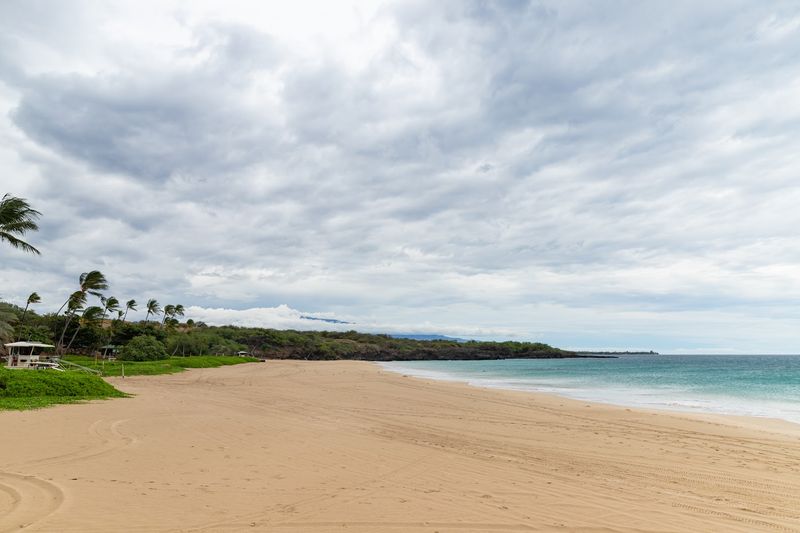
Most famous beaches in Hawaii have a reputation for being overrun, but Hapuna plays by different rules.
Come on a weekday morning and you might share the sand with only a handful of other people, a couple walking the shoreline, maybe a local family setting up near the pavilions.
The dry, semi-arid Kohala Coast climate means sunny skies are the norm year-round, so there is no real off-season here.
That consistency is part of what makes Hapuna feel quietly special rather than frantically popular.
I showed up on a Tuesday in the middle of the day and found a comfortable stretch of sand with nobody within fifty feet of me.
The ocean was doing its thing, steady and rhythmic, and the only interruption was a seabird making lazy circles overhead.
Mornings tend to be the calmest window of the day. The air is cooler, the light is soft, and the water is usually at its clearest before afternoon winds pick up.
If solitude matters to you, arriving when the park opens at 7 AM is a genuinely good strategy.
Weekends and holiday periods do bring more visitors, especially local families who know a good beach when they see one. But even then, the length of the shoreline does a lot of the work.
You can always find a quieter patch by heading toward the lava rock edges where the crowds naturally thin out. The park earns its reputation for calm without much effort.
Adventures in the Azure Waters
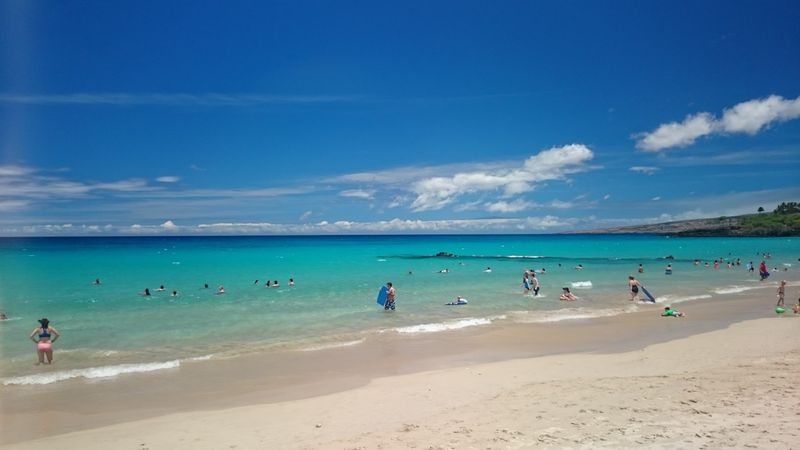
The ocean at Hapuna does not just sit there looking pretty. It actively invites you in, and once you are in, it rewards you.
The sandy bottom slopes gradually, which makes entry smooth and reassuring for swimmers of all experience levels.
I have swum here in both glassy summer conditions and choppier winter swells, and each version of the ocean here is worth experiencing.
Summer brings calmer water that is ideal for long swims and floating. The surface is clear enough that you can often see the sandy floor beneath you, which gives the whole experience an almost dreamlike quality.
Families with young kids tend to gravitate toward the shallower sections, where the gentle shore break is manageable and fun without being intimidating.
Winter shifts the energy considerably. From roughly November through March, swells build and the waves become more powerful, drawing bodyboarders and experienced surfers to the break.
Watching skilled riders work the waves from shore is entertainment in itself, a kind of free show that plays out all afternoon.
Snorkeling is worth mentioning too, though the main sandy stretch is better for swimming than reef exploration.
The rocky areas at both ends of the beach are where the underwater life gets interesting, with colorful fish weaving through coral on calm days.
Lifeguards are on duty year-round, which adds a layer of comfort whether you are a confident swimmer or someone who just wants to wade in up to their knees and soak in the warmth.
Exploring Beyond the Shoreline
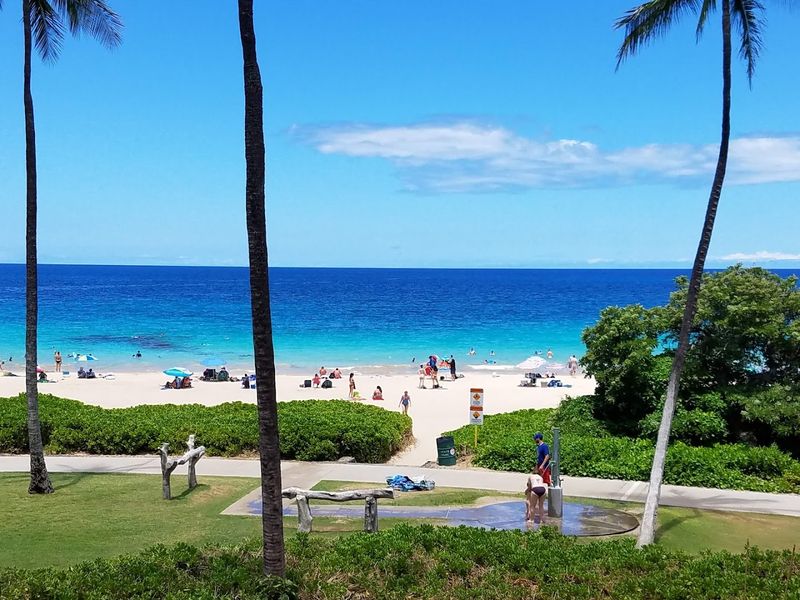
Not everyone comes to Hapuna just to swim. The park covers over 61 acres, and there is more going on beyond the sand than most first-time visitors realize.
A section of the Ala Kahakai National Historic Trail runs through the park, tracing the coastline and connecting various cultural and historical points along the Kohala Coast.
It is an ancient route, and walking even a short stretch of it gives you a different perspective on the land.
The trail winds past lava formations, coastal scrub, and open views of the Pacific that feel very different from the beach itself.
I spent an hour following it one afternoon and came away with a much richer sense of what this coastline actually is beneath its postcard surface.
The dry landscape here is striking in its own way, sparse and sun-baked, with plants that have figured out how to thrive without much rain.
The lava promontory of Ihumoku, which bisects the beach, is also worth a closer look. It creates natural tide pools and rocky edges that attract curious explorers and the occasional heron standing very still and hoping you will not notice it.
Children especially love poking around the edges of these formations.
The park’s location on the sunny Kohala Coast means it rarely sees significant rainfall, making it a reliable destination for outdoor exploration throughout the year.
The surrounding landscape, with its volcanic textures and coastal drama, adds real depth to what could otherwise be just another beach visit.
Comforts and Conveniences Under the Hawaiian Sun
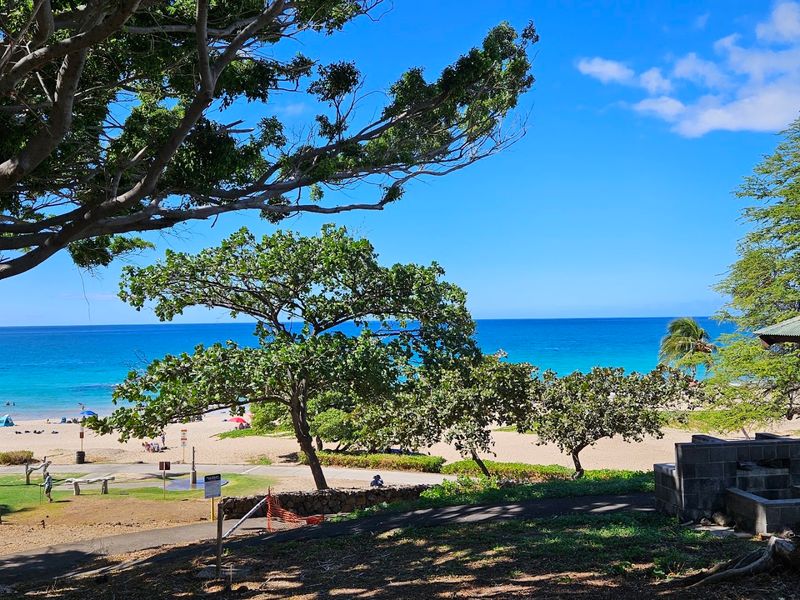
Good facilities can make or break a beach day, and Hapuna takes this seriously. The park offers paved parking lots, clean restrooms, outdoor showers for rinsing off, and changing rooms, all maintained to a solid standard.
Multiple visitors have noted that the bathrooms were recently renovated, which is a small but genuinely appreciated detail when you are spending a full day outside.
Shaded pavilions with picnic tables and barbecue grills are scattered throughout the park, making it easy to set up a proper meal rather than eating sandy sandwiches on a towel.
I watched several families arrive with coolers and grills, clearly regulars who had figured out the best spots years ago.
There is something communal and warm about a beach that makes room for that kind of easy, unhurried gathering.
If you forgot to pack food, the small concession at the park covers the basics. It is not a full restaurant, but it is enough to keep hunger at bay while you figure out your next move.
Equipment rentals are also available for those who did not bring their own gear, including bodyboards, snorkel sets, beach chairs, and umbrellas.
The park even offers A-frame shelters for overnight stays, which can be reserved in advance for visitors who want a more immersive experience.
Lifeguards are present year-round, which is not something every Hawaii beach can claim.
ADA-accessible paths make the beach reachable for visitors with mobility needs, rounding out a facility that clearly tries to welcome everyone.
A Place to Rejuvenate the Spirit
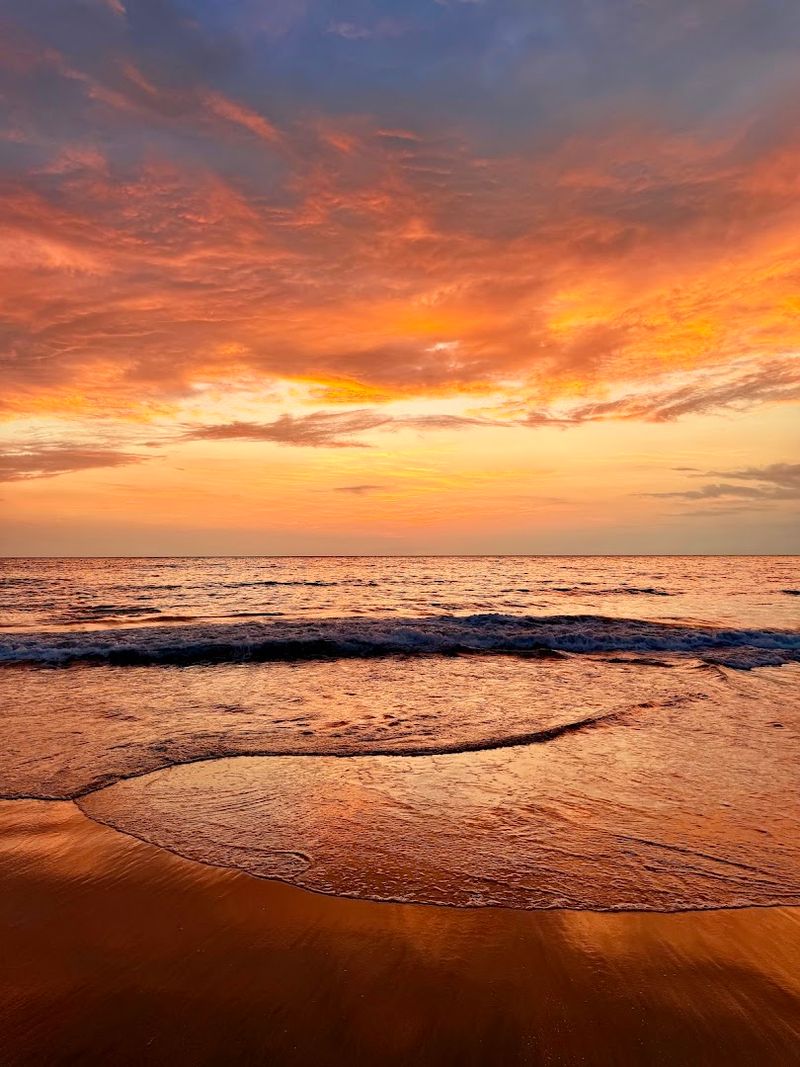
By late afternoon, when the angle of the sun turns everything golden and the air softens, Hapuna Beach reveals its most quietly powerful quality. It is a place that genuinely slows you down.
Not because there is nothing to do, but because the setting makes rushing feel pointless and a little rude.
Sunsets here are the kind that make people stop mid-conversation and just stare. The sky over the Pacific goes through a full spectrum, from pale yellow to deep orange to a bruised purple that lingers long after the sun has dropped below the horizon.
I sat on the sand one evening watching it happen and felt the kind of uncomplicated happiness that is hard to manufacture anywhere else.
The beach holds a 4.8-star rating across thousands of visitor reviews, and it was named Best Beach in America by Dr. Beach in both 1993 and 2021. TripAdvisor echoed that recognition in 2022.
Those are not just statistics; they reflect something real about what this place consistently delivers.
Hapuna does not need dramatic marketing or clever branding. The half-mile of white sand, the clear water, the reliable sunshine, and the unhurried pace do all the work on their own.
Whether you visit once or find yourself returning trip after trip, the beach has a way of resetting something in you that city life tends to wear down. It is the kind of place that stays with you, quietly, long after you have gone home.
Address: Old Puako Rd, Waimea, HI 96743
