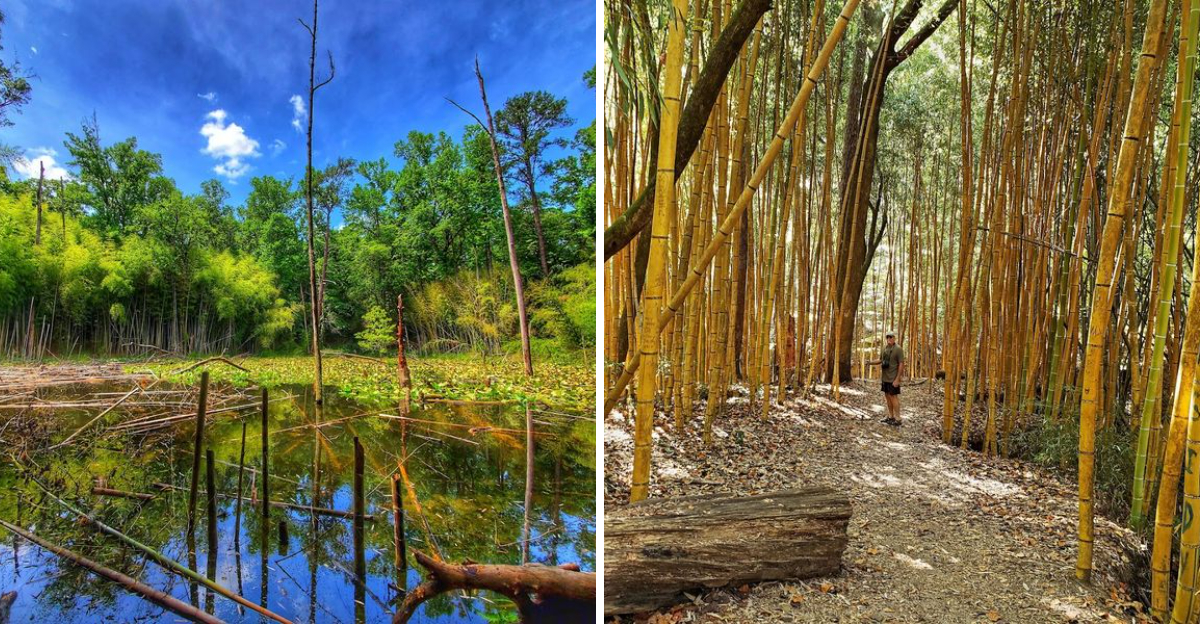
Somewhere in Prattville, Alabama, a trail winds through a landscape that feels completely out of place in the Deep South. Towering bamboo stalks rise overhead, creating a shaded green tunnel that makes visitors feel as though they have stepped into another world.
Beyond the bamboo, a network of paths leads through peaceful natural areas that offer a quiet escape from everyday routines. The preserve has become a favorite for walkers, photographers, families, and anyone looking to discover something unexpected outdoors.
It is the kind of place that surprises first-time visitors and keeps people coming back for another look. Whether you enjoy exploring nature or simply want a destination that feels different from the usual park experience, this hidden gem is well worth a visit.
You Will Not Believe How Tall It Gets
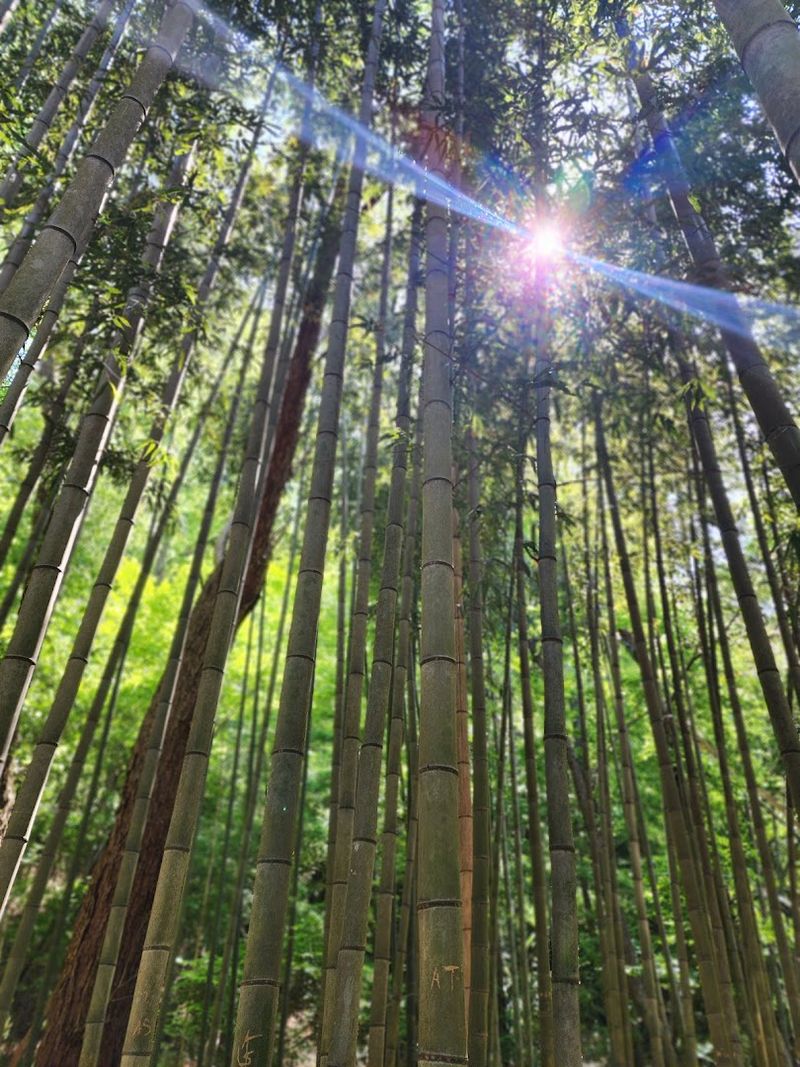
Most people do not expect to find a bamboo forest in Alabama. Yet here, inside a 26-acre preserve in the heart of Prattville, stalks of bamboo shoot skyward up to 60 feet tall with trunks measuring up to six inches across.
The scale of it catches nearly every first-time visitor completely off guard.
Standing beneath that canopy feels like being inside a living cathedral. The green light filtering down through the dense overhead growth creates an atmosphere unlike anything else in the state.
Even on a bright afternoon, the bamboo blocks enough sun to keep the trail noticeably cool and shaded.
The park is home to several distinct bamboo varieties, each labeled with informational signs along the path. You will spot Fishpole Bamboo, Henon Bamboo, Robert Young Bamboo, and Yellow Groove Bamboo as you walk the loop.
Each species has its own texture, color, and growth pattern, making the walk genuinely educational without feeling like a classroom lesson.
The Wilderness Park Bamboo Loop is only about 0.4 miles long, so the sheer visual drama packed into such a short distance is remarkable. Families with young children find it especially engaging because there is always something new to look at just a few steps ahead.
Come ready to look up, because that is where the real magic lives.
Do Not Skip The History Behind This Place
The story behind this bamboo forest is almost as fascinating as the forest itself. Back in the 1940s, a man named Floyd Smith owned this land and had a deep passion for exotic plants.
He ordered bamboo shoots from a Washington import firm and began planting what would eventually grow into one of the most unusual green spaces in the American South.
Decades later, the property changed hands and ended up under the ownership of General William Butler. During the 1960s, the U.S.
Air Force actually used this dense bamboo grove as part of its Survival Program. Soldiers trained here because the thick growth could simulate conditions similar to those found in Vietnam.
That detail alone gives this quiet trail a surprisingly layered and powerful backstory.
In 1982, the park was officially dedicated as a public preserve. It holds the distinction of being the first wilderness park ever developed inside city limits in the entire United States.
That is not a small achievement for a mid-sized Alabama city.
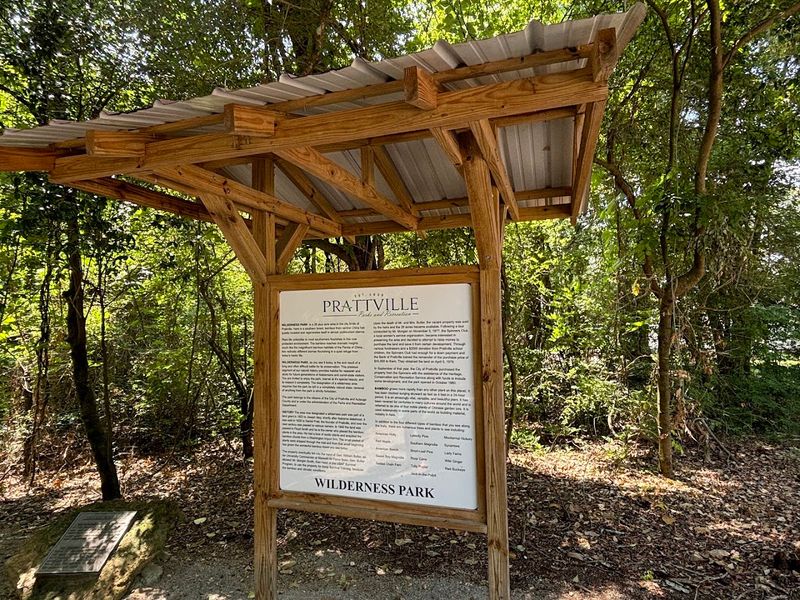
A large informational placard near the park entrance tells this full story for visitors who want the complete picture before they start walking. Reading it before you hit the trail adds real depth to the experience.
Knowing what happened here makes every step feel a little more meaningful and connected to something larger than a simple afternoon stroll.
Come Ready For Wildlife Around Every Turn
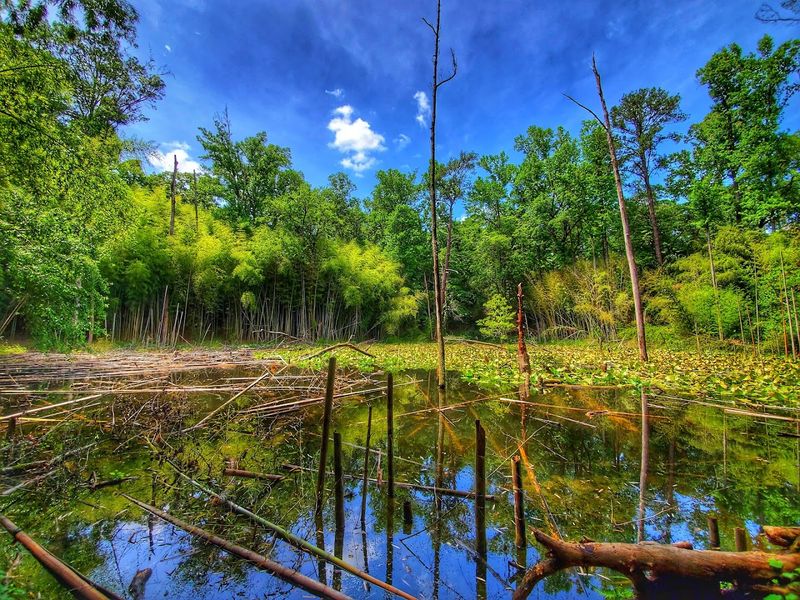
Beyond the bamboo, the park holds a quiet little pond that has become a favorite gathering spot for local wildlife. Turtles sun themselves on logs near the water’s edge, and bullfrogs sound off from the marshy banks in a chorus that feels surprisingly loud for such a small space.
Children absolutely love this part of the trail.
Keep your eyes open and you may catch a glimpse of a large catfish moving through the water. Past visitors have spotted them cruising just below the surface near the pond’s center.
It is one of those unexpected moments that turns a short walk into a genuine adventure, especially for kids who are not used to seeing wildlife up close.
The park also shelters hundreds of plant varieties beyond the bamboo. One of Alabama’s largest beech trees grows within the preserve, and the surrounding meadows add a different visual texture to the experience.
Moving from the dense bamboo tunnel into an open meadow and then back again keeps the walk feeling varied and fresh throughout.
Autauga Creek runs along part of the trail as well, adding the gentle sound of moving water to the overall atmosphere. That combination of creek, pond, meadow, and bamboo canopy makes this small park feel much larger than its acreage suggests.
Bring your camera and move slowly, because the wildlife here rewards patient visitors more than hurried ones.
Plan Your Visit Around Morning Light
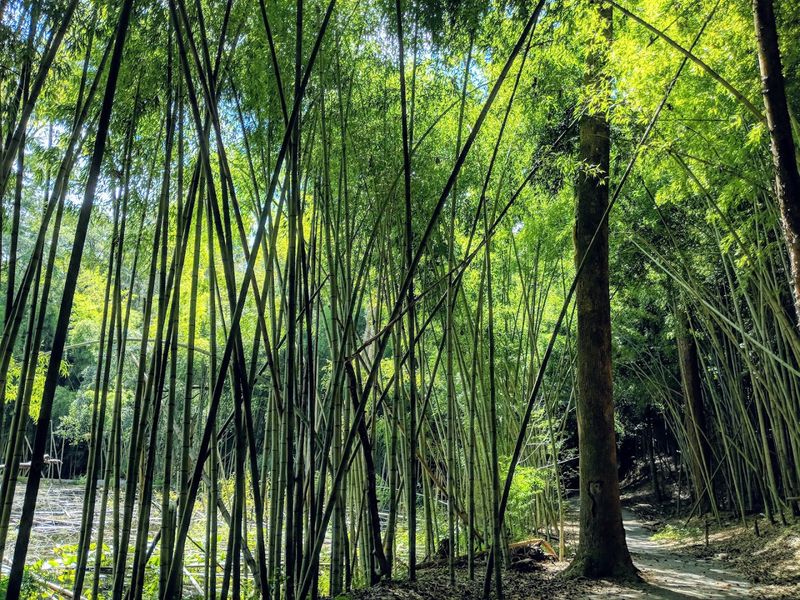
Timing your visit can completely change what you experience at this park. Morning light is widely considered the best time to see the bamboo forest at its most photogenic.
When the sun sits low in the sky, it pushes long shafts of golden light sideways through the bamboo stalks, creating dramatic contrast and a slightly misty, otherworldly atmosphere.
Photographers who have visited multiple times consistently recommend arriving shortly after the park opens at 8 AM. The trail is quieter at that hour, the air is cooler, and the light has a softness that disappears once midday arrives.
Even if you are not a serious photographer, the morning version of this trail is simply a more peaceful and immersive experience.
Spring and fall are generally considered the best seasons to visit due to mild temperatures across Alabama. Summer visits are still enjoyable because the thick bamboo canopy provides heavy shade even at 2 PM, keeping the trail noticeably cooler than open areas nearby.
Winter visits have their own stripped-down charm, with the bamboo standing out more starkly against bare surrounding trees.
The park operates daily from 8 AM to 6 PM year-round, which gives visitors plenty of flexibility. Admission is completely free, so there is no financial reason to rush your visit.
Arriving early, staying unhurried, and walking slowly through the bamboo loop will give you the fullest and most satisfying experience this trail has to offer.
Try This Trail With Kids Or Dogs
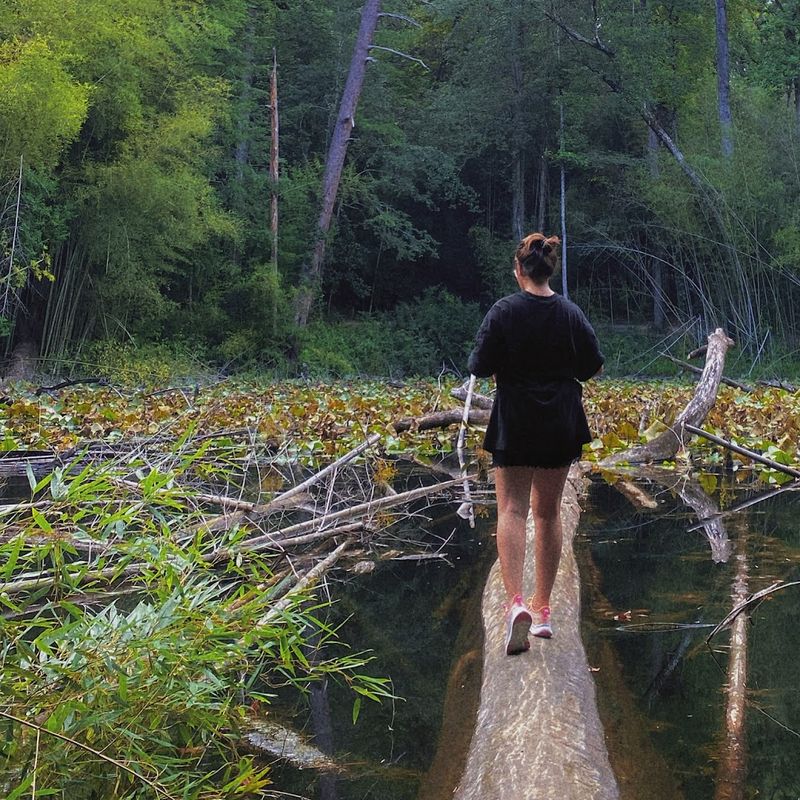
One of the best things about the Prattville Wilderness Park is how genuinely welcoming it is to different kinds of visitors. The main Bamboo Loop trail, located at 800 Upper Kingston Rd, Prattville, AL 36067, is rated easy, covering roughly 0.4 miles with only minor elevation changes.
That makes it a strong choice for families with young children who need a manageable but exciting outdoor activity.
Dogs are fully welcome here on leash, and the shaded trail keeps four-legged visitors comfortable even on warmer days. The relatively short distance means that even smaller or older dogs can complete the loop without difficulty.
Many visitors make it a regular weekend outing with their pets, enjoying the calm and natural setting just minutes from downtown Prattville.
A few things are worth knowing before you bring a stroller. Some sections of the trail have exposed tree roots that can make navigation a bit tricky for wheeled gear.
Most visitors report that strollers are passable but require some careful maneuvering in spots. A baby carrier might be a more comfortable option for very young toddlers.
The park also has a picnic table in the parking area, which makes it easy to pack a lunch and turn the visit into a half-day outing. There are no concession stands or restrooms on site, so come prepared with water and snacks.
The relaxed, unhurried pace of this trail makes it one of the friendliest outdoor spots in central Alabama for families of all sizes.
Skip The Crowds And Find Real Quiet Here
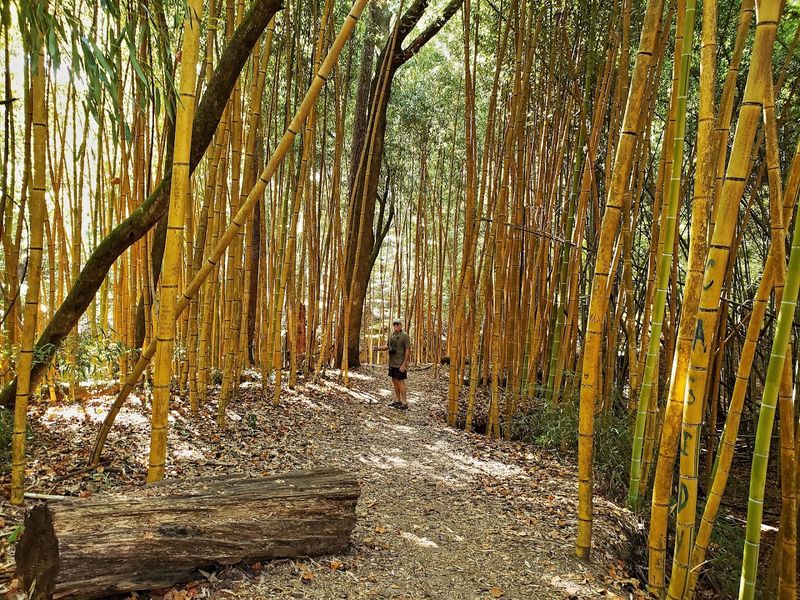
Not every great outdoor destination needs to be packed with people to feel worthwhile. The Prattville Wilderness Park has a calm, unhurried energy that sets it apart from larger and more well-known Alabama attractions.
On most weekdays, the trail sees relatively light foot traffic, giving visitors a genuine sense of solitude inside the bamboo.
That quiet is part of what makes the place so restorative. The sound of wind moving through tall bamboo stalks has a distinctive rustling quality that is hard to describe but easy to appreciate.
Add the background noise of the creek and the occasional bullfrog, and the overall soundscape becomes something close to meditative.
The park sits just off the suburban edge of Prattville, which means it is easy to reach without a long drive into remote wilderness. Yet once you step onto the trail, the surrounding neighborhoods disappear almost immediately behind the dense wall of green.
That quick transition from ordinary suburban surroundings to something genuinely wild is one of the park’s most charming qualities.
Visitors who have been coming here for years often describe it as their go-to reset spot after a stressful week. There is no admission fee, no ticket line, and no crowded parking situation on most days.
The simplicity of the experience is a large part of its appeal. Sometimes the best outdoor destinations are the ones that ask nothing of you except to slow down and pay attention to what is growing all around you.
Make Time For The Educational Signs Along The Path
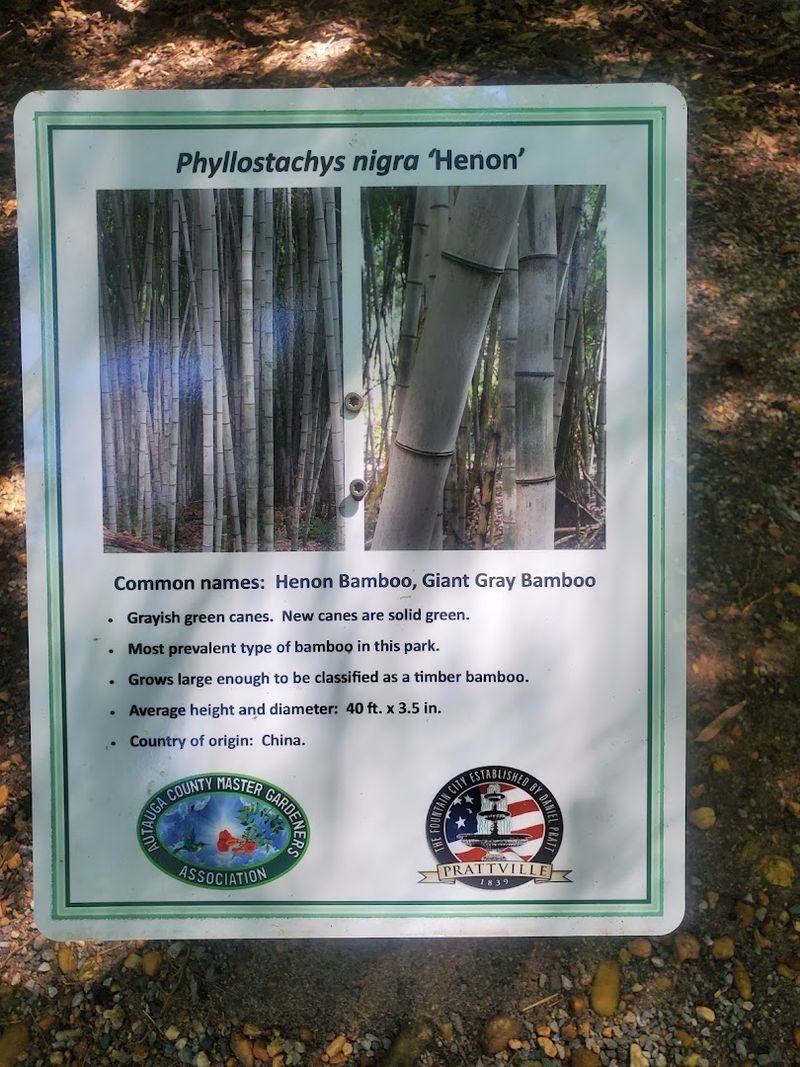
Walking through a bamboo forest is impressive on its own, but understanding what you are looking at makes the experience significantly richer. The Prattville Wilderness Park has placed informational markers at various points along the Bamboo Loop, identifying the different species growing in each section.
These signs are clear, readable, and genuinely interesting even for visitors who do not normally pay much attention to plant life.
Henon Bamboo is the most prevalent species in the park and tends to grow the tallest and thickest. Fishpole Bamboo has a more slender, flexible appearance that gives it a different character entirely.
Robert Young Bamboo and Yellow Groove Bamboo round out the collection, each with subtle visual differences that become easier to spot once you know what to look for.
The large entrance placard near the trailhead covers the full origin story of the forest, from Floyd Smith’s original planting in the 1940s through the Air Force training use in the 1960s and the park’s official dedication in 1982.
Reading that history before you walk sets a meaningful context for everything you see along the way.
Teachers and parents have found the park useful as an informal outdoor classroom. The combination of labeled species, historical background, and accessible trail length makes it a natural fit for school-age children who learn well through direct observation.
You leave knowing more than when you arrived, which is a quality worth seeking out in any destination worth visiting.
