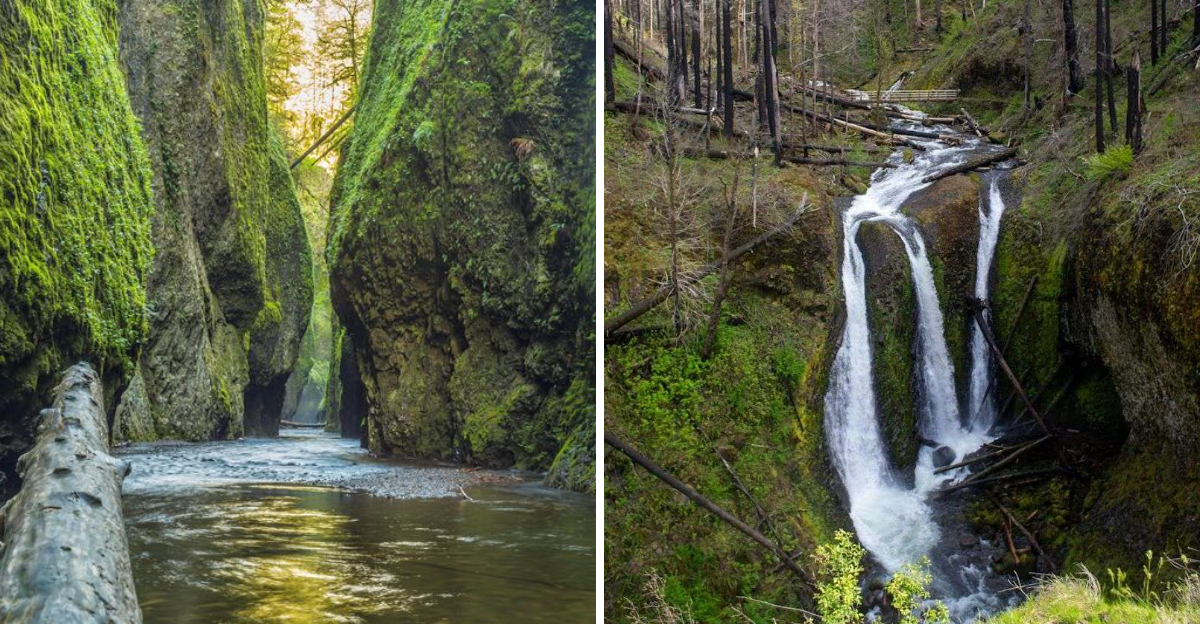
Imagine stepping out of reality and into the pages of a beloved fantasy novel, where every corner holds a breathtaking secret. If you’re anything like us, that’s the kind of adventure you live for, and guess what?
Oregon has a place that feels exactly like that! Tucked away and almost whispered about, there’s a hidden canyon so profoundly beautiful and uniquely formed, it genuinely looks like a backdrop from a fantastical film.
Picture ancient, moss-draped walls, shimmering waterfalls, and an atmosphere so serene, you’ll half expect an elf or a hobbit to greet you. It’s an escape, a marvel, and truly one of Oregon’s most enchanting, unforgettable scenes.
The Slot Canyon That Looks Like a Portal to Another World
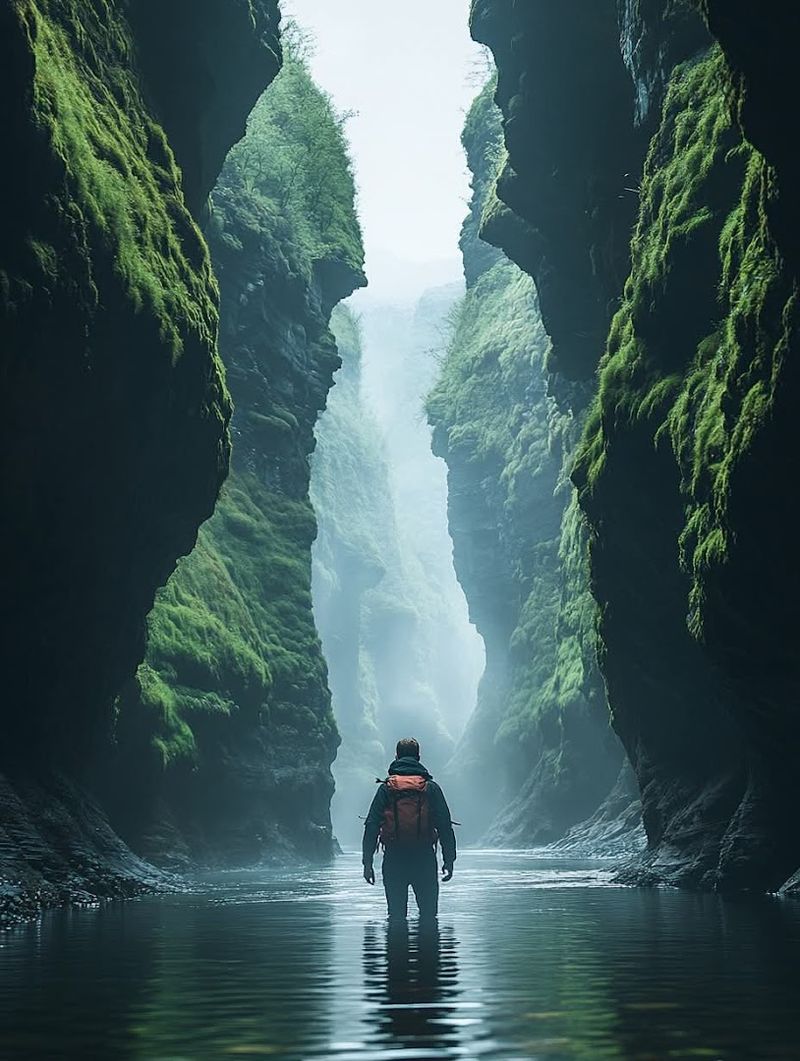
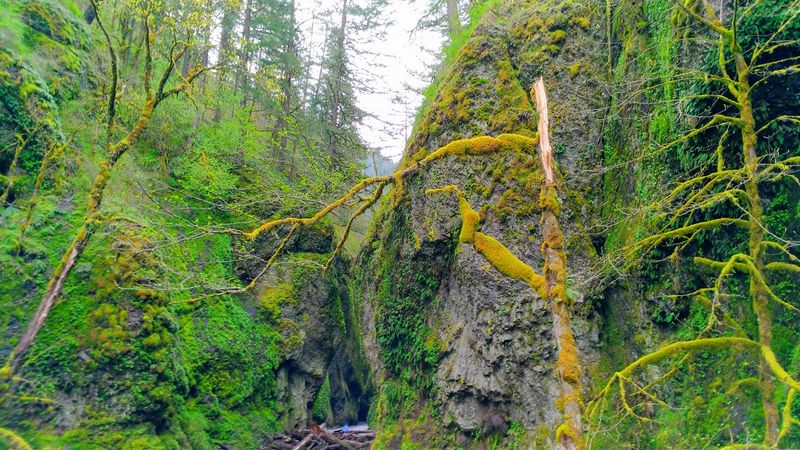
Walking into Oneonta Gorge for the first time feels less like a hike and more like stepping through a doorway into something ancient. The basalt walls close in on both sides, rising sharply above you in layers of dark rock completely buried under thick green moss.
It is narrow enough that the sky above shrinks to a thin ribbon of light.
The creek runs right through the center, which means you are wading through cold water from the very start. There is no trail here in the traditional sense.
You are simply following the creek upstream, stepping over boulders, ducking under fallen logs, and letting the canyon walls guide you forward.
The U.S. Forest Service has designated this area as a botanical zone because of the rare plant species that grow exclusively here.
That makes the whole experience feel even more special. You are not just hiking through a pretty place.
You are moving through a living ecosystem that exists almost nowhere else on the planet.
Cold Water Wading You Will Actually Enjoy
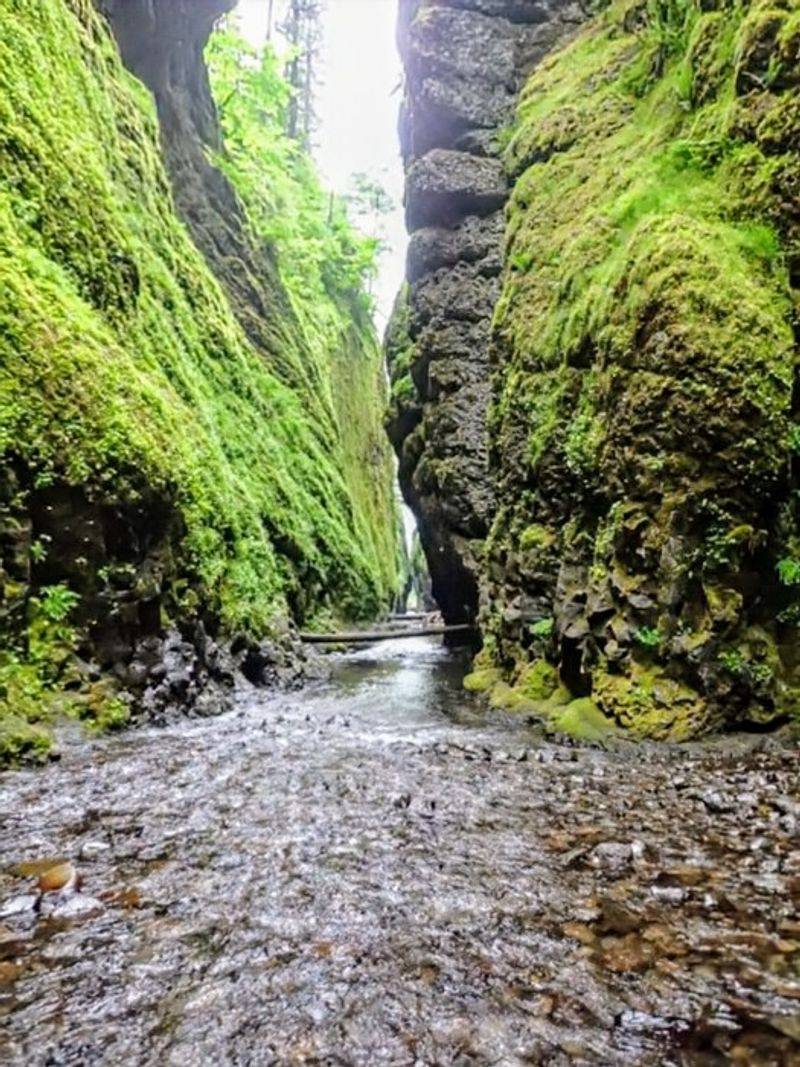
Getting wet is not a side effect of this hike. It is the whole point.
The moment you step into the creek at the base of the gorge, that cold water hits your ankles and you immediately understand why people remember this place for years.
The water temperature stays cold even in summer, fed by shaded canyon walls and the steady flow coming down from the waterfall upstream. At one point in the canyon, the water level can reach chest height depending on the season, so knowing what you are getting into before you go matters a lot.
Waterproof sandals or old sneakers you do not mind soaking are the move here. Bare feet on the slippery rocks are a recipe for a stumble.
Pack a dry bag for your phone and any snacks you bring along. The cold water feels shocking at first, then oddly refreshing, and by the time you reach the waterfall, you will not want to leave.
Lower Oneonta Falls and the Waterfall at the End of the Gorge
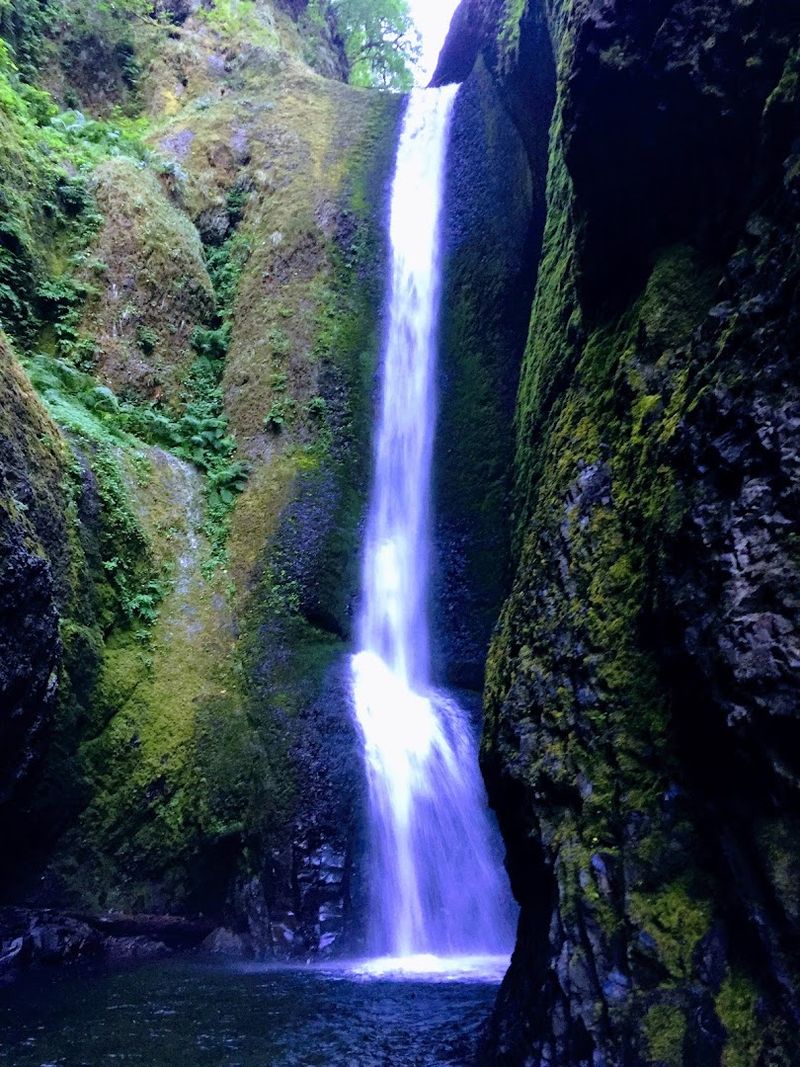
There is something genuinely cinematic about the moment the waterfall comes into view. After wading through the canyon and squeezing past boulders, you turn a final bend and there it is, a curtain of white water dropping into a small pool at the base of the gorge walls.
Around midday, the sun lines up directly above the gorge opening and sends a shaft of light straight down onto the falls. That moment is worth planning your visit around.
The combination of mist, moss, and direct sunlight hitting the water creates a visual that no filter could improve.
The lower falls have historically been the most visited part of Oneonta Gorge, though trail access has faced closures related to fire damage and safety concerns in recent years. Always check current trail conditions before heading out.
The experience of seeing those falls from inside the canyon, surrounded by dripping walls and fern-covered rock, is one of the more genuinely breathtaking things Oregon has to offer.
The Fallen Log Obstacle That Adds to the Adventure
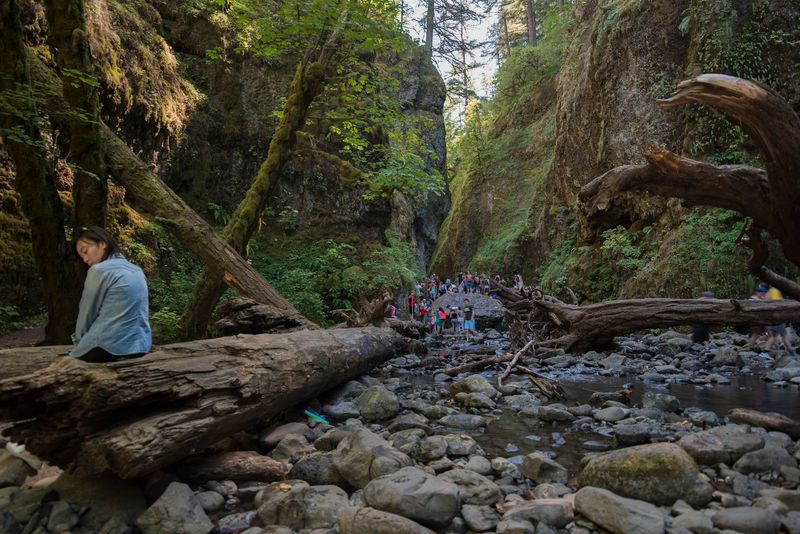
Somewhere partway into the gorge, you will meet the log. It is a large fallen tree that sits across the canyon, blocking the path completely, and you have to figure out how to get past it.
Some people go over, some squeeze under, and honestly both options are equally awkward and fun.
This is the kind of obstacle that turns a regular hike into a memory. Kids absolutely love it.
Adults pretend they are cool about it and then laugh when they inevitably get more wet than expected. The log has been a fixture of the gorge experience for years and adds a genuine sense of earned access to what lies beyond.
Gloves can be helpful here because the wood and rock surfaces are slick with moisture and moss. Take your time at the log and do not rush.
The gorge rewards patience. Moving carefully and deliberately through each section of the canyon is how you actually notice the details, the tiny ferns, the dripping walls, the way sound changes inside those narrow rock walls.
Rare Plants That Grow Nowhere Else on Earth
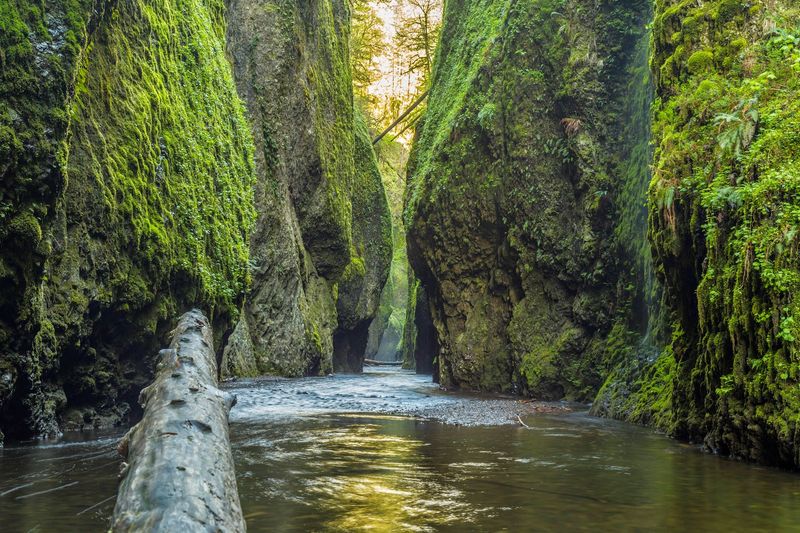
Oneonta Gorge is not just a pretty canyon. It is one of the only places in the world where certain plant species have managed to survive and thrive.
The U.S. Forest Service recognized this by officially designating the gorge as a botanical special interest area, which is a pretty rare distinction for a hiking spot.
The combination of constant moisture, shade from the towering walls, and the unique basalt rock chemistry creates growing conditions that simply do not exist most other places. Mosses, liverworts, and ferns carpet every surface in shades of green that range from bright lime to deep forest.
Looking closely at the walls feels like studying a miniature jungle.
Because of this, the rules around staying on the path and not touching the vegetation are taken seriously. These plants are fragile and slow-growing.
Respecting the ecosystem here is not just about following rules. It is about making sure future visitors get to experience the same magical landscape you are walking through right now.
The Historic Columbia River Highway Tunnel Nearby
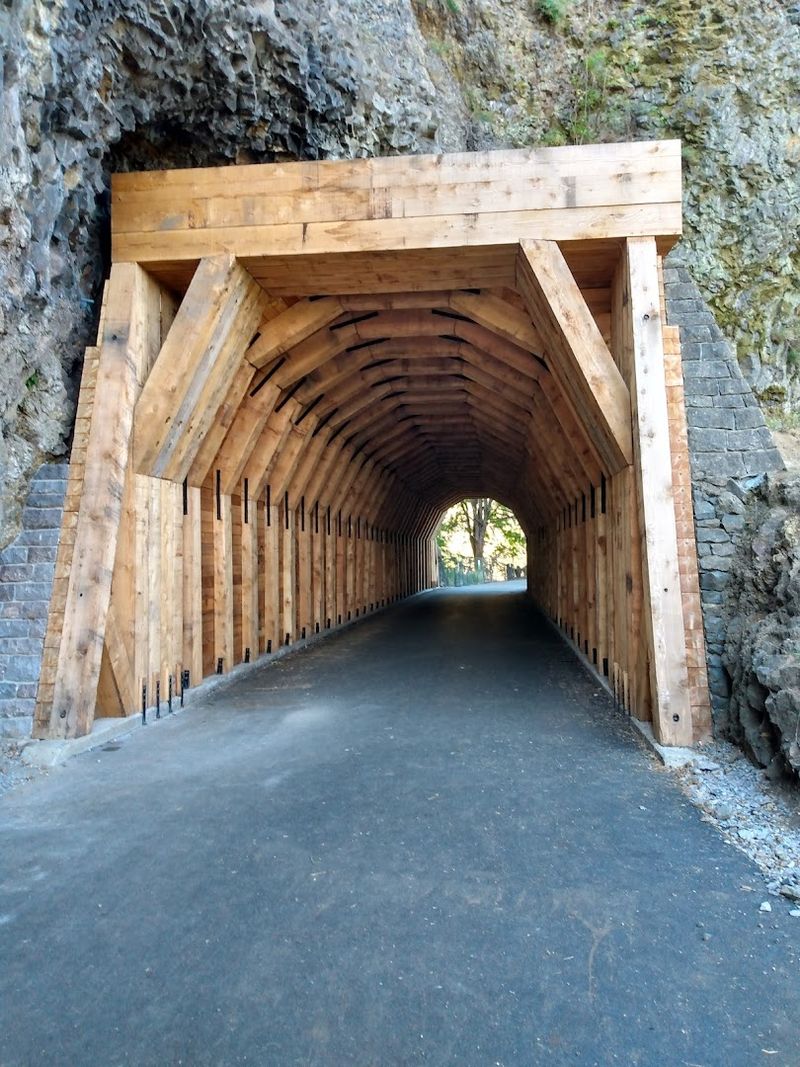
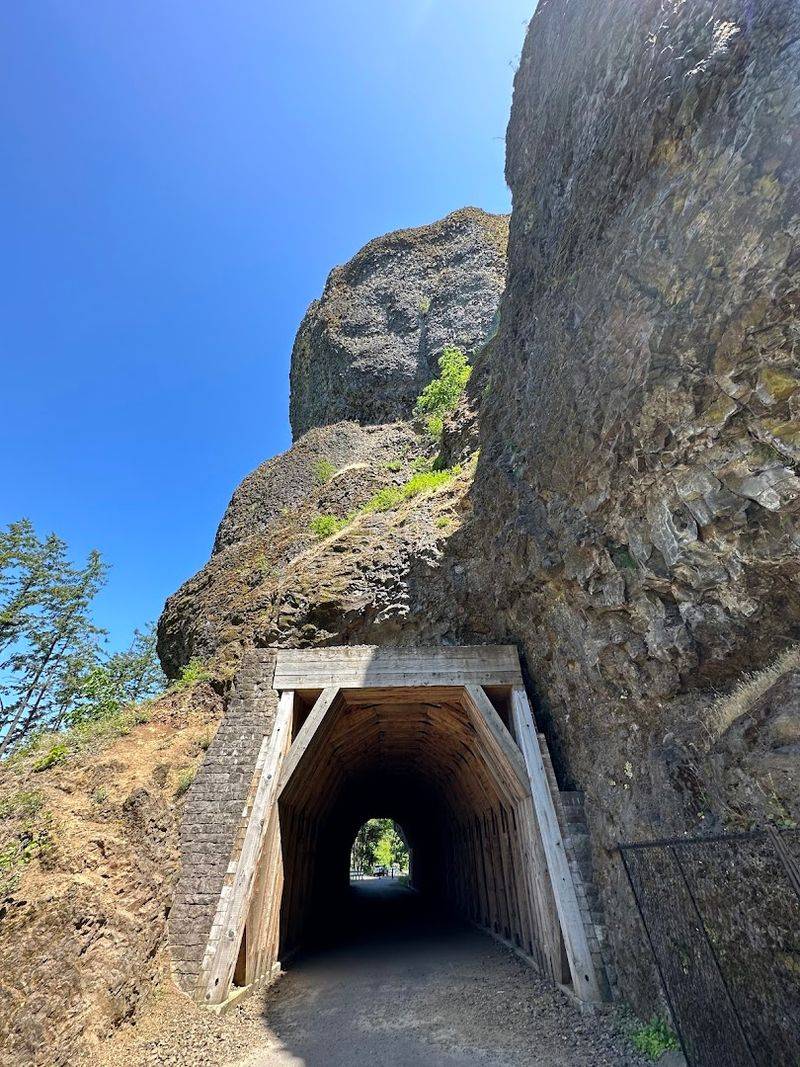
Just steps from the gorge trailhead sits one of the most charming relics of early Pacific Northwest travel. The old railroad tunnel near Oneonta Gorge has been repurposed as part of a pedestrian path, and walking through it gives you this wonderful sense of layered history, nature and human engineering sitting side by side.
The tunnel is short enough that you can see light at both ends the whole time, which makes it feel more like a passage than a dark tunnel. The stone and wood construction has a satisfying roughness to it.
Even during periods when the gorge trail itself has been closed, visitors have still made the trip just to walk through this tunnel and take in the surrounding scenery.
There is limited parking near the tunnel, so arriving early is genuinely smart. Morning visits also mean cooler temperatures and softer light filtering through the tree canopy along the highway.
The tunnel alone is worth a stop, especially if you are already driving the Historic Columbia River Highway and collecting all its small wonders.
Triple Falls Trail for the Full Canyon Experience
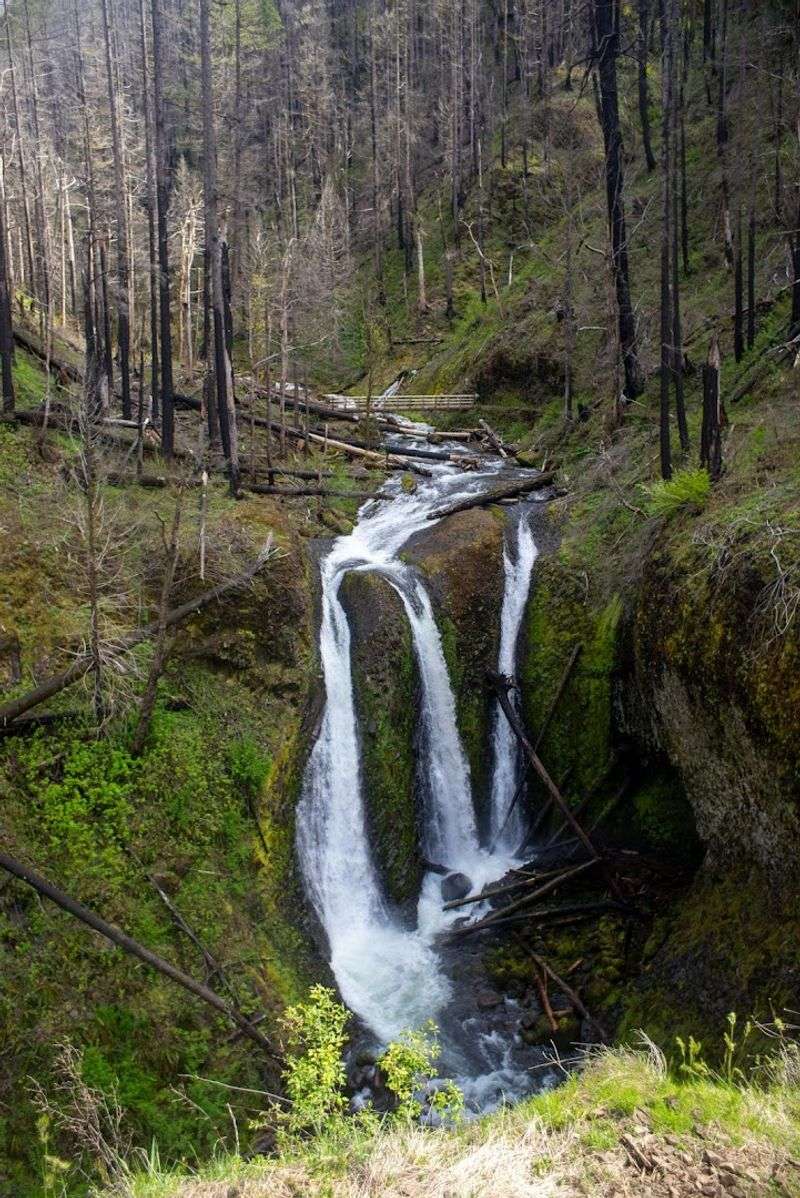
When the lower gorge trail is closed, the Triple Falls trail steps in and delivers something equally impressive from a completely different angle. The trailhead sits just above the gorge on the upper road and takes you on a roughly 3.5-mile round trip hike through dense Pacific Northwest forest to a viewpoint above the three-tiered waterfall.
The elevation changes along this trail are real. It is not a flat stroll.
But the reward at the top, watching water drop in three distinct stages down a mossy cliff face, makes every uphill stretch worth it. The surrounding forest is old and quiet in the way that only Pacific Northwest old-growth gets, where the canopy is so thick the light goes green and soft.
This trail also connects to other routes in the Columbia River Gorge National Scenic Area, so experienced hikers can extend the day significantly. Gorton Creek trail nearby is another option worth exploring.
Bringing enough water and a snack for the full outing is smart. The elevation gain sneaks up on you.
What to Know About Trail Closures and Current Access
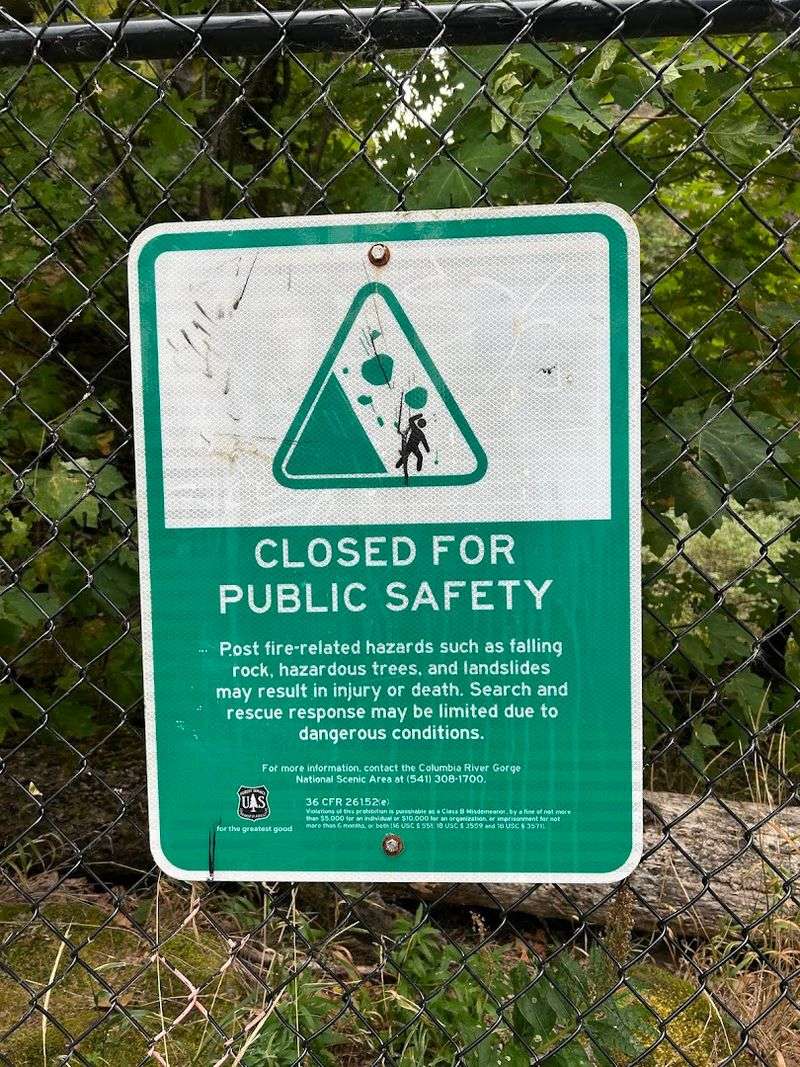
Honest travel writing means mentioning the complicated stuff, and Oneonta Gorge has a complicated recent history. The Eagle Creek Fire of 2017 caused significant damage to the area, and the lower gorge trail has faced extended closures since then for safety reasons related to fire damage and unstable terrain.
Before making the drive out, checking with the Columbia River Gorge National Scenic Area or the U.S. Forest Service for the latest access information is absolutely essential.
Conditions change, and showing up to a closed trailhead after a long drive is genuinely disappointing. Some visitors have found the upper trails and tunnel area still accessible even when the main gorge is closed.
Nature is slowly reclaiming the burned areas, and seeing that recovery process up close is its own kind of moving experience. Scorched trunks with new green growth pushing through them tell a story about resilience that feels relevant well beyond the forest.
The gorge will return fully. Patience and preparation are the best tools for planning a visit right now.
The Best Time of Day and Year to Visit
Timing a visit to Oneonta Gorge makes a noticeable difference in what you experience. Midday in summer is genuinely magical because the sun aligns directly above the narrow gorge opening and sends light straight down into the canyon.
That shaft of sunlight hitting the mist above the waterfall is the image that haunts people long after they leave.
Summer is also the best season for the water wading portion, since the creek levels are more manageable and the air temperature makes cold water feel like a relief rather than a shock. Spring brings higher water levels and a more intense green throughout the canyon, but wading can be more challenging and the cold bites harder.
Early morning visits on weekdays keep the crowds thin. Oneonta Gorge sits along the Historic Columbia River Highway, which is a popular route, and summer weekends can bring significant foot traffic to the area.
Arriving before 9 a.m. gives you the best shot at having those narrow canyon walls mostly to yourself, which is a completely different experience.
How to Get There and What to Bring
Oneonta Gorge sits along the Historic Columbia River Highway, roughly 35 miles east of Portland. The drive itself is part of the experience.
The highway winds through the Columbia River Gorge National Scenic Area past waterfalls, overlooks, and dense forest that gradually gets wilder the further east you go.
Parking near the gorge is limited. A small lot sits near the tunnel and trailhead, and it fills up fast on summer weekends.
Some visitors park further along the highway and walk back. Arriving early solves most of the parking headache.
A Northwest Forest Pass or America the Beautiful pass covers the parking fee if required at the time of your visit.
Pack water shoes or old sneakers, a dry bag for electronics, a light layer for the cool canyon air, and some snacks for after the hike. There are no facilities at the gorge itself, so plan accordingly.
The nearest towns with food options are Cascade Locks and Hood River, both worth stopping in after a morning in the canyon.
Dear Reader: This page may contain affiliate links which may earn a commission if you click through and make a purchase. Our independent journalism is not influenced by any advertiser or commercial initiative unless it is clearly marked as sponsored content. As travel products change, please be sure to reconfirm all details and stay up to date with current events to ensure a safe and successful trip.
