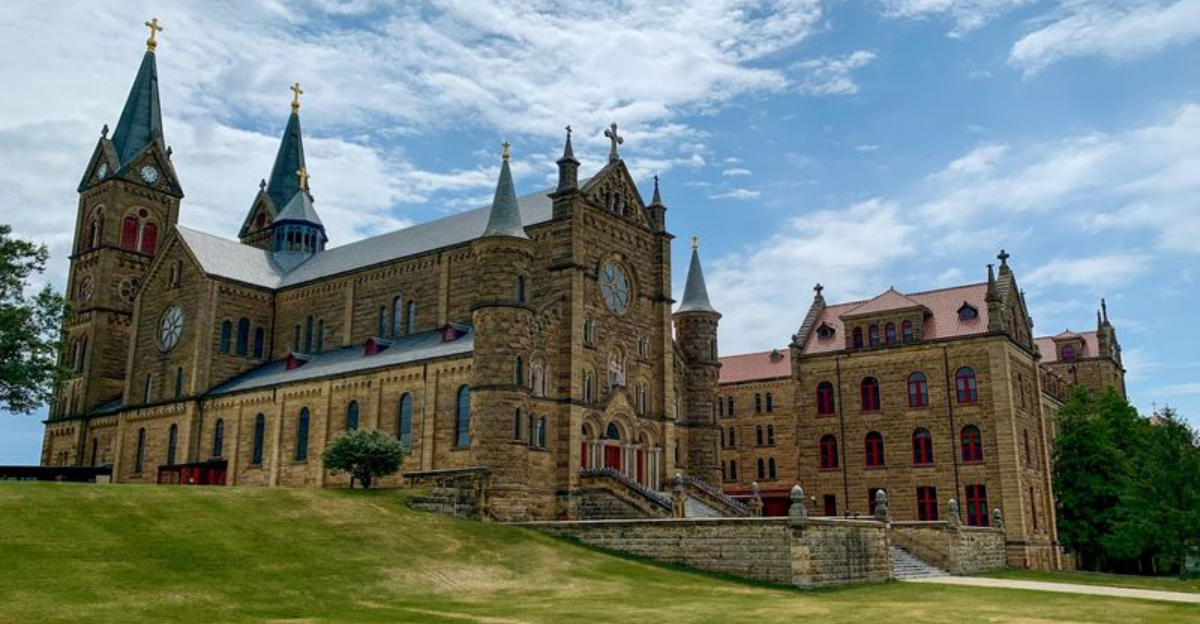
Most people drive through southern Indiana without realizing something extraordinary sits just off the road. This historic Benedictine monastery is one of those places that quietly commands attention the moment its sandstone buildings and sweeping grounds come into view.
Founded in the mid-1800s by monks who brought their traditions from Europe, it remains an active religious community where daily life still follows centuries-old rhythms. The architecture, libraries, and surrounding landscape all reflect a sense of purpose and continuity that feels unusually still and grounded compared to much of the modern world.
Whether you are interested in history, architecture, or simply a quiet place for reflection, it offers an experience that feels both deeply peaceful and distinctly out of step with everyday life in the Midwest.
Romanesque Architecture That Looks Straight Out of a European History Book
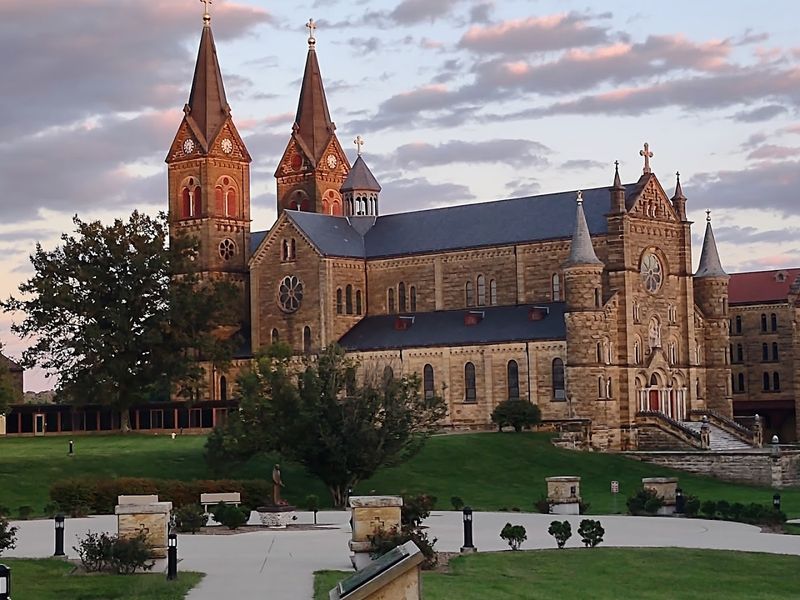
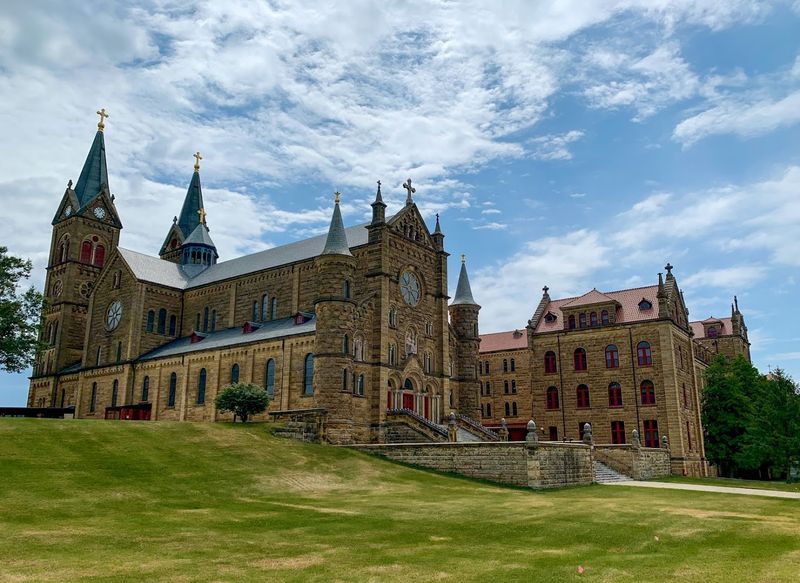
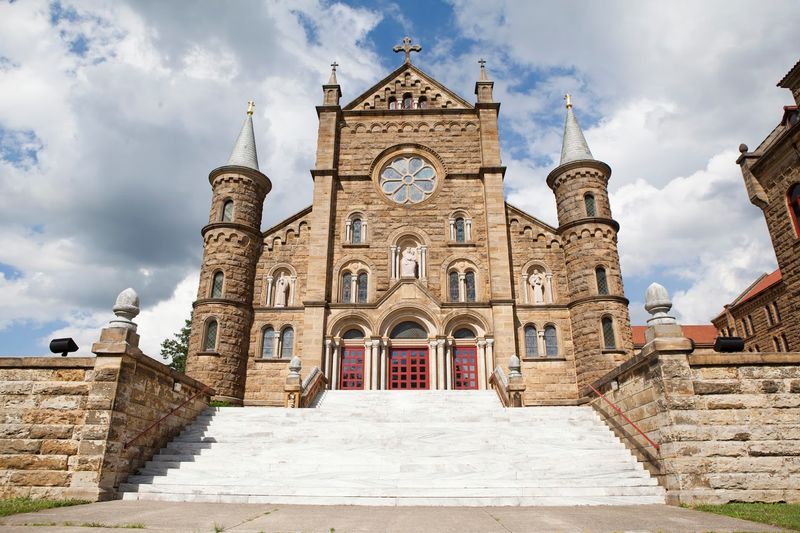
Some buildings earn their reputation simply by existing. The Archabbey Church of Our Lady of Einsiedeln, completed in 1907, is built entirely from sandstone quarried right on the monastery’s own property.
That detail alone makes it remarkable, but standing in front of those twin towers, you quickly understand why visitors consistently compare it to something pulled from a European cathedral town rather than rural Indiana.
The Romanesque style features thick stone walls, rounded arched windows, and a sense of weight and permanence that modern buildings rarely achieve. Every curve and column seems intentional, shaped by hands that believed deeply in what they were building.
The warm golden color of the local sandstone shifts beautifully depending on the time of day and the angle of sunlight.
Walking the exterior perimeter gives you a different view with every few steps. The scale of the church only becomes fully clear when you realize the surrounding buildings, also sandstone, were constructed in the same tradition.
Visitors who have traveled through Germany, Austria, or Switzerland often remark that Saint Meinrad triggers the same feeling of awe. You do not need a passport to experience that kind of beauty.
The archabbey is located at 200 Hill Drive, St. Meinrad, IN 47577, and the church exterior is open to all visitors during daylight hours.
The Underground Crypt Beneath the Main Church
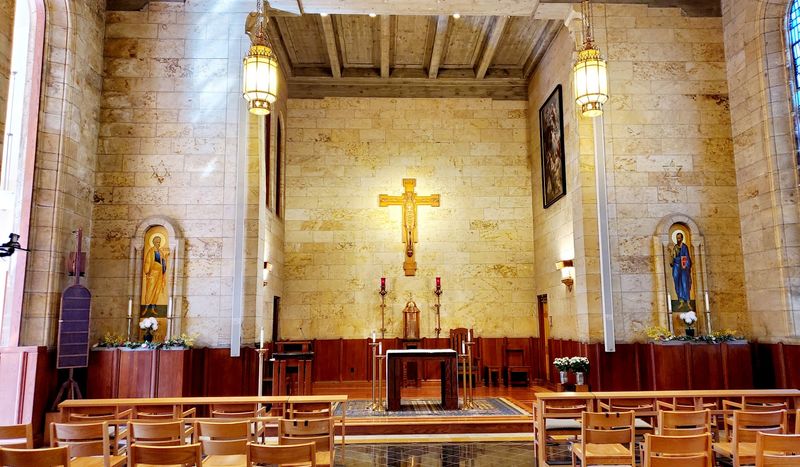
Not everyone knows the main church has a world beneath it. The crypt at Saint Meinrad Archabbey sits directly under the church floor and is open to the public, offering a quiet, cool, and genuinely layered experience that many visitors describe as one of the most memorable parts of their trip.
It feels ancient in a way that is hard to explain until you are actually standing inside it.
The vaulted stone ceiling, the low light, and the hushed atmosphere create a space that feels completely removed from the world outside. It is the kind of place where you naturally slow down, lower your voice, and take a longer look at your surroundings.
The crypt connects the visitor to the deeper history of the monastery in a very physical and immediate way.
For families with curious kids, this underground chamber tends to spark real fascination. Children who might otherwise rush through historic sites tend to slow down here, drawn in by the unusual setting and the sense of discovery it creates.
Adults often find it meditative. The contrast between the open sky and sweeping grounds above and the quiet stone space below makes the visit feel complete in a way that single-level historic sites rarely do.
Plan enough time to explore both levels of the church so you do not miss what lies beneath.
The Monte Cassino Shrine and Its 1870 Chapel in the Woods
About a mile from the main archabbey grounds, a small stone chapel sits in the woods with a history that goes back to 1870. The Monte Cassino Shrine is dedicated to the Virgin Mary and named after the Italian abbey where St. Benedict himself established the foundations of European monasticism.
Finding it feels like a genuine discovery, the kind of quiet treasure that rewards visitors who take the time to explore beyond the main buildings.
The trail leading to the shrine winds through wooded terrain with Stations of the Cross placed along the path, making the walk itself part of the experience. Whether you approach it as a pilgrimage, a nature walk, or simply a curiosity, the journey to the shrine adds a layer of depth that the main campus alone cannot offer.
The setting is peaceful in a way that feels undisturbed and unhurried.
The chapel itself is small, simple, and genuinely moving in its modesty. It sits in contrast to the grand scale of the archabbey church, offering a more intimate kind of reflection.
Local visitors often return to this spot repeatedly across different seasons because the surrounding woods change dramatically from spring through autumn. If you visit in October, the color along the trail is remarkable.
Gregorian Chant and Daily Prayer Services Open to All Visitors
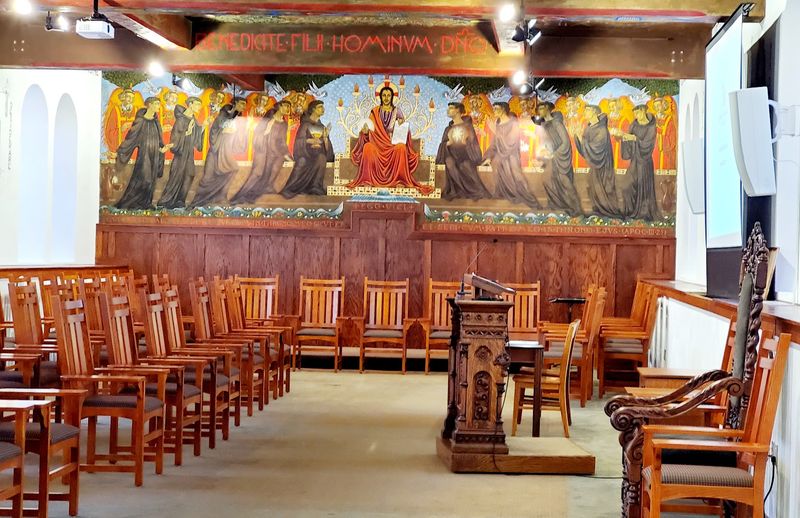
There is a specific kind of silence that only exists inside a space where prayer happens every single day. At Saint Meinrad, approximately 70 to 80 Benedictine monks follow the 6th-century Rule of St. Benedict, which organizes each day around regular hours of communal prayer.
Visitors are welcome to attend these services, and most people who do are surprised by how moving the experience turns out to be.
Gregorian chant fills the stone interior in a way that feels almost physical. The sound rises, echoes, and settles across the arched ceiling in layers that no recording can fully capture.
You do not need to be Catholic or even religious to feel something shift inside you during those moments. The monks sing with calm focus, and their voices carry a tradition stretching back well over a thousand years.
Daily Mass and the Liturgy of the Hours are the anchors of monastic life here, and attending even one service gives you a completely different perspective on the place. The schedule is posted on the archabbey’s official website at saintmeinrad.org so you can plan your visit around a service that fits your timing.
Morning prayer in particular, when the light comes through the stained glass and the chant begins, is one of those experiences that stays with a person for a long time. It is genuinely unlike anything else available in Indiana.
Walking Trails, Fish Ponds, and a Rock Garden Built for Quiet Reflection
Not every reason to visit Saint Meinrad is rooted in history or faith. The grounds themselves are genuinely beautiful, and the 1.5-mile paved walking trail that winds through the property is one of the most pleasant walks in southern Indiana.
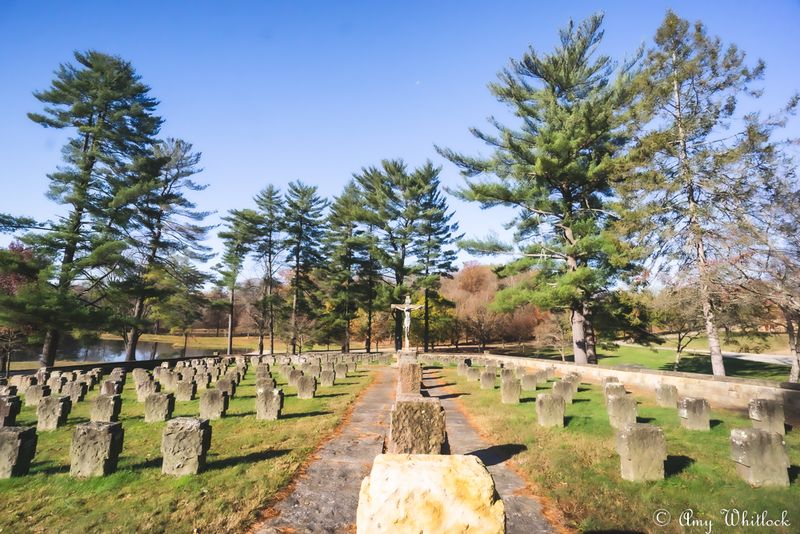
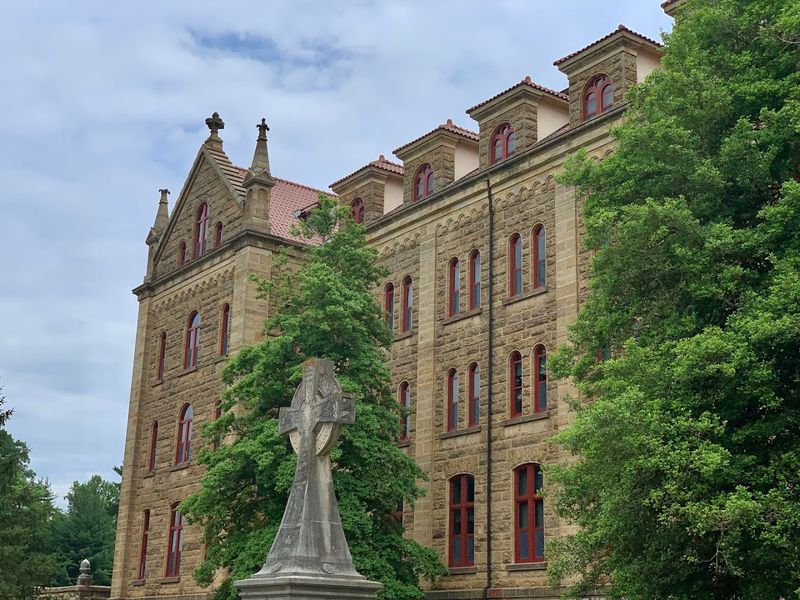
It passes historic sandstone buildings, a peaceful monastery cemetery, serene lakes, and sections of wooded landscape that make the whole experience feel like a slow exhale.
The monastery rock garden with its fish ponds is a particular highlight for visitors who want a place to simply sit and think. The ponds are calm, the garden is well-maintained, and the surrounding quiet makes it easy to stay longer than planned.
There are also two larger ponds on the property, and the grounds include a frisbee golf course for visitors who want something more active alongside the reflective elements.
Families find the trail especially welcoming because the paved surface makes it accessible for younger kids and older visitors alike. The combination of natural beauty, historic architecture, and open green space gives the grounds a versatility that most historic sites lack.
Morning is a particularly good time to walk, when the light is soft and the monastery is just beginning its daily rhythm. There are no entry fees for walking the grounds, and the open-air nature of the trail means you can set your own pace entirely.
Benedictine Hospitality and Retreat Stays at the Guest House
Hospitality is not just a courtesy at Saint Meinrad. It is a core principle of Benedictine life, rooted in the belief that every guest should be received as Christ himself.
That philosophy shapes everything about a stay at the Archabbey Guest House and Retreat Center, from the simply furnished rooms to the calm rhythm of the days spent there. People who come for a weekend retreat often leave describing the experience as genuinely restorative in a way that ordinary vacations rarely are.
Individual and group retreats are available, and the retreat center draws visitors from across the country who are looking for something quieter and more intentional than typical travel. The rooms are comfortable without being elaborate, which turns out to suit the setting perfectly.
Waking up to monastery bells and morning light on sandstone walls is a remarkably grounding way to start a day.
The food served during retreat stays has earned consistent praise from visitors, with meals prepared to nourish rather than impress. The overall experience of staying on the grounds gives you access to the monastery’s daily rhythm in a way that day visits simply cannot replicate.
Attending morning prayer, walking the trail before breakfast, and spending an afternoon in the rock garden all feel different when you are staying on site rather than passing through.
The Gift Shop, Art Gallery, and Nearby Local Attractions Worth Exploring
The Archabbey Gift Shop is the kind of place where you end up spending more time than expected. It carries books, music, and handcrafted items, including goods made by monks and nuns, that you genuinely cannot find anywhere else.
The Scholar Shop on campus adds to the selection with theological and academic titles alongside more general spiritual reading. Both shops reflect the intellectual and creative life of the monastic community in a way that feels authentic rather than commercial.
The Archabbey Library Gallery hosts rotating art exhibits that bring a cultural dimension to the visit beyond architecture and prayer. The gallery is worth checking in advance to see what is currently on display, as the exhibits change and often feature work connected to faith, history, or regional artists.
The seminary buildings on campus also contain what some visitors describe as hidden hallways and architectural surprises that reward those who take a slow, curious walk through the grounds.
When you are ready to explore the surrounding area, the Lincoln Boyhood National Memorial is about ten minutes away at 3027 East South Street, Lincoln City, IN 47552, and offers a meaningful look at Abraham Lincoln’s early years in Indiana. The town of Tell City, roughly 25 minutes south, has local dining options worth exploring along the Ohio River corridor.
Saint Meinrad sits at the center of a region with more to discover than most visitors initially expect, making it an ideal anchor for a longer southern Indiana trip.
