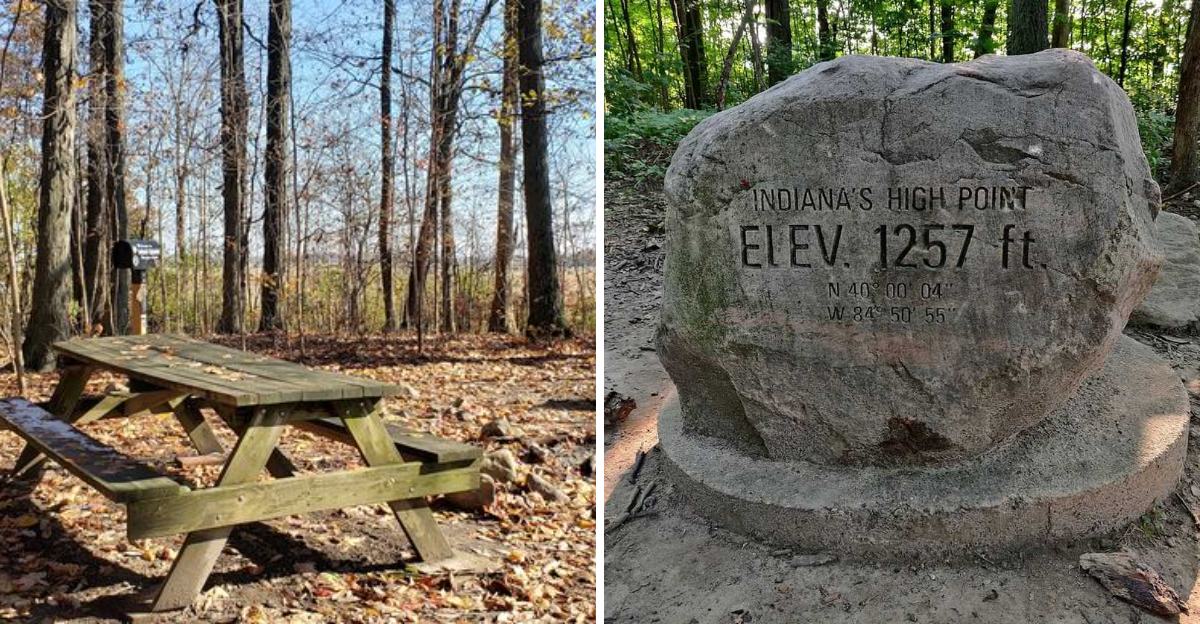
I never expected Indiana’s highest point to feel like a secret worth keeping. Hoosier Hill sits quietly amid the farmland of Wayne County, easy to miss if you don’t know where to look, yet it holds a kind of understated magic that surprises almost every visitor who makes the trip.
At 1,257 feet above sea level, it’s far from a towering peak, but what it lacks in height it more than makes up for in charm, history, and community spirit.
There’s even a mailbox at the top hiding a guest book, where adventurers from across the country have left their names and notes; a small detail that somehow makes the journey feel like more than just a hike.
Indiana’s Crown Jewel of Elevation
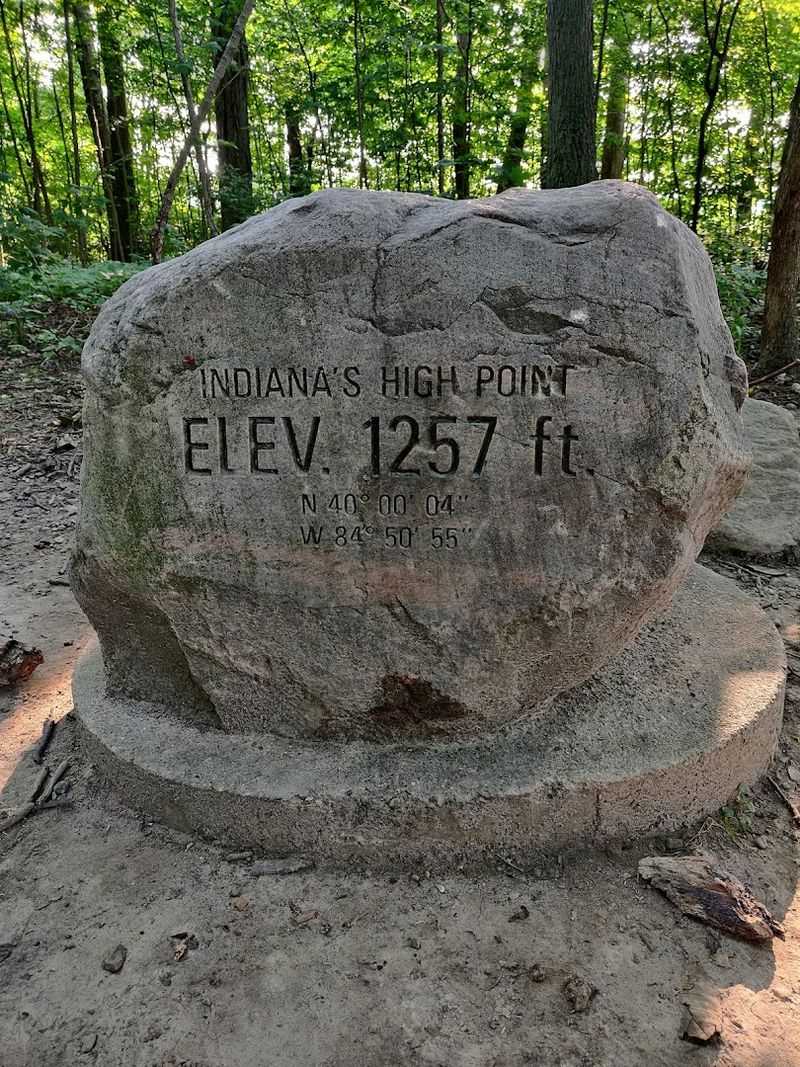
Not every crown looks the way you’d expect. Hoosier Hill holds the title of Indiana’s highest natural point, sitting at 1,257 feet above sea level in the quiet farmland of Franklin Township, Wayne County.
It doesn’t announce itself with dramatic cliffs or sweeping panoramas, but that understated quality is exactly what makes it so genuinely Indiana.
The high point is marked by an engraved boulder that replaced the original wooden sign in 2016, a practical upgrade meant to protect the site from repeated theft. That boulder now sits in a small, peaceful clearing surrounded by trees, and it feels surprisingly meaningful when you stand beside it.
Newer elevation tools like the USGS 3DEP system actually place the summit closer to 1,255.48 feet, slightly adjusting the older SRTM figure. But whether you go by old data or new, the experience of standing at Indiana’s geographic ceiling is something most Hoosiers have never done.
It’s the kind of place that makes you appreciate just how quietly remarkable your home state can be when you slow down long enough to notice it.
The Secret Mailbox That Connects Strangers
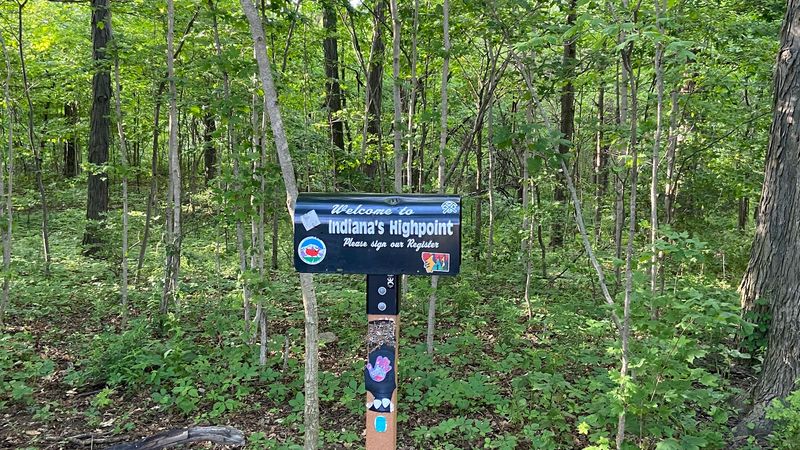
There’s something wonderfully old-fashioned about a mailbox on a hilltop. At Hoosier Hill, a small metal mailbox sits near the summit marker, and inside you’ll find a guest book filled with signatures from visitors who have traveled from all across the United States and beyond.
Flipping through those pages feels like reading a slow, handwritten story that never quite ends.
The log also contains high point postcards that visitors are welcome to take as a small souvenir of their visit. Some people leave notes, drawings, or inside jokes for future hikers to discover.
It’s a low-tech tradition in the best possible way, creating a real sense of connection between total strangers who share one thing: they all made the effort to show up.
The mailbox tradition is closely tied to the broader highpointing community, a passionate group of travelers dedicated to reaching the highest natural point in every U.S. state. Signing the register at Hoosier Hill means your name joins a long list of adventurers who have stood in that same quiet clearing.
For many, it’s a milestone moment. For others, it’s just a fun detour.
Either way, that little mailbox carries more meaning than its size suggests, and opening it feels like being let in on a very good secret.
A Trailhead Built by an Eagle Scout
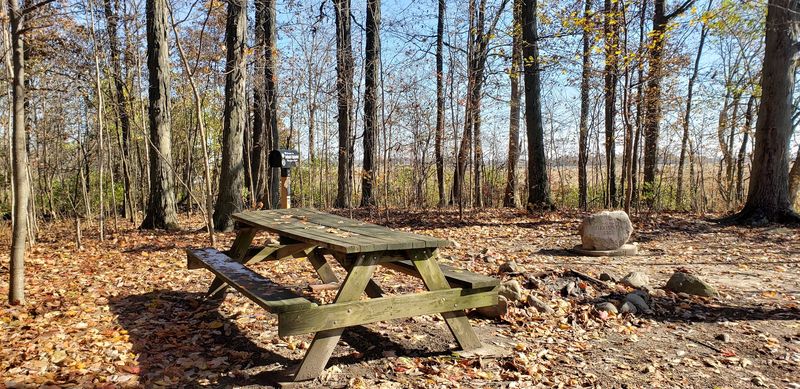
Back in 2005, a young Eagle Scout candidate named Kyle Cummings partnered with the property owner to transform what had been a simple geographic marker into a proper visitor destination. He built a short trail through the trees, installed a sign, and created a small picnic area complete with a table and a bench.
That volunteer effort changed the entire feel of the place.
Before that project, reaching the high point was a bit more of a guessing game. Now there’s a clear path, and the walk from the gravel parking area to the summit marker takes only a few minutes.
It’s accessible for families with young kids, older visitors, and anyone who isn’t looking for a strenuous hike but still wants to feel like they’ve gone somewhere worth going.
The picnic area is a genuinely nice touch. Visitors regularly stop to eat lunch in the shade, enjoy the quiet, or just sit for a moment before heading back to the car.
One of the most honest things about Hoosier Hill is that it doesn’t try to be more than it is. A well-kept trail, a shaded bench, a carved rock, and a mailbox: that’s the whole experience.
And somehow, that simplicity is exactly what makes it feel so right. Kyle’s work still shows, nearly two decades later.
The Highpointing Community That Calls It Home
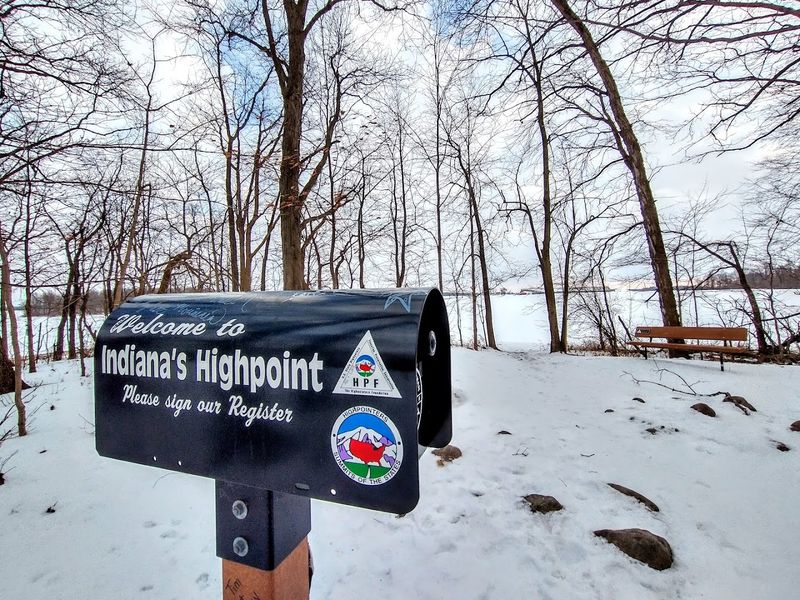
Around 1,500 visitors make their way to Hoosier Hill every year, which is a surprisingly high number for a spot that most Indiana residents have never heard of. Many of them are highpointers, dedicated travelers whose goal is to stand on the highest natural point in every single U.S. state.
For this crowd, Hoosier Hill is a must-check destination, and some have even visited multiple state high points in a single day.
One visitor famously recorded reaching Indiana, Ohio, Pennsylvania, Maryland, and West Virginia all in one road trip push. That kind of enthusiasm says a lot about what drives the highpointing community.
It’s not about difficulty or bragging rights. It’s about showing up, being present, and appreciating what each state offers at its geographic peak, however modest that peak might be.
The guest book in the mailbox reflects just how international the community has become. Signatures come from across the country and occasionally from abroad, all gathered in one ordinary-looking mailbox in the middle of Indiana farmland.
There’s a real camaraderie among highpointers, a quiet understanding that every summit counts, whether it’s 14,000 feet or 1,257. Hoosier Hill may be the 44th highest state high point in the country, but to the people who seek it out, it carries just as much weight as any of the others.
A Piece of American Exploration History
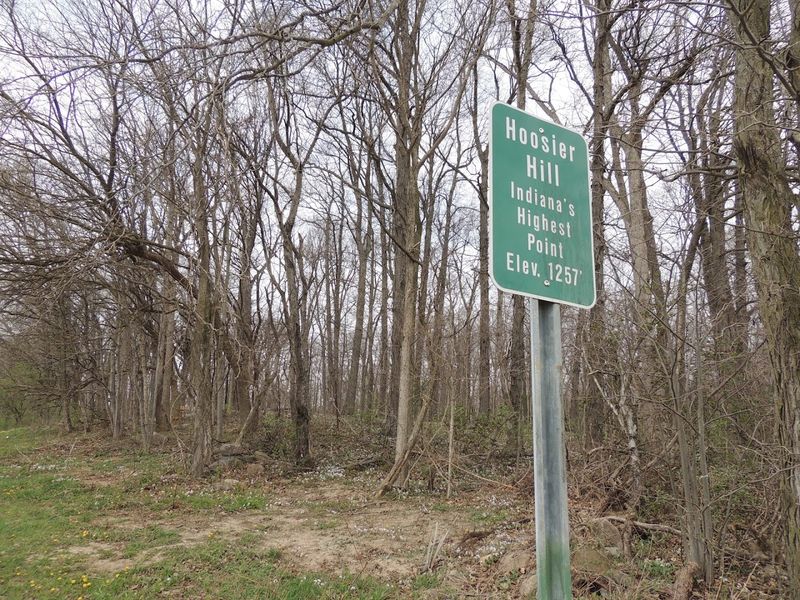
Long before highpointing had a name or a dedicated community, one man was quietly working his way through every state high point in the contiguous United States. A.H.
Marshall became the first person to successfully climb all 48 contiguous U.S. state high points, and he saved Hoosier Hill for last. He completed that extraordinary achievement in 1936, finishing his journey right here in the farmland of eastern Indiana.
That historical detail adds a layer of meaning to an already interesting place. When you stand at the engraved boulder and look around at the trees and the surrounding fields, you’re standing where a genuine piece of American exploration history happened.
Marshall didn’t have GPS, online trail guides, or a highpointing community to lean on. He just had determination and a map.
Knowing that story changes how the visit feels. What might look like a small clearing in the woods suddenly carries the weight of a 1930s quest that stretched across an entire nation.
Indiana was the final chapter of that journey, the quiet punctuation mark at the end of a remarkable sentence. For history buffs and geography lovers, that context transforms Hoosier Hill from a curiosity into something genuinely worth celebrating.
It’s the kind of local history that deserves to be better known, and visiting is one small way of honoring it.
Getting There Is Easier Than You Think
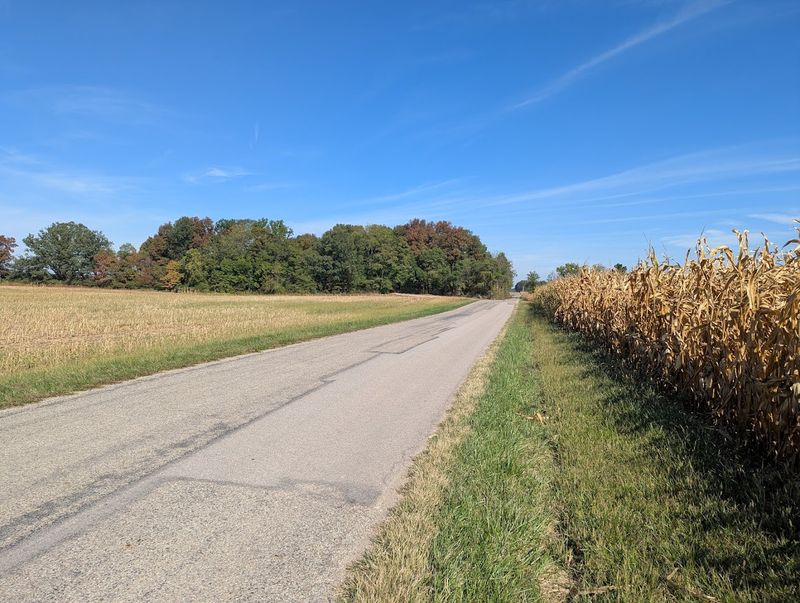
One of the most refreshing things about Hoosier Hill is how genuinely easy it is to visit. The site sits in Franklin Township, Wayne County, near the intersection of Elliot Road and County Line Road.
Interstate 70 is roughly 11 miles to the south, with Richmond serving as the nearest major city. You don’t need hiking boots, a trail permit, or a full day to make this trip work.
A small gravel parking area sits right off the rural road, and the walk to the summit marker is short enough that most people are back at their car within 15 to 20 minutes. That accessibility makes it a perfect detour for road trippers passing through eastern Indiana, or for local families looking for something low-key but genuinely interesting to do on a weekend afternoon.
The land is privately owned, which makes the owner’s generosity in allowing public access all the more meaningful. Visitors are asked to be respectful, and the community has responded in kind, keeping the site clean and well-maintained over the years.
There’s no entry fee, no reservation required, and no complicated parking situation. Just a quiet road, a short walk, and one of the most understated geographic landmarks in the entire Midwest waiting for you at the end of it.
That kind of simplicity is harder to find than you’d think.
What To Explore After You Sign the Register
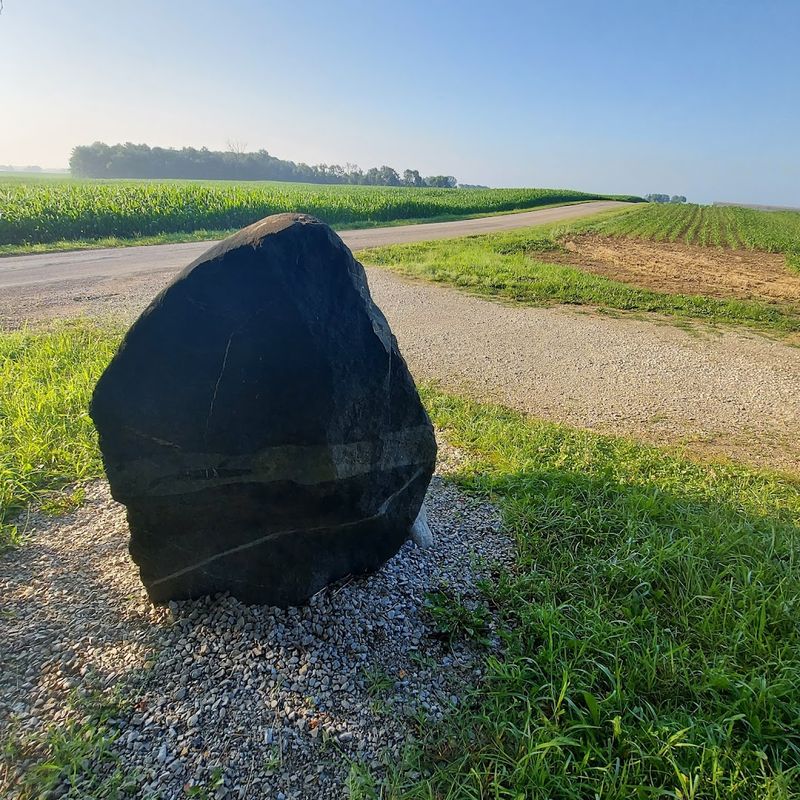
After you’ve signed the guest book and snapped your photo at the boulder, the surrounding area offers a handful of genuinely worthwhile stops. The Levi and Catherine Coffin State Historic Site, located at 201 US-27 in Fountain City, is one of the most historically significant destinations in Indiana.
Levi Coffin was known as the president of the Underground Railroad, and his preserved home tells a story that connects directly to American freedom and courage.
If you’re looking for something a little more casual, Fountain Acres Foods at 1609 IN-1 in Fountain City is an Amish grocery store that draws visitors for its fresh produce, baked goods, and pantry staples you won’t find at a regular supermarket. It’s the kind of stop that turns into a longer browse than you planned, and that’s not a bad thing at all.
History enthusiasts might also want to check out the Richmond area, which sits about 11 miles south of Hoosier Hill and offers museums, local dining, and access to the Whitewater River. The whole region has a quiet, unhurried pace that pairs well with the spirit of a Hoosier Hill visit.
Whether you make it a quick two-hour outing or a full day of exploration, eastern Indiana has more going on beneath the surface than most people expect. And that, perhaps, is the whole point.
Dear Reader: This page may contain affiliate links which may earn a commission if you click through and make a purchase. Our independent journalism is not influenced by any advertiser or commercial initiative unless it is clearly marked as sponsored content. As travel products change, please be sure to reconfirm all details and stay up to date with current events to ensure a safe and successful trip.
