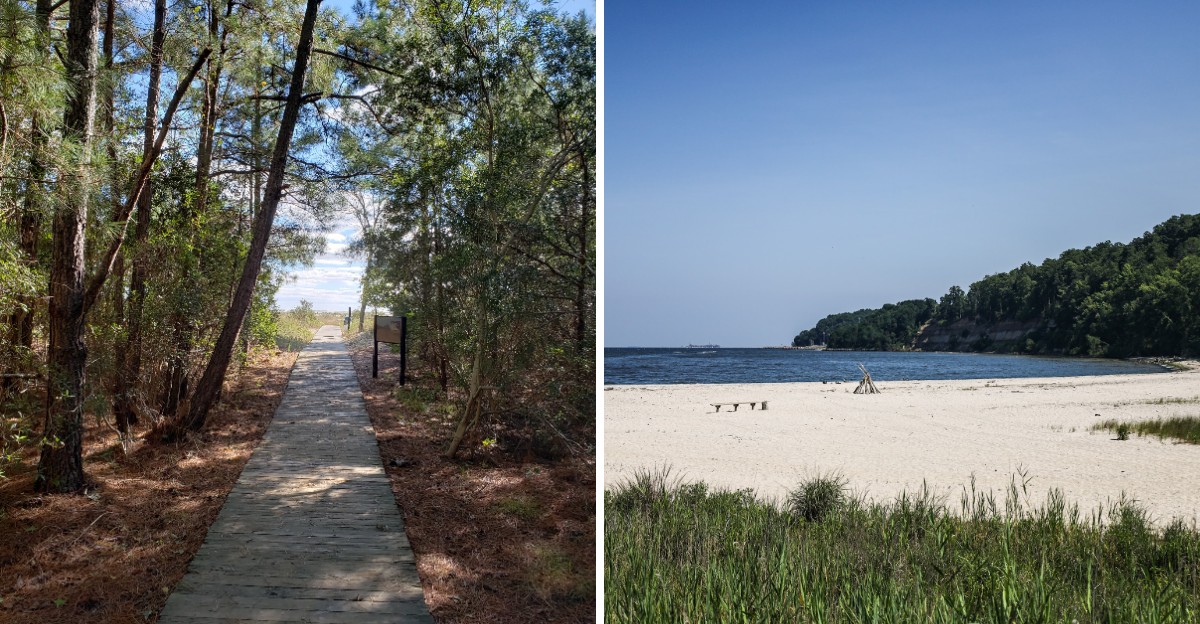
Shark teeth can turn up in the sand at the end of this half-mile woodland trail. Not plastic souvenirs, but fossils from animals that swam here millions of years ago.
That’s a pretty extraordinary reward for such a short walk.
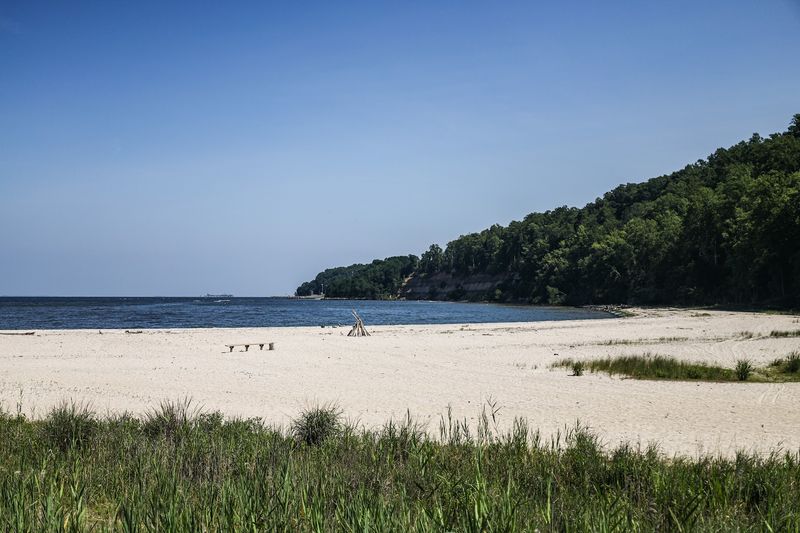
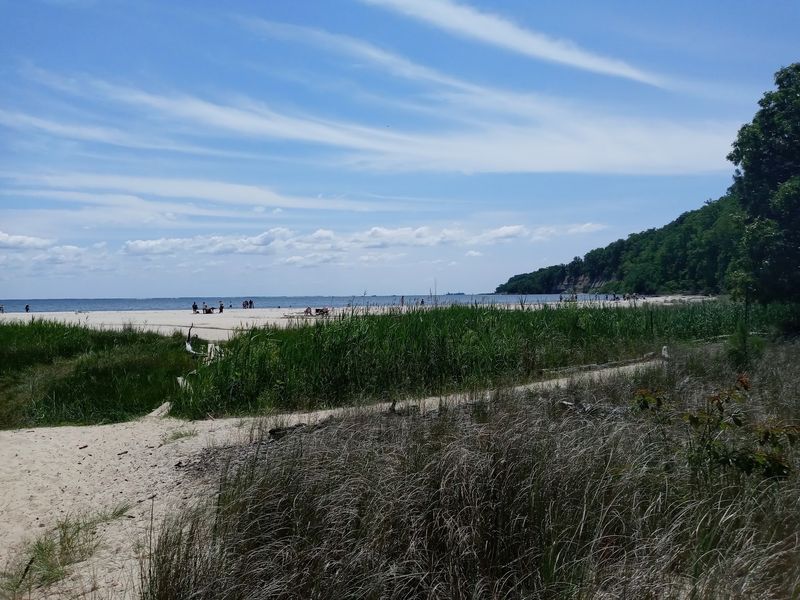
The Maryland path leads through trees to a sandy Chesapeake Bay beach, with freshwater ponds and views toward the Calvert Cliffs nearby. You can also explore longer trails, stop at observation platforms, and peek inside a reconstructed fishing shanty that recalls the area’s old fishing industry.
I find the fossil possibility especially irresistible. A beach afternoon is pleasant enough, but knowing that something prehistoric might be lying among the shells changes where you look.
Even if you leave without a shark tooth, the quiet shore and its strange history make the walk feel like a little discovery.
Your Treasure Hunt Starts With Tiny Shark Teeth
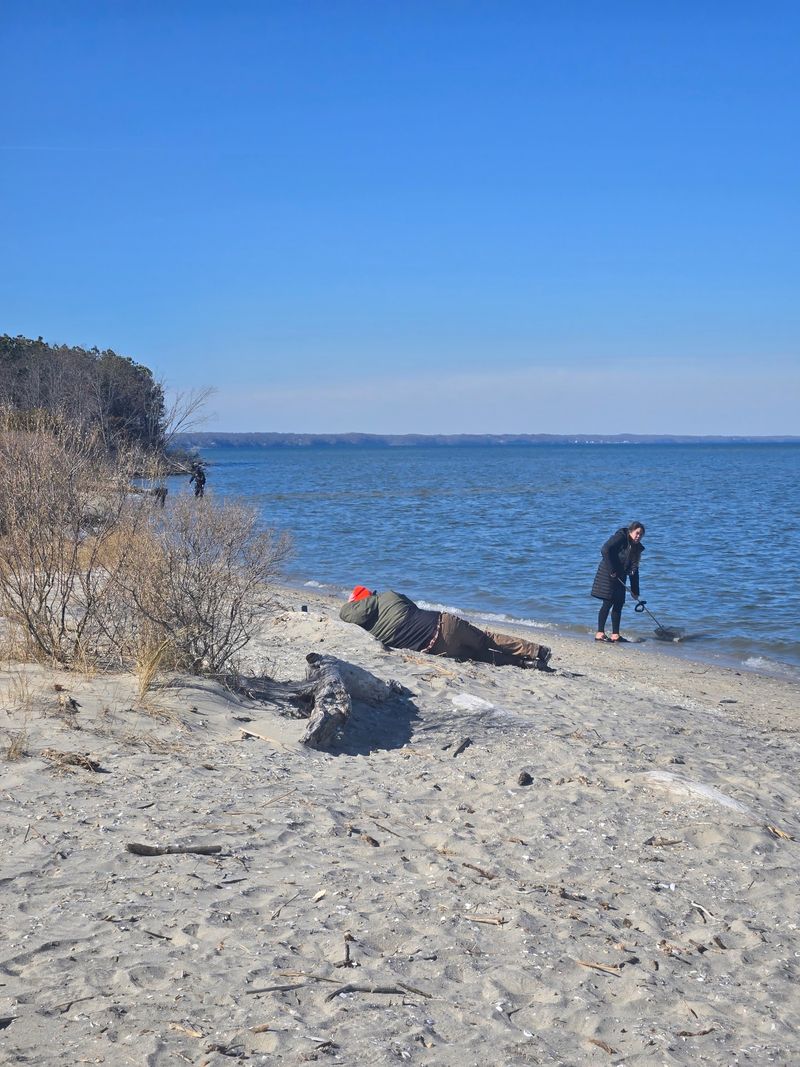
Shark teeth are the star attraction at Flag Ponds Nature Park, and they come with serious bragging rights. Many date back to the Miocene era, when the bay looked very different.
Back then, sharks, whales, and crocodiles swam in these waters. Some of those creatures are now extinct, which makes each find a real piece of natural history.
The fossils don’t appear by magic. They erode out of the famous Calvert Cliffs along the Chesapeake Bay and slowly wash ashore.
Most teeth are small, dark, and shiny. Your best strategy is to scan the gravelly patches near the waterline instead of the soft dry sand.
A simple sifter or small kitchen strainer helps a lot. Scoop up sand and pebbles, shake gently, and watch for triangle shapes.
Patience matters more than luck here. Some families find a handful in minutes, while others need a slower afternoon of searching.
Kids usually turn this into a full-blown competition. Grown-ups often do too, honestly, once the first tooth shows up in their palm.
Bring a small bag or container for your finds. Little treasures disappear fast in a pocket full of sand, and nobody wants that heartbreak on the drive home.
The Half-Mile Walk Builds Up the Big Reveal
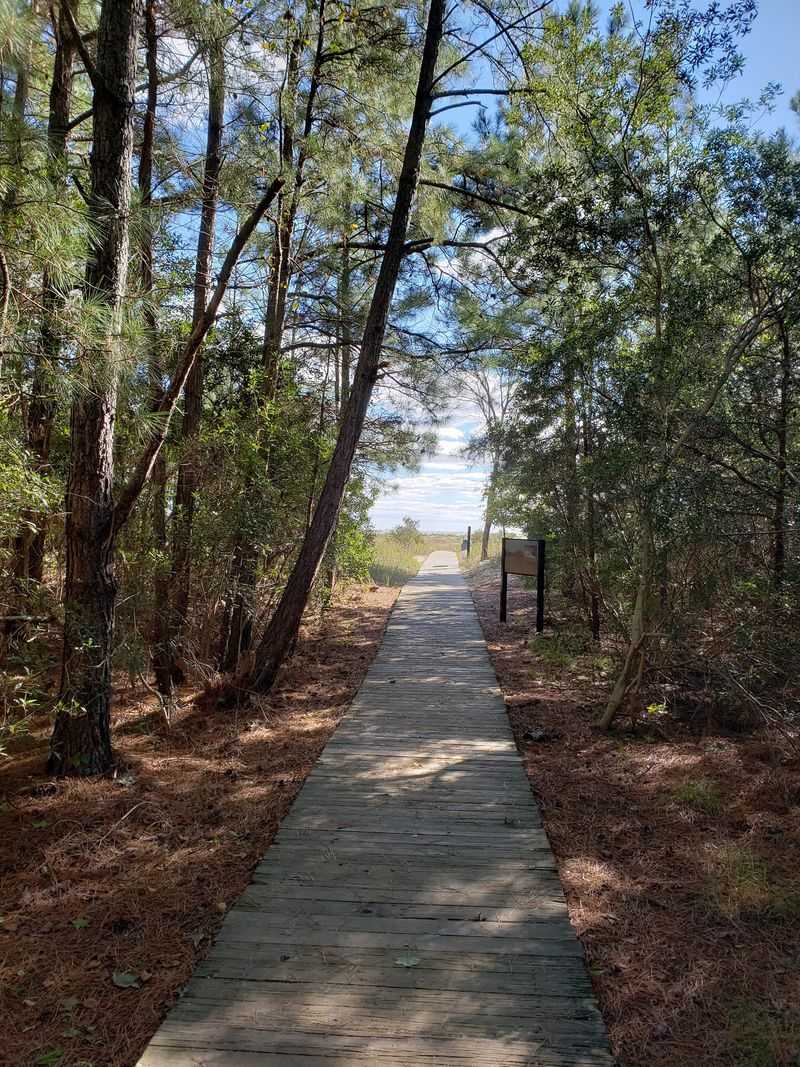
Half a mile doesn’t sound like much. Yet this walk from the parking area to the beach sets the whole mood for your day.
The main trail winds through shaded woods before opening up to the Chesapeake Bay. That first glimpse of open water feels like a curtain lifting.
Going down is easy and breezy. Coming back is mostly uphill, though, and there’s a short steep stretch to tackle.
Packing smart makes a big difference. A wagon or beach cart can carry chairs, coolers, and towels without wearing out your arms.
Strollers can be tricky in some spots. After rain, parts of the trails may get muddy or tough to pass.
Visitors with limited mobility have an option. A separate accessible parking lot sits closer to the beach, with a shorter boardwalk walk.
Comfortable shoes are a smart choice here. Flip-flops work on the sand, but sneakers handle the hill much better.
Think of the walk as part of the adventure. It keeps the beach feeling wild, and it gives you a few quiet minutes to leave everyday noise behind before the bay appears.
A Fishing Shanty Tells the Story of Old Bay Life
Long before beach towels took over, this shoreline was a working fishing spot. From the early 1900s until 1955, crews used pound nets to catch fish here.
The fishermen lived right on the shore during the busy season. Their simple shanties earned a funny nickname: the Buoy Hotel.
Don’t expect room service or fluffy pillows. These were plain wooden shelters built for hardworking watermen who spent long days on the bay.
The last original shanty was lost to a fire in 2012. A faithful replica went up in 2015, so the story didn’t fade away.
You can peek inside and get a feel for how these workers lived. It’s a small space, which says a lot about their tough routines.
This stop pairs nicely with the fossil hunt. One shows ancient life, and the other shows how people made a living here not so long ago.
Kids often have questions after seeing it. Where did they sleep?
What did they eat? Those conversations make the trip richer.
Spend a few minutes here before heading to the sand. The beach feels even more meaningful once you know who worked it first.
Quiet Ponds Bring a Totally Different Kind of Wild
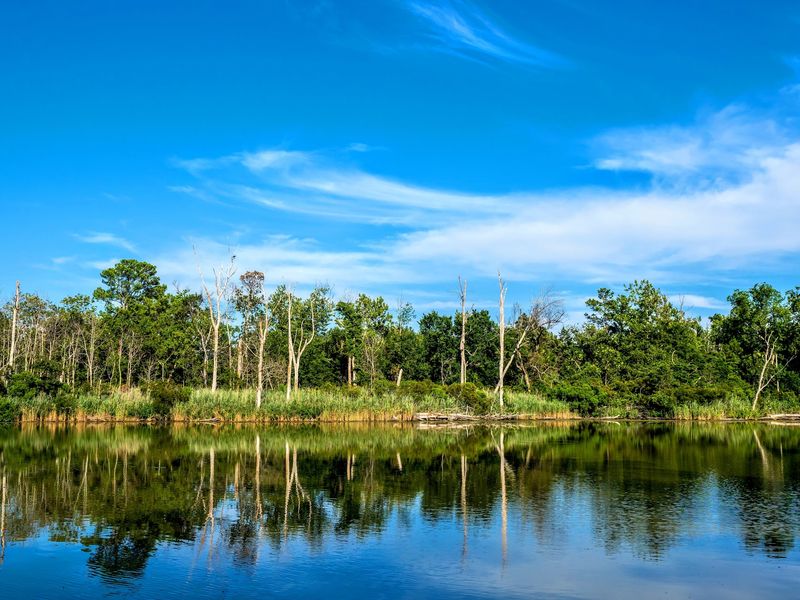
Surprise number one: this beach park is named for ponds, not sand. Flag Ponds Nature Park holds freshwater ponds that feel peaceful and secret.
Richardson’s Pond covers about 28 acres. A boardwalk lets you look over the water and spot plants and creatures up close.
Duncan’s Pond is smaller, at roughly 9 acres. It has an observation spot where you can stand still and watch the world go by.
Bird lovers, take note. More than 245 bird species have been reported in the park, from herons to colorful warblers.
Binoculars are worth packing. Even a cheap pair can turn a blurry speck into a bird you can actually name.
The ponds give you a calm break from the beach. Waves splash on one side of the park, while still water rests on the other.
Early mornings tend to be great for wildlife watching. Animals are often more active before the day heats up.
Keep your voice low and your steps slow. You’ll notice much more that way, and the ponds reward quiet visitors with ripples, splashes, and the occasional feathered show.
Over 500 Acres Means the Trails Deserve Your Attention Too
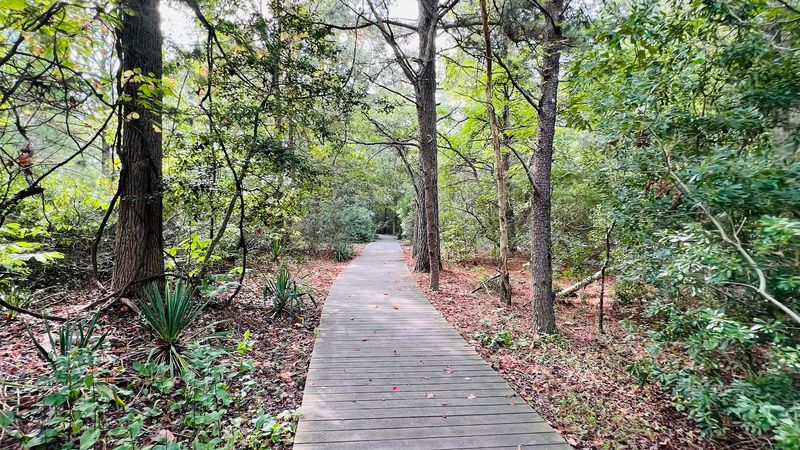
Most people rush straight to the beach. That’s understandable, but they miss a big chunk of this Maryland park.
Flag Ponds covers more than 500 acres, and a network of trails winds through it. You’ll pass forests, open wetlands, and leafy pawpaw groves.
The trails are generally easy. They work well for families, casual walkers, and anyone who wants nature without a tough climb.
A trail map shows the distances, so you can plan a short loop or a longer wander. That flexibility is handy when little legs get tired.
Bug spray is a must on these paths. Ticks, mosquitoes, and chiggers can show up, especially during warmer months.
Stay on marked trails, too. Poison ivy grows in the park, and nobody wants an itchy souvenir.
A quick tick check before getting in the car is smart. Check kids and dogs carefully as well.
Try pairing a trail loop with your beach time. Hike in the cooler morning, then cool off by the bay later.
That combo shows off the full personality of the park, from shady woods to wide-open water.
The Beach Never Looks Exactly the Same Twice
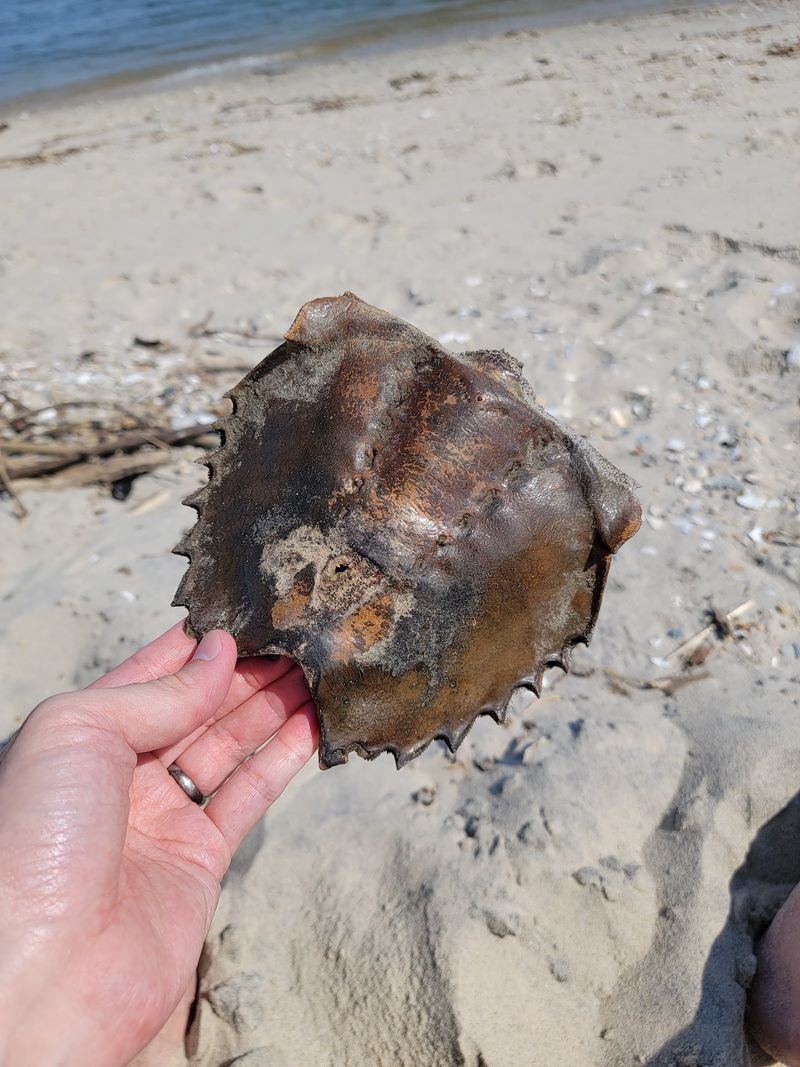
Tides, storms, and seasons keep reshaping this shoreline. Flag Ponds Nature Park has a beach that changes its look all the time.
That constant shifting is exactly why fossils keep appearing. Erosion uncovers new treasures, so a beach that came up empty last month might surprise you today.
The shoreline feels raw and natural. There are no boardwalk shops, no snack stands, and no rows of buildings crowding the view.
Plants and grasses have also grown in some areas in recent years. Low tide often gives you more room to spread out and explore.
Shells and smooth rocks cover parts of the sand. It’s a great spot for collecting, even if shark teeth play hard to get.
Bring a chair or blanket from home. You won’t find picnic tables or chairs waiting at the beach area.
Water shoes are handy if you plan to wade. The bay bottom can feel slippery, and some days bring jellyfish too.
Check conditions before you go, especially in summer. Nature runs the show here, which is part of the charm and part of the adventure.
Rinse, Refuel, and Relax With Handy Park Perks
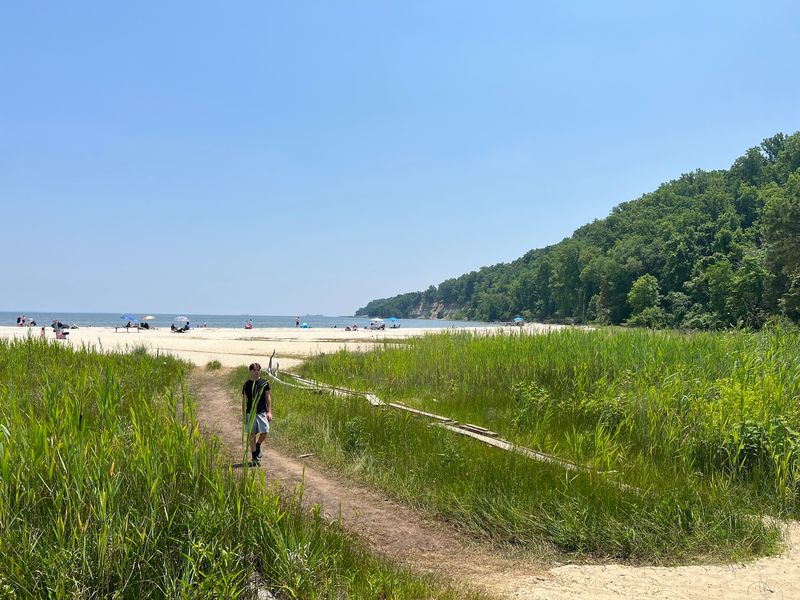
Sandy feet and a long walk back? Luckily, this park thinks ahead.
Restrooms sit near the visitor center and also closer to the beach. That second set saves you from a desperate uphill sprint.
An outdoor shower station near the beach boardwalk is a real treat. You can rinse off sand before hiking back to the car.
Picnic areas with grills are near the visitor center. Pack sandwiches or plan a cookout for a laid-back lunch break.
Grilling isn’t allowed on the beach itself, though. Keep the barbecue up by the visitor center area.
The visitor center is worth a quick stop. It’s small, but it offers a good introduction before you head out.
Sand sifters have been available to borrow near the start of the boardwalk. Bringing your own is still a safe bet.
Plan your snacks carefully, since the beach has no food vendors. A small cooler with water and treats goes a long way on a warm day.
These simple comforts make a wild beach feel easy. You get untamed nature without giving up clean hands and a fresh change of clothes.
Smart Planning Keeps You From Getting Turned Away
Timing can make or break your trip. Flag Ponds Nature Park sits at 1525 Flag Ponds Pkwy, Lusby, MD 20657, and it’s open year-round.
Hours change with the seasons, so check before you leave. In cooler months, the park closes Tuesday through Thursday.
The beach and gates usually close one hour before the park itself. Arrive early enough to enjoy your full day.
Parking is limited, and that matters. On busy warm days, the park may close when it reaches capacity.
Once that happens, walk-ins aren’t allowed. An early arrival is the easiest way to avoid disappointment.
There is an entrance fee, charged per vehicle. Calvert County residents pay less than out-of-county visitors.
Swimming is allowed, but there are no lifeguards. Keep a close eye on kids and swim with care.
The park sits just a short drive from Calvert Cliffs State Park. You could explore both on a fossil-themed Maryland weekend.
Pack sunscreen, bug spray, water, and a sifter. With those basics covered, you’re ready for a beach that feels like it skipped a few decades, in the best way.
