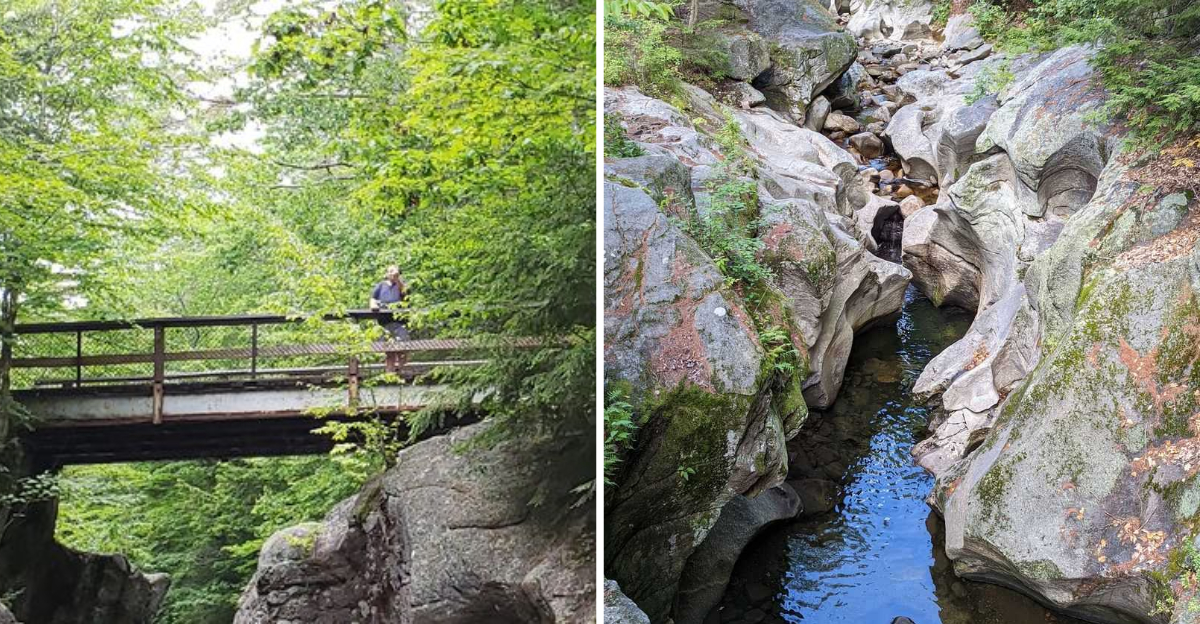
I almost drove past the little brown sign on a back road in New Hampshire, and I am so glad I hit the brakes. The parking lot sits across the street from the water, so you hear the river before you ever see it, a low rushing sound coming up through the trees.
Then you step to the edge and the ground just splits open into this narrow, smooth-walled gorge full of curved bowls and tumbling little cascades. It looks carved by hand, though it was really ice melt and sand doing the work over thousands of years.
I spent way longer than I planned leaning on the wooden footbridge, watching water slide through stone chutes below my boots. The whole place felt like a secret the state had been keeping, tucked into the woods without any fanfare, just waiting for someone curious enough to stop.
If you love places where geology shows off without asking for attention, this quiet corner of New Hampshire deserves a spot on your map.
The Gorge Itself, A Stone Hallway Cut By Meltwater
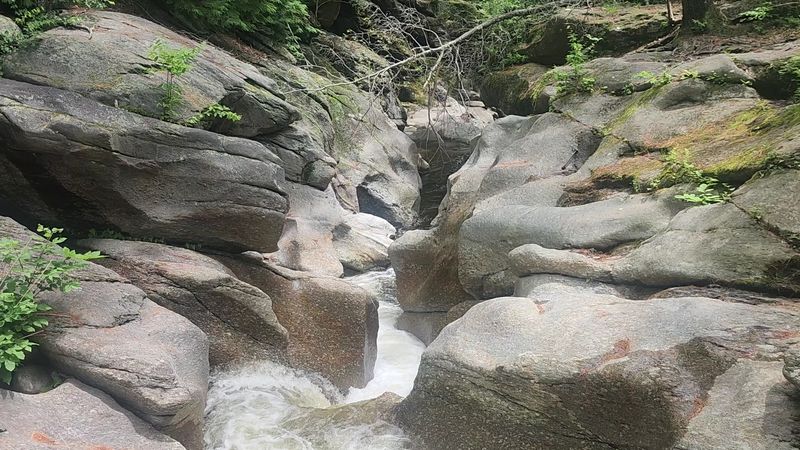
My first look down into the gorge came with a small jolt of surprise. The land is flat and forested, then suddenly the bedrock splits into a tight corridor barely wide enough for the river to squeeze through.
The Cockermouth River did all of this, though it had serious help. Around 10,000 years ago, at the tail end of the last Ice Age, huge volumes of melting ice and snow poured through here carrying sand and grit.
That gritty water acted like liquid sandpaper, grinding downward year after year until the channel deepened into what you see now. Some folks call it the Little Grand Canyon of New Hampshire, and while it is much smaller, the comparison makes sense once you are standing above those sheer walls.
What struck me most was how smooth everything looks. The rock has soft curves and rounded lips instead of jagged breaks, almost like clay someone shaped with a thumb.
Sunlight filters through the trees and bounces off the wet stone, which gives the whole slot a greenish glow on bright days. The sound down there is constant but never harsh, more melodic than loud.
Take your time along the upper edges before dropping toward the water. The best angles come from a few steps back, where you can see the full narrowness of the cut and understand just how much stone the river removed.
It is a short walk for a very big payoff.
Potholes, Bowls, And The Strange Art Of Spinning Sand
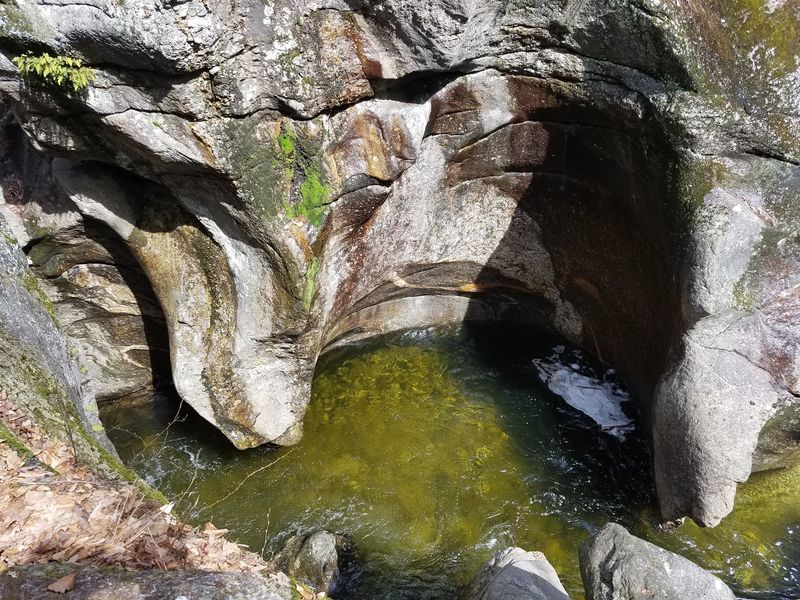
Nature made bowls here, and they are ridiculously satisfying to look at. Perfectly round depressions sit scooped into solid rock, some shallow enough to hold a puddle, others deep enough to swallow a backpack.
Geologists explain them simply enough. A pebble gets trapped in a small dip, swirling water spins it around, and over centuries that spinning stone drills a smooth cylinder into the bedrock.
Multiply that by thousands of years of grit and meltwater and you get the collection of potholes scattered through the natural area. Several connect to each other, forming little stone staircases the water pours through.
I kept crouching down to run my hand along the rims. They are worn glass-smooth, cool to the touch even on a warm afternoon, and the curves catch shadows in a way photos never quite capture.
Bring a camera, but manage your expectations. Plenty of visitors mention that pictures flatten the shapes, and I agree, the depth reads much better in person.
Watch your footing constantly around these formations. Wet rock here is genuinely slick, the edges tilt at odd angles, and the drops into the bowls are steeper than they appear from above.
If you are curious about how landscapes get built, this is a fantastic outdoor classroom. Kids especially seem to click with the idea that a small rock, given enough patience, can drill through granite.
Slow down and look closely, because the details are the whole show.
Cascades And The Sound Of Water Falling Through Stone
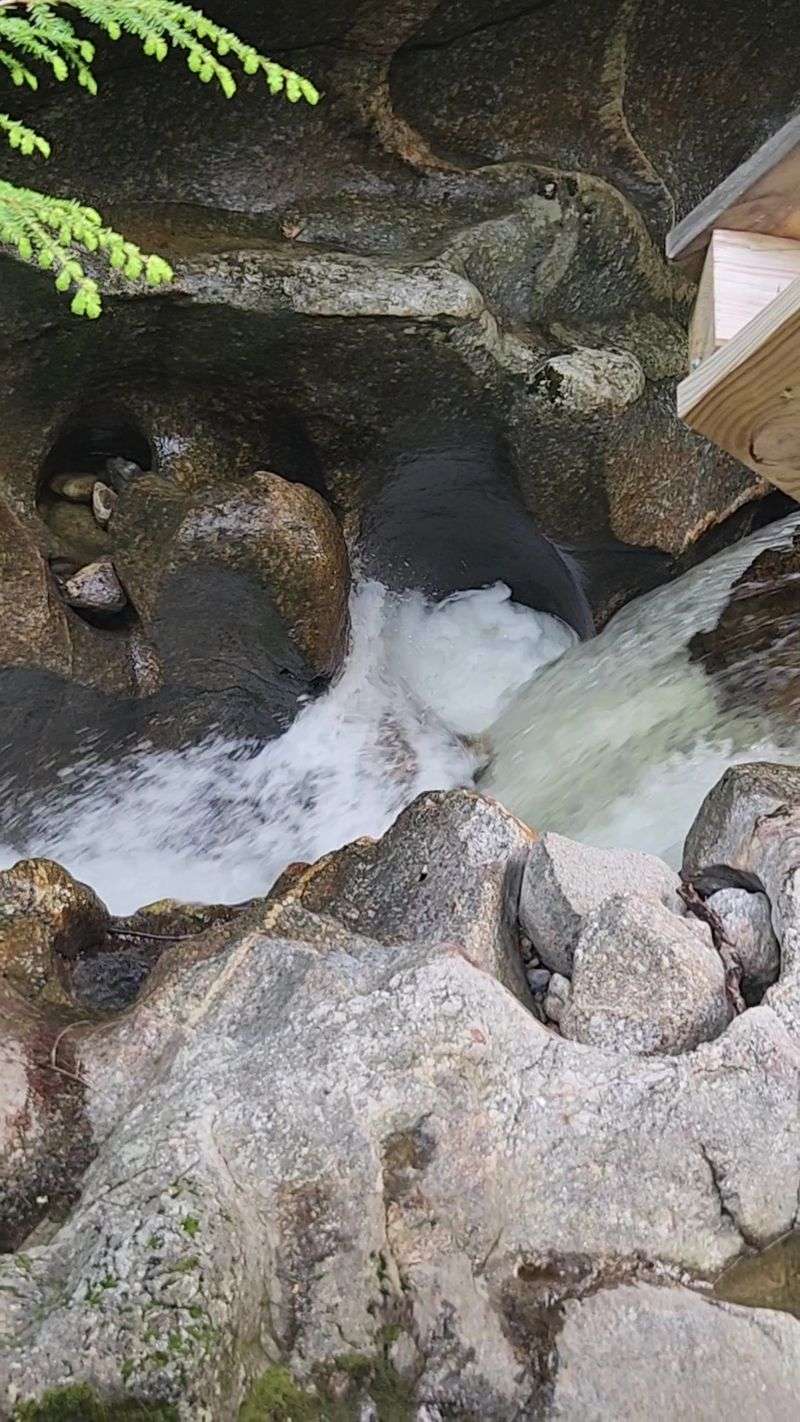
Close your eyes for a second on the trail and the river does most of the talking. Water drops through the narrow chutes in short bursts, hits a pool, then slides on to the next ledge.
These are not thundering waterfalls, and that is part of the charm. Each cascade is small, maybe a few feet, but there are enough of them stacked along the gorge to keep the soundtrack going the whole visit.
Spring brings the loudest version. Snowmelt pushes the Cockermouth to its highest and fastest flow, and the whole channel turns into a churning rush that fills the air with mist.
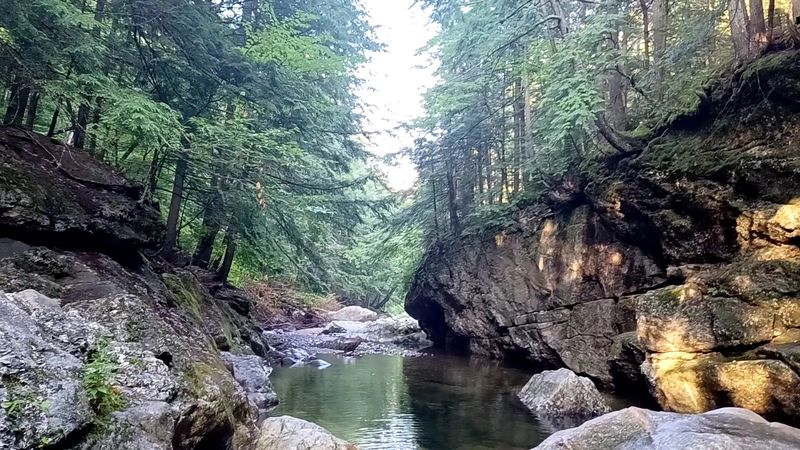
Summer flips the mood entirely. Lower water reveals more of the sculpted rock, the pools settle into clear green mirrors, and the cascades become gentle trickles you can sit beside.
My favorite trick is to walk upstream a bit, where the river widens into a shallow rocky flat before it funnels into the gorge. You get the calm version and the dramatic version within a hundred steps of each other.
Sit on a dry ledge and just listen for a while. The mix of falling water and wind in the hemlocks is the kind of thing that resets your brain faster than any app.
Do not try to climb beside the cascades for a closer shot. The spray keeps that stone permanently damp, and slippery footing near moving water is how good days turn bad.
Crossing The Wooden Footbridge For The Best Overlook
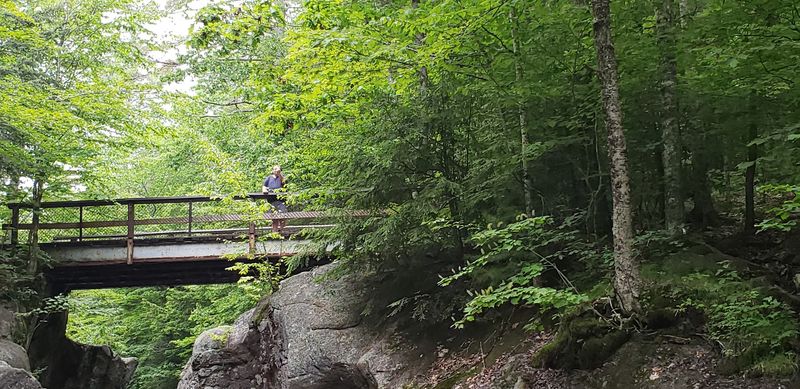
The footbridge is where I lingered longest, and I doubt I’m alone in that. It spans the Cockermouth River right where the gorge tightens, so you are looking straight down into the carved slot.
From up there the whole story clicks into place. You can trace the water’s path through the bends, spot potholes you missed from ground level, and see how the channel narrows to a slip barely wider than the bridge deck.
Families seem to love this spot for dropping sticks off one side and racing to the other. It is a simple game and it works perfectly here, since the current moves fast enough to make it exciting.
Getting there is easy. Park in the lot, cross Sculptured Rocks Road toward the river, and follow the short path downstream roughly a thousand feet.
The main trail runs about a tenth of a mile one way, so this is not a hike that demands training or a big time block. Anyone comfortable on uneven ground can manage it.
On the far side of the bridge, a small footpath continues along the river and opens up several wading spots. That is where the visit stretches from fifteen minutes into an hour without you noticing.
Morning light tends to be kindest for photos from the bridge, before the sun sits directly overhead and washes out the contrast between wet stone and shadow. Leashed dogs are welcome too.
Swimming Holes, Cold Water, And Staying Safe On Slick Rock
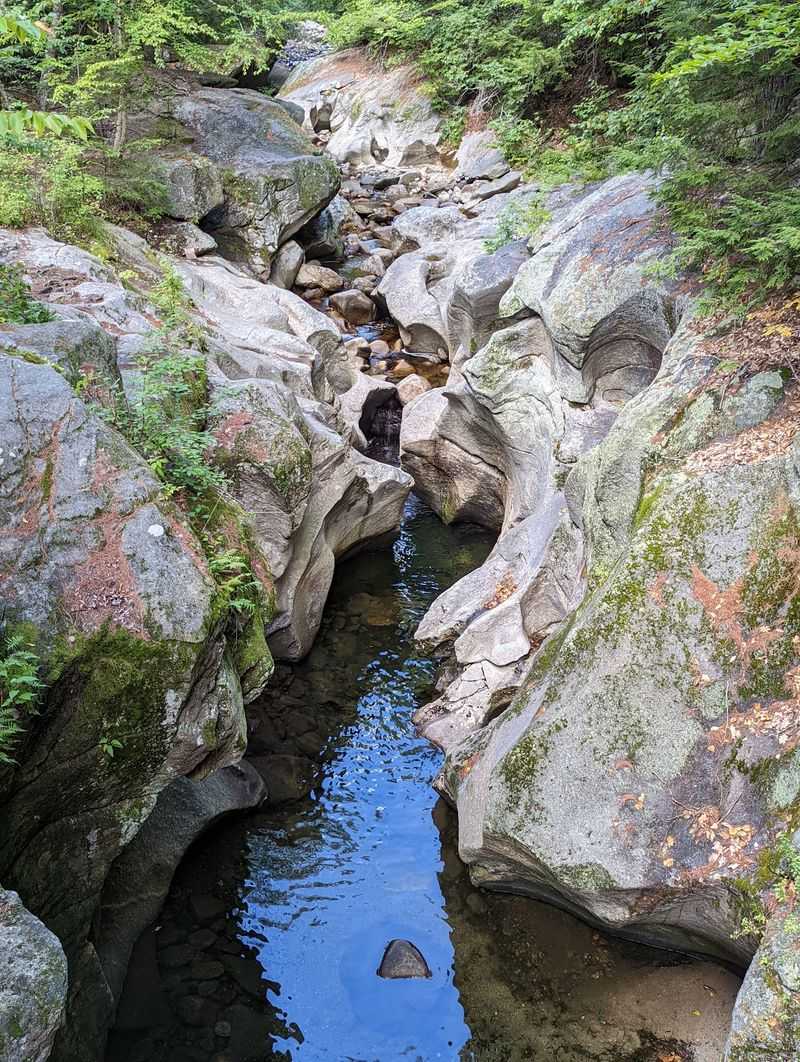
Locals have been cooling off here for generations, and one dip tells you why. The pools sit tucked between polished boulders, clear enough to see straight to the bottom, with deeper sections carved out by the current.
Fair warning about the temperature. Even in the middle of August this water runs frigid, the kind of cold that makes you gasp and laugh at the same time.
Above the main swimming holes, the river spreads into a shallow rocky flat that is ideal for sitting, wading, and letting little kids splash without much worry. That upper stretch is where I’d set up with a towel and a snack.
Safety deserves real attention at this spot. The rocks are slippery, many surfaces slope at awkward angles, and the drops beside the pools are higher than they look from a distance.
High water changes everything. During spring runoff or after heavy rain the current becomes genuinely dangerous, so swimming is best saved for low, calm summer conditions.
Footwear matters more than you’d think. Bring shoes you don’t mind soaking, ideally with grippy soles, because barefoot scrambling on wet granite is a quick route to a bruised tailbone.
Keep a close eye on children near every ledge, not just the obvious ones. The gorge has plenty of quiet edges that sneak up on you.
Pack out whatever you bring in, and the next visitors will find it just as pristine.
Trails Beyond The Rocks And Choosing Your Season
Here’s the thing plenty of first-timers miss: the sculpted gorge is small, and the surrounding trail network is where the extra hours hide. Paths climb from the river up into the hills, and some continue as snowmobile routes in winter.
One of those routes passes a historic cellar hole, a quiet stone reminder that people once lived and farmed in these woods. I always find old foundations weirdly moving, sitting there under the pines with trees growing where a kitchen used to be.
The nearby Hebron Town Forest adds even more mileage if you want to turn a quick stop into a proper half-day outing. Pair it with Newfound Lake and you have an easy full itinerary.
Season shapes the whole experience. Spring delivers the most powerful flow, summer opens up the pools, autumn drapes copper and orange leaves over the gray stone, and winter wraps everything in silence and snow.
Early October is a personal favorite. The contrast of bright foliage against dark wet rock makes even a phone camera look talented.
Practical notes worth knowing: the area is administered by the New Hampshire State Park System, the site is open around the clock, and geocaching is not permitted inside the natural area.
Watch for large rocks poking up in the parking lot when you pull in. Then just follow the sound of the water, because it will lead you right to the good part.
Address: 251 Sculptured Rocks Road, Groton, New Hampshire
