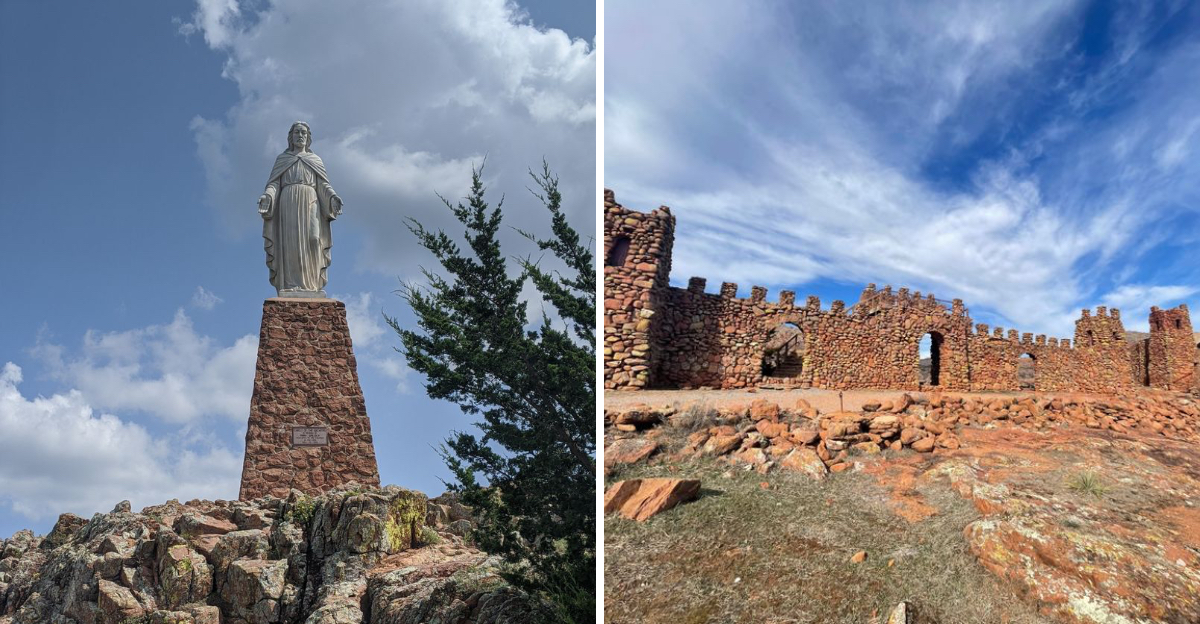
Imagine you’re driving through the rugged Wichita Mountains, surrounded by nothing but red rock and wild prairie, when suddenly ancient Jerusalem appears before your eyes.
The Holy City of the Wichitas sits in the middle of Oklahoma’s wilderness like a time portal dropped from the sky.
Built by a preacher who had a vision, this place recreates the sacred sites of the Holy Land with stunning stone structures that rise from the dusty earth, and honestly, the first time you round that corner and see it, your jaw will hit the floor.
A Vision Turned Stone Reality
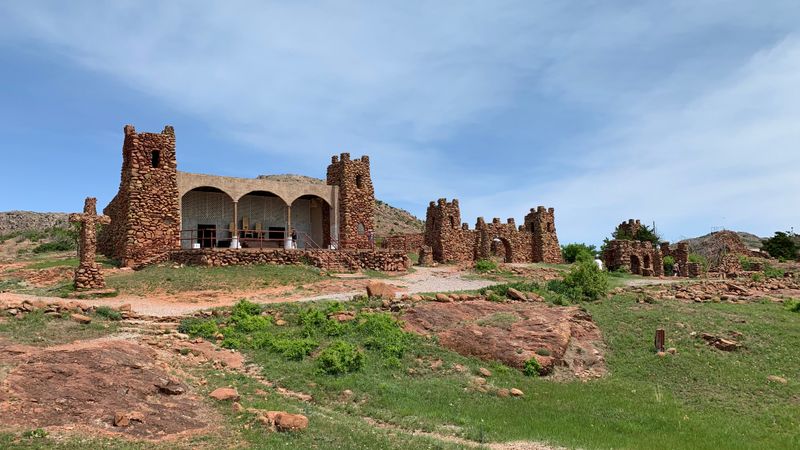
Back in the 1930s, Reverend Anthony Mark Wallock had a dream that wouldn’t let him go. He saw Jerusalem recreated in the Wichita Mountains, and instead of shrugging it off, he actually built it.
What started as one man’s spiritual vision became a full-scale replica of the Holy Land’s most sacred sites.
Walking through these structures feels surreal because you’re literally in Oklahoma, but your eyes are telling you something completely different. The stone architecture mimics ancient Middle Eastern design with such care that you forget you’re surrounded by prairie grass and bison.
Each building was placed thoughtfully to mirror the layout of actual Jerusalem.
The dedication it took to construct this place in the 1940s, without modern equipment, blows my mind every time I visit. Workers hauled stones and shaped them by hand, driven by faith and determination.
Today, it stands as a testament to what passion and vision can create, even in the middle of nowhere.
This isn’t some cheesy roadside attraction. The craftsmanship and attention to historical detail make it feel authentic and deeply meaningful, whether you’re religious or just appreciate incredible human achievement.
What gets me every time is imagining the sheer audacity of it all. In an era without big funding or flashy promotion, they just kept building, stone by stone, trusting the vision would resonate.
You can sense that stubborn faith in the walls themselves. It adds another layer to the experience, knowing you’re walking through something that exists purely because someone refused to let a dream fade away.
The Easter Pageant That Draws Thousands
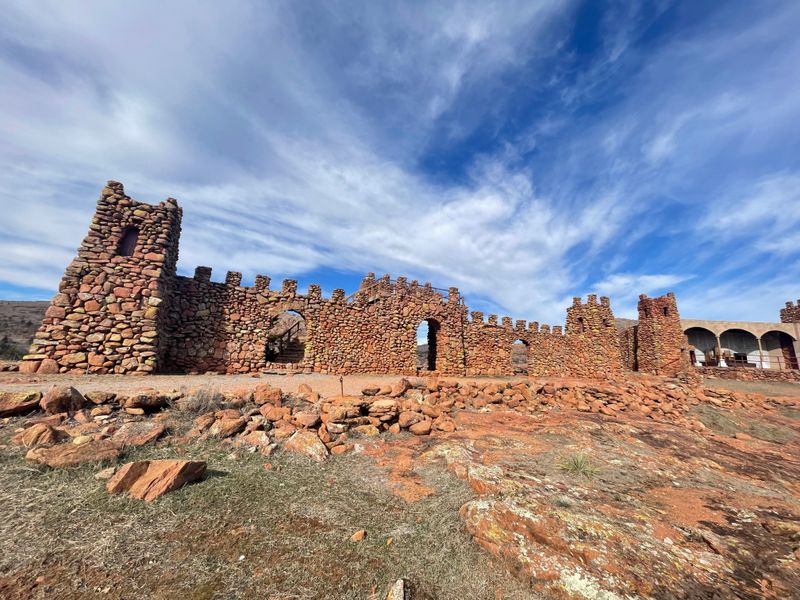
For over 80 years, this place transforms into a living, breathing biblical drama every Easter season. The pageant isn’t some small church production.
We’re talking hundreds of volunteers, elaborate costumes, live animals, and dramatic lighting against the natural rock formations that serve as the ultimate stage backdrop.
Watching the Easter story unfold here hits different than any church service I’ve attended. The actors move between the replica buildings, recreating scenes from Christ’s final days with genuine emotion and commitment.
The outdoor setting adds an element of raw authenticity you can’t replicate indoors.
People travel from all over to witness this century-old tradition, and honestly, I understand why. The combination of natural beauty, historical architecture, and powerful storytelling creates something unforgettable.
Even if you’re not particularly religious, the theatrical experience alone is worth the trip.
They’ve been performing this pageant since the 1940s, making it one of the longest-running Easter productions in the country. That kind of continuity speaks to how much this place means to the community and visitors alike.
Come during Easter season, and you’ll see faith expressed through art in its purest form.
The energy during pageant nights is electric in a way that’s hard to explain unless you’ve stood there yourself. You feel the anticipation ripple through the crowd as the sky darkens and the first scene begins.
It’s dramatic, yes, but it’s also deeply communal. Strangers sit shoulder to shoulder, completely absorbed, sharing an experience that’s been unfolding here for generations.
Wildlife Wandering Through Sacred Grounds
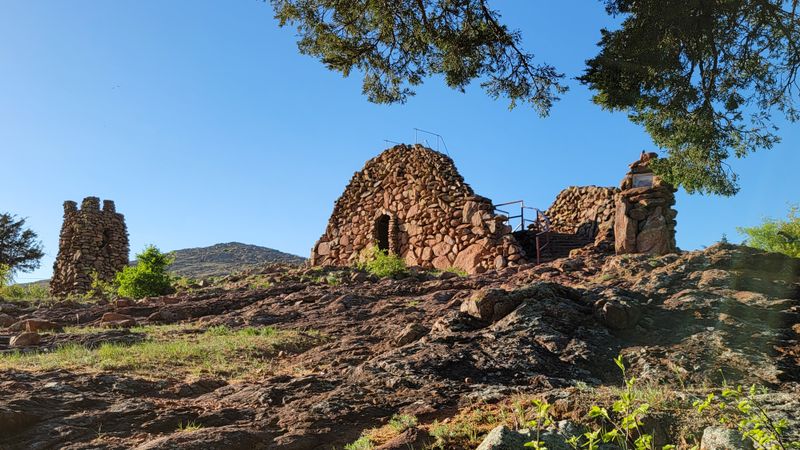
Here’s something nobody tells you: you might be contemplating the sacred architecture when a massive bison casually strolls past like it owns the place. Because technically, it does.
The Holy City sits within the Wichita Mountains Wildlife Refuge, meaning the wildlife has zero respect for your spiritual moment.
Elk, prairie dogs, and longhorn cattle also call this area home, creating the most unexpected biblical mashup you’ve ever seen. I’ve watched prairie dogs pop up near the replica tomb while tourists snap photos, completely unfazed by the human activity.
It’s hilarious and magical at the same time.
The animals add an element of unpredictability that makes every visit unique. One time I saw a buffalo standing perfectly framed by an archway, looking like some sort of sacred guardian.
My friend swears an elk photobombed her picture at the chapel, and I absolutely believe her.
This wildlife integration isn’t planned or controlled beyond basic safety measures. The animals roam freely, reminding you that this sanctuary exists within wild, untamed nature.
That contrast between human-made holiness and raw wilderness creates an atmosphere you won’t find anywhere else in America.
I think that’s part of why this place sticks with you. You’re never fully in control of the scene.
Nature keeps reminding you who’s really in charge out here. One minute you’re admiring ancient-style stonework, the next you’re giving respectful distance to a bison that wandered into frame.
It’s chaotic in the most Oklahoma way possible, and somehow it works.
Stone Structures That Transport You
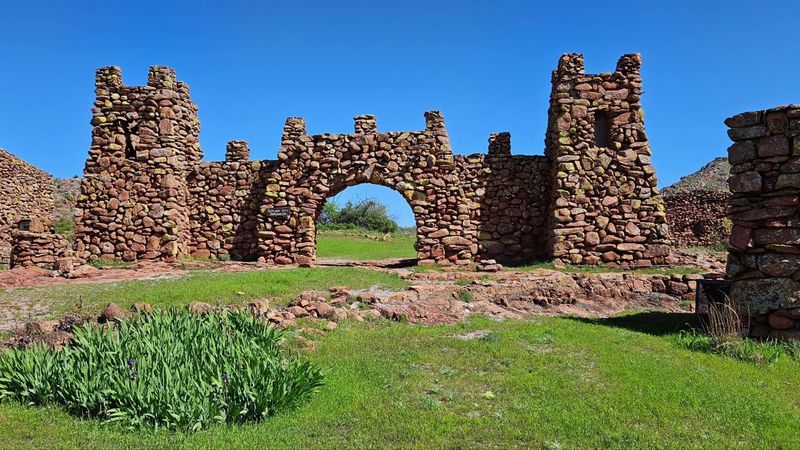
The moment you step through these stone archways, something shifts in your perception. The builders didn’t just slap together some rocks and call it Jerusalem.
They studied the actual Holy Land architecture and recreated it with painstaking accuracy, using local stone that naturally fits the landscape.
Each structure serves a purpose in telling the biblical story, from the Garden Tomb to Pilate’s Judgment Hall. The weathering over decades has only added to the authentic ancient feel.
Running your hands across the rough stone walls, you can feel the history and intention embedded in every block.
What strikes me most is how these buildings interact with the natural rock formations surrounding them. The architects worked with the landscape rather than against it, creating a seamless blend of human construction and God’s original work.
The result is breathtaking from every angle.
Photography here is a dream because the stone structures catch light beautifully throughout the day. Early morning and golden hour create dramatic shadows that emphasize the architectural details.
I’ve taken hundreds of photos here, and each visit reveals new perspectives and details I missed before.
The illusion deepens the longer you stay. You start noticing the angles of the doorways, the way the stone stacks unevenly like it’s been standing for centuries.
Wind whistles through the archways, and suddenly you’re not thinking about your to-do list or your phone buzzing in your pocket. You’re just present, fully absorbed in a space that feels far older than it actually is.
The Chapel That Stops You Cold
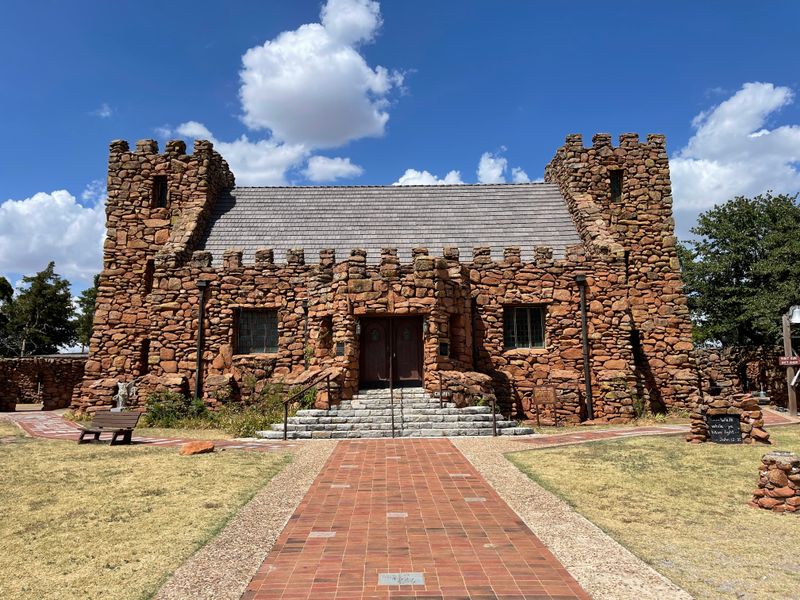
Walking into the chapel here does something to your breathing. Maybe it’s the simplicity, maybe it’s the silence, but this small stone building carries a weight of peace that’s hard to describe.
The interior is modest, almost sparse, which somehow makes it more powerful than any ornate cathedral.
Wooden pews face a simple altar, and natural light filters through the windows in a way that feels intentional and holy. I’ve sat in here alone, listening to absolutely nothing, and felt more centered than after hours of meditation.
Something about the combination of stone walls and open sky visible through the windows creates perfect stillness.
People use this chapel for weddings, and I completely understand why. The setting is intimate and meaningful without being overwhelming or pretentious.
You’re surrounded by history, nature, and faith all at once, creating a ceremony backdrop that’s genuinely unique.
Even if you’re not religious, spending a few minutes in this space feels restorative. The cool stone walls provide relief from Oklahoma heat, and the quiet offers a break from our constantly noisy world.
It’s become my favorite spot for reflection whenever I visit.
I’ve watched tough, chatty people walk in here and immediately go quiet. There’s something about the acoustics and the filtered light that demands a little respect.
Even if you don’t pray, you pause. And in a world where we rarely pause for anything, that alone feels significant.
The Gift Shop With Unexpected Treasures
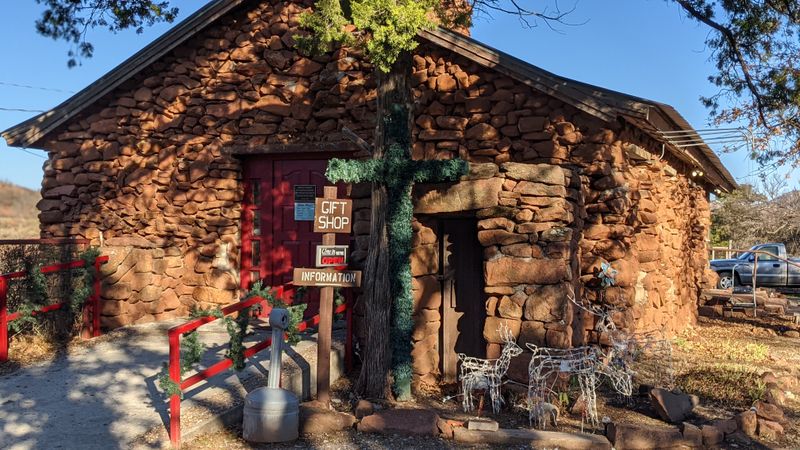
Look, gift shops at religious sites can be hit or miss, usually leaning toward tacky trinkets you don’t need. This one surprised me by being actually useful and charming.
Beyond the expected religious items, they stock cold drinks, which becomes crucial information when you’re exploring in Oklahoma summer heat.
The staff here are genuinely warm and knowledgeable, not just working a register but sharing the history and stories of the place. The woman I spoke with last visit knew every detail about the site’s construction and the Easter pageant’s evolution over the decades.
That kind of personal connection makes browsing more meaningful.
They carry local crafts and items you won’t find in every tourist trap across the state. I picked up a handmade bookmark and a small stone carving that actually reminds me of my visit without being cheesy.
The selection shows thought and care rather than just wholesale religious merchandise dumped on shelves.
Honestly, the cold drinks alone make this shop worth finding. When you’re walking around in the heat, having access to something cold that’s not from a vending machine feels like a small miracle.
Plus, your purchase supports the site’s maintenance and programs.
What surprised me most is how unhurried everything feels inside. Nobody’s pushing souvenirs or rushing you toward checkout.
Conversations flow naturally, often drifting into stories about past Easter performances or favorite moments on the grounds. It feels less like a transaction and more like being welcomed into a long-running tradition.
Trails That Wind Through History
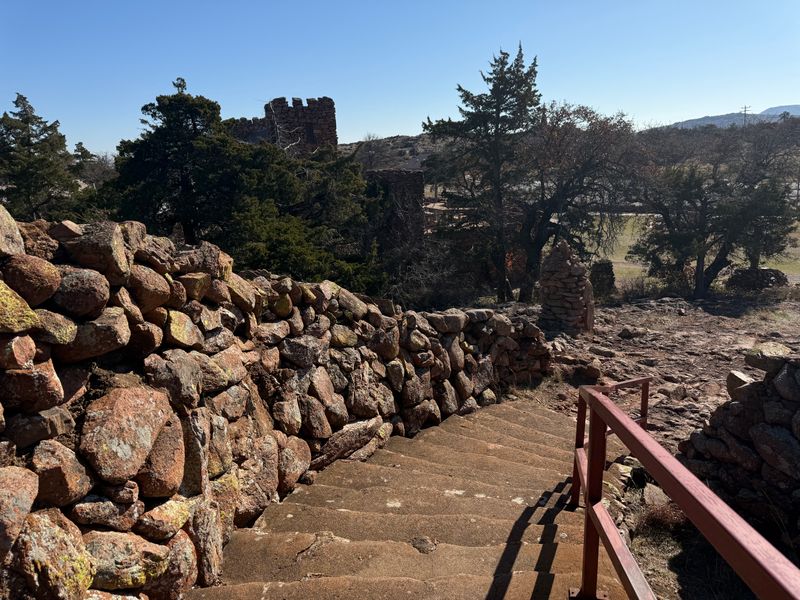
The paths connecting the various structures aren’t just functional walkways. They’re part of the storytelling, guiding you through the biblical narrative in geographical sequence.
Walking these trails, you’re literally following the footsteps of ancient stories, recreated in Oklahoma red dirt and native prairie grass.
The terrain is manageable for most fitness levels, though the natural landscape means some uneven ground and slight elevation changes. I’ve seen families with young kids and older visitors navigating it comfortably.
The paths are well-maintained without being overly manicured, preserving that wilderness feel.
Along the way, you’ll encounter interpretive signs explaining each structure’s significance and historical context. These aren’t long-winded academic plaques but concise, accessible explanations that enhance understanding without overwhelming you with information.
They’re placed thoughtfully so you can read or skip them based on your interest level.
During different seasons, the trails offer completely different experiences. Spring brings wildflowers that add color to the stone structures.
Fall creates golden prairie grass that glows in afternoon light. Even winter has a stark beauty that emphasizes the enduring nature of these buildings against Oklahoma’s sometimes harsh climate.
The walk between structures gives you time to process what you’ve just seen. You’re not herded from one stop to the next.
Instead, you wander, glance back at a tower you just passed, maybe change direction entirely. The openness lets you create your own rhythm, which makes the entire visit feel personal rather than scripted.
The Christ Statue Overlooking Everything
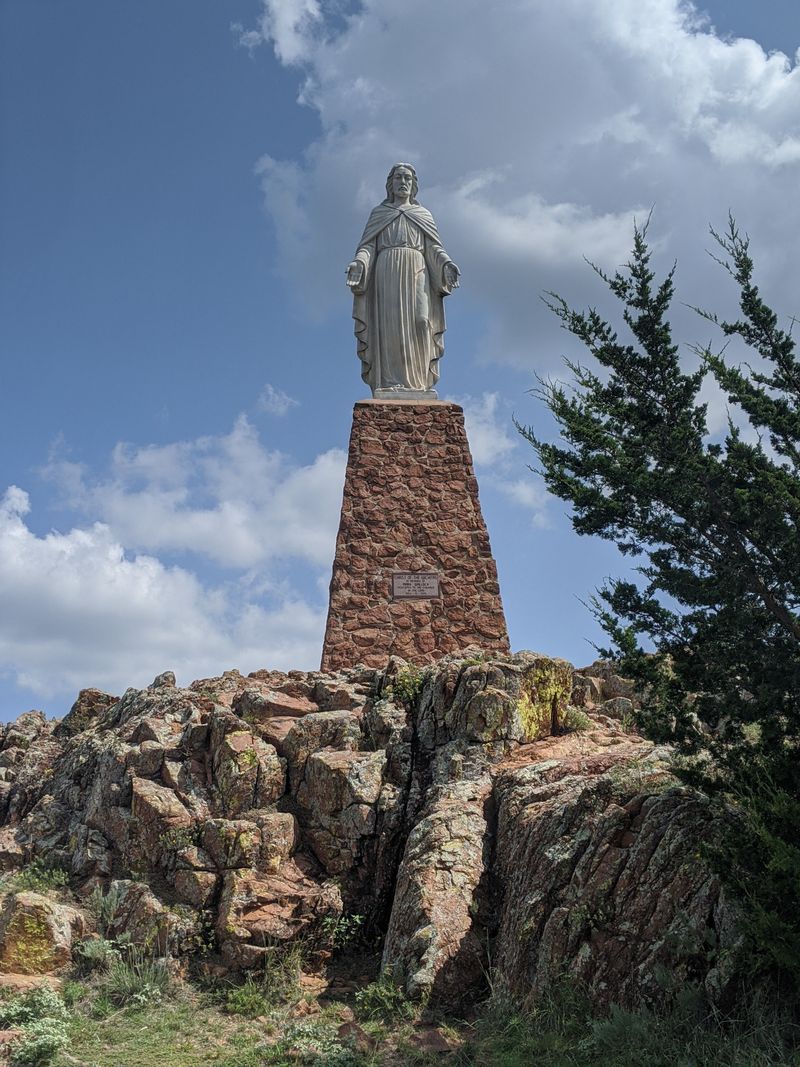
Rising above the other structures, the Christ statue serves as both spiritual focal point and geographical landmark. It’s not as massive as Rio’s famous version, but in this context, surrounded by Oklahoma wilderness and replica ancient buildings, it carries equal emotional impact.
The positioning on elevated ground means you can see it from multiple points throughout the site.
Photographers love this statue because it creates powerful compositions from every angle. Shot from below, it appears to watch over the entire Holy City with protective presence.
From a distance, it anchors the whole scene, giving context and scale to the stone structures below. I’ve seen it photographed in every lighting condition imaginable, and it’s stunning in all of them.
The statue’s condition and maintenance reflect the care this entire site receives. Despite decades of exposure to Oklahoma weather, it remains beautiful and dignified.
Someone clearly takes pride in preserving these structures for future generations, and that dedication shows in every detail.
Standing at the base and looking up creates a moment of perspective that’s hard to shake. Whether you’re religious or not, the artistic achievement and the peaceful setting combine to create something memorable and moving.
Every time I look up at it, I notice something new. The way the light hits the face at sunset.
The silhouette against a stormy Oklahoma sky. It becomes this constant presence throughout your visit, quietly tying everything together from above.
You don’t have to be religious to feel the weight of it.
A Place That Defies Expectations
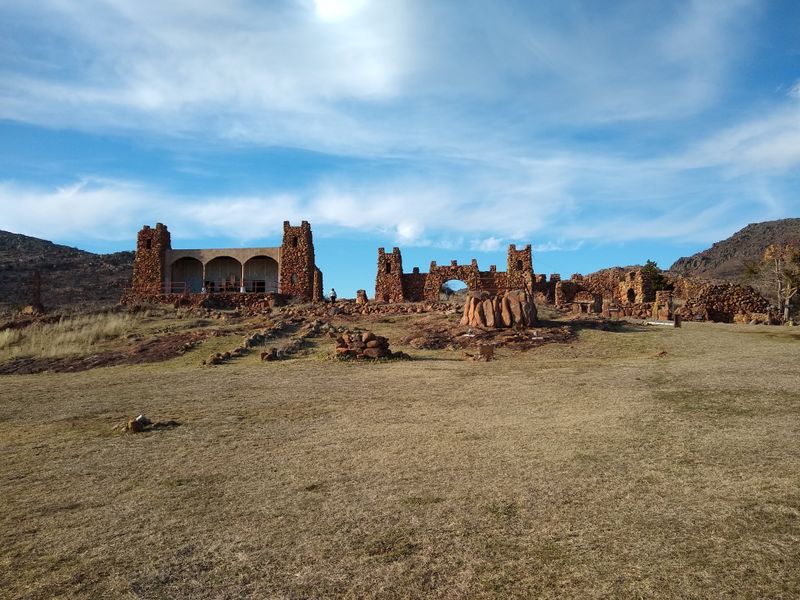
Nothing prepares you for how this place makes you feel. You arrive expecting maybe a quirky roadside attraction, something to check off a list.
Instead, you discover a labor of love that’s been maintained and cherished for over 80 years, sitting in one of Oklahoma’s most beautiful natural settings.
The combination of elements shouldn’t work. Ancient Jerusalem architecture in prairie wilderness, with bison wandering past biblical structures, feels like it should be disjointed or weird.
Instead, it creates harmony that feels almost inevitable, like this is exactly where these buildings were meant to exist.
Visitors consistently describe feeling unexpected peace here, regardless of their religious background or beliefs. Maybe it’s the quiet, maybe it’s the craftsmanship, maybe it’s the natural beauty, or maybe it’s all of it working together.
Whatever the reason, people leave different than they arrived.
I’ve brought friends here who were skeptical, expecting something kitschy or over-the-top. Every single one of them left thoughtful and a little quieter than usual.
There’s just something about the mix of faith, craftsmanship, and wild landscape that settles into you. It’s not loud about its impact.
It just lingers.
The Holy City of the Wichitas stands as proof that vision, faith, and hard work can create something truly special in the most unexpected places. It’s located at 262 Holy City Rd, Lawton, OK 73507, waiting to surprise you just like it surprised me the first time I visited.
Dear Reader: This page may contain affiliate links which may earn a commission if you click through and make a purchase. Our independent journalism is not influenced by any advertiser or commercial initiative unless it is clearly marked as sponsored content. As travel products change, please be sure to reconfirm all details and stay up to date with current events to ensure a safe and successful trip.
