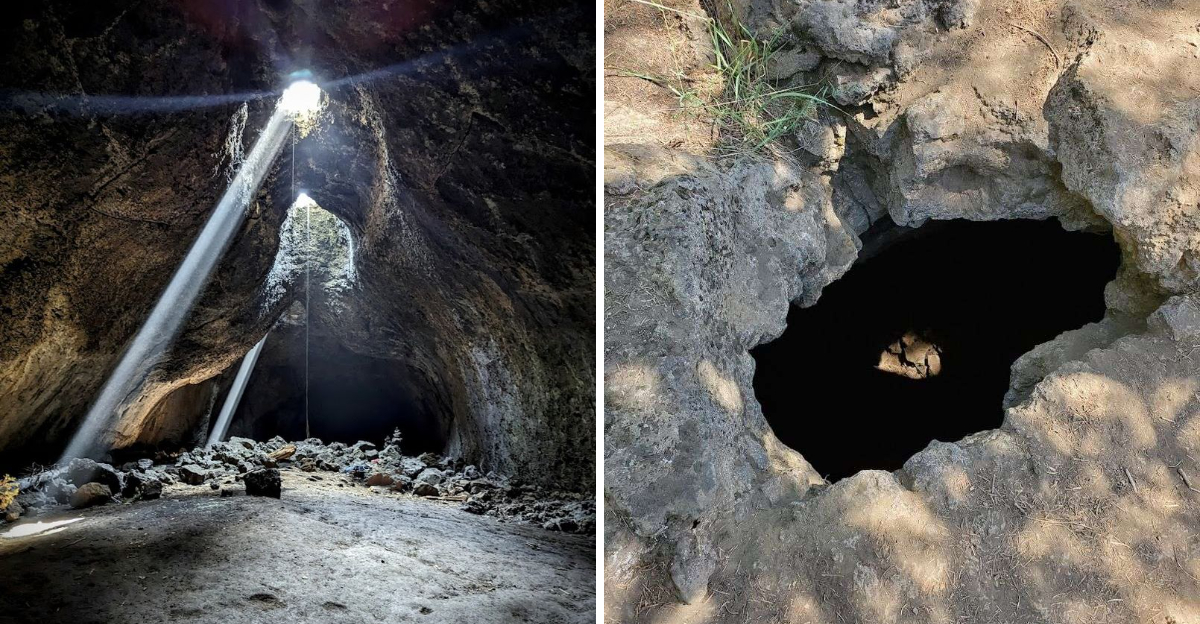
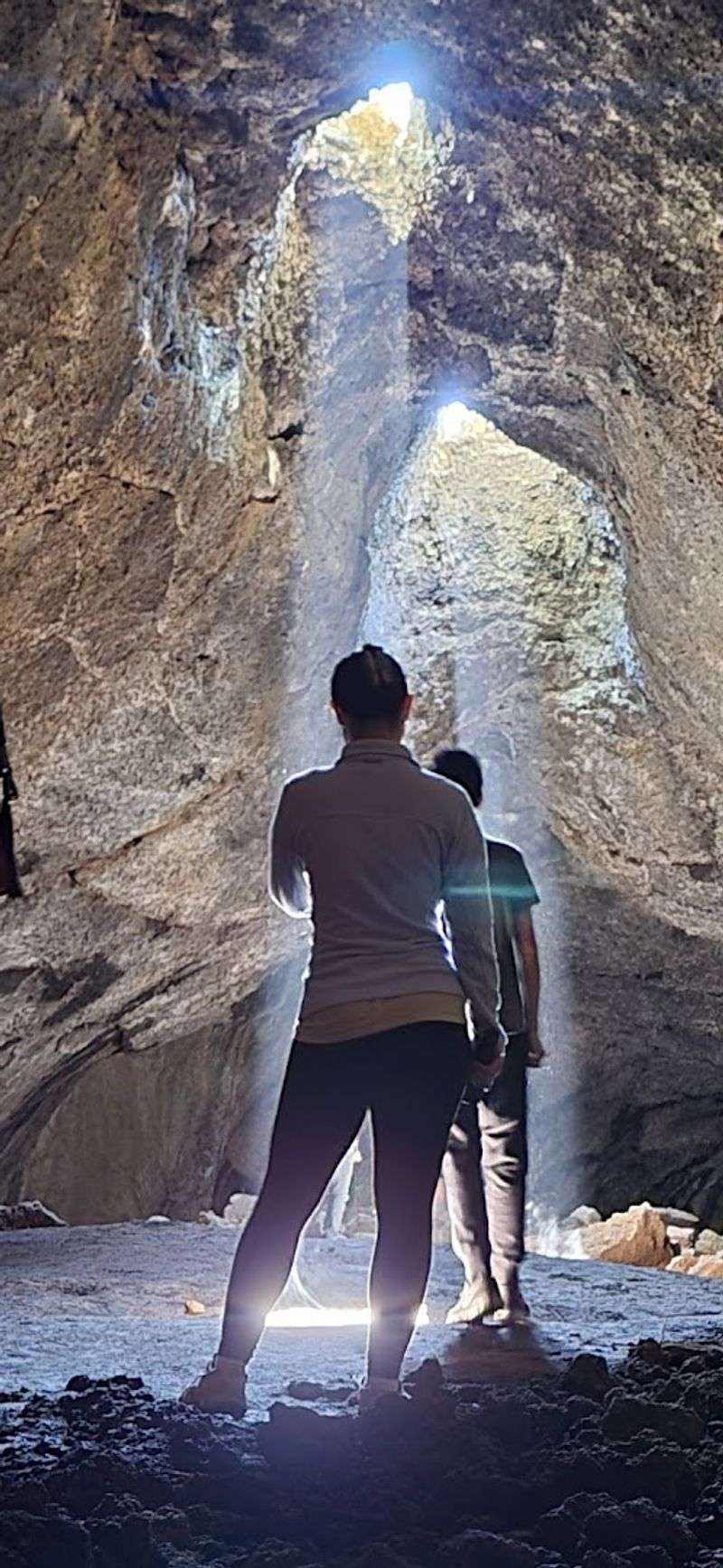
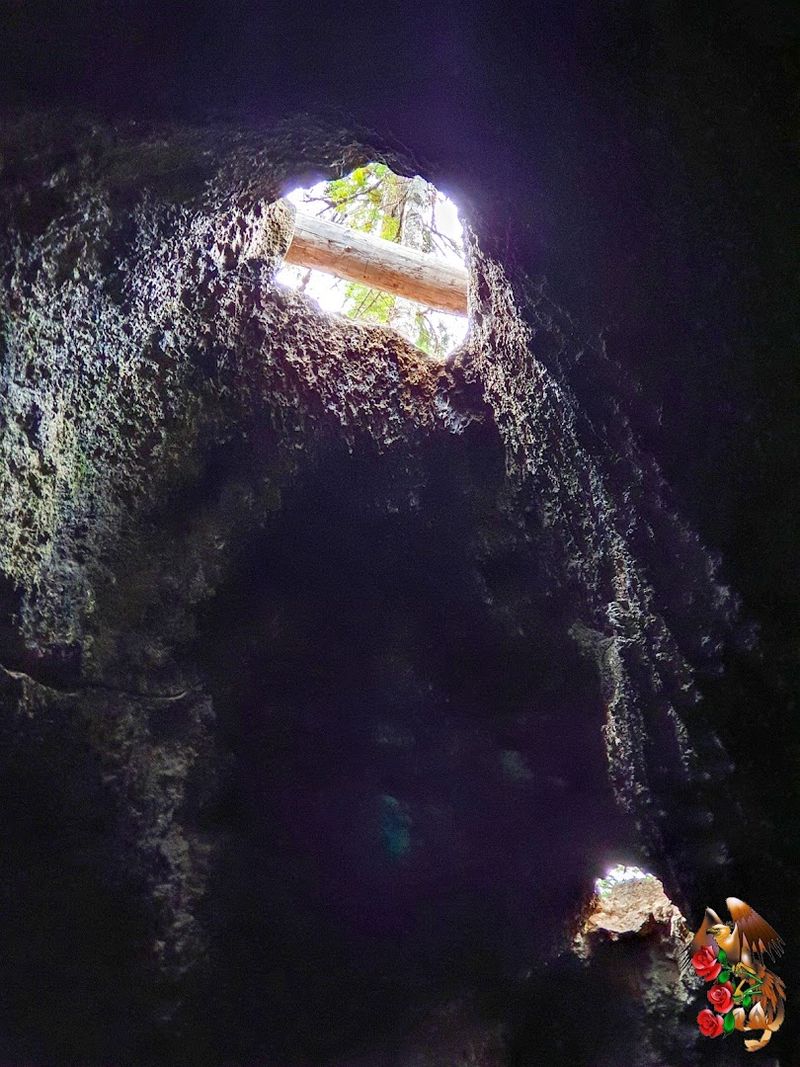
The cave is dark and cold until you look up at the perfect moment. A giant hole in the ceiling pours sunlight down like a theater spotlight.
I stood there with my mouth open as the golden beam hit the dusty floor. The light moves slowly throughout the day like someone is aiming it carefully.
My friend and I timed our visit so the beam landed right in front of us. We pretended to give an acceptance speech for an award we definitely did not win.
The rest of the cave is cool and quiet and full of dark shadows watching us. But that single column of light makes the whole dark place feel completely magical instead.
I sat on a rock and just watched dust particles dance inside the golden glow endlessly. Nature built its own cathedral here and the ceiling has a perfect skylight included for free.
What Skylight Cave Actually Is
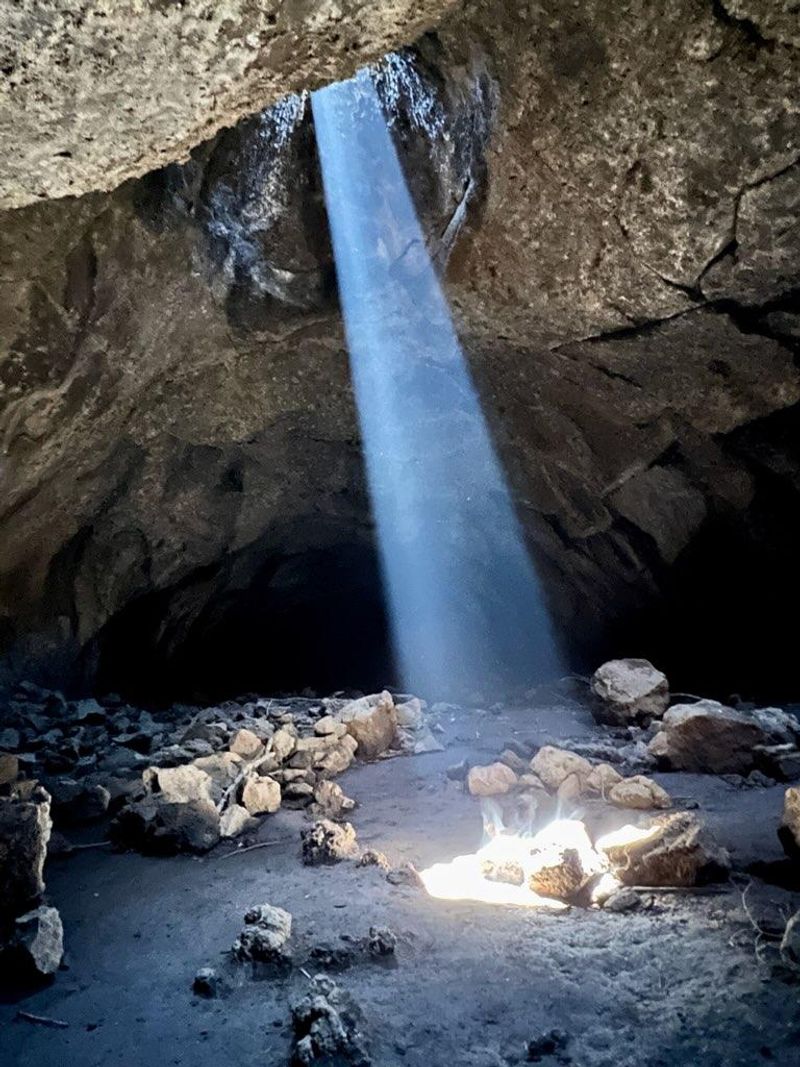
Most people picture caves as dark, cramped, and a little terrifying. Skylight Cave flips that idea completely on its head.
This is a lava tube, formed thousands of years ago when molten lava flowed and cooled on the outside while the inside kept moving.
What remained was a long, open tunnel carved right into the earth. The ceiling eventually collapsed in three places, creating natural skylights.
Those openings let sunlight pour straight down into the cave.
The tube is wide and spacious. There are no tight squeezes or low ceilings to worry about.
It feels more like walking through a cathedral than crawling through a hole in the ground.
The walls are rough volcanic rock, dark and textured. The floor is uneven in spots, so solid shoes are a must.
But the overall experience is surprisingly accessible for most people.
This is not your average cave visit. It is a geological wonder hiding in plain sight, waiting for curious travelers willing to make the drive.
The Golden Light Show You Will Not Forget
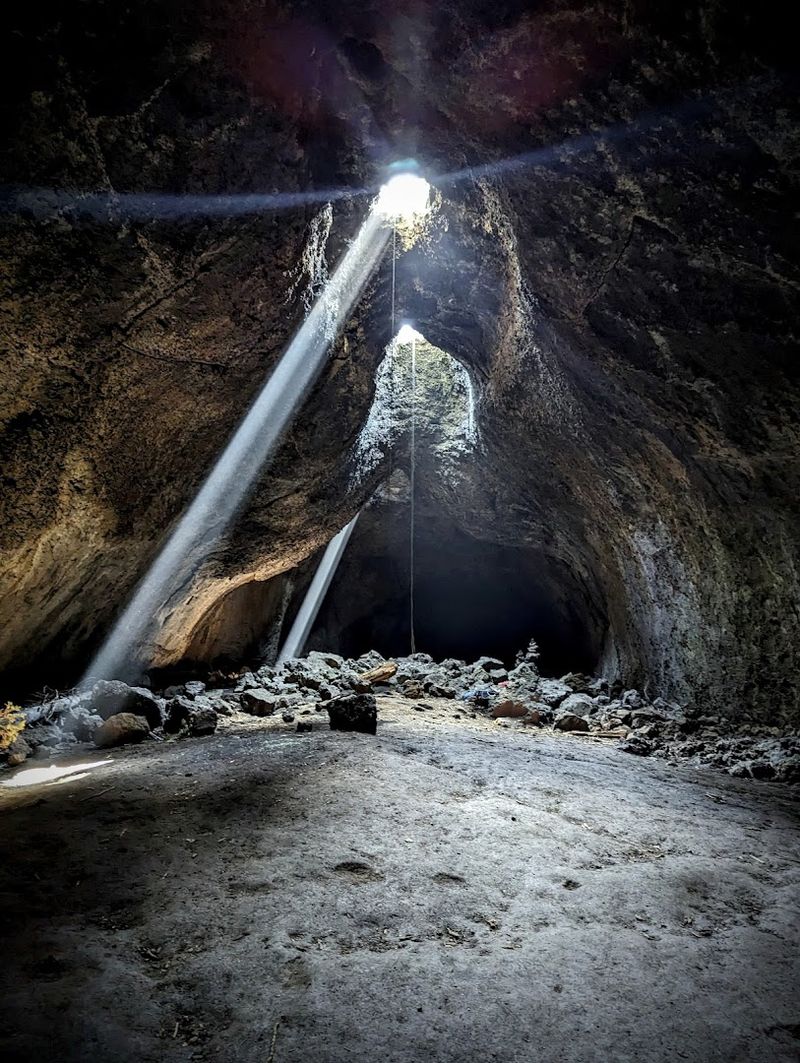
The moment sunlight hits the cave floor, everything changes. Three beams drop down from above, thick and golden, like spotlights aimed at the earth.
It is genuinely one of the most striking natural sights I have ever stood inside.
Timing matters a lot here. The best light happens between 9 AM and 11 AM during summer months.
That window is when the sun sits at just the right angle to shoot straight through those ceiling openings.
Arriving early pays off in a big way. The light is sharper, brighter, and more dramatic in the morning.
Later in the day, the beams soften and eventually disappear as the sun shifts.
Dust particles and cave moisture catch the light beautifully. The whole scene has a glowing, almost otherworldly quality that photos struggle to fully capture.
You really have to stand there and take it in.
Bring a camera anyway. Even an imperfect photo of those light beams is worth keeping.
This is one of those rare moments where nature genuinely outdoes itself.
Getting There Is Part of the Adventure
Reaching Skylight Cave is not a simple pull-off-the-highway situation. The drive involves several miles of unpaved forest roads, and the last stretch gets bumpy.
A vehicle with decent clearance makes the trip much smoother.
Most visitors approach from Highway 242, heading toward Road 1028 and then turning onto the narrow Road 260. The signage is minimal at best.
GPS can get unreliable out here, so downloading an offline map before leaving town is a smart move.
The parking area is small and informal. A log blocks vehicles from driving further, so the short walk to the cave entrance begins there.
The sign for the cave is easy to spot once you are in the right area.
Keep windows up on the gravel roads to avoid a dust-covered interior. Driving slowly also protects your paint from flying rocks and scraping bushes along the narrow path.
The bumpy ride actually builds excitement. By the time you park and start walking, the anticipation has been simmering for miles.
Climbing Down the Ladder Into the Dark
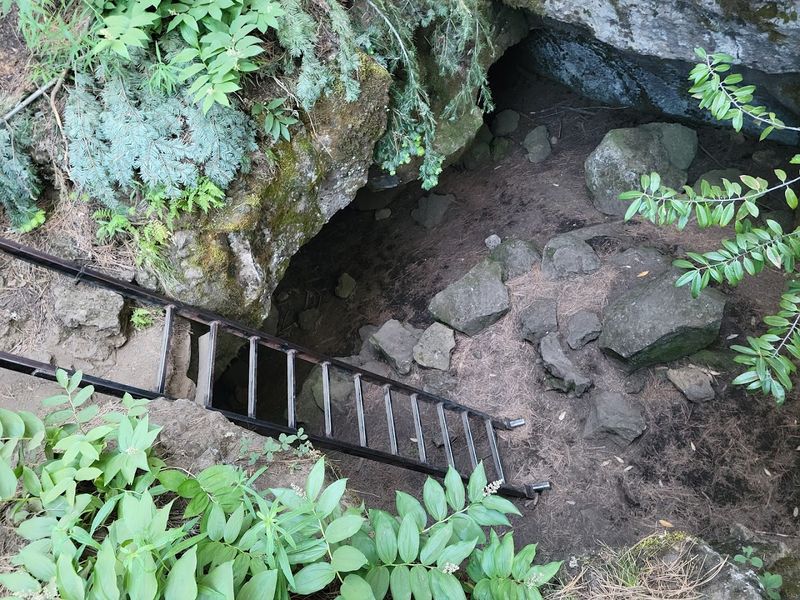
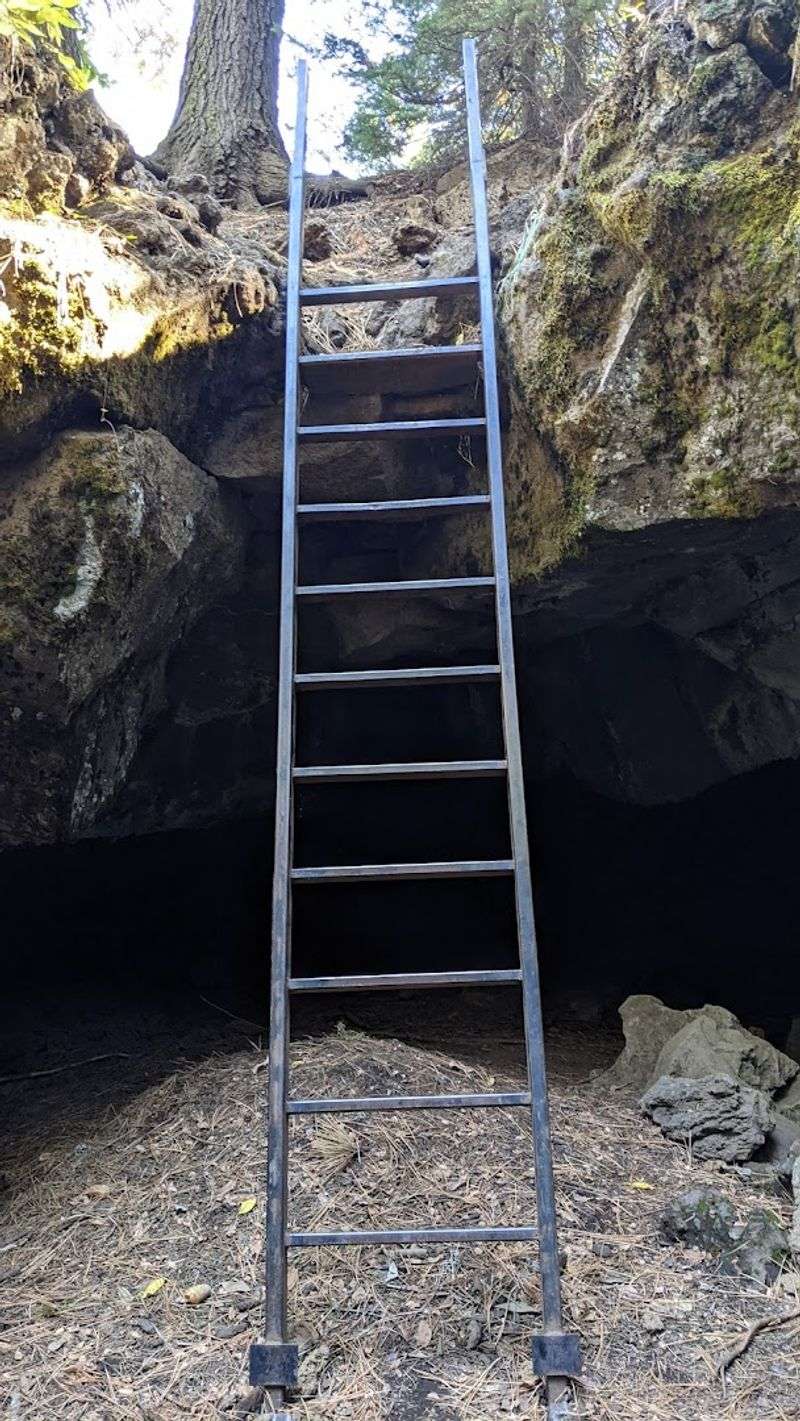
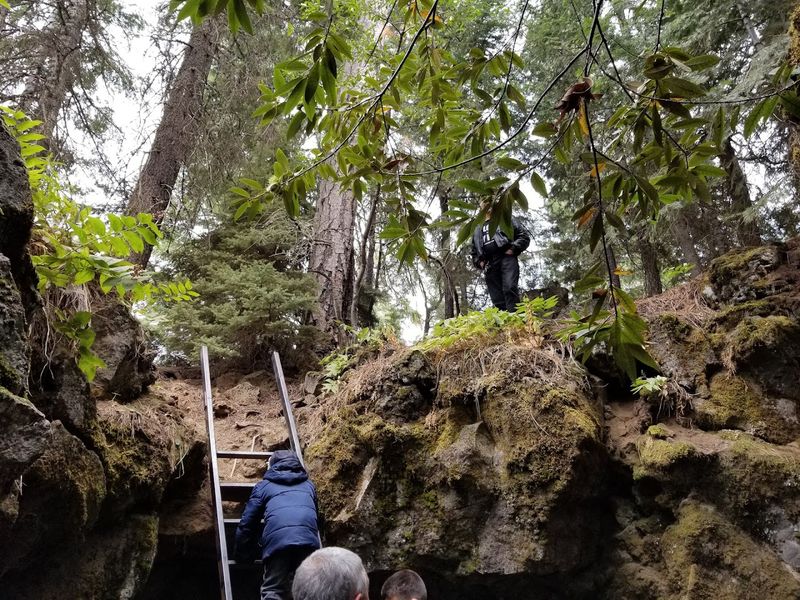
The cave entrance is not a gentle slope you stroll into. There is a steel ladder bolted in place, dropping you down into the darkness below.
It is sturdy and well-mounted, barely taller than climbing into an attic.
The descent is manageable for most people. Using both hands and feet makes it feel natural and stable.
Kids handle it well, and so do adults who are not thrilled about heights.
One important note: the ladder is removed during the closed season, which runs from September 15 through April 30. This closure protects the small bat population that winters inside the cave.
If the ladder is gone, the cave is off-limits.
Once you are down, the cave opens up immediately. The ceiling rises and the walls spread wide.
That first breath of cool, damp cave air hits you right away.
Eyes adjust within a minute or two. Headlamps make navigation easier, especially toward the darker sections further in.
The ladder moment feels like crossing a threshold into a completely different world.
What to Pack Before You Head Out
Packing smart makes a huge difference at Skylight Cave. The most essential item is a headlamp or flashlight.
The section between the entrance and the skylights is genuinely dark, and stumbling over lava rock is not fun.
Sturdy, closed-toe shoes are non-negotiable. The cave floor is uneven volcanic rock with sharp edges in places.
Flip flops or sandals are a recipe for a twisted ankle or a cut foot.
A light jacket is worth tossing in your bag. The cave stays cool year-round, sometimes damp, and the temperature drop from a warm summer day is noticeable.
It feels refreshing at first, but chilly after a few minutes.
Gloves are a smart addition too. Lava rock walls are rough, and reaching out to steady yourself is natural when footing gets tricky.
Protecting your hands just makes the whole experience more comfortable.
Pack out everything you bring in. The cave is a natural treasure and a protected habitat.
Leaving it exactly as you found it keeps it beautiful for every person who visits after you.
The Two Sides of the Cave Worth Exploring
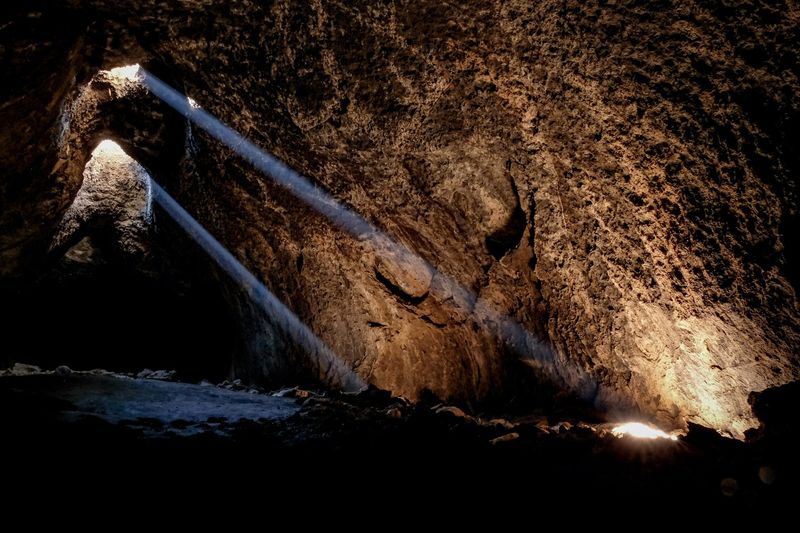
Skylight Cave is actually two experiences in one. The side with the skylights is shorter and fills with natural light in the morning.
That is the showstopper section most visitors come specifically to see.
The other direction stretches much further into the earth. It goes deep and gets genuinely dark fast.
A strong flashlight or headlamp is essential for exploring that end properly.
Both sides are worth your time. The bright skylight section is dramatic and photogenic.
The darker tunnel feels more like classic spelunking, raw and adventurous, with the cave walls closing in around your light beam.
The floor shifts between the two sides. Some sections are relatively flat while others have loose rock that requires careful footing.
Moving slowly and watching each step keeps things safe and enjoyable.
Many visitors focus only on the skylights and miss the longer tunnel entirely. Spending a little extra time exploring both directions gives a much fuller sense of how vast and impressive this lava tube actually is.
The Best Time of Year to Visit
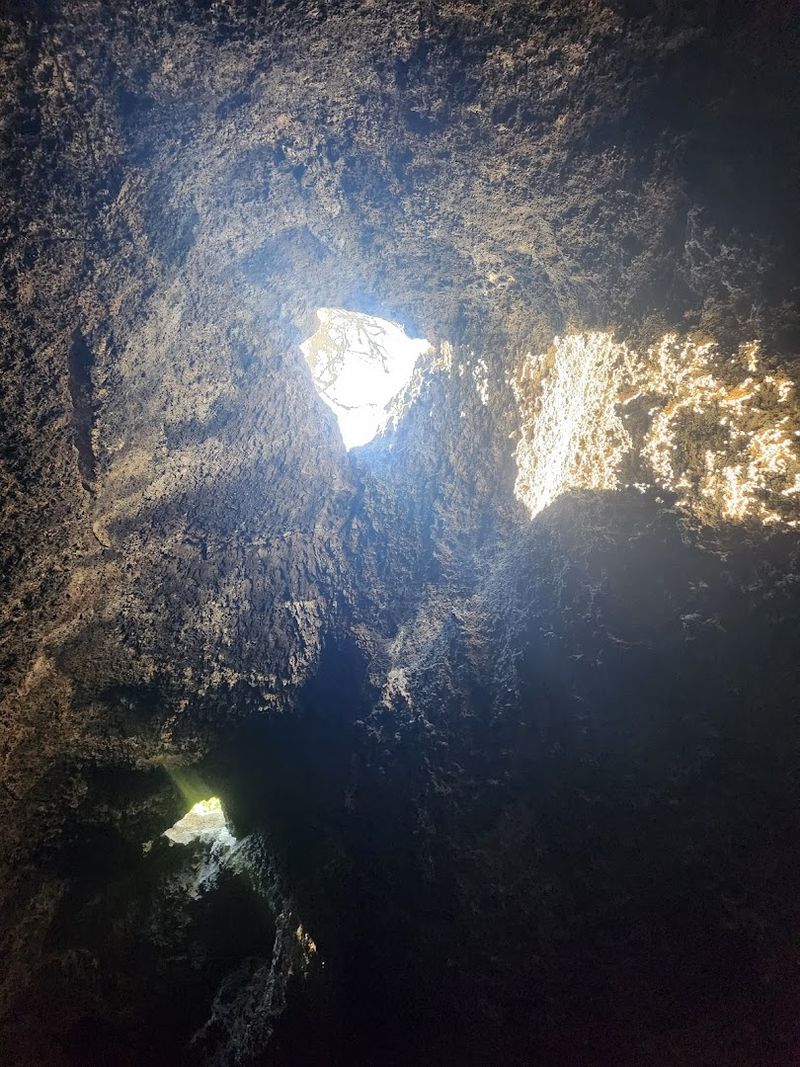
Summer is the prime season for Skylight Cave. The cave is open from May 1 through September 15, and summer mornings offer the most spectacular light conditions inside.
Warm days also make the cool cave interior feel like a reward.
June, July, and August hit the sweet spot. Days are long and sunny, maximizing the chance of catching those golden light beams at their best.
Arriving before 9 AM gives you the full show.
Spring visits in May can be lovely too. The forest is fresh and green, and crowds are thinner than peak summer.
The light show still happens, though morning temperatures outside the cave can be cool.
Avoid planning a trip after September 15. The cave closes for the season and the ladder gets removed.
Weekdays tend to be quieter than weekends. Arriving early on a Tuesday or Wednesday almost guarantees a peaceful, unhurried visit with the cave mostly to yourself.
The Bat Population Living Inside
Skylight Cave is not just a tourist attraction. It is an active habitat for a small bat colony that calls the cave home.
That is actually why the cave closes each fall and winter, to protect the bats during hibernation season.
Bat populations in lava tube caves face real pressure from human disturbance. The seasonal closure between September 15 and May 1 gives them a protected space to rest undisturbed through the colder months.
Visitors have spotted bats inside during open season. Catching a glimpse of one hanging quietly from the ceiling adds a whole extra layer to the experience.
They are small and unobtrusive, easy to miss if you are not looking up.
Respecting the cave means respecting its residents. Loud noises and bright lights aimed directly at roosting bats are stressful for them.
The bat population has been declining at this cave over recent years. That makes responsible visitation even more meaningful.
Being a thoughtful guest here genuinely contributes to protecting something fragile and worth preserving.
Viewing the Skylights From Above Ground
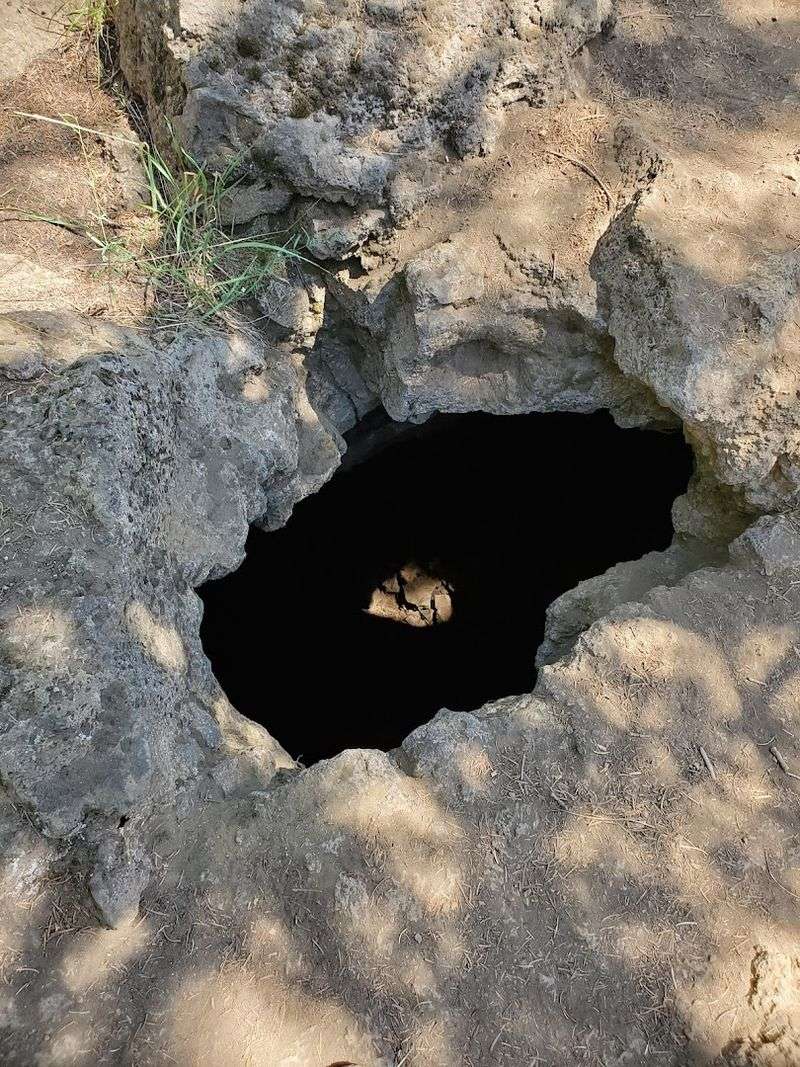
Here is something a lot of visitors completely miss. There is a small path to the left of the main cave sign that leads up to the skylights from above ground.
Standing on the surface and peering down into the cave is a totally different perspective.
Looking down into those openings gives you a clear sense of how thick the lava tube ceiling actually is. The drop below looks dramatic from up top, and the cave floor is just barely visible in the shadows.
This above-ground view works well as a planning tool too. You can spot exactly where the light beams will fall inside before you climb down.
It helps you position yourself for the best photos once you are in the cave.
Standing at the edge of those openings, looking down into a cave that is also looking up at you, creates a strange and wonderful moment. It is the kind of thing that sticks with you long after the drive home.
Practical Tips for a Smooth Visit
A few practical details make a big difference at Skylight Cave. There are no restroom facilities at the site.
Plan accordingly before leaving town, because the nearest options are a long drive away on forest roads.
Cell service is unreliable or nonexistent near the cave. Downloading offline maps of the Deschutes National Forest before leaving is genuinely useful.
It prevents the frustration of GPS sending you down roads that no longer exist.
Biking in from Highway 242 is a real option. The distance is roughly four miles, and the forest road makes for a scenic ride.
It is a great alternative for people who want to avoid putting rough road miles on their vehicle.
Pack out all trash without exception. The cave and surrounding forest are pristine because people before you cared enough to leave nothing behind.
Keeping that standard going is a shared responsibility every visitor carries.
Address: Skylight Cave, Road 260, Deschutes National Forest, Bend, Oregon
